• ABOUT
  • BIRDING 2018
  • Birding 2019
  • BLOG POSTS
  • Butterflies 2018
  • Resources

earthstar

~ a celebration of nature

earthstar

Category Archives: nature

Orange-tips

27 Sunday May 2018

Posted by sconzani in insects, nature

≈ Leave a comment

Tags

Anthocharis cardamines, British butterflies, butterfly, Orange-tip, Orange-tip butterfly

The various white butterflies can be difficult to tell apart but the Orange-tips (Anthocharis cardamines) are a little easier to spot. The male sports the orange tips on its wings that give the species its common name and which are, according to the UK Butterflies website, caused by an accumulation of the mustard oils that were ingested when it was a caterpillar.

180527 Orange-tip male

The female Orange-tip doesn’t have those bright wing tips but she does share with the male the equally characteristic mottled green pattern on her underwings.

180527 Orange-tip female.jpg

The female lays a single egg – the caterpillars will devour other eggs and fellow caterpillars given the chance, hence the single egg – on one of the preferred larval food plants, their favourites being Cuckooflower (Cardamine pratensis) and Garlic Mustard (Alliaria petiolata). Eggs are white when first laid, changing to orange as they near maturity, a process that takes a week or two.

Newly laid white egg
Maturing orange egg
Maturing orange egg

180527 Orange-tip egg (3)

I haven’t yet found a caterpillar but, in the next week or so, I will be re-checking the places where I found these eggs. If you want to read more about Orange-tips, you can check the Butterfly Conservation website here.
Like Loading...

Birding at St David’s Vale

26 Saturday May 2018

Posted by sconzani in birds, insects, nature

≈ Leave a comment

Tags

birding, birdwatching, British birds, Broad-bodied Chaser, Cockchafer, Common heath moth, Glamorgan Bird Club, Meadow pipit, Skylark, Small heath butterfly, St David's Vale, Stonechat, Tree pipit, Whinchat, Willow warbler

I might also have called this blog post ‘One hundred and eighty!’. Let me explain …

180525 St Davids Vale (1)

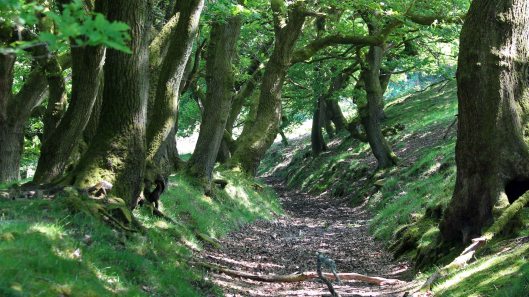
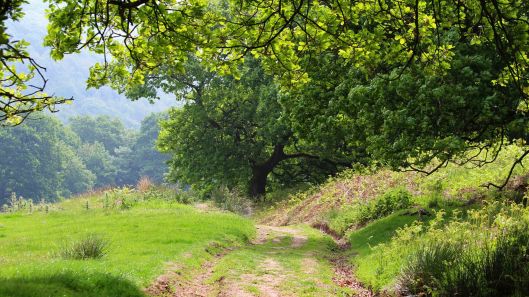
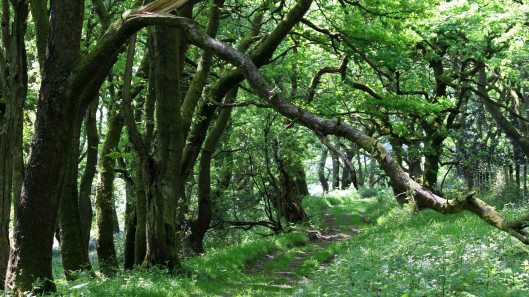
Last Wednesday I joined fourteen other members of the Glamorgan Bird Club for a day’s birding in the stunning scenery of St David’s Vale, near Abergavenny. We walked part of an ancient hollow way …

180525 St Davids Vale (4)180525 St Davids Vale (6)

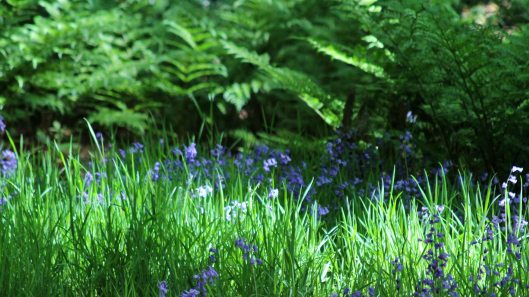
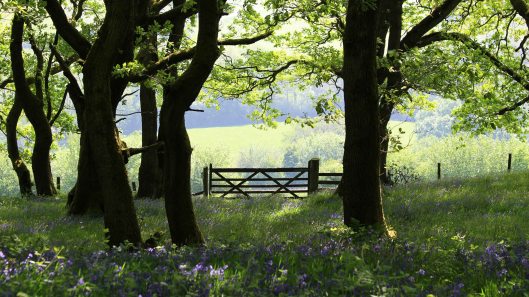
Beneath mighty oaks in an equally ancient woodland carpeted with bluebells …

180525 St Davids Vale (2)180525 St Davids Vale (3)

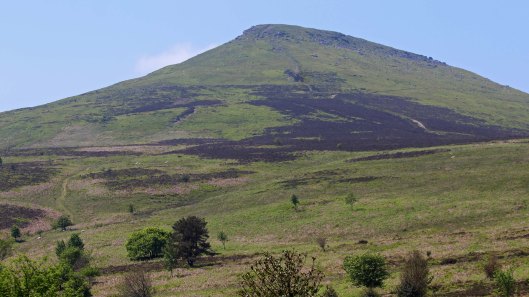
And then, as the sun broke through the low cloud that had earlier floated across the border from England, we climbed up on to the broad open moorland, with panoramic views all around and the impressive peak of Sugarloaf looming to our right.

180525 St Davids Vale (5)

Most of the birds mocked my photographic skills and no-so-long lens as they perched on distant tree tops and bushes but I was delighted to hear and then see my very first Wood warbler, and then, on the moorland, several beautiful Whinchats. And those two sightings brought my year list to – yes, you guessed it – one hundred and eighty!

180525 b willow warbler
180525 b stonechat
180525 b whinchat
180525 b tree pipit
180525 b meadow pipit
180525 b skylark

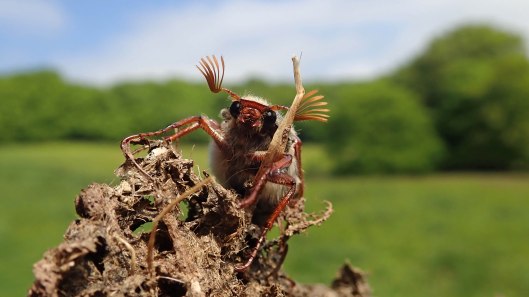
Our keen amateur naturalists also spotted a Small heath butterfly and two Common heath moths (this is the male; the female landed on my trouser leg so another birder got that picture), and a Broad-bodied chaser dragonfly. And we were entertained by the bumbling flights of several Cockchafers (I’ll cover those in a future post.)

Small heath butterfly
Common heath moth
Common heath moth
Broad-bodied chaser
Broad-bodied chaser

Cockchafer

My bird list for the today was: Mistlethrush, Robin, Goldfinch, Blackbird, Great tit, Carrion crow, Meadow pipit, Willow warbler, Swallow, Woodpigeon, Blue tit, Blackcap, Skylark, Buzzard, Chaffinch, Garden warbler, Long-tailed tit, Wood warbler, Stonechat, Raven, Tree pipit, Linnet, Whinchat, Wren, Cuckoo, House sparrow, Pied wagtail, Dunnock, Magpie and Jackdaw. It was a perfectly wonderful day!

Like Loading...

A wildflower catch-up

25 Friday May 2018

Posted by sconzani in flowers, nature, wildflowers

≈ 5 Comments

Tags

British wildflowers, Bush vetch, Common vetch, Herb Bennet, Oxeye daisy, Ragged robin, Russian comfrey, Wood avens

Time to catch up on which wildflowers are currently flowering in the waysides …

180525 Bush vetch

I often see the mottled purplish flowers of Bush vetch (Vicia sepium) in the wonderfully scruffy areas on the edges of roads and paths.

180525 Common vetch

Often accompanying its Bush cousin, the Common vetch (Vicia sativa) has a delicate pink, often single flower, very much like the popular garden plant the Sweet pea, to which it is also related.

180525 Oxeye daisy

There’s something innately cheerful about the Oxeye daisy (Leucanthemum vulgare), which also goes by the common names of Dog daisy, Horse daisy, Moon daisy and Moonpenny (I almost typed Moneypenny!).

180525 Ragged-robin

The perfectly named Ragged-Robin (Lychnis flos-cuculi) likes to have its feet in damp places so look for it in marshy areas, near drains and streams.

180525 Russian Comfrey

Given the deep purple of its flowers, I think this might be Russian comfrey (Symphytum x uplandicum), a hybrid of Common and Creeping comfrey. I found it growing well in a coastal location near where I live.

180525 Wood avens

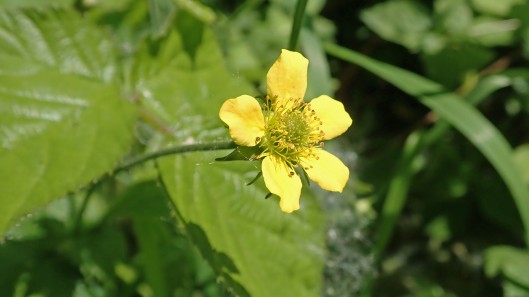
Though officially known as Wood avens (Geum urbanum) I always think of this plant as Herb Bennet, which, according to Flora Britannica, is a corruption of the medieval Latin herba benedicta, meaning the blessed herb. Its roots were widely used in herbal medicine.

Like Loading...

Razorbills

24 Thursday May 2018

Posted by sconzani in birds, nature

≈ Leave a comment

Tags

Alca torda, birding, birdwatching, British birds, Farne Islands, Razorbill, seabirds

180524 Razorbills (1)

Though it’s darker in colour, the Razorbill (Alca torda) looks, at first glance, a lot like the Guillemot but then you notice that beak, the sharpness of which is how the bird got its name. It’s a fish eater, which is why its population has been steadily declining – there just aren’t the numbers of sprats, herrings and sandeels in the ocean any more to feed these beautiful creatures.

180524 Razorbills (2)

Like the Guillemot, the Razorbill only comes ashore to breed, which is how I got to see them close up, on my recent trip to the Farne Islands.

180524 Razorbills (3)

Razorbills partner for life – I wonder how long these two have been together?

180524 Razorbills (4)180524 Razorbills (5)

Like Loading...

Wild word: mnemonic

23 Wednesday May 2018

Posted by sconzani in birds, nature

≈ 4 Comments

Tags

#WildWords, birding, birdwatching, British birds, mnemonic, mnemonic for bird song, ways to remember bird songs, wild words

Mnemonic: Noun; a system such as a pattern of letters, ideas, or associations which assists in remembering something; from the Greek mnēmonikos, from mnēmōn, meaning ‘mindful’ (Oxford Dictionary).

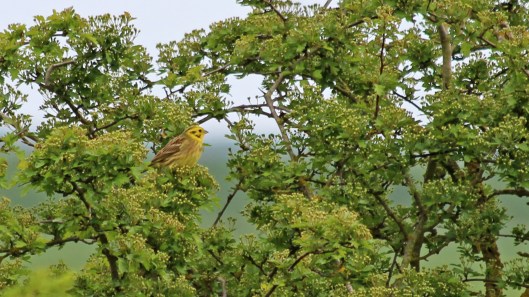
I’ve found mnemonics particularly useful when trying to remember bird songs. Apart from the very obvious sounds, where the bird is, in fact, named for its song – I’m thinking here of the Chiffchaff and the Kittiwake – there are also some well-known phrases that many birders know, like ‘a little bit of bread and no cheeeeese’ for the song of the Yellowhammer, ‘chissick’ for the Pied wagtail, and ‘teacher, teacher’ for the Great tit. Do you have any bird song mnemonics you can share?

yellowhammer

The yellowhammer: ‘a little bit of bread and no cheeeeese’

Like Loading...

The Shieldbug red-light district

22 Tuesday May 2018

Posted by sconzani in insects, nature

≈ Leave a comment

Tags

British insects, Dolycoris baccarum, Green shieldbug, Hairy shieldbug, Palomena prasina, shield bugs, shieldbug

There’s a little track I often walk down, or up, between my home and Penarth Marina, that’s not been touched by the Council’s destructive strimmers (so far), so it’s a great place to look for wildflowers and critters, and it can take me 30 minutes or more to walk its 100 metres.

OLYMPUS DIGITAL CAMERA

When I walked this way the other day, I came across this little Green shieldbug (Palomena prasina). Just look at that innocent-looking face … but don’t be fooled. It was probably the only one of maybe 30 Green shieldbugs I saw that was on its own – all the others were working on ensuring the continuation of their species.

OLYMPUS DIGITAL CAMERA

Even the Hairy shieldbugs (Dolycoris baccarum) I found (only 3 of those) were at it! Given all the bad news we hear these days about declining insect populations, I hope this means the shieldbugs are doing okay.

OLYMPUS DIGITAL CAMERA
Like Loading...

Gorgeous Guillemots

21 Monday May 2018

Posted by sconzani in birds, nature

≈ 2 Comments

Tags

birding, birdwatching, Bridled form of Guillemot, British birds, dimorphism in Guillemot, Farne Islands, Guillemot

180521 Guillemot (10)

What gorgeous birds the Guillemots are! A delicious combination of crisp white and rich chocolate brown, a smile that beams contentment, a look of gentleness despite that fierce-looking beak….

180521 Guillemot (1)180521 Guillemot (4)

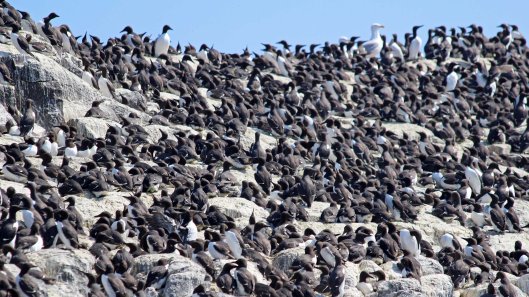
Guillemots spend most of their lives at sea, only moving on to land to breed, so May was the perfect time to see them on the Farne Islands, where they breed in their thousands each year. The densely packed breeding colonies are called loomeries.

180521 Guillemot (2)

180521 Guillemot (8)
180521 Guillemot (9)

Reciprocal grooming is part of their bonding process and was delightful to watch.

180521 Guillemot (3)

Some Guillemots have an additional white marking around their eyes, like the two you can see in this photo. These are officially known as the ‘bridled’ form, though they look like they’re wearing glasses to me. The bridling is, apparently, caused by a genetic mutation, and there seems to be a correlation with temperature – the bridled form is more common in cooler areas.

180521 Guillemot (5)

I’m not sure what was happening in the top of this photo: bouncing for joy? Jumping off the cliff? Coming in to land?

180521 Guillemot (7)
180521 Guillemot (6)

Sleepy in the sunshine. Just beautiful!

Like Loading...

Holly blues

20 Sunday May 2018

Posted by sconzani in insects, nature

≈ 5 Comments

Tags

blue butterfly, British butterflies, butterflies, Holly blue, Holly blue butterfly, Lavernock Nature Reserve

180520 Holly blue (2)

With clear blue skies and temps in the mid 20s, it was hot work chasing the Holly blue butterflies (Celastrina argiolus) around Lavernock last Monday. I think I saw five but they move so quickly along the scrub and up and over the trees that it was hard to be sure. Those fast fliers are mostly the males, I think, constantly sniffing for the female pheromones.

180520 Holly blue (1)

I know there were at least two Holly blues, as I managed to get a male and female together in one photo, and then was lucky enough to catch the female laying an egg on a Dogwood plant. Once she’d departed I carefully examined the plant but couldn’t find the egg. I think she must have tucked it well in amongst the flower buds, which I didn’t pry apart in case I damaged the newly laid egg. But I remember where it was so will try and go back in a week or so to check for a caterpillar.

180520 Holly blue (3)180520 Holly blue (5)

Holly blues are the first of Britain’s blue-coloured butterflies to emerge each year, which is one way to distinguish them from the many other blue butterflies. Another is their flight pattern – the other blues usually fly close to the ground. And the Holly blues are the only ones with small black dots on the undersides of their wings though, unless you see one perched, you’ll need to be quick to spot those dots ’cause these little beauties are speedy.

180520 Holly blue (4)

Like Loading...

Shags are surprising

19 Saturday May 2018

Posted by sconzani in birds, nature

≈ 6 Comments

Tags

birding, birdwatching, British birds, Farne Islands, Phalacrocorax aristotelis, Shag, Shag behaviour, Shag nesting

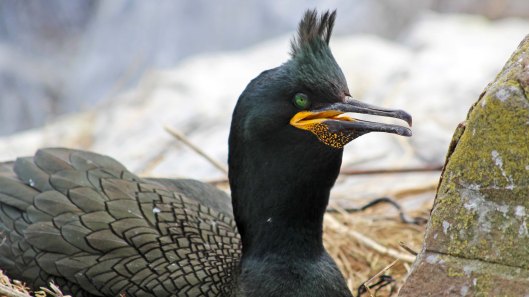
I always thought the Shag was all black, but I was wrong: its adult plumage is an intricate combination of vibrant metallic greens, browns and black, and it has beautiful patterning on its wings. As you can see, the Shag also has soulful green eyes, and, during the breeding season, the adult birds have a very punky crest on the tops of their heads, a combination which, obviously, makes them irresistible …. to other Shags.

180519 shag (1)
180519 shag (2)
180519 shag (3)
180519 shag (4)

Shags have a superb Latin name too, Phalacrocorax aristotelis, which is derived from Ancient Greek. Phalacrocorax is a combination of φαλακρός (phalakros) meaning bald and κόραξ (korax) meaning raven, and the epithet commemorates Aristotle. Did that Greek philosopher look like a bald raven, I wonder?
180519 shag (5)180519 shag (9)

Shags build their stick nests on rocks, sometimes on top of very high cliffs, and, on the Farne Islands, separated only by a rope barrier and monitored by a local ranger, we were able to get very very close to a couple of Shags that had chosen to nest right next to the path.

180519 shag (6)

One of the Shags was making odd motions with its head and puffing out its neck as if breathing heavily (I should’ve taken a video!). The ranger said this was to warn people off getting too close, and I’ve since found a paper that explains some aspects of the displays Shags make:

At the lowest intensity of stationary aggressiveness, the bird on the nest or nest-site points its bill at the object of aggression with gular pouch slightly distended, and at the same time makes slight lateral head-shakes without taking its eyes off the intruder.

180519 shag (8)

It was being close enough to observe such behaviour, as well as get a better look at the physical characteristics of the birds that made our visit to the Farnes so special for me.

180519 shag (7)

Like Loading...

Ravishing rhoddies

18 Friday May 2018

Posted by sconzani in flowers, nature, parks

≈ Leave a comment

Tags

#FloralFriday, Bute Park, language of flowers, rhoddies, rhododendron

180518 rhododendrons (1)

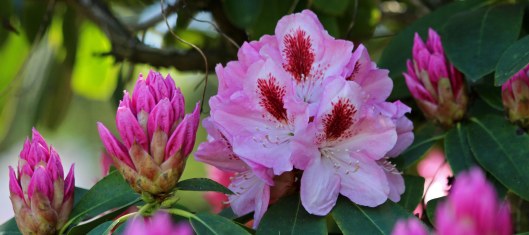
Did you know that in the Victorian era, when flowers were used to convey not-so-hidden meanings, the rhododendron symbolised danger? I really can’t imagine why, except perhaps the danger of being stung by a bee if you put your face too close to the rhoddies’ extravagant blossoms. These beautiful blooms entranced me during a wander through Cardiff’s Bute Park on Monday.

180518 rhododendrons (2)
OLYMPUS DIGITAL CAMERA
180518 rhododendrons (7)
OLYMPUS DIGITAL CAMERA
180518 rhododendrons (10)
Like Loading...
← Older posts
Newer posts →

About me

sconzani

sconzani

I'm a writer and photographer; researcher and blogger; birder and nature lover; countryside rambler and city strider; volunteer and biodiversity recorder.

View Full Profile →

Follow earthstar on WordPress.com

Enter your email address to follow this blog and receive notifications of new posts by email.

Recent blog posts

  • NFY: Orange-tip April 20, 2026
  • All the yellows April 19, 2026
  • Spider: Dysdera crocata April 18, 2026
  • Recent Reed buntings April 17, 2026
  • Tiny but feisty April 16, 2026

From the archives

COPYRIGHT

Unless otherwise acknowledged, the text and photographs on this blog are my own and are subject to international copyright. Nothing may be downloaded or copied without my permission.

Fellow Earth Stars!

  • Unknown's avatar
  • Unknown's avatar
  • Unknown's avatar
  • Unknown's avatar
  • Unknown's avatar
  • Unknown's avatar
  • Unknown's avatar
  • Unknown's avatar
  • Unknown's avatar
  • Unknown's avatar
  • Unknown's avatar
  • Unknown's avatar
  • Unknown's avatar
  • Unknown's avatar
  • Unknown's avatar
  • Unknown's avatar
  • Unknown's avatar
  • Unknown's avatar
  • Unknown's avatar
  • Unknown's avatar
  • Unknown's avatar
  • Unknown's avatar
  • Unknown's avatar
  • Unknown's avatar
  • Unknown's avatar
  • Unknown's avatar
  • Unknown's avatar
  • Unknown's avatar
  • Unknown's avatar
  • Unknown's avatar
  • Unknown's avatar
  • Unknown's avatar
  • Unknown's avatar
  • Unknown's avatar
  • Unknown's avatar
  • Unknown's avatar
  • Unknown's avatar
  • Unknown's avatar
  • Unknown's avatar
  • Unknown's avatar
  • Unknown's avatar
  • Unknown's avatar
  • Unknown's avatar
  • Unknown's avatar
  • Unknown's avatar
  • Unknown's avatar
  • Unknown's avatar
  • Unknown's avatar
  • Unknown's avatar
  • Unknown's avatar

Blog at WordPress.com.

Privacy & Cookies: This site uses cookies. By continuing to use this website, you agree to their use.
To find out more, including how to control cookies, see here: Cookie Policy
  • Subscribe Subscribed
    • earthstar
    • Join 642 other subscribers
    • Already have a WordPress.com account? Log in now.
    • earthstar
    • Subscribe Subscribed
    • Sign up
    • Log in
    • Report this content
    • View site in Reader
    • Manage subscriptions
    • Collapse this bar
 

Loading Comments...
 

You must be logged in to post a comment.

    %d