• ABOUT
  • BIRDING 2018
  • Birding 2019
  • BLOG POSTS
  • Butterflies 2018
  • Resources

earthstar

~ a celebration of nature

earthstar

Category Archives: plants

Box tree moth

14 Thursday Sep 2023

Posted by sconzani in insects, plants

≈ Leave a comment

Tags

Box sp, Box tree moth, British moths, Buxus sp, Cydalima perspectalis

The gardeners amongst you will not welcome the sight of this moth in your vicinity, at least not if you grow any species of Box (Buxus) in your garden, as its larvae eat the leaves of Box and cover the plant in a webbing like thick cobweb. This is the appropriately named Box tree moth (Cydalima perspectalis), a native of east Asia that established itself in Europe and hopped across the Channel to Britain in 2007. From the Aderyn biodiversity records database, the first Welsh sightings were recorded in 2016 and, in the seven years since then, a further 260 records have been added to the database, with most sightings along the coast of south Wales and a smattering across the top of north Wales.

Like Loading...

Theme: #seedheads

10 Sunday Sep 2023

Posted by sconzani in flowers, plants, wildflowers

≈ 2 Comments

Tags

#seedheads, #WildflowerHour, British wildflowers, seed heads

As mentioned in yesterday’s post, the challenge for this evening’s #WildflowerHour on social media is #seedheads.

230910 seedheads (1)

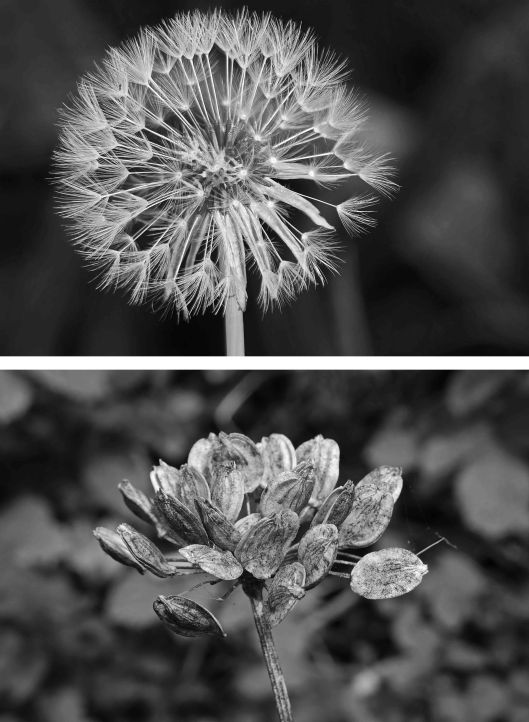
This is a topic I’ve posted about on here many times previously because I admire and enjoy photographing the sculptural aspects and diversity of floral seed heads.

230910 seedheads (3)

Some seeds, those with silken, feathery or fluffy attachments, have obviously been designed to be caught and distributed by the wind; others, with tiny hooks or burrs, to be caught on the fur or fabric of passers-by and transported with them to new destinations.

230910 seedheads (2)

This week I’ve pared back my photos, turning to black and white and trying to simplify the backgrounds in order to emphasise the shapes and designs of these remarkable seed heads.

230910 seedheads (4)

Like Loading...

Photobombing sparrows

09 Saturday Sep 2023

Posted by sconzani in birds, plants, wildflowers

≈ Leave a comment

Tags

birding, birdwatching, British birds, house sparrow, seed heads, sparrow eating seeds, wildflower seed heads

I was about to take some photos of the seed heads of this plant for tomorrow’s Wildflower Hour on social media (theme: #seedheads), when a gang of House sparrows flew in and started to eat the seeds from those seed heads, so they became the subjects of my photos instead.

230909 house sparrow

Like Loading...

Stinking Roger

03 Sunday Sep 2023

Posted by sconzani in plants, wildflowers

≈ Leave a comment

Tags

Black horehound, Stinking Roger

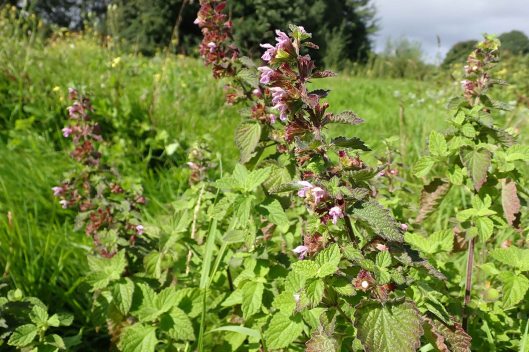
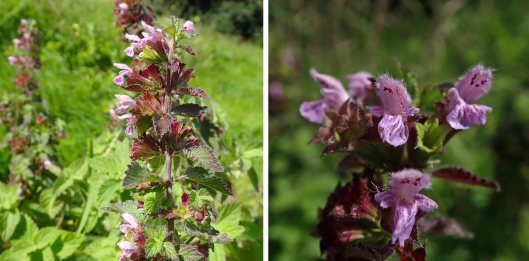
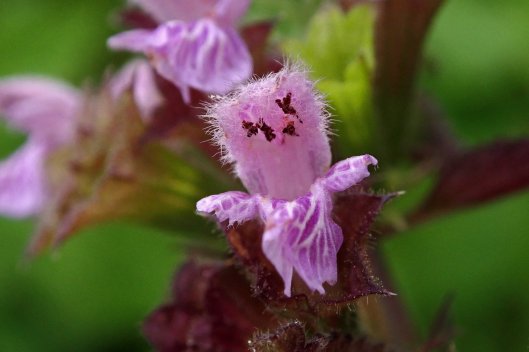
This new wildflower comes courtesy of a local birding pal who also likes to botanise. This is Black horehound (Ballota nigra), which my Flora Britannica says is also known as Stinking Roger. It doesn’t explain where the name Roger comes from but I can understand the ‘stinking’ – I rubbed the leaves and was left with a nasty pong on my fingers.

230903 black horehound (1)

Interestingly, when I googled ‘Stinking Roger’, I found that name applied to several different plants all around the world. Roger obviously has a reputation! Also, an entry in the Merriam-Webster online dictionary gave three other vernacular names: Black archangel, Fetid horehound, and Stinking horehound.

230903 black horehound (2)

Despite its smell, Black horehound is a pretty enough perennial, a frequenter of path edges and waste ground, with lovely pinkish flowers arranged in whorls around the stem.

230903 black horehound (3)

Like Loading...

By the sea

20 Sunday Aug 2023

Posted by sconzani in plants, seaside, wildflowers

≈ Leave a comment

Tags

#WildflowerHour, British wildflowers, Echium vulgare, seaside wildflowers, Silene latifolia, Tanacetum vulgare, Tansy, Teucrium scorodonia, Viper's-bugloss, White campion, Wood sage

This week’s challenge for #WildflowerHour was ‘What can you find blooming along the coast?’. I’ve had a couple of walks around parts of Cardiff Bay this week and could’ve included a lot of plants but have selected just four.

230820 vipers-bugloss

As Cardiff Council has (amazingly!) refrained from cutting the Barrage grass in recent months, the few Viper’s-bugloss (Echium vulgare) plants that were previously growing there have increased markedly. There must be over 50 plants now spread across the expanse of the Barrage, and the blue flowers make a lovely contrast against the grass green.

230820 tansy

I rarely see Tansy (Tanacetum vulgare), so this single plant, thriving on the sandy slope below the children’s playground on the Barrage, was a delightful surprise.

230820 white campion

Growing just along from that Tansy plant, was this lone White campion (Silene latifolia) plant. It wasn’t looking as healthy as the Tansy but was covered in seed heads so I think it was just past its best.

230820 wood sage

This Wood sage (Teucrium scorodonia) was a total surprise as you wouldn’t necessarily expect a plant with ‘wood’ in its name to be growing alongside a seaside path. My book says it prefers acid soils but, when I googled, I found many examples of Wood sage growing on scree slopes, amongst limestone, and close to sand dunes, so I guess it’s very adaptable.

Like Loading...

The mystery of the white thistles

16 Wednesday Aug 2023

Posted by sconzani in plants, wildflowers

≈ Leave a comment

Tags

bacteria on Creeping thistle, Creeping thistle, Pseudomonas syringae, white shoots on Creeping thistle

I’ve noticed in previous years that the top shoots of many Creeping Thistle plants (Cirsium arvense) sometimes turn white at this time of year and I’ve only recently found out that this is caused by Pseudomonas syringae, a bacteria that produces a chemical called tagetitoxin, which poison chloroplasts and causes chlorosis.

230816 white thistle (1)

There’s an excellent article on the Llanelli Naturalists website, entitled ‘The Mystery of the “White” Thistles’, which includes the following explanatory paragraph (nb this article was uploaded in January 2009 so the situation has probably changed since it was written).

This bacterial disease was recorded in the UK for the first time by a retired plant pathologist, Dr John Fletcher, in the vicinity of his home in Canterbury, Kent, only six years ago. The bacterium causing the disease is now thought to be a pathological variety of Pseudomonas syringiae – a complex of bacterial types that affects over 180 species of fruit, vegetable, forage and horticultural plants. The infection on creeping thistle was found for the first time in Canada in 2003. Scientists from Alberta (Zhang et al, 2004) recorded the disease at several locations across Canada and have named it the “White‐colour disease of Canadian Thistle”. Their diseased plants showed apical chlorosis and these symptoms were associated with stunted growth, fewer shoots, inhibition of flowering and/or sterility. These are exactly the same symptoms found on the local populations of Creeping Thistle at Burry Port.

230816 white thistle (2)

Like Loading...

Nettle groundbugs

07 Monday Aug 2023

Posted by sconzani in insects, plants

≈ 2 Comments

Tags

British bugs, bugs on nettle, Heterogaster urticae, insects on nettle, Nettle groundbug

Considering how much nettle I see, I’m amazed I’d never seen a Nettle groundbug (Heterogaster urticae) before last Thursday, when I saw heaps, at various stages of growth between egg and adult, all out sunbathing in little groups on nettle leaves. And there are only 114 records in the Welsh database of flora and fauna, which also surprised me.

230807 nettle groundbugs (1)

They’re actually very attractive little bugs, rather hairy, with quite diverse markings in their different instars. The British Bugs website reports that they overwinter as adults so, in theory, we should be able to see them all year round. The website also says that, when they mate, the male and female ‘may remain coupled together for several days’ – nothing like making sure they’ve succeeded, I guess.

230807 nettle groundbugs (2)

Sorry my pics aren’t the sharpest – the bugs were moving around a bit – but I wanted to show as many instars as possible.

Like Loading...

Carrot mining bee

05 Saturday Aug 2023

Posted by sconzani in insects, plants, wildflowers

≈ Leave a comment

Tags

Andrena nitidiuscula, bees on Wild carrot, British mining bees, Carrot mining bee, Cosmeston Lakes Country Park, Daucus carota, Lavernock Nature Reserve, Wild carrot

In August 2020, local entomologist Liam Olds made the amazing discovery of the first Carrot mining bees (Andrena nitidiuscula) for Wales at Lavernock Nature Reserve, and Liam later went on to find a population of the bees at nearby Cosmeston Lakes Country Park. Despite these parks both being relatively near where I live, it’s taken me three years to find my own Carrot mining bee, at Cosmeston on Thursday.

230805 Carrot mining bee (1)

As you might have guessed from the bee’s name, it can usually be found collecting pollen from the flowers of Wild carrot (Daucus carota). And therein lies one of the problem’s for this bee’s future, the preservation of the right habitat to ensure the bee’s conservation. Earlier this year, despite protests against what was happening, the Vale of Glamorgan Council, which operates Cosmeston, went ahead with planting trees across large areas of a wildflower meadow where the bee had previously been found by Liam Olds. Yes, the planet needs more trees, but those trees need to be planted in the right place. When they’re not, they risk destroying important local flora and fauna. Let’s hope the Carrot mining bee can survive the local council’s actions!

230805 Carrot mining bee (2)

Like Loading...

Jersey cudweed

30 Sunday Jul 2023

Posted by sconzani in plants, wildflowers

≈ Leave a comment

Tags

British wildflowers, Gnaphalium luteoalbum, Jersey cudweed

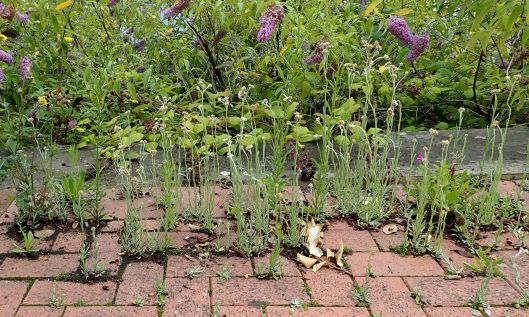
A year ago, one of my local birding acquaintances, who is also a keen botanist, discovered a small area of Jersey cudweed (Gnaphalium luteoalbum) growing along the edge of the Cardiff Bay walking and cycling trail. Though he quickly reported his find to Cardiff Council in an attempt to protect it, their contractors soon obliterated the plants in a typical ‘kill the weeds’ operation. So, I didn’t get to see this new plant then but I made myself a note to check back in a year’s time, which I did, last week, and was very pleased to see the plants have reappeared.

230730 jersey cudweed (1)

The NatureSpot website notes that Jersey cudweed is likely to have been ‘an ancient introduction’ to Britain that then ‘became almost extinct’ but is now bouncing back (despite the anti-weed brigade!). And, though traditionally a plant of sandy fields and dune slacks, it is now adapting to life as a pavement plant in our towns and cities.

230730 jersey cudweed (2)

Like Loading...

The cycle goes round and round

14 Friday Jul 2023

Posted by sconzani in insects, plants

≈ Leave a comment

Tags

beetle eggs, beetle larvae, beetles on dock plants, dock beetles, dock plant, Green dock beetle

All that’s missing from this illustration of the life cycle of the Dock beetle is the pupation stage but I’m not going to disturb their underground pupae to show you that. Though common, I still find them fascinating and, because they’re common, they’re a good insect to show children how a beetle’s life cycle functions.

230714 dock beetle life cycle

n.b. There may be an extra insect in the photo of the larvae. I suspect those tiny white dots might be hoverfly eggs, as the larvae of some species enjoying feasting on various leaf beetle eggs and larvae. I’ll be doing more leaf-turning to check.

Like Loading...
← Older posts
Newer posts →

About me

sconzani

sconzani

I'm a writer and photographer; researcher and blogger; birder and nature lover; countryside rambler and city strider; volunteer and biodiversity recorder.

View Full Profile →

Follow earthstar on WordPress.com

Enter your email address to follow this blog and receive notifications of new posts by email.

Recent blog posts

  • Busy Blue tits March 17, 2026
  • Cuttlebones March 16, 2026
  • No woodland here March 15, 2026
  • Family comes first March 14, 2026
  • Local Little egrets March 13, 2026

From the archives

COPYRIGHT

Unless otherwise acknowledged, the text and photographs on this blog are my own and are subject to international copyright. Nothing may be downloaded or copied without my permission.

Fellow Earth Stars!

  • Unknown's avatar
  • Unknown's avatar
  • Unknown's avatar
  • Unknown's avatar
  • Unknown's avatar
  • Unknown's avatar
  • Unknown's avatar
  • Unknown's avatar
  • Unknown's avatar
  • Unknown's avatar
  • Unknown's avatar
  • Unknown's avatar
  • Unknown's avatar
  • Unknown's avatar
  • Unknown's avatar
  • Unknown's avatar
  • Unknown's avatar
  • Unknown's avatar
  • Unknown's avatar
  • Unknown's avatar
  • Unknown's avatar
  • Unknown's avatar
  • Unknown's avatar
  • Unknown's avatar
  • Unknown's avatar
  • Unknown's avatar
  • Unknown's avatar
  • Unknown's avatar
  • Unknown's avatar
  • Unknown's avatar
  • Unknown's avatar
  • Unknown's avatar
  • Unknown's avatar
  • Unknown's avatar
  • Unknown's avatar
  • Unknown's avatar
  • Unknown's avatar
  • Unknown's avatar
  • Unknown's avatar
  • Unknown's avatar
  • Unknown's avatar
  • Unknown's avatar
  • Unknown's avatar
  • Unknown's avatar
  • Unknown's avatar
  • Unknown's avatar
  • Unknown's avatar
  • Unknown's avatar
  • Unknown's avatar
  • Unknown's avatar

Blog at WordPress.com.

Privacy & Cookies: This site uses cookies. By continuing to use this website, you agree to their use.
To find out more, including how to control cookies, see here: Cookie Policy
  • Subscribe Subscribed
    • earthstar
    • Join 668 other subscribers
    • Already have a WordPress.com account? Log in now.
    • earthstar
    • Subscribe Subscribed
    • Sign up
    • Log in
    • Report this content
    • View site in Reader
    • Manage subscriptions
    • Collapse this bar
 

Loading Comments...
 

You must be logged in to post a comment.

    %d