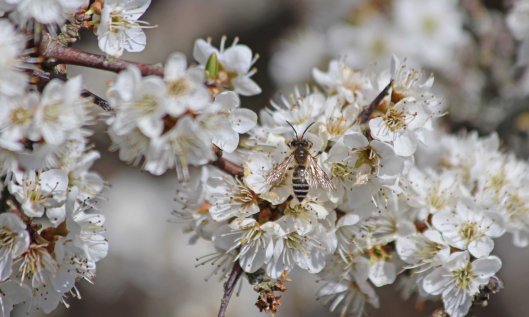
The Blackthorn is buzzing
23 Friday Apr 2021
23 Friday Apr 2021
18 Sunday Apr 2021
Posted in spring, trees, walks, wildflowers
Tags
Bluebells, British wildflowers, Herb-Paris, Lesser Celandine, Moschatel, Opposite-leaved golden saxifrage, Spring colour, spring wildflowers, Wild garlic, Wood anemone, woodland wildflowers
I thought for this week’s Sunday wildflower post, I’d take you on a walk through parts of my local woodlands to show you some of the gorgeous plants a’blooming there at the moment. There are other wildflowers too, of course – Primroses, Violets, Dog’s-mercury, etc – but my video features Wild garlic, Opposite-leaved golden saxifrage, Wood anemone, Herb-paris, Lesser celandine, Moschatel and Bluebells.
06 Tuesday Apr 2021
Tags
British trees, bud burst, Field maple, Field maple bud burst, Field maple leaf burst, leaf burst
Field maple leaves are now bursting out wherever I walk, and they speak truth to the old saying that ‘good things come in small packages’. The tiny buds are exquisitely fashioned, covered in a soft furry outer skin that splits open to reveal the sculptural beauty of the prominent lime-green veins and much-folded pinkish-red blade.
28 Sunday Mar 2021
22 Monday Mar 2021
At this time of year the ornamental cherry tree outside my flat is awash with blossom, of a warm white shade flushed with the merest tinge of pink.

It looks glorious, especially on sunny days, and, at a time when there are few flowers in bloom, it’s a magnet for newly emerging, hungry insects of the flying kind.

Yesterday, as well as a few Honey bees, I spotted half a dozen, all Buff-tailed, bumblebees doddering from one flower to the next, before lurching haphazardly to the next branch, dislodging the delicate petals as they passed.

12 Friday Mar 2021
Tags
blackthorn, bracket fungi, British fungi, fungi on Blackthorn, Phellinus pomaceus, Prunus spinosa
Though I haven’t been able to verify its identification, I’m fairly sure today’s fungus is Phellinus pomaceus.

It’s a hard, woody bracket fungus that grows on Prunus tree species – in this case, it’s growing on Blackthorn (Prunus spinosa).
The NBN (National Biodiversity Network Trust) Atlas entry for this species (which also includes a map showing where in Britain the fungus has been recorded) says ‘It is not aggressively pathogenic but can cause considerable decay in trees suffering from other stress factors’, so you wouldn’t want to find it in a commercial fruit orchard. In my case, the fungi were only showing on two adjacent trees in a large copse of Blackthorn, and the trees looked quite elderly, so I don’t think it’s causing a problem.
11 Thursday Mar 2021
I don’t often take landscape photos these days but the combination of sunny spring weather, fabulous trees, and what looked to my inexpert eye as good land management, plus the colours and leading lines, prompted me to start clicking during a recent walk.

This piece of countryside, about an hour’s walk from home, is a combination of farm and woodland. Perhaps a hedgerow would be better than a fence alongside this field (happily, there are a lot of hedgerows in this area) but at least there’s a wide area of ‘set aside’ where, hopefully, wildflowers will be allowed to grow. And there are some magnificent towering old trees in the surrounding landscape, to which my photos really do not do justice.

08 Monday Mar 2021
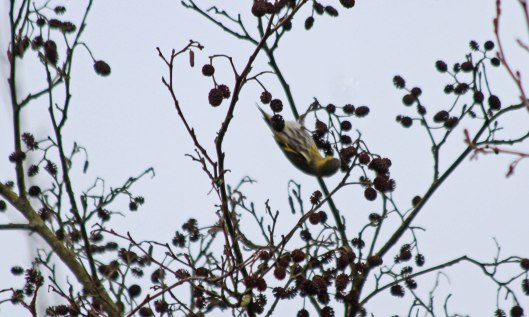
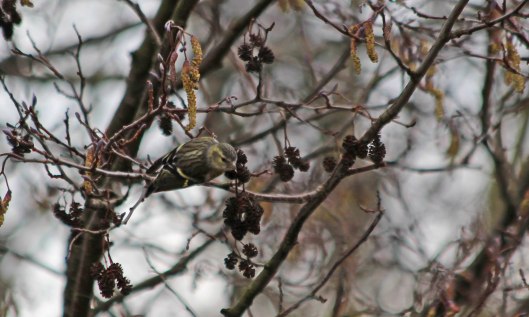
In yesterday’s post I mentioned the birds I’ve been seeing recently in Alder trees, in particular the Alder-cone-seed-nibbling Siskins.


At Cosmeston Lakes Country Park, in the Cwm George woodland behind Dinas Powys, at Grangemoor Park and, yesterday, at Hamadryad Park – this year the Siskins seem to be everywhere there are Alders, nibbling on seeds, squabbling with Goldfinches, hanging upside down from slender stems … it’s been a joy to watch their antics.


07 Sunday Mar 2021
Tags
Alder, Alder catkins, Alder cones, Alnus glutinosa, British trees, catkins, female Alder flowers, male Alder flowers
I’m off on a flower tangent this week. With no new wildflowers to add to last week’s collection and because I’ve been seeing lots of nice birds (especially Siskin) in Alder trees this week, I thought I’d focus on Alder for my Sunday flower post.
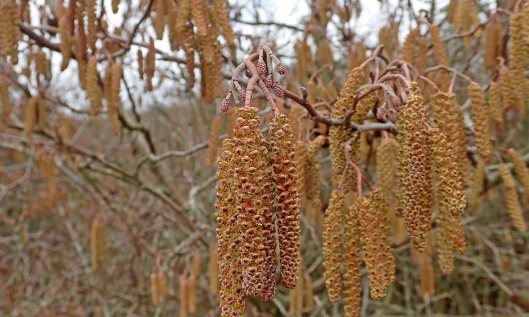
As the Alder (Alnus glutinosa) is monoecious, you can find both the male and female flowers on the same tree. I’ve frequently noticed the male flowers (commonly known as catkins), as they’re the most obvious and are very similar to Hazel catkins. Give them a flick at this time of year and you’re sure to see a shower of yellow ‘dust’ released into the air: that’s the pollen.
However, I hadn’t really paid any attention to the female flowers before and, I admit, I hadn’t really made the connection between the female flowers and the little woody cones they grow in to once fertilised. The female flowers are much smaller and found in little bunches on the stem, usually above the male catkins.
Interestingly, the Woodland Trust website says that ‘The green dye from the flowers was used to colour and camouflage the clothes of outlaws like Robin Hood, and was thought to also colour the clothes of fairies.’ And, of course, in the winter months the seeds from the cones provide essential nourishment to the Siskin, the Goldfinch and the Redpoll. What a bountiful tree the Alder is!


24 Wednesday Feb 2021
You must be logged in to post a comment.