• ABOUT
  • BIRDING 2018
  • Birding 2019
  • BLOG POSTS
  • Butterflies 2018
  • Resources

earthstar

~ a celebration of nature

earthstar

Category Archives: trees

326/366 Leaf mines: on Beech

21 Saturday Nov 2020

Posted by sconzani in autumn, insects, leaves, trees

≈ Leave a comment

Tags

beech, leaf mines on Beech, moth larvae in leaf mines, moth leafmines, Parornix fagivora, Phyllonorycter maestingella, Phyllonorycter messaniella, Stigmella hemargyrella, Stigmella tityrella

Five species of Lepidoptera larvae can be found in the leaves of Beech (Fagus species) and, with a lot of searching, much head-scratching, some rejections, and the much appreciated assistance of our county moth recorder Dave, I’ve now found and positively identified all five in my local area.

201121 beech (1)
201121 beech (2)

Stigmella tityrella: This moth’s larval leaf mines featured in last week’s post about green islands. The gallery (like a corridor) mine is usually compact and angular and, in particular, the larva stays between the veins when creating its mine – that is the feature I find helps most with its identification. As you can see from the two mines below, the galleries are very narrow to begin with, then broaden as the larvae grow.
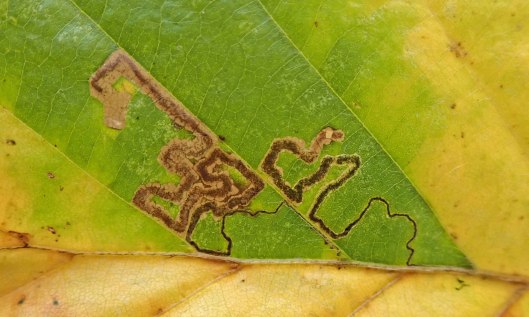
OLYMPUS DIGITAL CAMERA

Stigmella hemargyrella: These larvae also create a gallery mine, but the mine is most often wider and longer than that of S. tityrella, and the larvae have no issue with crossing over the leaf veins.

201121 Stigmella hemargyrella (1)
201121 Stigmella hemargyrella (2)

Parornix fagivora: This is the mine I’ve found least in my local area, though I’m not sure if that’s a reflection on the moth’s rarity or my finding skills. Look for a blister, where the larva lives at first, and then a folded leaf edge, which it inhabits a bit like a cave.

201121 Parornix fagivora (1)
201121 Parornix fagivora (2)

Phyllonorycter messaniella: Both Phyllonorycter species on Beech create blisters; this one is usually an oval shape, almost rectangular, and quite broad. I’ve found the upper side of the leaf can be almost featureless but the blister on the underside is quite obvious so, if recording these, it’s best to include a photo of both sides of the leaf.

201121 Phyllonorycter messaniella (1)
201121 Phyllonorycter messaniella (2)
201121 Phyllonorycter messaniella (4)
201121 Phyllonorycter messaniella (3)

Phyllonorycter maestingella: This blister mine is long and quite narrow, and often placed between leaf veins. By spinning silk, the larva draws the leaf together to create a cosy tunnel, which looks a bit like a crease on the upper side of the leaf.
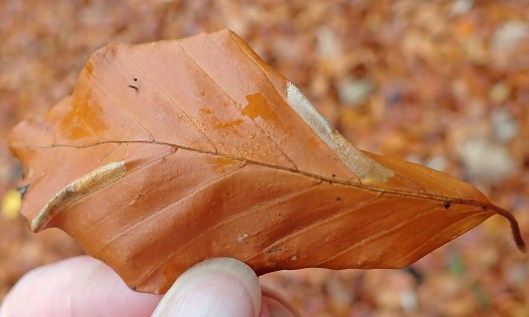
201121 Phyllonorycter maestingella (1)

201121 Phyllonorycter maestingella (2)
201121 Phyllonorycter maestingella (3)

I’ve attached to each of the moths’ names a link to the species description on the British Leafminers website, which is an excellent resource for anyone wanting to learn more.

Like Loading...

316/366 Green islands

11 Wednesday Nov 2020

Posted by sconzani in autumn, insects, trees

≈ 3 Comments

Tags

beech, gall causing midge, galls on Beech, green islands, green islands on Beech leaves, Hartigiola annulipes, leaf mines, leaf mines on Beech, Stigmella tityrella

It’s late autumn, nearly winter, and, as you would expect, the leaves on this Beech tree have all now changed from vivid summer green to autumn brown … or have they? If you look more closely at this image, you’ll notice that some of the leaves have what entomologists, moth-ers and others in the know call ‘green islands’.

201111 green islands on beech

Butterfly Conservation’s Associate Director of Recording and Monitoring Richard Fox explained the reason for this most succinctly in a recent post on Twitter: ‘Thanks to Wolbachia bacteria in its body, the caterpillar uses cytokinin to maintain a green island of plant tissue in which it can feed in autumn.’

201111 green island stigmella tityrella (2)
201111 green island stigmella tityrella (1)

Fox was referring to leaf-mining moth caterpillars, like the Stigmella tityrella moth larvae that produced the mines in the leaves shown above, but other insects also manipulate the physiology of leaves so they can continue feeding. Another example from the same Beech tree can be seen below – here the larvae of the gall-inducing midge Hartigiola annulipes have also caused green islands to form in the leaves.

201111 Hartigiola annulipes green islands (1)

If you want to read more on the science behind this process, I found a paper entitled ‘Plant green-island phenotype induced by leaf-miners is mediated by bacterial symbionts‘, on the Royal Society website.

Like Loading...

314/366 Leaf mines: Parornix anglicella

09 Monday Nov 2020

Posted by sconzani in autumn, insects, leaves, trees

≈ Leave a comment

Tags

British moths, Hawthorn, leaf mines, leaf mines on Hawthorn, moth larvae in leaf mines, moth leafmines, Parornix anglicella

Here’s another leaf mine to look for in your local hedgerows, a very distinctive mine on Hawthorn (Crataegus sp.) made by the larvae of the micro moth Parornix anglicella, also known as the Hawthorn slender.

201109 parornix anglicella cones (1)

Although the newly hatched moth larva initially creates a corridor mine and then a blotch, it later makes itself a cone-shaped tent, using silk to adhere the bent-over edge to the main part of the leaf, and these cones are very easy to spot. Turn over the leaf to view the underside and you’ll find incredibly beautiful, almost sculptural structures, some resembling miniature latticework pyramids.

201109 parornix anglicella cones (2)
201109 parornix anglicella cones (3)
201109 parornix anglicella cones (4)
201109 parornix anglicella cones (5)

You can read more scientific detail about the leaf mine on the UK Fly Mines website here, and see what the adult moth looks like on the UK Moths website here.
201109 parornix anglicella cones (6)

Like Loading...

310/366 Geography in a leaf

05 Thursday Nov 2020

Posted by sconzani in autumn, leaves, trees

≈ Leave a comment

Tags

autumn colour, autumn leaves, Oak leaf

This Oak leaf looks to me like a lesson in geography, maybe a topographical map or perhaps a close view of the earth from a satellite, where the veins are rivers, the green the agricultural fields nurtured by their water, the brown the dry uplands.

Like Loading...

302/366 Gone galling, again

28 Wednesday Oct 2020

Posted by sconzani in autumn, insects, leaves, trees

≈ 1 Comment

Tags

Aceria macrochela, gall mites, gall-causing mites, galls, galls on Field maple, galls on Spindle, mite galls, Stenacis euonymi

October is a good month to check out life on leaves (and I’ll be writing some posts about the various leaf mines I’ve been finding) but today I want to show you a couple of gall species that are new to me. The first is quite common and easy to find, the second perhaps less so.
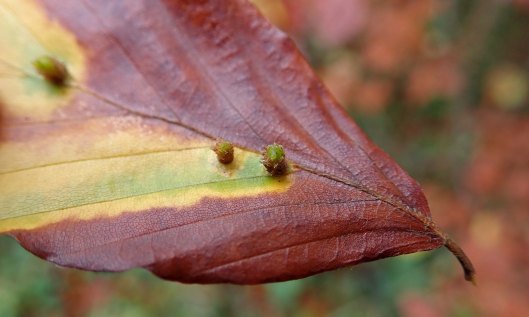
The first species is Aceria macrochela, a microscopic mite that spends its larval life in these tiny bumps on the leaves of Field maple (Acer campestre). You can read more about them and see more images on the mighty Nature Spot website.

201028 Aceria macrochela (1)
201028 Aceria macrochela (2)
201028 Aceria macrochela (3)
201028 Aceria macrochela (4)

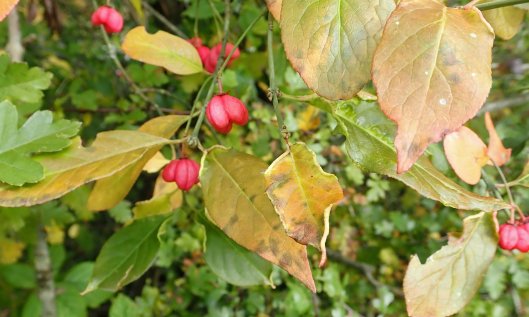
And the second is also a mite, this one called Stenacis euonymi, whose larvae make their homes in the rolled-up edges of leaves on Spindle (Euonymus europaeus). If you have trouble with tree identification, as I often do, this is a good time to look for these as the gloriously obvious fruit of the Spindle are easy to spot.

201028 Stenacis euonymi (1)

Looking on the NBN (Nature Biodiversity Network) Atlas I see there are currently only 112 UK records for this species (113 including mine, which doesn’t show yet) but that’s probably due to it being under-recorded, so if you spot these, please do record your sighting.

201028 Stenacis euonymi (2)
201028 Stenacis euonymi (3)
Like Loading...

293/366 Stigmella aceris

19 Monday Oct 2020

Posted by sconzani in autumn, insects, leaves, trees

≈ 5 Comments

Tags

British moths, Field maple, leaf mines on maple, leaf-mining moth larvae, leafminer, Norway maple, Scarce Maple pigmy, Stigmella aceris

I’ve been hunting for leaf mines in recent days, the mines made by the larvae of the micro moth Stigmella aceris, which can be found at this time of year on the leaves of Norway and Field maples. Unfortunately, I haven’t made any finds of my own but my Twitter pal Gareth had the honour of finding the first mines in the Vale of Glamorgan last week so I went and checked out his find site to get a look at the mines for myself.

201019 leafmine (1)

According to the UK Moths website, this moth was classified as rare until 40 years ago, when it began increasing its range ‘dramatically’. It can now be found throughout central and southern England, and also in south Wales – it was found for the first time in Cardiff in November 2019.

201019 leafmine (2)

I’ve never seen the adult moth, which has the common name of Scarce maple pigmy – and probably never will – but you can see a photo of it on the British Lepidoptera weebly site here.

201019 leafmine (3)
201019 leafmine (4)

And now I’m heading out to check more Maple trees before their leaves all fall and turn to mush …

201019 leafmine (5)

Like Loading...

289/366 Spectacular Spindle

15 Thursday Oct 2020

Posted by sconzani in autumn, plants, trees

≈ Leave a comment

Tags

autumn colour, autumn fruit, British trees, Euonymus europaeus, fruit, Spindle

Spectacular. Flamboyant. Ostentatious. Garish. There are so many adjectives you could use to describe the fruit of the Spindle tree (Euonymus europaeus). If I had a garden, this is one tree I would definitely plant in it, for the fruit alone.

201015 spindle

Like Loading...

272/366 Walking with the trees

28 Monday Sep 2020

Posted by sconzani in autumn, trees, walks

≈ Leave a comment

Tags

autumn trees, trees

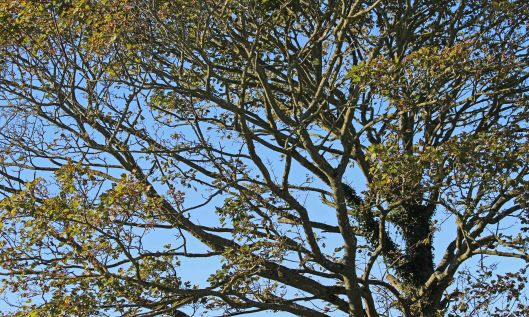
‘Today I have grown taller from walking with the trees’
~ from the poem ‘Good Company’ by Karle Wilson Baker (1878-1960)

200928 trees (1)200928 trees (2)200928 trees (3)200928 trees (4)

Like Loading...

271/366 Tooty fruity

27 Sunday Sep 2020

Posted by sconzani in autumn, trees

≈ Leave a comment

Tags

autumn berries, autumn colour, autumn fruit, berries, fruit, hips

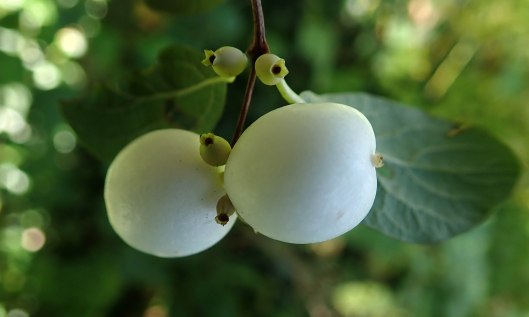
‘Autumn is the mellower season, and what we lose in flowers we more than gain in fruits.’
~ Samuel Butler, The Way of All Flesh, 1912.

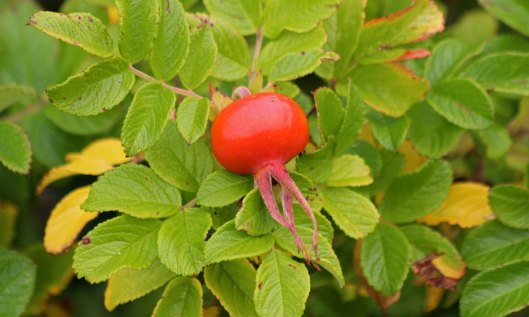
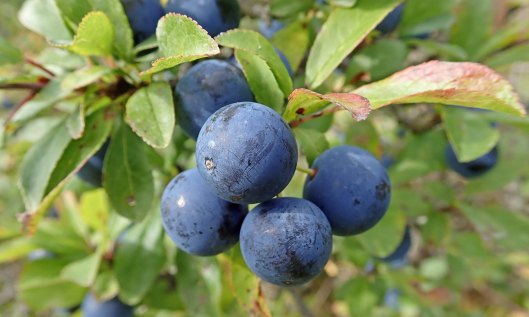
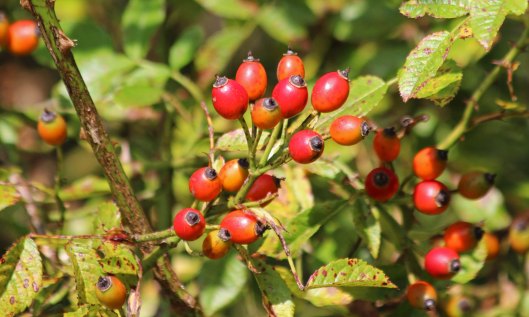
200927 1 cotoneaster200927 2 snowberry200927 3 spindle200927 4 hawthorn200927 5 japanese rose200927 6 sloe200927 7 guelder rose200927 8 dog rose

Like Loading...

268/366 Gone galling

24 Thursday Sep 2020

Posted by sconzani in insects, trees

≈ Leave a comment

Tags

Common spangle gall, gall wasps, galls on oak trees, Knopper gall, Marble galls, oak galls, Oyster gall, Silk button galls, Smooth spangle galls

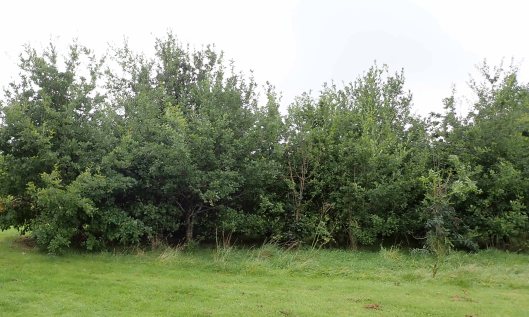
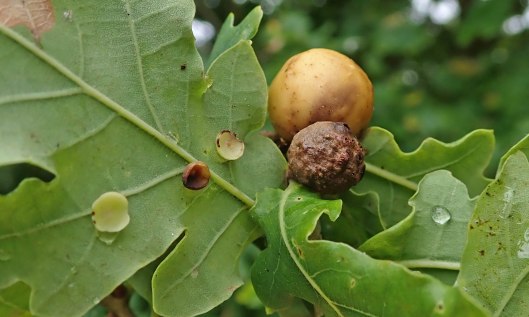
I wanted a relatively short walk between rain showers so headed to a small local green belt where Oak saplings were planted a few years ago, and my wander turned into a challenge to see how many different types of gall I could find in just this one small copse of young Oaks. The answer? Six!

200924 oak galls (1)

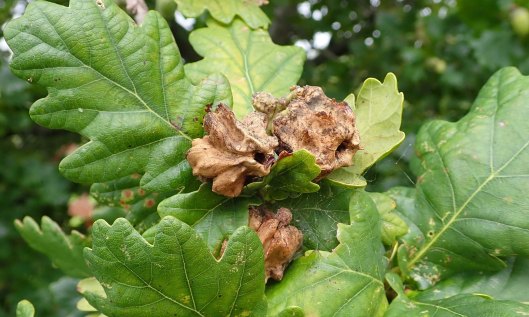
First up, Knopper galls, caused by the wasp Andriscus quercuscalicis. For more on that gall, see my August 2017 post Oak galls: knoppers and artichokes.

200924 oak galls (2) knopper

Next, Marbles, which I covered in Oak galls: marbles and apples, August 2017.

200924 oak galls (3) marble

Then, I found some Common spangles (below left), caused by the wasp Neuroterus quercusbaccarum. More on that mouthful in Oak galls: currants and spangles, August 2017.

200924 oak galls (4a) common spangle
200924 oak galls (4b) smooth spangle

You may have noticed my photo of Marble galls also had something else on the leaves. These were Smooth spangles (above right), a product of the wasp Neuroterus albipes.

200924 oak galls (5a) oyster
200924 oak galls (5b) oyster

I covered both Smooth spangles and this next gall, the Oyster, in the same blog: Oak galls: spangles and oysters, September 2017. The photo on the left above shows Oysters just beginning to form on the spine of the leaf; the one on the right shows two more developed examples, both on the same tree.

200924 oak galls (6) silk button

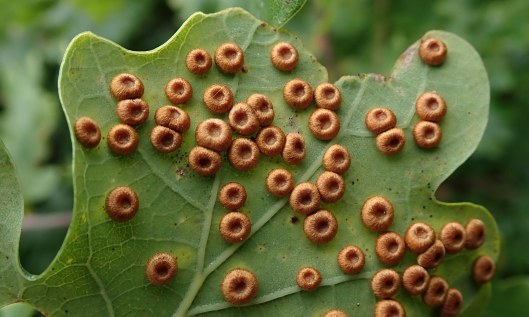
And, last but most certainly not least, as there were thousands of these on all the Oak trees I looked at, Silk button galls, caused by the wasp Neuroterus numismalis. I wrote about those in Oak galls: ram’s-horns and silk buttons, September 2017.

Not a bad haul for an hour turning over leaves and peering amongst branches. I didn’t find examples of all the Oak galls I’ve found before but I was very happy with this sampling.

Like Loading...
← Older posts
Newer posts →

About me

sconzani

sconzani

I'm a writer and photographer; researcher and blogger; birder and nature lover; countryside rambler and city strider; volunteer and biodiversity recorder.

View Full Profile →

Follow earthstar on WordPress.com

Enter your email address to follow this blog and receive notifications of new posts by email.

Recent blog posts

  • A huddle of 7-spots March 18, 2026
  • Busy Blue tits March 17, 2026
  • Cuttlebones March 16, 2026
  • No woodland here March 15, 2026
  • Family comes first March 14, 2026

From the archives

COPYRIGHT

Unless otherwise acknowledged, the text and photographs on this blog are my own and are subject to international copyright. Nothing may be downloaded or copied without my permission.

Fellow Earth Stars!

  • Unknown's avatar
  • Unknown's avatar
  • Unknown's avatar
  • Unknown's avatar
  • Unknown's avatar
  • Unknown's avatar
  • Unknown's avatar
  • Unknown's avatar
  • Unknown's avatar
  • Unknown's avatar
  • Unknown's avatar
  • Unknown's avatar
  • Unknown's avatar
  • Unknown's avatar
  • Unknown's avatar
  • Unknown's avatar
  • Unknown's avatar
  • Unknown's avatar
  • Unknown's avatar
  • Unknown's avatar
  • Unknown's avatar
  • Unknown's avatar
  • Unknown's avatar
  • Unknown's avatar
  • Unknown's avatar
  • Unknown's avatar
  • Unknown's avatar
  • Unknown's avatar
  • Unknown's avatar
  • Unknown's avatar
  • Unknown's avatar
  • Unknown's avatar
  • Unknown's avatar
  • Unknown's avatar
  • Unknown's avatar
  • Unknown's avatar
  • Unknown's avatar
  • Unknown's avatar
  • Unknown's avatar
  • Unknown's avatar
  • Unknown's avatar
  • Unknown's avatar
  • Unknown's avatar
  • Unknown's avatar
  • Unknown's avatar
  • Unknown's avatar
  • Unknown's avatar
  • Unknown's avatar
  • Unknown's avatar
  • Unknown's avatar

Blog at WordPress.com.

Privacy & Cookies: This site uses cookies. By continuing to use this website, you agree to their use.
To find out more, including how to control cookies, see here: Cookie Policy
  • Subscribe Subscribed
    • earthstar
    • Join 668 other subscribers
    • Already have a WordPress.com account? Log in now.
    • earthstar
    • Subscribe Subscribed
    • Sign up
    • Log in
    • Report this content
    • View site in Reader
    • Manage subscriptions
    • Collapse this bar
 

Loading Comments...
 

You must be logged in to post a comment.

    %d