Wobbling no more

Tags

, , , ,

I was hesitant with my identification of this fungus at first as previous examples I’ve seen have been yellow and jelly-like – poke them and they wobble.
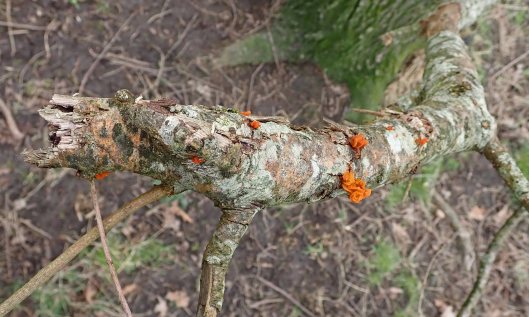
Then I read, on the First Nature website, that ‘in dry weather this fungus becomes a hard orange bracket’. Also, this particular fungus feeds on other fungi, crusts in the Peniophora genus, and I couldn’t see any crusts on this branch. First Nature explains it again:

Very little or none of the Peniophora may be visible; this is because Tremella mesenterica feeds on the mycelium of the Peniophora fungus, and that can be deep inside the timber rather than on its surface. The fruiting body of the crust fungus does not even have to be present, therefore, and so it may look as though Yellow Brain is feeding directly on the host wood.
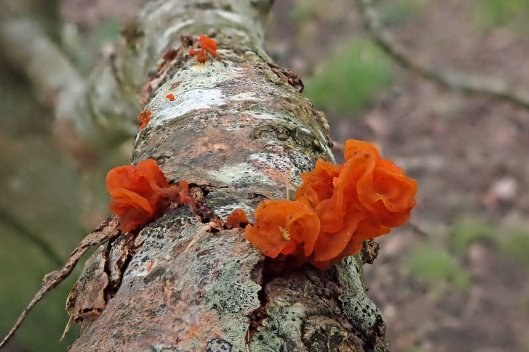
So, reassured by the website’s explanations, I believe I can confidently say this is Yellow brain fungus (Tremella mesenterica). Happy Fungi Friday!
Life on a seepage

Tags

, , , , , , , ,

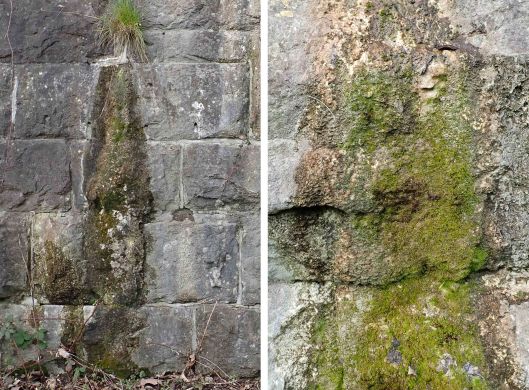
On one side of a local railway station there is a huge stone embankment, perhaps 50 feet tall, that was probably constructed in the 1880s (the platforms were opened in 1888). I walked along the path next to this embankment a couple of days ago and couldn’t help but notice several areas where moisture was seeping from between the stone blocks. When I looked more closely at these seepages, I was amazed by how much life they were supporting – an intriguing habitat in miniature.

230302 seepage

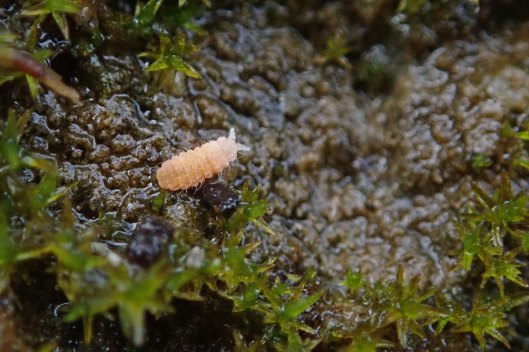
As well as a variety of mosses and lichens, I found four miniscule springtails, which I think are Monobella grassei, a new species for me, though my identification hasn’t yet been validated.

230302 Monobella grassei

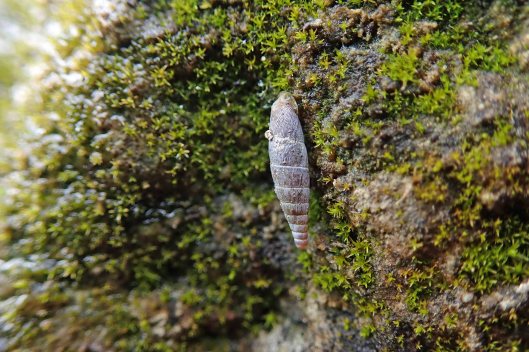
There was also a stunning little snail, covered in grooves that are actually growth lines. Again, its identity has yet to be confirmed, but I think this is probably a Two-toothed door snail (Clausilia bidentata). The Naturespot website reports that it can often be found hiding in cracks in rocks and that it ’emerges in damp weather and at night and climbs high up on bare surfaces to graze on algae and lichens’, which is exactly what this one was doing.

230302 clausiliidae species

Chissicking all the while

Tags

, , ,

I enjoyed a fabulous walk along Sully beach on Monday, seeing 2 Curlew, a Grey plover, 4 Dunlin and at least 6 Ringed plover, which is a good number and variety for a beach that is, these days, often empty of birds due to disturbance by walkers and dogs off their leads. Sadly, those birds were all quite distant for photographs but this gorgeous little Pied wagtail was much more obliging, walking jauntily along the top of a nearby stone wall, chissicking all the while.

Comes the sun

Tags

, , , ,

Comes the sun, come the flies! A sheltered south-facing ivy-covered wall with assorted small shrubs, wild plants and dense leaf litter below is their little bit of paradise. The first of these images shows my second hoverfly for the year, a Marmalade hoverfly (Episyrphus balteatus), the rest I don’t know, nor am I bothered to discover their identities – I was simply enjoying seeing little critters flitting about the vegetation again, and knowing that more, including my beloved butterflies, will soon follow.

230227 flies

First Jack, now Common

Tags

, , , , ,

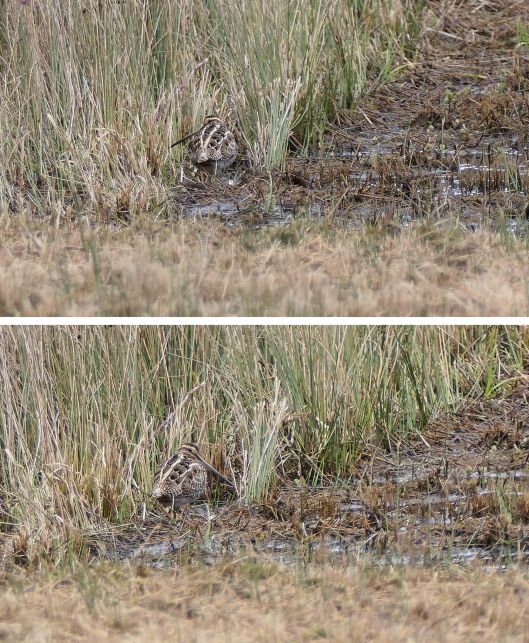
This has been a very good winter for Snipe sightings. As well as the Jack snipes I blogged about back in December (Not one but two, 8 December), I enjoyed a more recent sighting, on 18 February, both of those thanks to local birder Graham’s use of a thermal imager. Then, yesterday, I spotted a Common snipe (Gallinago gallinago) in the same area. There was no need for an imaging device with this bird as it was sitting in plain sight, along the edge of an area of reeds. Snipe often take to the air immediately they notice movement nearby so I was extremely lucky that, even though it had obviously noticed me, this bird stayed put and let me take several photographs.

230225 snipe

A Chiffchaff from Siberia

Tags

, , , , ,

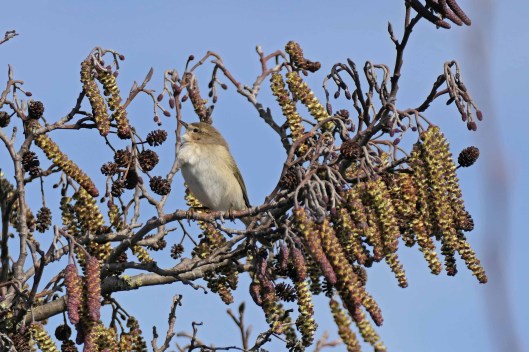
It’s been three years since I saw a Siberian chiffchaff, though one or two seem to appear in the county almost annually these days, blown off course as they move from their Siberian breeding territories to their usual over-wintering grounds south of the Himalayas. I first spotted this one in early February and thought it a Common chiffchaff but a more expert local birder did tell me then that he thought it had the look of a Sibe about it (the Siberian birds look rather grey and have darker legs). Almost a fortnight passed until that same birder saw the bird again and, more importantly, heard it call, because that is the clincher when it comes to these birds. Though it has been very elusive, I’ve managed two further sightings but have yet to hear that distinguishing call.

230223 siberian chiffchaff

Gorse weevils and dung flies

Tags

, , , , ,

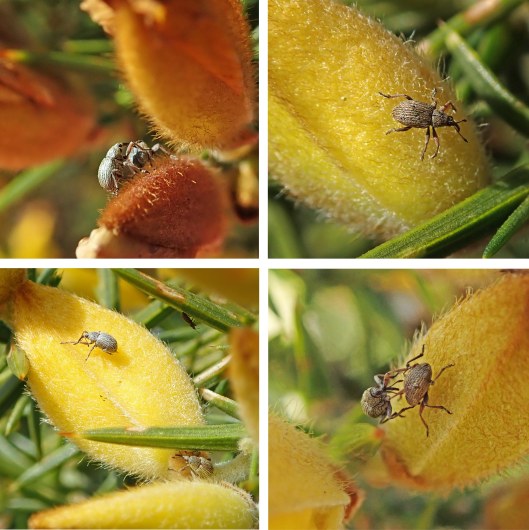
Last Sunday was very Spring-like, the sunshine warm on your back if you were out of the wind. Nature thought so too and I was delighted to see some insects out and about. Though my first butterfly of the year, a Brimstone, didn’t linger long enough for a photo, the abundance of Gorse weevils on the flowering Gorse bushes were much more obliging.

230222 gorse weevils

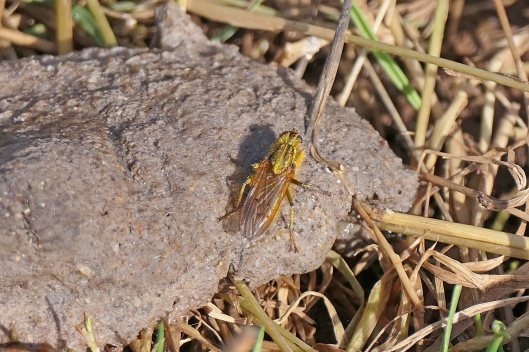
And, on a rather large splatter of dog poo, which the dog’s owner hadn’t bothered to pick up, Dung flies were out in good numbers. Which is probably one of the very few reasons I would ever want to look closely at dog poo.

230222 dung fly