Leafmines: on Himalayan honeysuckle

Tags

, , , , , , ,

Two for the price of one this week. The plant is Himalayan honeysuckle (Leycesteria formosa), not a British native as you can guess from its name, but a plant that’s now naturalised quite extensively in the wild, at least in my local area. The leafmines were found on 18 December, quite late in the year but a sign of how mild our weather has been so far this winter.

These first mines were made by the larvae of the tiny fly Chromatomyia lonicerae. I like the description of this mine on the Nature Spot website: ‘The leafmine starts with an irregular star-like blotch with a later linear section’. You can see that in my photo on the left below, and, in the photo on the right, you can see a pupa, which remains in the mine until it emerges as an adult fly.

This second mine is the creation of the larva of the moth Phyllonorycter emberizaepenella, a beautiful little brown-and-white creature that you can see on the UK Moths website. The larva spins itself a blotch mine, which pulls the underside of the leaf together, as you can see in the photos below: top of the leaf on the left, bottom on the right.

Brambling!

Tags

, , , ,

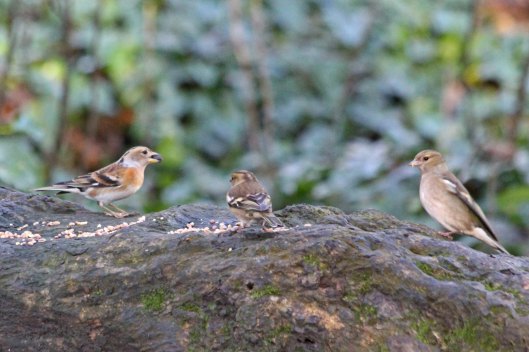
This was Tuesday’s magical moment – well, actually, about 30 minutes of moments grinning like a Cheshire Cat while standing in the bitter cold, but what better reason to get frost bite than a Brambling!

220108 brambling (1)

These beauties are rarely seen in my part of south Wales. Bramblings breed in the far north, in parts of Scandinavia and Russia, heading south to Britain during our winter, so are often seen passing through when the weather starts to turn cold here. And local birders did report seeing them and hearing their distinctive calls in November-December 2021 (I also had a flyover sighting of two birds in December). But then they disappeared, presumably flying further afield in search of their favourite food, Beech mast, which is sparse locally this winter.

220108 brambling (2)

Presumably, a combination of a lack of food elsewhere and the increasingly cold weather is why some birds are now returning and being seen, with their cousins the Chaffinches, coming for seed from garden feeders and in other locations where people put out food for small birds in the winter. This is one reason I always carry some seed with me on winter walks. You never know what you might be lucky enough to see.

It’s Tripe time

Tags

, , , ,

At first glance, I thought this was Turkey tail, a common bracket fungus that I’m sure most people are aware of.

220107 tripe (1)

But, when I looked more closely, particularly at the newest growth – those fat, juicy looking little buttons, and also at how furry some of the growth was, I knew my initial impression was wrong. This is Tripe fungus (Auricularia mesenterica).

I couldn’t tell what the wood was as the tree had been sawn off very close to the ground and only a very short section of trunk and some sections of exposed root remained (all of which were covered in fungal growth). But, Tripe fungus grows most commonly on Elm trees so I assume this was an English elm that had succumbed to Dutch elm disease.

Three Black redstarts

Tags

, , , , ,

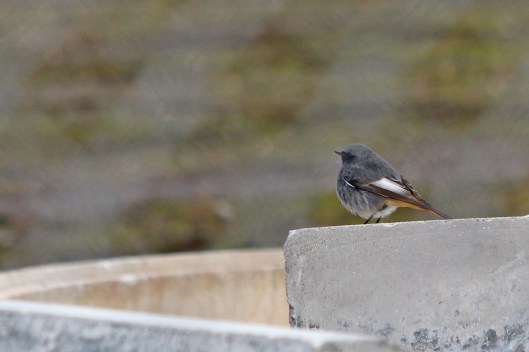
On 10 December the word went out to local birders that someone had spotted a Black redstart in the Porth Teigr area of Cardiff Bay, so the next morning I wasn’t the only person to head over to see if I could find it.

220105 black redstart male

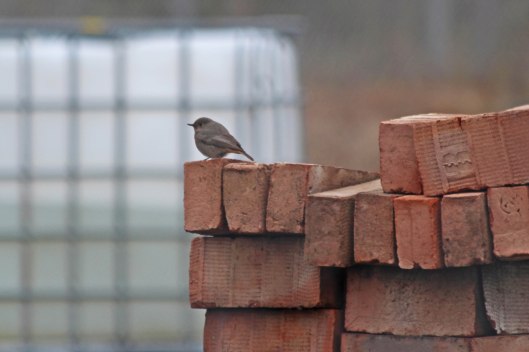
Turns out, there are, in fact, three Black redstarts dotting around together, two males (one, above) and a female (below). I’ve been back to see them several times now and they are worth every strip of shoe leather I wear off my soles walking there and back. They are simply stunning little birds!

220105 black redstart female

p.s. I wrote this post yesterday and, amazingly, in the interim, one of my birding friends noticed that there are actually two females, meaning there are four Black redstarts. I walked across for another look this morning and, sure enough, there were two females. Amazing!

Voiceless Raven

Tags

, , , , ,

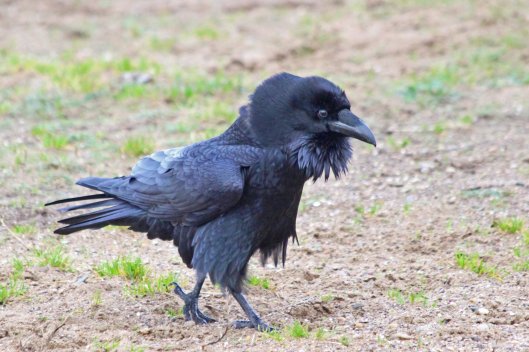
While my A-to-Z countdown to the end of 2021 was underway, I had a few wildlife encounters I want, belatedly, to share. First up is this gorgeous Raven, a juvenile I think, which was utterly voiceless. No matter how hard it tried – and it was straining, almost looking like it was trying to vomit, no sound came out, not even a squeak. I still find myself wondering how this inability to communicate vocally will affect its life.

220104 voiceless raven

Leafmines: Psychoides filicivora

Tags

, , , , ,

Once again, I was alerted to this little leafminer by a tweet from Rob Edmunds (@leafminerman), one of the brains behind the British Leafminers website, and I’ve now found it at three local sites where Hart’s-tongue fern (Phyllitis scolopendrium) is plentiful, though it can also be found on a couple of other fern species.

220103 Psychoides filicivora (1)

These are the larvae of Psychoides filicivora, a tiny brown moth (you can see the adult on the UK Moths website here), whose larvae munch on the fern fronds and hide away under little ‘nests’ of sporangia on the undersides of the fronds.

There is another very similar moth species that also lives on fern fronds, Psychoides verhuella – so far, I’ve only found P. filicivora – but the British Leafminers website has very good information on both, as well as an excellent side-by-side comparison image of their larvae.

New Year Plant Hunt 2022

Tags

, , ,

It’s on again, the New Year Plant Hunt, running from 1 to 4 January inclusive, so you still have time to join in and help the BSBI (Botanical Society of Britain & Ireland) ‘build up a clearer picture of how our wildflowers are responding to changes in autumn and winter weather patterns’. Click HERE for more information on how to join in and to see past years’ results.

My little video shows the 31 species in bloom I managed to find during an extended meander around my town in coastal south Wales. Some flowers are looking a bit raggedy after a lot of recent rain but the lack of really cold temperatures so far this winter means there are still a lot of wildflowers a’flowering.

Let the birding begin

Tags

, , , ,

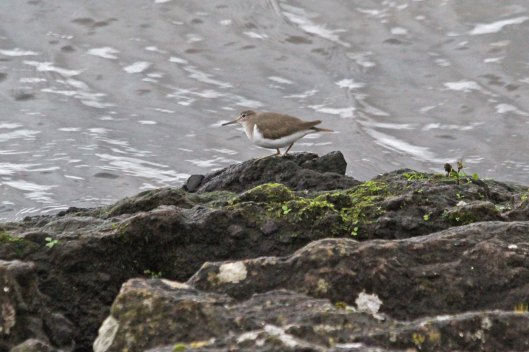
In what is becoming something of a tradition, I enjoyed a lovely long walk around Cardiff Bay today to kickstart my patch birding list for the year. I managed to spot 45 species, with the highlights being an overwintering Blackcap; a Common sandpiper (pictured below); the Yellow-legged gull I blogged about a couple of days ago; and one of three Black redstarts currently in the Bay – more on those in a forthcoming blog post. I also caught up with several friendly fellow birders, always a pleasure. Happy New Year, one and all!

220101 common sandpiper