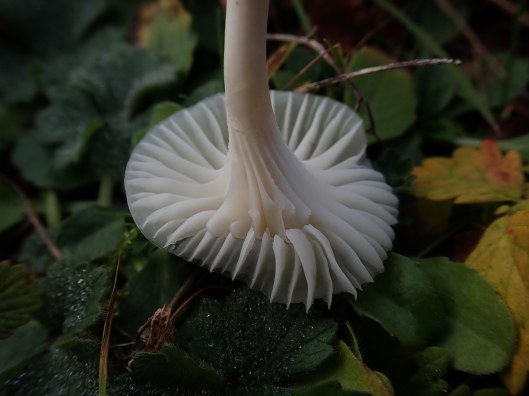
Fungi as art
07 Friday Dec 2018

07 Friday Dec 2018
06 Thursday Dec 2018
Tags
cyclamen, flowering cyclamen, green fingers, growing cyclamen from seed, growing houseplants, growing seeds, pink flowers
It seems constantly to be raining here at the moment, which is limiting my opportunities to get outdoors with the camera. Luckily, lovely little things are happening indoors and so I’m taking this opportunity to show off my green fingers … though, in truth, I didn’t actually get this process right and it’s all happening in spite of my efforts rather than because of them.
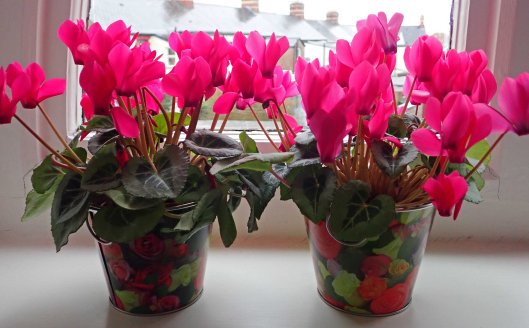
I bought these beautiful cyclamen plants almost two years ago, to add some colour to my new flat and, except for a short rest period each year during the heat of summer, they’ve flowered almost constantly ever since. (I really must re-pot them next time they rest.)

When I noticed a couple of the expired flowers had developed into seed heads, I thought I’d have a go at growing more plants. I googled for instructions, extracted the seeds, popped them in some potting mix and waited.
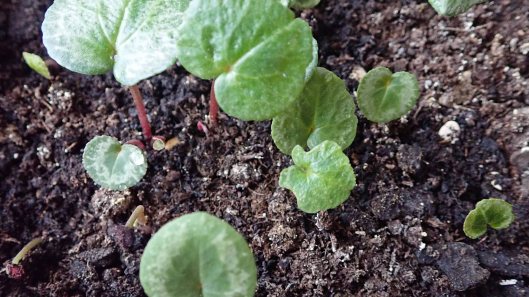
Initially, nothing happened and I had actually given up on them but, it seems they need the cold to trigger their growth as, since the cooler weather has arrived, they have begun popping up.

The earliest sprouters are now about thumb height, with tiny second and third leaves just coming through. On yet another grey day, I sit here imagining a whole windowsill of pink lusciousness!
05 Wednesday Dec 2018
Posted in nature
Tags
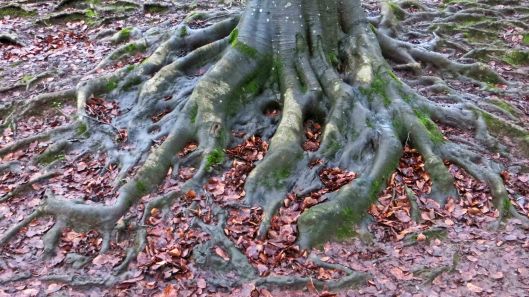
#WildWords, plant roots, root, roots, tree roots, wild words
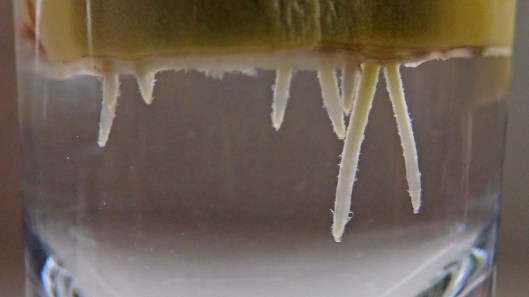
Root: noun; ‘The part of a plant which attaches it to the ground or to a support, typically underground, conveying water and nourishment to the rest of the plant via numerous branches and fibres.’ (Oxford Dictionary).
04 Tuesday Dec 2018
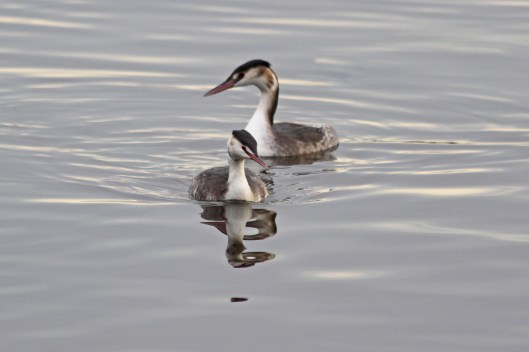
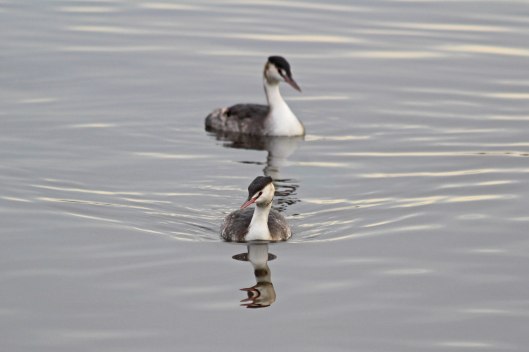
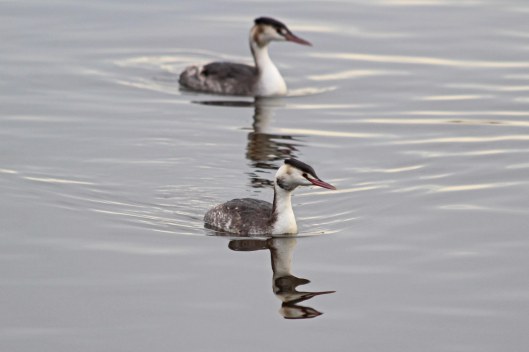
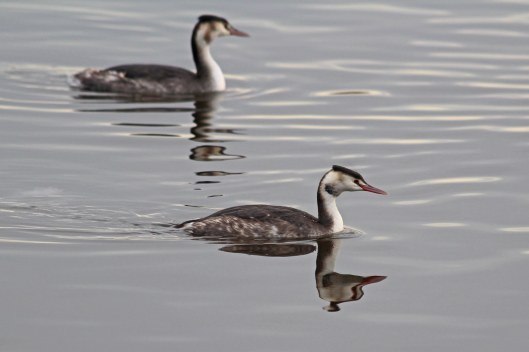
These two Great crested grebes put on a delightful display of synchronised swimming for me at Cardiff Bay Wetlands today, gliding first one way, then the other. I scored them a perfect 10. I almost applauded … but that would’ve scared them off. Gold to the grebes!
03 Monday Dec 2018
It’s Saturday morning, the Met Office’s forecast of no rain was a lie so I’m doing house chores. At 11:30 I re-check the weather – supposedly clearing, but that’s not what the pitter-patter on my window panes is telling me – and I have a quick look at the birding hashtag used by local birders on Twitter to see if anything’s happening. It is! At 11:41, local birder Mat had posted that another local Ian had spotted a Great northern diver at Barry Docks.
Action stations. My backpack is packed, rain jacket, hat, scarf and gloves are on, and I’m out the door in record time. I stride the 20-minute walk to Cogan Station in record time and wait impatiently for the next train, due in 7 minutes. Why am I in such a rush to twitch this bird? Because, although there was a Great northern diver – the same bird? – at Barry Docks for several weeks earlier this year, I didn’t manage to spot it on the two occasions I went looking. So, I’m determined not to dip this time.
The slowest train ride ever, another rapid stride from the station to the edge of the dock and, as soon as I get there, my heart sinks – as well as the drizzly rain, it’s windy and the water in the dock is incredibly choppy, making it difficult to see anything. I put my backpack on a bench, get out my bins and turn to start scanning the water. And there is the bird, no more than 20 metres in front of me!


I can hardly believe my luck and get my camera out as quickly as I can to record the moment. I fire off half a dozen shots, then the bird dives. Knowing it could go quite a distance underwater, I put my backpack on, move to the edge of the dock and wait, scanning constantly from left to right as if I’m watching a tennis match.

It’s up again, not too far away and I move closer, grabbing more photos. For some reason, it’s got its eye on the sky so I look to see what it might be looking at – only gulls wheeling on the wind – but when I look back, the diver has disappeared again.
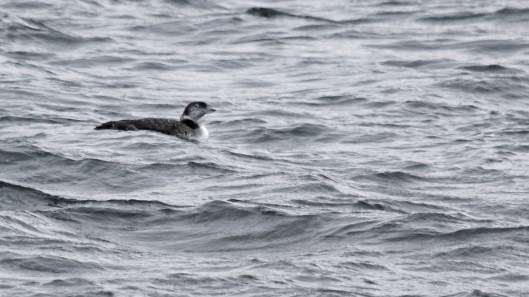
I move over to where a lone fisherman is packing up his gear and he asks me if I’ve come specially to see this bird. He says he’s been watching it for about 15 minutes, working its way along the dock and then returning. As the fisherman heads off, I look again for the bird and realise I’ve lost it. I walk further west along the dock edge, stopping to scan the water every couple of minutes, but the rain is heavier now and it’s become very dull and gloomy. I thank my lucky stars that I’ve managed to see the bird at all and decide to head back to the station. And when I turn, there’s the diver again – it has doubled back and is quite close in, so I grab a few more photos.
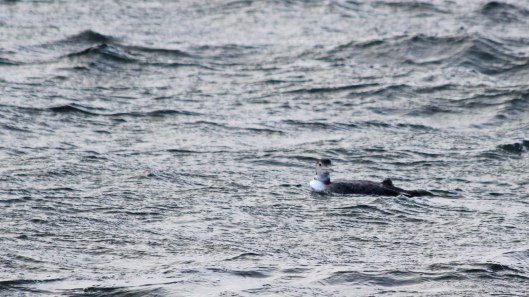
The diver looks sleepy now, is closing its eyes as it rocks up and down on the waves, and is drifting further and further away from me. I call it a day and head home, smiling all the way.

02 Sunday Dec 2018
Posted in autumn, flowers, nature, wildflowers, winter
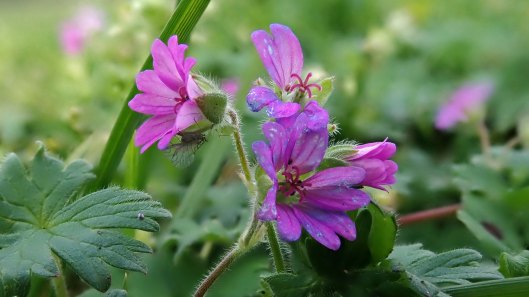
Here are this week’s still-flowering wildflowers for Wildflowerhour’s #Winter10 challenge, found during my perambulations around my local patch. These are (I think): Dove’s-foot crane’s-bill (above), Bush vetch, Common chickweed, Daisy, Herb Robert, Ivy-leaved toadflax, Petty spurge, Red campion, a sowthistle (possibly Smooth sowthistle) (must pay more attention to the leaves next time), and Yellow corydalis.


01 Saturday Dec 2018
You might think it’s just the little Robin that goes bob-bob-bobbing along but no!
After two days of weather warnings, gale-force winds and heavy rain showers, I was itching for a walk, partly because I tend to go a little stir crazy if I can’t get out every day but also because I’ve been learning this year how much weather affects the movements of birds. On Thursday, though more rain was forecast, I decided I’d head down to Penarth Marina for a walk along the Ely embankment path to see if anything unusual was sheltering from the tumultuous weather in its relatively calm waters.


The three Redshanks were a nice surprise, the most I’ve seen there this autumn, but the highlight came right at the end. As I approached the last bend in the path, I spotted a dark bird at the water’s edge. I hadn’t brought my bins with me so used my camera to take a photo and zoom in. A Dipper! What a treat!

The Dipper (Cinclus cinclus) is a rotund little bird, more often seen prospecting for food in stony streams and low-flowing rivers. It’s the only British passerine (birds that perch) that feeds underwater and the only British member of the five species of Cinclidae found around the world. Their name cinclus comes from the Ancient Greek word kinklos, meaning a small tail-wagging bird that lives near water.

In deeper water, the Dipper swims down to the river bed, ‘flying underwater’ – an action probably more akin to rowing with wings, and its sturdy claws can grip even the smoothest of stones. This lovely bird, though, was working the shallow water where the stony embankment of the River Ely meets the brackish water of Cardiff Bay, poking about and flipping stones in its quest for aquatic insects.


It paused when it noticed me watching it from the top of the bank above so I stayed completely still, hoping it would then ignore me and return to its grazing. It blinked at me several times, exposing its pale upper eyelid, an action I have since read is either a courtship or threat display – I don’t think it fancied me!

Luckily, after a couple of minutes, it obviously decided I posed no immediate threat, bobbed a couple of times and carried on. Bobbing is an odd motion that several different birds make – it has been interpreted as a means of visual communication but that seems unlikely in this case as the bird was on its own. I also read on the Birdnote website:
One possibility is that the dipper’s repetitive bobbing, against a background of turbulent water, helps conceal the bird’s image from predators. A second theory asserts that dipping helps the bird spot prey beneath the surface of the water.

Perhaps we’ll never know the real reason for its bobbing but it was certainly a joy to watch this particular bird a’dipping and a’bobbing on my local patch.
30 Friday Nov 2018
Tags
Bisporella citrina, British fungi, cup fungi, disco fungi, fungi on rotting wood, Lachnum virgineum, Lemon disco, Snowy disco
Discos seem appropriate for a Friday night or, rather, they would have in the 1960s and ’70s. But my discos don’t involve a multi-colour dance floor or a flashing-ball light or John Travolta-style dancing – my discos are fungi. Getting down and dirty in Cogan Wood earlier this week, selectively picking up small logs of rotting wood for inspection, I found two of these little beauties.
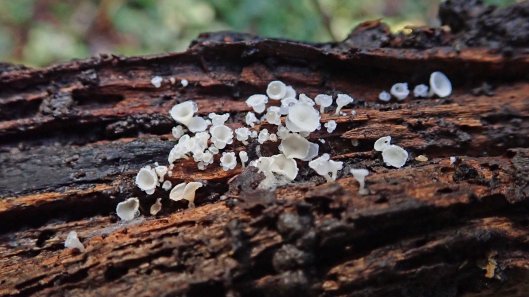 Snowy disco (Lachnum virgineum)
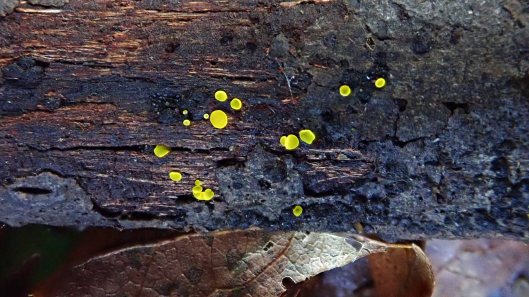 Lemon disco (Bisporella citrina)
Disclaimer: Fungi are notoriously difficult to identify and one thing I’ve learnt from dipping my toes into the mycological world is that one should always confirm one’s identification, especially of minute fungi like these, by microscopic examination. I have not done that so my IDs are not confirmed, just quite likely.
29 Thursday Nov 2018
This Garden spider (Araneus diadematus) was doing a spot of web maintenance as I passed by and I – rather fancifully, I admit – thought it looked just like it was playing a game of peek-a-boo.


28 Wednesday Nov 2018
Tags
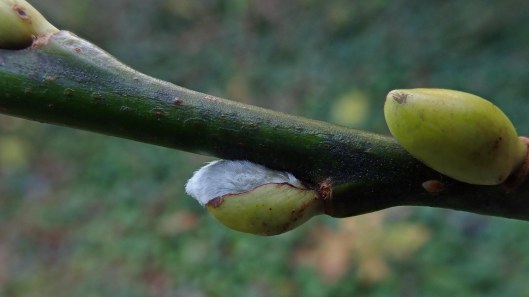
As I look around me on my daily walks, I see dying leaves falling from skeletal trees, I note that the butterflies and most other insects have now disappeared, I watch the winter bird migrants munching on the final berries, and I notice how short the hours of daylight are becoming. Yet, in the midst of all this death, decay and gloominess, I am cheered to notice signs of life and renewal. It seems awfully early for Pussy willow – maybe it’s not that. Whatever it is, it’s lovely.

 earthstar
You must be logged in to post a comment.