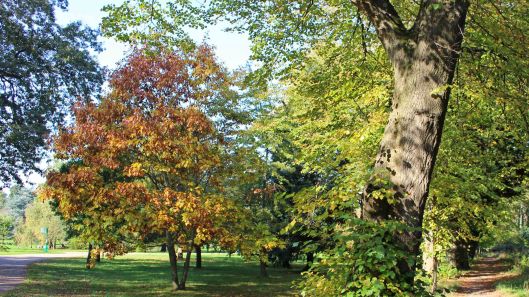
Birding at Maiden Castle

Tags

, , , , , , ,

This past Friday to Sunday was the annual Glamorgan Bird Club long weekend trip to Portland Bird Observatory, and my second visit to the fascinating island of Portland. But first the trip down …
181029 birding at maiden castle (1)

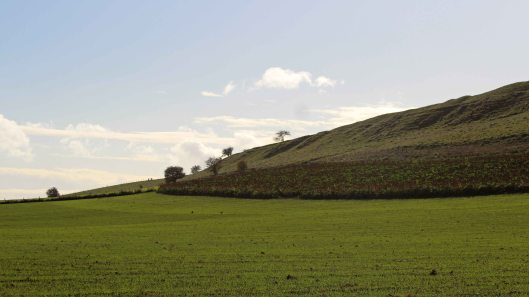
Eleven of us left south Wales in various car-share combinations and via various routes to meet up around 10am at Maiden Castle, just outside of Dorchester. The ‘castle’ is, of course, not a castle but rather an ancient Iron Age hillfort, one of the largest in Europe.

181029 birding at maiden castle (3)

I still haven’t managed to explore the site itself, as our primary reason for meeting there is because we’re almost certain to see a Corn bunting, a bird we don’t get in Wales so it’s a year tick for most of us and a lifer for some. (You’ll need to believe me when I say that the small brown blob sitting on the fence is a Corn bunting.)

181029 birding at maiden castle (2)

Sitting in the field adjacent to the Maiden Castle carpark were over a hundred Golden plovers, a bird that seems common in this area as we also saw a large flock of them on the 2017 trip.

We were also treated to our first of many Kestrel sightings of the weekend. After a bit of fence-post sitting and some hovering, this beautiful little bird plunged down to the earth in a nearby field, having apparently caught something. It fluttered about several times, as if its prey was still alive and trying to escape and the Kestrel was having trouble subduing it.

181029 birding at maiden castle (8)

My long lens wasn’t quite long enough to identify the victim but, whatever it was, it seems it may have been too large and/or heavy for the Kestrel to carry as the bird eventually flew off empty-clawed.

181029 birding at maiden castle (9)

Soon afterwards – though probably unrelated – something spooked the Golden plovers and they treated us to a wonderful display of formation flying before settling again further off. And that was our cue also to head off, to our next stop en route to Portland.
Butter cap anyone?

Tags

, , , , ,

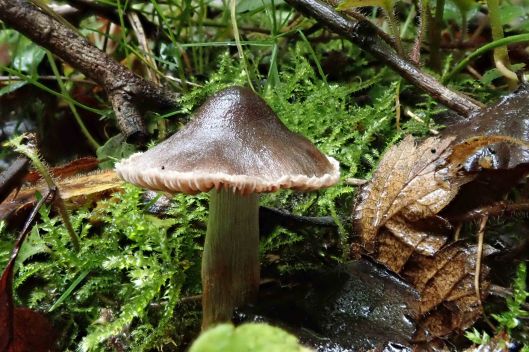
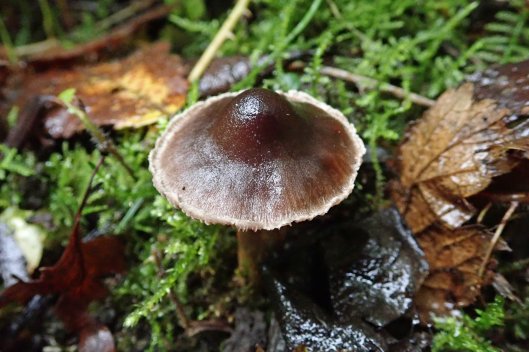
Here’s a fungus I can actually identify! This is the Butter cap, a name that’s so much easier to say than its scientific name Rhodocollybia butyracea.

181028 Butter cap fungus (2)

Thanks to the most excellent First Nature website, I can tell you that Rhodocollybia is from rhodo, meaning ‘pink’ (a reference to the pinkish tinge of the mushroom’s gills), and collybia means ‘small coin’, while the epithet butyracea means ‘buttery’ (but not in taste – it’s a reference to the greasiness of the cap).

181028 Butter cap fungus (1)

Death on the windowsill

Tags

, , , , , , , ,

I don’t know about you but, except on the very coldest of days, I like to have my windows open, at least for a short time each day, to let some fresh air into the house. Trouble is the little critters seem to sense that it’s warmer indoors than out and, if I don’t notice their presence, they don’t manage to escape with their lives. This morning I found two casualties, a Slater and a Wasp.

181025 dead slater181025 dead wasp

No. 198: Wryneck

Tags

, , , , ,

You’ve heard of a needle in a haystack? Well, that’s kind of what it was like trying to see this incredibly well-camouflaged little bird, my 198th species for the year and a lifer for me, a Wryneck.

181025 wryneck (1)

These first two uncropped photos were taken with my 300mm lens – can you spot the bird?

181025 wryneck (2)

It’s a little easier to see when it had popped up on to a clod of earth, instead of disappearing in to the furrows in search of its favourite food, ants.

One of the things that helped me spot the bird was the reaction of the House sparrows that were also feeding in the field at the time. They were clearly aware that this Wryneck was something different, something odd, something to be looked at and investigated. The sparrows also provide a good size comparison – as you can see, the Wryneck is a small bird.
181025 wryneck (5)

The Wryneck (Jynx torquilla) is a member of the woodpecker family, hence its liking for ants, but it prefers spending its time on the ground rather than in trees, like most other woodpeckers.

181025 wryneck (7)

The name Wryneck comes from the bird’s ability to swivel its head around 180° – a bit creepy but probably very handy for the bird. This is yet another bird that has declined in numbers in recent years. It once used to nest in Britain but these days it just passes through in Spring and Autumn on its way to pastures greener (or, perhaps, that should be pastures ant-ier).

181025 wryneck (6)

The ones that got away

Tags

, , , , , ,

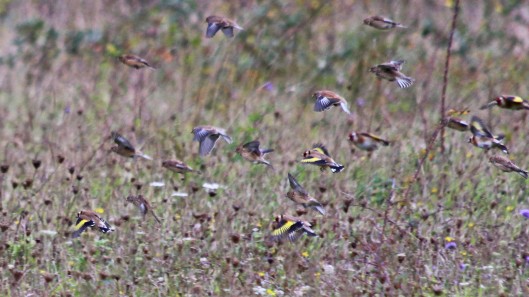
These are just a few of the Goldfinches that have managed to escape the talons of the Sparrowhawk I featured yesterday (and other hungry birds of prey). This seems to be a particularly good year for these little birds, as small flocks of them have been everywhere in recent weeks, in local parks and reserves, flying along Penarth’s cliff tops, in the neighbour’s garden over the back lane, even in the tree outside my living room window.

181024 goldfinches (1)181024 goldfinches (2)

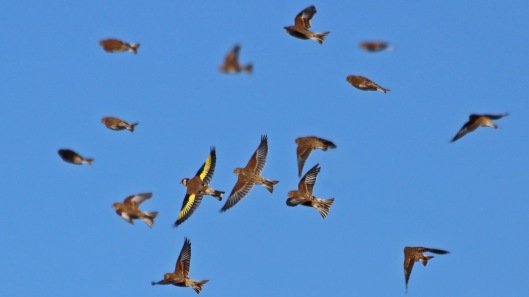
Although it’s not the sharpest of shots, I particularly like this photo of the Goldfinch flying with a flock of Linnets as it shows its distinctive yellow wing-bars so well.

181024 goldfinches (3)

The juveniles take a while to get their full bright red and yellow colours so look a little scruffy for a time … but very cute with it!

Sparrowhawk goes a’hunting

Tags

, , , , , , , , ,

Until the farmer decided to plough them last week, the fields alongside the coastal path between Penarth and Lavernock were alive with birds, hundreds, perhaps thousands of Linnets and Goldfinches.

181023 Sparrowhawk hunting (1)

For those fascinated by birds, it was a feast for the eyes but for the local birds of prey, it was just a feast … or, at least, this Sparrowhawk was fervently hoping it would be a feast.

181023 Sparrowhawk hunting (2)

However, although I watched it for over an hour one day, flap-flap-flap-gliding effortlessly overhead and then swooping very low and very fast over the fields, I never saw it actually catch anything.

181023 Sparrowhawk hunting (3)

It seems the Sparrowhawk mostly went hungry and most of the little finches lived to fly another day.

181023 Sparrowhawk hunting (4)

Dead but full of life

Tags

, , , , , ,

181022 fungi on log (1)

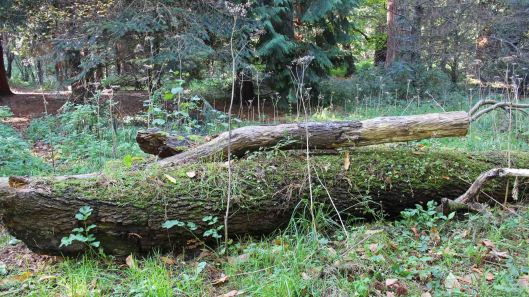
This tree may be dead but it’s teeming with life.

I’m sure it’s chock full of a huge variety of bugs and beetles, slugs and centipedes, and many other mini-beasties, but what caught my eye was the number of different types of fungi it was supporting.

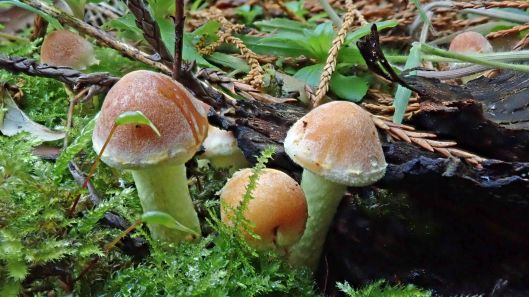
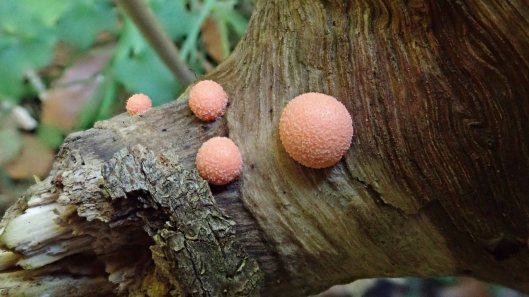
As well as several species of gilled mushrooms, there were also various intriguing brackets, some oozing golden droplets, and a wonderfully vibrant orange Lycogala species of slime mould. Fungi may often be difficult to identify but they never cease to amaze me.

181022 fungi on log (6)181022 fungi on log (13)

Bute trees

Tags

, , , , , ,

181021 Bute trees (4)

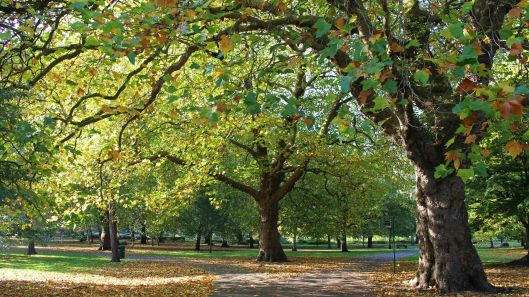
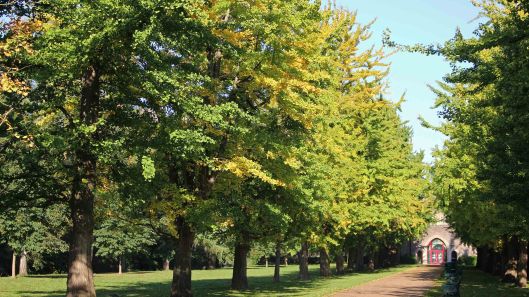
As I mentioned in yesterday’s blog, I spent several hours of a glorious autumnal Friday wandering amongst the trees in Cardiff’s Bute Park, and it was wonderful. I love trees and this meander reminded me why – their myriad different shapes and sizes, the variety of colours and textures in their leaves and their bark, and how difficult it is to capture all those qualities well in photographs. Since 2015, the year I spent photographing a tree each and every single day, I find I’m a little out of practice. I haven’t decided on next year’s project yet so maybe …

181021 Bute trees (1)181021 Bute trees (2)181021 Bute trees (3)181021 Bute trees (5)181021 Bute trees (6)181021 Bute trees (7)

Rhododendron leafhoppers

Tags

, , , , ,

I enjoyed a delightful long meander in Cardiff’s magnificent Bute Park yesterday (there will be a blog, probably tomorrow, once I finish going through my photos) and, in the course of that, I made sure to visit one particular small patch of rhododendron. The reason is these little critters, Rhododendron leafhoppers (Graphocephala fennahi).

181020 Graphocephala fennahi (5)

If you’ve been here a while, you may remember I blogged about them back in August 2016, when I was first introduced to them. I wasn’t sure they’d still be around this late in the year, and there certainly weren’t very many of them, but two or three were hopping from leaf to leaf whenever I tried to get near enough for photos. I’ve since read, on the British Bugs website, that they can be seen as late as November, feeding on rhododendron sap and laying their eggs in the leaf buds.

Leafhoppers come in a splendid variety of colours hence this 2019 diary note: *Note to self: make more of an effort to look for leafhoppers next spring/summer*.

181020 Graphocephala fennahi (1)