The living fossil fungus challenge

Tags

, , , ,

My local fungus group has a new challenge going for the month of January, to find a ‘living fossil fungus’. Sounds weird? Well, the ‘living fossil’ is the Ginkgo tree (Ginkgo biloba), a tree that’s been around since the time of the dinosaurs (read more about this beautiful tree on my sconzani blog here), and the fungus is Bartheletia paradoxa, a basidiomycete that only grows on Ginkgo leaves and has characteristics that are unique amongst basidiomycetes (for the science geeks out there, here’s a link to an expert article).

180105 Ginkgo fungus (1)

The fungus was not formally recognised until 1932 and was first found in Britain, on the leaves of a Ginkgo at Kew Gardens, in 2008. There are still very few official records for it but, as members of our fungus group are now discovering, it seems to be on almost every Ginkgo tree we can find.

As you can see from the photos, the fungus looks like black spots on the fallen leaves. Of course, autumn is long gone and the winter winds that have been roaring across Britain this past week have blown away a lot of fallen leaf litter but it’s still worth looking look around any Ginkgo trees you know of in your local parks. I found these leaves on Wednesday around the magnificent Ginkgo avenue in Bute Park, behind Cardiff Castle, and I have another couple of places to go looking in the next few days. So, do see if you can find yourself a ‘living fossil fungus’ as well.

A leucistic crow

Tags

, , , , , , ,

180104 Leucistic crow (5)

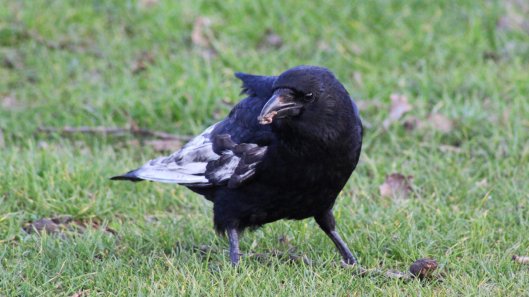
I posted a photo of this splendid leucistic Carrion crow (Corvus corone) on my new ‘Birding 2018’ page, after seeing him for the second time on a recent walk around Cardiff Bay, where he appears to frequent the area around the Norwegian Church.

I write ‘he’ but ‘he’ may well be a ‘she’, as I’m not sure how to tell the gender of crows. It’s certainly a handsome creature and I decided it was worth a post of its own. As you can see from my photos, the leucism seems to be restricted to its wings.
(If you’re not sure what leucism is, I wrote about it in an earlier blog post here.)

180104 Leucistic crow (4)

Wild words: pluviophile

Tags

, , , , ,

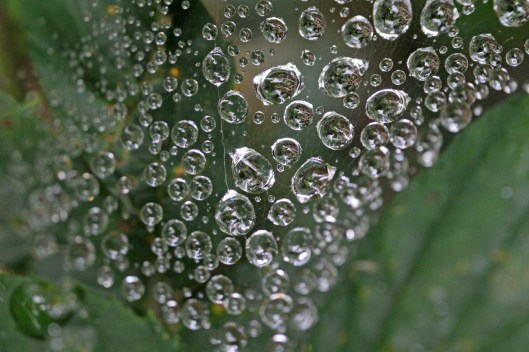
Pluviophile: a lover of rain; someone who finds joy and peace of mind during rainy days.

180103 pluviophile (1)

Of course, some might label such a person crazy and I’m not sure I would categorise myself as a pluviophile but, if I’ve got plenty of indoors things to do, some tasty food to eat, and I’m warm and cosy, then I do find pleasure in the pitter-patter of raindrops on the window panes.

180103 pluviophile (2)

New Year Plant Hunt

Tags

, , , , ,

Did you do the New Year Plant Hunt?

 
Running from Saturday 30 December until today, Tuesday 2 January, this was the BSBI’s (Botanical Society of Britain and Ireland) seventh annual plant hunt event. The idea is to spend three hours on one of those days (or every day, if you’re as keen as Hoary mustard), in one location (or several, if you like to roam like Ivy), trying to find as many wild or naturalised plants that are flowering as you can. You then share your finds on social media and, most importantly, you also need to send your records in to the BSBI team so they can analyse the results (full details on their website here).

On the last day of 2017 I took myself off on a wander around Penarth township and marina – basically, within the square kilometre that is ST1872 – and was delighted to find 15 different wild plants in bloom. The Field scabious was a particular highlight!

One hundred and sixty-three

Tags

, , , , , ,

Neither my age, nor my weight, nor my height (though that comes closest), one hundred and sixty-three is my birding total for 2017 – that is, the total number of species I managed to see in Britain.

171231 avocets

This was the first year I’ve kept a count, and it was just out of interest really but, as my more dedicated birding friends post their totals on our Facebook group page (one has 223, another a whopping 252) , I’ve decided to try for a 200-bird year in 2018. That doesn’t mean I’m going to become a mad twitcher or go haring off all over the country to see rare birds. I’m just going to make more of an effort to see as many as I can because I love them so!

171231 robin

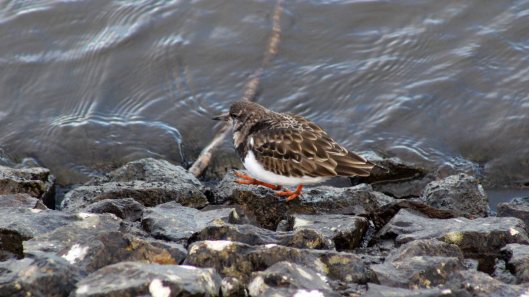
And my favourite birding moments in 2017? There were too many to recount, from marvelling at an encounter between a Bittern and a Marsh harrier at RSPB Ham Wall to my frequent local conversations with Robins and chuckles at Tufted ducks, from the joy of watching Avocets with their chicks at Rye Harbour on my birthday to the thrill of seeing feeding Gannets crashing headfirst into the ocean off Dawlish beach, from the lovely little Turnstones than bumble along the embankment in Penarth Marina to the Sand martin that sat and chattered away to me on a railing at Cardiff Bay.

171231 Sand martin

Why just yesterday I had a Great tit land on my hand to grab itself a piece of the flapjack I was sharing with the hungry birds at Cosmeston! Every moment like that, every second spent watching and hearing my feathered friends is joyous!

171231 Great tit

December on the Ely embankment

Tags

, , , , , , , , , ,

My first embankment stroll this month was on the third and I saw not a single solitary Turnstone – that hasn’t happened since I started doing a regular weekly count along this embankment back in September. The only birds on the stones were three Grey wagtails, and, though there were two Little grebes in the water, even the numbers of Coot and Mute swan were much reduced.

The 8th of December was a bitterly cold day, with the wind so strong it was whipping up small waves against the stones of the embankment. I’m sure that’s the reason I saw so few birds – a single Grey wagtail flitted back and forth, and only six hardy Coots braved the chilly waters, a tiny number compared to usual. There wasn’t a single Mute swan or Mallard or Turnstone, and even gull numbers were low – those that were about were flying quite low around me, as if hoping for food. I had none to give but I did try to grab some flight photos, this Black-headed gull being the best of a blurry bunch.

171230 Ely embankment (4)

The 16th was cold but not sub-zero so relatively pleasant, and perhaps that’s why the Turnstones had returned – well, two of them had, and it was lovely to see them foraging along the water’s edge. I didn’t think there were many gulls about until a Black-headed gull about 50 metres from me found some food and then gulls flew in from every direction – 37 Black-headed and 5 Lesser black-backs, all wheeling and screeching and squabbling over one slice of bread.

171230 Ely embankment (5)

Apart from those, there were two Mute swans, 3 Mallards, about 6 Coots, 3 Great crested grebes and 1 Grey wagtail. Oh, and I mustn’t forget the littlest of all, a tiny Wren bopping in and out of the rocks in search of insects.

The Winter Seventeen

Tags

, , , , , ,

171229 Ham Hill

Back in early November I blogged about Wildflower Hour’s winter challenge encouraging us all to try to find ten wildflowers still in bloom each week of winter. Well, I’ve been on holiday in Somerset over Christmas and, when my friend Sarah and I were out walking at Ham Hill on Christmas Eve, we took the challenge and were amazed to find not ten but seventeen wildflowers in bloom. Here (with apologies for the blurry pics – the wind was howling – and the lack of accurate names – I didn’t take my guide book on holiday) they are: ragwort, red campion, white dead nettle, hogweed, bramble, dog’s mercury, possible one of the Hawk’s-beard family, chamomile, cow parsley, ivy, a species of thistle and another of grass, wild parsnip, a variety of speedwell, the ever-reliable daisy, yarrow, and the equally reliable gorse.

p.s. Ham Hill is a fascinating place to explore if you’re ever in that vicinity and I’m already planning another walk there when I visit Sarah again in the summer.

171229 Ham Hill wildflowers (17)

December at Cosmeston

Tags

, , , , , , , , , , , , ,

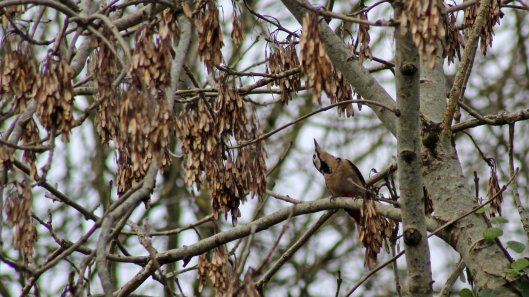
It was fairly quiet bird-wise on my first monthly visit to Cosmeston Lakes Country Park on 2 December, though there were still good numbers of the various thrushes (Mistle, Song, Redwing and Blackbird) around. A Great spotted woodpecker in the west paddock was a nice surprise – I initially thought it a Jay when I saw that peachy belly. The Tufted ducks amused, as always, and, while I sat watching them, the Brown rat I’d seen before at that particular spot came snuffling around for food. There were two more rats foraging by the boardwalk near the café.

171228 Cosmeston (1)

It’s a thrush takeover! On 6 December, I’d scarcely left the house to walk to Cosmeston than I was spotting Redwings, Song thrushes, and a Mistle thrush, plus Goldfinches and Chaffinches, in the trees just across the road. And when I got to Cosmeston it was more – much more – of the same, plus the first Fieldfares I’ve seen there. In Cogan Wood, the little birds were hungry so I shared my flapjack with them – there were even two Nuthatches and a half dozen Long-tailed tits picking up the crumbs on the ground. And the prize for the most colourful birds goes to the pair of Bullfinch that were munching on hogweed seeds.

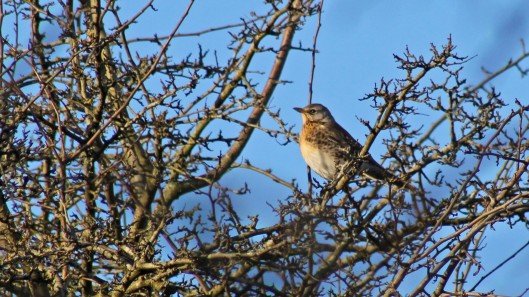
On 15 December, I finally got a reasonable, though not brilliant photo of a Fieldfare – they are very skittish so it’s hard to get close to them. I finally found a spot behind the berry trees they were feasting in, then just had to be patient and wait for one to pop up to the top of a tree.

171228 Cosmeston (8)

In Cogan Wood, one of the resident Marsh tits popped out to say hello – first sighting I’ve had since earlier in the year as they seem to disappear during the breeding season. And there was a Stonechat at the top end of the west paddock. There had been a pair of Stonechats in that area in the autumn but they seemed to have disappeared when the park staff mowed that field, so it was good to see one there again.

Something else happened at Cossie during this visit, something that’s never happened to me before. A squirrel climbed up my leg, not once but four times – the first time it grabbed my finger, the second time it touched my camera. I didn’t have food but it obviously thought I did. It certainly made me laugh.

Wild words: brumous

Tags

, , , ,

171227 brumous (1)

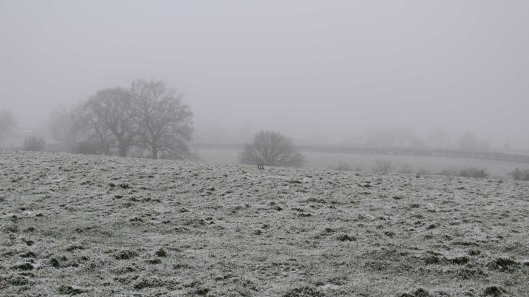
brumous: adjective; meaning foggy and wintry; dating from the mid-19th century; from the French brumeux, meaning misty, from late Latin bruma meaning winter and also the winter solstice (I should have posted this blog last week!). The Merriam-Webster Dictionary gives the following list of synonyms for brumous: beclouded, befogged, hazy, clouded, cloudy, foggy, gauzy, misty, murky, smoggy, soupy. I think you get the idea.

171227 brumous (2)