Rock pipit

Tags

, , , , , , , ,

171226 rock pipit (2)

For a relatively non-descript small brown bird the Rock pipit’s alternative names are anything but ordinary. Its Latin name is Anthus petrosus, which sounds for all the world like an incantation Harry Potter might utter against some evil force that was assailing him, and it has a wealth of interesting vernacular names that include dusky lark – understandable; gutter teetan – most peculiar; rock lintie – from Aberdeenshire; from east Yorkshire, sea lark; another from Scotland, sea lintie – is lintie the Scots for linnet perhaps; tangle sparrow, from Orkney and Shetland, as well as teetan and teetuck, also from Shetland.

I see these little birds quite often on the south Wales coast, on the rocks and stone embankments of Cardiff Bay and the rivers that flow into it, and on the sloping stone walls of other dockland areas, like Barry docks. When they’re not perching watchfully on a prominent rock, they’re fossicking busily between the stones for insects and seeds, beetles and, if they’re lucky, small fish.

171226 rock pipit (1)

Seeing blue

Tags

, , , , , ,

Blue feathers, blue water, blue flowers, blue butterflies …

The reasons why our eyes perceive these things as blue (or don’t, if we’re colour-blind) vary depending on what we’re looking at. With birds’ feathers, for example, the blue is actually a ‘structural colour’, because ‘When white light strikes a blue feather, the keratin pattern causes red and yellow wavelengths to cancel each other out, while blue wavelengths of light reinforce and amplify one another and reflect back to the beholder’s eye’ (from the amazing Smithsonian website).

Water looks blue because it more readily absorbs light in red, orange and yellow wavelengths but reflects the blue wavelength, so it’s reflecting the colour of the sky above. Blue flowers occur in plants that are able to chemically modify red anthocyanin pigments to reflect white light as blue, and those butterflies that look blue are also reflecting white light, the blue colour being dependent on the placement of the minute scales on their wings. Colour is so complicated!

Four and twenty blackbirds

Tags

, , , , ,

This is not a pie recipe! This is a visual celebration of one of our most common birds; one that almost every person can recognise and name; one that loves to sing its happy tune in our gardens and parks. There have been songs entitled ‘Blackbird’ (the Beatles, 1968 song, for example); films and plays, books, poems and short stories (too numerous to mention); people with the Blackbird surname; places named Blackbird (in England and the United States); planes, yachts and locomotives with the Blackbird name; even sports teams and personal computers (Hewlett Packard’s Blackbird 002). What a contribution this humble bird has made to the world!

Hebe and bumble

Tags

, , , ,

I always have a little smile to myself when I see a Hebe because, of course, it’s a New Zealand native plant and reminds me of my homeland (though I was surprised to read today that they’re also native to South America, the Falkland Islands and one island in French Polynesia).

They’re tough plants. The two species shown here were photographed in 0° Celsius, in between hail showers, yet they show no signs of being affected by the Welsh winter and, in fact, are providing much-needed food for the few bees (that’s a Buff-tailed bumblebee in my photo) and other insects that are still out and about. As well as the cold, they’re also very tolerant of salty sea air so they’re a good plant for coastal gardens like those here in Penarth.

In case you didn’t know, the plant is named after the Greek goddess Hebe, daughter of chief god Zeus and his wife Hera. Hebe was barista on Mt Olympus, serving ambrosia and nectar to all the other gods and goddesses, until she married Heracles and became a stay-at-home mum to their two kids.

Wild words: Pareidolia

Tags

, ,

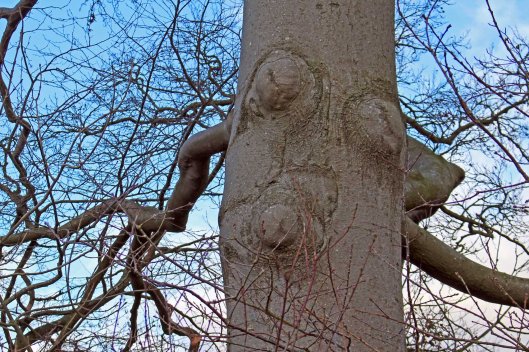
Pareidolia: noun; this is a general term to describe how we humans with active imaginations can bring ourselves to believe that we can see familiar patterns where none, in fact, exist. That’s a bit vague but it will become clearer if I give you some examples: the face of a man in the craters and shadows of the moon; figures of humans and animals in the shapes of clouds, and, in my examples below, human-like faces in trees. Do you see them?

171220 pareidolia (3)

Oyks, for short

Tags

, , , , , , , ,

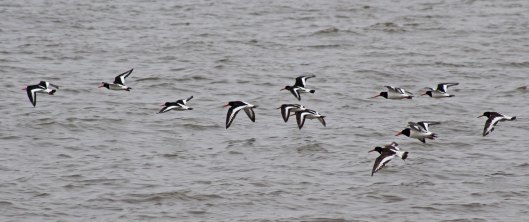
The Oystercatcher is one of the few British waders that I knew well, and whose call I could already easily recognise, before I came to live in this country because we also have Oystercatchers in New Zealand and, indeed, they can be found on coastlines around much of the world. They are not all the same species though – the most common New Zealand species is Haematopus unicolor and the British bird is Haematopus ostralegus.

Those Latin names are a bit of a mouthful so let’s stick with Oystercatcher, though whoever gave them that name wasn’t very observant – they don’t actually ‘catch’ anything and, while I’m sure they enjoy breaking open the odd oyster when they find one, they eat all types of shellfish.

171218 oystercatchers (4)

I particularly like some of their vernacular names (listed in Stefan Buczacki’s Fauna Britannica): in Norfolk they’re known as Dickie birds; in Scotland Gilliebrides (the word ‘bride’ is a reference to St Bridget of Ireland who was said to be the patron saint of birds and carried an Oystercatcher in each hand); in Yorkshire they’re known as Sea nanpies; and as Seapies (‘pie’, meaning black and white, just as in the name Magpie), in Lancashire, Norfolk, Gloucestershire and Cornwall; and in northern England, appropriately enough, they’re called Mussel crackers. But, if all those names are too much to remember, we could just call them Oyks, for short.

171218 oystercatchers (1)