Winter 9 plus

Tags

, ,

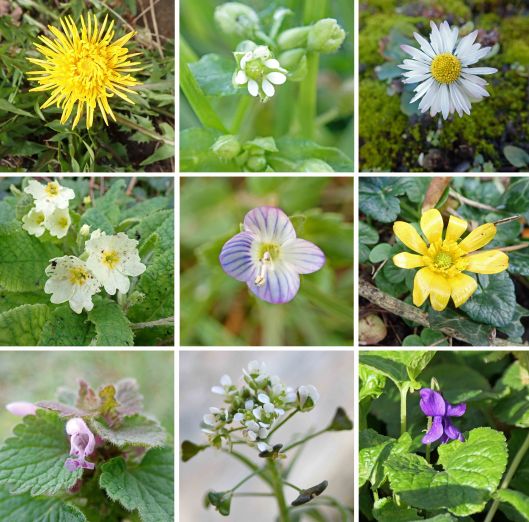
As poet Robbie Burns wrote ‘The best laid schemes … gang aft agley’, and such was my experience this week. I’d planned to go for a long walk today to search out as many wildflowers in bloom as I could but the weather has intervened, with forecast strong wind and heavy rain warnings. So, here are nine flowers I grabbed in a short walk yesterday, though I didn’t photograph all I saw. I know, for example, that Petty spurge, Groundsel, one of the bittercresses, Snow drops and Three-cornered leek, as well as Ivy-leaved toadflax, were among those I missed. Still, it was nice to see my first Sweet violets of the year and a little Red dead-nettle, and there’s always next Sunday …

A Dipper dipping

Tags

, , ,

I heard this Dipper singing before I saw it. With my binoculars, I scanned the stones and small boulders along the opposite edge of the River Taff, near Radyr in south Wales, until I spotted the bird, then stood mesmerised as it sang its sweet melody, presumably hoping to attract a female Dipper.

Serenade over, the bird proceeded to do as its name implies, dipping beneath the fast-flowing waters of the river. This is how Dippers feed, moving along underwater in the search for small invertebrates, though, in this case, I’m not sure whether the Dipper was feeding or washing itself or simply enjoying a good splash. It was a delight to watch so I tried to capture some of the action for you all to enjoy.

Spider: Platnickina tincta

Tags

, , ,

My local records centre SEWBReC, the South East Wales Biodiversity Records Centre, likes to support local recorders like me and has recently, very generously, given me a book grant, with which I’ve purchased guide books to help me identify spiders, craneflies and, yet to come when it’s published in October, a book about flies.
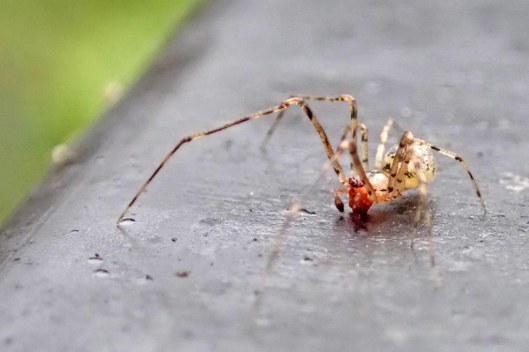
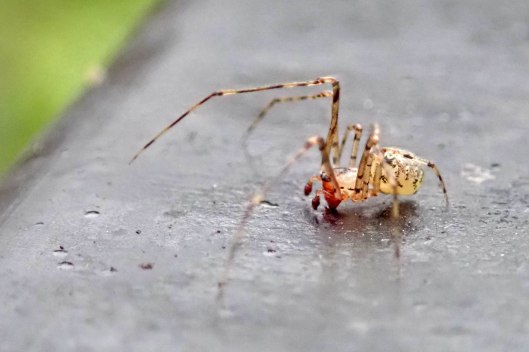
Now, I feel duty bound to look more closely at these creatures (of course, that’s why I chose these books), and this week I found a spider I’d never seen before. At first, I thought this tiny spider, just 2.5-3.5mm in length, was a Spitting spider but the size, location and daytime sighting didn’t fit – Spitting spiders are slightly larger, night time roamers and favour indoor locations, particularly museums for some reason. So, I posted some photos on social media, and got an almost instant answer from SEWBReC’s partner organisation Cofnod, the local environmental records centre for north Wales.

My spider is almost certainly an adult male Platnickina tincta, a species that’s usually found low down in shrubs and tree branches. It’s a bit of an opportunist it seems, feeding on other small spiders and stealing their prey from their webs. It’s uncommon in Wales; the Spider and Harvestman Recording Scheme website shows the distribution in Britain, where this species is abundant in the southeast but increasingly scarce as we track north and west.

Male Bullfinches

Tags

, , , , ,

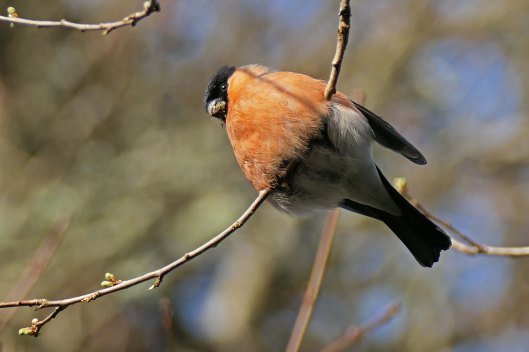
For me the male Bullfinch, with his glorious apricot breast feathers, is the most exotic-looking of Britain’s birds. He looks like he belongs in a tropical rain forest, not in the sub-zero temperatures of a British winter. These two particularly handsome chaps were busily nibbling the new buds from the trees at Forest Farm Nature Reserve earlier this week, which is why these birds are never much liked by orchardists.

There were female Bullfinches about as well, though, for some reason, they tended to be skulking in the furthest reaches of the branches, out of this photographer’s lens range. Perhaps it’s just that male birds in general like to advertise their presence more as we approach spring and the breeding season.

Elm bark beetle

Tags

, , , , , ,

After last Friday’s post about the Velvet shanks I’d found on a dead Wych elm, it occurred to me that I couldn’t recall seeing any traces of the elm bark beetles (likely the Large elm bark beetle Scolytus scolytus, according to an article on the Forest Research website) that carry the fungus that killed the tree. So, I went back for another look, and it turns out I hadn’t looked closely enough: there were signs of beetle activity all over the exposed areas of trunk where bark had fallen away and this showed up much more clearly on the darker underside of the bark itself.

During the summer, the female elm bark beetle drills a hole through the tree’s bark, then creates a long straight burrow (called the mother tunnel) under the bark. As she excavates, she lays eggs and, when the larvae hatch they create their own tunnels outwards from the mother tunnel. If the effects of their presence weren’t so deadly, the tunnels could almost be viewed as tiny works of art.

Rook pair-bonding behaviour

Tags

, , , , , ,

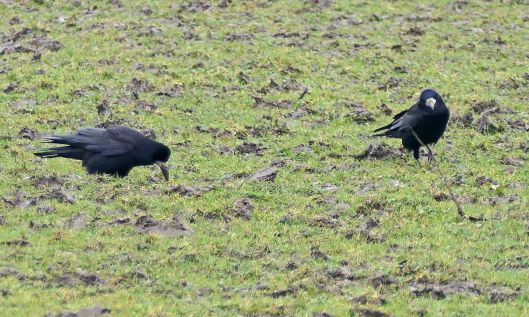
I’d read, on the British Trust for Ornithology website, that ‘Rook pairs spend a lot of time close together, feeding one another, displaying and vocalising together and preening’, but had never seen that behaviour until last Sunday when I stood watching eight Rooks grazing a horse field.

As you will see in my short video clip, one bird ‘bows’ to the other, while splaying out its tail feathers, then its mate feeds it. What a privilege it was to witness this pair-bonding behaviour.

Leafmines on Spring flowers

Tags

, , , , , ,

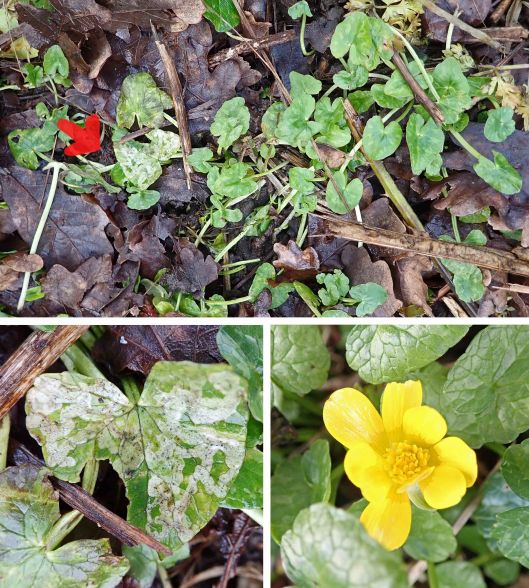
While you’re admiring the beautiful Spring wildflowers that are now beginning to bloom, keep an eye out for leafmines on their leaves. These are two examples that seem widespread and easy to find. I’ve linked to my previous blogs on these species so you can read more if you so choose.

Phytomyza ranunculi on Lesser celandine

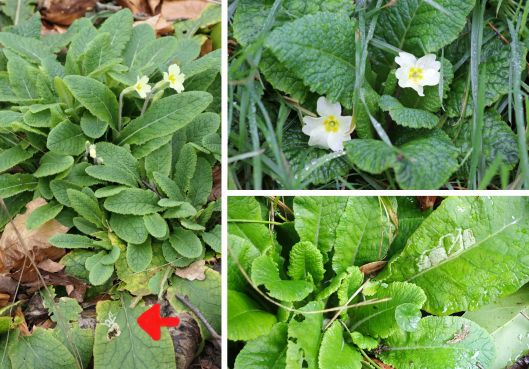
Chromatomyia primulae on Primrose

Leaf skeletons

Tags

, , ,

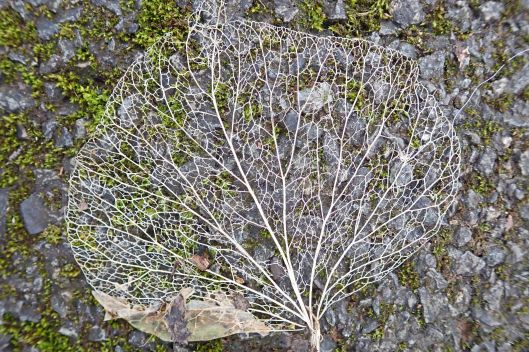
I googled ‘leaf skeletons’ and found links to blogs and videos on how to make leaf skeletons, and advertisements for various websites selling skeletons, from locations as distant as Thailand, to be used in art projects and journals.

I found this depressing! Where are the expressions of joy at finding a skeleton when you’re out for a walk, a skeleton that has been produced by natural methods, a combination of weather, perhaps a muddy surface, insect feeding, the natural process of rotting and deterioration? I liken leaf skeletons to feathers, small natural gifts that brighten a walk in dull grey winter weather and always bring a smile.

Scurrying Turnstones

Tags

, , , ,

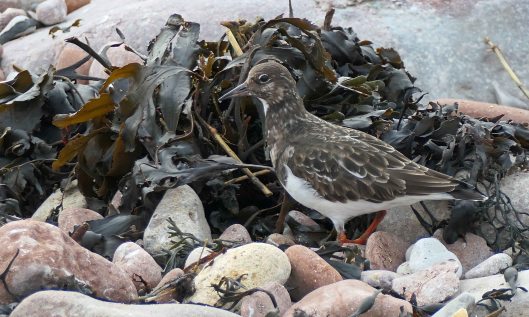
As is often the case, I heard them before I saw them, a huddle of perhaps 20 Turnstones, busily scurrying back and forth, flicking their way through the most recent piles of seaweed deposited by the outgoing tide and hooking their beaks beneath the smaller stones to find the delicacies hidden beneath.

Though my video only catches the distant sound of the waves, I could hear two other, different types of sound: as well as the clinking of the stones, the birds were also chattering to themselves and each other. I wondered what they were saying: ‘Look what I’ve found’; ‘This one’s juicy’; ‘That’s mine’; ‘It’s a good feast today’; ‘I saw that first’?

As walkers passed by with their dogs, completely oblivious to the delightful gathering just a few feet below their path, I paused to watch and enjoy these glorious little shore birds going about their daily business.

Velvet shanks and a Wych elm

Tags

, , , ,

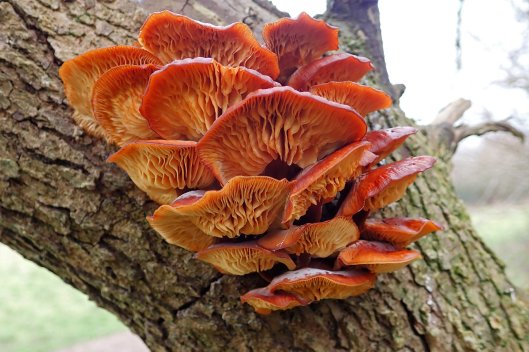
The tree where I found these lush Velvet shanks growing was the Wych elm where, in October 2021, I found my first ever Elm zigzag sawfly larvae (Aproceros leucopoda), the first of this invasive species to be recorded in Wales (see my blog post Zorro comes to Wales). Now, that tree and several other young Wych elms growing in the margins of this field are all dead, presumably as a result of another invasive species, the fungus that causes Dutch elm disease (Ophiostoma novo-ulmi).

The Elm zigzag sawflies have spread well beyond this field now so won’t be affected by the tree’s death, and, though, presumably, the Dutch elm disease fungus dies when its host tree has died, it will continue to spread as it’s carried to new trees by Elm bark beetles (Scolytus species).

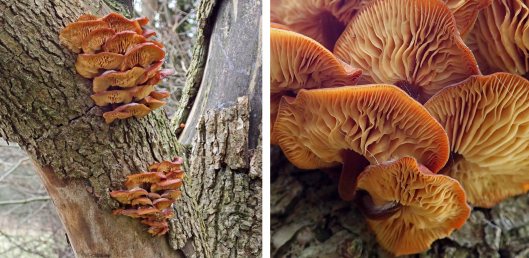
Yet, as with all living organisms, the death of one brings life-giving opportunities for others. So, though dead, the Wych elm is now providing sustenance to invertebrates that thrive in decaying wood and to the lovely Velvet shanks (Flammulina velutipes) that are specialists in devouring standing dead wood. Some of the clumps of Velvet shanks had already completed their lifecycle and were themselves rotting away but, as you can see in my photos below, more were oozing from the cracks in the tree’s trunk and branches.