Leafmining in the dead of winter

Tags

, , , , , , , ,

I reminded myself during Saturday’s meander around local trails and pathways that leafmining can be a year round pastime. I didn’t find anything new but I did find several miners that I’ve seen and blogged about before. So, if you’ve a mind to get started on your personal journey of discovering leafmines, there’s no need to wait until the warmer months.
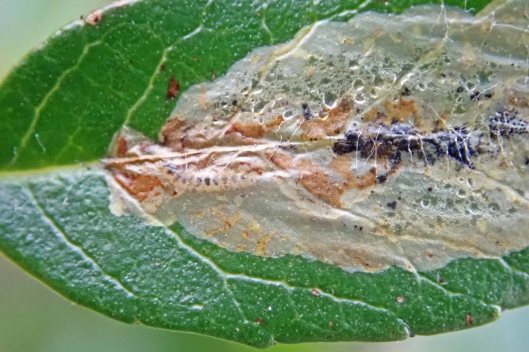
Phyllonorycter leucographella on one of the Pyracantha species. The tiny larva, with its black on white markings, is just visible within the mine.
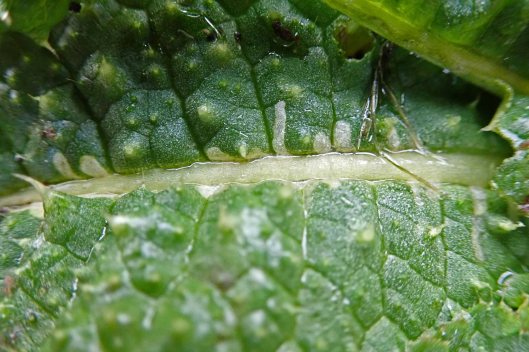
Chromatomyia ramosa just getting started on a new Teasel rosette
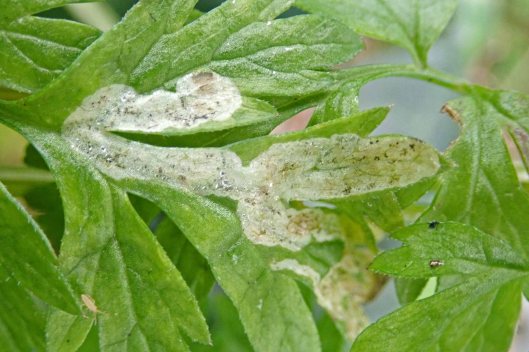
Phytomyza chaerophylli on newly sprouted Cow parsley
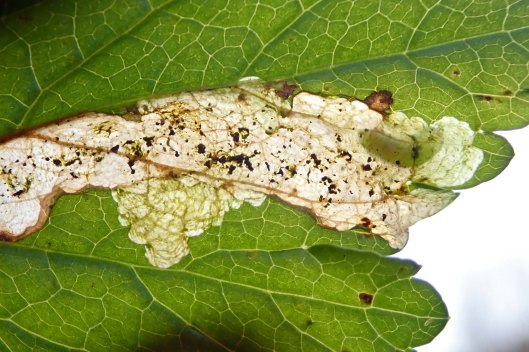
Euleia heraclei on Alexanders, a plant that grows almost constantly and very prolifically here in coastal south Wales. I held the leaf up to the light so as to show the larva within.

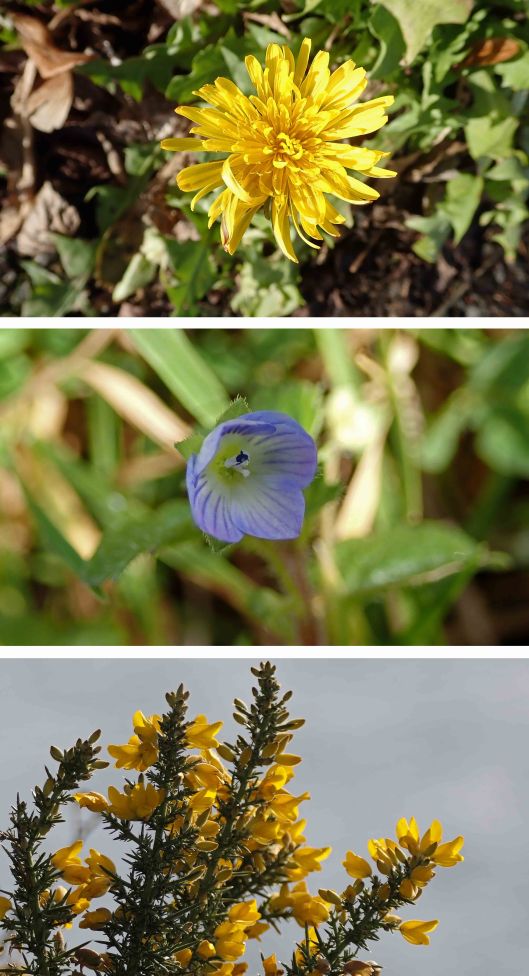
Winter 12

Tags

, , ,

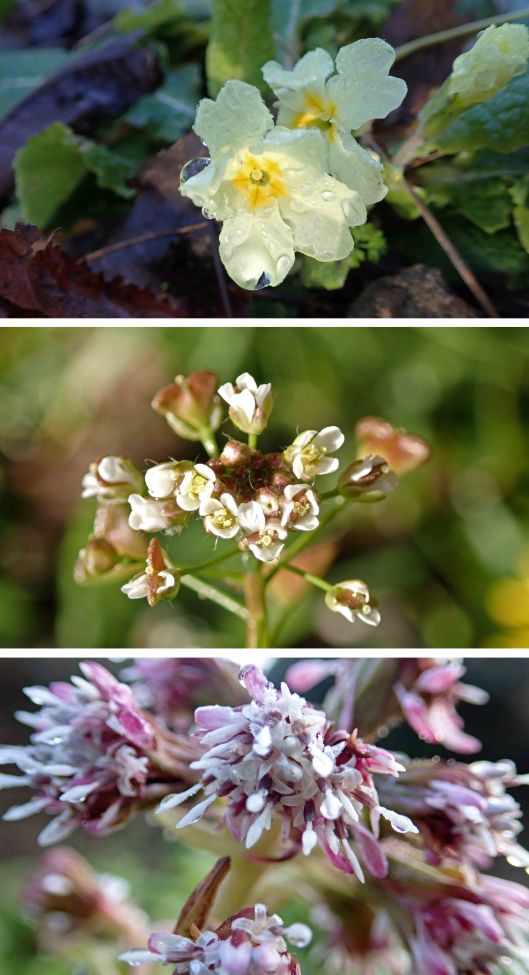
Some sub-zero overnight temperatures have knocked back many wildflowers but I was pleased still to find these 12 species in flower.

The first of this year’s Cow parsley, Creeping buttercup, and ever reliable Daisy

Dandelion, Field speedwell (I had to wait for some sunshine for these to open), and glorious Gorse

Groundsel, Honeysuckle (barely, but I’ll take it), and Lesser celandine

Primrose, Shepherd’s-purse, and the deliciously smelling Winter heliotrope

Double trouble

Tags

, , , , ,

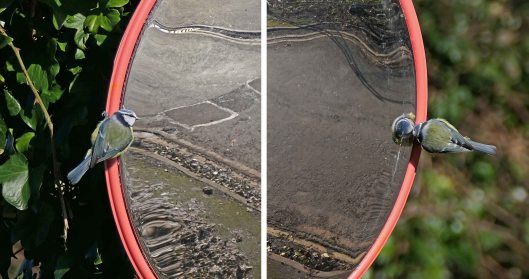
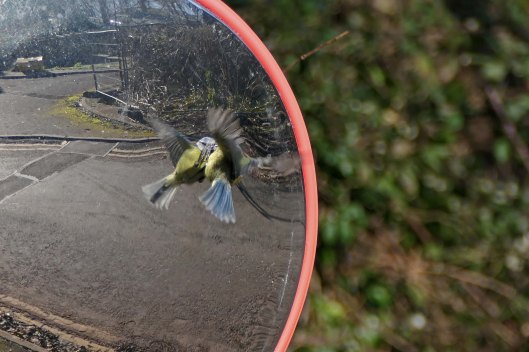
This was really funny to watch though, after a while, I began to feel guilty for laughing at the poor little Blue tit because it was getting more and more agitated about that other Blue tit in the mirror.

Birds, of course, don’t understand the concept of a mirror or reflective surface, so think they are seeing another bird that has invaded their territory and try to chase it away.

In case you haven’t seen one of these mirrors before, they can be attached to a post opposite the entrance to someone’s driveway so they can more easily see approaching traffic when trying to exit their property.

Fluted bird’s nest fungi

Tags

, , , ,

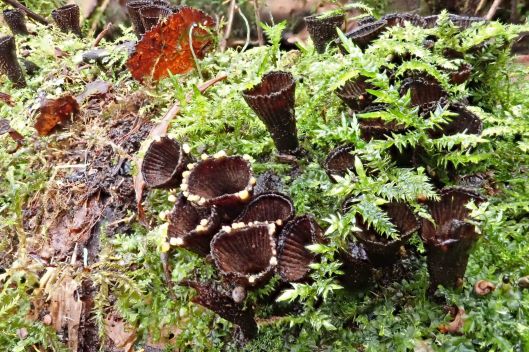
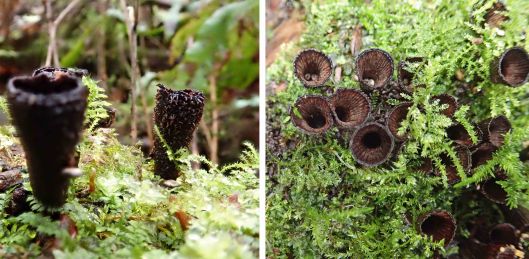
Almost seven and a half years have passed since I first saw these fungi, the perfectly named Fluted bird’s nest fungi (Cyathus striatus) (I blogged about that sighting in More Bird’s-nests with eggs! on 11 September 2017).

Since then, every time I’ve passed this location I’ve cast my eye over the various mossy logs and branches that lie adjacent to the path, hoping to spot them again. I saw nothing until my visit this past Wednesday and, to be honest, I’m amazed I was able to see them then, as the logs were draped in Bramble, through which I had to push my way to get closer. It was worth a couple of scratches though, to see these stunning fungi again.

With their shaggy looking exterior covering and the ribbed interior, they’re very distinctive and so easy to identify, which is always a bonus with fungi. They can be found (if you’re lucky!) growing on wood, usually within woodlands.

Common and green

Tags

, , ,

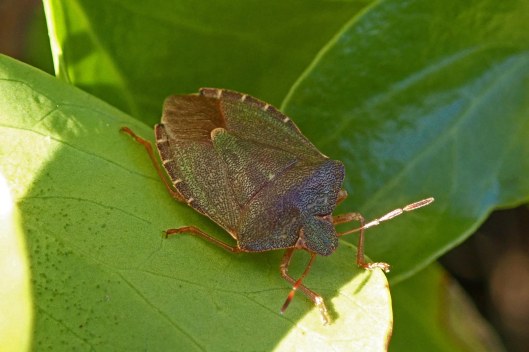
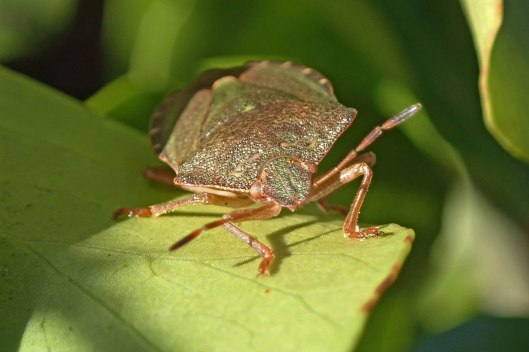
I called this blog common and green as that is the name of this lovely creature, the Common green shieldbug (Palomena prasina), but this particular shieldbug’s colour looked to be half way between its summer green colour and the bronze it assumes during the winter months.

It was basking on an ivy leaf, out of the chill wind, in today’s relatively warm winter sunshine, and, in my fanciful imagination, I thought it looked to be smiling contentedly. I was certainly smiling to see this, my first shieldbug of 2025.

Foraging Common sandpiper

Tags

, , , ,

In recent years we have been fortunate to have had one or two Common sandpipers overwintering around the edges of Cardiff Bay so I see these stunning little birds on a regular basis, and they never fail to delight me with their scurrying and bobbing as they forage for food amongst the stones and along the water’s edge.

Yesterday, I watched this little one for quite some time and, as it was unaware of my presence, was able to make a short video of its behaviour. I hope you enjoy watching it as much as I did at the time.

Creeping ever skywards

Tags

, , ,

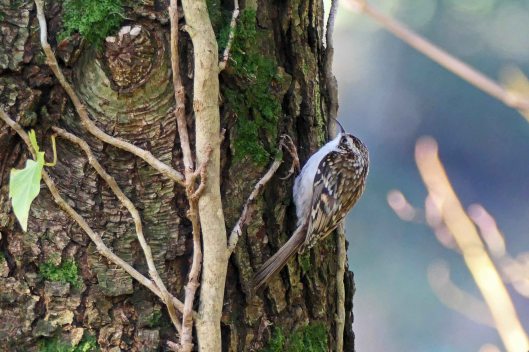
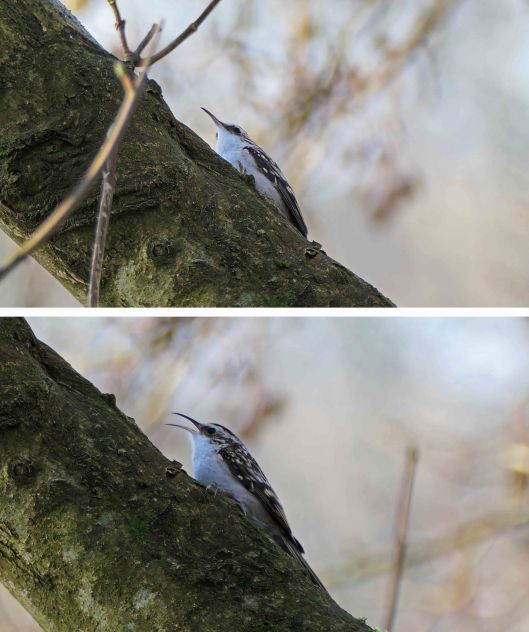
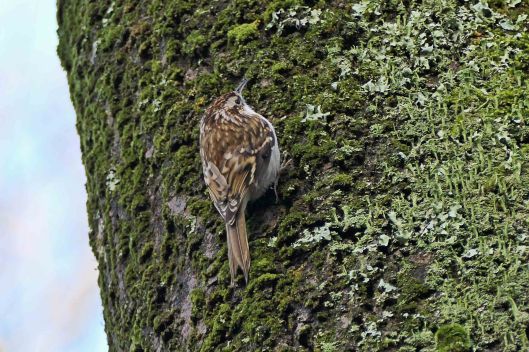
Treecreepers frequently elude me so it has been wonderful this month to have had the privilege of seeing several, and those at a variety of locations, though always in the wooded areas they call home.

I’m lucky that my hearing is still reasonably good so I can hear their tinkling call. Sometimes that is what alerts me to their presence; other times it’s a fleeting movement in my peripheral vision as they flit from the top of one tree trunk to the bottom of another, or from a high branch to a lower one.

Even then they can be difficult to spot; though their bellies are bright white, the variegated browns on their backs make for good camouflage, and they seem always to spiral as they climb, frequently disappearing from view. Given these challenges, I feel very lucky to have captured several reasonable photos of these beautiful little birds.

First caterpillar of 2025

Tags

, , , ,

I actually spotted this little caterpillar nine days ago, on 16 January, but have struggled to put a name to it (I have a caterpillar guide book but the illustrations are so small that I find it difficult to distinguish between the many green caterpillars). I wondered if it might be a Silver Y moth (Autographa gamma) and some of my social media contacts agreed, though I’m still not entirely convinced. It was munching on the leaves of an Aquilegia that had escaped the confines of someone’s garden bed.

First Snowdrops

Tags

, , ,

The snowdrop and primrose our woodlands adorn,
And violets bathe in the wet o’ the morn
~ from Robert Burns’ poem ‘My Nanie’s Awa’, translated in to modern English

Have you seen your first Snowdrops yet? I spotted small clumps in two locations this week, surrounded by mud rather than snow, but they were still heartwarming to see.

Nest excavation

Tags

, , , , ,

Usually, when birds’ brains turn to breeding, they begin building their nests but not the Nuthatch. These birds raise their young in holes in tree trunks so they need to excavate their nests. Rather than dig out the entire hole on their own, they sometimes take advantage of a natural hole in the wood, perhaps where a branch had broken off, or, more often, they use a hole that has previously been used by a woodpecker.

Still, some remodelling or, at the very least, a good clear out would probably be necessary, and that’s exactly what I spotted this particular Nuthatch doing at Forest Farm earlier this week. It would dive inside, disappearing completely for a minute or so, then its head would appear, and it would give itself a good shake to release the tiny bits of wood it had excavated with its sharp beak. This went on for quite a while until a well-meaning woman came along and sprinkled some seeds on a nearby branch. That brought in several small birds and, when it realised food was on offer, the Nuthatch quickly became distracted. Still, I’m sure it will return to the nest hole, and I’ll certainly be checking out this location on future visits, keeping an eye out for signs the nest contains chicks.