My first Palmate newt

Tags

, , , , , ,

On Monday, I saw my very first Palmate newt (Lissotriton helveticus).
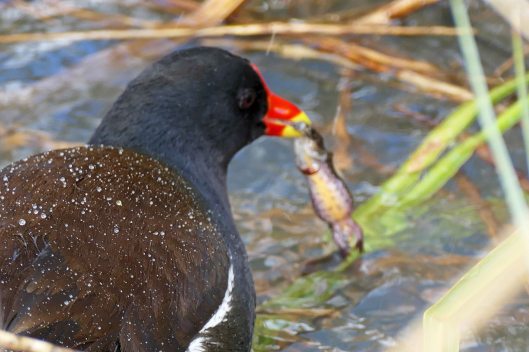
240229 palmate newt (1)

Unfortunately …

240229 palmate newt (2)

The Moorhen was treating the newt in almost the same way a cat sometimes plays with a mouse, dropping it, picking it up again, twirling it round, bashing it against the water and reeds. And, surprisingly, it didn’t eat the newt, just dropped it in the water and stalked away when some people came noisily walking along the adjacent boardwalk.
p.s. I’m hoping at some stage to see a live newt!

Weevil: Dorytomus taeniatus

Tags

, , , , ,

This was the other new-to-me species I found during last Wednesday’s walk (see also Monday’s post about the Ghost slug), or rather, these were – three tiny weevils, which, I think, must be Dorytomus taeniatus.

The reason I think that is partly because they fit the description I found on the Nature Spot website: a ‘small weevil with a mottled dark and light brown appearance’, and partly because these weevils develop inside willow catkins, which is where I found them. One was even sheltering or, perhaps, not yet emerged from inside one of the catkins. My photos are not very clear, sorry – I’m going to look for more of these when/if the weather improves.

240228 Dorytomus taeniatus (2)

Ghost slug

Tags

, ,

Last week was miserable – two consecutive days of heavy rain warnings, grey, miserable, and only brief snippets of sunshine all week. Despite this, and much to my amazement, when I donned full waterproofs, grabbed my small waterproof camera, and went out for a walk last Wednesday, I found two new-to-me species.

240228 ghost slug (1)

The first was this Ghost slug (Selenochlamys ysbryda), a species first formally recognised and named here in Wales in 2008: you may not recognise the Welsh but the epithet of its scientific name, ysbryda, is from the word ysbryd meaning ghost. The scientists think this slug has been introduced, presumably accidentally, as it has also been found in the Crimean mountains of Ukraine.

240228 ghost slug (2)

I was first alerted to the presence of Ghost slugs in a local park by the person who runs the park’s Twitter account. That was in April 2023, and then Gareth contacted me again on Tuesday to say he’d found another. I couldn’t get there till the following day and was surprised to see the slug where it had been the previous day, though the reason soon became obvious – it was dead. So, it was a Ghost slug in more ways than one!

Celandine Day

Tags

, ,

I’m a bit late to the party but last Wednesday, 21 February, was Celandine Day, so named, according to the PlantLife website, ‘since 1795, when the renowned naturalist Gilbert White noted that the first celandines usually appeared in his Hampshire village of Selborne’. The date for the appearance of the first blooms has changed rather a lot in the intervening 229 years but these gorgeous wildflowers are still worth celebrating, I think.

240225 lesser celandine

Lovey-dovey grebes

Tags

, , , , , , ,

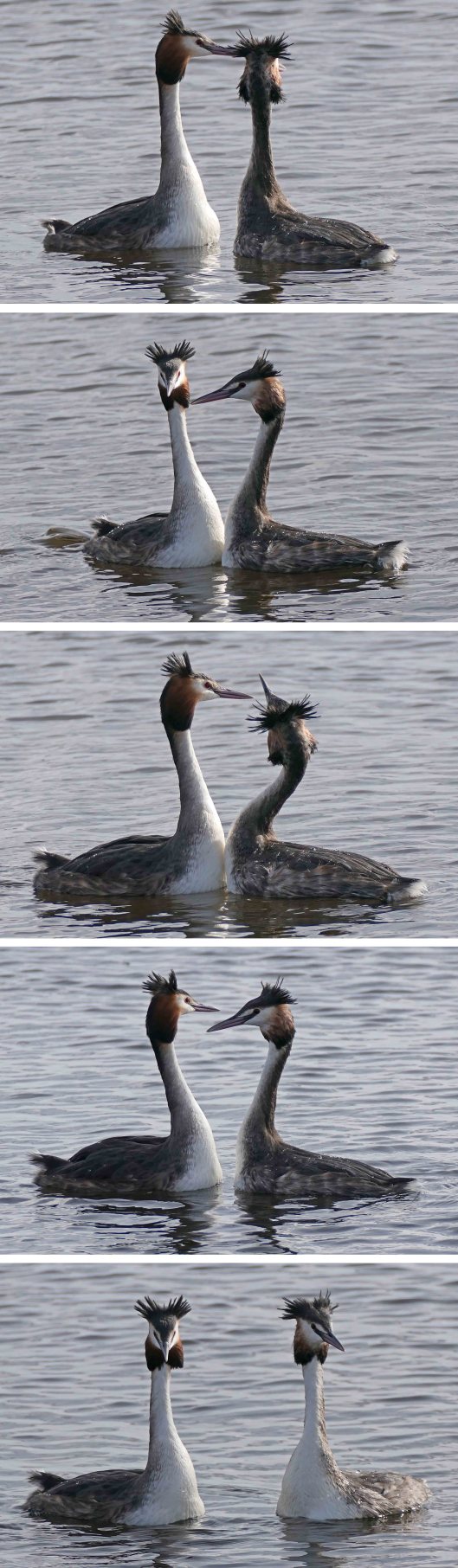
Last week it was lovey-dovey Mute swans; this week it’s lovey-dovey Great crested grebes. I don’t think these birds are actually mating yet – their displays are more about reaffirming pair bonds and practising their moves. Once again though, the birds’ movements are elegant, rhythmic, and exquisite to watch.

240224 great crested grebes

Floating fungi

Tags

, ,

Can you see it?

240223 velvet shanks (1)

I don’t mean the rubbish – sadly, this is very typical of what comes floating down the River Ely in to Cardiff Bay and on out to the Bristol Channel, and thence to the Irish Sea. I’m talking about the two blobs of orange on the large log.

240223 velvet shanks (2)

Obviously I couldn’t get very close to these fungi but they are distinctive enough to identify with confidence – these are Velvet shanks (Flammulina velutipes). I can’t help but wonder where they will end up. It’s certainly a perfect example of how easily flora and fauna can spread around the country, the globe.

240223 velvet shanks (3)

Toads and frogs

Tags

, , , , , , ,

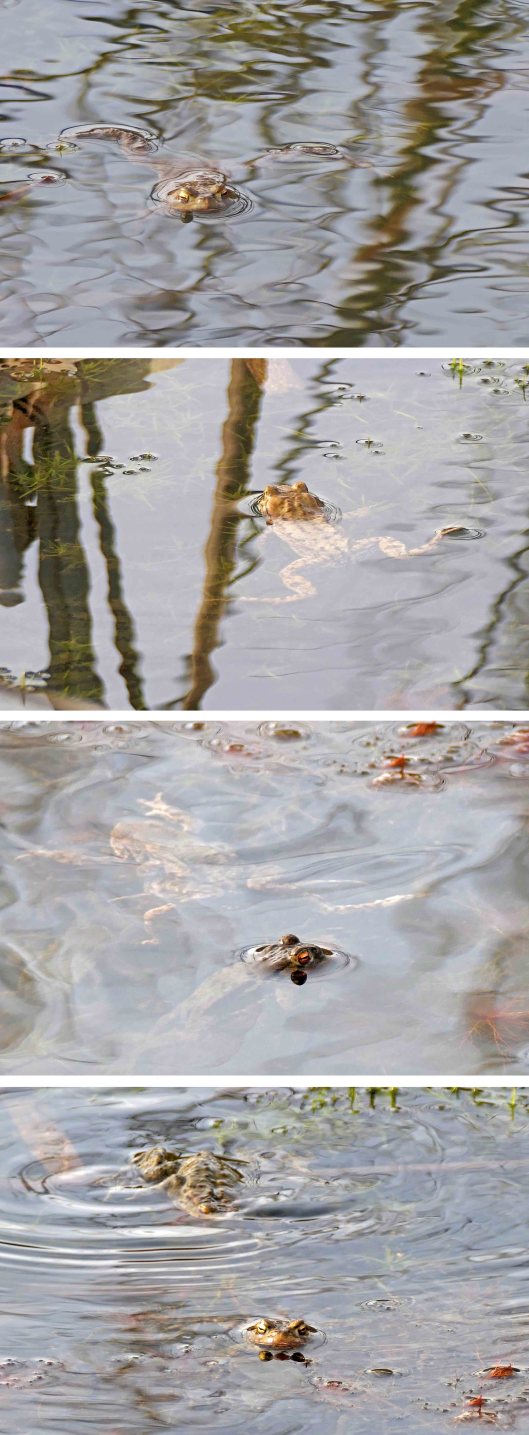
It’s ‘that’ time of year! I didn’t spot them initially, then wondered what was making the ripples in the water … and, when I looked closer, felt like a voyeur.

240222 toads

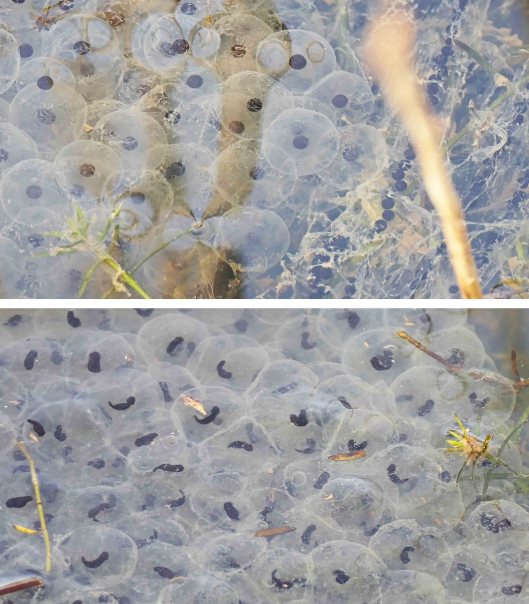
I think my photos all show Toads (though I couldn’t see their bodies or sizes properly, they all seemed to have lumpy backs) but there must have been plenty of Frogs around as well because I found both Toad and Frog spawn. Toad spawn comes in long strings, as shown in the right of the upper photo below, whereas Frog spawn consists of single eggs all lumped together. Some of the Frog spawn had obviously been there for a few days as the tiny tadpoles were already beginning to develop.

240222 toad and frog spawn

Finally, a Scaup

Tags

, , , , ,

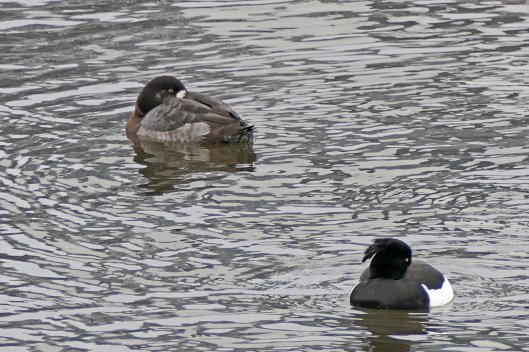
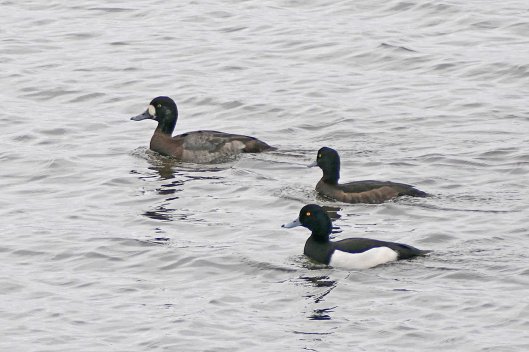
Twice previously this year I’ve thought I’ve spotted a Scaup where they frequently hang out amongst the local flocks of Tufted ducks, but I haven’t been able to positively identify those possibilities because the birds were either females or immature birds and so looked very similar to female Tufties, or they were too distant, and/or they had their heads tucked away, snoozing.

240221 scaup (1)

So, I was delighted when one of our local birders, who is much more expert than I am and had the visual assistance of a telescope, spotted this Scaup in Cardiff Bay last Friday evening. And, very fortunately, the bird paddled over to join one of the Tufty flocks overnight and was still there the next day for the rest of us birders to see and enjoy.

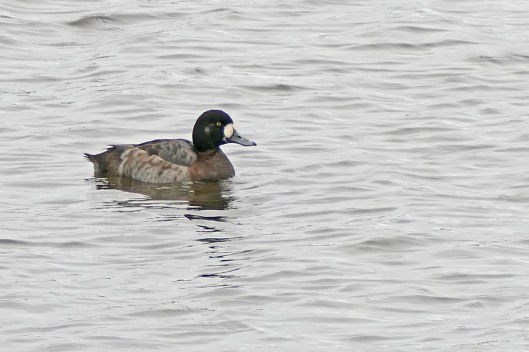
240221 scaup (2)

Though it spent a lot of its time asleep, you could still see the large white face shield that is typical of female and immature Scaup. And, though I would normally curse the unthinking kayakers who paddle far too closely to flocks of birds in the Bay, the passing of two kayaks did serve to awaken all the ducks and bring them a little closer to the water’s edge, giving much better views of this lovely duck.

240221 scaup (3)

Whose feet, 3?

Tags

, , , ,

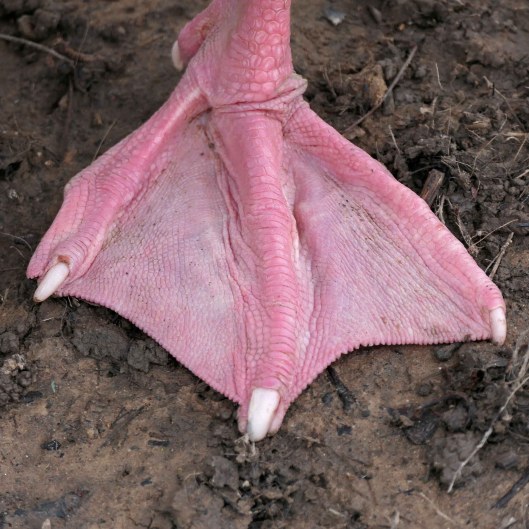
Get your thinking caps on. Here’s another bird’s foot to test those ID skills. No clues this time. I’ll reply to your comments/guesses tomorrow and update this post with a photo of the bird. Good luck!

240220 bird foot (1)

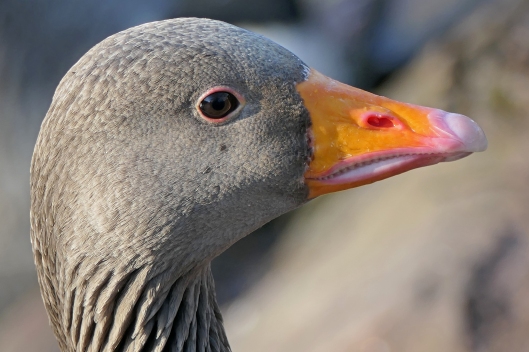
And the answer is …

240220 bird foot (2)

Greylag goose.
Thanks for all your comments. A little surprisingly, no one got this one, though there were some very smart guesses. Well done, everyone, and thanks for playing along. More feet soon! 🙂