Casebearer: Luffia lapidella

Tags

, , , ,

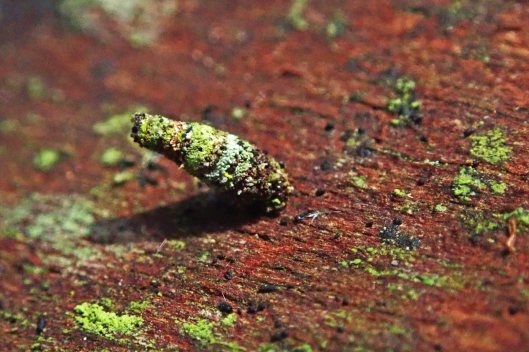
I found this very pretty lichen-covered casebearer on fallen bark during a recent visit to Cardiff’s Cathays Cemetery (this year I’ve been doing some voluntary genealogical research, which has led to a few recent cemetery visits – not that I need a lot of urging, as this cemetery is huge, an arboretum and a SSSI). By sheer coincidence, a moth ecologist I follow on social media posted a photo the very next day of a casebearer that looked very like what I’d seen. When I asked, George confirmed my find as the larva of the moth Luffia lapidella, also known as Ramshorn Bagworm, Virgin Smoke, Grey Bagworm, and Luffia ferchaultella.
240219 Luffia lapidella

As well as covering its case in colourful lichen, the larva also eats lichen, so can be found in the damp places where lichen thrives, like tree trunks and branches, fence posts and even rocks. You can read more on the Naturespot website here.
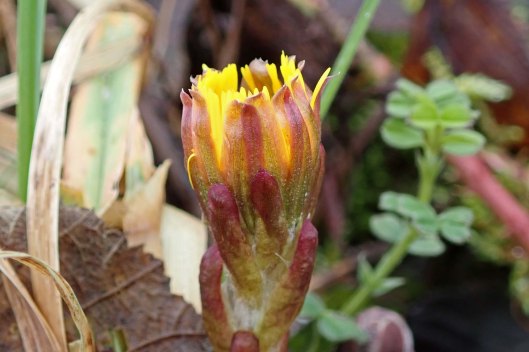
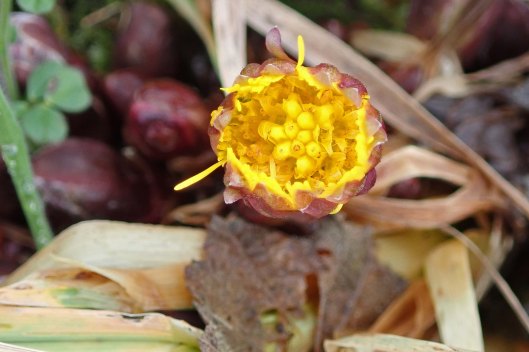
First Coltsfoot

Tags

, , , ,

240218 coltsfoot (2)

I’ve been checking this little area each time I’ve passed in recent weeks, looking for early signs of growth. It’s very overgrown with straggly brambles and long grass but, last Friday, after poking about the area with a stick, I found what I was hoping to see, my first Coltsfoot flower of the season.

240218 coltsfoot (3)

This spot, on the edge of a local park, is where I’ve seen my first Coltsfoots in bloom in the past but, as seems to be the case with most flora and fauna, this flower is at least a week earlier than my sightings in previous years.

240218 coltsfoot (1)

Lovey-dovey swans

Tags

, , , , , ,

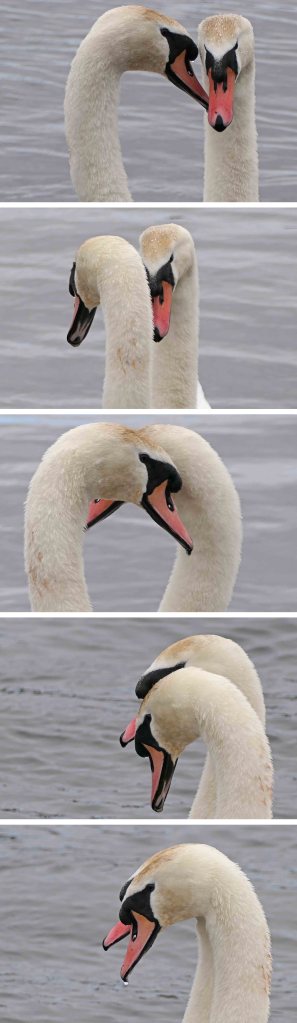
Spring is definitely in the air, according to these Mute swans. Though male swans can be quite brutal when competing for their chosen female, I saw none of that while watching these two, despite them being surrounded by a flock of other swans. The pair were gentle, their movements graceful and coordinated, and it was really rather lovely.

An early weevil

Tags

, , , ,

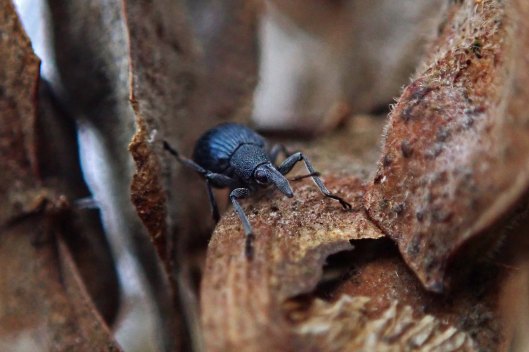
I can’t remember what led me to check the few bundles of dried Ash keys still hanging from a short tree alongside the path I walked this morning but I’m very glad I did because I found this stunning little weevil lurking amongst the keys. I’m sure this is the earliest date I’ve ever seen a weevil, more evidence if it were needed of how mild this winter has been.

240216 weevil

The Teal deal

Tags

, , ,

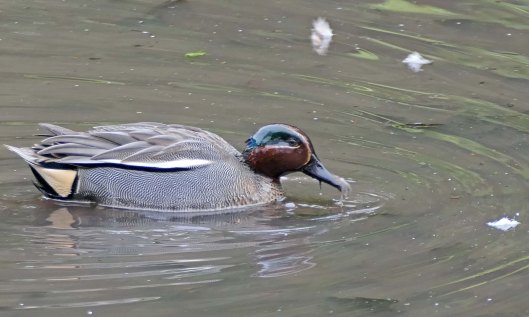
When I strolled around Cardiff’s Roath Park Lake two weeks ago, there were perhaps 20 Teal in residence, and many of the males were whistling their merry tunes. Last week, I could only find a couple of Teal so I now wonder if that whistling was an indication that the birds were beginning to think about mating, and that they have now begun their flights north towards their breeding grounds.

Though the females are the typical brown of most female ducks, the males, with their chestnut heads and green eye stripes and their finely patterned black-and-white feathered bodies, are rather gorgeous. Teal can be quite difficult to photograph at this lake: either they’re constantly bobbing their heads underwater to find food, or they’re tucked away under the lakeside foliage snoozing, so I was particularly happy to grab a couple of reasonable images of them.

Heartsease

Tags

, , , ,

This photograph was taken several years ago, at Merthyr Mawr National Nature Reserve, but I’ve not shared it before and, though I don’t personally celebrate Valentine’s Day, I was looking for something appropriate to today’s love theme for those of you who do. Heartsease (Viola tricolor), a delicate and delightful little pansy, grows wild on the edges of the dunes at Merthyr Mawr.

240214 heartsease

Catkin miner: Epinotia tenerana

Tags

, , , , , ,

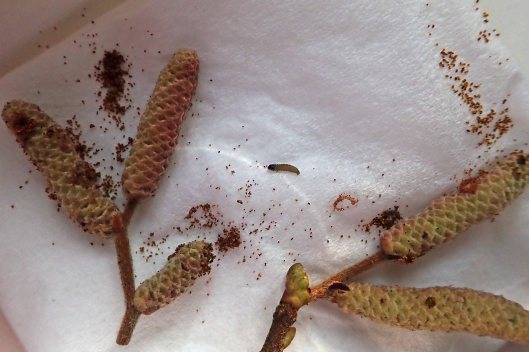
Much excitement last Sunday! I sent this tweet to Rob, who runs the British Leafminers website:

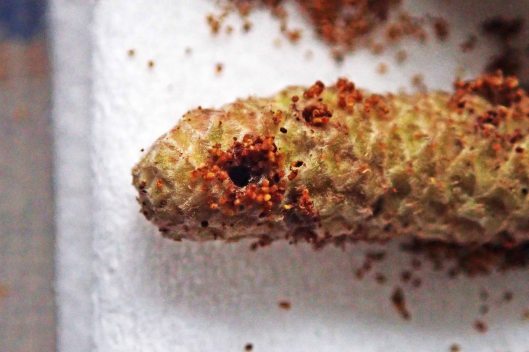
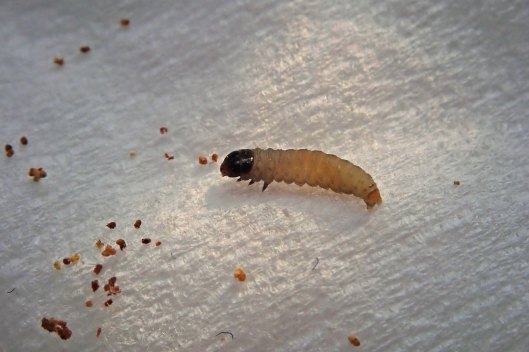
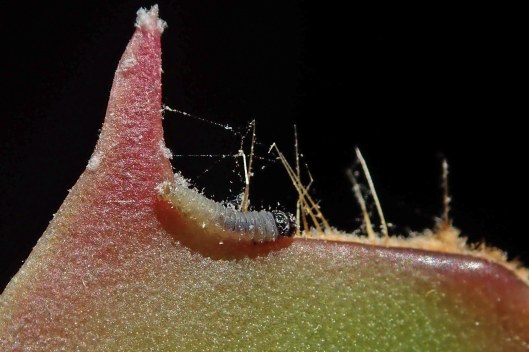
I’ve got larvae emerging from Hazel catkins!!! The lid of the container was slightly ajar & one’s done a runner, first to a cactus, now on a succulent on my kitchen window. The other’s still in the container. Might these be Epinotia tenerana?

240213 Epinotia tenerana (1)

Rob kindly confirmed my identification of these little critters as the larvae of the Nut Bud moth (Epinotia tenerana). Though these are obviously not leafminers, it was, in fact, Rob who inspired me to collect these catkins in the first place. In a tweet a couple of weeks ago, he also recommended harvesting catkins from Birch, native Alder and Italian alder, and putting them in containers to see what might emerge from them. He wasn’t specific about what to expect but I was intrigued so went a’harvesting.

240213 Epinotia tenerana (2)

If I had the right equipment and more space, I would try to rear these larvae. If you want to try this for yourself, you can read more about this moth and find instructions on the UK Moths website.

240213 Epinotia tenerana (3)

Unfortunately, there’s no sign of anything in my other containers so I might try collecting catkins from different locations and trying again.

240213 Epinotia tenerana (4)

First Blackthorn blossom

Tags

, , , ,

Wouldn’t you know it? After finishing yesterday’s post about wildflowers and trees currently in bloom, I went for a walk and found several Blackthorn / Sloe bushes / trees in flower. They’ve probably been flowering for a week or more but I hadn’t walked the path they were growing along – a reminder to keep mixing up my walking routes. What blossom have you seen in your area?

240212 blackthorn

Mid-February winter 10

Tags

, , ,

Despite this having been a very wet week, the temperatures have been quite mild and, in some cases – as with the ornamental Cherry tree outside my flat, for example – I’ve felt like I could almost see the buds fattening. So, it comes as no surprise to me that, this week, I’ve managed to find ten species of wildflower and tree in flower: Alder, Field speedwell, Dandelion, Lesser celandine, Primrose, Wild strawberry, Sweet violet, Common fumitory, Three-cornered leek, and Red dead-nettle.

Alder seeds are delicious

Tags

, , , , , ,

Alder seeds are delicious. That statement seems indisputable, judging by the gusto with which this small flock of Siskin were tearing apart the Alder cones and munching continuously and vigorously on the tiny seeds. And aren’t Siskin just the most glorious little birds? It was truly joyful to watch them at their feasting today at Cosmeston.

240210 siskin