Saw-fly

Tags

, , , , ,

Did you know that the sawfly gets its name from the way it lays its eggs? Innocuous little flies, like the beauty shown below (Arge pagana, one of the UK species that uses the rose as its larval plant), have an in-built saw-like body part that they use to cut a slot in their larval plant material and in that slot they lay their eggs.
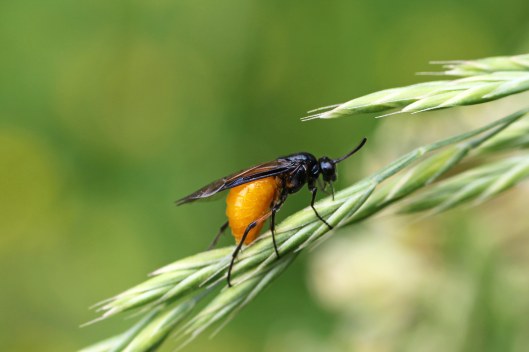
231125 Arge pagana

On some plants, like the stems of the various Rosa species used by Arge pagana, the slot leaves quite a substantial scar and, this week, for the first time, I noticed one of these when checking Dog roses for leafmines. As you can see, there’s a healthy leaf bud right next to the scar so the plant doesn’t seem to have been damaged by the slot-making process, though the voracious larvae that hatched from the eggs earlier in the year may well have stripped the rose of many of its leaves.
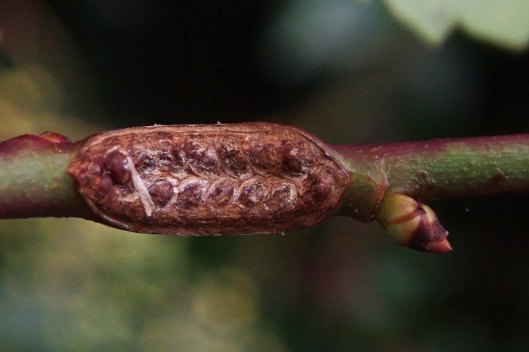
231125 sawfly egg scar

Waxcap Friday

Tags

, , , , , , , , , , ,

Green, pink, red and white are just some of the colours you can see in the diverse range of fungi known as waxcaps. These are some I’ve found during recent fungi-seeking forays.

231124 waxcap parrot

Parrot waxcap (Gliophorus psittacinus)

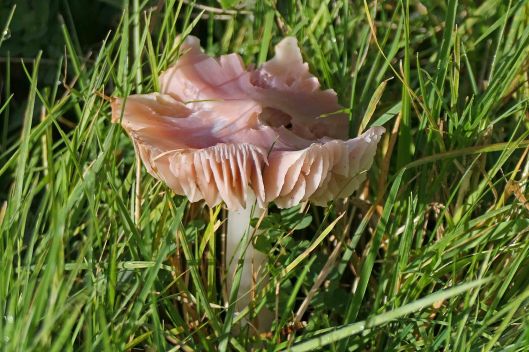
231124 waxcap pink

Pink waxcap (Porpolomopsis calyptriformis), also known as the ballerina, for the tutu-like appearance of its spread cap as it dances in the grass

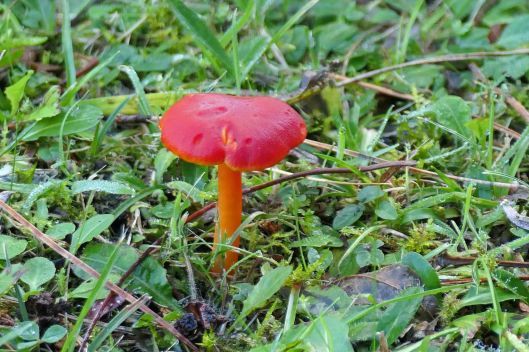
231124 waxcap scarlet

Scarlet waxcap (Hygrocybe coccinea)

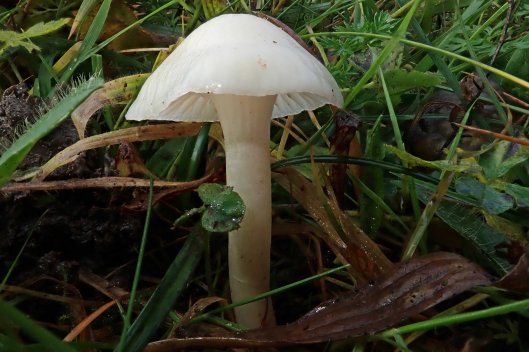
231124 waxcap snowy

Snowy waxcap (Cuphophyllus virgineus)

It’s spring!

Tags

, , ,

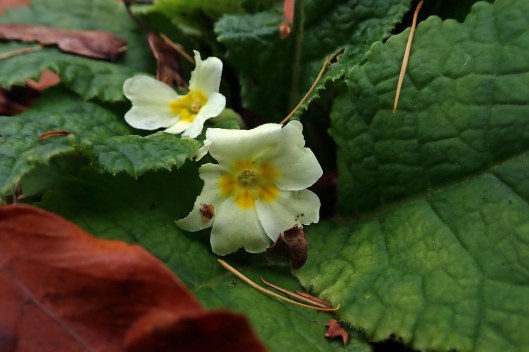
Spring? Oh, wait. We haven’t had winter yet. Well, I found my first flowering Primrose – the traditional harbinger of springtime –lurking under the trees and shrubs in the scruffier part of a local park during today’s walk. Although it has been even wetter than usual this autumn, it has been very mild so perhaps that has fooled some plants into thinking spring is just around the corner.

231122 primrose

Herring gull up close

Tags

, , , ,

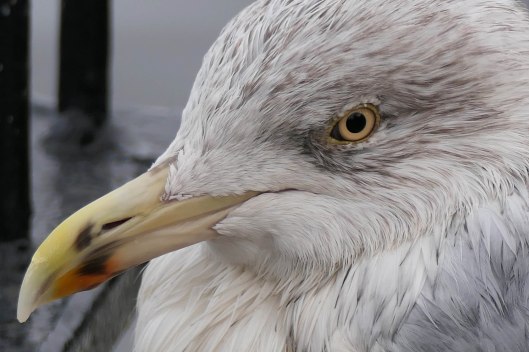
It’s not always easy to get up close to a Herring gull (Larus argentatus) as they’re rightly wary of humans. Sadly, this bird did not look well – its feathers were unkempt and it appeared to be holding its right wing at an odd angle. I didn’t want to stress it any further than it already was so took a few photos with my long lens and quickly retreated, taking an alternate route to where I was going. When I got home and checked my photos, the bird’s eye held my attention.

231121 herring gull

Leafmines: Phyllonorycter viminiella

Tags

, , , , ,

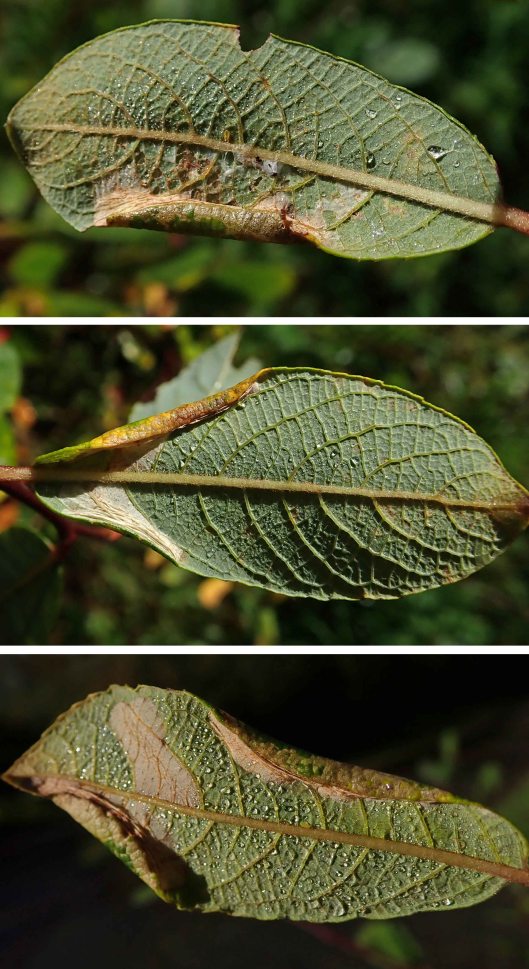
This was just the second time I’ve spotted these particular leafmines: they got a mention in On narrow-leaved willows, 26 December 2022, but I thought they deserved their own post. The larvae of the moth Phyllonorycter viminiella munch on the underside of Willows (usually those Salix species with smooth leaves), their feeding causing the edges of leaves to fold over and develop strong creasing in the mine, as you can see in my images below. These attractive little moths are bivoltine, so you can find the larval mines first around July and then again around October.

Hop trefoil

Tags

, ,

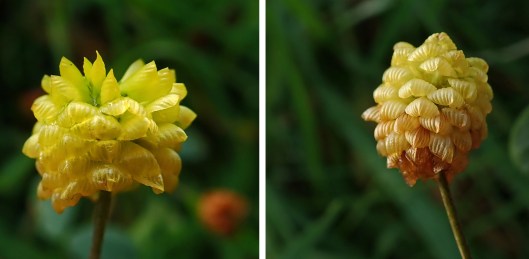
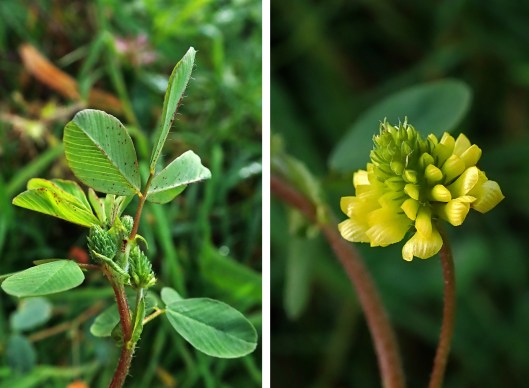
At first I hesitated to name this Hop trefoil (Trifolium campestre) as it’s a new plant for me but, when I posted some photos online, I got a thumbs up from a botanist and, looking at the ID guidance on the Naturespot website, I think it meets the criteria:

231119 Hop trefoil (1)

Short, hairy, erect plant. Trifoliate, leaflets oval, narrowed towards the base, the central one short stalked. Flowers pale yellow, becoming pale brown eventually, 4 to 5 mm long in small, globose, stalked heads to 15 mm across

And

… Larger and paler than Lesser Hop-trefoil, and turns brownish with age. Both trefoils are similar to Black Medick in flower, but Black Medick leaves are much more hairy and have an apiculate point (i.e a short fine ‘needle’ from the end of the leaflet)

231119 Hop trefoil (2)

And then there were two

Tags

, , , , ,

On 8 November I posted about the return of a male Black redstart to a location this species has, in recent years, favoured for over-wintering in Cardiff Bay. I’m pleased to report that a female has now been sighted in the same area – I spotted her hopping around the top of the BBC building last Tuesday. A female was also spotted on waste ground a couple of blocks away later in the day, which may be a third bird or it may be the same female exploring the area. We will have to wait for more sightings and photographs to be sure but it is wonderful to have these little characters back with us again.

231118 black redstart

Lumpy brackets

Tags

, , , ,

How to identify Lumpy brackets (Trametes gibbosa) (courtesy of the First Nature website):
– found on most kinds of hardwood trees but most commonly on Beech (these were on Beech)
– the pale upper surface is often discoloured by green algae, particularly away from the edges
– the pores are slot-like, rather than round or oval as found on other whitish Trametes
I found this impressive array of Lumpy brackets on a huge fallen Beech in Cardiff’s Heath Park.

Dog sick

Tags

, , , , , , ,

There are two slime moulds that are named for their resemblance to dogs’ vomit. One is called Dog sick (Mucilago crustacea), which starts off yellow but fades to white, then eventually looks much darker due to its mass of black spores. The key thing with this slime mould is that it grows on grass or other vegetation.

231116 Mucilago crustacea

The other is Fuligo septica, commonly known as the Dog vomit or Scrambled egg slime (though, obviously, it’s not something anyone would ever want to eat, regardless of how much its yellow lumpy appearance resembles scrambled egg). Although it can look very similar to Mucilago crustacea, it grows on wood, on dead trees and branches in woodland areas but also on wood chip and bark mulches, according to the Naturespot website.

231116 Fuligo septica

The Dog sick shown here was found in a cemetery last week; the Dog vomit image is from my photo library. (I hope you weren’t having your breakfast when you read this!)