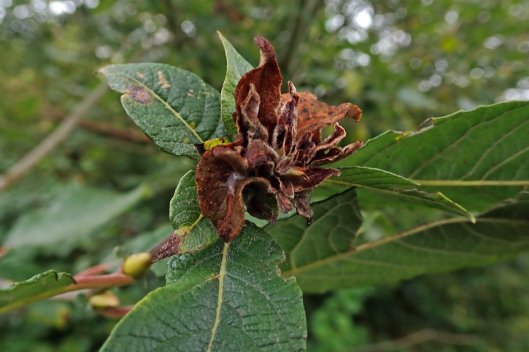
Hoverfly larvae

Tags

, , , , , , ,

It’s that time of year when, especially after rain, hoverfly larvae can be found washed off their leaves on to fence posts, railings and stones (e.g. gravestones), particularly under Sycamore trees. Twice in the past week I’ve checked the roadside railings of a local park and found several larvae each time, of three different species.
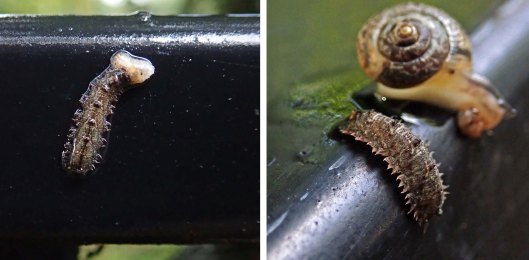
First, a little cannibalism. The first shot shows a Dasysyrphus species larva that has almost finished eating a larva of one of the Syrphus species of hoverfly. When I returned this way a couple of hours later, the Dasysyrphus sp. larva hadn’t moved far (image on the right) and almost looked like it was considering the snail as prey but I think that would be biting off more than it could chew!
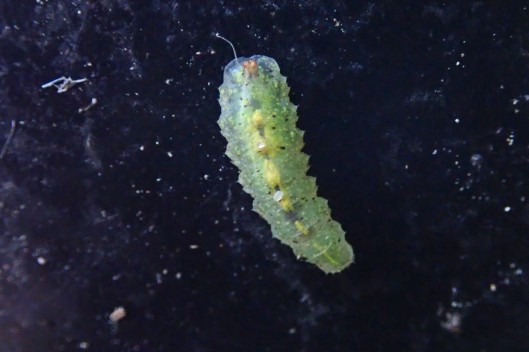
This is just the second Epistrophe grossulariae I’ve seen so I was very pleased to spot it. If you’re wondering what it will grow in to, click this link.
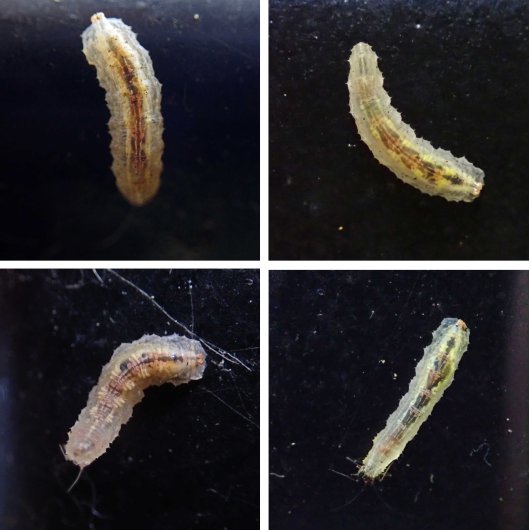
Syrphus species larvae were the most abundant (as with many of these larvae, it’s almost impossible to identify them accurately unless they’re retained and breed through to adulthood). And, as a final treat (?), here’s a little video of one of those Syrphus larvae munching on an aphid (slightly gross but compelling viewing!).

Aphids: Tuberolachnus salignus

Tags

, , ,

I know, I know. I said there’d probably be no more aphids during the winter months but they overwinter as adults, and I just happened to be looking at the leaves of a willow while waiting for a train when I spotted these and couldn’t resist a few photos. These are Giant willow aphids (Tuberolachnus salignus), and I happened to catch them in various sizes and forms: the winged aphid is an adult (the scientific term is alate).

231026 Tuberolachnus salignus on willow (1)

The Influential Points website gives some fascinating information about these aphids:

Tuberolachnus salignus is anholocyclic and no males have ever been found, so all reproduction is assumed to be parthenogenetic. The females produce live young which are all genetically identical (clones) … [and]
One part of the giant willow aphid’s life cycle remains shrouded in mystery. Tuberolachnus salignus have only been found on willow trees from July through to early March. Numbers tend to peak in October, but by February few are left on the trees and none has been seen from April to July. [So, where do they go?]

231026 Tuberolachnus salignus on willow (2)

Though I didn’t catch it on camera as my train was pulling in to the station, the aphids got annoyed with my lens being so close to them and started waving their legs at me, apparently something they do to frighten off potential predators.

Canada goose DAKP

Tags

, , , , , ,

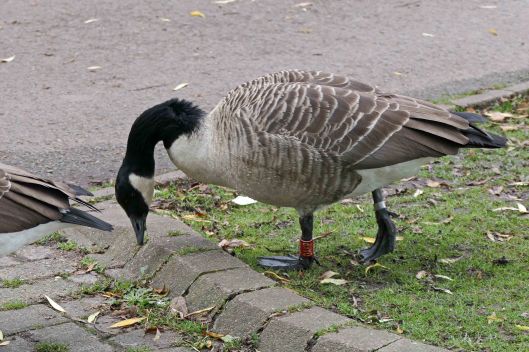
It’s always interesting to learn a bird’s history. During last Monday’s jaunt around Roath Park Lake, as well as enjoying the Shovelers, I spotted this colour-ringed Canada goose so reported my sighting. This bird was ringed near Waterhead, Ambleside, in Cumbria, in June 2016 but has since decided it prefers south Wales.

231024 canada goose (1)

First, it checked out the lake around Caerphilly Castle, where it was spotted in July 2017. Later that year, in December, a report was sent in from Cosmeston Lakes, and the goose also checked in at the coast near Ogmore, in September 2018. Since then, though, Canada goose DAKP seems to have settled at Roath Park Lake, where it’s been since December 2019. Interestingly, there are some gaps in reported sightings: from early February to late July 2020, from October 2020 to May 2021, from February to August 2022, and from late March to late July this year. Whether this means it travels elsewhere to breed, or just fancies a change of scene from time to time is impossible to tell.

231024 canada goose (2)

Leafmines: Phyllonorycter corylifoliella

Tags

, , , , , ,

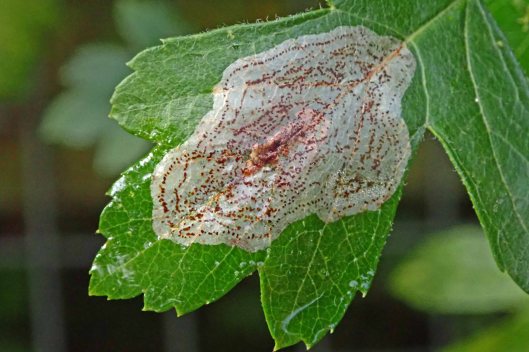
I thought I’d already shared this leafmine but it seems not so say hello to the Hawthorn midget (Phyllonorycter corylifoliella), a very attractive chestnut –and-white moth, which can be viewed on the UK Moths website and whose larvae mine the leaves of various Rosaceous trees and shrubs. As you can probably see, the mines I’ve found have been on Hawthorn (Crataegus species) but they also mine Apple (Malus sp.) and Cherry (Prunus sp.)

231023 Phyllonorycter corylifoliella (1)

The mines, which are found on the upperside of the leaves, look almost silvery and contains strings of brown frass, can be found in July, and again in September –October. The adult moths are active in May and August, though I’ve not seen one yet.

231023 Phyllonorycter corylifoliella (2)

Beautiful berries

Tags

, , , ,

I hate when this happens: I had a free Microsoft video editor that was easy to use but, for reasons known only to themselves, Microsoft have deleted it and introduced new software which is totally incomprehensible to me. So, I made a video of my berry (and other fruit) images but with no title card and no captions, and no time to spend trying to figure out how easily to add them.
So, from the local fields and hedgerows, here are: Black bryony; Blackthorn; Bramble; Buckthorn; two types of Cotoneaster which, I think, are C. horizontalis and C. luteus; Dewberry; Field rose; Guelder-rose; Hawthorn; Ivy (not yet ripe); Japanese rose; Privet; Snowberry; Spindle (not really a berry/fruit but rather a case for the seeds within, but I love their colour); Stinking iris; Whitebeam; and Yew.

Orange and spotty

Tags

, ,

As I put my foot forward to get closer to yet another bush I was examining, something tiny and yellow-looking flitted up from the ground. I was intrigued, wondering what it could be, so followed its upward trajectory until it settled on a bramble branch in front of me. Well, hello, little Orange ladybird. How lovely to see you!

231021 orange ladybird

Fungi at Cosmeston

Tags

, , , , , , ,

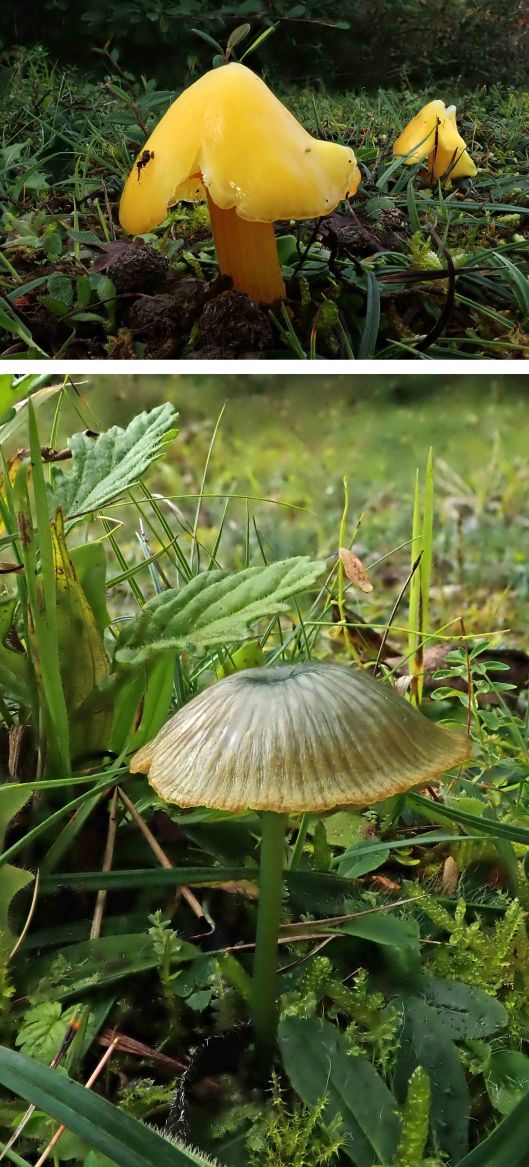
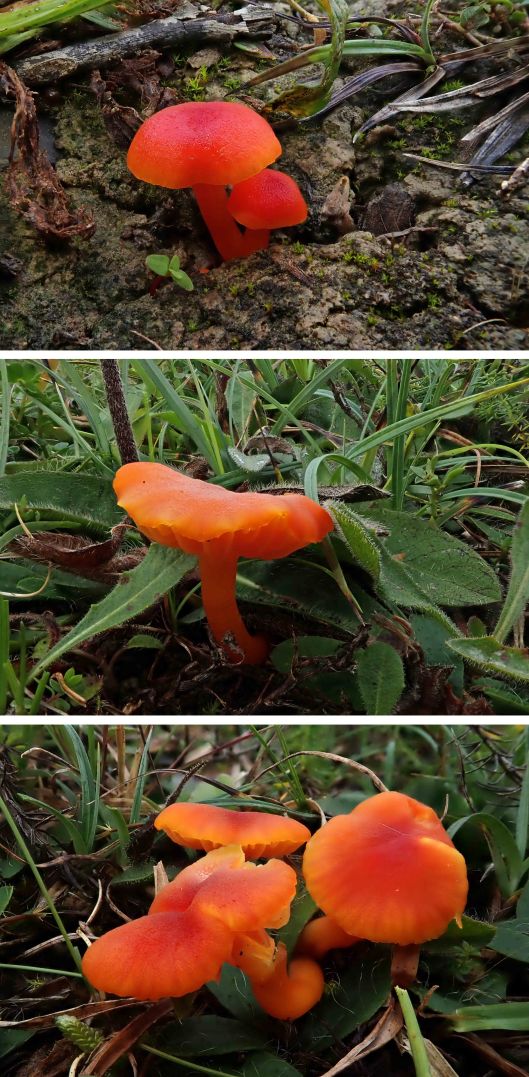
After a few wet, grey and gusty days being battered by Storm Babet, I thought we could do with some Friday night bright colour so here are some recent fungi finds from Cosmeston Lakes Country Park.

231020 cosmeston fungi (2)

The fungi above are Persistent waxcap (Hygrocybe acutoconica), the yellow beauties at the top above, and Mousepee pinkgill (Entoloma incanum), the lovely little green mushroom with the wonderful name. And, below, these are all Honey waxcaps (Hygrocybe reidii), in various stages of development.

231020 cosmeston fungi (1)

Black mummies

Tags

, , , , , , ,

Unless I find something particularly noteworthy, this might be my last venture into the confusing world of aphids and their parasites, at least for the winter months. You might remember my post about Aphid mummies on 26 September. Well, the tiny creature pictured below is also an aphid mummy and, thanks to my local expert, I can identify this as a nymph of the aphid Drepanosiphum platanoidis that has been parasitised by one of the Aphelinus species of parasitic wasps. Within its now-blackened body, a wasp larva has been eating its host, will pupate and eventually emerge as an adult wasp. (Perhaps I should have saved this post until 31 October as it has something of the Halloween / zombie / walking dead feel to it.)

First Shovelers

Tags

, , , ,

We usually see the odd Shoveler or two at Cosmeston Lakes Country Park but none have turned up so far in 2023 so on Monday I took myself off on the train for a meander around the watery areas of north Cardiff. First, a circuit of the newly reopened Llanishen and Lisvane Reservoirs turned up distant views of a Ring-necked duck and a Goldeneye, then I stomped down through Nant Fawr woodland for a circuit of Roath Park Lake where there were at least six Shovelers.

231018 shoveler (1)

Some were hiding between the islands so I could only see them through binoculars but three were more obliging, nearer the lake’s edge on the eastern side. They rarely kept still enough for photos though, constantly employing their shovel-shaped bills to sieve small pieces of plant material and insects from the water’s surface. It was a pleasure to watch them, and I went home happy with my Shoveler fix!

231018 shoveler (2)

Galls: Rabdophaga rosaria

Tags

, , , , , , ,

Although I’ve named this blog post Rabdophaga rosaria, it is apparently difficult to be specific as to which exact species has caused galls like the one pictured below, so finds are recorded as Rabdophaga strobilina / rosaria agg. The gall causer is a midge, of the family Cecidomyiidae, of which there are more than 600 species in Britain. All are tiny, less than 5mm in length, and it is their larvae that cause the plants they inhabit to form galls. In this instance, the galls are formed in the buds of willow species.

231017 Rabdophaga rosaria