Leafmines: Agromyza alnivora

Tags

, , , , , ,

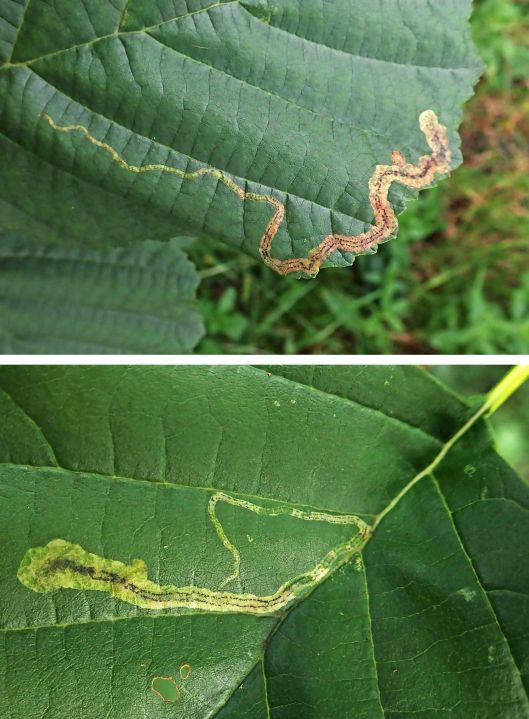
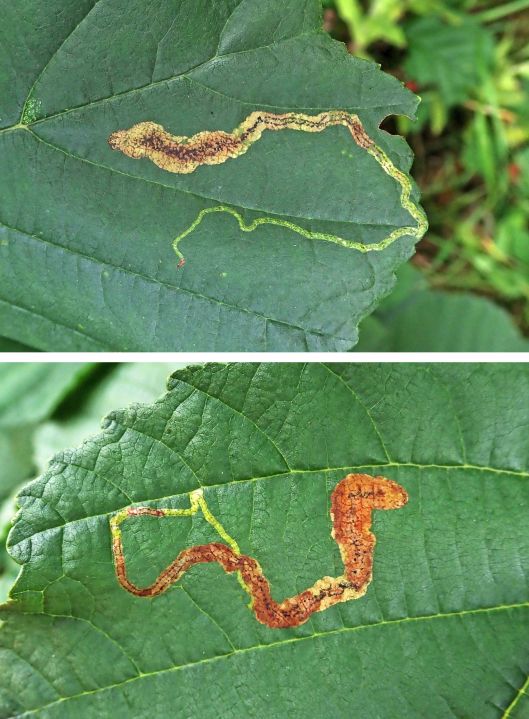
These are new leafmines for me, found during time recently spent checking the leaves of Alder trees, both the more frequently seen Alder (Alnus glutinosa) and the Italian alder (Alnus cordata), a common planting here along street edges and in parks. To me, these mines all look very snake-like!

231016 Agromyza alnivora (1)

These are the work of larvae of the fly species Agromyza alnivora. As the British Leafminers website describes, they create ‘An upper surface corridor, gradually widening, which is not associated with leaf margin or veins’, but the most distinctive feature of these mines is the frass, which is always deposited in two rows. The larvae make their mines twice each year – the technical term is bivoltine – in summer and in early autumn.

231016 Agromyza alnivora (2)

Small white on purple

Tags

, , , , , ,

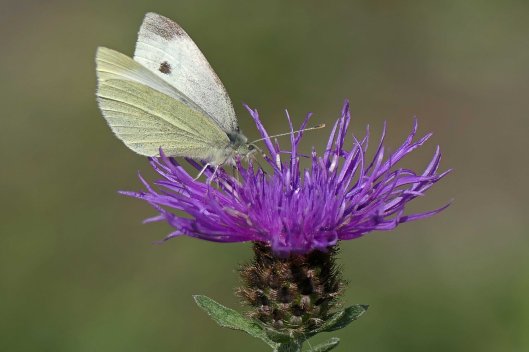
I had something different planned for today but ‘the best laid plans’ and all that. So, here is the first scene that greeted when I arrived at the local country park this chilly autumn morning, a lovely little Small white butterfly sipping from a pretty purple Common knapweed flower.

Redwings come rolling in

Tags

, , , , , ,

A week or so earlier than in recent years, the winter thrushes came rolling in, in small flocks and large, across the North Sea from northern Europe, to spend their winter months with us here in the British isles. Have you seen them? Here in south Wales, these first flocks tend to fly on through, south and west, and ‘our’ birds are either later arrivals or those earlier flocks coming back after eating up all the berries where they first alight. I’ve seen small numbers so far but I’m looking forward to getting closer views, of both the beautiful Redwings and the stunning Fieldfares, once they settle locally. (This photo is from a previous year.)

231014 redwing

A Vapourer cocoon

Tags

, , , , ,

Here’s an intriguing find I made when doing a little leaf-turning during yesterday’s rather damp local meander – a hairy cocoon on willow.

231013 vapourer cocoon

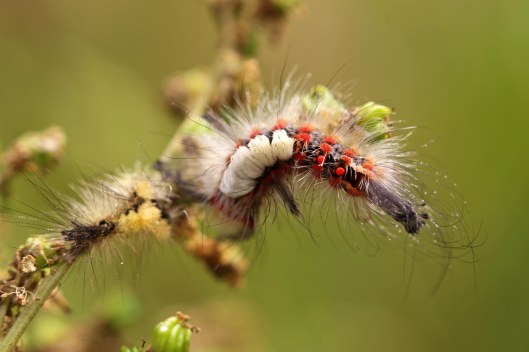
From looking at the yellow and black hairs contained within the silk, I thought perhaps this might have been created by a Pale tussock moth. Fortunately, Andy, one of the moth-ers I follow on Twitter, recognised this cocoon and was able to correct my identification. This was, in fact, created by a Vapourer moth larva (Orgyia antiqua) – below is one I photographed a few years back (it had just shed its skin, the remnants of which can be seen to the left of the caterpillar).

231013 vapourer larva

I’ve not yet seen an adult Vapourer but they are a particularly interesting species, as the female is virtually wingless – you can read more and see some images on the UK Moths website. Andy also introduced me to the Lepiform e.V. website, which, though it is in German, can still be searched using a moth’s scientific name and has an excellent and comprehensive range of images for each species, including larval stages, cocoons, pupae, etc.

The rabbit finds a way

Tags

, , , ,

I don’t know how they’ve managed it but there are rabbits living next to the port just off the Barrage in Cardiff Bay. Don’t get me wrong – I really enjoy seeing them, especially this little cutie, and their numbers seem to have increased this year.

What intrigues me how on earth they got there. I’ve marked the area they inhabit in red on the map below. I can’t think of anywhere on that map where rabbits are currently living that could be the origin of the Barrage bunnies. It’s a mystery!

A confusion of pie crusts

Tags

, , , , , , , ,

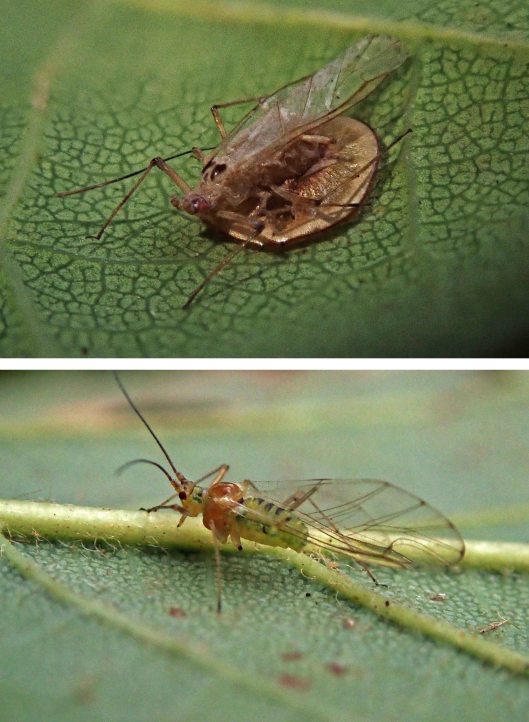
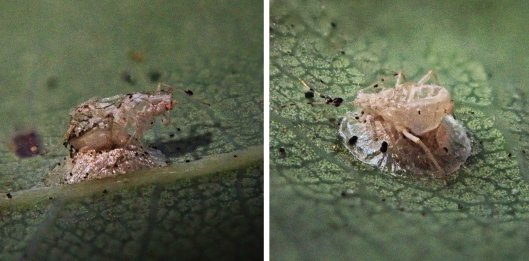
You can tell I’m no baker – I got my pie crusts confused, what should’ve been puff pastry was really a pizza base. And now you’re confused … let me explain.

Back on 19 September, I wrote about A parasitised aphid, and said that ‘The Praon genus of parasitic wasps are the only ones that create this disc-shaped attachment beneath their host’. That was wrong (and I’ve now edited that post). The Praon wasps are actually responsible for an attachment beneath their host that looks more like puff pastry. Here are examples of the two types of pie crust.

231010 Drepanosiphum platanoidis parasitised by Dyscritulus planiceps and live

First, the pizza base. The first photo above shows the aphid Drepanosiphum platanoidis, which has been parasitised by the wasp Dyscritulus planiceps. The second photo, just for comparison, shows the same species of aphid when alive.

231010 Tuberculatus parasitised by Praon flavinode

Second, the puff pastry. And these two are both Tuberculatus species of aphids that have been parasitised by Praon wasps, most likely Praon flavinode (the local expert I’ve now made contact with tells me ‘There are quite a few species of Praon/Praini but flavinode will almost certainly be the species involved with Tuberculatus on oak’). What was that I said about ‘standing at the top of a very slippery slope, at the bottom of which is a chasm filled with aphids and their parasites!’ (Aphid mummies, 26 September)? Always learning!

Leafmines: Lyonetia prunifoliella

Tags

, , , , , ,

For over 100 years, the lovely little micro moth Lyonetia prunifoliella was thought to be extinct in the UK until it was rediscovered in the 2000s in southern England. It took a while to spread across the country but was found new to Wales, near Holyhead, last autumn and, soon afterwards, found here in south Wales, at Kenfig National Nature Reserve, though just one larval mine was found despite much searching by Butterfly Conservation’s senior moth ecologist George Tordoff.
231009 lyonetia prunifoliella (1)

This year, though, George says, it’s really taken off in south Wales: he’s found it in various Cardiff parks and at Lavernock Nature Reserve. When I heard this news last Sunday, 1 October, I immediately decided to go searching, focussing in particular on the suckering growth of Blackthorn (Prunus spinosa), the tree this moth appears to favour locally for its larval leafmines (though it is known to use other roseaceous trees elsewhere).

231009 lyonetia prunifoliella (2)

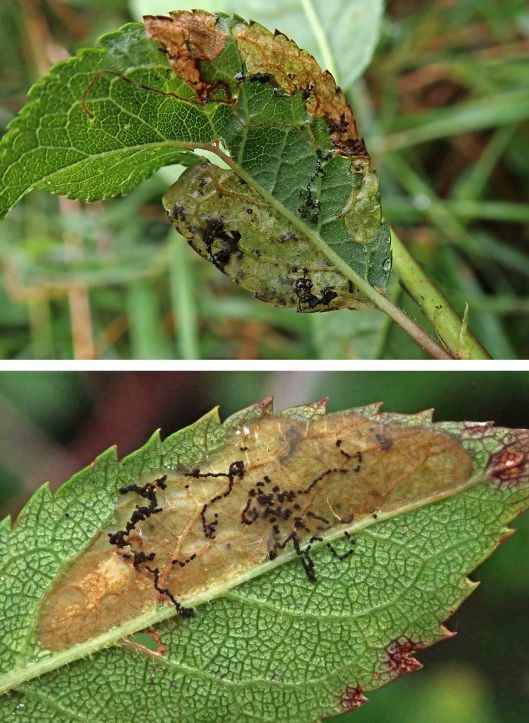
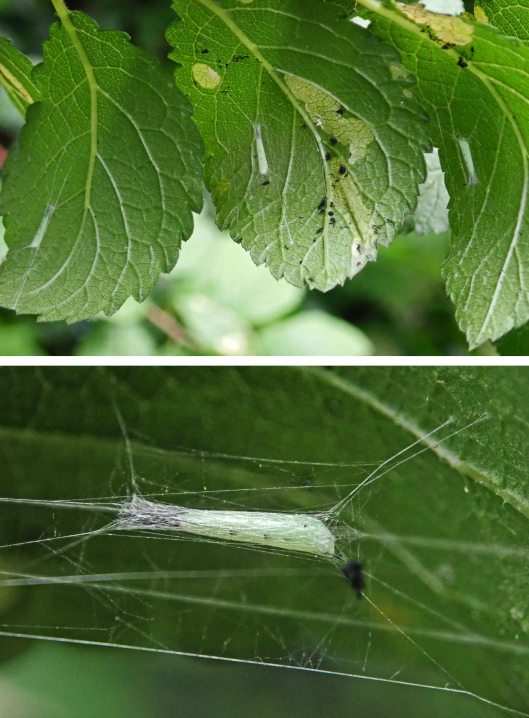
Last Monday I found Lyonetia prunifoliella mines immediately at the first place I looked, and have since found it at six locations in my surrounding area, sometimes in abundance, other times just one or two mines, despite a plentiful supply of young Blackthorn leaves. The mines are relatively easy to identify, as the larvae eject their frass from the mines in a ‘string of black pearls’, a rather poetic description from someone on Twitter but easy to remember. (The photographs above show the upper and under sides of the same leaf, with the larva apparent above and its frass ejected below.)
231009 lyonetia prunifoliella (3)

Although most mines I’ve seen have been empty (this moth overwinters as an adult), a few have held larvae, and I was particularly delighted last Thursday to find a group of five cocoons, strung like hammocks on the underside of leaves with silk produced by the larvae before they pupate. I’ve yet to see an adult moth but will definitely share that exciting moment when it happens.

An aster, but which?

Tags

, , ,

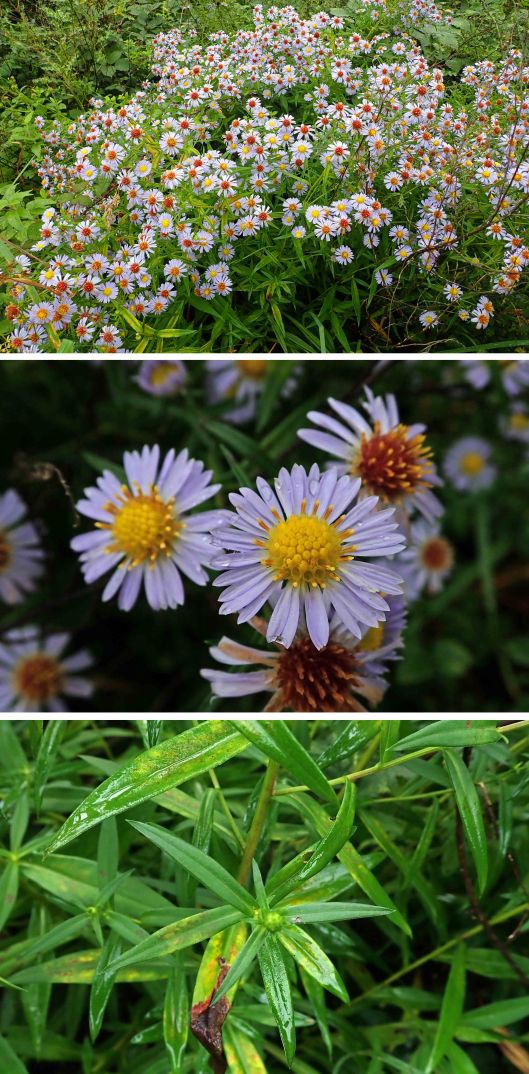
When I spotted these plants during a walk to a new place last week, I thought perhaps they were Sea asters (Tripolium pannonicum) and, indeed, they might be, but I’ve since heard how frequently other species of Aster self-seed on waste ground, which has cast doubt on my identification. These were growing in rough ground near a very busy road but quite close to the banks of a tidal creek. I’m going to have to ‘phone a friend’ but, in the meantime, if you’re familiar with Sea aster, please do venture an opinion in the comments.

231008 sea aster

Harvestman: Opilio canestrinii

Tags

,

I seem to be seeing a lot of Harvestmen this year. I’m not sure if they’re having a particular good year or if it’s just because I’m doing a lot of leaf-turning and that’s where they’re generally to be found, lurking on a leaf. With its orange coxae (think hip bones in humans – so at the top of the legs where they join the body) and a white ring around the eyes (not easy to see in this image, unfortunately), I think I’ve nailed the ID for this one: Opilio canestrinii.

231007 Harvestman Opilio canestrinii

Interestingly, the NatureSpot website reports that this harvestman is

an invader that is quickly colonising Britain. It was first seen in the UK in October 1999 beside a reservoir in the Lea Valley, Essex. The species has been expanding northwards from Italy, Austria and Switzerland. Where it has colonised Denmark and Germany, it has displaced the other two species of Opilio so this may also happen here.