• ABOUT
  • BIRDING 2018
  • Birding 2019
  • BLOG POSTS
  • Butterflies 2018
  • Resources

earthstar

~ a celebration of nature

earthstar

Tag Archives: #365DaysWild

197/365 Butterflying at Slade Wood

16 Tuesday Jul 2019

Posted by sconzani in 365DaysWildin2019, insects, nature, walks

≈ 7 Comments

Tags

#365DaysWild, British butterflies, butterfly, butterflying, Comma, Peacock, Red Admiral, Silver-washed fritillary, Slade Wood, Small tortoiseshell, White admiral

Yesterday, with my friend Sharon, I went to Slade Wood, in the neighbouring county of Gwent, for a walk and some butterflying.
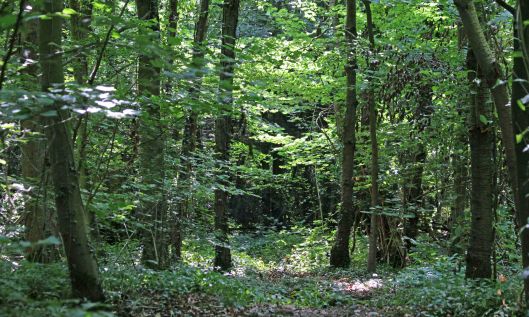
190716 Slade Wood

The woodland was lovely and a haven from the hot sun but, for us, the best butterflying was to be had just wandering along the country lane leading to the woodland. With high hedges, abundant wildflowers and occasional blooming Buddleia bushes, backed by the tall woodland trees, it was heaven for butterflies. These are a few of the 12 species we saw …
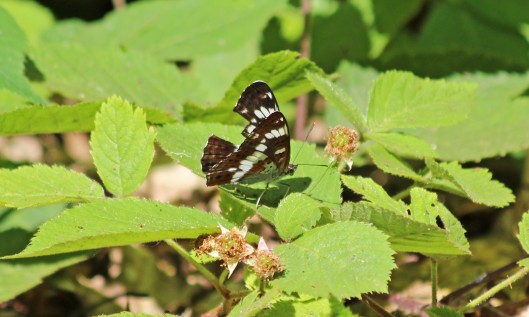
190716 white admiral

My first White admirals of the year, the first I’ve seen in Wales; they seem to float over the vegetation.
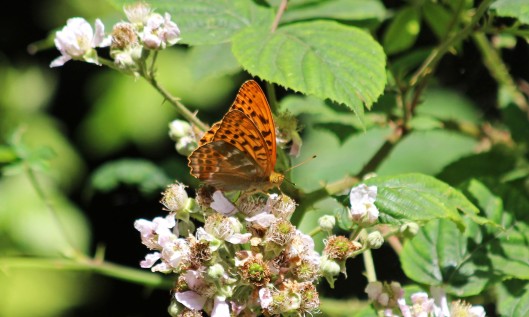
190716 silver-washed fritillary

Those giant orange-and-brown speedsters, the Silver-washed fritillaries.
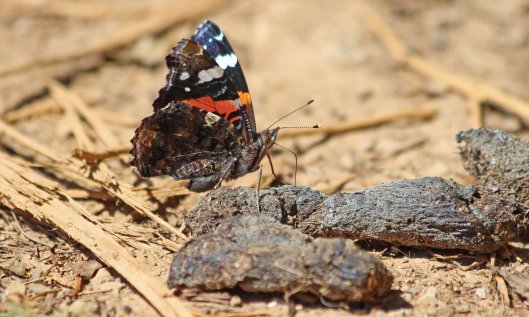
190716 red admiral

Red admiral extracting minerals from poo … mmmmm, delicious!
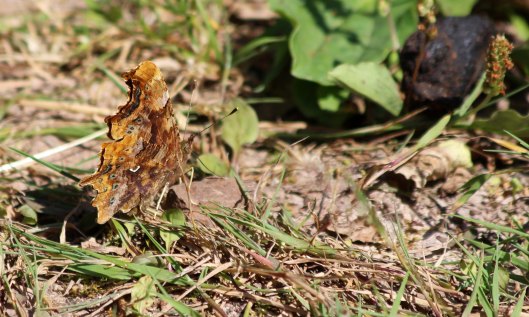
190716 comma

Comma, incredibly well camouflaged amongst the grasses and leaf litter, also heading for a slurp at the poo.
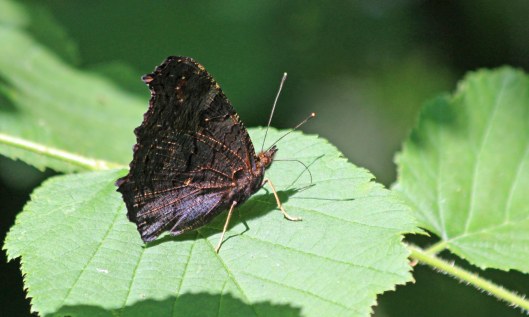
190716 peacock

Peacock, hiding its glorious bold colours away behind those closed wings.
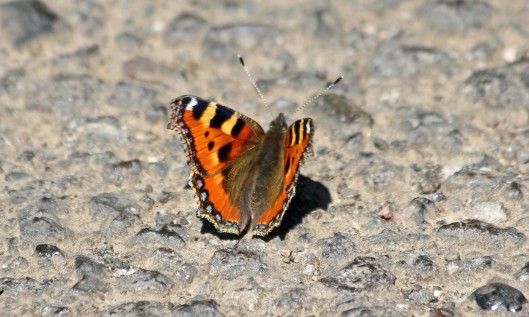
190716 small tortoiseshell

Small tortoiseshell, a pretty little butterfly that I don’t see very often, so a delight to spot one of these.
Like Loading...

196/365 Ether’s nild

15 Monday Jul 2019

Posted by sconzani in 365DaysWildin2019, insects, nature

≈ 4 Comments

Tags

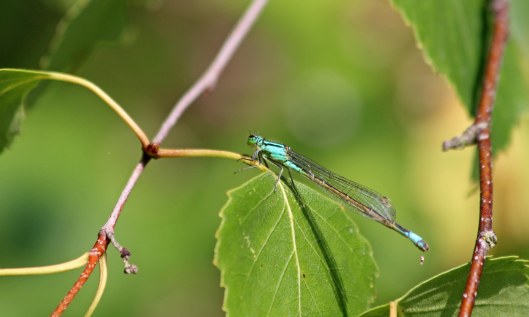
#365DaysWild, Blue-tailed damselfly, British damselflies, damselfly, damselfly and devil, Ischnura elegans rufescens

The damselfly and the devil – not a combination I’d have thought of but this, from Paul Evans, Field Notes from the Edge: Journeys through Britain’s secret wilderness (Rider, London, 2015) is fascinating:

In her novel Precious Bane, Mary Webb … used a Shropshire name for damselfly, ether’s nild: the ether or adder’s nild or needle because of its shape and stitching flight. Country lore had it that damselflies hovered over an adder coiled in the heath or bog as lookouts for their venomous master or mistress … Elsewhere called the Devil’s darning-needle, naughty children, scolding women and swearing men were warned that the damselfly would come and sew their eyes and mouths shut if they did not mend their ways.

190715 blue-tailed damselfly

The damselflies in my images are both Blue-tailed damselflies (Ischnura elegans). The females come in five different colour variations – this, with the reddish thorax, is called rufescens.

190715 blue-tailed damselfly rufescens

Like Loading...

194/365 On the top of the tip

13 Saturday Jul 2019

Posted by sconzani in 365DaysWildin2019, insects, nature

≈ 2 Comments

Tags

#365DaysWild, Aberbargoed spoil tip, British butterflies, butterfly, colliery spoil tip, Grayling

The coal-mining spoil tip in Aberbargeod was once 400 feet high, a disaster waiting to happen, until the tragedy at Aberfan in 1966 (when 144 people, mostly children in the town’s primary school, were killed by the local spoil tip sliding down the valley) caused an urgent re-evaluation of the dangers of these tips. Aberbargoed’s was reduced in size, walkways and culverts were built around it, trees have been planted on it, and it’s now a wondrous place for biodiversity.

190713 grayling (1)

It is, however, still a steep huffing-puffing walk to the top on a hot summer’s day, particularly when, as I did yesterday, you walk straight up, instead of using one of the longer zigzagging paths. But it was worth every drop of sweat I exuded as, not only are the panoramic views superb, but Aberbargoed tip is also home to a colony of Grayling butterflies.

190713 grayling (2)

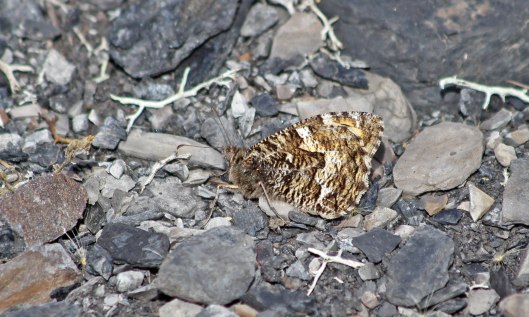
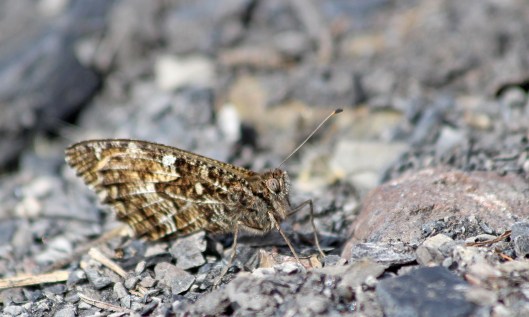
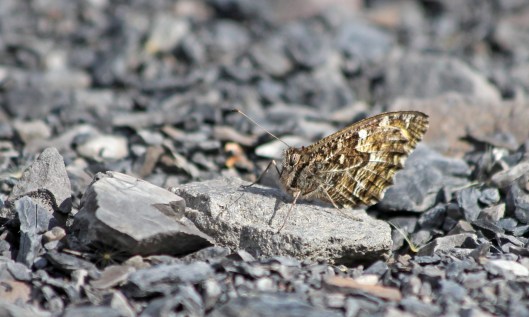
Graylings prefer dry, well-drained locations with sparse vegetation, so a spoil tip is the perfect spot for them. And, as they like to hunker down with the bright eye spots on their forewings well hidden, the mottled colouring on their hind wings means they’re incredibly well camouflaged on the stone chippings.

190713 grayling (3)

I was lucky, though, that a couple of the Graylings I spotted yesterday seemed curious about this stranger who had invaded their territories. So, I plonked myself down on a slope next to a path and waited. And sure enough, first one, then a second butterfly came to investigate. If it hadn’t been as hot as hell, I could’ve stayed there for hours.

190713 grayling (4)

You can read more about the environmental importance of preserving the spoil tip sites on Liam Old’s excellent website, Colliery Spoil Biodiversity Initiative.

Like Loading...

193/365 Hairstreaks

12 Friday Jul 2019

Posted by sconzani in 365DaysWildin2019, insects, nature

≈ 2 Comments

Tags

#365DaysWild, British butterflies, butterfly, hairstreaks, Purple hairstreak, record shots only, White-letter hairstreak

Record shots only! Have you heard that term? Well, these photos are extremely good examples of what it means – really lousy photos, sometimes taken at long distance and then heavily cropped, often blurry, possibly adjusted in Photoshop or similar image processing software to try to enhance the features, but really only retained as proof that you did actually see what you say you saw. (So you can actually see what lovely butterflies these are, I’ve linked their names to the relevant pages on the Butterfly Conservation website.)

190712 white-letter hairstreak

Luckily, with this shot of a White-letter hairstreak, I was with another person, who actually showed me the location, so I have a witness to the sighting. From my ‘record shot’ you probably can’t even tell that the small blob in the sky is a butterfly flitting around in the top canopy of this Wych elm.

190712 purple hairstreak (1)

I did a little better with the Purple hairstreak. Again, this is a known location, where other people have seen and photographed these lovely little butterflies in recent days. The first time I visited, all I could see were small flutterings at the very top of the tall old oak trees where the Purple hairstreaks live. Luckily, on my second visit, some of the butterflies were moving around further down the tree. I just needed to be patient and wait for one to fly, then try to follow where it went – believe me, that’s not easy as they almost seem to disappear amongst the leaves and they really are quite small (a wing span of 37-39mm).

190712 purple hairstreak (2)

Like Loading...

192/365 Essex skippers

11 Thursday Jul 2019

Posted by sconzani in 365DaysWildin2019, insects, nature

≈ 2 Comments

Tags

#365DaysWild, British butterflies, butterflies, butterfly, Essex skipper, skipper identification

Tuesday was the first time I have knowingly seen and photographed Essex skippers. I visited a location where there’s been a colony in previous years so my chances were high but I knew they were tricksy little butterflies to identify – the only photo I have of one was taken two years ago in a different place and I didn’t realise what it was till I checked it more carefully a year later.

190711 essex skipper (1)

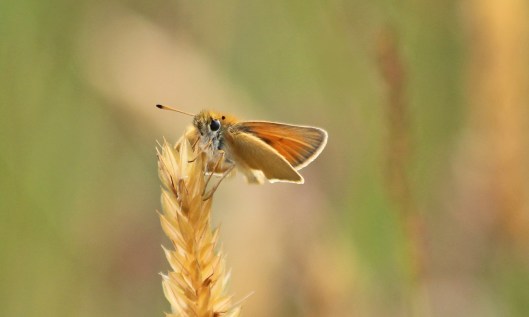
You see, the Essex looks superficially very similar to the Small skipper. They’re the same size, the same general colour and can be found in the same habitats. The defining feature for a novice like me is the tips of the butterfly’s antennae – in the Essex skipper these are black, both on top and below. And therein lies the difficulty! Because you just try seeing the colour on the underside of the antennae of very small butterflies that spend most of their time skilfully weaving their way in and around tall grasses in a meadow full of similar butterflies. It ain’t easy!

190711 essex skipper (2)

Still, it was a pleasant day, the meadow was full of lovely wildflowers, and I was surrounded by butterflies of several types and sizes – what could be nicer? It was really just a matter of time and patience, and eventually I had two definite sightings. One very cute little Essex even decided to pose for me, repeatedly settling on grass stems so I could get the front-on photos that I needed to be sure of its identity.

190711 essex skipper (3)

Like Loading...

188/365 Silver-washed fritillary

07 Sunday Jul 2019

Posted by sconzani in 365DaysWildin2019, insects, nature

≈ 2 Comments

Tags

#365DaysWild, British butterflies, butterflies, butterfly, fritillaries, Silver-washed fritillary

As well as the endangered High brown fritillaries and their cousins the Dark greens, Friday’s butterflying day out also turned up a couple of these beauties, the equally glorious members of the family, the Silver-washed fritillaries (Argynnis paphia).

190707 silver-washed fritillary (1)

If you’re wondering how an orange-and-black-patterned butterfly got the name silver-washed, it’s because the underside of its wings are streaked silver. Unfortunately, my photos don’t show that very clearly … next time.

190707 silver-washed fritillary (2)

Like Loading...

187/365 Most threatened butterfly

06 Saturday Jul 2019

Posted by sconzani in 365DaysWildin2019, insects, nature

≈ 5 Comments

Tags

#365DaysWild, Britain's most threatened butterfly, British butterflies, butterflies, fritillaries, High brown fritillary

190706 High brown fritillary (1)

I had the very great privilege yesterday of spending time with some of Britain’s most threatened butterflies, in the only location in Wales where they can be found. These are the High brown fritillaries (Argynnis adippe), which, despite their large robust appearance, have declined by almost 80% since the 1970s and are now the subject of ongoing conservation efforts by the staff of Butterfly Conservation and their dedicated and hard-working team of volunteers.

190706 High brown fritillary (4)

It was one of their long-term volunteers, Richard, who willingly gave his time yesterday to show me around the site, to explain all about the work they’re doing to save this butterfly from extinction, and to show me how he surveys a transect to monitor their population. Brush cutting, bracken bashing, surveying, visitor management, tour guiding, newsletter writing – and he’s been doing all this since 1995! I simply can’t thank him enough.

190706 High brown fritillary (2)

And as for the High browns – what glorious creatures they are! There was one particular area, a wide bowl of head-high bracken, where we were treated to wonderful sightings. The males mostly raced past at high speed, frantically following the trail of an enticing female, and sometimes bounced around each other in their quest for dominance and territory. At other times, they wafted gracefully around the bracken tops, offering perfect close views when they stopped to nectar on bramble and thistle flowers; they even floated over to check out the human intruders in their space.

190706 High brown fritillary (3)

The High brown fritillary can be difficult to tell apart from the Dark green fritillary, both of which share this particular location – it’s all about the size of the third dot on their upper wings and the presence or absence of reddish markings on their under-wings but you do need clear views to see these differences. I think I’d cracked it by the end of the day but the best thing, the most wonderful thing was just being there amongst them. Bliss!

Like Loading...

186/365 Humming-bird Hawk-moth

05 Friday Jul 2019

Posted by sconzani in 365DaysWildin2019, insects, nature

≈ 2 Comments

Tags

#365DaysWild, British moths, Humming-bird hawk-moth, moths

I’ve had the most wonderful day out butterflying but it’s already 5:30, I have a lot of photos to go through, I’m hungry, and I desperately need a shower to wash off the heat and insect repellent – okay, probably too much information, but you get the picture. The butterfly blogs will have to wait till tomorrow and Sunday. So, here’s another gorgeous creature from today’s outing, a Humming-bird Hawk-moth.

190705 Hummingbird Hawkmoth

Like Loading...

185/365 Beauty and the Beast

04 Thursday Jul 2019

Posted by sconzani in 365DaysWildin2019, flowers, nature, wildflowers

≈ 2 Comments

Tags

#365DaysWild, British orchids, Epipactis palustris, Marsh helleborine, native orchids, orchids, orchids at brownfield site, Rhoose Point Nature Reserve

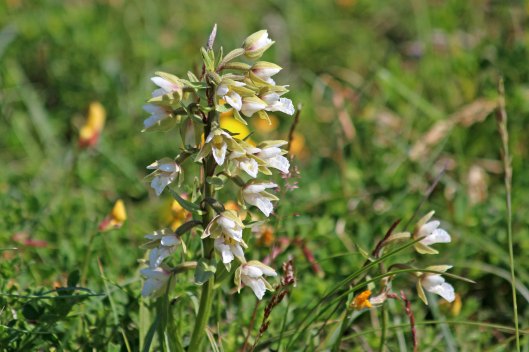
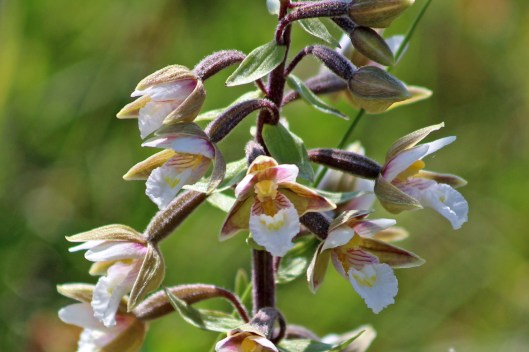
Like many brownfield sites, the former limestone quarries at Rhoose Point, the southernmost point in Wales, are now a nature-filled paradise, and yesterday one area was positively teeming with these beautiful Marsh helleborines (Epipactis palustris).

190704 marsh helleborines (1)

As their name implies, these orchids need water to flourish: the First Nature website says ‘This plant thrives in habitats which are usually submerged with water during the winter and maintain high levels of moisture during the summer. Dune slacks are often home to vast colonies, as are fens which are fed by alkaline springs running through limestone rocks – chalk being the other essential element to enable the Marsh Helleborine to flourish.’

190704 marsh helleborines (3)

I love what Richard Mabey has to say about orchids in Flora Botannica:

These days [their lightweight seed] often fetches up on artificially open habitats, low in nutrients and free of competition (quarries, for example), which replicate orchid-rich natural habitats such as sand dunes and cliff tops. It is this paradoxical, opportunistic quality of many orchids – the exquisite bloom transforming the spoil tip – that has become the basis for the true modern myth of the family, a botanical version of Beauty and the Beast.

190704 marsh helleborines (2)

The Marsh helleborines (and the many other species of orchid) that grow so well in the old Rhoose quarries are a stunning example of this transformation.

190704 marsh helleborines (4)

Like Loading...

183/365 Pathetic, but not

02 Tuesday Jul 2019

Posted by sconzani in 365DaysWildin2019, birds, nature

≈ 2 Comments

Tags

#365DaysWild, birding, birdwatching, British birds, fledgling bird, fledgling Song thrust, Song thrush

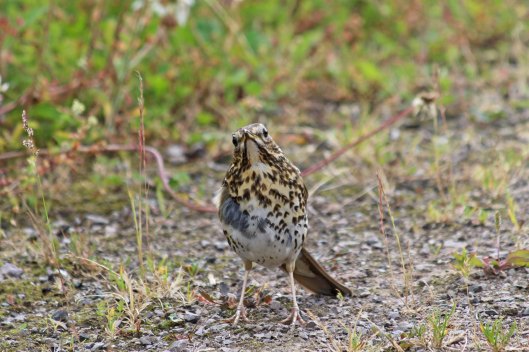
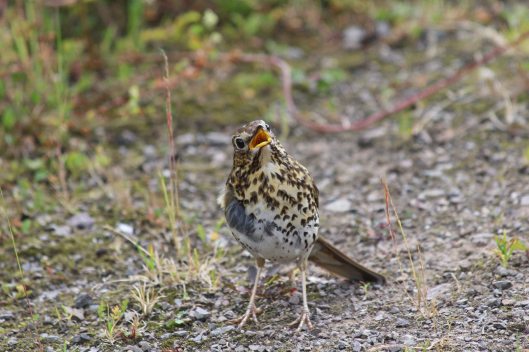
Young birds really have perfected the ‘poor me, I’m starving, feed me’ routine!

190702 song thrush (a)

This fledgling Song thrush was sitting on a path alongside a wildflower meadow I visited today. It had its head tilted to keep an eye on the sky and was uttering the most pathetic-sounding peeps. I immediately felt sorry for it, thought it might have lost its parents, be injured, be unable to fly.

190702 song thrush (b)

But no, as soon as I got within a few feet of it, it was up and off at a rate of knots to the nearest tree. I didn’t see its parents – maybe they’d become immune to its pleas and knew very well it was old enough to fend for itself.

190702 song thrush (c)

Like Loading...
← Older posts
Newer posts →

About me

sconzani

sconzani

I'm a writer and photographer; researcher and blogger; birder and nature lover; countryside rambler and city strider; volunteer and biodiversity recorder.

View Full Profile →

Follow earthstar on WordPress.com

Enter your email address to follow this blog and receive notifications of new posts by email.

Recent blog posts

  • P is for Phalarope December 21, 2025
  • O is for Odonata December 20, 2025
  • N is for nest December 19, 2025
  • M is for mite December 18, 2025
  • L is for lepidopteran lifers December 17, 2025

From the archives

COPYRIGHT

Unless otherwise acknowledged, the text and photographs on this blog are my own and are subject to international copyright. Nothing may be downloaded or copied without my permission.

Fellow Earth Stars!

  • Unknown's avatar
  • Unknown's avatar
  • Unknown's avatar
  • Unknown's avatar
  • Unknown's avatar
  • Unknown's avatar
  • Unknown's avatar
  • Unknown's avatar
  • Unknown's avatar
  • Unknown's avatar
  • Unknown's avatar
  • Unknown's avatar
  • Unknown's avatar
  • Unknown's avatar
  • Unknown's avatar
  • Unknown's avatar
  • Unknown's avatar
  • Unknown's avatar
  • Unknown's avatar
  • Unknown's avatar
  • Unknown's avatar
  • Unknown's avatar
  • Unknown's avatar
  • Unknown's avatar
  • Unknown's avatar
  • Unknown's avatar
  • Unknown's avatar
  • Unknown's avatar
  • Unknown's avatar
  • Unknown's avatar
  • Unknown's avatar
  • Unknown's avatar
  • Unknown's avatar
  • Unknown's avatar
  • Unknown's avatar
  • Unknown's avatar
  • Unknown's avatar
  • Unknown's avatar
  • Unknown's avatar
  • Unknown's avatar
  • Unknown's avatar
  • Unknown's avatar
  • Unknown's avatar
  • Unknown's avatar
  • Unknown's avatar
  • Unknown's avatar
  • Unknown's avatar
  • Unknown's avatar
  • Unknown's avatar
  • Unknown's avatar

Blog at WordPress.com.

Privacy & Cookies: This site uses cookies. By continuing to use this website, you agree to their use.
To find out more, including how to control cookies, see here: Cookie Policy
  • Subscribe Subscribed
    • earthstar
    • Join 667 other subscribers
    • Already have a WordPress.com account? Log in now.
    • earthstar
    • Subscribe Subscribed
    • Sign up
    • Log in
    • Report this content
    • View site in Reader
    • Manage subscriptions
    • Collapse this bar
 

Loading Comments...
 

You must be logged in to post a comment.

    %d