• ABOUT
  • BIRDING 2018
  • Birding 2019
  • BLOG POSTS
  • Butterflies 2018
  • Resources

earthstar

~ a celebration of nature

earthstar

Tag Archives: birding

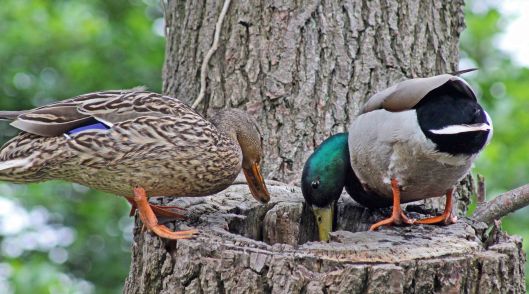
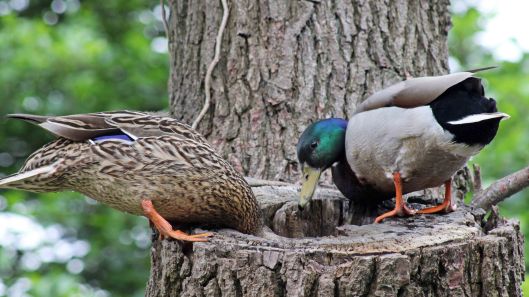
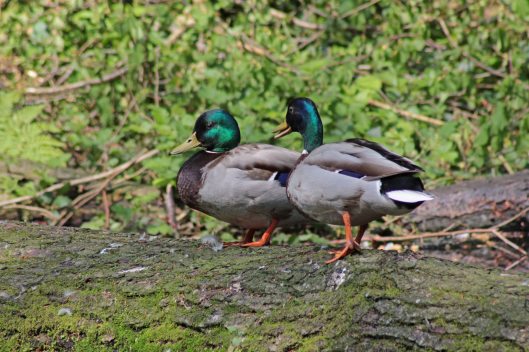
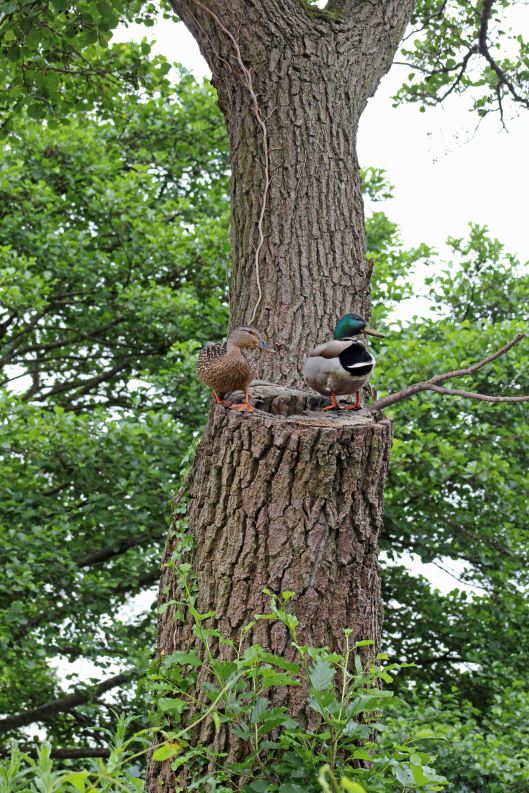
Two mallards up a tree

27 Monday Jun 2016

Posted by sconzani in birds, nature

≈ 11 Comments

Tags

birding, birdwatching, British birds, duck, Mallard

160627 mallards in tree (1)

This was the scene I encountered during a recent walk around Roath Park Lake. It immediately struck me as odd as you almost never see mallards in trees, so what on earth were they doing? There’s a story here. I was on my way to catch a train so couldn’t linger long, so I don’t know what the story is, but there’s definitely a story. Feel free to post your suggestions in the comments below. Sensible or silly, I’d welcome your ideas.

160627 mallards in tree (2)160627 mallards in tree (3)160627 mallards in tree (5)160627 mallards in tree (6)

Like Loading...

A heron learns to fish

18 Saturday Jun 2016

Posted by sconzani in birds, nature

≈ 12 Comments

Tags

birding, birdwatching, British birds, Grey heron, heron fishing

It must be hard being a young heron. When they’re still in the nest, their food comes via home delivery, courtesy of mum and dad, but once they’re fledged, what then? It’s not like they can go to school to learn how to fish. There’s no one to teach them stealth, no lessons in stillness or focus, no tutors to advise on the best way to sneak up on a fish or a frog. What if they have poor eyesight, or two left feet? What if their natural inclination is to blunder noisily through the shallows? The reality is it’s just practice, practice, practice, all day long.

160619 heron fishing (1)
160619 heron fishing (2)
160619 heron fishing (3)
160619 heron fishing (4)
160619 heron fishing (5)
160619 heron fishing (6)
160619 heron fishing (7)
160619 heron fishing (8)
160619 heron fishing (9)
160619 heron fishing (10)

Luckily, it seems practice really does make perfect.

160619 heron fishing (11)

Like Loading...

The stork that brings the baby

15 Wednesday Jun 2016

Posted by sconzani in birds, nature

≈ Leave a comment

Tags

birding, birds in Morocco, birdwatching, Ciconia ciconia, European stork, Morocco, stork brings baby, storks in Morocco

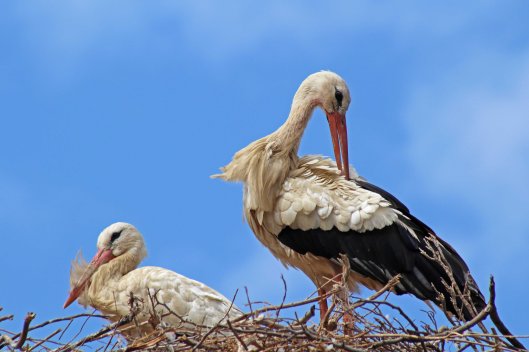
When you were young and you asked your parents where babies came from, did they give you that old faithful answer, ‘The stork brings them’? Well, these are those storks.

160615 storks (5)

This is the European stork (Ciconia ciconia), and it seems the baby-delivery myth may have arisen, originally in Germany, from the fact that storks are migratory birds, leaving Europe for around 9 months over the winter before returning to breed in the springtime. The birds also breed in North Africa, which is where my photos were taken, in Morocco in June 2014.

160615 storks (2)

Apparently, there is an old Berber myth that storks are actually humans who have been transformed into birds. In the Muslim religion, storks are considered sacred, which may be because they appear to prostrate themselves in prayer when resting. However, there is also a tale told in Marrakesh, of a local man, dressed in the traditional white djellaba and black robe, who got drunk on wine and climbed a local minaret, all the while blaspheming. His punishment was transformation into a stork.

160615 storks (3)
160615 storks (4)
160615 storks (6)
160615 storks (7)
160615 storks (1)
Like Loading...

‘Dedicated Naturalist’: The Stormcock

14 Tuesday Jun 2016

Posted by sconzani in 'Dedicated Naturalist' Project, birds, nature

≈ 6 Comments

Tags

birding, birdwatching, British birds, Dr Mary Gillham, Mistle thrush

A snippet from my volunteer work on the ‘Dedicated Naturalist’ Project, helping to decipher and digitise, record and publicise the life’s work of naturalist extraordinaire, Dr Mary Gillham.

Written in her fifth form year at Ealing Grammar School for Girls, Mary’s poignant poem about a mistle thrush was subsequently published in the school’s annual yearbook.

The Stormcock
The thunder roared from the clouds on high;
The lightning flashed across the darkened sky;
The woods were lone and drear and drenched with rain,
And not a soul passed by along the lane.

The raindrops glistened on the leaves like gems,
The flowers drooped low upon their slender stems,
And all the birds save one had gone to rest
While this one lingered on beside his nest.

It was a missel-thrush that perched aloft,
With speckled breast, bright eyes, and plumage soft;
His song rose through the branches clear and sweet,
Above the noise of wind and rain and sleet.

160602 mistle thrush (3)

The hen bird on the nest beside her mate
Had heard him singing frequently of late,
But still she listened with attentive air
While he sang gaily on without a care.

His song defied the tumult of the storm:
The eggs within the nest were safe and warm,
And that was what he cared for most of all,
And so his praise came forth in joyous call.

Despite the elements that tried to quell
The joyous sounds that from his being swell,
The bird sang on through wind and sleet and rain
Until the storm at last began to wane.

160602 mistle thrush (1)
160602 mistle thrush (2)

You can follow our progress with this project on Facebook and on Twitter. A website will follow soon.

Like Loading...

Welsh biodiversity: Forest Farm

09 Thursday Jun 2016

Posted by sconzani in animals, birds, insects, nature

≈ Leave a comment

Tags

biodiversity, birding, birdwatching, damselflies, dragonflies, Forest Farm Nature Reserve, rabbits, Wales Biodiversity Week

I’ve sung the praises of Forest Farm in previous blogs (here and here) and enjoyed many conversations with robins during my walks there but today, on day six of Wales Biodiversity Week, for the wildlife at Forest Farm it was all about procreation.

160609 forest farm (1)

Male damselflies were flashing their colourful wings trying to impress the females; male dragonflies were patrolling their territory to warn off any potential interlopers; damselflies were copulating as they flew along the canal and around the pond, and I saw two female dragonflies depositing their eggs amongst plants and reeds in the pond.

160609 forest farm (2)

The birdlife was a little more advanced – there were chicks and fledglings everywhere: ducklings, baby coots and moorhens, young robins and dunnocks, to name just a few. Perhaps cutest of all, though, were the baby rabbits, happily frolicking and nibbling on the grass near the bird hides. It was like a scene from Watership Down!

1
2
3
4
5
6
7
8
9
10
11
12
Like Loading...

The real teal

01 Wednesday Jun 2016

Posted by sconzani in birds, nature

≈ 4 Comments

Tags

Anas chlorotis, birding, birdwatching, Brown teal, endangered species, New Zealand birds, pateke

Earlier this week, we had The real peel; today we have The real teal, a look at another unique bird from my New Zealand homeland. The brown teal (Anas chlorotis) (known to the indigenous Maori people as pāteke) is listed ‘at risk’ so I consider myself very lucky to have seen this little beauty. Once widespread throughout New Zealand, the brown teal is now mostly confined to the northern parts of the North Island due to predation by introduced species like rats and stoats, and also to the loss of their preferred wetland habitat. The bird’s population is now estimated to be as low as 2000-2500, though conservation efforts to save the bird from extinction are underway and have thus far proven successful. (You can read more about efforts to conserve these pretty little creatures here.)

160530 brown teal (1)

If you get the opportunity, it’s an easy bird to identify – it’s slightly smaller than a mallard and predominantly dark brown. At breeding time, the male has a distinctive iridescent green sheen on the back of his head, as you can see in my photo below left.

160530 brown teal (2)
160530 brown teal (3)
Like Loading...

The mallard muppets

28 Saturday May 2016

Posted by sconzani in birds, nature

≈ 2 Comments

Tags

birding, birdwatching, British birds, Mallard

160528 mallards (1)

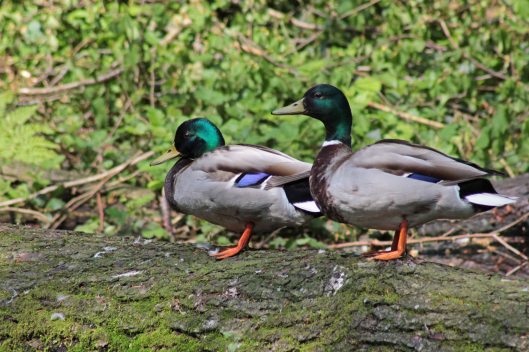
Bert: ‘Ernie, don’t look now but there’s a woman over there with one those gadgets with the long black tube attached. What do you think she’s doing?’

160528 mallards (2)

Ernie: ‘I don’t know, Bert. You see a lot of humans with them, and they point them right at you. Total invasion of privacy, I reckon’
Bert: ‘Maybe if we look the other way, she’ll stop doing it.’

160528 mallards (3)

Like Loading...

Baby, you’re adorable!

26 Thursday May 2016

Posted by sconzani in birds, nature

≈ 5 Comments

Tags

baby birds, birding, birdwatching, Blue tit, British birds, chicks, Coot, duckling, gosling, Greylag goose, Mallard, nuthatch

After having the very upsetting experience of seeing a Lesser black-backed gull grab and devour, whole, a little coot chick earlier this week, I want to celebrate today the birds that have made it … so far. There seem so many obstacles in the paths of baby birds, so many predators looking for an easy meal, problems with inexperienced parents not caring for their chicks properly, and also, in some cases, a lack of sufficient food. It seems a miracle any of them make it to adulthood. Here are some that are doing better than most.

IMG_0447

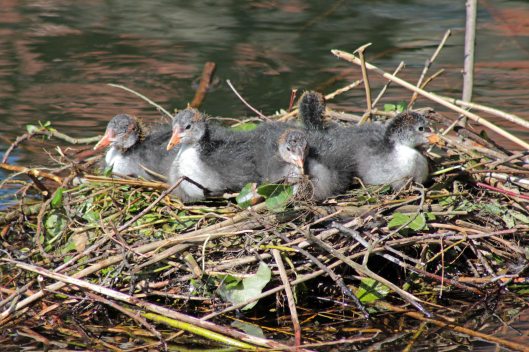
These Coot siblings are doing well, and are looking much more adult now they’ve lost their orange and red head feathers.

IMG_1038

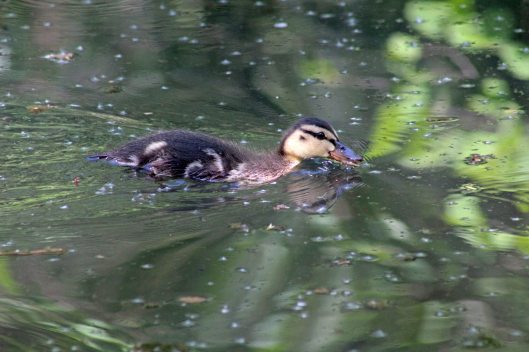
This little Mallard duckling was so cute, scooting along quickly, feeding actively, keeping closely behind mum. Fingers crossed for him/her!

IMG_1274

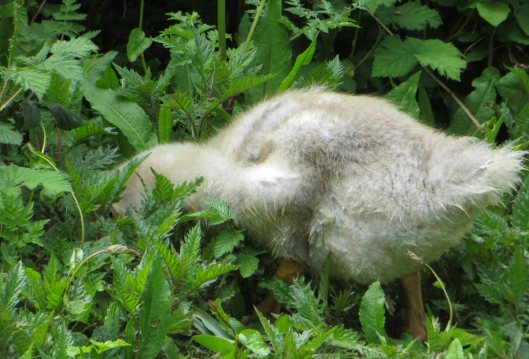
You’ve heard of the ostrich hiding its head in the sand? Well, it seems this Greylag gosling is trying the ‘hiding its head in the nettles’ version.

IMG_1894

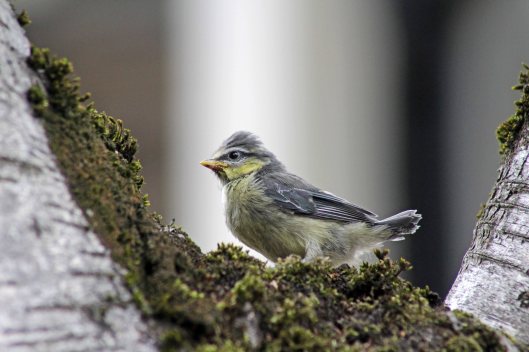
Baby Blue tit was sitting on the pavement outside my house yesterday but quickly, though slightly erratically, fluttered up to the nearest tree as I approached. Luckily, one of its parents was nearby and flew down with some food. Its big eyes make it look surprised by the big wide world outside the nest!

IMG_1909

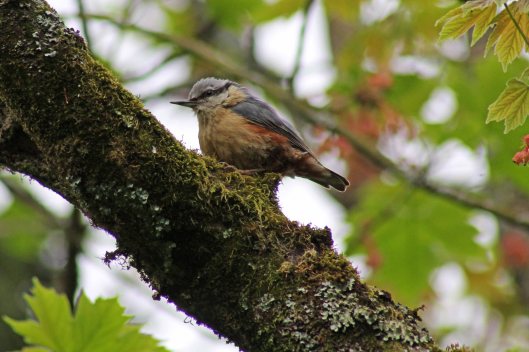
This Nuthatch is the most advanced chick I’ve seen and was actively feeding itself on a tree in a local park, though it was stopping often to preen. Moulting its baby fluff must be an itchy process.

Like Loading...

The Bald eagles have landed

25 Wednesday May 2016

Posted by sconzani in birds, nature, nature photography

≈ Leave a comment

Tags

American bald eagle, American birds, Bald eagle, birding, birdwatching, Haliaeetus leucocephalus, United States national bird

160525 bald eagle (6)

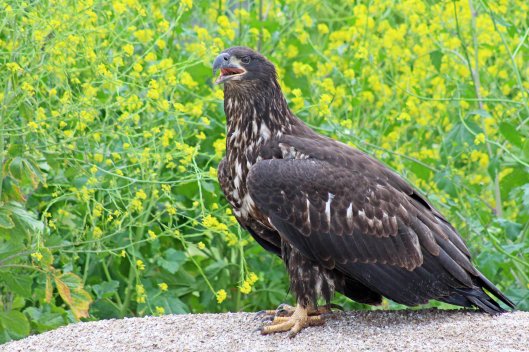
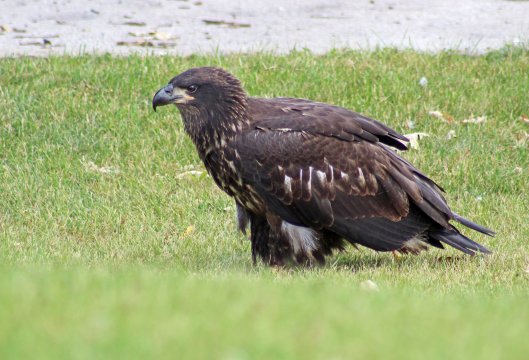
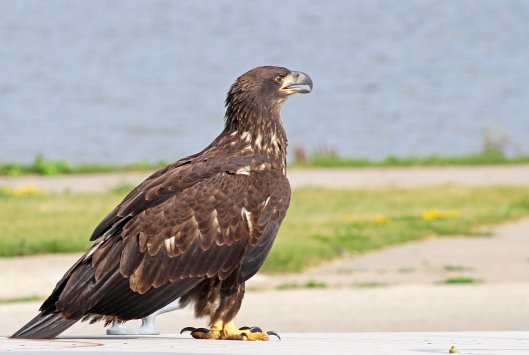
On the very first day of my 2015 visit to the USA, I was privileged to see these magnificent birds, and, over the following week, spent several hours watching them with my friend Trudey.

160525 bald eagle (1)
160525 bald eagle (2)
160525 bald eagle (3)
160525 bald eagle (4)

In 1782 the American Bald Eagle (Haliaeetus leucocephalus) became the official bird emblem of the United States because of its majestic beauty, great strength, long life, and because it’s native to North America. It appears on the Great Seal of the United States, is stamped on the reverse of several American coins, and its image can be found in a multitude of locations, situations and media throughout the United States.

160525 bald eagle (7)

Trudey had been following this particular family from the time the three eaglets were born, about a week apart, in March. By the time I arrived, in mid July, the birds had fledged so were no longer on the nest. Luckily for us though, they were still spending most of their time in the immediate vicinity, in a park alongside the Fox River, in Wisconsin.

160525 bald eagle (5)

You can read more about these incredible birds on the Cornell Lab of Ornithology website.

Like Loading...

Moorhen multiplication

19 Thursday May 2016

Posted by sconzani in birds, nature, spring

≈ Leave a comment

Tags

birding, birdwatching, British birds, chicks, Forest Farm Nature Reserve, Gallinula chloropus, Moorhen

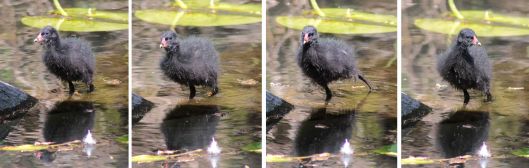
Are you ready for more cute bird babies? The Moorhen (Gallinula chloropus) chicks at Forest Farm Nature Reserve last Friday were the first I’d seen, so I just had to take lots of photos of them. They looked a lot like coot chicks to me, except perhaps with even bigger feet!

160521 moorhen chicks (2)

According to the RSPB website there are around 270,000 breeding pairs in Britain so the chances of seeing them are fairly good, especially in lowland areas. The adults build a nest on the ground, in amongst thick shrubs for protection, and lay between 5 and 8 eggs that take about three weeks to incubate, with both male and female taking turns on the nest.

160521 moorhen chicks (3)
160521 moorhen chicks (6)
160521 moorhen chicks (5)
160521 moorhen chicks (4)

The parents also share the feeding of their offspring, though the chicks are able to feed themselves after a few days, and are fully fledged 6 to 7 weeks after hatching. A few weeks after that, the chicks head off on their own and the parents will often raise a second brood. That sounds like an awful lot of moorhens in the making but, sadly, as with most birds, predators take their toll.

160521 moorhen chicks (1)

chick callisthenics?

If you want to know more about moorhens, I found a delightful article online here. Meantime, I hope my photos make you smile as much as I did while watching these little cuties.

Like Loading...
← Older posts
Newer posts →

About me

sconzani

sconzani

I'm a writer and photographer; researcher and blogger; birder and nature lover; countryside rambler and city strider; volunteer and biodiversity recorder.

View Full Profile →

Follow earthstar on WordPress.com

Enter your email address to follow this blog and receive notifications of new posts by email.

Recent blog posts

  • Bearded tit!!! April 3, 2026
  • A Portland Bill Kestrel April 2, 2026
  • A proliferation of Peacocks April 1, 2026
  • Little owl March 31, 2026
  • Distant seabirds March 30, 2026

From the archives

COPYRIGHT

Unless otherwise acknowledged, the text and photographs on this blog are my own and are subject to international copyright. Nothing may be downloaded or copied without my permission.

Fellow Earth Stars!

  • Unknown's avatar
  • Unknown's avatar
  • Unknown's avatar
  • Unknown's avatar
  • Unknown's avatar
  • Unknown's avatar
  • Unknown's avatar
  • Unknown's avatar
  • Unknown's avatar
  • Unknown's avatar
  • Unknown's avatar
  • Unknown's avatar
  • Unknown's avatar
  • Unknown's avatar
  • Unknown's avatar
  • Unknown's avatar
  • Unknown's avatar
  • Unknown's avatar
  • Unknown's avatar
  • Unknown's avatar
  • Unknown's avatar
  • Unknown's avatar
  • Unknown's avatar
  • Unknown's avatar
  • Unknown's avatar
  • Unknown's avatar
  • Unknown's avatar
  • Unknown's avatar
  • Unknown's avatar
  • Unknown's avatar
  • Unknown's avatar
  • Unknown's avatar
  • Unknown's avatar
  • Unknown's avatar
  • Unknown's avatar
  • Unknown's avatar
  • Unknown's avatar
  • Unknown's avatar
  • Unknown's avatar
  • Unknown's avatar
  • Unknown's avatar
  • Unknown's avatar
  • Unknown's avatar
  • Unknown's avatar
  • Unknown's avatar
  • Unknown's avatar
  • Unknown's avatar
  • Unknown's avatar
  • Unknown's avatar
  • Unknown's avatar

Blog at WordPress.com.

Privacy & Cookies: This site uses cookies. By continuing to use this website, you agree to their use.
To find out more, including how to control cookies, see here: Cookie Policy
  • Subscribe Subscribed
    • earthstar
    • Join 642 other subscribers
    • Already have a WordPress.com account? Log in now.
    • earthstar
    • Subscribe Subscribed
    • Sign up
    • Log in
    • Report this content
    • View site in Reader
    • Manage subscriptions
    • Collapse this bar
 

Loading Comments...
 

You must be logged in to post a comment.

    %d