• ABOUT
  • BIRDING 2018
  • Birding 2019
  • BLOG POSTS
  • Butterflies 2018
  • Resources

earthstar

~ a celebration of nature

earthstar

Tag Archives: British bugs

Heterotoma planicornis

08 Monday Jul 2024

Posted by sconzani in insects

≈ Leave a comment

Tags

British bugs, British insects, Heterotoma planicornis, Heterotoma planicornis nymph, plant bugs

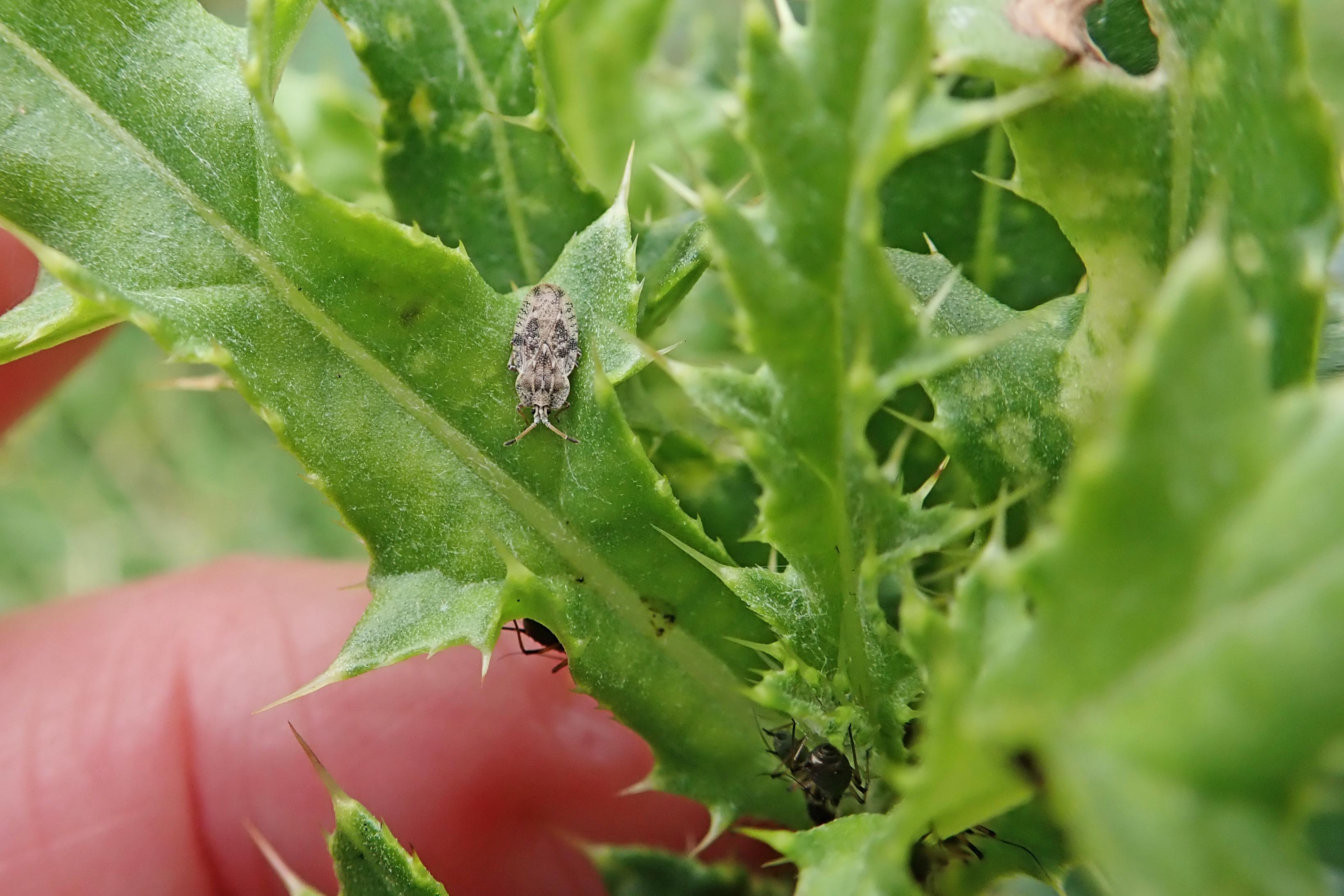
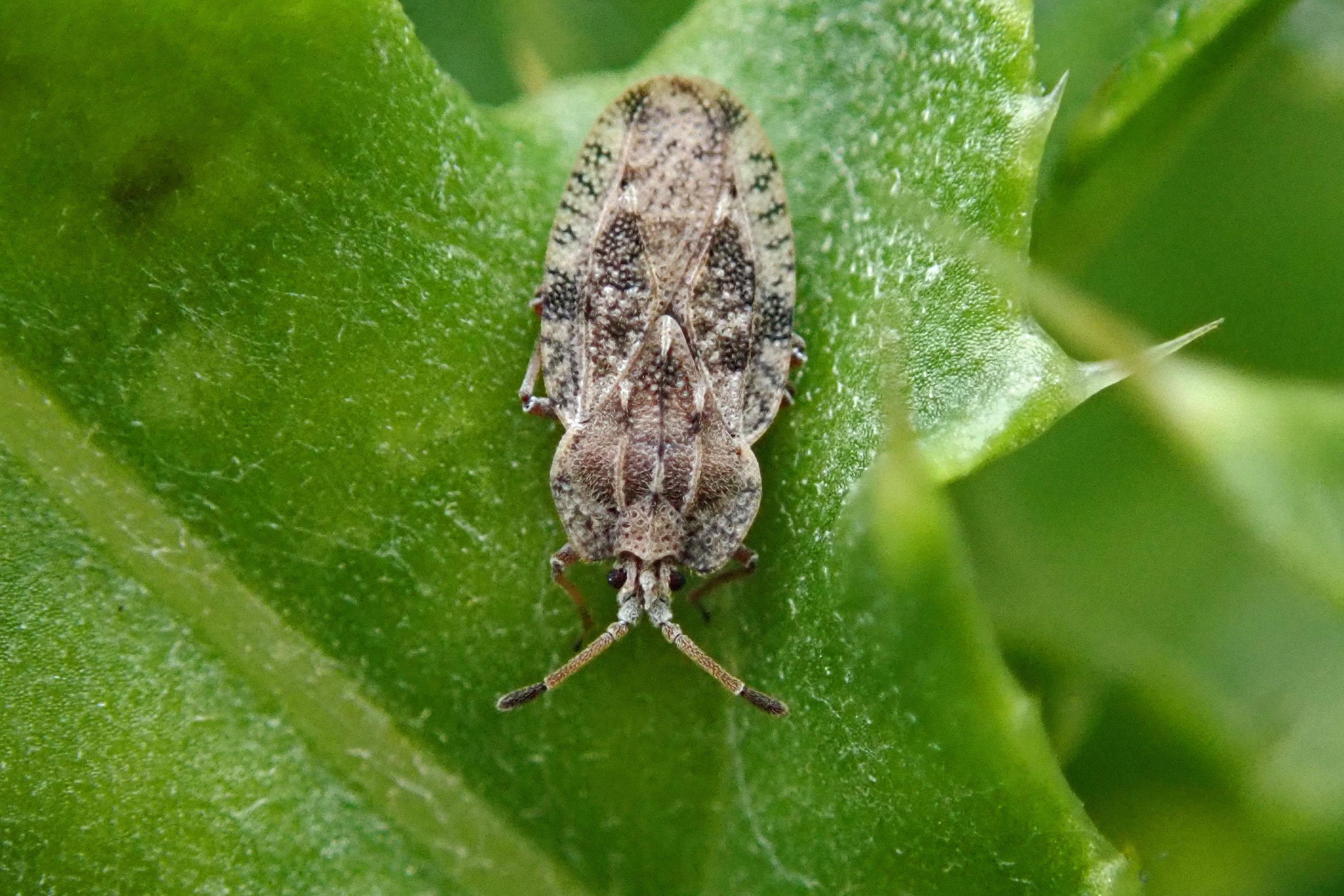
Though I had never seen one of these before, with those flattened parts of its antennae there was no mistaking this little insect. This is Heterotoma planicornis, a tiny member of the Miridae family of plant bugs. It can be found throughout Britain, on various plant species – mine was on the leaf of an Alder tree. The NatureSpot website reports that the eggs hatch in May and the nymphs develop in to adults from June onwards. The tiny bug I found was still a nymph so I guess it will be making its final change fairly soon.

240708 Heterotoma planicornis

Like Loading...

New bug: Cymus glandicolor

29 Wednesday May 2024

Posted by sconzani in insects

≈ Leave a comment

Tags

British bugs, bugs on sedge, Cymus glandicolor, groundbug, Lygaeidae, Pendulous sedge

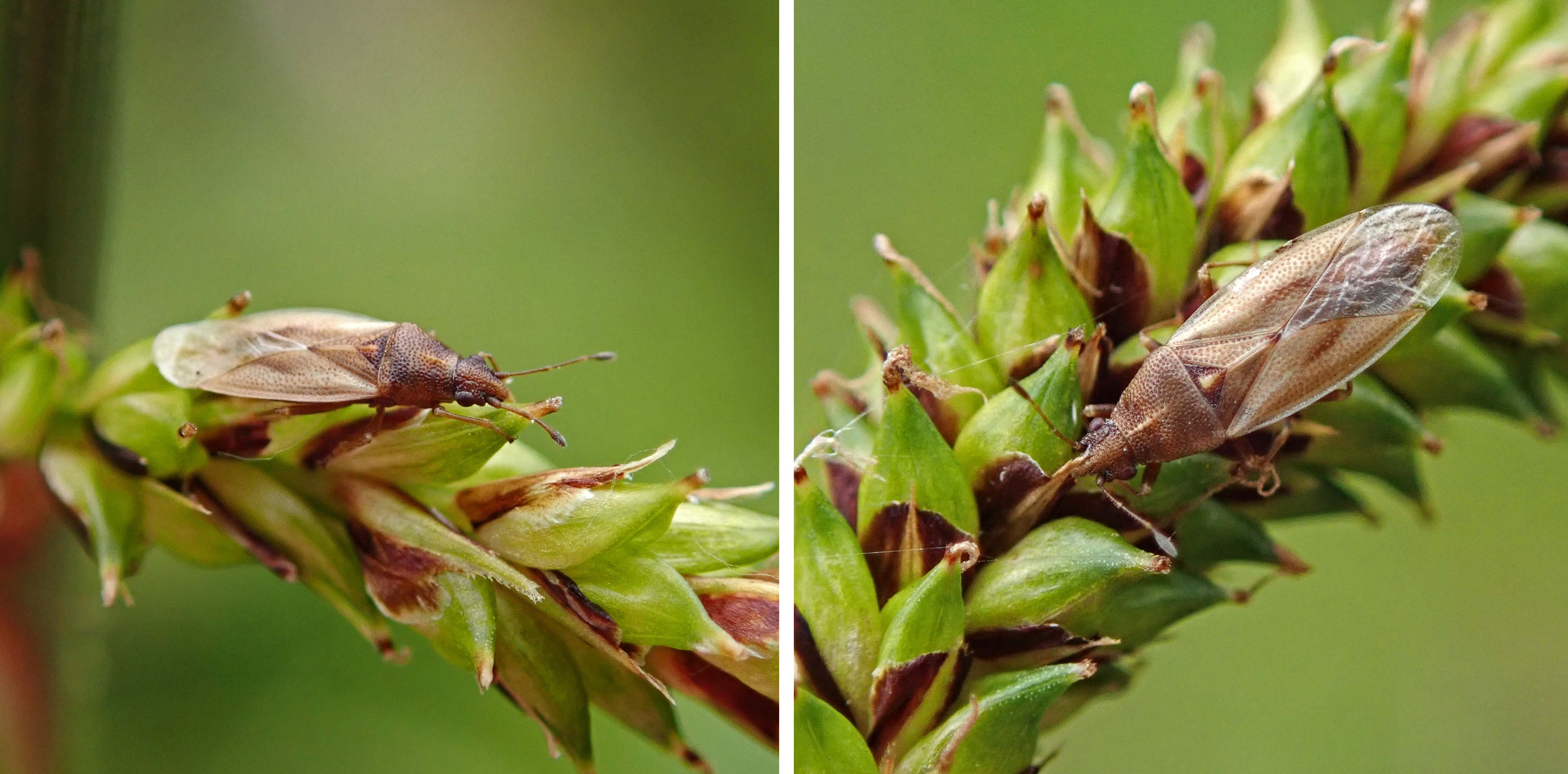
As I’m stubborn and won’t use apps to help identify the things I find, it took me two and a half weeks to work out what these creatures are and then, truth be told, I only worked it out by using an app, Google lens, once I’d posted some images on Twitter and cried ‘help!’.

240529 cymus glandicolor (2)

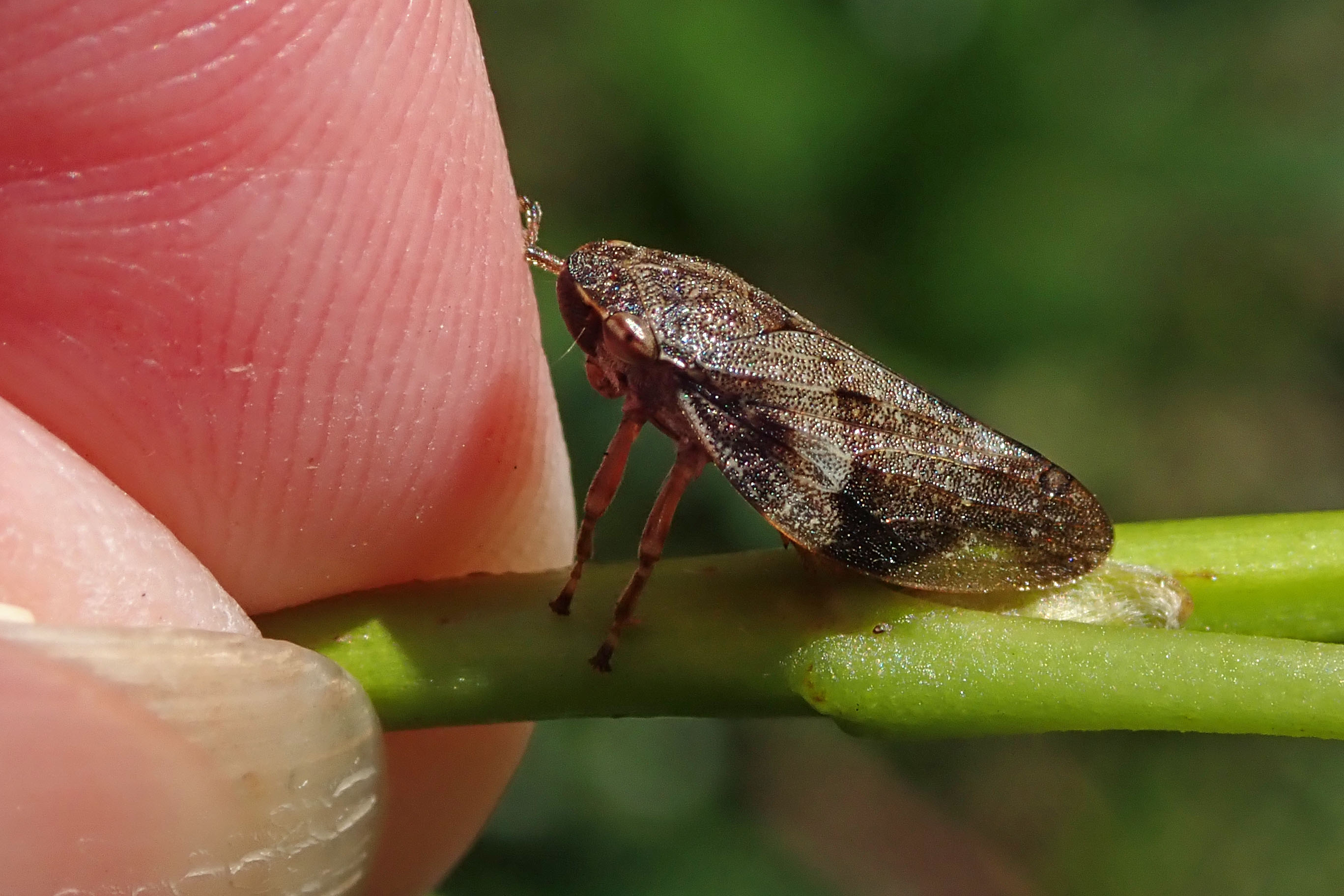
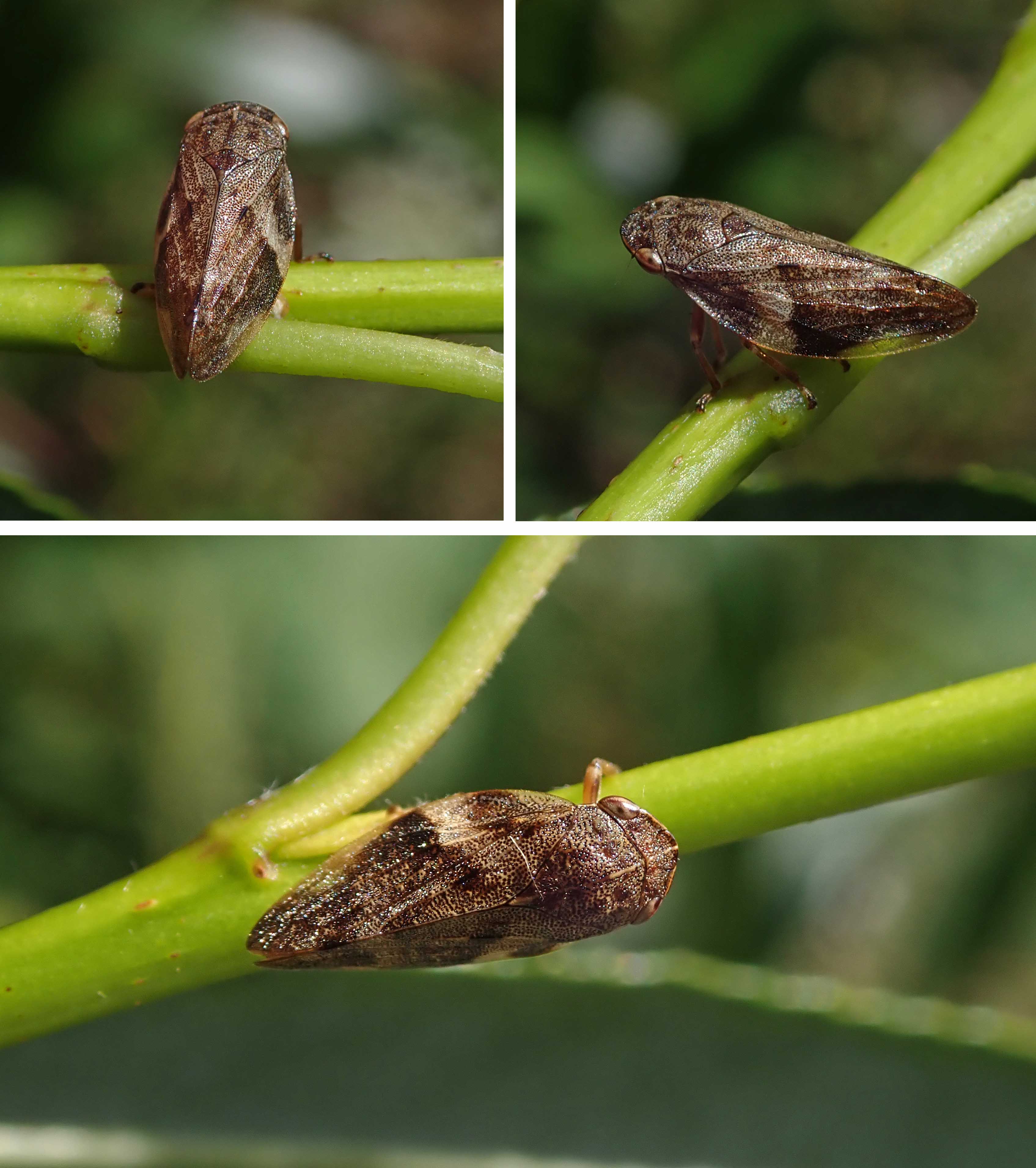
I saw the tiny bugs first on this Pendulous sedge on 6 May, lots of them, mostly mating. After that sighting, I tried trawling through the images on the British Bugs website but couldn’t narrow down an identification. My excuse is that I focussed on checking through all the plant bugs, whereas this is actually a member of the Lygaeidae groundbug family.

240529 cymus glandicolor (3)

After seeing these little bugs on the exact same sedge (but not on other sedge plants nearby), still mostly mating, on 23 May, I decided to try again to find their name. And so, thanks to Google lens, I can at last introduce you to Cymus glandicolor, a lover of the damp places where sedges like to grow, mostly in England and Wales, though recently recorded also in Scotland according to the British Bugs website.

240529 cymus glandicolor (1)

Like Loading...

Nettle groundbugs

07 Monday Aug 2023

Posted by sconzani in insects, plants

≈ 2 Comments

Tags

British bugs, bugs on nettle, Heterogaster urticae, insects on nettle, Nettle groundbug

Considering how much nettle I see, I’m amazed I’d never seen a Nettle groundbug (Heterogaster urticae) before last Thursday, when I saw heaps, at various stages of growth between egg and adult, all out sunbathing in little groups on nettle leaves. And there are only 114 records in the Welsh database of flora and fauna, which also surprised me.

230807 nettle groundbugs (1)

They’re actually very attractive little bugs, rather hairy, with quite diverse markings in their different instars. The British Bugs website reports that they overwinter as adults so, in theory, we should be able to see them all year round. The website also says that, when they mate, the male and female ‘may remain coupled together for several days’ – nothing like making sure they’ve succeeded, I guess.

230807 nettle groundbugs (2)

Sorry my pics aren’t the sharpest – the bugs were moving around a bit – but I wanted to show as many instars as possible.

Like Loading...

Galls: Psyllopsis fraxini

12 Monday Jun 2023

Posted by sconzani in insects

≈ Leave a comment

Tags

British bugs, British galls, gall, galls on Ash, Jumping plant louse, Psyllopsis fraxini

There is a place locally I call the secret field because it has just a couple of quite well-concealed entrances and very few people visit it – in fact, of the many local people I know there’s only one who knows this place. It is surrounded by large mature trees, which means the location is quite sheltered, and the field itself seems to have been planted with saplings perhaps 10-15 years ago, judging by their size. This secret field is where I make many of my most interesting discoveries, and this is one of the most recent.

230612 psyllopsis fraxini on ash (1)

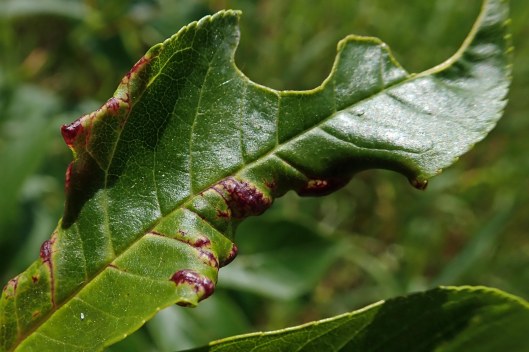
These are galls on the leaves of Ash trees (upper leaf above, lower leaf below) caused by the larvae of a small bug called Psyllopsis fraxini, also known as the Jumping plant louse according to the Naturespot website, though I’m not sure that’s an official name. There are, apparently, three species of this Psyllopsis bug whose larvae cause galls like these so when recording such finds the aggregate name is used, Psyllopsis fraxini agg. You can read more about these wee beasties and see photos of the adult on the British Bugs website here.

230612 psyllopsis fraxini on ash (2)

Like Loading...

Lurking beneath

23 Wednesday Nov 2022

Posted by sconzani in autumn, insects, leaves

≈ Leave a comment

Tags

British bugs, British shieldbugs, Elasmucha grisea, leaf-turning, Parent bug

This is my favourite time of year for leaf turning, not only because it’s the best time of year to search for leafmines but also because you never know what you might find lurking beneath. In this instance, a rosy red Parent bug (Elasmucha grisea), which overwinters as an adult bug, was hiding away beneath the leaves in a well-vegetated spot.

221123 parent bug

Like Loading...

Stenodema laevigata

01 Monday Aug 2022

Posted by sconzani in insects

≈ Leave a comment

Tags

British bugs, mirid bugs, Miridae, plant bugs, Stenodema laevigata

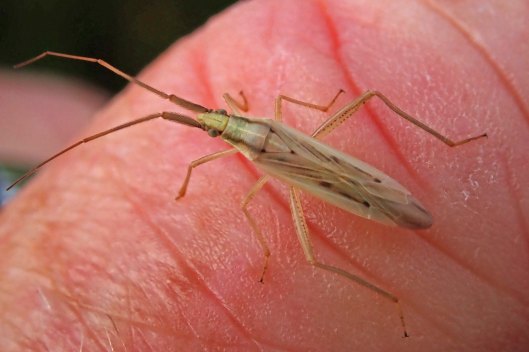
I cannot tell a lie – I didn’t find this bug, it found me. As I was wandering around a local field, I glimpsed something flit up from the flowers and looked down to find it sitting on my t-shirt. Very obligingly, it waited until I got my camera out of my pocket and was then persuaded to climb on to my hand for some photos. Meet Stenodema laevigata, another of the Miridae family of plant bugs. This species is much more common and widespread, with over 3000 records currently showing on the NBN Atlas webpage, or perhaps it’s more often recorded because its slim shape and singular markings make it easier to identify.

220801 Stenodema laevigata

Like Loading...

Adelphocoris lineolatus

30 Saturday Jul 2022

Posted by sconzani in insects

≈ Leave a comment

Tags

Adelphocoris lineolatus, British bugs, Miridae, plant bug

At last a bug with a common name – Adelphocoris lineolatus is also known as the Lucerne bug, though it actually favours quite a wide variety of food plants and, as you can see, I found it sitting on Common fleabane (Pulicaria dysenterica). This species is a little trickier to identify but its combination of paired lines and double spots helped me nail it down. As with yesterday’s mirid bug, records for this species are scattered and mostly to be found in southern Britain, though some adventurous individuals have been recorded in Scotland. (I have not identified the smaller bug in this picture – my photo didn’t show enough details and I suspect it might have fallen into the ‘too hard’ basket anyway.)

220730 Adelphocoris lineolatus

Like Loading...

Oncotylus viridiflavus

29 Friday Jul 2022

Posted by sconzani in insects, wildflowers

≈ Leave a comment

Tags

British bugs, insects on knapweed, knapweed, Miridae, Oncotylus viridiflavus, plant bugs

High summer is prime time for spotting plant bugs. By keeping an eye out for insects on wildflowers, I’ve managed to spot three new (to me) species in the past week alone. This is one of them: a mirid bug with a mouthful of a name, Oncotylus viridiflavus. A lot of these bugs have very similar markings and can be tricky to tell apart but, luckily, this little guy has quite distinct colouration and patterning and, very helpfully, was sitting right where it should be, on top of its food plant, Knapweed. The records for this species are scattered throughout the southern half of Britain but there are a lot of gaps in the map – perhaps you can be the first to find one in your area.

220729 oncotylus viridiflavus

Like Loading...

Cyllecoris histrionius

21 Tuesday Jun 2022

Posted by sconzani in insects, leaves, trees

≈ Leave a comment

Tags

British bugs, bugs on Oak leaves, Cyllecoris histrionius, insects on Oak trees, Miridae

It’s National Insect Week here in Britain so I thought I’d share a new bug I found while checking out life on the leaves of Oak trees. And if you think today’s bug looks a bit like last week’s bug, Leptopterna dolabrata, you’d be absolutely right. Meet Cyllecoris histrionius, another member of the Miridae family. This bug species overwinters as an egg, the larvae hatch in the Spring, then the adults are active from May to July. Oak leaves are their usual habitat; there they can be found munching away on aphids and other tiny insects.

220621 Cyllecoris histrionius

Like Loading...

Grass bugs

15 Wednesday Jun 2022

Posted by sconzani in insects

≈ Leave a comment

Tags

British bugs, grass bugs, Leptopterna dolabrata, Miridae

The Miridae family of plant / leaf / grass bugs is huge, with thousands of species worldwide. This one, Leptopterna dolabrata, is a species I often see in the local meadows at this time of year and, during a recent walk, I found a little colony of them, with several adult males and females, mating adults, and nymphs that I have tentatively identified from looking at their colouring as male and female, though I may be wrong about those. So, the photos below are, I think, female nymph (left) and adult (right), male nymph (left) and adult (right), and, most obviously, a male and female mating.

220615 Leptopterna dolabrata

Like Loading...
← Older posts
Newer posts →

About me

sconzani

sconzani

I'm a writer and photographer; researcher and blogger; birder and nature lover; countryside rambler and city strider; volunteer and biodiversity recorder.

View Full Profile →

Follow earthstar on WordPress.com

Enter your email address to follow this blog and receive notifications of new posts by email.

Recent blog posts

  • M is for mite December 18, 2025
  • L is for lepidopteran lifers December 17, 2025
  • K is for Keeled skimmers December 16, 2025
  • J is for Jersey tiger December 15, 2025
  • I is for Ichneumon December 14, 2025

From the archives

COPYRIGHT

Unless otherwise acknowledged, the text and photographs on this blog are my own and are subject to international copyright. Nothing may be downloaded or copied without my permission.

Fellow Earth Stars!

  • Unknown's avatar
  • Unknown's avatar
  • Unknown's avatar
  • Unknown's avatar
  • Unknown's avatar
  • Unknown's avatar
  • Unknown's avatar
  • Unknown's avatar
  • Unknown's avatar
  • Unknown's avatar
  • Unknown's avatar
  • Unknown's avatar
  • Unknown's avatar
  • Unknown's avatar
  • Unknown's avatar
  • Unknown's avatar
  • Unknown's avatar
  • Unknown's avatar
  • Unknown's avatar
  • Unknown's avatar
  • Unknown's avatar
  • Unknown's avatar
  • Unknown's avatar
  • Unknown's avatar
  • Unknown's avatar
  • Unknown's avatar
  • Unknown's avatar
  • Unknown's avatar
  • Unknown's avatar
  • Unknown's avatar
  • Unknown's avatar
  • Unknown's avatar
  • Unknown's avatar
  • Unknown's avatar
  • Unknown's avatar
  • Unknown's avatar
  • Unknown's avatar
  • Unknown's avatar
  • Unknown's avatar
  • Unknown's avatar
  • Unknown's avatar
  • Unknown's avatar
  • Unknown's avatar
  • Unknown's avatar
  • Unknown's avatar
  • Unknown's avatar
  • Unknown's avatar
  • Unknown's avatar
  • Unknown's avatar
  • Unknown's avatar

Blog at WordPress.com.

Privacy & Cookies: This site uses cookies. By continuing to use this website, you agree to their use.
To find out more, including how to control cookies, see here: Cookie Policy
  • Subscribe Subscribed
    • earthstar
    • Join 667 other subscribers
    • Already have a WordPress.com account? Log in now.
    • earthstar
    • Subscribe Subscribed
    • Sign up
    • Log in
    • Report this content
    • View site in Reader
    • Manage subscriptions
    • Collapse this bar
 

Loading Comments...
 

You must be logged in to post a comment.

    %d