• ABOUT
  • BIRDING 2018
  • Birding 2019
  • BLOG POSTS
  • Butterflies 2018
  • Resources

earthstar

~ a celebration of nature

earthstar

Tag Archives: British galls

M is for mite

18 Thursday Dec 2025

Posted by sconzani in insects, plants

≈ Leave a comment

Tags

British galls, Colomerus vitis, gall mites, gall-causing mites, galls, galls on grape leaves, galls on grapevines

When preparing this series of countdown blog posts, I revisited the two locations where I found Grape mites (Galls on grapevines, 26 July) earlier this year, hoping to take a new photo to accompany this post. Unfortunately, I’d left it too late, as the grape vines were both bare, their leaves dead and already dropped off or blown from their branches on to the ground below. My find of this miniscule mite was one of my ‘first for Wales’ sightings in 2025 and I’m quite surprised to note that no other sightings have yet been recorded though, on checking iRecord, sightings do look quite sparse across Britain so far. I’ve already made a diary note to check for the mites (Colomerus vitis) again next year, and will be on the lookout for their telltale signs in other locations.
Like Loading...

Galls: Aceria fraxinivora

29 Tuesday Jul 2025

Posted by sconzani in insects, trees

≈ Leave a comment

Tags

Aceria fraxinivora, Ash key galls, British galls, Cauliflower galls, galls caused by mites, galls on Ash keys

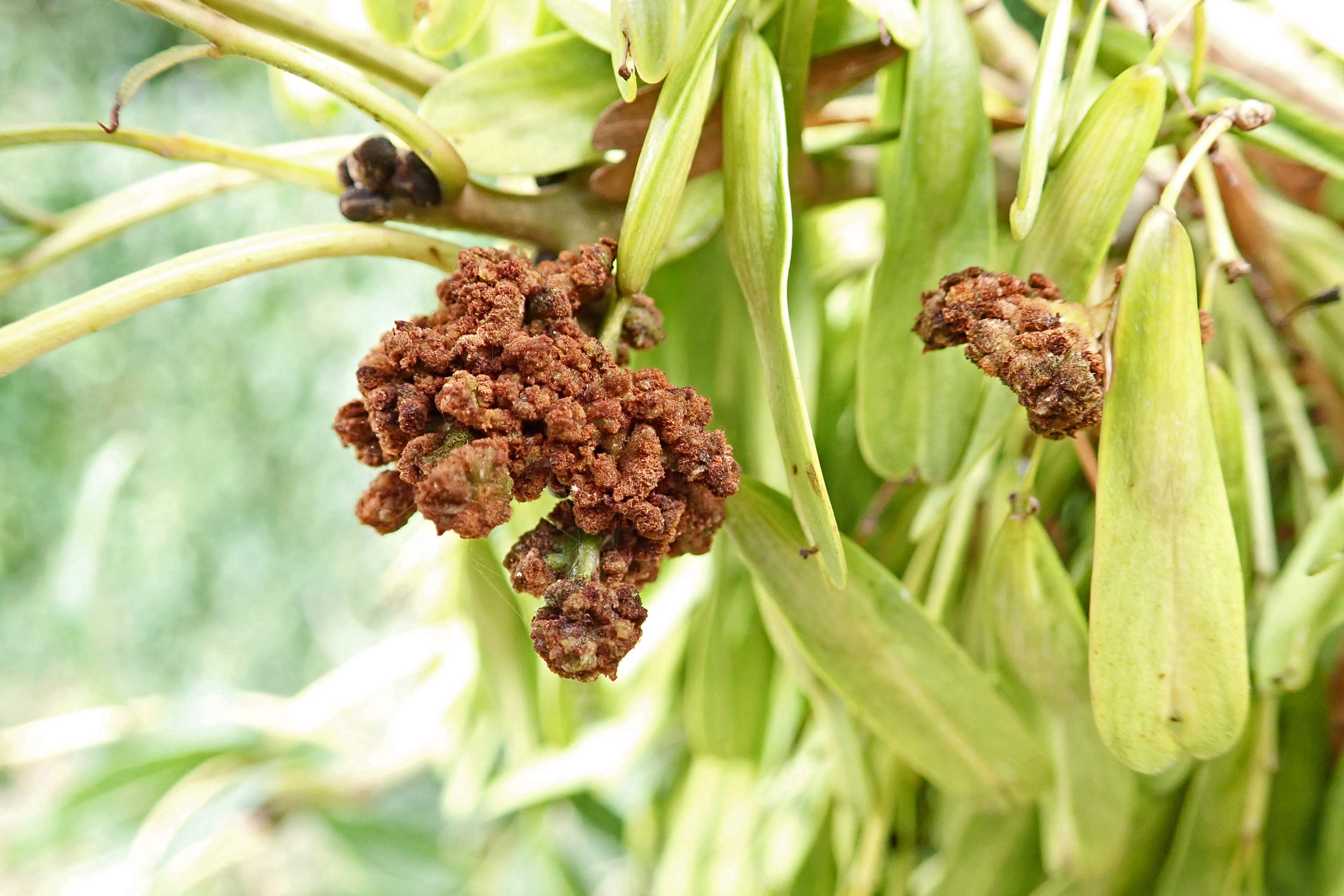
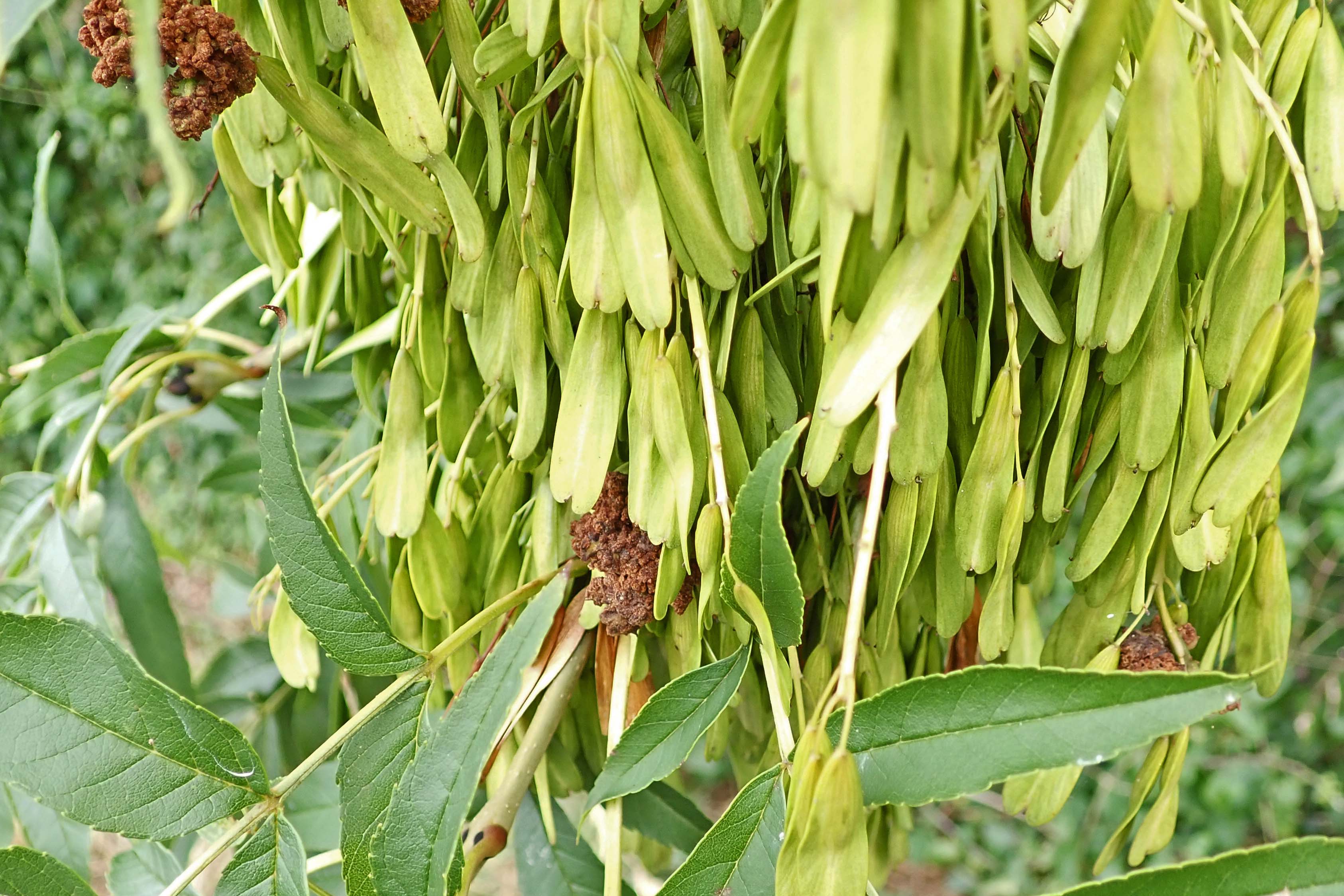
Over the years I must have looked at hundreds of bunches of Ash keys (so named because the clusters of seeds on Ash trees look like bunches of old-fashioned metal keys hanging together) yet this was the first time I had noticed these odd woody growths on any of them. The growths, which start off green but later turn brown, are known by the common name of Cauliflower galls – I think you can see why. The galls are caused by the mite Aceria fraxinivora, a mite so small you can’t even see it with the naked eye.

Despite their diminutive stature, by piercing the Ash’s cells to feed, the mite causes the surrounding plant cells to expand and multiply, thus forming the galls you can see in these photos. According to the Plant Parasites of Europe website, the galls sometimes occur on the stems and leaves of the Ash tree (the website has photos of these) but they are most often found on the flower heads, presumably because those cells are easier to access for the hungry mites.

Like Loading...

Galls on grapevines

26 Saturday Jul 2025

Posted by sconzani in insects, plants

≈ Leave a comment

Tags

British galls, Colomerus vitis, gall mites, gall-causing mites, galls, galls on grape leaves, galls on grapevines

After last Sunday’s local meander I wrote on social media:

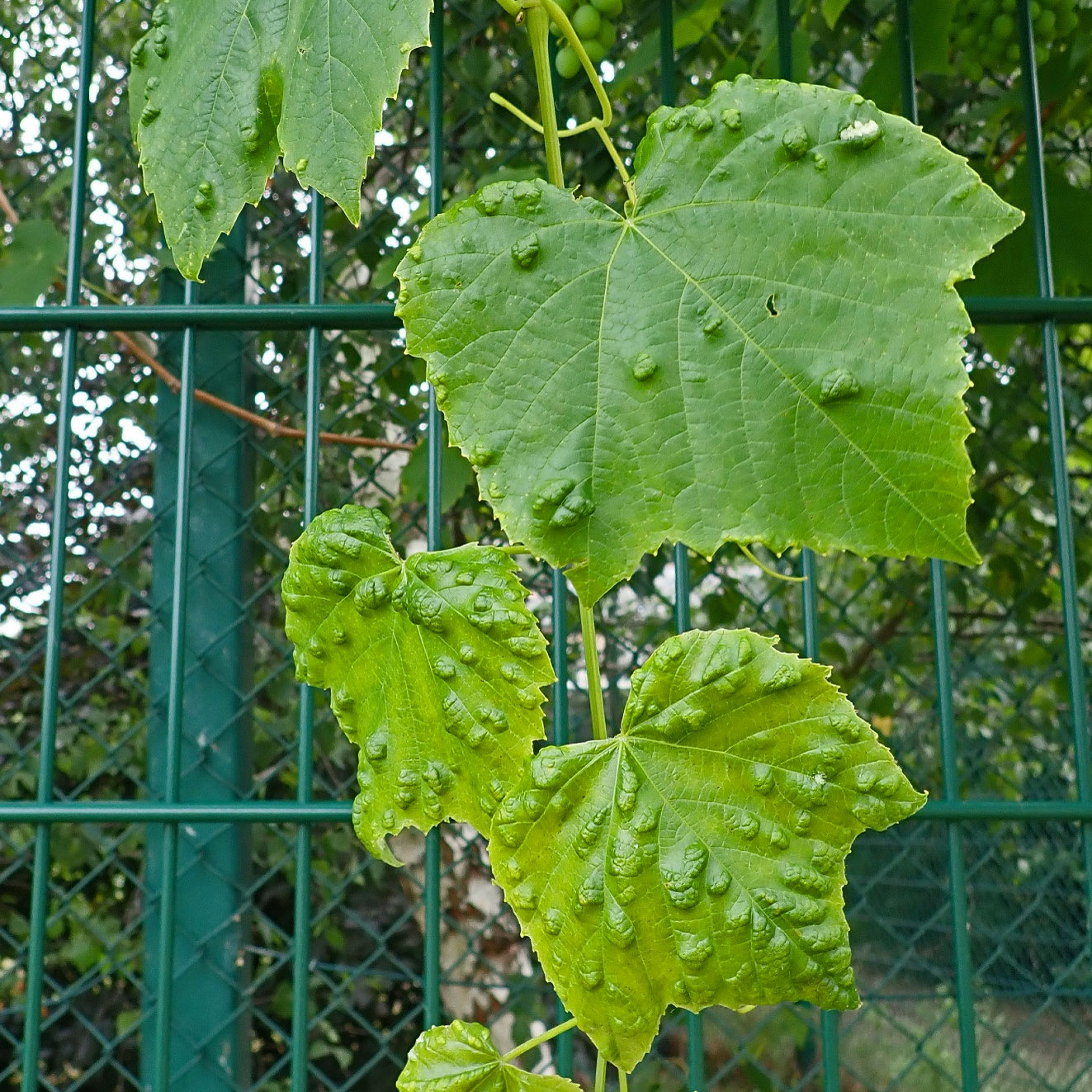
A lesson for me in the importance of recording: I’ve walked past this grapevine many times recently & noticed the galls on its leaves. Today I finally took photos, figured it’s caused by the mite Colomerus vitis & found there are NO Welsh records, tho’ it must be out there somewhere.

I’ve since checked the only other publicly accessible grapevine I know of locally and found that it, too, has these galls on its leaves so I was right to assume that this is something that has simply been overlooked and not recorded by anyone who’s noticed it. As well as there having been no previous Welsh records, there are very few records from elsewhere in the UK, which I assume is also under-recording, not scarcity.

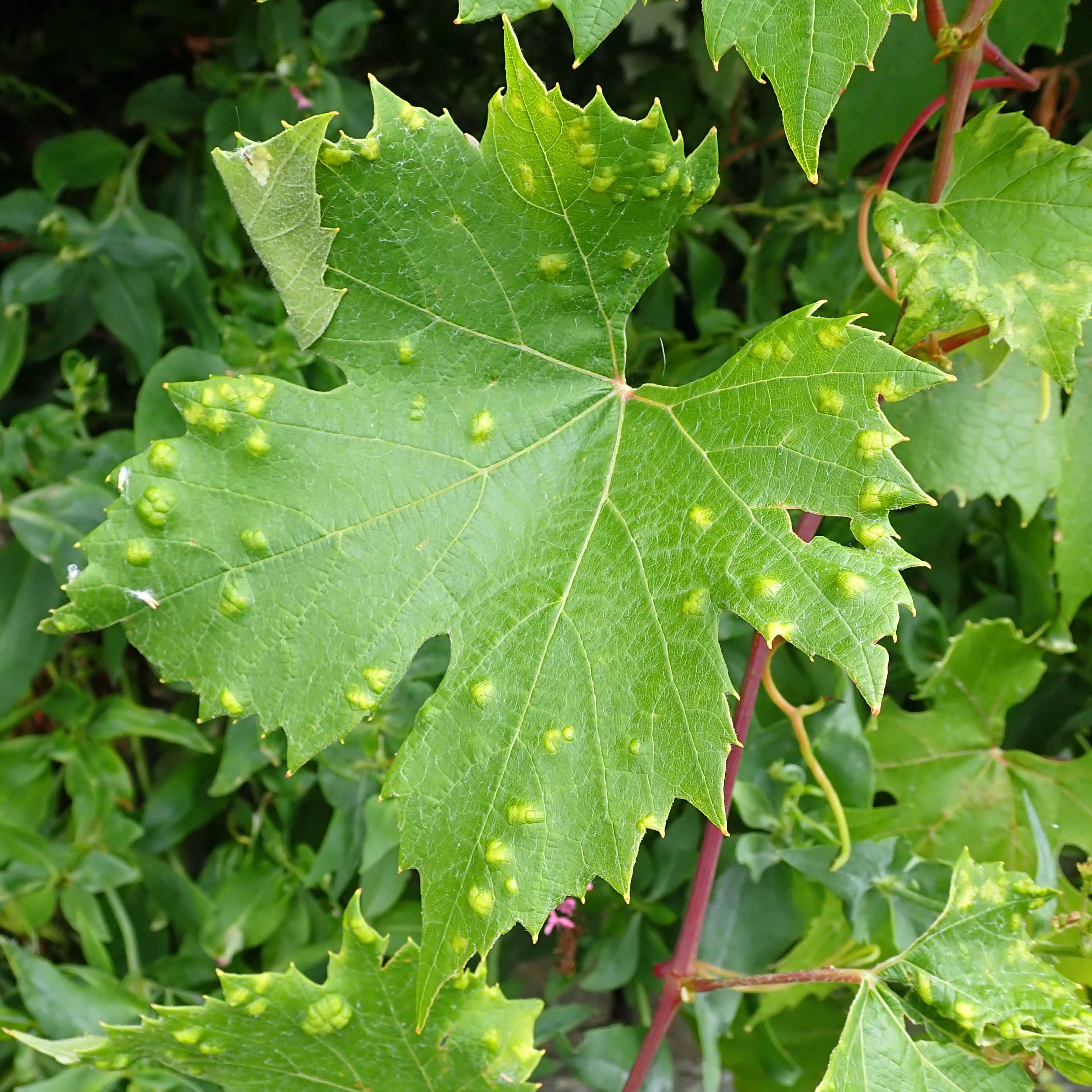
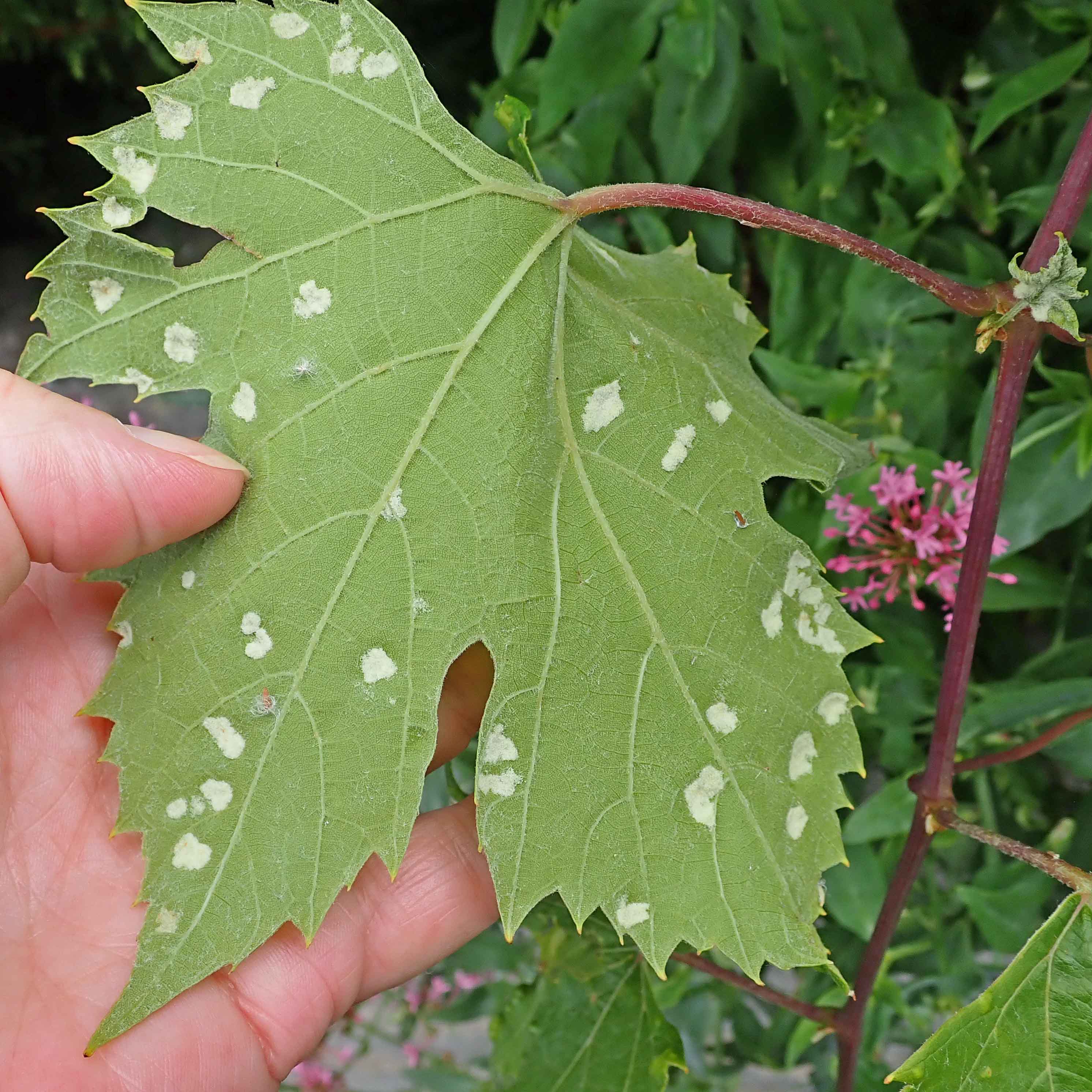
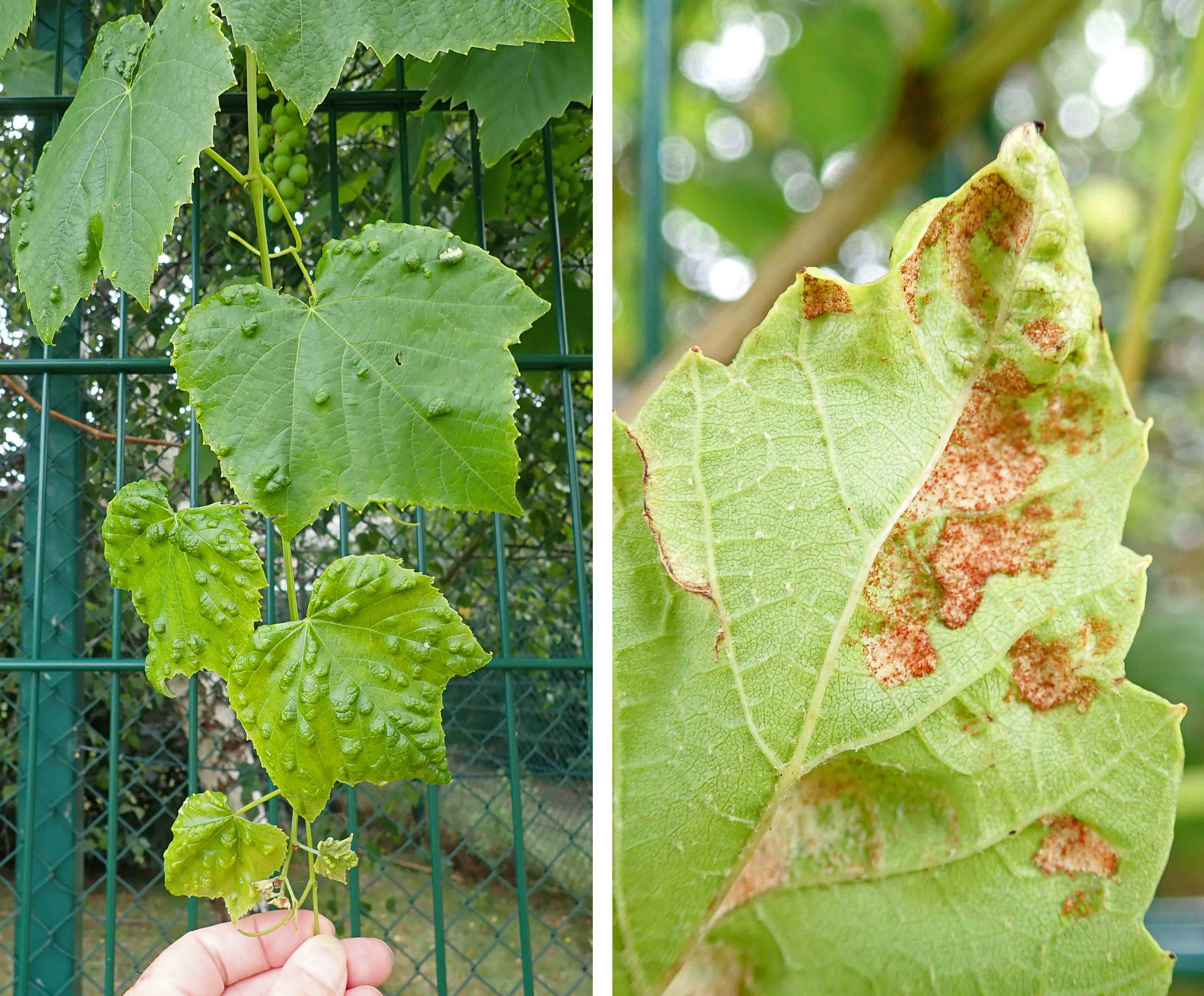
The galls, which appear as lumps and bumps on the upper side of the leaves, are caused by the miniscule mite Colomerus vitis. These mites inhabit the felt-like surface of the galls on the underside of the leaves, a surface that starts out white but gradually browns over time. The vines I’ve looked at are covered in bunches of grapes and the plants themselves look very healthy so, presumably, the galls are having little affect on the plants’ productivity.

Like Loading...

Galls: Macrodiplosis pustularis

02 Monday Jun 2025

Posted by sconzani in insects, trees

≈ Leave a comment

Tags

British galls, Cecidomyiidae, folded leaf lobes on Oak leaves, gall midges, galls on Oak leaves, insects on Oak, Macrodiplosis pustularis

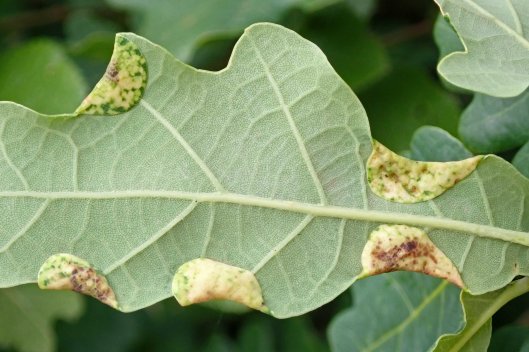
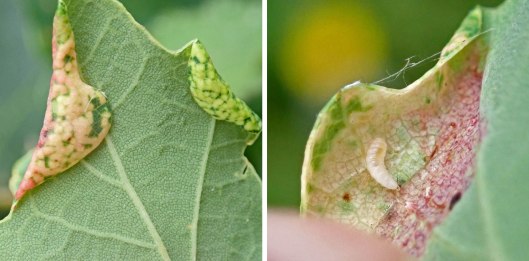
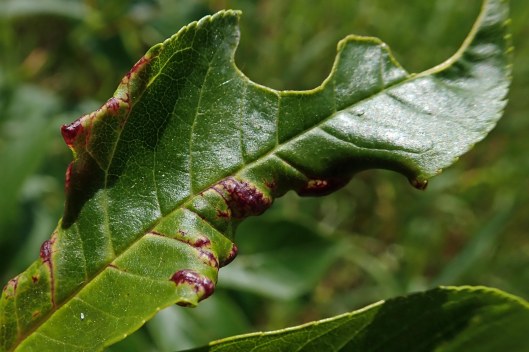
In my ignorance, when I first saw these folded-over leaf lobes on an Oak tree in a local park, I thought they had been created by leaf-mining moth larvae. Fortunately, there are much smarter people around than me and, when I posted some photos on social media, one of them popped up and told me what these really were: galls made by the larvae of the gall midge, Macrodiplosis pustularis.

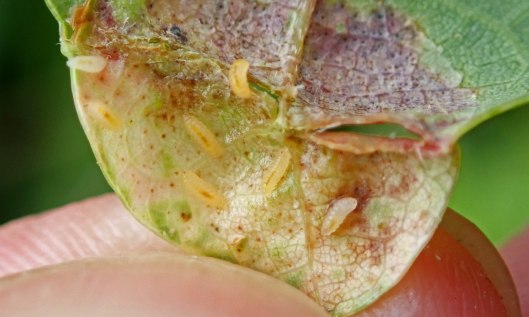
Of course, once I knew that I had to return to the spot and pull up a couple of the folds to see the tiny larvae. The numbers inside can vary, apparently, from one to six or more. They are white when young but change to an orange colour as they develop.

The fold of the leaf is both a means of protection for the vulnerable larvae and also a food larder; they eat the leaf from the inside. Eventually, the larvae will drop from their leaf shelters, pupate and remain in the soil until the following Spring, when the whole process begins again.

Like Loading...

Galls: Dasineura crataegi

04 Wednesday Sep 2024

Posted by sconzani in insects, plants, trees

≈ Leave a comment

Tags

British galls, Dasineura crataegi, gall-causing mites, galls caused by mites, galls on Hawthorn, Hawthorn button-top gall, plant galls

Teeny tiny mites have caused this damage to the tips of new branches on Hawthorn bushes (Crataegus species). Mites are so tiny that they can feed on individual plant cells, and it is this feeding that distorts and deforms the new leaf growth. These particular mites are called Dasineura crataegi, and the galls they create are known as Hawthorn button-top galls.

240904 Dasineura crataegi

Apparently, these galls are quite common but I’ve only seen them recently. All plant growth in the field where these Hawthorn bushes are growing is usually cut to the ground in late Autumn but that cut wasn’t down last year, possibly because it was too wet. This has allowed Hawthorn seedlings to grow where they usually wouldn’t, and it is on these young Hawthorns that the mites are thriving. It will be interesting to see if the galls appear again next year if the annual cut goes ahead.

Like Loading...

Galls: Taphrina pruni

28 Tuesday May 2024

Posted by sconzani in fungi, trees

≈ Leave a comment

Tags

Bladder plum gall, British galls, gall caused by fungal pathogen, gall on Blackthorn, gall on plum tree, Pocket plum gall, Taphrina pruni

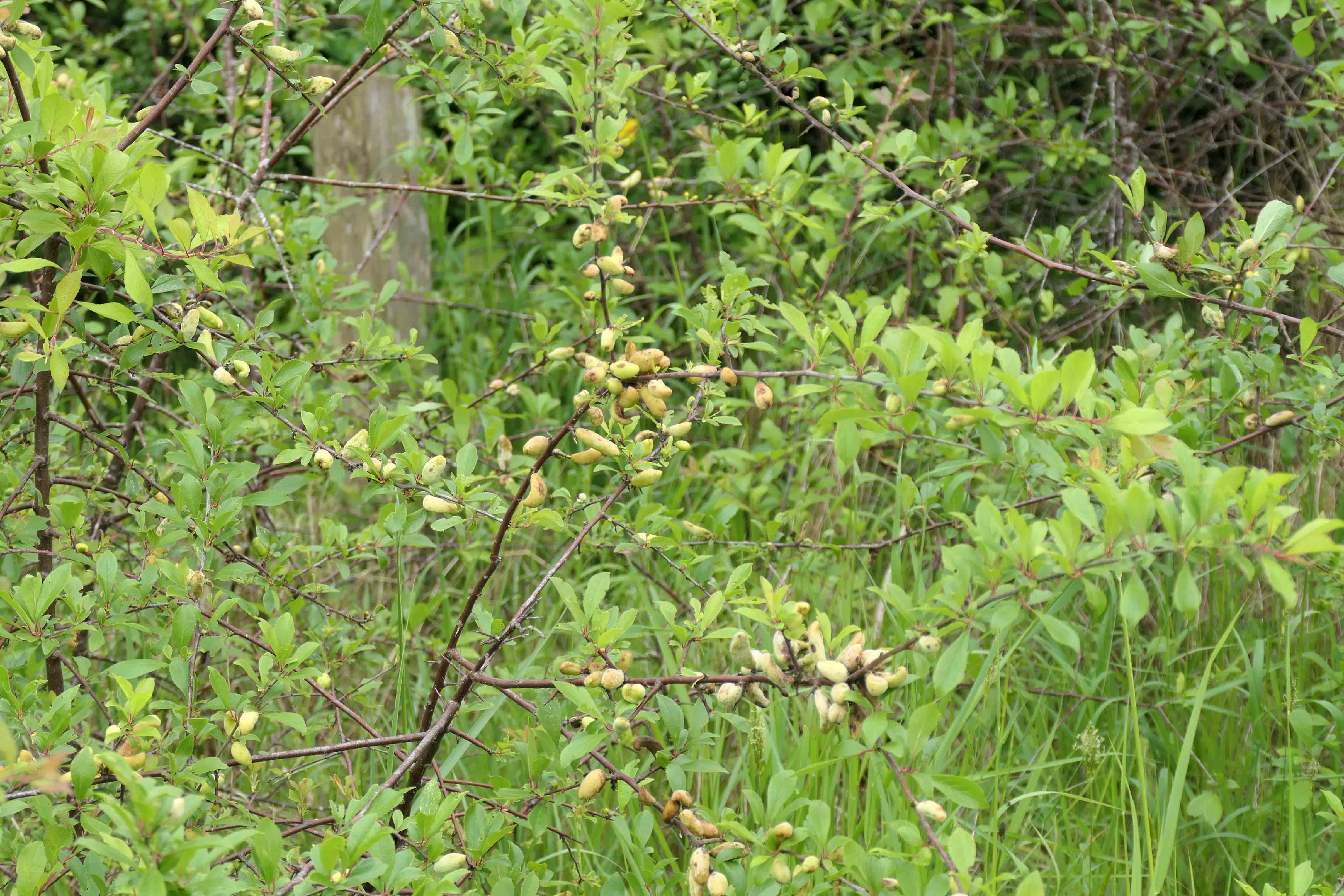
I’ve looked for these galls for some time, and, like that saying about buses (‘you wait ages for one, then two come along at the same time’), I’ve now seen them twice in the past couple of days.

240528 taphrina pruni (1)

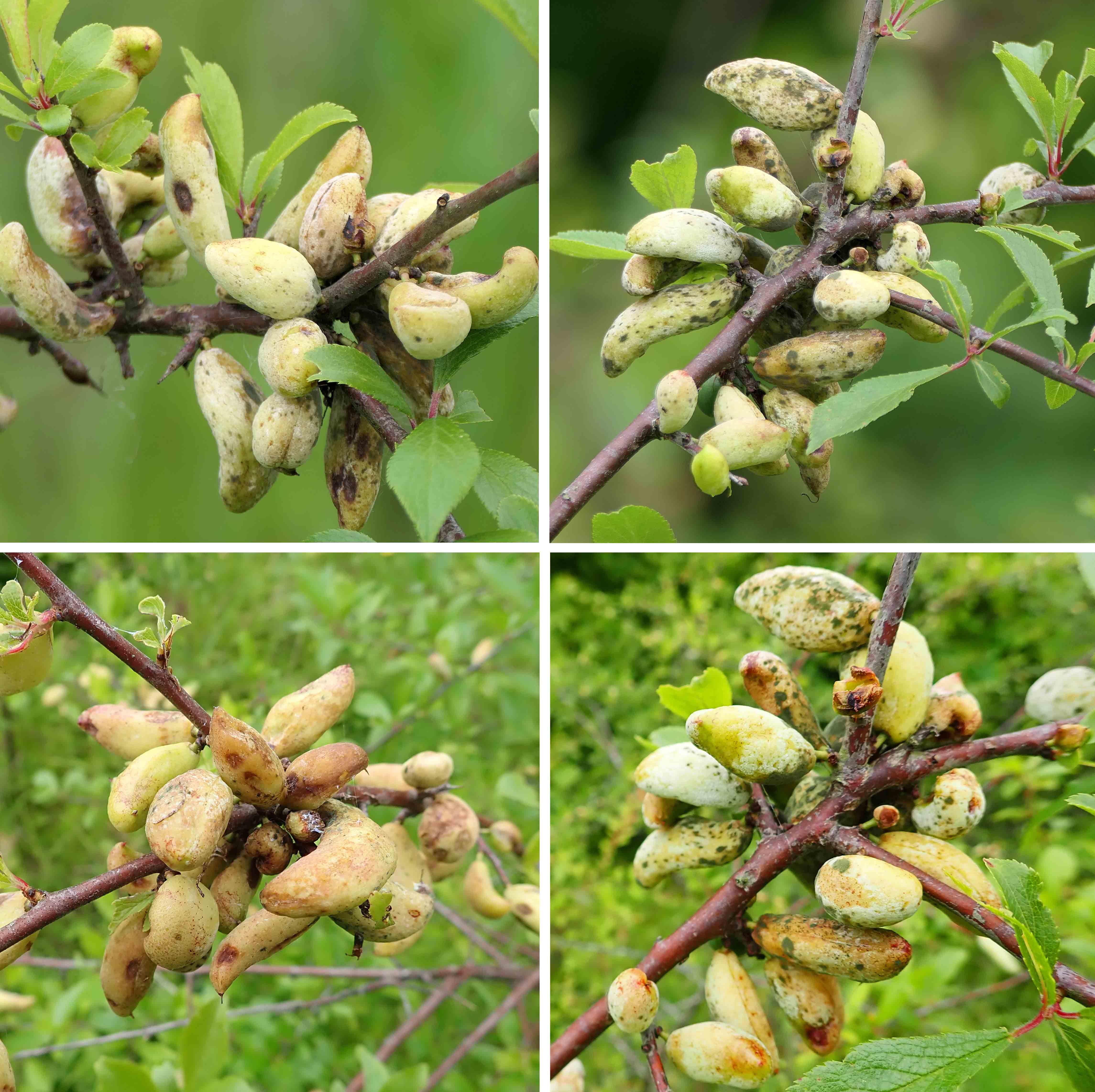
Though you’d be forgiven for not recognising them, these are the fruit of the Blackthorn or Sloe (Prunus spinosa) but they have been attacked by a fungal pathogen. That pathogen changes the shape and the colour of the fruit and, if you were to split one open (which I did), you would find that there is no stone inside (or, rather, there is a miniscule speck of brown matter that would have developed in to a stone). The gall is sometimes referred to the Pocket or Bladder plum gall and can also affect domestic plum trees.

240528 taphrina pruni (2)

Like Loading...

Rhizobium radiobacter

01 Friday Mar 2024

Posted by sconzani in trees

≈ Leave a comment

Tags

Agrobacterium tumefaciens, British galls, Crown gall, gall on willow, pathogen-causing gall, plant pathogen, Rhizobium radiobacter

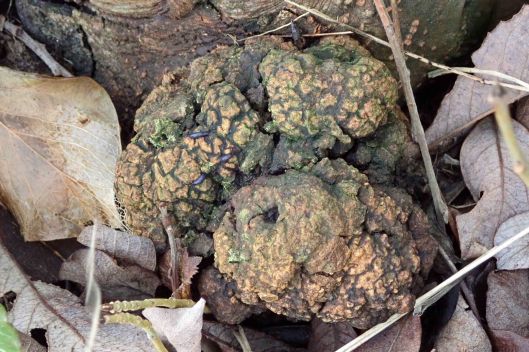
This is a strange one! I found some odd galls on a couple of willows (Salix species), large round lumpy masses around the base of the trunks, smaller lumpy growths further up the trunks and on the branches.

It turns out these are caused by a plant pathogen. I found a pdf on The British Society for Plant Pathology website, with the following explanation:

Rhizobium radiobacter is a soil-living, gram-negative, motile rod-shaped bacterium. It is a biotrophic pathogen that can alter the physiology and morphology of its host plant without killing it, resulting in tumourlike structures or galls. Prior to 2001, gall forming R. radiobacter was called Agrobacterium tumefaciens.

The pathogen enters the plant tissue through wounds, and the galls, also known as Crown galls, can be found on a huge variety of plant species. The one-page BSPP pdf has more information if you’re interested.

Like Loading...

K is for Knopper

16 Saturday Dec 2023

Posted by sconzani in insects, plants, trees

≈ Leave a comment

Tags

British galls, bug galls, galls, galls on Ash, galls on Hazel, galls on oak trees, galls on Poplar, galls on willow, galls on Yew, Knopper gall, midge galls, mite galls, wasp galls

This is really a review of the galls I’ve found this year but the letter G simply had to be about my first ever confirmed Goshawk sighting, so K is for Knopper is my alternative lead in.

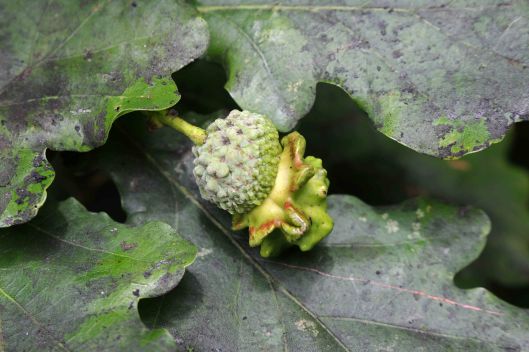
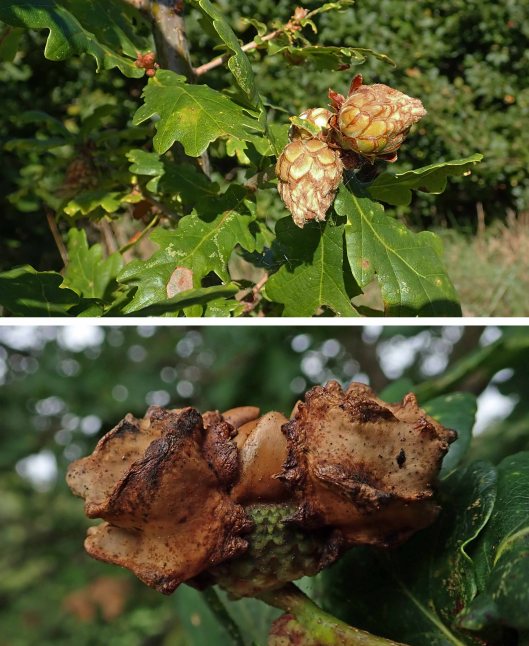
231216 Knopper Andricus quercuscalicis

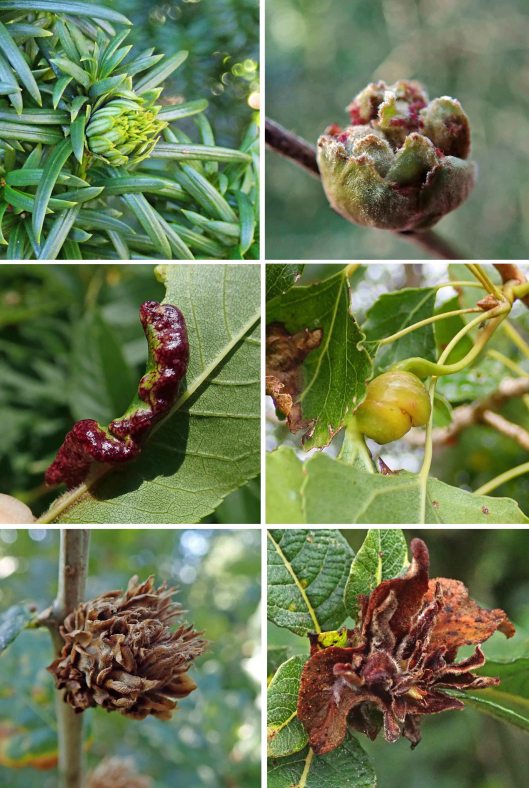
Knopper galls, like the one shown above, did feature in one post this year, Acorns and galls on 1 October, but there were many other galls, most of which were new finds for me. February saw the year off to a good start with galls on Yew trees caused by a tiny midge (Galls: Taxomyia taxi, 9 February) and galls on Hazel caused by an equally tiny mite (Galls: Phytoptus avellanae, 20 February). In June, it was a small bug that was creating eye-catching galls on the leaves of an Ash tree (Galls: Psyllopsis fraxini, 12 June), and, in July, aphids were the gall causers on a Poplar tree (Galls: Pemphigus spyrothecae, 17 July). In that October blog Acorns and galls I mentioned above, as well as the knoppers, another tiny wasp had caused artichoke galls to form on the same Oak tree. And, a couple of weeks later, I found my final new galls for the year, those caused by midges on Willow trees (Galls: Rabdophaga rosaria, 17 October). All in all, 2023 was quite a galling year!

231216 mixed galls

Like Loading...

Acorns and galls

01 Sunday Oct 2023

Posted by sconzani in autumn, insects, trees

≈ Leave a comment

Tags

acorns, Andricus foecundatrix, Andriscus quercuscalicis, artichoke galls, British galls, gall wasps, galls on acorns, galls on oak trees, knoppers, Oak gall wasps, Oak trees

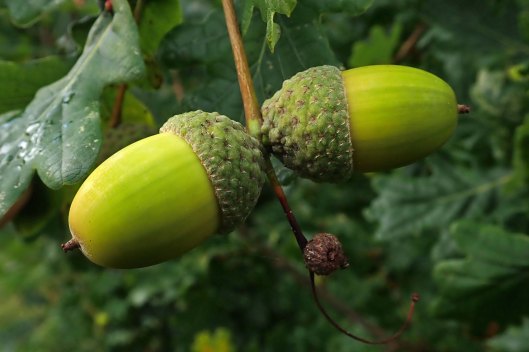
I was taking photos of acorns, thinking I’d perhaps write a blog about the many varied types of nuts, when it occurred to me how many galls I’ve been seeing on acorns this year. The gall-causers are having a good year.

230930 acorns (1)

I’ve covered these before (in Oak galls: knoppers and artichokes, August 2017) so won’t repeat myself here. But if you’re interested in what causes these particular galls, just click on the link to that previous blog. The galls in the first photo are Artichoke galls, caused by the tiny wasp Andricus foecundatrix, and the galls in the second photo, which have almost totally consumed the acorns, have been caused by another wasp Andriscus quercuscalicis.

230930 acorn galls (2)

Like Loading...

Galls: Psyllopsis fraxini

12 Monday Jun 2023

Posted by sconzani in insects

≈ Leave a comment

Tags

British bugs, British galls, gall, galls on Ash, Jumping plant louse, Psyllopsis fraxini

There is a place locally I call the secret field because it has just a couple of quite well-concealed entrances and very few people visit it – in fact, of the many local people I know there’s only one who knows this place. It is surrounded by large mature trees, which means the location is quite sheltered, and the field itself seems to have been planted with saplings perhaps 10-15 years ago, judging by their size. This secret field is where I make many of my most interesting discoveries, and this is one of the most recent.

230612 psyllopsis fraxini on ash (1)

These are galls on the leaves of Ash trees (upper leaf above, lower leaf below) caused by the larvae of a small bug called Psyllopsis fraxini, also known as the Jumping plant louse according to the Naturespot website, though I’m not sure that’s an official name. There are, apparently, three species of this Psyllopsis bug whose larvae cause galls like these so when recording such finds the aggregate name is used, Psyllopsis fraxini agg. You can read more about these wee beasties and see photos of the adult on the British Bugs website here.

230612 psyllopsis fraxini on ash (2)

Like Loading...
← Older posts

About me

sconzani

sconzani

I'm a writer and photographer; researcher and blogger; birder and nature lover; countryside rambler and city strider; volunteer and biodiversity recorder.

View Full Profile →

Follow earthstar on WordPress.com

Enter your email address to follow this blog and receive notifications of new posts by email.

Recent blog posts

  • M is for mite December 18, 2025
  • L is for lepidopteran lifers December 17, 2025
  • K is for Keeled skimmers December 16, 2025
  • J is for Jersey tiger December 15, 2025
  • I is for Ichneumon December 14, 2025

From the archives

COPYRIGHT

Unless otherwise acknowledged, the text and photographs on this blog are my own and are subject to international copyright. Nothing may be downloaded or copied without my permission.

Fellow Earth Stars!

  • Unknown's avatar
  • Unknown's avatar
  • Unknown's avatar
  • Unknown's avatar
  • Unknown's avatar
  • Unknown's avatar
  • Unknown's avatar
  • Unknown's avatar
  • Unknown's avatar
  • Unknown's avatar
  • Unknown's avatar
  • Unknown's avatar
  • Unknown's avatar
  • Unknown's avatar
  • Unknown's avatar
  • Unknown's avatar
  • Unknown's avatar
  • Unknown's avatar
  • Unknown's avatar
  • Unknown's avatar
  • Unknown's avatar
  • Unknown's avatar
  • Unknown's avatar
  • Unknown's avatar
  • Unknown's avatar
  • Unknown's avatar
  • Unknown's avatar
  • Unknown's avatar
  • Unknown's avatar
  • Unknown's avatar
  • Unknown's avatar
  • Unknown's avatar
  • Unknown's avatar
  • Unknown's avatar
  • Unknown's avatar
  • Unknown's avatar
  • Unknown's avatar
  • Unknown's avatar
  • Unknown's avatar
  • Unknown's avatar
  • Unknown's avatar
  • Unknown's avatar
  • Unknown's avatar
  • Unknown's avatar
  • Unknown's avatar
  • Unknown's avatar
  • Unknown's avatar
  • Unknown's avatar
  • Unknown's avatar
  • Unknown's avatar

Blog at WordPress.com.

Privacy & Cookies: This site uses cookies. By continuing to use this website, you agree to their use.
To find out more, including how to control cookies, see here: Cookie Policy
  • Subscribe Subscribed
    • earthstar
    • Join 667 other subscribers
    • Already have a WordPress.com account? Log in now.
    • earthstar
    • Subscribe Subscribed
    • Sign up
    • Log in
    • Report this content
    • View site in Reader
    • Manage subscriptions
    • Collapse this bar
 

Loading Comments...
 

You must be logged in to post a comment.

    %d