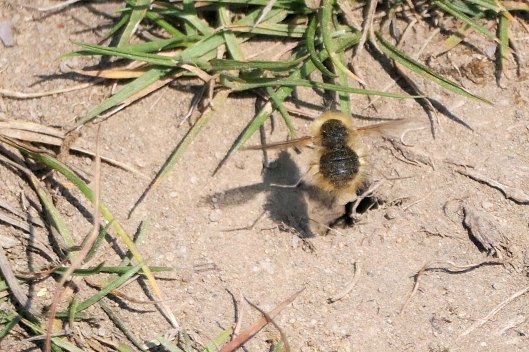
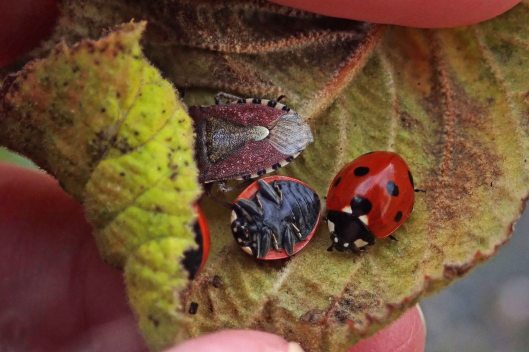
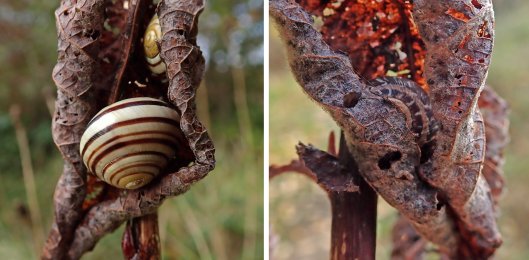
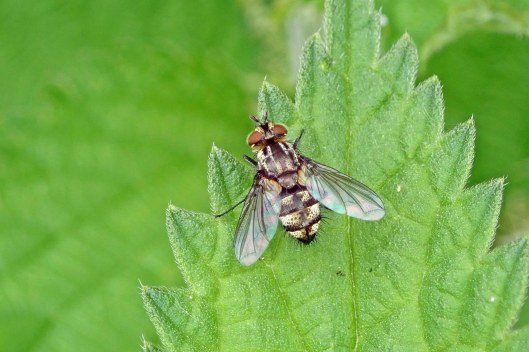
Despite being in a field full of blooming wildflowers this single buttercup flower was obviously the most delicious as all the little flying insects wanted a part of it.

06 Wednesday Sep 2023
Posted in insects, wildflowers
Despite being in a field full of blooming wildflowers this single buttercup flower was obviously the most delicious as all the little flying insects wanted a part of it.

17 Tuesday Jan 2023
Posted in insects
Another day, another summer fly. This one, from last May, is a little bristly beauty called Nemorilla floralis, whose name means something like ‘little visitor to the flowery glade’ (according to a tweet by @ivysuckle). Unfortunately, this fly doesn’t live up to its pretty name as it’s a parasitoid, laying its eggs in the living larvae of various micro moths and butterflies.

16 Monday Jan 2023
Posted in insects
I was going through my ‘pending’ photos and realised how many images I have from last summer that never got posted, just because each day’s walk in the warmer weather often produces several potential blog subjects. So, while we wait for the weather to improve, I’ll share the occasional 2022 find. And here’s one I’m sure many of you have seen as it has a very wide distribution – meet the Yellow dung fly (Scatophaga stercoraria). The etymology of its scientific name explains this little creature’s preferred habitat: Scatophaga comes from the Greek skatophagos, from skat-, skōr excrement and phagein to eat, and stercoraria is from the Medieval Latin stercorarium meaning toilet (stercorary is an archaic name for a place [e.g. a covered pit] for the storage of manure secure from the weather) (Merrian-Webster Dictionary). So, Scatophaga stercoraria is the dung eater from the dung pit.

21 Sunday Aug 2022
Posted in insects, wildflowers
Tags
British butterflies, British insects, British wildflowers, Common fleabane, fleabane, insects on fleabane, yellow wildflower
Fleabane is a godsend. It starts to flower in mid summer and carries on flowering through to early autumn, providing a much-needed food source for a diverse range of insects at a time when many other wildflowers are beginning to wilt and wither. I’ve been accumulating the photos in this video for several weeks, and many of the featured insects have themselves now faded away, victims of the passing of time and also of the sizzling hot temperatures we’ve been experiencing. I’m sure those insects that have managed to survive the hot dry weather have been very grateful for the sustenance Fleabane has provided.
03 Sunday Jul 2022
Posted in flowers, insects, wildflowers
Tags
British insects, British wildflowers, insects as pollinators, insects on Oxeye daisies, Oxeye daisy, Pollinating insects
These photos were taken over 3 days, as I meandered around the local fields and meadows. The ‘friends’ are a wide variety of creatures that all pollinate Oxeye daisies just by flitting/hopping/flying from one to the other, including ladybirds and their larvae; an as-yet-unidentified mirid bug; at least two spider species, including crab spiders using their colour to camouflage their presence; a wide variety of flies; crickets young and old; solitary bees; good numbers of Swollen-thighed beetles, male and female; and a very confiding Meadow grasshopper – they usually hop off when I approach. And these are just the insect species I managed to photograph – I know there are more I missed.
17 Thursday Feb 2022
Posted in insects
I’ve been log-diving again, checking under small rotting branches and logs to see what might be seen. Woodlice and slugs, small spiders and snails there were a’plenty but the only creature I found with even a modicum of colour was this little springtail. I think this is Neanura muscorum, an insect which couldn’t be less true to its name if it tried – no tail to be seen and certainly not very springy.

19 Sunday Dec 2021
This is a plug for the much-maligned Nettle, a plant most of us humans quickly learn to recognise in order to avoid its stings, though most wildlife seems well able to avoid them. I’ve read that Nettles support 40 species of insect but I wonder if that number is on the conservative side. Here are a few insects I spotted on them earlier this year: 7-spot ladybird larva, the 1st instar of a Common green shieldbug, Grypocoris stysi, Nettle weevil, the larva of the hoverfly Scaeva pyrastri, and a Speckled bush-cricket nymph.
24 Wednesday Nov 2021
Posted in insects
Looking for leafmines has had all sorts of spin-off benefits this year, as I’ve learned to recognise more tree species and encountered creatures I’ve never seen before. This little creature is a prime example: it has been confirmed as the Barkfly species Valenzuela flavidus.

Perhaps due to their tiny size (this one’s c.3mm), Barkflies are much under-recorded – I’d never even heard of them – but, as the Barkfly Recording Scheme website notes ‘The lack of recording ensures that even casual recorders of the group have a good chance of making significant finds. Wherever you live you are likely to turn up species previously unrecorded in the area and may even find species new to Britain.’ Seven new species of Barkfly have been discovered in just the past 10 years. So, that’s another insect group to keep a look out for.

30 Thursday Sep 2021
Posted in insects
Tags
British insects, moth caterpillars, moth larvae, mystery caterpillars, mystery larvae, sawfly caterpillars, sawfly larvae
To showcase their diversity, in colour, size, shape, pattern, habits and hairiness, I’ve been gathering photos of these (cater)pillars of the insect community, the larvae of moths, sawflies, and some mysteries, which could be one of these … or something other. Here they are:
Moths: 5-spot burnet (Zygaena trifolii), Drinker (Euthrix potatoria), and the delightfully named Maiden’s blush (Cyclophora punctaria).
Sawflies: a possible Allantus species (its identity cannot be confirmed as it was on the wrong plant), and the fluffy looking Eriocampa ovata.
Mysteries: if you can ID any of these, please leave a comment below. Thanks!
14 Monday Jun 2021
Posted in insects
It seems, from what I’ve just been reading on the NatureSpot website, that I was very lucky to catch these Scorpion flies in flagrante delicto:
Mating usually occurs at night. It can be a dangerous time for the male, if he is not careful the female might decide to kill him! To avoid this he presents her with a gift of a drop of saliva which, it seems, in the world of scorpion flies, is the equivalent of a bunch of roses or a box of chocolates.

You must be logged in to post a comment.