• ABOUT
  • BIRDING 2018
  • Birding 2019
  • BLOG POSTS
  • Butterflies 2018
  • Resources

earthstar

~ a celebration of nature

earthstar

Tag Archives: British moths

Leafminers: Eriocrania sangii

13 Monday May 2024

Posted by sconzani in insects, trees

≈ Leave a comment

Tags

Birch, British leafminers, British moths, Eriocrania sangii, leaf-mining moth larvae, leafmine on Birch

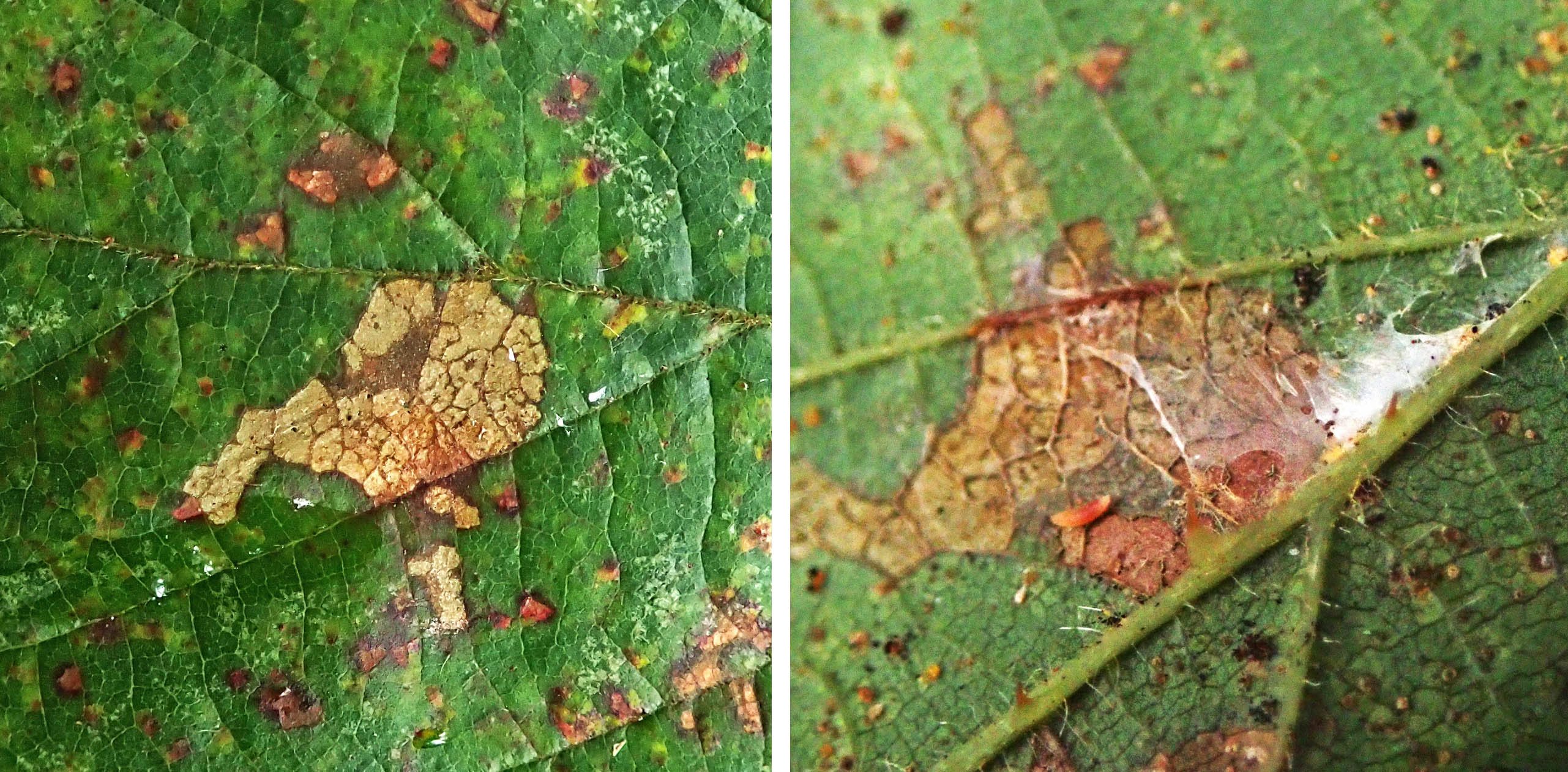
Last week I covered Eriocrania semipurpurella; this week’s leafminer is the second of the eight British Eriocraniidae moth species I’ve now found mining the leaves of Birch trees.

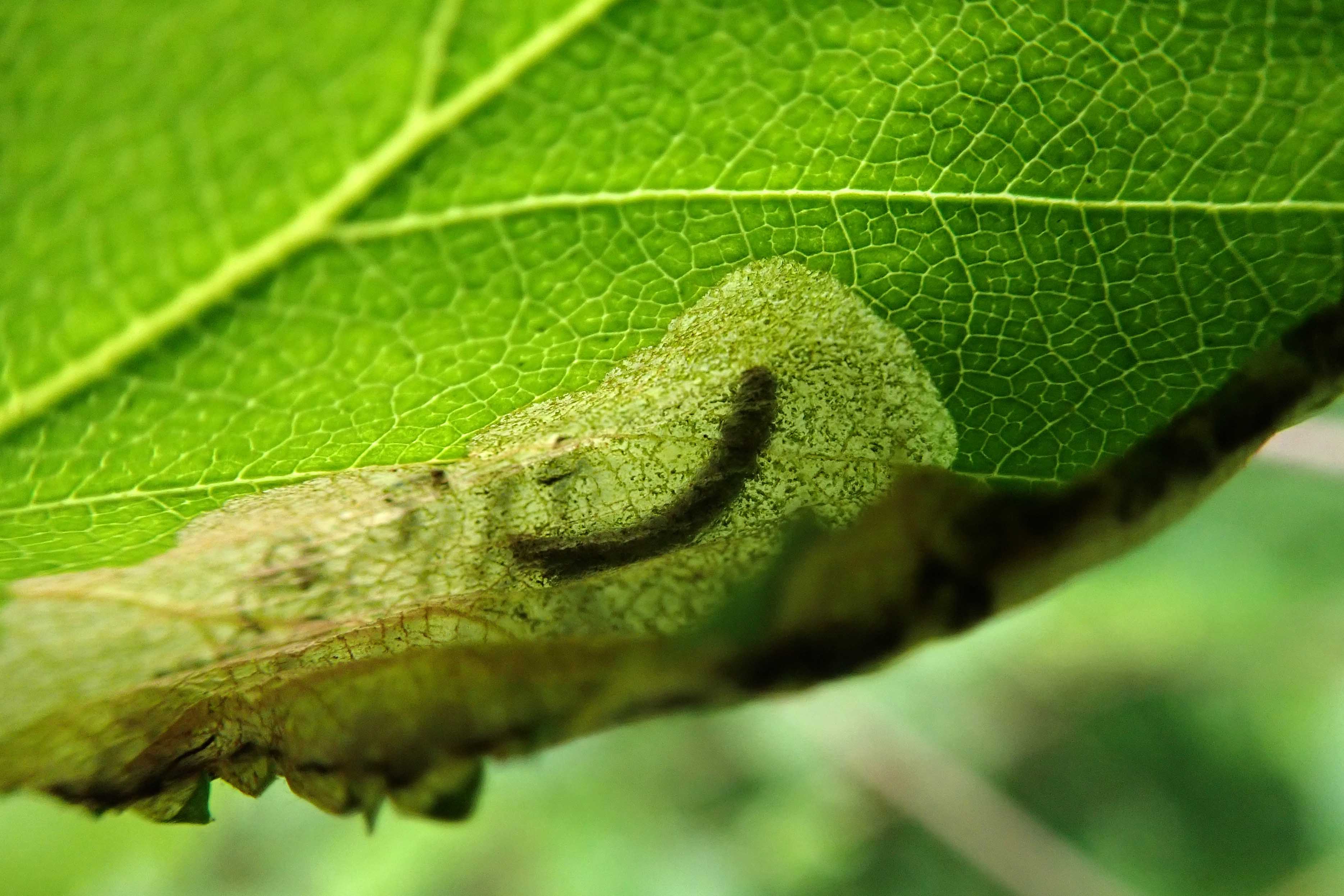
240513 Eriocrania sangii (1)

This dark grey larva (the colour makes this the easiest of the family to identify) will eventually develop into the moth Eriocrania sangii, which looks to be a very pretty sparkly purple if the image on the UK Moths website is true to life.

240513 Eriocrania sangii (2)

Like Loading...

Leafminers: Eriocrania semipurpurella

06 Monday May 2024

Posted by sconzani in insects, trees

≈ Leave a comment

Tags

British leafminers, British moths, Eriocrania semipurpurella, Eriocraniidae, leaf-mining moth larvae, leafmine on Birch

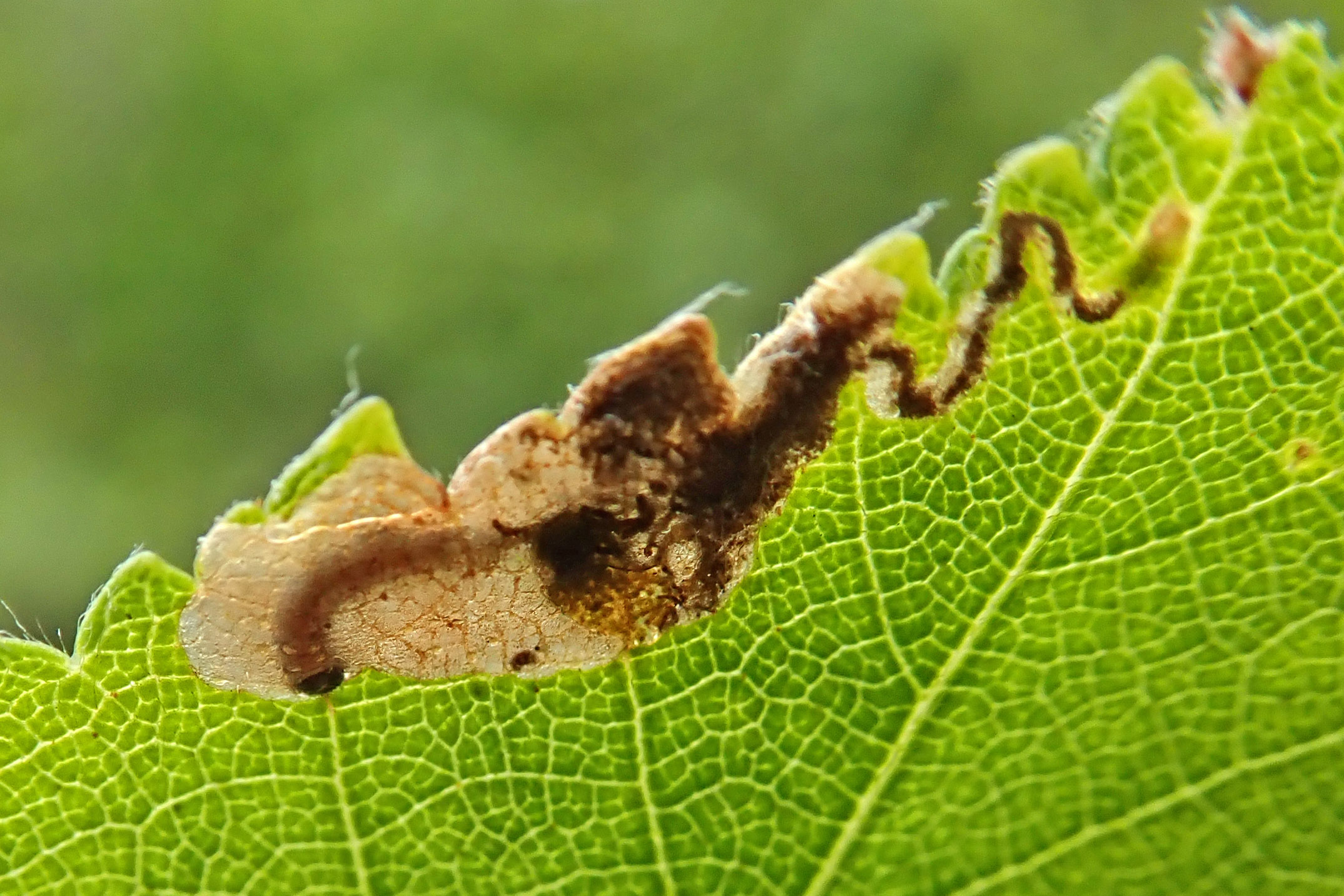
There are eight Eriocraniidae species of moth in Britain, the larvae of which can all be found mining the leaves of Birch trees at this time of year. And this means that, whenever I’m out walking and pass a Birch tree, I have to stop and stare at its leaves, looking for the signs of leaf mining. This is the first one I’ve found, Eriocrania semipurpurella, and it’s the biggest and most common of the Eriocraniidae. You can see what the adult moth looks like on the UK Moths website here.

240506 Eriocrania semipurpurella (1)

The entry on the British Leafminers website explains: ‘The mine starts at or near the leaf edge and then widens into a blotch. The young larva has a dark head and sclerotizations on the prothorax (as shown) [click the link to see the images]. As the larva matures it loses these dark markings….’ I am still finding these mines tricky to differentiate – the British Leafminers site has a page of images that is a good starting point, and I’m lucky to have contact with one of the site managers, Rob Edmunds, so can easily get my finds checked.

240506 Eriocrania semipurpurella (2)

Like Loading...

Leafminers : Coleophora lusciniaepennella

22 Monday Apr 2024

Posted by sconzani in insects, trees

≈ 2 Comments

Tags

British moths, case-bearing caterpillar, case-bearing moth larva, Case-bearing moth on willow, Coleophora, Coleophora lusciniaepennella, Willow case-bearer

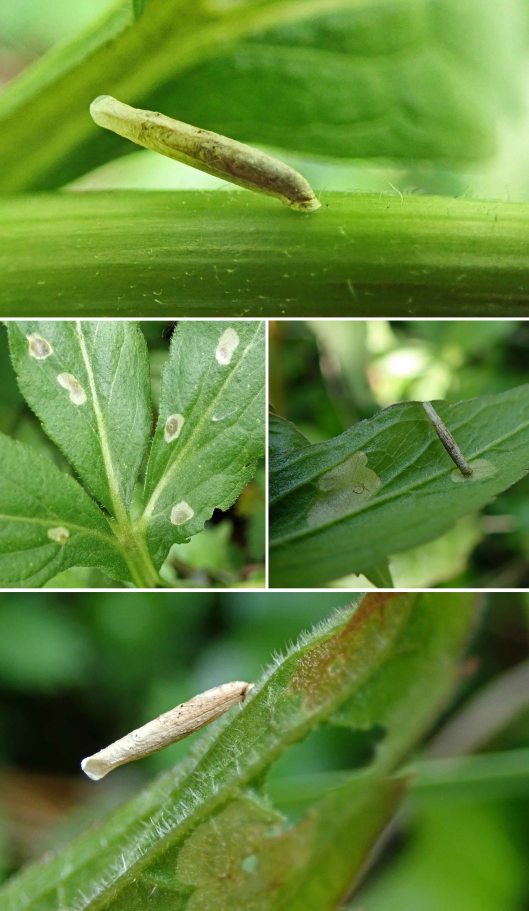
Last Wednesday I found my first active case-bearing moth larva of the year and it was a new species for me, the appropriately named Willow case-bearer (Coleophora lusciniaepennella), feeding, as its name implies, on Willow (one of the Salix species). There are not a lot of local records for this moth but Rob Edmunds of the British Leafminers website explained that these larvae feed up and disappear (to pupate) very quickly, so it seems a case of blink and you miss them. I was just very lucky. You can see the rather non-descript adult moth on the UK Moths website and find more about its larval stage on the British Leafminers website.

240422 Coleophora lusciniaepennella

My photos show the general location of the casebearer within the tree, what you see on the top side of the leaf, and views of either side of its cosy looking case.

Like Loading...

Casebearer: Luffia lapidella

19 Monday Feb 2024

Posted by sconzani in insects, lichen

≈ 3 Comments

Tags

British moths, casebearer, casebearing moth larvae, lichen-eating moth larva, Luffia lapidella

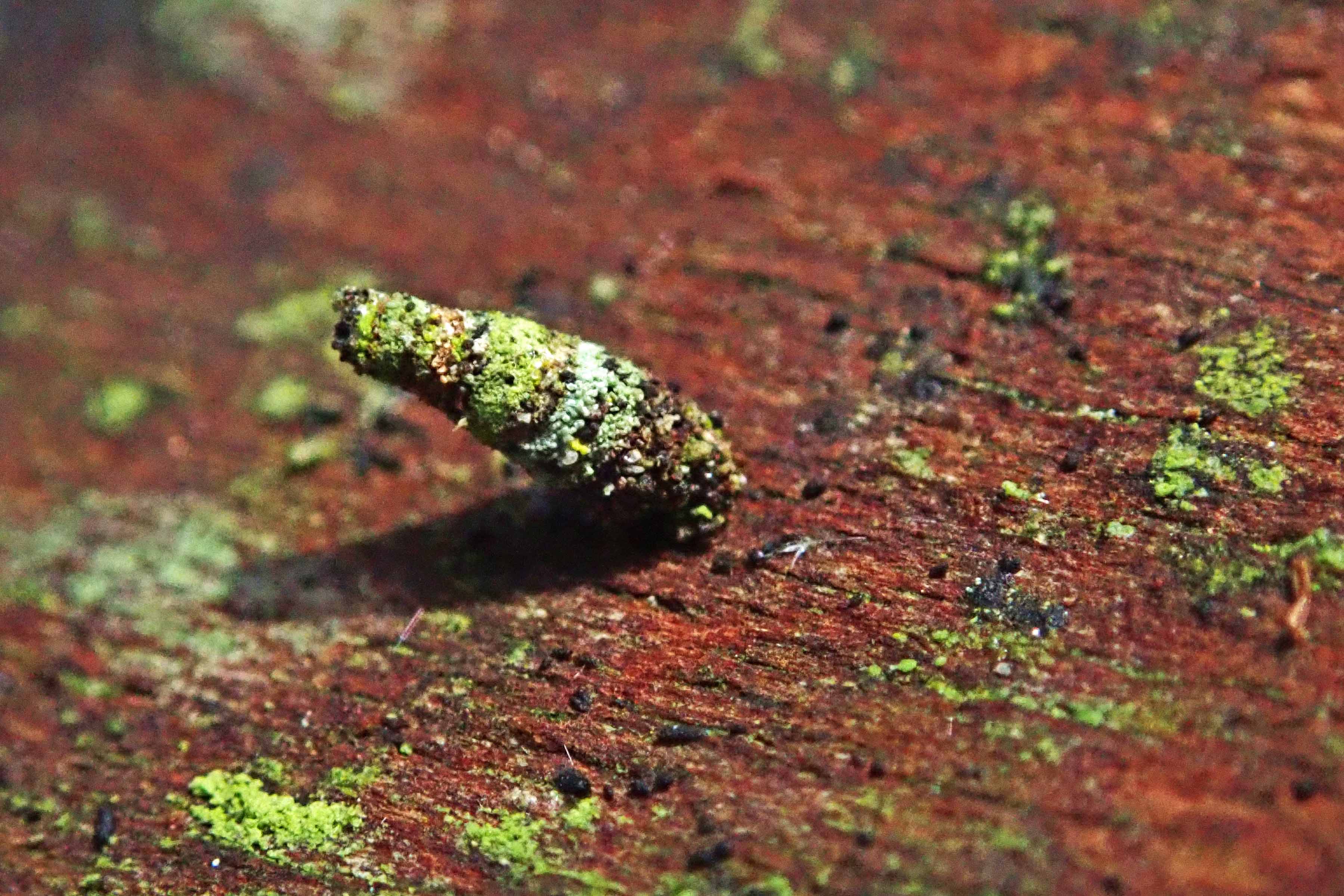
I found this very pretty lichen-covered casebearer on fallen bark during a recent visit to Cardiff’s Cathays Cemetery (this year I’ve been doing some voluntary genealogical research, which has led to a few recent cemetery visits – not that I need a lot of urging, as this cemetery is huge, an arboretum and a SSSI). By sheer coincidence, a moth ecologist I follow on social media posted a photo the very next day of a casebearer that looked very like what I’d seen. When I asked, George confirmed my find as the larva of the moth Luffia lapidella, also known as Ramshorn Bagworm, Virgin Smoke, Grey Bagworm, and Luffia ferchaultella.

240219 Luffia lapidella

As well as covering its case in colourful lichen, the larva also eats lichen, so can be found in the damp places where lichen thrives, like tree trunks and branches, fence posts and even rocks. You can read more on the Naturespot website here.

Like Loading...

Catkin miner: Epinotia tenerana

13 Tuesday Feb 2024

Posted by sconzani in insects, trees

≈ Leave a comment

Tags

British moths, catkin miners, Epinotia tenerana, Hazel, larvae in Hazel catkins, moth larvae in catkins, Nut Bud moth

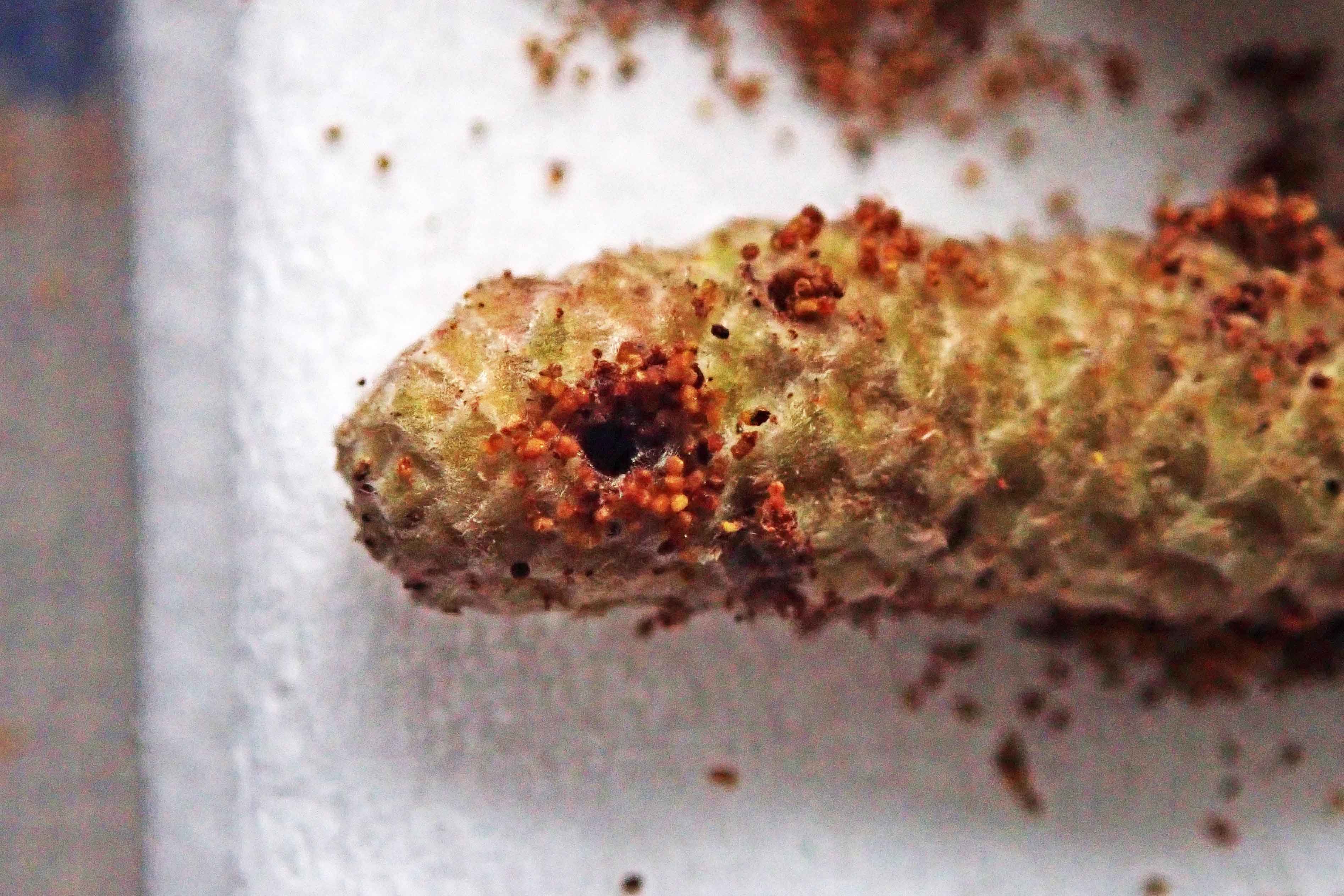
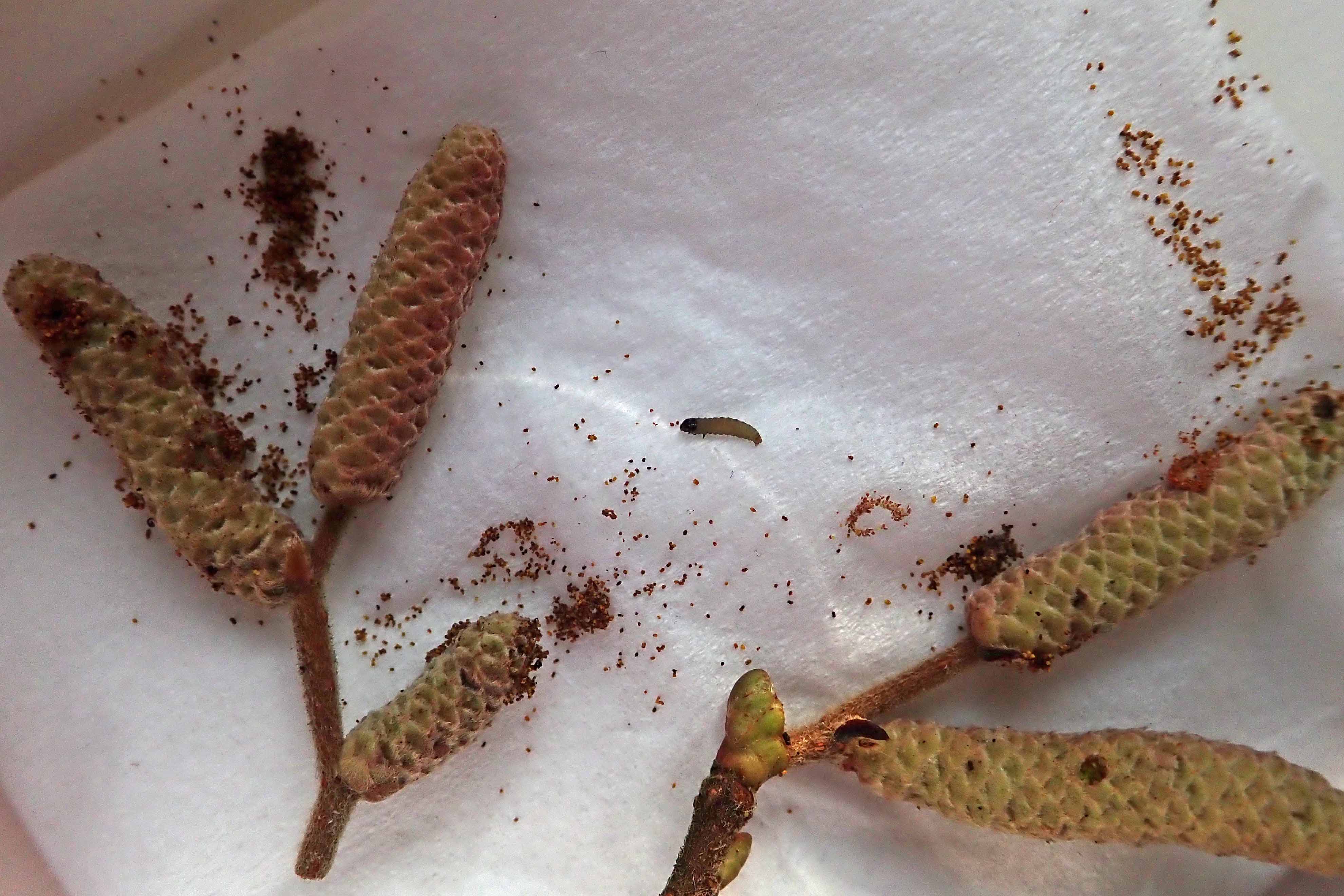
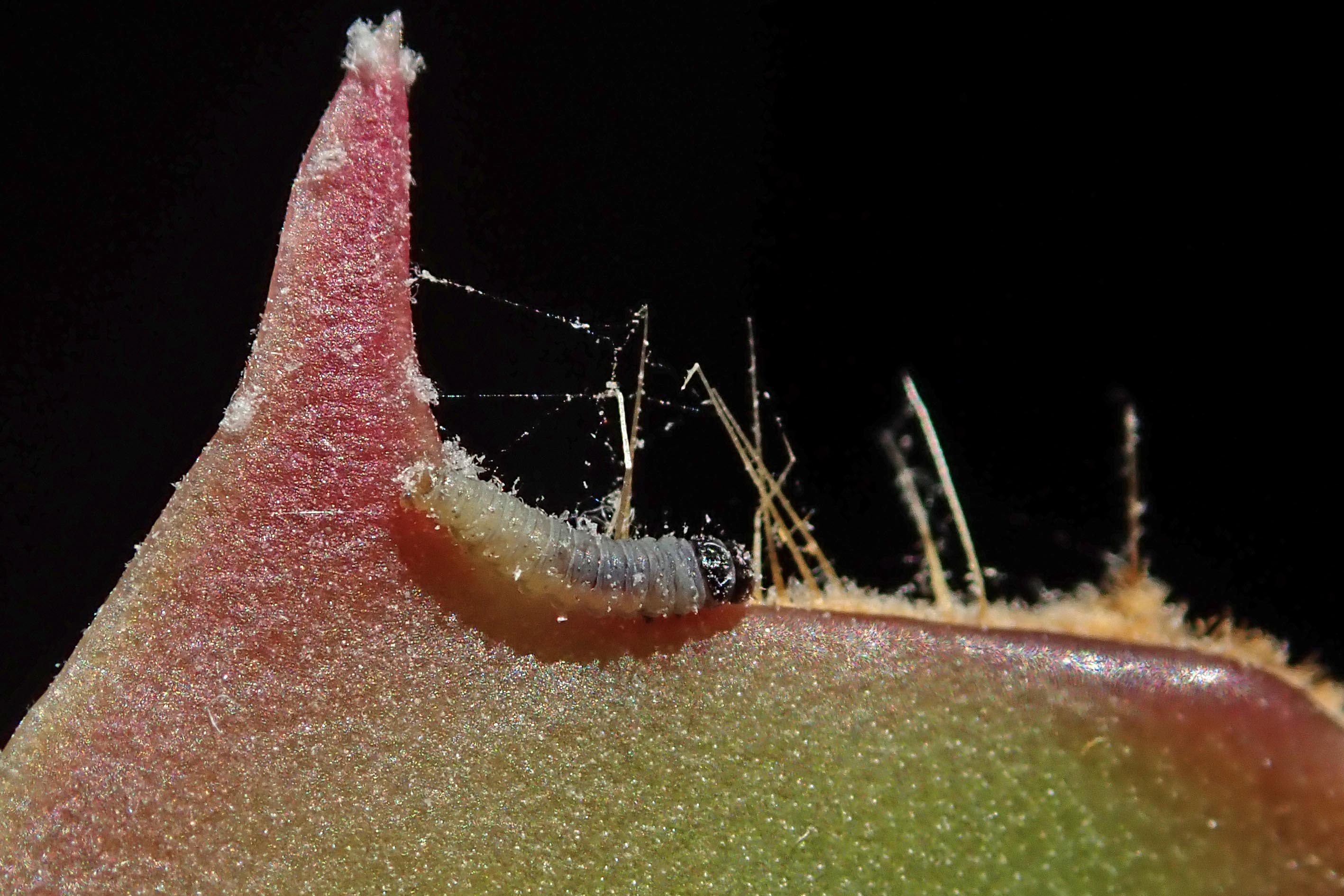
Much excitement last Sunday! I sent this tweet to Rob, who runs the British Leafminers website:

I’ve got larvae emerging from Hazel catkins!!! The lid of the container was slightly ajar & one’s done a runner, first to a cactus, now on a succulent on my kitchen window. The other’s still in the container. Might these be Epinotia tenerana?

240213 Epinotia tenerana (1)

Rob kindly confirmed my identification of these little critters as the larvae of the Nut Bud moth (Epinotia tenerana). Though these are obviously not leafminers, it was, in fact, Rob who inspired me to collect these catkins in the first place. In a tweet a couple of weeks ago, he also recommended harvesting catkins from Birch, native Alder and Italian alder, and putting them in containers to see what might emerge from them. He wasn’t specific about what to expect but I was intrigued so went a’harvesting.

240213 Epinotia tenerana (2)

If I had the right equipment and more space, I would try to rear these larvae. If you want to try this for yourself, you can read more about this moth and find instructions on the UK Moths website.

240213 Epinotia tenerana (3)

Unfortunately, there’s no sign of anything in my other containers so I might try collecting catkins from different locations and trying again.

240213 Epinotia tenerana (4)

Like Loading...

M is for moth

18 Monday Dec 2023

Posted by sconzani in insects

≈ 2 Comments

Tags

#MothsMatter, British moths, moth caterpillars, moth larvae, moths

With their intricate patterns and superb colour combinations, I think it’s true to say that moths are amazing! To showcase how visually stunning they are, I’ve pulled together a slideshow of some of the moths, and their larvae, I’ve encountered during 2023. Enjoy!

Like Loading...

Leafmines: Phyllonorycter viminiella

20 Monday Nov 2023

Posted by sconzani in insects, leaves, trees

≈ Leave a comment

Tags

British leafminers, British moths, leaf-mining moth larvae, leaf-mining moths, leafmines on willow, Phyllonorycter viminiella

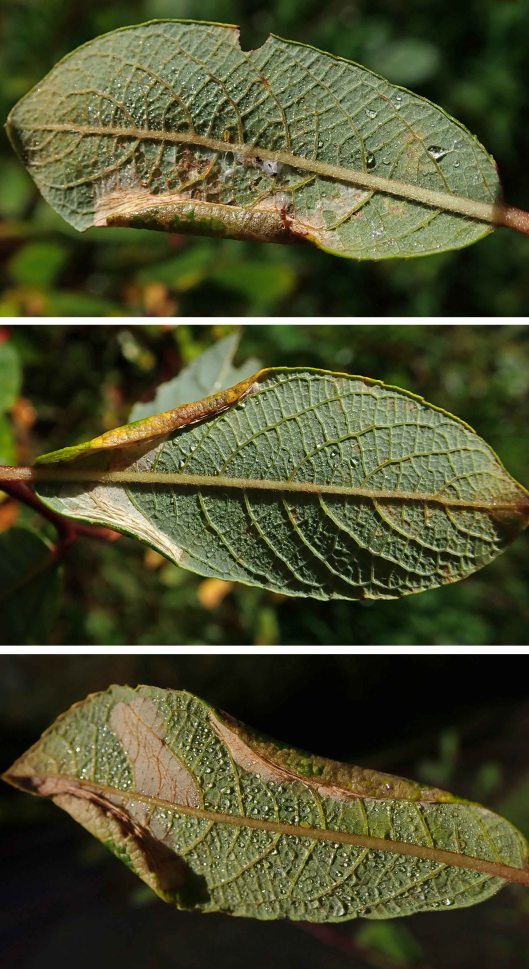
This was just the second time I’ve spotted these particular leafmines: they got a mention in On narrow-leaved willows, 26 December 2022, but I thought they deserved their own post. The larvae of the moth Phyllonorycter viminiella munch on the underside of Willows (usually those Salix species with smooth leaves), their feeding causing the edges of leaves to fold over and develop strong creasing in the mine, as you can see in my images below. These attractive little moths are bivoltine, so you can find the larval mines first around July and then again around October.

Like Loading...

Leaf grazers: Carcina quercana

06 Monday Nov 2023

Posted by sconzani in insects, plants, trees

≈ Leave a comment

Tags

British moths, Carcina quarcana, leaf-grazing moth larvae, moth larvae on Blackthorn, moth larvae on Bramble, moth larvae on Buckthorn, moth larval foodplants

I found these first on Blackthorn when looking for leafminers but couldn’t find any examples on the British Leafminers website, so I posted photos on Twitter and asked my ecologically minded followers ‘what’s this?’.

231106 Carcina quercana on blackthorn

The response was almost instant: ‘Carcina quercana does that on several trees. The silk tube is always against the midrib or a vein and they venture out to graze from there’.

231106 carcina quercana on bramble

Carcina quercana is a lovely little moth and the little silken tubes are created by its larvae. The UK Moths website says ‘The foodplants are various deciduous trees, including oak (Quercus) [hence the quercana, in its name] and beech (Fagus)’, but, as my examples here show, the larvae don’t seem too fussy about what they eat. My photos here, showing both the upper and lower sides of the leaves, are on Blackthorn, Bramble, and Buckthorn.

231106 carcina quercana on buckthorn (1)

And why did I not find this species on the British Leafminers website? Well, strictly speaking, it’s not a miner – the larvae graze on the underside of the leaf when they venture out from their protective silken homes. You might just be able to spot the larva in the photo below.

231106 carcina quercana on buckthorn (2)

Like Loading...

T is for plume

31 Tuesday Oct 2023

Posted by sconzani in insects

≈ Leave a comment

Tags

Amblyptilia acanthadactyla, Beautiful plume, British moths, Common plume, Emmelina monodactyla, moth, plume moths

‘T is for plume’ may sound an odd title but it’s the T shape these moths make when they’re resting that makes them recognisable as plume moths, the Pterophorinae. And why plume? Well, when their wings are spread, the deep indentations look like feathers (the photos of a White plume on the UK Moths website show a beautiful example).

231031 common plume

Common plume (Emmelina monodactyla)
As you’d expect from its name, this pretty moth is quite common – in fact, I’ve seen several in the last few weeks.

231031 Beautiful plume

Beautiful plume (Amblyptilia acanthadactyla)
Though this moth can be confused with another that’s very similar (Brindled plume, Amblyptilia punctidactyla), the reddish-brown hue confirms it as a Beautiful plume.

Like Loading...

A Vapourer cocoon

13 Friday Oct 2023

Posted by sconzani in insects

≈ Leave a comment

Tags

British moths, moth cocoon, Orgyia antiqua, Vapourer, Vapourer cocoon, Vapourer larva

Here’s an intriguing find I made when doing a little leaf-turning during yesterday’s rather damp local meander – a hairy cocoon on willow.

231013 vapourer cocoon

From looking at the yellow and black hairs contained within the silk, I thought perhaps this might have been created by a Pale tussock moth. Fortunately, Andy, one of the moth-ers I follow on Twitter, recognised this cocoon and was able to correct my identification. This was, in fact, created by a Vapourer moth larva (Orgyia antiqua) – below is one I photographed a few years back (it had just shed its skin, the remnants of which can be seen to the left of the caterpillar).

231013 vapourer larva

I’ve not yet seen an adult Vapourer but they are a particularly interesting species, as the female is virtually wingless – you can read more and see some images on the UK Moths website. Andy also introduced me to the Lepiform e.V. website, which, though it is in German, can still be searched using a moth’s scientific name and has an excellent and comprehensive range of images for each species, including larval stages, cocoons, pupae, etc.

Like Loading...
← Older posts
Newer posts →

About me

sconzani

sconzani

I'm a writer and photographer; researcher and blogger; birder and nature lover; countryside rambler and city strider; volunteer and biodiversity recorder.

View Full Profile →

Follow earthstar on WordPress.com

Enter your email address to follow this blog and receive notifications of new posts by email.

Recent blog posts

  • P is for Phalarope December 21, 2025
  • O is for Odonata December 20, 2025
  • N is for nest December 19, 2025
  • M is for mite December 18, 2025
  • L is for lepidopteran lifers December 17, 2025

From the archives

COPYRIGHT

Unless otherwise acknowledged, the text and photographs on this blog are my own and are subject to international copyright. Nothing may be downloaded or copied without my permission.

Fellow Earth Stars!

  • Unknown's avatar
  • Unknown's avatar
  • Unknown's avatar
  • Unknown's avatar
  • Unknown's avatar
  • Unknown's avatar
  • Unknown's avatar
  • Unknown's avatar
  • Unknown's avatar
  • Unknown's avatar
  • Unknown's avatar
  • Unknown's avatar
  • Unknown's avatar
  • Unknown's avatar
  • Unknown's avatar
  • Unknown's avatar
  • Unknown's avatar
  • Unknown's avatar
  • Unknown's avatar
  • Unknown's avatar
  • Unknown's avatar
  • Unknown's avatar
  • Unknown's avatar
  • Unknown's avatar
  • Unknown's avatar
  • Unknown's avatar
  • Unknown's avatar
  • Unknown's avatar
  • Unknown's avatar
  • Unknown's avatar
  • Unknown's avatar
  • Unknown's avatar
  • Unknown's avatar
  • Unknown's avatar
  • Unknown's avatar
  • Unknown's avatar
  • Unknown's avatar
  • Unknown's avatar
  • Unknown's avatar
  • Unknown's avatar
  • Unknown's avatar
  • Unknown's avatar
  • Unknown's avatar
  • Unknown's avatar
  • Unknown's avatar
  • Unknown's avatar
  • Unknown's avatar
  • Unknown's avatar
  • Unknown's avatar
  • Unknown's avatar

Blog at WordPress.com.

Privacy & Cookies: This site uses cookies. By continuing to use this website, you agree to their use.
To find out more, including how to control cookies, see here: Cookie Policy
  • Subscribe Subscribed
    • earthstar
    • Join 667 other subscribers
    • Already have a WordPress.com account? Log in now.
    • earthstar
    • Subscribe Subscribed
    • Sign up
    • Log in
    • Report this content
    • View site in Reader
    • Manage subscriptions
    • Collapse this bar
 

Loading Comments...
 

You must be logged in to post a comment.

    %d