I’m not sure what this Hairy shieldbug was doing – well, actually there were two of them, and they’d both decided they were going to play hide and seek under the fluffy umbrella of a Dandelion seedhead. Crazy, but cute!


10 Wednesday May 2023
Posted in insects
I’m not sure what this Hairy shieldbug was doing – well, actually there were two of them, and they’d both decided they were going to play hide and seek under the fluffy umbrella of a Dandelion seedhead. Crazy, but cute!
23 Wednesday Nov 2022
This is my favourite time of year for leaf turning, not only because it’s the best time of year to search for leafmines but also because you never know what you might find lurking beneath. In this instance, a rosy red Parent bug (Elasmucha grisea), which overwinters as an adult bug, was hiding away beneath the leaves in a well-vegetated spot.

25 Thursday Aug 2022
Posted in insects
Tags
Acanthosoma haemorrhoidale, British shieldbugs, final instar Hawthorn shieldbug, Hawthorn shieldbug
My walk of the fields at Cosmeston Lakes Country Park hadn’t turned up any migrating birds so I was having a poke around some trees before heading home when I found these two huddling together amongst the leaves. They’re Hawthorn shieldbug nymphs (Acanthosoma haemorrhoidale) in their fifth and final form (instar) before they become adults. (You can see the various instars on the superb British Bugs website.)

19 Tuesday Apr 2022
Tags
British shieldbugs, gorse, Gorse flowers, Gorse shieldbug, Gorse shieldbug eggs, Piezodorus lituratus
The sunshine yellow flowers of gorse always draw my eye and I can seldom resist a quick sniff of their delicious scent (does gorse smell of coconuts or do coconuts smell like gorse?). This time, as I drew close to the flowers, I noticed a Gorse shieldbug (Piezodorus lituratus) enjoying the Spring sunshine.
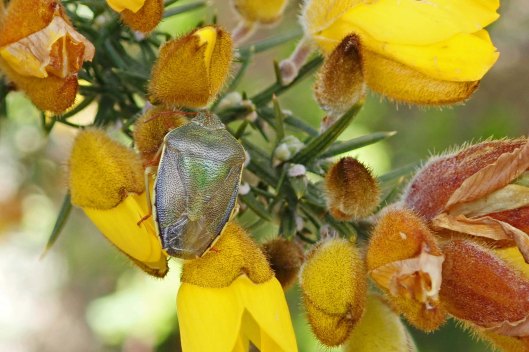
And then, of course, I had to have a quick search for more. I didn’t spot any further adult bugs but I did find two lots of their distinctive black-and-white barrel-shaped eggs. Apparently, the eggs hatch within a week so I’ll have to revisit this plant soon to see if I can find the nymphs.

21 Tuesday Sep 2021
Posted in insects
Seeing this huddle of final instar nymphs of the Parent bug (Elasmucha grisea) made my day!

I wasn’t sure what they were at first but, in case you’re not aware of it, the British Bugs website hosts a brilliant selection of photographs of all stages of British bugs, so a scroll through the shieldbug gallery quickly provided me with their identification. The website is particularly helpful for the less recognisable early instars of insects like shieldbugs.
03 Friday Sep 2021
Posted in insects
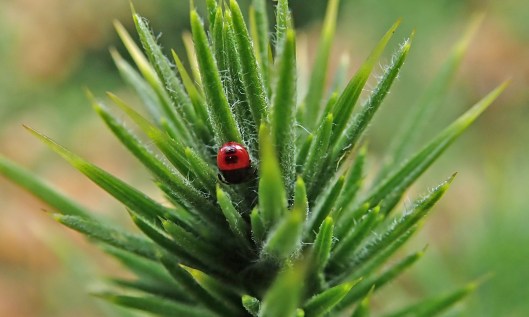
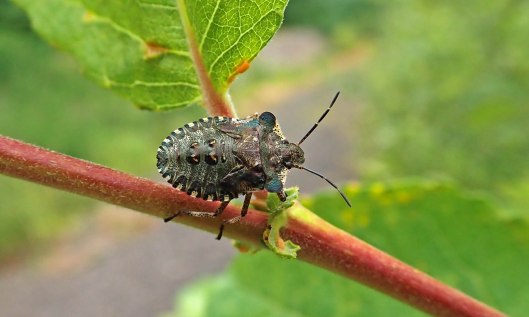
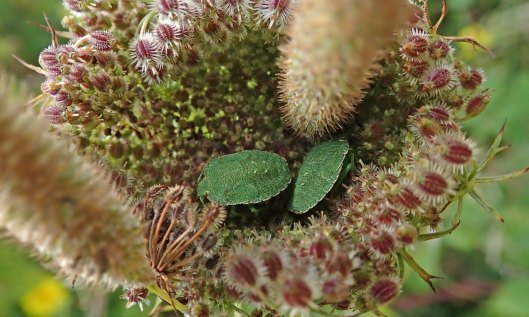
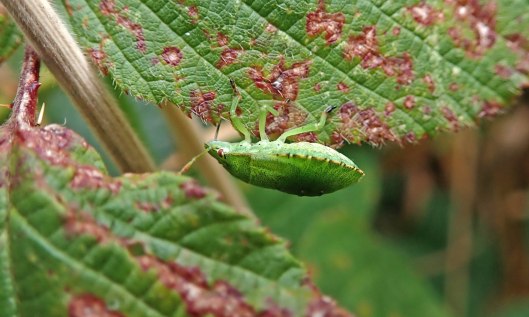
Do you have a favourite bug? I think the shieldbug is mine. Always cute, often comical, reasonably easy to identify – what’s not to love?
Gorse shieldbug, 2nd instar
Red-legged shieldbug, final instar
And a selection of Common green shieldbugs

22 Thursday Apr 2021
Tags
British insects, British shieldbugs, Dolycoris baccarum, gorse, Gorse shieldbug, Hairy shieldbug, Piezodorus lituratus, shieldbugs on gorse
I had expected to find Gorse shieldbugs on these glowing gorse bushes (the clue’s in the name) but, in fact, the most numerous were the Hairy shieldbugs (of which there must have been at least 20).


The Gorse shieldbug (Piezodorus lituratus) (above left) looks very like a Common green shieldbug but its red antennae are a distinctive identification feature. The Hairy shieldbug (Dolycoris baccarum) (above right, and below) is a much more colourful character, a stylish combination of purple-brown and green, and it also has distinctive antennae, this time three white bands on a black base.

22 Wednesday Apr 2020
You wouldn’t think an insect that looks like it’s wearing armour (hence ‘shield’ bug) could be hairy but the Hairy shieldbug (Dolycoris baccarum) is living proof. It’s difficult to see the hairs when you’re viewing them in full sunshine, as their shield-shaped backs are quite shiny, but if you can get a close view in a shady setting, you can see the hairs on their legs and, in my photo below, along the top of the shield.

I found at least 20, probably more, of these handsome creatures in the scrub alongside a seldom-walked local path, and will be keeping an eye on this area to see if I can spot their offspring in the coming months, as it’s always interesting to see the different stages of growth. You can see images of these different instars, not only for the Hairy shieldbug but also for all the other shieldbug species, on the excellent British Bugs website.


17 Thursday Oct 2019
As well as the cute little flower bug I found on Hedge woundwort (see yesterday’s post), on a nearby plant I also found this Woundwort shieldbug (Eysarcoris venustissimus), its jewel-like colours shining in the sunlight.

As the name implies, Hedge woundwort is one of the plants this bug’s larvae feed upon. Apparently, these shieldbugs were considered rare in the 19th century but their situation has improved and the adults can now be found year round in much of southern Britain.

 earthstar
You must be logged in to post a comment.