• ABOUT
  • BIRDING 2018
  • Birding 2019
  • BLOG POSTS
  • Butterflies 2018
  • Resources

earthstar

~ a celebration of nature

earthstar

Tag Archives: British wildflowers

Late summer brights

29 Sunday Aug 2021

Posted by sconzani in flowers, wildflowers

≈ Leave a comment

Tags

bright summer wildflowers, British wildflowers, late summer wildflowers, yellow flowers, yellow wildflowers

A selection of the wildflowers in bloom during these last weeks of summer – last week, my video featured flowers of more mellow, subtle hues; this week, you’ll need your sunglasses as these are the brights!

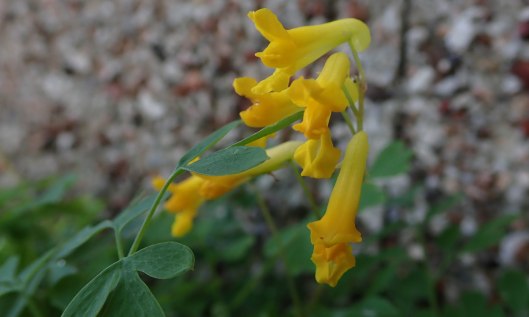
Featuring Agrimony, Bird’s-foot trefoil, Bristly oxtongue, Creeping buttercup, Creeping cinquefoil, Dandelion, Fleabane, Gorse, Honeysuckle, Meadow buttercup, Meadow vetchling, Melilot, Mouse-ear hawkweed, Nipplewort, Ragwort, Scarlet pimpernel, Smooth sow-thistle. Tutsan, Wild parsnip, Wood avens, Yellow corydalis, and Yellow-wort.

Like Loading...

Late summer mellows

22 Sunday Aug 2021

Posted by sconzani in flowers, wildflowers

≈ Leave a comment

Tags

British wildflowers, late summer wildflowers

A selection of the wildflowers in bloom during these last weeks of summer – this week, those of more mellow, subtle hues; next week, I’ll feature the brightly coloured flowers.

These are Bramble, Broad-leaved willowherb, Burdock, Daisy, Everlasting pea, Great willowherb, Hedge woundwort, Hemp agrimony, Knapweed, Large bindweed, Marsh woundwort, Meadow crane’s-bill, Mint, Oxeye daisy, Purple loosestrife, Red clover, Red valerian, Rosebay willowherb, Sneezewort, Tufted vetch, White clover, Wild carrot, and Yarrow.

Like Loading...

Variations in pink and white

15 Sunday Aug 2021

Posted by sconzani in flowers, wildflowers

≈ Leave a comment

Tags

British wildflowers, colour variation in flowers, Common centaury, knapweed, thistle, Yarrow

It fascinates me how many wildflowers vary from their standard colours, often changing from pink to white and vice versa. Here we have Centaury, usually pink but also commonly seen with white flowers; Knapweed, also usually a pinkish lilac, but I occasionally see a white variant; Thistles that are also usually pinky lilac but often flowering white hereabouts; and the usually white Yarrow, which I find growing with quite pink flowers in a local field.

210815 Centaury pink
210815 centaury white

210815 Knapweed pink210815 knapweed white

210815 thistle pink
210815 thistle white

210815 yarrow pink210815 yarrow white

Like Loading...

Balm

11 Wednesday Aug 2021

Posted by sconzani in plants, wildflowers

≈ 4 Comments

Tags

Balm, British wildflowers, Lemon balm, Melissa officinalis

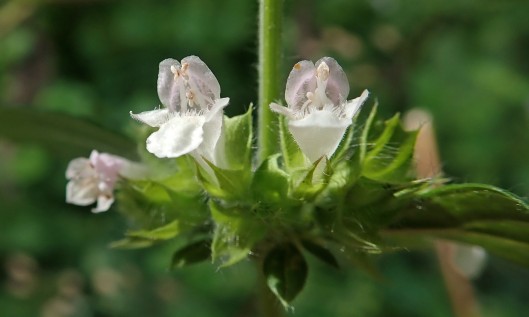
This is a new plant for me, an odd one to find growing at the edge of a local lane that’s only used for pedestrian, cycle and horse traffic, at some distance from houses and gardens. Perhaps it’s a result of a seed dropped from a walker’s shoe or a bird dropping.

210811 balm (1)

This is Balm (Melissa officinalis), also known as Lemon balm, a native plant of the Mediterranean and most often found in Britain as a garden plant, though also sometimes naturalised in nearby waste ground.

210811 balm (2)
210811 balm (3)

From the shape of the leaves I originally thought it some kind of mint, though the white flowers didn’t fit with that possibility. A rub of the foliage between my fingers provided an aromatic clue, as the leaves are often used in herbal teas and remedies.

210811 balm (4)

I thought about harvesting a few leaves to try but this particular Balm is low growing and sprawling along the lane edge, and the sight of a dog peeing just a little ahead of where this plant is growing put me off the idea.

Like Loading...

The bumble and thistle

08 Sunday Aug 2021

Posted by sconzani in insects, plants, wildflowers

≈ Leave a comment

Tags

British bumblebees, British wildflowers, Buff-tailed bumblebee, bumblee and thistle, Carline thistle

210808 bumble and carline thistle (1)

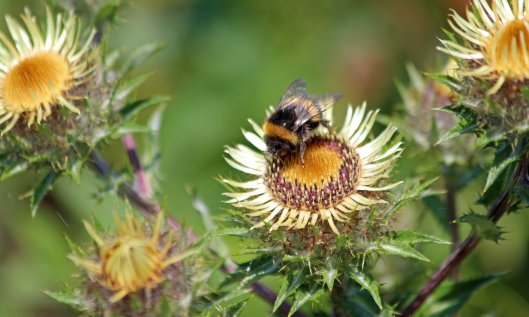
Carline thistles may look dry and unappetising but, as you can see from the enthusiastic feeding of this Buff-tailed bumblebee, they are in fact nectar rich, and favourites not only of bees but also of many species of butterflies.

210808 bumble and carline thistle (2)

Like Loading...

In praise of thistles

25 Sunday Jul 2021

Posted by sconzani in insects, wildflowers

≈ Leave a comment

Tags

British wildflowers, butterflies on thistles, flowering thistles, insects on thistles, thistle

Butterfly larvae and various beetles feed on their leaves; scores of insect species feast on their nectar and pollen; the stems of the plants are home to various over-wintering insect larvae; and, when the flowers are finished, birds like Goldfinches, Linnets and Siskin feed on their seeds. The plants I’m describing are the various species of the much maligned thistle family. Despite the derision of some farmers and the ‘neat-and-tidy’ brigade of gardeners, thistles are superb plants for wildlife, and I also think their flowers are rather beautiful.

During recent walks I’ve been capturing images of some of the creatures I’ve seen enjoying the bounty of these wild beauties: Comma, Large skipper, Marmalade hoverfly, Meadow brown, Red admiral, Red soldier beetle, Red-tailed bumblebee, Ringlet, Scorpion fly, Six-spot burnet, Small copper, Small skipper, and White-tailed bumblebee.

Like Loading...

The Andrex plant?

22 Thursday Jul 2021

Posted by sconzani in flowers, plants, wildflowers

≈ 2 Comments

Tags

British wildflowers, Great mullein, yellow flowers, yellow wildflowers

I had to laugh when I read in Flora Britannica that, because this plant’s large leaves feel like they are covered in soft grey wool: ‘In a more modern – and practical – vein, mullein has been nicknamed “the Andrex plant”, and its leaves used accordingly.’ I cannot attest to the veracity of this statement!

210722 great mullein (1)
210722 great mullein (2)

This is Great mullein (Verbascum thapsus), which also has some wonderful, less recent vernacular names: Aaron’s Rod, Hagtapers, Adam’s flannel, and Our Lady’s candle. These names are no doubt inspired partly by those leaves and also by the enormous yellow-flowered spike, which can grow to four or five feet tall. Mullein is a biennial plant: in its first year there is just a rosette of leaves, and it’s not till its second year that the flower spike grows.

210722 great mullein (3)
210722 great mullein (4)
Like Loading...

Marjoram and sage

18 Sunday Jul 2021

Posted by sconzani in wildflowers

≈ 2 Comments

Tags

British wildflowers, Oregano, Origanum vulgare, Teucrium scorodonia, Wild marjoram, Wood sage

Two of this week’s wildflower finds are herbal so it makes sense to blend them together here. First up, is Wild marjoram (Origanum vulgare), known in the Mediterranean countries as Oregano, though it doesn’t smell quite as pungent when grown in Britain’s cooler climate. This lovely plant can often be found in chalk and limestone grasslands, under hedge rows and in roadside verges, where its flowers are favourites of butterflies and other insects.

210718 wild marjoram (1)210718 wild marjoram (2)

The second plant, a new one for me, is Wood sage (Teucrium scorodonia), another wild herb that doesn’t have the strength of scent you find in the sage you use in cooking. As you might guess from its name, this plant thrives along dry woodland rides, but can also be found in coastal situations, in dunes and heaths and on cliffs.

210718 wood sage (1)
210718 wood sage (2)
Like Loading...

A summer selection

11 Sunday Jul 2021

Posted by sconzani in flowers, wildflowers

≈ 2 Comments

Tags

British wildflowers, summer colour, summer wildflowers

This week’s floral display is a selection of the latest summer wildflowers in bloom: Agrimony, Chicory, Everlasting pea, Field bindweed, Field madder, Field scabious, Honeysuckle, Mignonette, Milkwort, Restharrow, Scarlet pimpernel, Stinking iris, Woody nightshade, and Yellow rattle.

Like Loading...

Heath spotted-orchids

04 Sunday Jul 2021

Posted by sconzani in flowers, wildflowers

≈ 2 Comments

Tags

Aberbargoed Grasslands, British orchids, British wildflowers, Dactylorhiza maculata, Heath spotted-orchid, native orchids

From the often-boggy, mostly acid grasslands at Aberbargoed direct to your screens, this week’s native British orchid is the appropriately named Heath spotted-orchid (remember, the spotted part of that name refers to the marks on its leaves, not its petals). Its scientific name is Dactylorhiza maculata, which the Plantlife website explains as follows: ‘The genus name Dactylorhiza is formed from the Greek words daktylos meaning finger and rhiza meaning root’ – so, this orchid has a multi-fingered root, rather than a single tuber. And maculata means spotted – those leaves.

210704 Heath spotted-orchid (1)

As you can see from the flower spikes below, this is another orchid with some variation in both its colours, which range from white through pink to pale purple, and its markings, which, though they look spotted from a distance, actually have various combinations of streaks and little loops. The shape of the petals is also distinctive, the lower one in particular is less deeply lobed than, for example, the Common spotted-orchid, which the Heath spotted does superficially resemble.

210704 Heath spotted-orchid (2)
210704 Heath spotted-orchid (3)
210704 Heath spotted-orchid (4)
Like Loading...
← Older posts
Newer posts →

About me

sconzani

sconzani

I'm a writer and photographer; researcher and blogger; birder and nature lover; countryside rambler and city strider; volunteer and biodiversity recorder.

View Full Profile →

Follow earthstar on WordPress.com

Enter your email address to follow this blog and receive notifications of new posts by email.

Recent blog posts

  • Avocet February 21, 2026
  • First large spider February 20, 2026
  • Our celebrity Redshank February 19, 2026
  • My first moth of the year February 18, 2026
  • Three Common sandpipers February 17, 2026

From the archives

COPYRIGHT

Unless otherwise acknowledged, the text and photographs on this blog are my own and are subject to international copyright. Nothing may be downloaded or copied without my permission.

Fellow Earth Stars!

  • Unknown's avatar
  • Unknown's avatar
  • Unknown's avatar
  • Unknown's avatar
  • Unknown's avatar
  • Unknown's avatar
  • Unknown's avatar
  • Unknown's avatar
  • Unknown's avatar
  • Unknown's avatar
  • Unknown's avatar
  • Unknown's avatar
  • Unknown's avatar
  • Unknown's avatar
  • Unknown's avatar
  • Unknown's avatar
  • Unknown's avatar
  • Unknown's avatar
  • Unknown's avatar
  • Unknown's avatar
  • Unknown's avatar
  • Unknown's avatar
  • Unknown's avatar
  • Unknown's avatar
  • Unknown's avatar
  • Unknown's avatar
  • Unknown's avatar
  • Unknown's avatar
  • Unknown's avatar
  • Unknown's avatar
  • Unknown's avatar
  • Unknown's avatar
  • Unknown's avatar
  • Unknown's avatar
  • Unknown's avatar
  • Unknown's avatar
  • Unknown's avatar
  • Unknown's avatar
  • Unknown's avatar
  • Unknown's avatar
  • Unknown's avatar
  • Unknown's avatar
  • Unknown's avatar
  • Unknown's avatar
  • Unknown's avatar
  • Unknown's avatar
  • Unknown's avatar
  • Unknown's avatar
  • Unknown's avatar
  • Unknown's avatar

Blog at WordPress.com.

Privacy & Cookies: This site uses cookies. By continuing to use this website, you agree to their use.
To find out more, including how to control cookies, see here: Cookie Policy
  • Subscribe Subscribed
    • earthstar
    • Join 670 other subscribers
    • Already have a WordPress.com account? Log in now.
    • earthstar
    • Subscribe Subscribed
    • Sign up
    • Log in
    • Report this content
    • View site in Reader
    • Manage subscriptions
    • Collapse this bar
 

Loading Comments...
 

You must be logged in to post a comment.

    %d