• ABOUT
  • BIRDING 2018
  • Birding 2019
  • BLOG POSTS
  • Butterflies 2018
  • Resources

earthstar

~ a celebration of nature

earthstar

Tag Archives: British wildflowers

The almost inedible parsnip

11 Friday Aug 2017

Posted by sconzani in flowers, insects, nature, wildflowers

≈ Leave a comment

Tags

British flora, British wildflowers, Cosmeston Lakes Country Park, parsnip, Pastinaca sativa, umbellifers, Wild parsnip, wildflowers

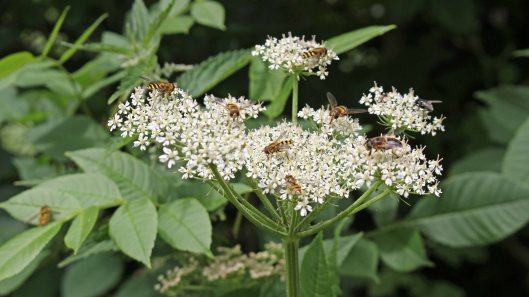
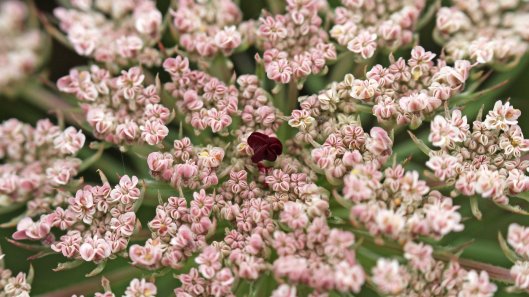
While we’re on the subject of wild vegetables (see yesterday’s Wild carrot post), I must mention the other umbellifer that’s currently in full bloom, the Wild parsnip (Pastinaca sativa). Unlike the Wild carrot, the root of the Wild parsnip is, in fact, edible, though it’s described as hard and wiry so doesn’t sound worth the bother to me. I’ve also read that the sap of the plants can cause severe rashes and burns in some people so handling doesn’t seem advisable. And, anyway, who would want to deprive the insects of their tasty feast or spoil the glorious sight of a field of parsnip in full bloom?


170810 Wild parsnip (2)
170810 Wild parsnip (3)
170810 Wild parsnip (4)

The Wild parsnip is the ancestor of the cultivated parsnip, which is one of my favourite winter vegetables – roasted, in soup, stir-fried, yum! – and its culinary use probably dates from the early Middle Ages. The wild variety can be found growing, often in large groupings, on the chalky grasslands of southern England and Wales. In Cosmeston Lakes Country Park, one particular field is like a forest of yellow, some plants taller than my 168cm, and you can smell the scent of parsnips as you walk along the tracks through the field. Delicious!

170810 Wild parsnip (1)

Like Loading...

The inedible carrot

10 Thursday Aug 2017

Posted by sconzani in flowers, nature, wildflowers

≈ Leave a comment

Tags

British flora, British wildflowers, carrot, Daucus carota, umbel, umbellifer, Wild carrot, wildflowers

I’m finally starting to get a handle on the various umbellifers to be found in this land and the progression of their flowering through the seasons. Here in Wales, one of those currently in full flower is the Wild carrot (Daucus carota).

wild carrot (1)

Its leaves smell of the edible carrot but I’ve read that the roots of this wild variety are ‘thin and wiry and bear little resemblance to the thick, orange tap-roots of the cultivated vegetable’ so that firmly rules out any foraging! I also read, in my copy of Richard Mabey’s trusty Flora Britannica, that edible carrots ‘were developed from a distinct subspecies, ssp.sativa, probably native to the Mediterranean, and brought to Britain in the 15th century’. Fascinating!

wild carrot (3)
wild carrot (4)
wild carrot (5)
wild carrot (6)
wild carrot (7)

Meanwhile, the Wild carrots continue to grow straight and about 3 feet tall in my local wild places, to the delight of the hoverflies, sawflies, soldier beetles and other assorted insects that seem particularly to enjoy them. They have quite distinctive feathery leaves and often, but not always, a very tiny pinkish-red flower in the exact centre of their umbel. Also, when they’ve finished flowering, the umbels contract to a nest-like shape, which is why one of their common names is Bird’s-nest.

wild carrot (2)

Like Loading...

A tale of three bindweeds

18 Tuesday Jul 2017

Posted by sconzani in flowers, nature, wildflowers

≈ 8 Comments

Tags

bindweed, Bindweed flower, British flora, British wildflowers, Field bindweed, Hedge bindweed, Large bindweed

170718 Bindweed (3)

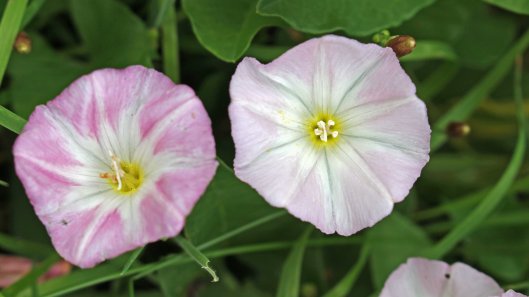
There are, in fact, five species of bindweed in Britain but I’ve only encountered three so far. One, the Field bindweed (Convolvulus arvensis) is, I think, the easiest to identify: it’s quite small, and its flowers are a delicate swirl of pink and white (as shown below).

170718 Field bindweed

Then there are the two bindweeds that have large white flowers, Hedge bindweed (Calystegia sepium) and the aptly named Large bindweed (Calystegia silvatica). To my untrained eye, these two look remarkably similar but I have recently learnt how to tell them apart so I thought I’d share that little snippet of knowledge. My wildflower key tells me that Hedge bindweed has an epicalyx of 2 bracteoles that don’t (or scarcely) overlap, whereas the Large bindweed has strongly inflated, overlapping bracteoles. Okay, so you might now be thinking, “Huh?” Well, the photos below show the difference: Hedge, left, and Large, right. Easy now, right?

170718 Bracteoles Hedge bindweed
170718 Bracteoles Large bindweed

Oh, and one more thing I found out while looking at all those bindweeds. The flowers often look like a little fairy has come along and snipped pretty patterns in their petals with miniature scissors. A fanciful idea I admit, but it’s almost true – these have been created by bees and other insects desperate to get at the sweet nectar inside so they cut their way into the flower bud before it opens.

170718 Bindweed (1)
170718 Bindweed (2)
Like Loading...

Fireweed, Bombweed

14 Friday Jul 2017

Posted by sconzani in nature, wildflowers

≈ 16 Comments

Tags

Bombweed, British flora, British wildflowers, Chamerion angustifolium, Fireweed, Rosebay willowherb

170714 Rosebay willowherb (5)

It takes a while to learn the differences between the different willowherbs (and the ease with which they hybridise doesn’t help!) but this, the Rosebay willowherb (Chamerion angustifolium), is probably the one most people know best. It was a garden escapee originally, first recorded growing in the wild in 1769, and was considered quite scarce until World War I, when the plant took advantage of woodland areas where timber had been felled (and the area burned) to assist the war effort. Rosebay willowherb’s liking for areas that have been burned is the reason for its common name of Fireweed and is why, during World War II, it thrived in London’s bomb craters, thus earning the plant its other common name of Bombweed. Some people curse it for its invasive tendencies but, for me, there is no prettier sight that a stand of Rosebay willowherb glowing in the bright summer sunshine.

170714 Rosebay willowherb (1)
170714 Rosebay willowherb (2)
170714 Rosebay willowherb (3)
170714 Rosebay willowherb (4)
170714 Rosebay willowherb (6)
170714 Rosebay willowherb (7)
170714 Rosebay willowherb (8)
Like Loading...

Purr-plish

07 Friday Jul 2017

Posted by sconzani in flowers, nature, wildflowers

≈ Leave a comment

Tags

#FloralFriday, British flora, British wildflowers, lilac flowers, pink wildflowers, purple flowers, wildflowers

For those of you who are not overly fond of yellow flowers – you know who you are! – I’ve been out and about looking for other hues, and the result this Floral Friday is a selection of blooms in shades of pink, lilac and purple. The flowers include Betony (Stachys officinalis), Bush vetch (Vicia sepium), Centaury (Centaurium erythraea), Devil’s-bit scabious (Succisa pratensis), Foxglove (Digitalis purpurea), Hedge woundwort (Stachys sylvatica), Herb-Robert (Geranium robertianum), Red clover (Trifolium pratense), Common restharrow (Ononis repens), Rosebay willowherb (Chamerion angustifolium), Tufted vetch (Vicia cracca) and a couple of thistley thingies. Enjoy!

170707 another thistle
170707 Betony
170707 Bush vetch
170707 Centaury
170707 Devil's-bit scabious
170707 Foxglove
170707 Hedge woundwort
170707 Herb-Robert
170707 Red clover
170707 Restharrow
170707 Rosebay willowherb
170707 thistle
170707 Tufted vetch
Like Loading...

In praise of hogweed

30 Friday Jun 2017

Posted by sconzani in insects, nature, plants, wildflowers

≈ 2 Comments

Tags

British flora, British wildflowers, food for insects, Heracleum sphondylium, Hogweed

170630 hogweed (1)

Hogweed is so named because the flowers are said to have a pig-like smell, though I can’t say that I’ve noticed. It has a ton of interesting-sounding common names, of which Bilers, Caddy, Eltrot, Limperscrimps, Cow-weed, Kirk, Chirk and Kek are just a few. Its Latin name, Heracleum sphondylium, is also interesting: Heracleum is a reference to the mythical Greek hero Heracles, who was said to have introduced the medicinal use of the plant to humans, and sphondylium comes from the Greek sphondylo, meaning backbone, and refers to the plant’s segmented stem.

170630 hogweed (3)

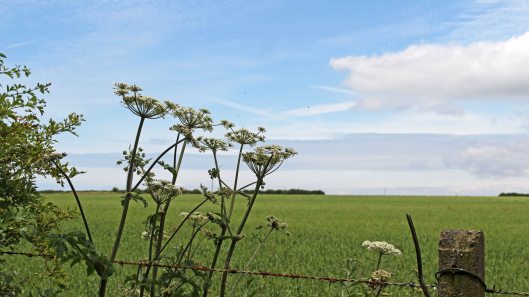
Hogweed is just coming in to flower now, adorning the roadsides, hedgerows and track edges in many of the parts of south Wales that I’ve visited recently.

170630 hogweed (2)

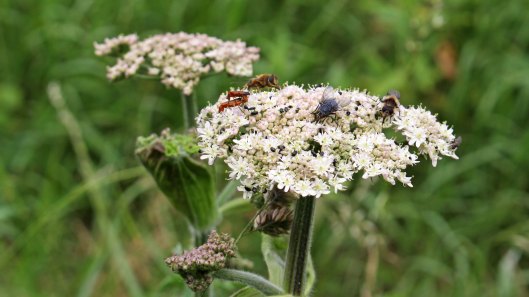
The statuesque purple-coloured-when-young stalks and those large white flower heads are glorious, indeed, but the very best thing about Hogweed, I think, is the food it provides for all manner of creatures, from flies and hoverflies to ants, bees and wasps, bugs and beetles.

170630 1 Common red soldier beetle
170630 2 Swollen-thighed beetle
170630 3 Cheilosia illustrata
170630 4 Noon fly
170630 5 Hogweed
170630 6 Broad centurion female
170630 7 Willow mason-wasp
170630 8 Stilt bug
170630 9 Hogweed leafminer
Like Loading...

Waving the yellow flag

16 Friday Jun 2017

Posted by sconzani in flowers, nature, wildflowers

≈ 3 Comments

Tags

British flora, British native flowers, British wildflowers, Iris pseudacorus, Segg, Yellow flag iris, Yellow iris

The Yellow iris (Iris pseudacorus), also known as the Yellow flag iris, is really a spring bloomer but I’m still seeing some flowers in the damper boggy and waterside areas during my countryside wanders so I thought I’d share some photos of them before they all disappear for the summer.

170616 Yellow iris (3)

Of course, the wonderfully green, spear-like leaves don’t disappear and they are, in fact, where this plant got one of its common names, Segg. According to Richard Mabey’s Flora Britannica, Segg is a variant of sedge and is derived from the Anglo-Saxon word for a short sword, though I have also seen Segg spelt secg and the Oxford Dictionary says sedge came originally from the Old English word secg, which has Germanic origins and whence also came the Latin secare meaning ‘to cut’ – hence secateurs. Here endeth today’s lesson!

170616 Yellow iris (2)
170616 Yellow iris (4)
170616 Yellow iris (1)
Like Loading...

Looking frazzled!

03 Saturday Jun 2017

Posted by sconzani in flowers, nature, wildflowers

≈ Leave a comment

Tags

British flora, British native flowers, British wildflowers, Ragged robin, Silene flos-cuculi

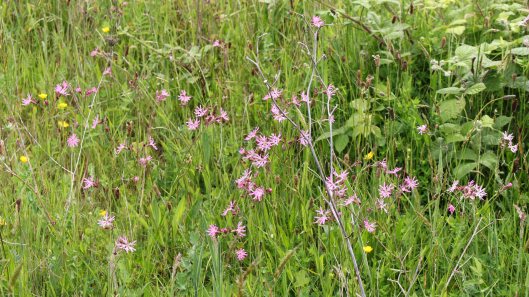
Ragged robin (Silene flos-cuculi) certainly lives up to its name. To me, it always looks a tad stressed, a touch frayed around the edges, a bit frazzled, as if it’s had a long hard day in the meadows, but its distinctive ragged shape does at least make it one of the easiest British wildflowers to identify.

Ragged robin (4)

I say ‘always’ but I don’t actually see this pretty native very often. Perhaps that’s because it prefers to dip its feet into the damper grass- and woodlands, though the word is that it has declined in recent years in many parts of Britain, mostly due to agriculture taking over its habitats.

Ragged robin (2)
Ragged robin (3)

It was, then, even more special to spot these plants in one of my local wild places this week, and I wasn’t the only one smiling at the sight. The bees were obviously pleased to see them too! Ragged Robin flowers from May through to August so I hope you’re lucky enough to spot some too.

Ragged robin (1)

Like Loading...

The bees that don’t buzz

02 Friday Jun 2017

Posted by sconzani in flowers, nature, wildflowers

≈ 6 Comments

Tags

Bee orchid, British orchids, British wildflowers, native orchids, Ophrys apifera), orchid

Finding my very first Bee orchids (Ophrys apifera) in a local park this week made my day! I know they’re designed to entice male bees to attempt mating with their flowers in order to facilitate pollination but to me they actually look like jolly smiling and laughing mouths.

170602 Bee orchid Ophrys apifera (1)
170602 Bee orchid Ophrys apifera (2)

I had to find out more, and I have to say that, when it comes to wild plants, I love the Plantlife website – as well as giving you the straight facts and figures about British plants, they also include the most interesting fact-lets, like these:

*  The aim of the mimicry is to attract passing male bees in the hope they will try to mate and thus aid pollination. In Britain, however, Bee orchids self-pollinate so the deception is not really required.
*  This wild flower was once called the “Humble Bee” orchid (Humble being a variation of Bumble).
*  According to Roman natural historian Pliny the Elder it was used by womenfolk to darken their eyebrows.
*  The Bee orchid is the County Flower of Bedfordshire.
*  In the Language of Flowers it stands for error and industry.

170602 Bee orchid Ophrys apifera (3)
170602 Bee orchid Ophrys apifera (4)
Like Loading...

Primrose x Cowslip = False Oxlip

12 Friday May 2017

Posted by sconzani in flowers, nature, wildflowers

≈ Leave a comment

Tags

British flora, British wildflowers, Cowslip, False oxlip, flora hybridisation, flower hybrids, primrose, Primula veris, Primula vulgaris, Primula vulgaris x veris = P. x polyantha


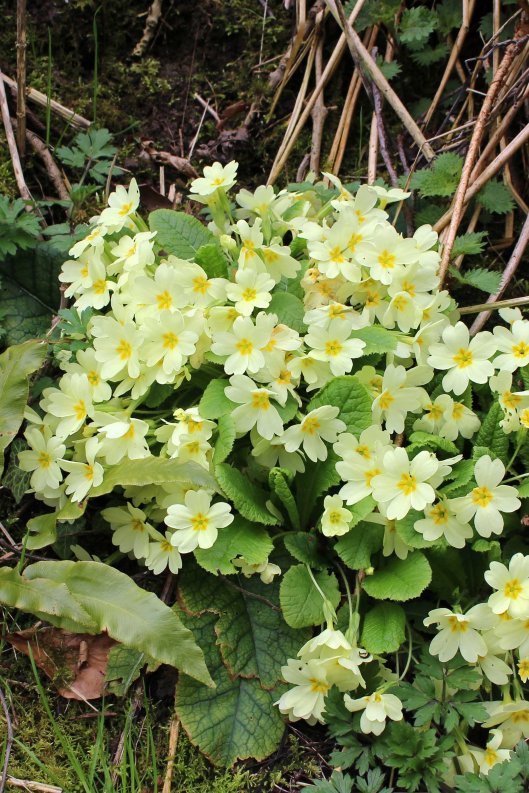
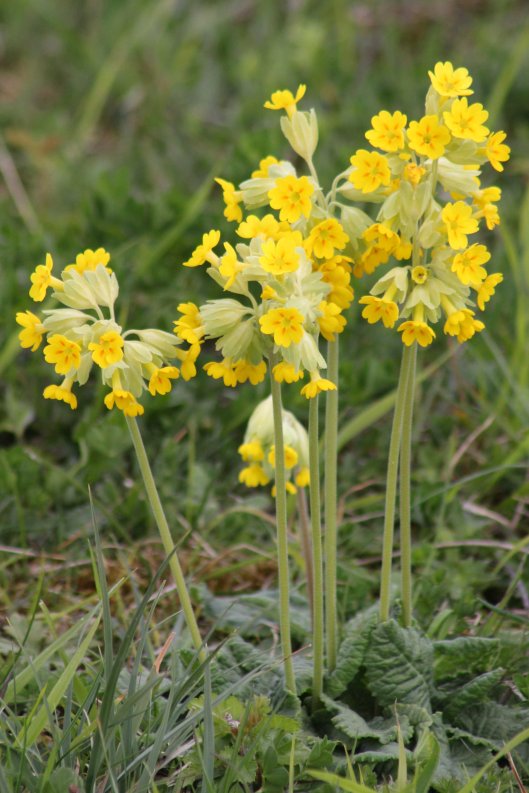
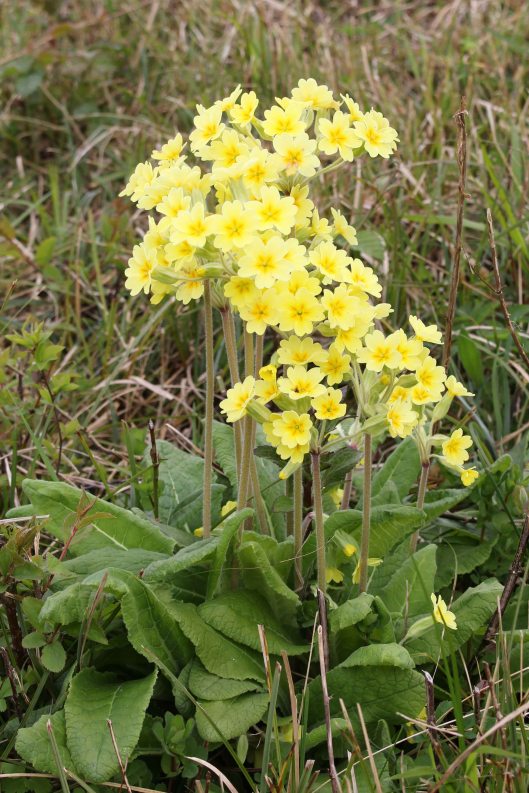
Where Primroses (Primula vulgaris) and Cowslips (Primula veris) grow in close proximity they will occasionally hybridise to produce the False Oxlip (Primula vulgaris x veris = P. x polyantha). Though this is not really clear from my images, the hybrid is usually a larger plant than the Cowslip, and I think it combines the prettiest traits of both parents to produce a real stunner!

170512 A Primrose
170512 B Cowslip
170512 C False oxlip
Like Loading...
← Older posts
Newer posts →

About me

sconzani

sconzani

I'm a writer and photographer; researcher and blogger; birder and nature lover; countryside rambler and city strider; volunteer and biodiversity recorder.

View Full Profile →

Follow earthstar on WordPress.com

Enter your email address to follow this blog and receive notifications of new posts by email.

Recent blog posts

  • Alder flies April 9, 2026
  • Lily beetle April 8, 2026
  • First bee-flies April 7, 2026
  • Bloody-nosed beetle April 6, 2026
  • Gorse and its weevil April 5, 2026

From the archives

COPYRIGHT

Unless otherwise acknowledged, the text and photographs on this blog are my own and are subject to international copyright. Nothing may be downloaded or copied without my permission.

Fellow Earth Stars!
  • Unknown's avatar
  • Unknown's avatar
  • Unknown's avatar
  • Unknown's avatar
  • Unknown's avatar
  • Unknown's avatar
  • Unknown's avatar
  • Unknown's avatar
  • Unknown's avatar
  • Unknown's avatar
  • Unknown's avatar
  • Unknown's avatar
  • Unknown's avatar
  • Unknown's avatar
  • Unknown's avatar
  • Unknown's avatar
  • Unknown's avatar
  • Unknown's avatar
  • Unknown's avatar
  • Unknown's avatar
  • Unknown's avatar
  • Unknown's avatar
  • Unknown's avatar
  • Unknown's avatar
  • Unknown's avatar
  • Unknown's avatar
  • Unknown's avatar
  • Unknown's avatar
  • Unknown's avatar
  • Unknown's avatar
  • Unknown's avatar
  • Unknown's avatar
  • Unknown's avatar
  • Unknown's avatar
  • Unknown's avatar
  • Unknown's avatar
  • Unknown's avatar
  • Unknown's avatar
  • Unknown's avatar
  • Unknown's avatar
  • Unknown's avatar
  • Unknown's avatar
  • Unknown's avatar
  • Unknown's avatar
  • Unknown's avatar
  • Unknown's avatar
  • Unknown's avatar
  • Unknown's avatar
  • Unknown's avatar
  • Unknown's avatar

Blog at WordPress.com.

Privacy & Cookies: This site uses cookies. By continuing to use this website, you agree to their use.
To find out more, including how to control cookies, see here: Cookie Policy
  • Subscribe Subscribed
    • earthstar
    • Join 642 other subscribers
    • Already have a WordPress.com account? Log in now.
    • earthstar
    • Subscribe Subscribed
    • Sign up
    • Log in
    • Report this content
    • View site in Reader
    • Manage subscriptions
    • Collapse this bar
 

Loading Comments...
 

You must be logged in to post a comment.

    %d