• ABOUT
  • BIRDING 2018
  • Birding 2019
  • BLOG POSTS
  • Butterflies 2018
  • Resources

earthstar

~ a celebration of nature

earthstar

Tag Archives: butterflying

212/366 A tip top butterfly

30 Thursday Jul 2020

Posted by sconzani in insects, nature

≈ 2 Comments

Tags

Aberbargoed coal tip, British butterflies, butterflying, coal spoil biodiversity, Grayling

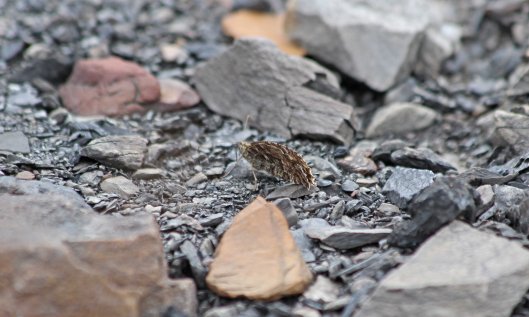
I had big plans to see more of Britain’s butterfly species this year but, in the immortal words of Robbie Burns, plans and schemes ‘gang aft agley’. The Covid 19 lockdown put a stop to all the butterflying plans I was hatching and I’ve missed seeing an awful lot of species this year. But, yesterday, I did manage one more species for 2020, that master of camouflage, the Grayling.
200730 grayling (1)

I have a friend who lives not far from Aberbargoed, with its Grasslands National Nature Reserve and the neighbouring coal spoil tip, so I was able to combine a delightful socially distanced walk with some butterflying. It was a little late in the month – last year I visited the tip in mid July – but we got lucky, with wonderful close sightings of just one individual.

200730 grayling (2)

In his Life Cycles of British & Irish Butterflies, Peter Eeles notes that the Grayling was once known as the Rock Underwing, a testament to its ability to blend in perfectly with the surrounding earth and pebbles when it lowers its forewings. Fortunately, when the Grayling is feeding, it raises its forewings and we were able to see more clearly its two eye spots.

200730 grayling (3)

Like Loading...

199/366 A cycle of life and death

17 Friday Jul 2020

Posted by sconzani in insects, nature

≈ Leave a comment

Tags

British butterflies, butterfly, butterflying, cycle of life, Ringlet, Ringlets mating

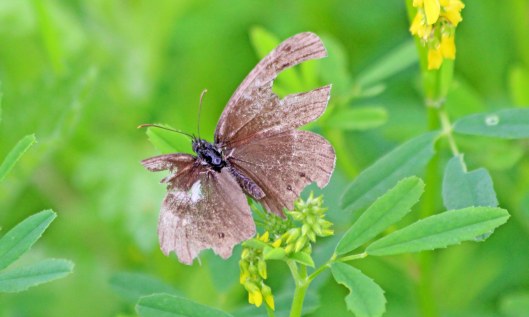
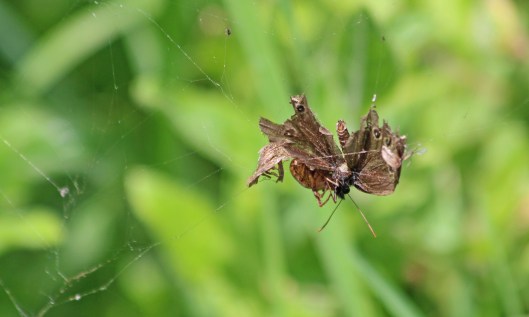
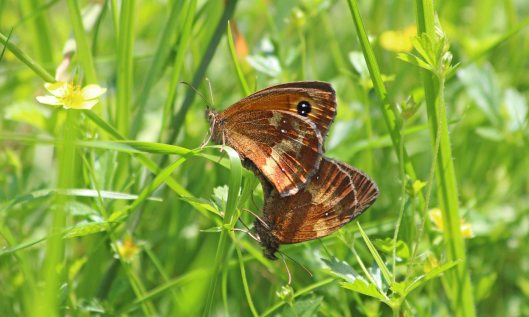
I am constantly reminded of how transitory life can be for the smaller creatures that share our planet. Take, for instance, the Ringlet butterfly. The adults usually emerge in the second half of June and only a few survive into August. In their few short weeks of life they experience a frantic rush to reproduce …

200717 1 ringlets mating

… a time full of danger from pecking birds, of collisions with damaging foliage …

200717 2 ragged ringlet

… before death takes them – unless, like this rather ragged creature, they are caught in a spider’s web, die prematurely but, in so doing, give life to another creature.

200717 2 ringlet caught by spider

Like Loading...

196/366 First Brown argus of 2020

14 Tuesday Jul 2020

Posted by sconzani in insects, nature

≈ 1 Comment

Tags

British butterflies, Brown argus, butterfly, butterflying, Grangemoor Park

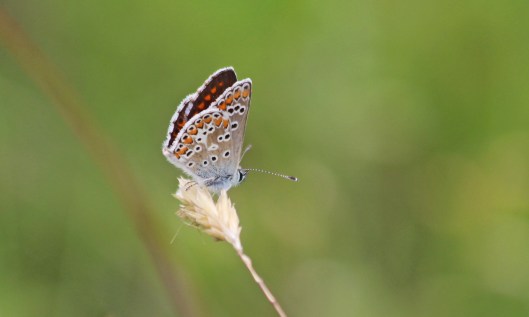
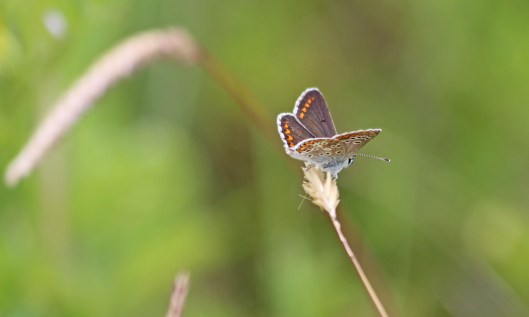
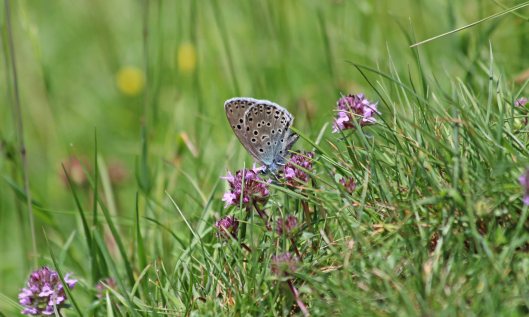
By this date last year, I had managed to find Brown argus butterflies at two different local sites (and one of those was the first Cardiff record in eight years). This year I only spotted my first Brown argus last Saturday, almost two months later than last year. The Polyommatinae family (that’s the blues and arguses) are not faring well in my part of south Wales this year, which is a great shame, as they are all gorgeous little butterflies.
200714 brown argus (1)

If you’re having trouble telling a Brown argus from a Common blue female, my blog Flying on the wings of Confusion, July 2018, has ID pointers and photos that should help.
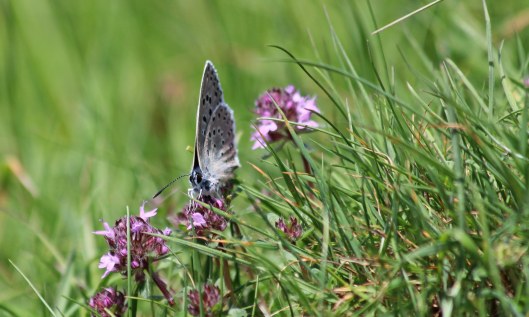
200714 brown argus (2)

Like Loading...

232/365 Lifer : Long-tailed blue

20 Tuesday Aug 2019

Posted by sconzani in 365DaysWildin2019, insects, nature

≈ 5 Comments

Tags

British butterflies, butterflies, butterfly, butterfly migration, butterflying, European butterflies, Long-tailed Blue, Rowland Wood

It was the final day of my five-day visit with my friend Jill in East Sussex and she very kindly indulged my wish to look again for the butterflies we don’t see in my part of south Wales. The weather so far had not been kind, with heavy rain some days and almost constant wind, and the huge clouds rolling through Sunday’s skies didn’t augur well, but we would at least enjoy some fresh air and exercise. Our first stop was Butterfly Conservation’s Rowland Wood reserve, a site neither of us had previously visited. Apart from the almost constant dog pooh (which someone had sprayed with pink fluorescent paint making it much easier to avoid), the reserve was lovely, with mature woodland interspersed with large areas of heathland. I imagine it would be a paradise for fritillaries in early summer.

190820 Rowland Wood

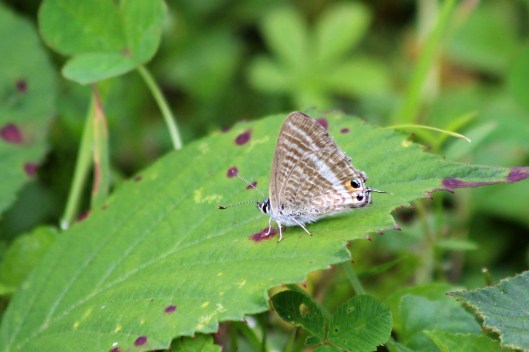
We’d spotted a small number of the more common butterfly species – Gatekeeper, Speckled wood, Common blue, Small heath, when I stopped in my tracks, almost unable to believe what my eyes were seeing – a Long-tailed blue, sitting on a bramble leaf right next to the path!

190820 Long-tailed blue (1)

This is a European butterfly, which sometimes makes the journey across the Channel to spend a little time in the summer sunshine along England’s southern coast. I’d been told two or three had been seen along the Sussex coast in the previous ten days, and had been keeping an eye out for them on our earlier walks, but I never expected to see one on the north side of the South Downs, especially in a location where there was none of the Everlasting pea it uses as a larval plant. I guess the wind had done me a huge favour by blowing the butterfly further inland than usual.

190820 Long-tailed blue (2)

Except for opening and closing its wings ever so slightly, this little beauty didn’t move and we didn’t disturb it. I took rather a lot of photos and we continued on our walk. As you might imagine, I was amazed / delighted / overjoyed – in fact, I’m still buzzing from the excitement of spotting such a special butterfly. The Fates were kind to me that day.

Like Loading...

230/365 Small copper

18 Sunday Aug 2019

Posted by sconzani in 365DaysWildin2019, insects, nature

≈ 8 Comments

Tags

British butterflies, butterflies, butterfly, butterflying, Small copper

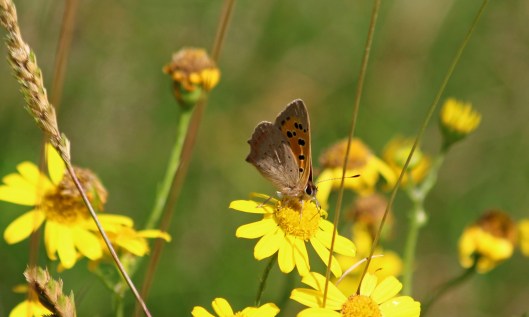
Sizzling, speedy, spunky, shimmering, sassy, spry, salient, sensational, shapely, striking, snappy, sparkly, spellbinding, splendiferous! Okay, I got a bit carried away but Small coppers are special.

190818 small copper (3)190818 small copper (2)190818 small copper (1)190818 small copper (4)


Like Loading...

215/365 Four go butterflying in Dorset

03 Saturday Aug 2019

Posted by sconzani in 365DaysWildin2019, insects, nature, wildflowers

≈ 5 Comments

Tags

Alners Gorse, British butterflies, butterfly, butterflying, Comma, Essex skipper, Purple hairstgreak, Red Admiral, Small copper

Off we went again, our gallant gang of four, this time in search of the rare Brown hairstreak at Butterfly Conservation’s Alners Gorse reserve in Dorset.

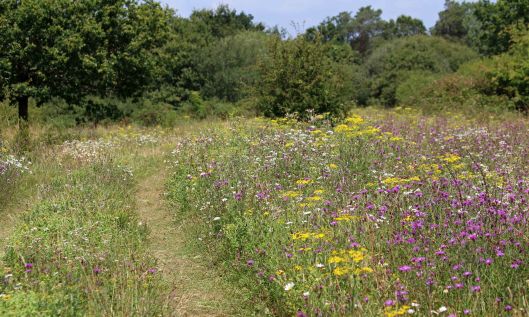
190803 alners gorse

This reserve is beautiful, the colourful swathes of wildflowers reminiscent of a painting by Monet or Van Gogh, the wide range of trees providing diverse habitats for local wildlife and welcome shade for butterfliers on yet another hot summer’s day.

190803 comma

Unfortunately, the Brown hairstreaks eluded us, and most of the other 20-odd people wandering around the reserve, staring intently, as we were, at bramble bushes, hedgerows and oak trees.

190803 essex skipper

One person, on turning a corner in the path, had almost bumped into a Brown, but the butterfly immediately flew off and wasn’t seen again. A couple said they’d seen one high in a tree but much tree staring failed to produce another sighting.

190803 purple hairstreak

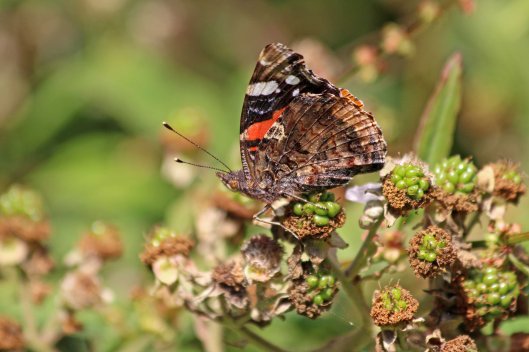
Still, there were butterflies in abundance and my list for the day totalled a very respectable seventeen: Silver-washed fritillary, Purple hairstreak, Comma, Peacock, Red admiral, Painted lady, Essex skipper, Small skipper, Small white, Green-veined white, Common blue, Small copper, Brimstone, Meadow brown, Ringlet, Gatekeeper and Speckled wood. My companions also saw Marbled white, bringing the group total to eighteen – I was obviously staring at a tree at that time!

190803 red admiral

Alners Gorse is a well known site for Marsh fritillaries – now finished for this year, and we saw large numbers of other insects – hoverflies, bees, flies, crickets and grasshoppers, and several species of dragonfly, so it’s well worth a visit at any time of the year.

190803 small copper

Like Loading...

207/365 Butterflying at Lower Woods

26 Friday Jul 2019

Posted by sconzani in 365DaysWildin2019, insects, nature

≈ 4 Comments

Tags

Brimstone, British butterflies, butterflying, Gatekeeper, Gloucestershire woodland, Lower Woods Nature Reserve, Purple hairstreak, Silver-washed fritillary, Small copper, woodland trenches

On the hottest July day on record, yesterday, three mad gents and a Kiwi woman went butterflying in the noon day sun!

190726 Lower Woods (1)

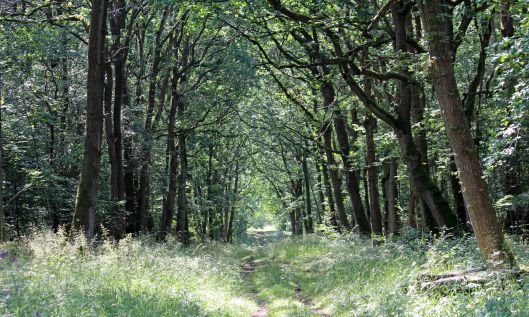
Our destination was the Gloucestershire Wildlife Trust’s Lower Woods Nature Reserve, which, according to their website, is ‘one of the largest ancient woodlands in the south-west of England’. I can believe it!

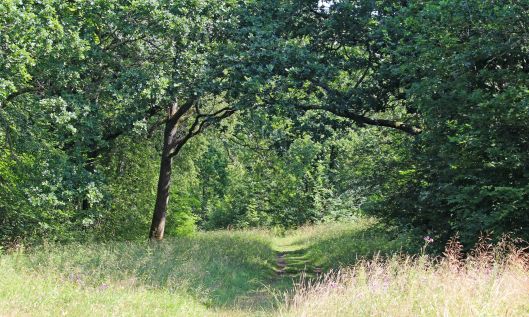
190726 Lower Woods (2)

We walked most of the Horton Great Trench, one of the long grassy roads that have been in existence since Medieval times, as well as detouring in through the woods on one of the many tracks, and it was beautiful – extremely hot, but beautiful! Towering old trees edged the ancient trackway, with clearings widening out to wildflower meadows in many places along the way.

190726 silver-washed frit

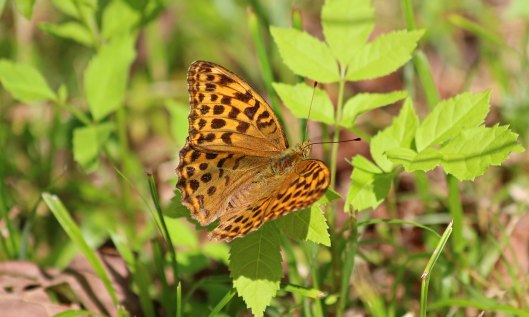
The trench was perfect for butterflies. I have never seen so many Silver-washed fritillaries before, and there was also an abundance of Peacocks, flashing their brilliant colours on the bramble flowers. We spotted several Purple hairstreaks up high in the ancient oaks and then had the delight of watching one come down to the grass to drink from the overnight dew – fabulous!

190726 purple hairstreak190726 small copper

Our list for the site came to 17 species: Silver-washed fritillary, Purple hairstreak, Peacock, Red admiral, Comma, Large and Small and Marbled whites, Brimstone, Small skipper, Common blue and Brown argus, Speckled wood, Meadow brown, Ringlet and Gatekeeper, and two gorgeous Small coppers.

190726 gatekeeper190726 brimstone

We didn’t actually find our target species, the White admiral, at Lower Woods but a detour to Slade Wood on the way home produced one individual, bringing our top-spotter car-driver his 50th butterfly species of the year. Congratulations, Gareth!

Like Loading...

197/365 Butterflying at Slade Wood

16 Tuesday Jul 2019

Posted by sconzani in 365DaysWildin2019, insects, nature, walks

≈ 7 Comments

Tags

#365DaysWild, British butterflies, butterfly, butterflying, Comma, Peacock, Red Admiral, Silver-washed fritillary, Slade Wood, Small tortoiseshell, White admiral

Yesterday, with my friend Sharon, I went to Slade Wood, in the neighbouring county of Gwent, for a walk and some butterflying.

190716 Slade Wood

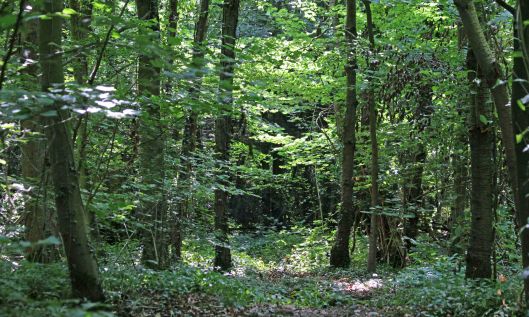
The woodland was lovely and a haven from the hot sun but, for us, the best butterflying was to be had just wandering along the country lane leading to the woodland. With high hedges, abundant wildflowers and occasional blooming Buddleia bushes, backed by the tall woodland trees, it was heaven for butterflies. These are a few of the 12 species we saw …

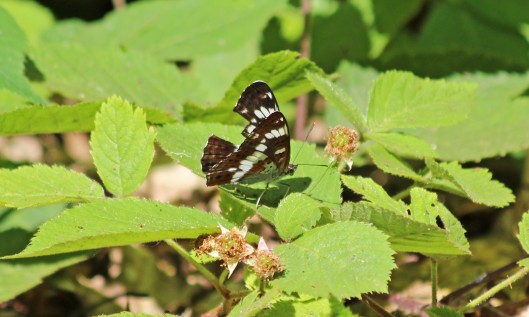
190716 white admiral

My first White admirals of the year, the first I’ve seen in Wales; they seem to float over the vegetation.

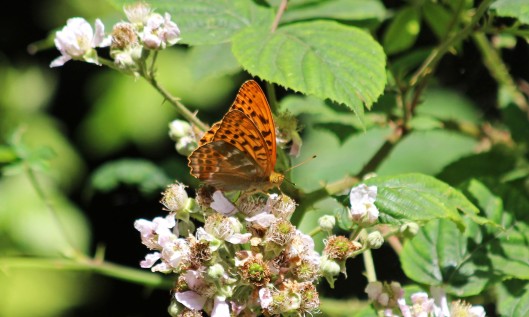
190716 silver-washed fritillary

Those giant orange-and-brown speedsters, the Silver-washed fritillaries.

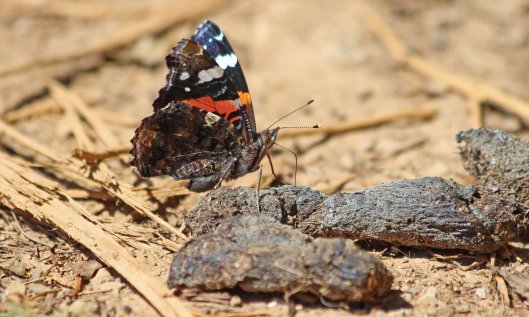
190716 red admiral

Red admiral extracting minerals from poo … mmmmm, delicious!

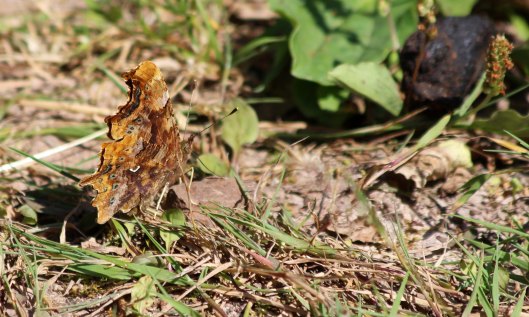
190716 comma

Comma, incredibly well camouflaged amongst the grasses and leaf litter, also heading for a slurp at the poo.

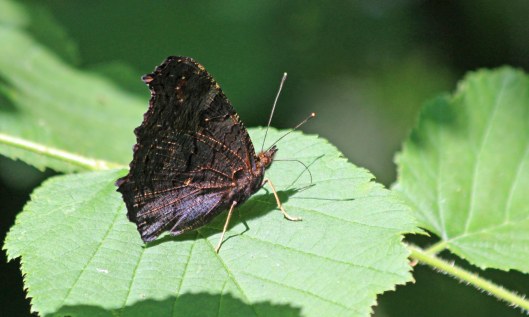
190716 peacock

Peacock, hiding its glorious bold colours away behind those closed wings.

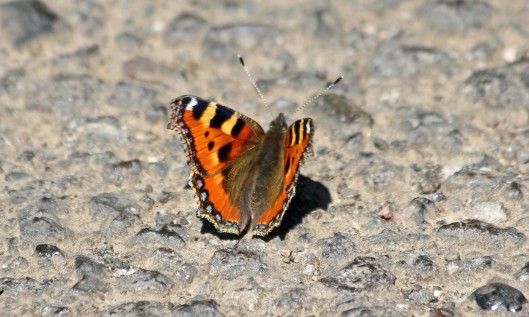
190716 small tortoiseshell

Small tortoiseshell, a pretty little butterfly that I don’t see very often, so a delight to spot one of these.

Like Loading...

180/365 Butterflying in Somerset, part II

29 Saturday Jun 2019

Posted by sconzani in 365DaysWildin2019, insects, nature, wildflowers

≈ 2 Comments

Tags

British butterflies, butterflies, butterfly, butterflying, Collard Hill, Large blue, Large blue butterfly, Marbled white, Wild thyme

Scenario: Three friends go seeking rare butterflies across the border in England.

190629 Collard Hill view

Second location: Collard Hill, in Somerset. A hot walk up the steep hill for more incredible views across picturesque Somerset. And we weren’t far from the legendary Glastonbury Tor.

190629 Glastonbury Tor

Support act: Marbled white. My first sightings of these little beauties for the year, and we saw several flitting back and forth above the long grass.

190629 marbled white

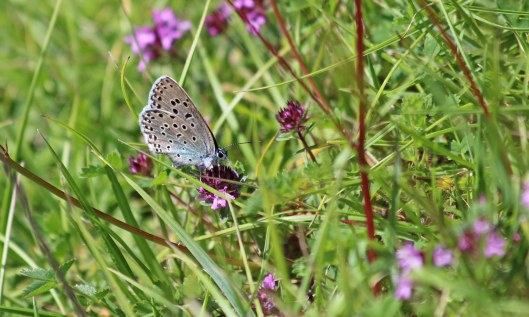
Star attraction: Large blue. Incredibly, this butterfly was declared extinct in Britain in the 1970s but was reintroduced from Sweden to Green Down, a Somerset Wildlife Trust site, in 1992. Since then the butterflies have mostly thrived (though they are affected by weather, habitat and ant conditions – for more on that, check out the National Trust Large blue blog) and they’ve been reintroduced to several other areas, including this site at Collard Hill.

190629 large blue (2)

During our visit, it was very windy at the top and very hot in the lee of the hill, not ideal conditions for seeing the butterflies but, after following the animal tracks back and forth across the hillside, we finally had good sightings of three Large blues on their favourite food plant, Wild thyme. One female was even ovipositing, which bodes well for the coming years.

190629 large blue (3)

It was amazing to see both these Large blues and, earlier in the day, the Heath fritillaries, both lifers for me, and I want to say a huge thank you to Gareth and Alan for letting me join their butterflying expedition. It was a truly magical day!

190629 large blue (4)

Like Loading...

179/365 Butterflying in Somerset, part I

28 Friday Jun 2019

Posted by sconzani in 365DaysWildin2019, insects, nature

≈ 5 Comments

Tags

British butterflies, butterflies, butterfly, butterflying, Exmoor ponies, Green hairstreak, Haddon Hill, Heath fritillary

Scenario: Three friends go seeking rare butterflies across the border in England.

190628 Haddon Hill views

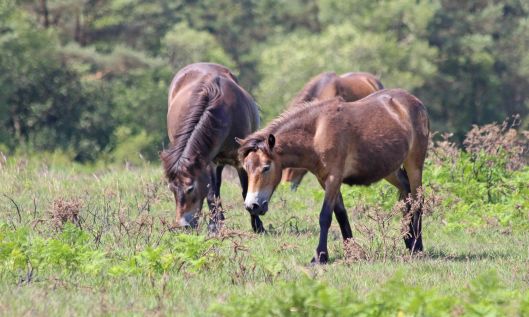
First location: Haddon Hill, in Somerset, offering superb views across the surrounding countryside and grazed by Exmoor ponies.

190628 exmoor ponies

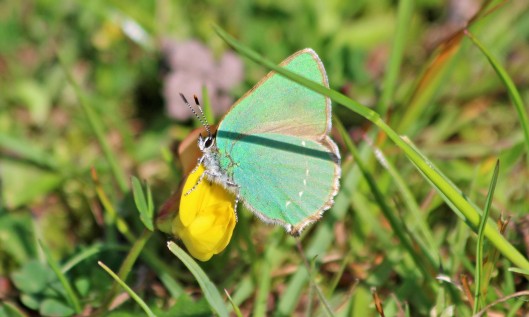
Support act: A Green hairstreak. This was a superb spot by Alan almost as soon as we crossed the stile into the reserve, as this gorgeous little butterfly was incredibly well camouflaged sitting on the grass.

190628 green hairstreak

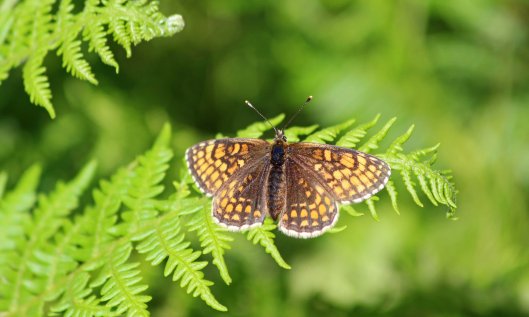
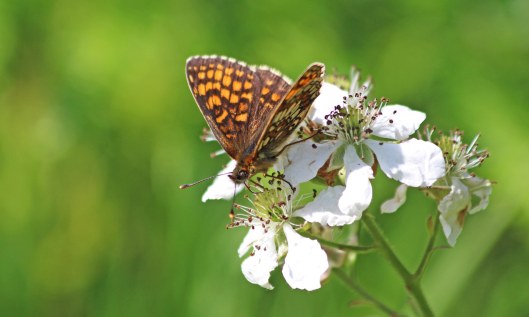
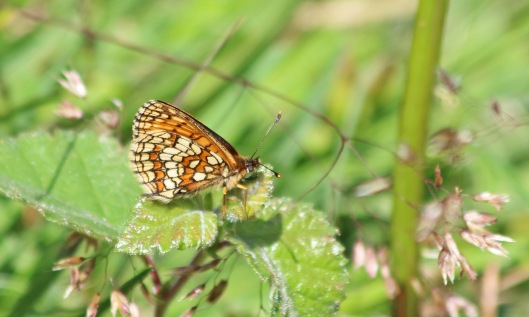
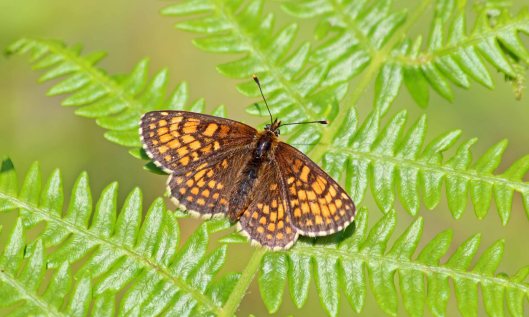
Star attraction: Heath fritillary. What a cracking little butterfly this is, with its elaborate orange and dark brown upperwing markings, and its equally lovely and intricate underwings. Sadly, this is a rare butterfly in Britain these days but it is being helped along by the sterling efforts of Butterfly Conservation and others. Luckily, at this site, Heath fritillaries are very numerous – we must’ve seen at least 25, and they were literally fluttering in the bushes and brambles all around us. One even landed briefly on my hand – an incredibly special moment.

190628 heath fritillary (1)190628 heath fritillary (2)190628 heath fritillary (3)190628 heath fritillary (4)190628 heath fritillary (5)

Like Loading...
Newer posts →

About me

sconzani

sconzani

I'm a writer and photographer; researcher and blogger; birder and nature lover; countryside rambler and city strider; volunteer and biodiversity recorder.

View Full Profile →

Follow earthstar on WordPress.com

Enter your email address to follow this blog and receive notifications of new posts by email.

Recent blog posts

  • O is for Odonata December 20, 2025
  • N is for nest December 19, 2025
  • M is for mite December 18, 2025
  • L is for lepidopteran lifers December 17, 2025
  • K is for Keeled skimmers December 16, 2025

From the archives

COPYRIGHT

Unless otherwise acknowledged, the text and photographs on this blog are my own and are subject to international copyright. Nothing may be downloaded or copied without my permission.

Fellow Earth Stars!

  • Unknown's avatar
  • Unknown's avatar
  • Unknown's avatar
  • Unknown's avatar
  • Unknown's avatar
  • Unknown's avatar
  • Unknown's avatar
  • Unknown's avatar
  • Unknown's avatar
  • Unknown's avatar
  • Unknown's avatar
  • Unknown's avatar
  • Unknown's avatar
  • Unknown's avatar
  • Unknown's avatar
  • Unknown's avatar
  • Unknown's avatar
  • Unknown's avatar
  • Unknown's avatar
  • Unknown's avatar
  • Unknown's avatar
  • Unknown's avatar
  • Unknown's avatar
  • Unknown's avatar
  • Unknown's avatar
  • Unknown's avatar
  • Unknown's avatar
  • Unknown's avatar
  • Unknown's avatar
  • Unknown's avatar
  • Unknown's avatar
  • Unknown's avatar
  • Unknown's avatar
  • Unknown's avatar
  • Unknown's avatar
  • Unknown's avatar
  • Unknown's avatar
  • Unknown's avatar
  • Unknown's avatar
  • Unknown's avatar
  • Unknown's avatar
  • Unknown's avatar
  • Unknown's avatar
  • Unknown's avatar
  • Unknown's avatar
  • Unknown's avatar
  • Unknown's avatar
  • Unknown's avatar
  • Unknown's avatar
  • Unknown's avatar

Blog at WordPress.com.

Privacy & Cookies: This site uses cookies. By continuing to use this website, you agree to their use.
To find out more, including how to control cookies, see here: Cookie Policy
  • Subscribe Subscribed
    • earthstar
    • Join 667 other subscribers
    • Already have a WordPress.com account? Log in now.
    • earthstar
    • Subscribe Subscribed
    • Sign up
    • Log in
    • Report this content
    • View site in Reader
    • Manage subscriptions
    • Collapse this bar
 

Loading Comments...
 

You must be logged in to post a comment.

    %d