Tags
British butterflies, butterfly, Clouded yellow, Dorset butterflies, Painted Lady, Small heath, Wall
Only eight species of butterfly were seen in Weymouth and on the Isle of Portland last week, as it’s now late in the year for most butterfly species, and the season for many is already over.

A lovely surprise was this rather faded Wall fluttering along a path at RSPB Lodmoor, likely the same specimen seen two days running. I did spend a morning walking around the disused quarries on Portland, and was told by a chap surveying a transect at Tout Quarry that he’d seen a couple of Wall that morning but I didn’t spot any as I subsequently wandered around the quarry.

Two Small heath in the neighbouring King Barrow Quarry were an unexpected surprise. The Dorset Butterflies website says there are ‘Two broods, the first starting in May and peaking in June, going through into July, and the second emerging in August and going through to September in smaller numbers’, so I was lucky to see these so late in September.

Not surprisingly given what an amazing influx we have seen this year, there were Clouded yellows everywhere, and I couldn’t resist taking even more photographs of these golden beauties. I’m going to have to be ruthless when I go through this year’s photos deleting those I don’t want to keep.

Otherwise, I found the odd Painted lady, quite a lot of Red admirals getting ready to depart on their return migration south to Europe’s warmer wintering grounds, a few late Common blues, some Small whites, and a number of Speckled woods. And I enjoyed seeing each and every one of them, knowing they will soon all be gone for the year.


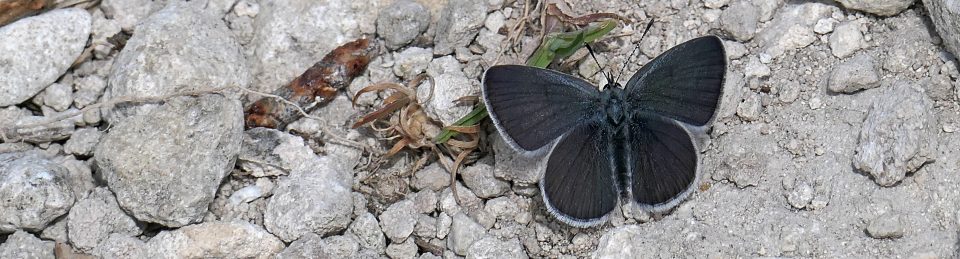
 And the third, on Sunday 10th, once again appeared as if conjured up out of thin air, this time on the grass below the National Coastwatch building near the coastal path that runs along Portland’s west cliffs.
 The one time I actually went looking for Small blues, and spent two hours walking almost every small path through the Broadcroft Butterfly Reserve, where these butterflies are supposed to live, I saw none. Which only made me even more grateful to have experienced the previous three totally unexpected sightings.


