• ABOUT
  • BIRDING 2018
  • Birding 2019
  • BLOG POSTS
  • Butterflies 2018
  • Resources

earthstar

~ a celebration of nature

earthstar

Tag Archives: gall midges

Galls: Macrodiplosis pustularis

02 Monday Jun 2025

Posted by sconzani in insects, trees

≈ Leave a comment

Tags

British galls, Cecidomyiidae, folded leaf lobes on Oak leaves, gall midges, galls on Oak leaves, insects on Oak, Macrodiplosis pustularis

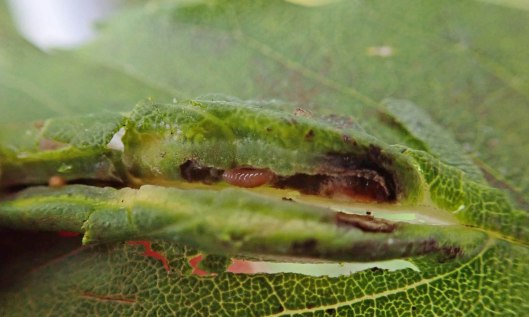
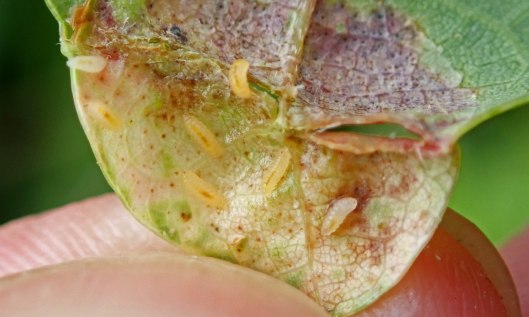
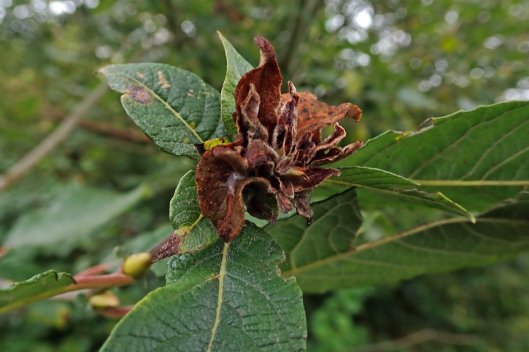
In my ignorance, when I first saw these folded-over leaf lobes on an Oak tree in a local park, I thought they had been created by leaf-mining moth larvae. Fortunately, there are much smarter people around than me and, when I posted some photos on social media, one of them popped up and told me what these really were: galls made by the larvae of the gall midge, Macrodiplosis pustularis.
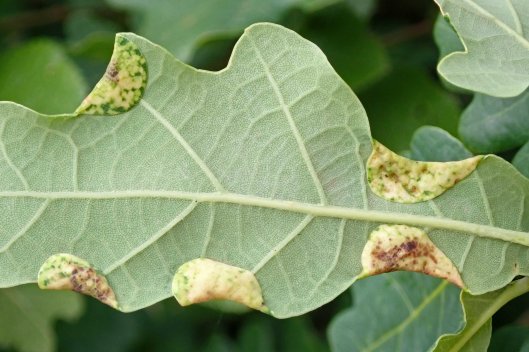
Of course, once I knew that I had to return to the spot and pull up a couple of the folds to see the tiny larvae. The numbers inside can vary, apparently, from one to six or more. They are white when young but change to an orange colour as they develop.
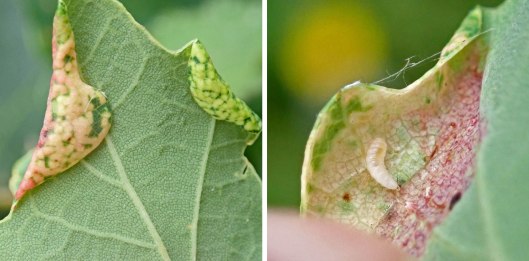
The fold of the leaf is both a means of protection for the vulnerable larvae and also a food larder; they eat the leaf from the inside. Eventually, the larvae will drop from their leaf shelters, pupate and remain in the soil until the following Spring, when the whole process begins again.
Like Loading...

Galls: Rabdophaga rosaria

17 Tuesday Oct 2023

Posted by sconzani in insects, trees

≈ Leave a comment

Tags

gall midges, gall-causing midges, galls, galls made by midges, galls on willow, Rabdophaga rosaria, Rabdophaga strobilina / rosaria agg, willow species

Although I’ve named this blog post Rabdophaga rosaria, it is apparently difficult to be specific as to which exact species has caused galls like the one pictured below, so finds are recorded as Rabdophaga strobilina / rosaria agg. The gall causer is a midge, of the family Cecidomyiidae, of which there are more than 600 species in Britain. All are tiny, less than 5mm in length, and it is their larvae that cause the plants they inhabit to form galls. In this instance, the galls are formed in the buds of willow species.

231017 Rabdophaga rosaria

Like Loading...

Dasineura fraxini galls

03 Wednesday Nov 2021

Posted by sconzani in insects, leaves, trees

≈ Leave a comment

Tags

Ash tree galls, Dasineura fraxini, gall causing midge, gall midges, galls, galls made by midges, galls on Ash leaves, midge gall

One of the benefits of checking the leaves of various trees, and other plants, for leafmines is that, even when I don’t find them, I do find other things just as interesting, and this is one of those. I didn’t know what it was, of course, until I got home and checked my Field Studies Council Guide to plant galls in Britain fold-out guide. (If you’re not familiar with these, check the FSC online shop here. I have a few of these and find them really useful.)

211103 Dasineura fraxini (1)
211103 Dasineura fraxini (2)

My guide informed me that these galls on the leaves of Ash trees were created by the larvae of Dasineura fraxini, a species of tiny midge. Few people have ever seen the adult midge but I did have a look at one of the galls that was partly open and spotted one of the miniscule orange larvae. These galls can be found from May through to October, at which time the leaves will fall to the ground, where the larvae will pupate and over-winter until emerging as adult midges in the springtime.

211103 Dasineura fraxini (3)

Like Loading...

More galls, part 1

03 Tuesday Oct 2017

Posted by sconzani in insects, nature, plants, trees

≈ 4 Comments

Tags

Cecidomyia salicis-folii, gall flies, gall midges, gall on Salix caprea, gall on willow, galls, Iteomyia capraea

Today’s and tomorrow’s galls are not on the gall-beleaguered Oak tree and, for a change, they are not caused by wasps, as so many galls seem to be. These two galls are caused by tiny members of the enormous order of flies, the Diptera.

171003 Iteomyia capraea on Salix capraea (1)

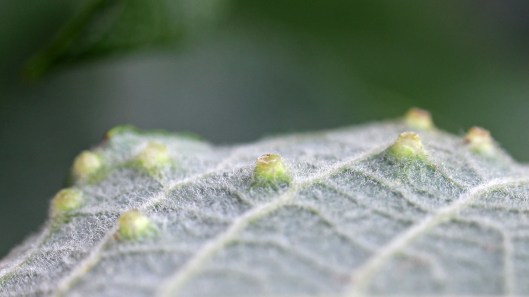
Today’s is Iteomyia capraea (sometimes known as Cecidomyia salicis-folii) (Cecidomyiidae is the family name for gall midges or gall flies). I think I would need better specs to actually see the midge that laid its eggs on this Goat willow (Salix caprea) leaf as it’s only 2-3mm long. Indeed, the galls themselves were pretty small (5-8mm), as you can see from the leafy picture below. When they hatch, the larvae of the midge feed within the leaf tissue causing the willow to develop a gall, sometimes on the midrib of the leaf, sometimes on a thick side vein. I’ve read one report that the larvae are white, another that they are an orange-red colour but I didn’t open up any of the galls for a look at the larva inside so I can’t confirm either report.

171003 Iteomyia capraea on Salix capraea (2)
171003 Iteomyia capraea on Salix capraea (3)

I’ve not been able to discover much about Iteomyia capraea. There are only 215 records showing in the NBN (National Biodiversity Network) database for the whole of Britain, 45 of which are in Wales, but I think that is more a reflection on the under-recording of galls that the rarity of the midge itself. Apparently, the species only breeds a single generation per year and they hibernate over winter in the soil underneath their host tree.

Like Loading...

About me

sconzani

sconzani

I'm a writer and photographer; researcher and blogger; birder and nature lover; countryside rambler and city strider; volunteer and biodiversity recorder.

View Full Profile →

Follow earthstar on WordPress.com

Enter your email address to follow this blog and receive notifications of new posts by email.

Recent blog posts

  • M is for mite December 18, 2025
  • L is for lepidopteran lifers December 17, 2025
  • K is for Keeled skimmers December 16, 2025
  • J is for Jersey tiger December 15, 2025
  • I is for Ichneumon December 14, 2025

From the archives

COPYRIGHT

Unless otherwise acknowledged, the text and photographs on this blog are my own and are subject to international copyright. Nothing may be downloaded or copied without my permission.

Fellow Earth Stars!

  • Unknown's avatar
  • Unknown's avatar
  • Unknown's avatar
  • Unknown's avatar
  • Unknown's avatar
  • Unknown's avatar
  • Unknown's avatar
  • Unknown's avatar
  • Unknown's avatar
  • Unknown's avatar
  • Unknown's avatar
  • Unknown's avatar
  • Unknown's avatar
  • Unknown's avatar
  • Unknown's avatar
  • Unknown's avatar
  • Unknown's avatar
  • Unknown's avatar
  • Unknown's avatar
  • Unknown's avatar
  • Unknown's avatar
  • Unknown's avatar
  • Unknown's avatar
  • Unknown's avatar
  • Unknown's avatar
  • Unknown's avatar
  • Unknown's avatar
  • Unknown's avatar
  • Unknown's avatar
  • Unknown's avatar
  • Unknown's avatar
  • Unknown's avatar
  • Unknown's avatar
  • Unknown's avatar
  • Unknown's avatar
  • Unknown's avatar
  • Unknown's avatar
  • Unknown's avatar
  • Unknown's avatar
  • Unknown's avatar
  • Unknown's avatar
  • Unknown's avatar
  • Unknown's avatar
  • Unknown's avatar
  • Unknown's avatar
  • Unknown's avatar
  • Unknown's avatar
  • Unknown's avatar
  • Unknown's avatar
  • Unknown's avatar

Blog at WordPress.com.

Privacy & Cookies: This site uses cookies. By continuing to use this website, you agree to their use.
To find out more, including how to control cookies, see here: Cookie Policy
  • Subscribe Subscribed
    • earthstar
    • Join 667 other subscribers
    • Already have a WordPress.com account? Log in now.
    • earthstar
    • Subscribe Subscribed
    • Sign up
    • Log in
    • Report this content
    • View site in Reader
    • Manage subscriptions
    • Collapse this bar
 

Loading Comments...
 

You must be logged in to post a comment.

    %d