• ABOUT
  • BIRDING 2018
  • Birding 2019
  • BLOG POSTS
  • Butterflies 2018
  • Resources

earthstar

~ a celebration of nature

earthstar

Tag Archives: moths

Random acts of wildness

01 Friday Jun 2018

Posted by sconzani in insects, nature

≈ 2 Comments

Tags

#30DaysWild, British butterflies, British moths, Burnet companion, butterflies, Cinnabar, Common blue, Latticed heath, moths, random acts of wildness, Silver Y, Small white

From today until the end of June, I’m taking part in 30 Days Wild, a month-long nature challenge run by the Wildlife Trusts. The idea is to do something wild every day for 30 days, whether ‘you take time out to simply smell a wildflower, listen to birdsong, explore a local wild place or leave a part of your garden to grow wild for a month’ and the aim is that by ‘making nature part of your life for 30 days’, you will feel ‘happier, healthier and more connected to nature’. This is pretty much what I do most days anyway but this month I’m going to ensure I go wild every single day! You can join in too, if you want – the info is here.
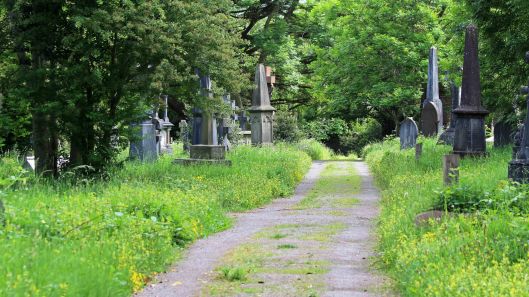
180601 (1) Cathays Cemetery

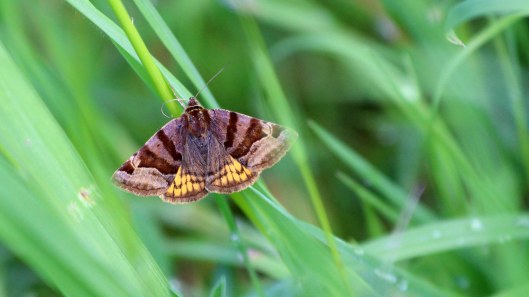
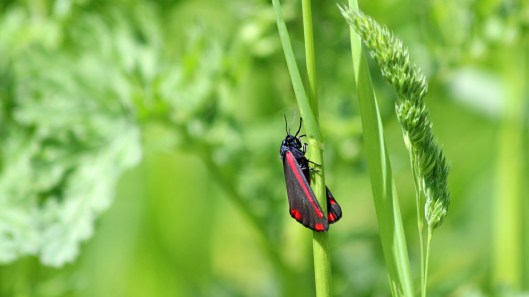
So, today, on day one, I went for a lovely long wander in Cathays Cemetery, Cardiff’s magnificent, huge, Victorian cemetery. Sadly, some parts of the cemetery are poorly managed – large areas without gravestones, which could be easily become wildflower meadows, are savagely mown, the clippings not removed. But there are a couple of areas where the grasses and wildflowers have been allowed to grow, and additional wildflowers – in particular, a lot of Yellow rattle – have been sewn. These two areas were alive with insects today: bees and hoverflies, bugs and beetles, and damselflies galore. My favourites, though, were all the lovely Lepidoptera: here are some I saw …

180601 (2) Latticed heath

Latticed heath moth

180601 (3) Common blue female

Common blue butterfly (female)

180601 (4) Common blue male

Common blue butterfly (male)

180601 (5) Silver Y

Silver Y moth

180601 (6) Burnet companion

Burnet companion moth

180601 (7) Small white

Small white butterfly

180601 (8) Cinnabar

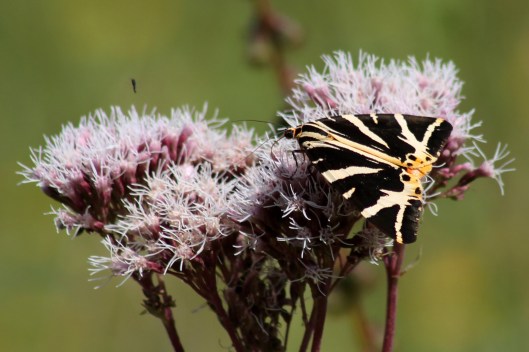
Cinnabar moth

Like Loading...

A moth trap

17 Tuesday Apr 2018

Posted by sconzani in insects, nature

≈ 8 Comments

Tags

British moths, Early grey, Early thorn, moths, Selenia dentaria, Xylocampa areola

I don’t have a garden so I can’t have a moth trap, and I admit to getting the teensiest bit envious of friends who do have traps. But I get to see their finds on Facebook, and I will also readily admit that learning to identify the 2500 species of moth found in Britain might just do my head in, so perhaps not having a moth trap is really a good thing! And, anyway, I seem to have discovered a very convenient place to find the occasional moth, a tall alleyway between local houses that has its very own street lamp.

OLYMPUS DIGITAL CAMERA

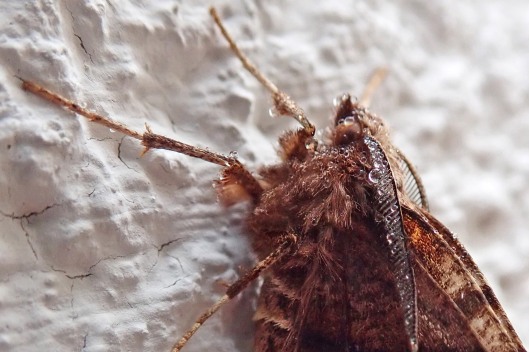
I walk this way often but hadn’t noticed moths until the day before yesterday – perhaps it hasn’t been warm enough before. And, as you can see from the head of this first moth (photo below), it was a damp, foggy morning and the moth was still to warm up so couldn’t fly away. This is one of the first of two generations of Early thorn (Selenia dentaria) to breed throughout much of Britain each year. (To find out more about the Early thorn, click here).

OLYMPUS DIGITAL CAMERA

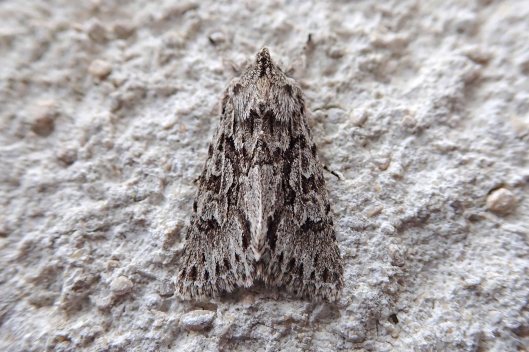
The second moth on the alley wall was this dapper delight, an Early grey (Xylocampa areola), another common and widespread moth, whose caterpillars feed on Honeysuckle. (More on the Early grey here.)

OLYMPUS DIGITAL CAMERA

Like Loading...

Moth trapping at the Obs

22 Sunday Oct 2017

Posted by sconzani in insects, nature

≈ 4 Comments

Tags

Black rustic, British moths, Brown-tail moth webs, Feathered Brindle, Fox moth caterpillar, Green-brindled Crescent, Lunar Underwing, moth larvae, moths, Portland moths

These are just a few moths from last weekend at Portland Bird Observatory in Dorset. They trap every night at the Obs and, because of their southern-coast location, just as with the birds they also get many migrant moths. However, I was too busy birding to take many moth photos and I’m fairly sure these are all common Brits. They’re not species I would necessarily see in Wales though and they are pretty, especially that third one (bottom left).

171022 Black rustic
171022 Feathered Brindle
171022 Green-brindled crescent
171022 Lunar underwing

These are: Black rustic (Aporophyla nigra), Feathered Brindle (Aporophyla australis), Green-brindled Crescent (Allophyes oxyacanthae), and Lunar Underwing (Omphaloscelis lunosa).

171022 Fox moth caterpillar

While out walking the cliff-top paths on Saturday afternoon, one of our team also found this little fella pottering along on the grass beside the track. It’s a Fox moth larva (Macrothylacia rubi).

171022 Brown-tail moth web (1)
171022 Brown-tail moth web (2)

We also spotted a ton of these webs in the brambles near the main lighthouse. They house the larvae of Brown-tail moths (Euproctis chrysorrhoea).

Like Loading...

Not one but three!

14 Monday Aug 2017

Posted by sconzani in insects, nature

≈ 1 Comment

Tags

British moths, Euplagia quadripunctaria, Jersey tiger, Lavernock Nature Reserve, moth, moths, UK moths

So, my question today is how many moths does it take to make a colony?

170814 Jersey tiger 100817170814 Jersey tiger 130817 (1)170814 Jersey tiger 130817 (2)

I passed through Lavernock Nature Reserve again yesterday and found two more Jersey tigers (Euplagia quadripunctaria). I can tell neither of these is the same as the one I saw three days earlier because the spots on their wings are all different (see inside bottom edge of right wing in these photos of all three, as shown below). I’m hoping this means there is now a colony of Jersey tigers becoming established in the reserve, rather than immigrants all arriving at the same time.

170814 Jersey tiger 100817 crop
170814 Jersey tiger 130817 crop (1)
170814 Jersey tiger 130817 crop (2)
Like Loading...

Fluttering at Lavernock

13 Sunday Aug 2017

Posted by sconzani in insects, nature

≈ 10 Comments

Tags

Brimstone butterfly, British butterflies, British moths, butterflies, Common blue, Large white, Lavernock Nature Reserve, moths, Painted Lady, Peacock, Red Admiral, Silver Y moth, Small copper

Now, I know I’ve been posting quite a few butterfly photos lately but I just adore them and, as summer will soon be over and they’ll disappear for another year, I can’t help but share their beauty while I can. So, as well as that gorgeous Jersey tiger I showed you yesterday, here are just a few of the 16 species of Lepidoptera from Lavernock Nature Reserve on Thursday: there were 4 Brimstone butterflies; large numbers of Common blues; this pair of Large whites mating; 5 Painted ladies; 2 stunning Peacocks; 4 Red admirals; 2 Silver Y moths that just wouldn’t keep still for a sharp photo; and only my second-ever Small copper that got scared off when someone came walking down the path towards me.

170813 Brimstone butterfly
170813 Common blue
170813 Large whites mating
170813 Painted lady
170813 Peacock
170813 Red admiral
170813 Silver Y moth
170813 Small copper
Like Loading...

Spots before my eyes

22 Saturday Jul 2017

Posted by sconzani in insects, nature

≈ 5 Comments

Tags

6-spot Burnet, British moths, Cosmeston Lakes Country Park, moth, moths, Six-spot burnet, UK moths, Zygaena filipendulae

170722 6-spot Burnet moth (1)

I have never before seen as many 6-spot Burnet moths (Zygaena filipendulae) as I saw last Monday in one of the fields at Cosmeston Lakes Country Park. I stopped counting at one hundred and there were many many more. They are gorgeous little flying machines and glowed like wee red bumblebees as they flitted from the sunshine-yellow ragwort flowers to the more subtle but no less glorious lilac and purple blooms of knapweed, meadow thistle and teasel. They were wondrous to behold.

170722 6-spot Burnet moth (2)
170722 6-spot Burnet moth (3)
170722 6-spot Burnet moth (4)
170722 6-spot Burnet moth (5)
170722 6-spot Burnet moth (6)
170722 6-spot Burnet moth (7)
170722 6-spot Burnet moth (8)
170722 6-spot Burnet moth (9)
170722 6-spot Burnet moth (10)
170722 6-spot Burnet moth (11)
170722 6-spot Burnet moth (12)
170722 6-spot Burnet moth (13)
Like Loading...

Moths at Parc Slip

04 Tuesday Jul 2017

Posted by sconzani in insects, nature

≈ Leave a comment

Tags

British moths, Common carpet moth, Crambus pascuella, Large Yellow Underwing, moths, Parc Slip Nature Reserve, Phtheochroa inopiana, Silver Y, White Ermine, White ermine caterpillar

As well as the reptiles we saw on our ramble around Parc Slip Nature Reserve and in spite of the constant light rain, we also saw quite a few moths, the odd butterfly, a few damselflies, and an abundance of pretty wildflowers. Here are the moths I managed to photograph (some poorly!): Common Carpet (Epirrhoe alternata), Inlaid grass-veneer (Crambus pascuella), Large Yellow Underwing (Noctua pronuba), Phtheochroa inopiana, Silver Y (Autographa gamma), and the larva of the White ermine (Spilosoma lubricipeda).

170704 Common Carpet Epirrhoe alternata
170704 Inlaid grass-veneer Crambus pascuella
170704 Large Yellow Underwing Noctua pronuba
170704 Phtheochroa inopiana
170704 Silver Y Autographa gamma
170704 White ermine Spilosoma lubricipeda
Like Loading...

March of the caterpillars

20 Tuesday Jun 2017

Posted by sconzani in insects, nature

≈ 7 Comments

Tags

Aglais io, butterflies, caterpillar, Euproctis similis, Lasiocampa quercus, moth larvae, moths, Oak eggar, Peacock butterfly, Yellow-tail

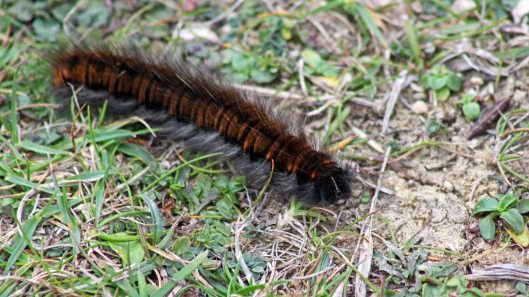
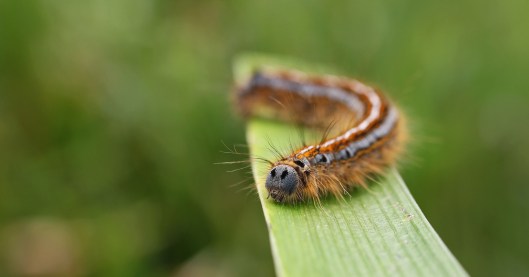
Perhaps that should really be MUNCH of the caterpillars because these little creatures are really the ultimate food processors. They eat ravenously, they ingest determinedly, they process interminably, and, yes, they pooh prodigiously. What a life!

170620 Oak eggar larva (1)

They can be covered in bristles: watch these ones as people with sensitive skin often get a rash from touching them because they can contain chemicals to deter predators from eating them. They can be dull to blend in with the vegetation on their favourite food plant. They can be patterned in startling colours and patterns, again as a warning to predators – ‘Don’t eat me!’

170620 Oak eggar larva (3)
170620 Yellow-tail larva (3)

These particular caterpillars are the larvae of two moths and one butterfly. The hairy ones are the moths, Oak eggar (Lasiocampa quercus) and Yellow-tail (Euproctis similis), and the spiky black one with white dots is the rather surprisingly coloured caterpillar of the Peacock butterfly (Aglais io).

170620 Oak eggar larva (2)
170620 Peacock caterpillars (1)
170620 Peacock caterpillars (2)
170620 Yellow-tail larva (1)
170620 Yellow-tail larva (2)
Like Loading...

Moths of Kenfig

11 Sunday Jun 2017

Posted by sconzani in insects, nature

≈ 5 Comments

Tags

Beautiful china-mark, British moths, Burnet, Cinnabar, Grass rivulet, Kenfig National Nature Reserve, Lackey, moth, moths, Oak eggar, Small china-mark, Straw dot, Yellow-tail

As the butterflies are still enjoying their summer holidays, I have some moths and soon-to-be moths for you. These were all seen at Wales’s stunning coastal national nature reserve at Kenfig last weekend.

170611 Beautiful china-mark
170611 Burnet
170611 Cinnabar

We have, from left:
Beautiful china-mark (Nymphula nitidulata): It was no surprise to find this near Kenfig pool as its larvae are aquatic.
Burnet: (Zygaena sp.): Not sure which of the Burnet moths this will become as the only difference in the caterpillars is the length of their hairs and I didn’t measure these.
Cinnabar (Tyria jacobaeae): The ‘Jacobaeae’ epithet comes from its larval foodplant, Senecio jacobaea, aka Common ragwort.

170611 Grass rivulet
170611 Lackey
170611 Oak eggar

Grass rivulet (Perizoma albulata): As well as loving grasslands, these little beauties also love a nice sandy beach.
Lackey (Malacosoma neustria): We’ve had these before if you remember (Lackey me).
Oak eggar (Lasiocampa quercus): Don’t go searching around oak trees for this one: its name comes from the acorn-like shape of its cocoon.

170611 Small China-mark
170611 Straw dot
170611 Yellow-tail

Small china-mark (Cataclysta lemnata): Apparently, they don’t often open their wings to show the underwing markings. I got lucky!
Straw dot (Rivula sericealis): Straw coloured with a dot on each wing. I think I might actually remember this one.
Yellow-tail (Euproctis similis): I have yet to see the moth but it seems the female has a yellow tuft of hairs on her bottom.

Like Loading...

Hilary’s moths

06 Tuesday Jun 2017

Posted by sconzani in insects, nature

≈ 9 Comments

Tags

Bright-line Brown-eye, British moth, Buff ermine, Garden Grass-veneer, Ingrailed clay, moth, moths, The Spectacle

When I arrived at my friend Hilary’s house early Saturday morning, to hitch a ride to our monthly fungi foray, she had a wonderful surprise for me. She had put her moth trap out the previous night and had kept the moths for me to have a look at before she released them. (In case you’re wondering, trapping is really the only way to record and monitor the moth population, and it’s done in a way that usually causes no harm to the moths.) Here are some of the beauties I saw …

170606 Agriphila geniculea

One of the Crambidae or grass moths, the Garden Grass-veneer (Chrysoteuchia culmella)

170606 Buff ermine

I blogged about the White ermine recently – this is its cousin the Buff ermine (Spilosoma lutea).

170606 Heart and Dart (1)
170606 Heart and Dart (2)

Heart & Dart (Agrotis exclamationis), named for the heart- and dart-shaped markings on its wings.

170606 Ingrailed clay (1)
170606 Ingrailed clay (2)

Ingrailed clay (Diarsia mendica). Its name is a mystery but its caterpillars live on brambles and bilberries.

170606 Bright-line brown-eye

Bright-line Brown-eye (Lacanobia oleracea). Don’t you just love the common names of moths?

170606 Spectacle (1)
170606 Spectacle (2)

And, last but certainly not least, this amazing creature, for fairly obvious reasons, is called The Spectacle (Abrostola tripartita).

Like Loading...
← Older posts
Newer posts →

About me

sconzani

sconzani

I'm a writer and photographer; researcher and blogger; birder and nature lover; countryside rambler and city strider; volunteer and biodiversity recorder.

View Full Profile →

Follow earthstar on WordPress.com

Enter your email address to follow this blog and receive notifications of new posts by email.

Recent blog posts

  • City Hall Peregrine January 12, 2026
  • Blackthorn in bloom January 11, 2026
  • Weevil: Mecinus pyraster January 10, 2026
  • Red in beak and claw January 9, 2026
  • Who’s watching who? January 8, 2026

From the archives

COPYRIGHT

Unless otherwise acknowledged, the text and photographs on this blog are my own and are subject to international copyright. Nothing may be downloaded or copied without my permission.

Fellow Earth Stars!

  • Unknown's avatar
  • Unknown's avatar
  • Unknown's avatar
  • Unknown's avatar
  • Unknown's avatar
  • Unknown's avatar
  • Unknown's avatar
  • Unknown's avatar
  • Unknown's avatar
  • Unknown's avatar
  • Unknown's avatar
  • Unknown's avatar
  • Unknown's avatar
  • Unknown's avatar
  • Unknown's avatar
  • Unknown's avatar
  • Unknown's avatar
  • Unknown's avatar
  • Unknown's avatar
  • Unknown's avatar
  • Unknown's avatar
  • Unknown's avatar
  • Unknown's avatar
  • Unknown's avatar
  • Unknown's avatar
  • Unknown's avatar
  • Unknown's avatar
  • Unknown's avatar
  • Unknown's avatar
  • Unknown's avatar
  • Unknown's avatar
  • Unknown's avatar
  • Unknown's avatar
  • Unknown's avatar
  • Unknown's avatar
  • Unknown's avatar
  • Unknown's avatar
  • Unknown's avatar
  • Unknown's avatar
  • Unknown's avatar
  • Unknown's avatar
  • Unknown's avatar
  • Unknown's avatar
  • Unknown's avatar
  • Unknown's avatar
  • Unknown's avatar
  • Unknown's avatar
  • Unknown's avatar
  • Unknown's avatar
  • Unknown's avatar

Blog at WordPress.com.

Privacy & Cookies: This site uses cookies. By continuing to use this website, you agree to their use.
To find out more, including how to control cookies, see here: Cookie Policy
  • Subscribe Subscribed
    • earthstar
    • Join 669 other subscribers
    • Already have a WordPress.com account? Log in now.
    • earthstar
    • Subscribe Subscribed
    • Sign up
    • Log in
    • Report this content
    • View site in Reader
    • Manage subscriptions
    • Collapse this bar
 

Loading Comments...
 

You must be logged in to post a comment.

    %d