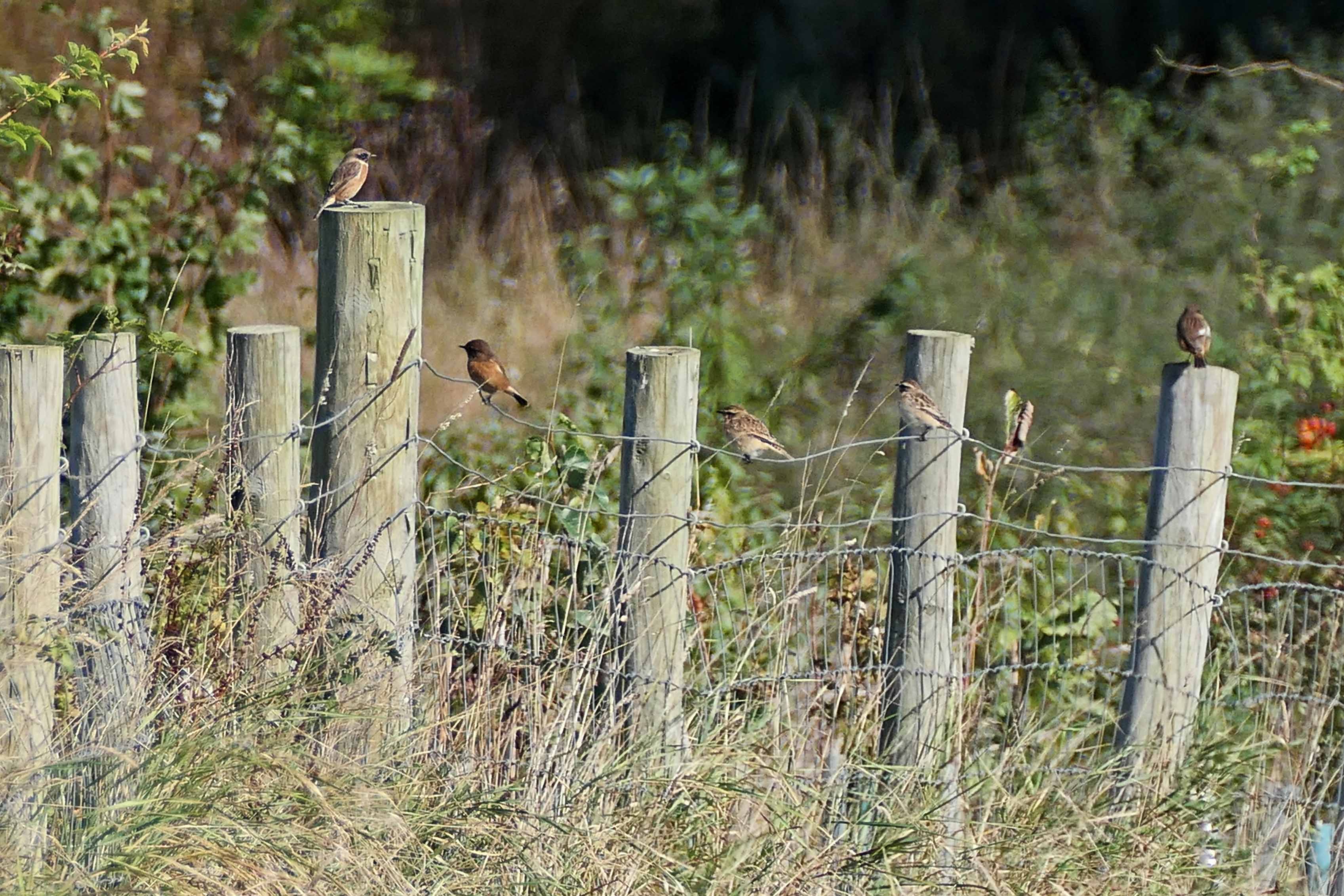
With its all-star lineup of migrating birds – three Stonechats and two Whinchats, this simply has to be my favourite kind of fence!

21 Saturday Sep 2024
With its all-star lineup of migrating birds – three Stonechats and two Whinchats, this simply has to be my favourite kind of fence!
02 Wednesday Aug 2023
Posted in birds
We humans may be hoping for a bit more warm weather now that August is here but the birds seem to have decided that summer is over. First up last Wednesday, 26 July, our local expert birder found the first migrating bird of the season, a juvenile Redstart, at Cosmeston Lakes Country Park. And when I went for a look (found it but my photo was poor), I also found a juvenile Stonechat in the same area.

And then on Friday, 28 July, I made my own first discovery of the migration season, also at Cosmeston, of a juvenile Whinchat that had begun its journey south. (Later in the day, the same local expert birder who found the Redstart found a second Whinchat, an adult this time.) Enjoy the last of the summer while you can because autumn is definitely in the wind.
07 Wednesday Sep 2022
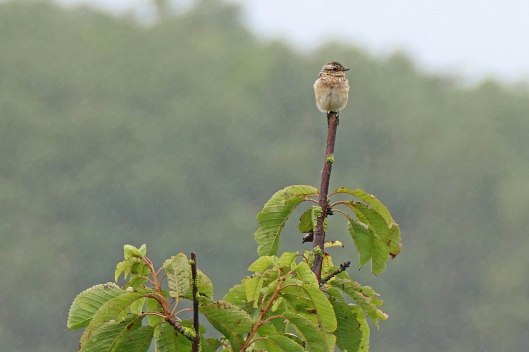
Thanks to my fellow local birders who found first one (first sighting to Graham), then two (Mat spotted the second), and then a third (Ian got all three, and was trying very hard to turn a Reed bunting into a fourth), I managed to get all my Whinchats in a row during Sunday morning’s walk.

These weren’t my first Whinchats of the autumn – they were the sixth, seventh and eighth, but this might well be the first time I’ve seen three together. And every single one is a little gem!

24 Monday Aug 2020
Tags
autumn migration, bird migration, birding, birdwatching, British birds, Clep yr eithin, Cosmeston Lakes Country Park, Crec yr eithin, Saxicola rubetra, Whinchat
The scientific name for the Whinchat is Saxicola rubetra which, apparently, means ‘small rock-dweller’, a reference to where this delightful little bird likes to make its home: saxicola is from the Latin saxum, meaning ‘rock’, and incola, meaning ‘dwelling’, and, also Latin, rubetra means ‘a small bird’.
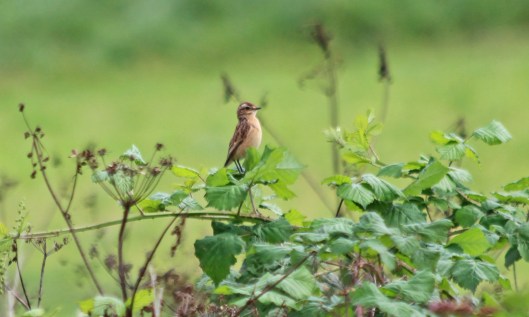
In Welsh, the Whinchat is Crec yr eithin or sometimes Clep yr eithin, eithin being the Welsh word for gorse (also known as furze or whin), where the bird is often seen perching; and crec and clep both meaning clap, a reference to the bird’s call.

Here in south Wales, the Whinchat is a passage migrant, meaning I only get the chance to see it locally in autumn – it passes through in spring as well, of course, but, as it’s then in a hurry to reach its breeding grounds, it usually just flies straight over. Both the gorgeous little Whinchats in my photos stopped over at Cosmeston Lakes Country Park last week, feeding up before they set out on their long migration flight south, crossing the English Channel, western Europe, the Med, North Africa, and finally the Sahara Desert before arriving at their wintering grounds in central and southern Africa.
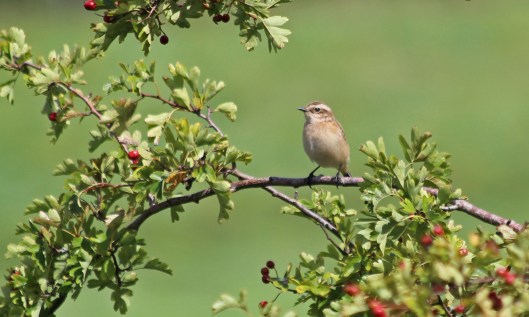
According to the RSPB website, Whinchat numbers in Britain declined more than 50% between 1995 and 2008, though the reason for that decline is not known. I imagine the hazards of their long migratory flight might well have something to do with it. Safe journey, little Whinchats!
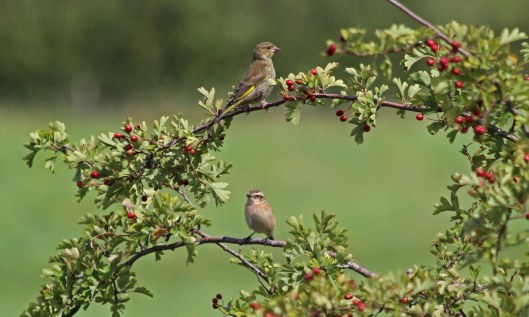
I love this photo with the Greenfinch – just shows how small the Whinchat really is.
08 Saturday Sep 2018
Tags
autumn migration, bird migration, birding, birdwatching, British birds, Cosmeston, Cosmeston Lakes Country Park, migrating birds, Saxicola rubetra, Whinchat

One of the highlights of this week at Cosmeston Lakes Country Park has been watching the party of three Whinchats that have stopped off to feed up prior to their migration to central and southern Africa. I think they’re a family group because this one appears still to have the plumage of a juvenile.

Another (below) is still part way through the moulting process. I read recently that birds don’t usually migrate until after their moult is complete, as the lack of all their proper flight feathers, in particular, can affect their ability to fly long distances. Perhaps that’s another reason why they’ve broken their journey at Cosmeston.

This is the third Whinchat, or Saxicola rubetra, to give it its scientific name.

Their common name, as with many birds, reflects their behaviour – whin is another word for gorse, as these little birds are commonly found amongst gorse and bracken and areas of low shrubs and bushes. Chat relates to their call, which combines the sound of two stones being tapped together with a series of melodic whistles.

01 Saturday Sep 2018
Tags
autumn migration, birding, birdwatching, British birds, Chiffchaff, Cosmeston, Cosmeston Lakes Country Park, migrating birds, Pied plycatcher, Redstart, Wheatear, Whinchat, Whitethroat, Willow warbler
My local country park, Cosmeston Lakes, has been awash with migrating birds this past week. And it’s not just me getting better at finding them – according to birders who’ve been checking the area much longer than I’ve lived nearby, this has been a bumper year for sightings.
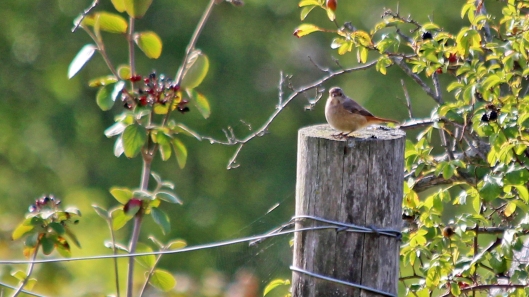
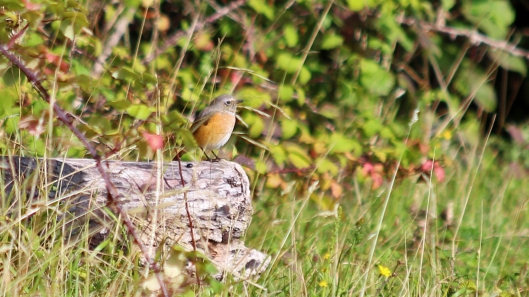
On 24 August I found two Redstarts, a male and another that may have been a female or an immature bird that hadn’t yet developed its full adult colouration.
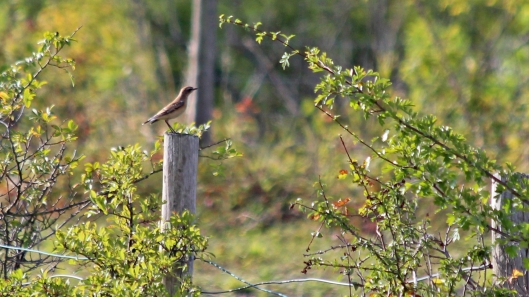
Also on the 24th I had a very fleeting view of a Wheatear that popped up from grass to fencepost, then was off in the blink of an eye.

On the 27th my birding friend Della texted me to say she’d found a Whinchat. That was the fastest I’d ever walked to Cosmeston and, luckily, the bird waited for me – and, in fact, stayed around most of the week so I saw it several times.
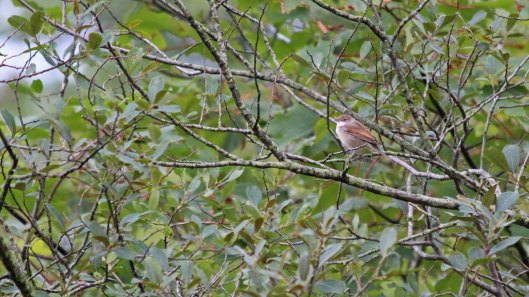
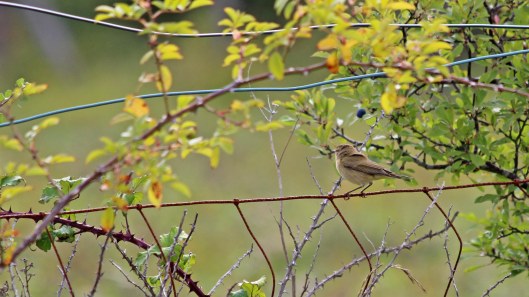
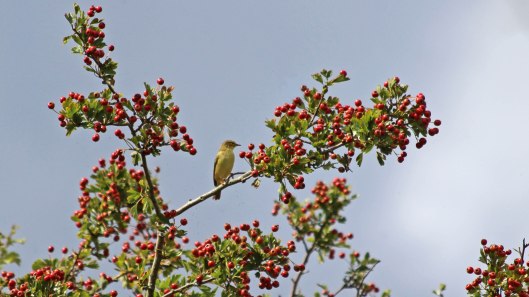
During my frequent visits to Cossie this week, I’ve seen ones and twos of Whitethroat and Chiffchaff, and tens of Willow warblers. These are the ones I spotted on the 30th.
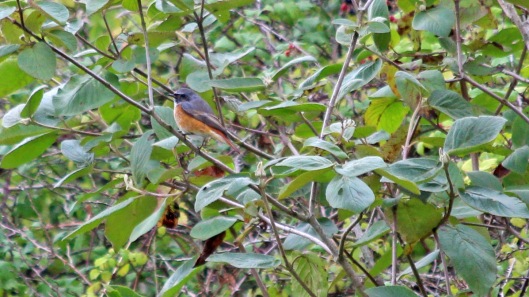
Also on 30 August, I spotted another Redstart and, from the dark head colours, I could tell this one was definitely a male.
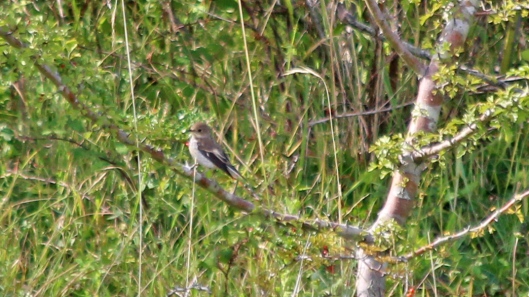
The week ended with a bang! My birding friend, Graham, let me know that he’d seen a Pied flycatcher with a small group of Spotted flycatchers, a most unusual visitor. Luckily, I was on the coastal path heading homeward so was able to divert towards Cosmeston and, with Graham’s help, got distant views of this beautiful little bird catching flies along the tree line. What a stunning week it has been!
26 Saturday May 2018
Tags
birding, birdwatching, British birds, Broad-bodied Chaser, Cockchafer, Common heath moth, Glamorgan Bird Club, Meadow pipit, Skylark, Small heath butterfly, St David's Vale, Stonechat, Tree pipit, Whinchat, Willow warbler
I might also have called this blog post ‘One hundred and eighty!’. Let me explain …
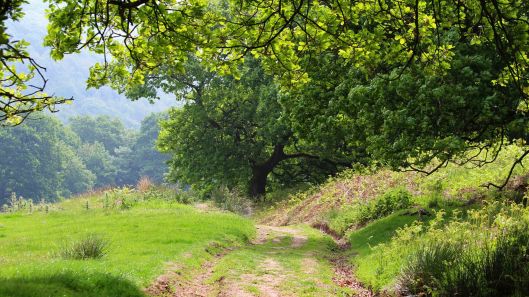
Last Wednesday I joined fourteen other members of the Glamorgan Bird Club for a day’s birding in the stunning scenery of St David’s Vale, near Abergavenny. We walked part of an ancient hollow way …
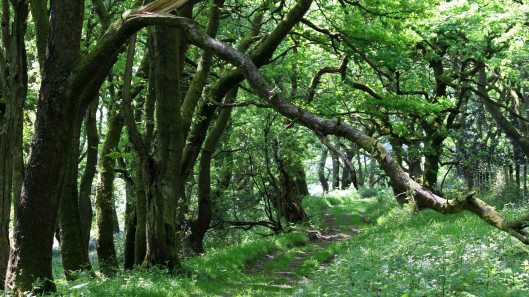
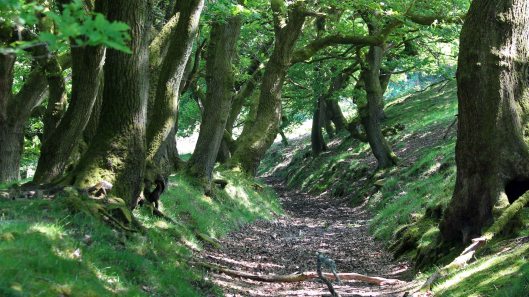
Beneath mighty oaks in an equally ancient woodland carpeted with bluebells …
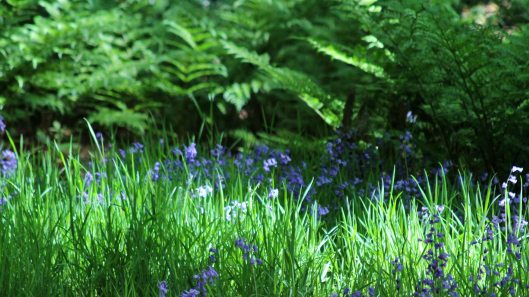
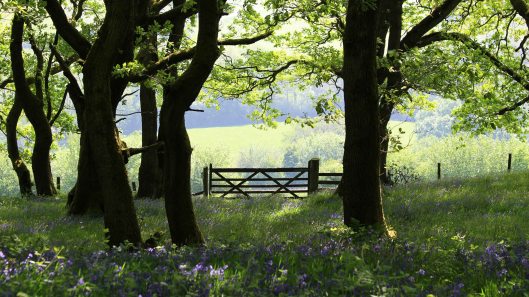
And then, as the sun broke through the low cloud that had earlier floated across the border from England, we climbed up on to the broad open moorland, with panoramic views all around and the impressive peak of Sugarloaf looming to our right.
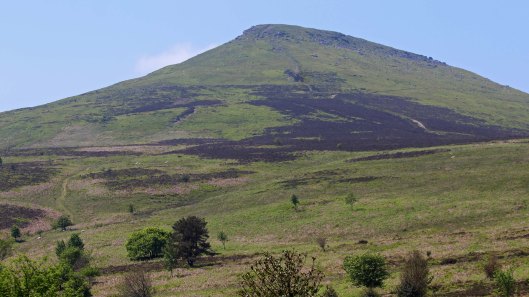
Most of the birds mocked my photographic skills and no-so-long lens as they perched on distant tree tops and bushes but I was delighted to hear and then see my very first Wood warbler, and then, on the moorland, several beautiful Whinchats. And those two sightings brought my year list to – yes, you guessed it – one hundred and eighty!


Our keen amateur naturalists also spotted a Small heath butterfly and two Common heath moths (this is the male; the female landed on my trouser leg so another birder got that picture), and a Broad-bodied chaser dragonfly. And we were entertained by the bumbling flights of several Cockchafers (I’ll cover those in a future post.)


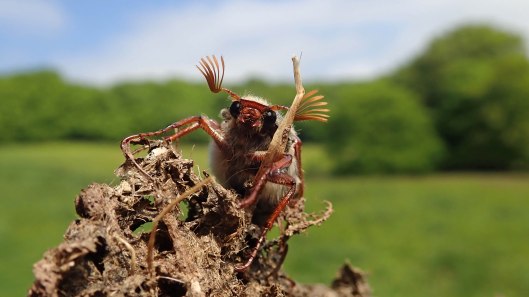
Cockchafer
My bird list for the today was: Mistlethrush, Robin, Goldfinch, Blackbird, Great tit, Carrion crow, Meadow pipit, Willow warbler, Swallow, Woodpigeon, Blue tit, Blackcap, Skylark, Buzzard, Chaffinch, Garden warbler, Long-tailed tit, Wood warbler, Stonechat, Raven, Tree pipit, Linnet, Whinchat, Wren, Cuckoo, House sparrow, Pied wagtail, Dunnock, Magpie and Jackdaw. It was a perfectly wonderful day!
 earthstar
You must be logged in to post a comment.