• ABOUT
  • BIRDING 2018
  • Birding 2019
  • BLOG POSTS
  • Butterflies 2018
  • Resources

earthstar

~ a celebration of nature

earthstar

Monthly Archives: May 2017

Good things come in small packages

11 Thursday May 2017

Posted by sconzani in insects, nature, spring

≈ Leave a comment

Tags

gorse, gorse flower, Gorse shieldbug, Gorse shieldbug eggs, insect eggs, Piezodorus lituratus, shieldbug

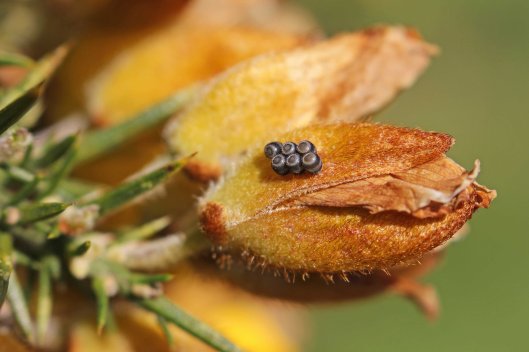
They say ‘Good things come in small packages’ and you couldn’t get much smaller than these tiny packages, the eggs of the Gorse shieldbug (Piezodorus lituratus) sitting on a gorse flower in Lavernock Reserve. I’ll be heading back soon to try to find the hatchlings.

170511 Gorse shieldbug eggs

Like Loading...

Whistling a merry tune?

10 Wednesday May 2017

Posted by sconzani in birds, nature

≈ Leave a comment

Tags

Angkor Centre for Conservation of Biodiversity, Asian birds, birding, birds of Cambodia, birdwatching, Dendrocygna javanica, Lesser whistling duck, Siem Reap, whistling duck

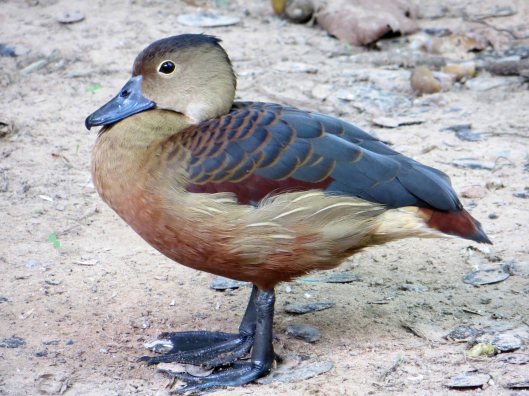
You might be forgiven for thinking that a bird with the name Lesser whistling duck (Dendrocygna javanica) could sing a merry tune but apparently its song is only a two-note wheezy call. Instead, and rather remarkably, its outermost primary wing feather has a rather unusual shape and is said to produce a prominent whistling sound when the bird is flying. As I only saw this duck looking rather drowsy and sitting perfectly still, I can neither confirm nor deny its musicality.

170510 Lesser whistling duck

Lesser whistling ducks can be found throughout the wetlands of Southeast Asia and lowland parts of the Indian subcontinent. I photographed this one in Cambodia, at the Angkor Centre for Conservation of Biodiversity about 60 kilometres outside Siem Reap. (You can read more about the conservation, rescue, rehabilitation and educational work of the ACCB here.)

Like Loading...

More from Merthyr Mawr

09 Tuesday May 2017

Posted by sconzani in insects, nature, wildflowers

≈ Leave a comment

Tags

biodiversity, biological diversity, Blood bee, Common Stork's-bill, Glamorgan Fungus Group, Green dock beetle, Merthyr Mawr National Nature Reserve, Micropterix calthella, Navelwort, Poplar leaf beetle, Red-headed Cardinal beetle

As I wrote yesterday, with very little fungi to be found our Glamorgan Fungus Group foray on Saturday developed into a more general nature ramble. I’m afraid I wasn’t writing down the names of all the various critters and plants we saw so I can’t identify everything in these photos but I can name some.

170509 (2) Pyrochroa serraticornis Red-headed Cardinal beetle
170509 (3) Centipede
170509 (4) Eggs of Gastrophysa viridula Green dock beetle
170509 (5) Micropterix calthella moths
170509 (6) Erodium cicutarium Common Stork's-bill
170509 (7) Two species of snails
170509 (8) Umbilicus rupestris Wall pennywort or Navelwort
170509 (9) Chrysomela populi Poplar leaf beetle
170509 (10) Sphecodes sp Blood bee

The first is a Red-headed cardinal beetle (Pyrochroa serraticornis), a very pretty beetle though this one wouldn’t keep still for me. The centipede was the same and I’m afraid I don’t remember its name, though I was told it’s not particularly common. It tickled! I think the little yellow dots are the eggs of the Green dock beetle (Gastrophysa viridula) as we saw a pair mating nearby. The tiny moths on the buttercup flower are Micropterix calthella. The plant with the pink flower is one I actually remembered from my botany walk on Thursday – a miracle! It’s Common Stork’s-bill (Erodium cicutarium). Then we have two different species of snail cosying up together. Once again, I was told the names but didn’t write them down and have forgotten (must do better next time!). This very pretty plant was a new one for me and it has two common names, so you might know it either as Wall pennywort or Navelwort (scientific name Umbilicus rupestris). Next is another beetle, this time a Poplar leaf beetle (Chrysomela populi). It was a gorgeous wee thing, with metallic green thorax and dark red body, almost like an oversized ladybird. And, last but not least, was this rather angry Blood bee (Sphecodes sp.). It was trying to lay its eggs in the holes of mining bees when it was netted and potted up for a quick close-up look.

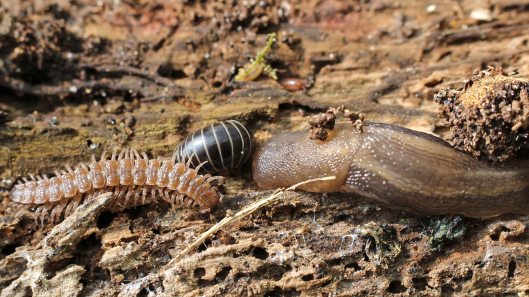
170509 (1) Millipede Pill bug Slug

My favourite moment of the day, though, was when I turned over this log. I particularly loved the little grouping of millipede, pill-bug and slug but these were only a few of the various creatures to be seen. It was just nice to see such biodiversity co-existing happily together. A lesson for us all, I think.

Like Loading...

Fungi foray: Merthyr Mawr

08 Monday May 2017

Posted by sconzani in fungi, nature, parks, spring, walks

≈ Leave a comment

Tags

Daedaleopsis confragosa, fungi enthusiasts, fungi foray, Glamorgan Fungus Group, Kuehneola uredinis, Melampsora epita var epitea, Melampsora populnea, Merthyr Mawr National Nature Reserve, Microbotryum silenes-dioicae, Mollisia, Phellinus hippophaeicola, Phylloporia ribis, rust fungi, Synchytrium taraxaci

Saturday dawned fine and mostly sunny, good news for most but not such good news for fungi enthusiasts, who are already bemoaning the recent lack of rain. Still, keen-eyed fungi fans can always find something and our Glamorgan Fungus Group has some of the keenest in ‘Eagle-eyes’ Emma. Though we were just a small group of six and a half, we enjoyed a splendid day searching the woodland areas of Merthyr Mawr National Nature Reserve, and our limited numbers were, in fact, a bonus, as we had amongst us the county recorder for Orthoptera (grasshoppers and related insects) and an experienced botanist, so we were able to enjoy, discuss and identify a broad range of flora and fauna. As expected, our fungi finds were limited but we finished the day with a very respectable total of 21 species and had a great time along the way.

Here are some of our finds: the rust Melampsora populnea on Dog’s mercury; another rust Kuehneola uredinis, on Bramble; Microbotryum silenes-dioicae, a smut that occurs on the anthers of Red campion flowers; another rust Melampsora epita var. epitea on Spindle; fungi enthusiasts inspecting the one group of cap fungi (‘real mushrooms’) found this day; the ‘real mushrooms’ that must remain unidentified as they were much eaten and turning gloopy; likely one of the Mollisia species of Disco fungi; Phellinus hippophaeicola on Sea buckthorn; Phylloporia ribis on Spindle; a rather old and faded Blushing bracket Daedaleopsis confragosa; a Puccinia species of rust on Common ragwort – this needs microscope work to positively ID; and the pimple-like growths of Dandelion wart Synchytrium taraxaci on one of the gazillions of Dandelion species, so Taraxacum officinale agg.

170508 (1) Melampsora populnea on Dog's mercury
170508 (2) Kuehneola uredinis on Bramble
170508 (3) Microbotryum silenes-dioicae Smut on Red campion
170508 (4) Melampsora epita var epitea on Spindle
170508 (5) Fungi enthusiasts
170508 (6) Unidentified fungus
170508 (7) Mollisia sp
170508 (8) Phellinus hippophaeicola on Sea buckthorn
170508 (9) Phylloporia ribis on Spindle
170508 (10) Daedaleopsis confragosa Blushing bracket
170508 (11) Puccinia sp on Common ragwort
170508 (12) Synchytrium taraxaci on Taraxacum officinale agg
Like Loading...

Botany 101: Status = scarce

07 Sunday May 2017

Posted by sconzani in nature, plants, seaside

≈ Leave a comment

Tags

Bota, British clovers, British coastal plants, British flora, British grasses, Bulbous Meadow-grass, Poa bulbosa, Scarce British flora, Suffocated clover, Trifolium suffocatum

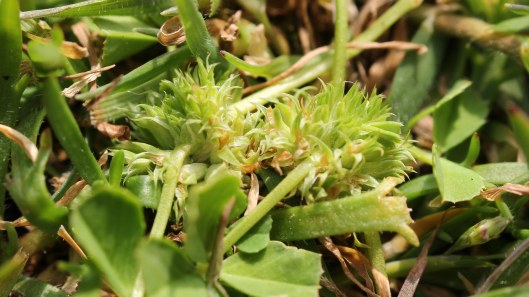
I would normally walk right over these tiny plants but, after my outing with my botany mentor on Thursday, I now know to look more closely at what’s growing under my feet. These two plants may not look like much but they are nationally scarce and just as fascinating as the more colourful and showy flowering plants that most easily catch our eye.
170507 Trifolium suffocatum Suffocated clover (1)

Trifolium suffocatum Suffocated clover
Suffocated seems an apt name for this little beauty, surrounded and almost overpowered as it was by the species-rich grassland in which it was living. Luckily, it seems to thrive on a good stomping by humans, in places like picnic sites and car parks, as this was growing in a much-trampled area of the south Wales coastline. Luckily, too, we visited at the right time, as this little clover does not hang around long: its seeds usually germinate in the autumn, it flowers between March and May, and then ‘disintegrates’, according to the Online Atlas of British and Irish Flora. The flowers, which are white and tiny, are contained in the burr-like clusters you can see in the photo above.

Poa bulbosa Bulbous Meadow-grass
The exceedingly dry April weather meant we didn’t get to see this second scarce plant at its best: though we counted 27 flower heads, the plants themselves had mostly dried up, though you can still see the bulbous bases that give it its name. Though it’s called a meadow grass, it actually seems to prefer rather infertile sandy soils, living, according to the Atlas, in ‘open sparse grassland’ and even ‘on bare sand in dune systems’. We found ours in a car park adjacent to a beach and dune systems but it wasn’t actually growing in those dunes.

170507 Poa bulbosa Bulbous Meadow-grass (1)
170507 Poa bulbosa Bulbous Meadow-grass (2)

Though this grass can spread through the wind blowing the bulbs around, the plants that live in south Wales are also all viviparous: the flowers are ‘replaced by tiny plantlets which are capable of rooting and becoming established as individual plants’. I thought the flower heads (inflorescences) were particularly lovely with their shades of purple, green and cream.

Like Loading...

Botany 101: sore knees and sniffy nose

06 Saturday May 2017

Posted by sconzani in nature, plants, wildflowers

≈ 7 Comments

Tags

botanists' knees, botany mentee, botany mentorship, British coastal plants, British flora, learning botany

You’ll recall I blogged recently about my first outing as a botany mentee. Well, on Thursday I took my second tentative step on the road to learning more about the incredible variety of plants that surround us. This time it was just me and my mentor Julian, though we were joined by another enthusiast David for the morning part of our jaunt. This time also I was better prepared, with a notebook to write down plant names and, though I somehow managed to lose my pen around lunchtime, I’m proud to say I remembered the names of all but one of the afternoon’s plant finds.

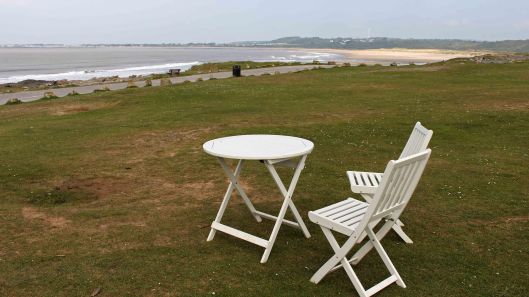
170506 Ogmore-by-sea

The ‘grass’, the view and a nice spot for morning tea

One thing I hadn’t expected was a condition I will describe as botanists’ knees. The plants we spent the morning looking for and at, in a ‘grassy’ area on the south Wales coast (I now know ‘grassy’ is a hopelessly inadequate adjective to describe the incredible number of plants growing in those areas I would once have called grass), were never more than an inch or two high so we spent most of the morning on hands and knees, bums in the air. One further unexpected result of that was full sinuses (and the accompanying drippy nose), though perhaps there was an element of hay fever in the mix as well – with my poor eyesight the easiest way to see the finer details of some plants was to take my specs off and get my face within an inch or two of the plants, so I’m sure I breathed in plenty of pollen and dust in the process.

170506 Anthyllis vulneraria Kidney vetch Newton
170506 Arenaria serpyllifolia Thyme-leaved sandwort
170506 Erodium cicutarium Common stork's-bill

After lunching on a nearby river bank (a couple of specialist plants there too), Julian and I headed to another coastal site nearby, to inspect a car park – it has a rare grass – and to wander amongst some large sand dunes. I’ll blog separately about a couple of the special plants we saw but here is a selection of the more common but no less lovely: (above) Anthyllis vulneraria Kidney vetch, Arenaria serpyllifolia Thyme-leaved sandwort, Erodium cicutarium Common stork’s-bill, (below) Medicago lupulina Black medic, Polygala vulgaris Milkwort, and Sherardia arvensis Field madder. Needless to say, in spite of my sore knees and sniffy nose, I enjoyed the day immensely.

170506 Medicago lupulina Black medic
170506 Polygala vulgaris Milkwort Newton
170506 Sherardia arvensis Field madder
Like Loading...

Early purple orchid

05 Friday May 2017

Posted by sconzani in flowers, nature, spring, wildflowers

≈ Leave a comment

Tags

Early purple orchid, Native British orchid, native orchids, Orchis mascula

170505 Early purple orchid (1)

This does what it says on the tin: The Early purple orchid (Orchis mascula) is one of the 56 species of native orchid to be found in Britain, it flowers early in spring and is usually the first orchid to flower each year, and it’s a magnificently imperial shade of purple.

170505 Early purple orchid (2)
170505 Early purple orchid (3)
Like Loading...

Hawthorn: did you know … ?

04 Thursday May 2017

Posted by sconzani in flowers, nature, spring, trees

≈ 6 Comments

Tags

Crataegus monogyna, Hawthorn, Hawthorn wood, May-tree, uses for hawthorn berries

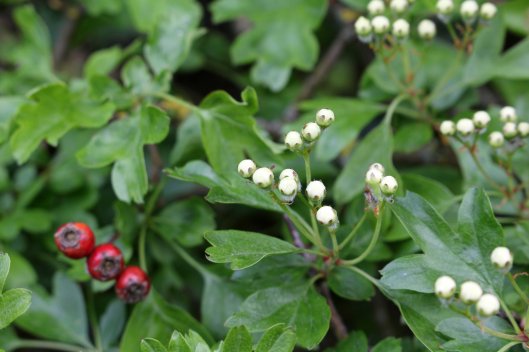
170504 Hawthorn (3)

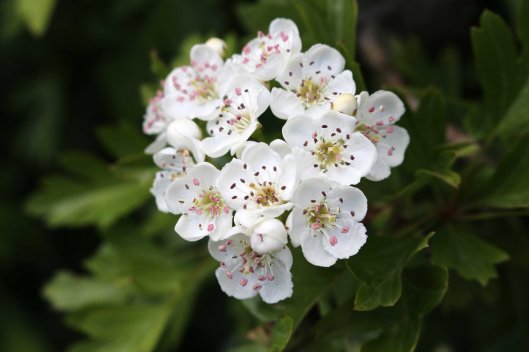
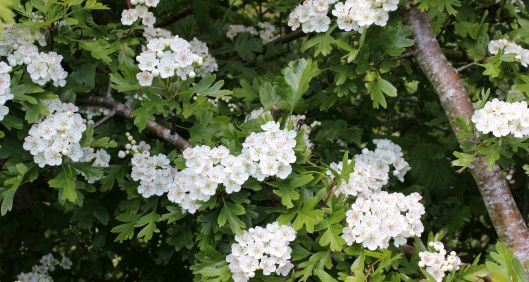
>   Hawthorn’s scientific name is Crataegus monogyna. Crataegus comes from the Greek kratos, meaning strength, and akis, meaning sharp, and monogyna is derived from mono, meaning one or single, and gyna, meaning seed or ovary.
>   Hawthorn is also known as the May-tree, Mayblossom and Maythorn, not surprisingly because it usually flowers during May. It is the only British plant named after the month in which it blooms.

170504 Hawthorn (4)
170504 Hawthorn (1)

>   The Hawthorn’s white flowers can be either male or female. You can tell the male flowers by their pink-tipped stamens.
>   Hawthorn’s red berries, the haws, not only serve as food for birds, particularly the thrushes, they can also be used to make jams and jellies and wine.
>   The Hawthorn provides food for more than 150 different species of insect, like the hawthorn shield bug, the common earwig and common flower bug, bumblebees and cockchafers, to name just a few.

170504 Hawthorn (5)

>   Due to its dense growth and long thorns, Hawthorn has served as the perfect impenetrable hedge for thousands of years. Individual trees can live for 400 years or more.
>   In years gone by, the wood of the Hawthorn, because it has a very fine grain and is very hard, was used for making things like tool handles and engravers’ blocks. The root wood was also used to make combs and small boxes.

170504 Hawthorn (2)

Like Loading...

Praying or preying?

03 Wednesday May 2017

Posted by sconzani in insects, nature

≈ 2 Comments

Tags

#WorldWildlifeWednesday, insects, Mantids, Praying mantis, Praying mantis Cambodia, Praying mantis New Zealand, Preying mantis

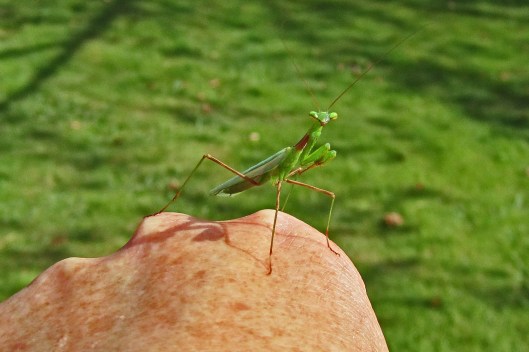
The correct name for this insect is Praying mantis (or, in fact, Praying mantid as my photos were taken in New Zealand (above) and Cambodia (below) and I’m not sure which species these are), the word ‘praying’ coming from its stance – with its large front legs bent and resting together, the insect looks like it’s praying. However, the word ‘preying’ seems equally appropriate for the mantis as it’s a formidable hunter.

170503 Praying mantis New Zealand

Mantids are masters of camouflage and use this ability to change their colouration to blend in with their surroundings, partly as a way to avoid being eaten by their predators but also, as they are mostly ambush predators themselves, as a way to more easily capture their own victims. They are also masters of the rapid pounce and their diet includes living insects like flies and aphids, crickets, moths, grasshoppers and even cockroaches.

170503 Praying mantis Cambodia

But wait, there’s more. The Praying mantis can also be cannibalistic. When food is scarce, they will eat their own kind, though male mantids are most at risk from the females at mating time. It seems hungry females have a tendency to eat their mates if the males don’t dismount and run away as rapidly as possible after copulation.

Like Loading...

Bishy-barnabee & Co

02 Tuesday May 2017

Posted by sconzani in insects, ladybird, nature

≈ 3 Comments

Tags

14-spot ladybird, 18-spot ladybird, 22-spot ladybird, 7-spot ladybird, Bishy-barnabee, harlequin ladybird, ladybird, Orange ladybird, Robert Macfarlane, vernacular names for ladybird

If you’re on Twitter and follow one of my favourite authors, Robert Macfarlane, you’ll know that he tweets a ‘word of the day’. Yesterday’s was ‘Bishy-barnabee’, a vernacular name for the ladybird used by folk who live in the English county of Norfolk. I adore these common names – they are often old, come from a time when folk paid more attention to the natural world, observing the habits and customs of the creatures around them, or they named creatures after concepts and ideas that were important to them. Macfarlane listed other ladybird names too: cushcow, goldie-bird, red-sodger, and kingcollawa. In Fauna Britannica, Stefan Buczacki lists even more: as well as bishie barni-bee, he has bishop barnabee, bishop is burning, bishop that burneth (all from Norfolk); clock-o’clay and cow lady (from Yorkshire); God Almighty’s cow, God’s little cow and King Galowa (from Scotland); and ladycow, lady fly, lady lanners, Mary gold and sodger (from Northumberland). I’m sure there are many many more.
Here is a selection of the Bishy-barnabees I have photographed (using the mostly numerical descriptions we more commonly use these days: two 7-spots, a 14-spot, an 18-spot, a 22-spot, 3 Harlequins and an Orange).

170501 ladybird 7-spot (1)
170501 ladybird 7-spot (2)
170501 ladybird 14-spot
170501 ladybird 18-spot
170501 ladybird 22-spot
170501 ladybird Harlequin (1)
170501 ladybird Harlequin (2)
170501 ladybird Harlequin (3)
170501 ladybird Orange
Like Loading...
← Older posts
Newer posts →

About me

sconzani

sconzani

I'm a writer and photographer; researcher and blogger; birder and nature lover; countryside rambler and city strider; volunteer and biodiversity recorder.

View Full Profile →

Follow earthstar on WordPress.com

Enter your email address to follow this blog and receive notifications of new posts by email.

Recent blog posts

  • Bearded tit!!! April 3, 2026
  • A Portland Bill Kestrel April 2, 2026
  • A proliferation of Peacocks April 1, 2026
  • Little owl March 31, 2026
  • Distant seabirds March 30, 2026

From the archives

COPYRIGHT

Unless otherwise acknowledged, the text and photographs on this blog are my own and are subject to international copyright. Nothing may be downloaded or copied without my permission.

Fellow Earth Stars!

  • Unknown's avatar
  • Unknown's avatar
  • Unknown's avatar
  • Unknown's avatar
  • Unknown's avatar
  • Unknown's avatar
  • Unknown's avatar
  • Unknown's avatar
  • Unknown's avatar
  • Unknown's avatar
  • Unknown's avatar
  • Unknown's avatar
  • Unknown's avatar
  • Unknown's avatar
  • Unknown's avatar
  • Unknown's avatar
  • Unknown's avatar
  • Unknown's avatar
  • Unknown's avatar
  • Unknown's avatar
  • Unknown's avatar
  • Unknown's avatar
  • Unknown's avatar
  • Unknown's avatar
  • Unknown's avatar
  • Unknown's avatar
  • Unknown's avatar
  • Unknown's avatar
  • Unknown's avatar
  • Unknown's avatar
  • Unknown's avatar
  • Unknown's avatar
  • Unknown's avatar
  • Unknown's avatar
  • Unknown's avatar
  • Unknown's avatar
  • Unknown's avatar
  • Unknown's avatar
  • Unknown's avatar
  • Unknown's avatar
  • Unknown's avatar
  • Unknown's avatar
  • Unknown's avatar
  • Unknown's avatar
  • Unknown's avatar
  • Unknown's avatar
  • Unknown's avatar
  • Unknown's avatar
  • Unknown's avatar
  • Unknown's avatar

Blog at WordPress.com.

Privacy & Cookies: This site uses cookies. By continuing to use this website, you agree to their use.
To find out more, including how to control cookies, see here: Cookie Policy
  • Subscribe Subscribed
    • earthstar
    • Join 642 other subscribers
    • Already have a WordPress.com account? Log in now.
    • earthstar
    • Subscribe Subscribed
    • Sign up
    • Log in
    • Report this content
    • View site in Reader
    • Manage subscriptions
    • Collapse this bar
 

Loading Comments...
 

You must be logged in to post a comment.

    %d