• ABOUT
  • BIRDING 2018
  • Birding 2019
  • BLOG POSTS
  • Butterflies 2018
  • Resources

earthstar

~ a celebration of nature

earthstar

Monthly Archives: May 2017

Seaford Head wildlife walk

21 Sunday May 2017

Posted by sconzani in birds, coastal fauna, nature, plants, wildflowers

≈ Leave a comment

Tags

Brown-tail moth caterpillars, Fulmar, Green-winged orchid, Rock pipit, Rook, Seaford Head Nature Reserve, Seaford Head wildlife walk, Stonechat, Sussex Wildlife Trust, Thrift

One of the highlights of my recent short break in Sussex was a guided wildlife walk around Seaford Head, organised by the Sussex Wildlife Trust and led by knowledgeable and amusing local naturalist Michael Blencowe.

170521 1 Seaford Head walk

The day was very windy and scattered showers kept us clad in rain jackets until lunchtime but that didn’t spoil the walk. The scenery on this coast is magnificent and it’s one of my favourite places in the whole of Britain so, even if we’d not seen any wildlife, I would’ve been happy. As it was, we saw more than I expected, and our guide was a mine of funny stories and fascinating facts.

170521 2 Seaford Head Hound's-tongue
170521 3 Seaford Head Stonechat
170521 4 Seaford Head Fulmar
170521 5 Seaford Head group
170521 6 Seaford Head Rock pipit
170521 7 Seaford Head Flower
170521 8 Seaford Head Brown-tail moth
170521 9 Seaford Head Green-winged orchid
170521 10 Seaford Head Rook

Our flora and fauna sightings included many different plants in flower, like Green alkanet, Hound’s-tongue and Thrift; plus several Stonechats and Linnets, and Rock pipits and Rooks aplenty. We had Fulmars soaring up from the cliffs to the left of us and Skylarks serenading us high in the sky to the right. A grass snake was discovered snoozing under a sheet of corrugated iron, the webs of Brown-tail moth caterpillars adorned the bramble bushes, and Green-winged orchids provided striking bursts of colour in the rough alongside the local golf course. If you ever get the chance, I’d highly recommend this walk.
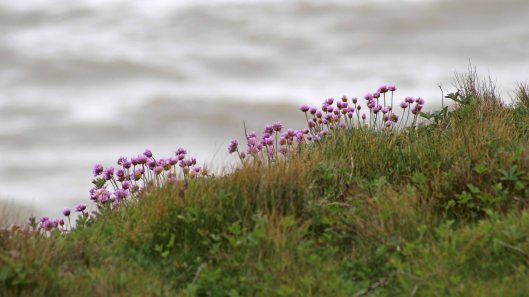
170521 11 Seaford Head Thrift

Like Loading...

The Russian who came in from the cold

20 Saturday May 2017

Posted by sconzani in birds, coastal fauna, nature

≈ Leave a comment

Tags

Anser albifrons, birding, birdwatching, Greylag goose, Rye Harbour Nature Reserve, White-fronted goose

That title sounds like something from a James Bond movie, sorry, but the sentiment is true enough. I’m referring to the White-fronted goose (Anser albifrons) I saw hanging out with a flock of Greylags during my recent visit to Rye Harbour Nature Reserve in Sussex (on the left in the photo below).
170520 White-fronted & Greylag geese (3)

The ‘white front’ in its name refers to the white patch on the front of its head around the beak and, as you can see, it’s quite a bit smaller than the Greylags, though its diet is similar: grass, clover, grain, wheat and potatoes.

170520 White-fronted & Greylag geese (2)
170520 White-fronted & Greylag geese (1)

These birds don’t breed in Britain but geese from two separate races frequently over-winter here; the birds with orange beaks breed in Greenland, and those with pink beaks, like the one I saw, breed in Siberia. The Greenland birds tend to over-winter in western Scotland and in Ireland, while the Greenland birds prefer southern England. They’re usually only seen from October through to March but the ranger said this one appeared with this flock of Greylags and has stayed on at the reserve with them. Maybe it doesn’t like the cold!

170520 Greylag geese

More Greylags flying in

Like Loading...

The phenomenal poppy

19 Friday May 2017

Posted by sconzani in flowers, nature, nature photography

≈ Leave a comment

Tags

#FloralFriday, poppy, poppy flower, Poppy seeds

170519 poppy

For Floral Friday this week, a most remarkable flower. Did you know
> a single poppy seed head contains 1000 seeds and each plant can have as many as 20 heads?
> of those 20,000 seeds as many as 85% (that’s 17,000) seeds will germinate if conditions are right?
> prior to farmers using chemical weedkillers, a one-acre cornfield could potentially have contained 100 million dormant seeds?

Facts garnered from Richard Mabey, Weeds: How vagabond plants gatecrashed and changed the way we think about nature (Profile Books, London, 2010), a most fascinating read.

Like Loading...

The grass is always greener

18 Thursday May 2017

Posted by sconzani in animals, nature, nature photography

≈ 2 Comments

Tags

sheep, sheep eating grass, sheep on South Downs, South Downs, Sussex sheep, The grass is always greener

170518 Sheep in Sussex (1)

… on the other side of the fence?
These sheep on the South Downs in Sussex certainly seem to think so.

170518 Sheep in Sussex (2)

Like Loading...

Royal Botanic Garden, Madrid

17 Wednesday May 2017

Posted by sconzani in flowers, insects, nature, parks

≈ 2 Comments

Tags

Madrid, Prado Museum, Royal Botanic Garden, Royal Botanic Garden Madrid

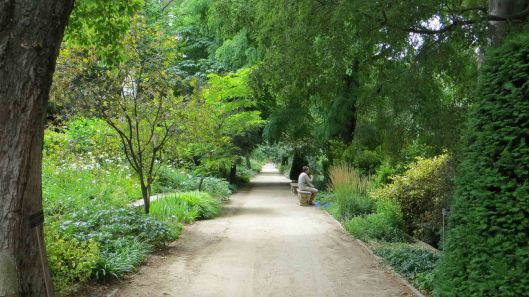
Three years ago I was fortunate to enjoy a short break in the Spanish city of Madrid – and what a beautiful city it is! One of the highlights for me (as well as the fact that King Felipe was kind enough to synchronise his coronation with my visit) was the time I spent wandering in the Royal Botanic Garden. It is situated right next to the incredible Prado Museum and is the perfect dessert to the museum’s main course of artistic masterpieces.

170517 Royal Botanic Garden Madrid (9)

Established by King Charles III in 1781, the Garden is not meant as a park but is rather a museum collection of live plants, a centre for research into historic plants and for the study of plant life, for the preservation of plant species and for the encouragement of the botanical sciences. It is also a feast for the senses!

170517 Royal Botanic Garden Madrid (1)
170517 Royal Botanic Garden Madrid (2)
170517 Royal Botanic Garden Madrid (3)
170517 Royal Botanic Garden Madrid (4)
170517 Royal Botanic Garden Madrid (5)
170517 Royal Botanic Garden Madrid (6)
170517 Royal Botanic Garden Madrid (7)
170517 Royal Botanic Garden Madrid (8)
Like Loading...

The awesome avocet

16 Tuesday May 2017

Posted by sconzani in birds, coastal fauna, nature

≈ 3 Comments

Tags

Avocet, Avocet chicks, Avocet in flight, birding, birdwatching, British birds, Recurvirostra avosetta, RSPB logo, Rye Harbour Nature Reserve

Awesome is a much overused word but I feel my use of it here is justified – I truly was in awe of these most beautiful birds, seen at the Rye Harbour Nature Reserve in East Sussex last Saturday.

170516 avocets (1)

The Avocet (Recurvirostra avosetta) is one of Britain’s conservation success stories, hence its use as a logo by the Royal Society for the Protection of Birds. After years of being killed for food and taxidermy and having its eggs robbed by collectors, the Avocet disappeared from its British breeding sites around 1842, and it wasn’t until 1947 that just four pairs were rediscovered breeding in Suffolk. Incredibly, this was, in part, due to the Second World War: damage from an exploding bomb had inadvertently recreated their ideal habitat of shallow ponds and muddy islands near the seaside at Havergate and, at Minsmere, where the coastal marshes had been flooded to prevent enemy troops invading, shallow ponds also formed when the marshes began to dry up.
170516 avocets (3)
170516 avocets (4)
170516 avocets (5)
170516 avocets (6)

Further breeding sites have now been created and protected (at Rye Harbour, with electric fences to deter predators like foxes and badgers) in suitable areas around Britain’s coastline, and the number of breeding pairs is estimated to be around 500. Long may their success continue!

170516 avocets (2)

Like Loading...

The Cuckoos of the bee world

15 Monday May 2017

Posted by sconzani in insects, nature

≈ Leave a comment

Tags

bees, Cuckoo, Cuckoo bees, Nomada bees, Nomada species

You’ve no doubt heard of the Cuckoo bird that lays its eggs in the nests of other birds to get them to do all the hard work of feeding and raising their chicks but have you heard of the Cuckoo bees? These are the Nomada species, a huge group of bees with over 850 species worldwide, though only about 30 of these can be found in Britain. Even so, it is extremely difficult to tell those 30 species apart so I’m not even going to attempt to identify those in my photos.

170509 Nomada sp Cuckoo bees (3)

As you may have guessed, these bees lay their eggs in the nests of other bee species, primarily the Andrena species. When they hatch, the Cuckoo bee larvae eat the eggs of their host and then consume the food the Andrena had gathered for their own young. It’s very cunning if rather nasty behaviour.

170509 Nomada sp Cuckoo bees (1)
170509 Nomada sp Cuckoo bees (5)
170509 Nomada sp Cuckoo bees (2)
170509 Nomada sp Cuckoo bees (4)
Like Loading...

Herb-Paris

14 Sunday May 2017

Posted by sconzani in nature, wildflowers

≈ Leave a comment

Tags

ancient woodland, British native plant, British wildflower, conservation of ancient woodlands, Herb-Paris, Paris quadrifolia

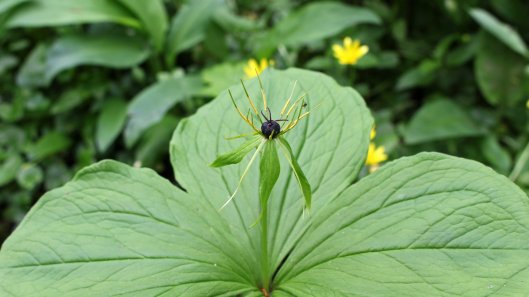
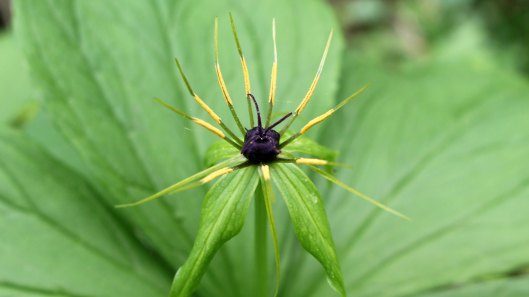
Paris quadrifolia is its scientific name and you’d think quadrifolia would mean this plant had four leaves but no one told the plant that! Herb-Paris, as it’s more commonly known, can actually have between 4 and 8 leaves. It’s not its leaves that Herb-Paris is most admired for though, it’s its stunning solitary flower, a true masterpiece of Nature.

170508 Herb-Paris (1)

Herb-Paris is a perennial plant and can be found in both cool and temperate areas of Europe. In Britain you’re most likely to find it in the damp shade of ancient woodlands on calcareous soils, though sadly it has declined significantly over the last century due to the destruction of many broad-leaved woodlands in favour of conifer plantations. As Herb-Paris has proven to be very slow at colonising replanted woodlands, the only hope for its survival is the conservation of those ancient woodlands that still exist.

170508 Herb-Paris (2)
170508 Herb-Paris (3)

Though all parts of this plant are considered poisonous, it was used in various ways in traditional medicine: it was considered to be an antidote for mercury and arsenic poisoning, its root was used as an emetic, and the juice of its berry as a treatment for inflammation of the eyes. I think I’ll stick to conventional medicine and leave this beautiful herb to be admired by all who are lucky enough to see it.

170508 Herb-Paris (4)

Like Loading...

A bumper day for butterflies, and a moth

13 Saturday May 2017

Posted by sconzani in insects, nature, parks

≈ Leave a comment

Tags

Aglais io, Brimstone, British butterflies, British moth, butterflies, butterfly, Common blue, Cyclophora annularia, Dingy Skipper, Erynnis tages, Gonepteryx rhamni, moth, Pararge aegeria, Peacock, Polyommatus icarus, Speckled wood, The Mocha

Blue skies, warm temperatures, wildflowers in bloom – what more could a butterfly want? Not much it seems as they were out in force at Cosmeston Lakes Country Park and I spent several happy hours following them around, trying to get photographs but also just intrigued by their flight patterns, the food plants they were choosing and their general behaviour. The Whites, large and small, eluded my lens, as did several Orange-tips and one Red Admiral but I did manage to snap these six.

170513 (1) Brimstone
170513 (2) Common blue
170513 (3) Peacock

The first is a Brimstone butterfly (Gonepteryx rhamni), not to be confused with the moth of the same name. I saw two flying together, land together and then the male heading purposefully towards the female. Turns out though that her spreading her wings and raising her abdomen in the air was not a ‘come hither’ signal but rather the opposite. She was indicating that she had already mated and was rebuffing the male. I saw several Common blues (Polyommatus icarus), also easily confused with other very similar small blue butterflies. They are so vibrant! And seeing a Peacock (Aglais io) is always a treat, though this one was looking a little battered.

170513 (4) Speckled wood
170513 (5) Dingy skipper
170513 (6) Mocha moth

Speckled woods (Pararge aegeria) seem to be the butterflies I see most often wherever I go but I love their pretty dappling of brown and cream. The next was a new one for me and I saw two of them – it’s a Dingy Skipper (Erynnis tages), a butterfly whose caterpillars feed on Bird’s-foot trefoil so it’s often found on the short impoverished grasslands of former coal tips, rubbish tips and quarries. I’ve just learnt that it’s called Dingy because ‘it loses scales alarmingly as it get older so looks, well, dingy’ (thanks, Steven). The last is not a butterfly but a moth and rather a special moth, The Mocha (Cyclophora annularia). This moth is nationally scarce but more frequent in the woodlands of southern Britain so I was well pleased with this sighting.

Like Loading...

Primrose x Cowslip = False Oxlip

12 Friday May 2017

Posted by sconzani in flowers, nature, wildflowers

≈ Leave a comment

Tags

British flora, British wildflowers, Cowslip, False oxlip, flora hybridisation, flower hybrids, primrose, Primula veris, Primula vulgaris, Primula vulgaris x veris = P. x polyantha


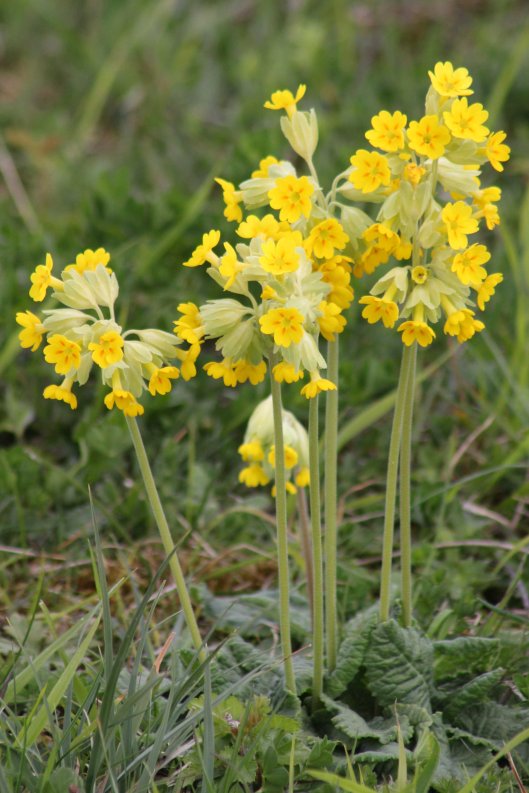
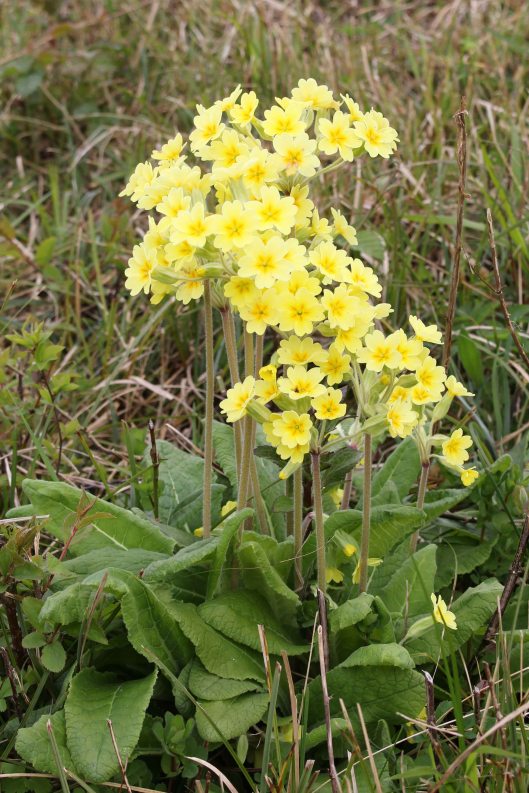
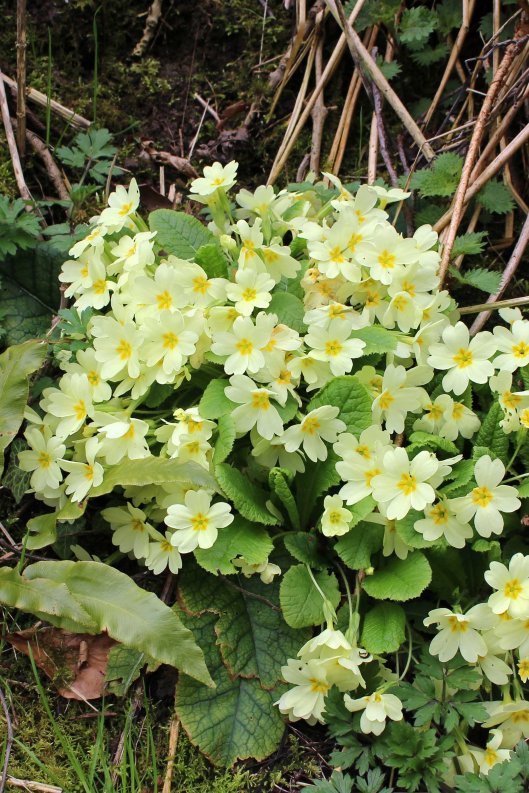
Where Primroses (Primula vulgaris) and Cowslips (Primula veris) grow in close proximity they will occasionally hybridise to produce the False Oxlip (Primula vulgaris x veris = P. x polyantha). Though this is not really clear from my images, the hybrid is usually a larger plant than the Cowslip, and I think it combines the prettiest traits of both parents to produce a real stunner!

170512 A Primrose
170512 B Cowslip
170512 C False oxlip
Like Loading...
← Older posts
Newer posts →

About me

sconzani

sconzani

I'm a writer and photographer; researcher and blogger; birder and nature lover; countryside rambler and city strider; volunteer and biodiversity recorder.

View Full Profile →

Follow earthstar on WordPress.com

Enter your email address to follow this blog and receive notifications of new posts by email.

Recent blog posts

  • Bearded tit!!! April 3, 2026
  • A Portland Bill Kestrel April 2, 2026
  • A proliferation of Peacocks April 1, 2026
  • Little owl March 31, 2026
  • Distant seabirds March 30, 2026

From the archives

COPYRIGHT

Unless otherwise acknowledged, the text and photographs on this blog are my own and are subject to international copyright. Nothing may be downloaded or copied without my permission.

Fellow Earth Stars!

  • Unknown's avatar
  • Unknown's avatar
  • Unknown's avatar
  • Unknown's avatar
  • Unknown's avatar
  • Unknown's avatar
  • Unknown's avatar
  • Unknown's avatar
  • Unknown's avatar
  • Unknown's avatar
  • Unknown's avatar
  • Unknown's avatar
  • Unknown's avatar
  • Unknown's avatar
  • Unknown's avatar
  • Unknown's avatar
  • Unknown's avatar
  • Unknown's avatar
  • Unknown's avatar
  • Unknown's avatar
  • Unknown's avatar
  • Unknown's avatar
  • Unknown's avatar
  • Unknown's avatar
  • Unknown's avatar
  • Unknown's avatar
  • Unknown's avatar
  • Unknown's avatar
  • Unknown's avatar
  • Unknown's avatar
  • Unknown's avatar
  • Unknown's avatar
  • Unknown's avatar
  • Unknown's avatar
  • Unknown's avatar
  • Unknown's avatar
  • Unknown's avatar
  • Unknown's avatar
  • Unknown's avatar
  • Unknown's avatar
  • Unknown's avatar
  • Unknown's avatar
  • Unknown's avatar
  • Unknown's avatar
  • Unknown's avatar
  • Unknown's avatar
  • Unknown's avatar
  • Unknown's avatar
  • Unknown's avatar
  • Unknown's avatar

Blog at WordPress.com.

Privacy & Cookies: This site uses cookies. By continuing to use this website, you agree to their use.
To find out more, including how to control cookies, see here: Cookie Policy
  • Subscribe Subscribed
    • earthstar
    • Join 642 other subscribers
    • Already have a WordPress.com account? Log in now.
    • earthstar
    • Subscribe Subscribed
    • Sign up
    • Log in
    • Report this content
    • View site in Reader
    • Manage subscriptions
    • Collapse this bar
 

Loading Comments...
 

You must be logged in to post a comment.

    %d