Topknot or tonsure or a bizarre combination of both? Teasel flowers never seem to flower throughout their length all at the same time. I wonder why that is.


14 Sunday Aug 2022
Posted in flowers, wildflowers
Topknot or tonsure or a bizarre combination of both? Teasel flowers never seem to flower throughout their length all at the same time. I wonder why that is.
13 Saturday Aug 2022
Posted in birds
Tags
birding, birdwatching, British birds, Cardiff Bay birding, Cardiff Bay Wetland Reserve, ducklings, Tufted duck, Tufted ducklings
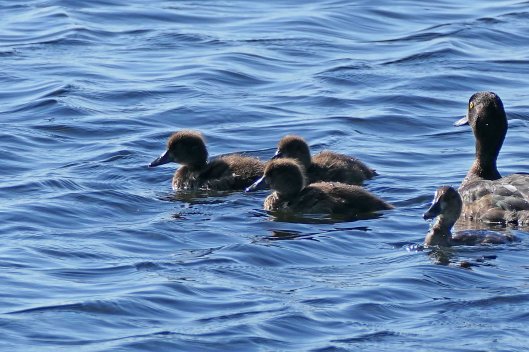
Once upon a time (22 July, to be precise) there were ten Tufted ducklings, tiny little fluff bundles following their mother as she ventured tentatively out from the reed beds at Cardiff Bay wetlands. Seventeen days and, presumably, many hungry gulls later, there were four Tufted ducklings. It’s a sad story but almost inevitable in this bird-rich wetland setting. The good news is that the remaining four should now be large enough to be safe from more hungry gulls. When young and at a distance, the ducklings looked black but now, seen more closely, they look a rich, chocolatey brown, and drop-dead gorgeous!
12 Friday Aug 2022
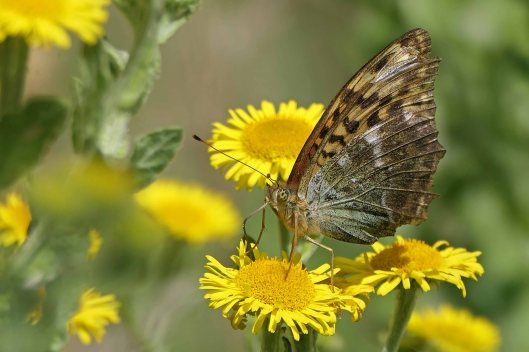
My first lucky day happened when I took the new camera for its first outing, and not only produced the Robin photo I posted yesterday but also the Brown argus I blogged about on Wednesday. The very next day I was, if anything, even more lucky, as I found this superb, if rather faded Silver-washed fritillary in a local woodland. Long time followers might remember I found a male Silver-washed frit (A golden surprise) last July, which was in the same woodland. This latest butterfly was quite a distance from last year’s find spot but that may just be because the scarcity of food sources had forced it to fly a little further than usual. This year’s butterfly is a female so I’m hoping she had found/can find a male and laid/will lay some eggs.
11 Thursday Aug 2022
Posted in birds
Tags
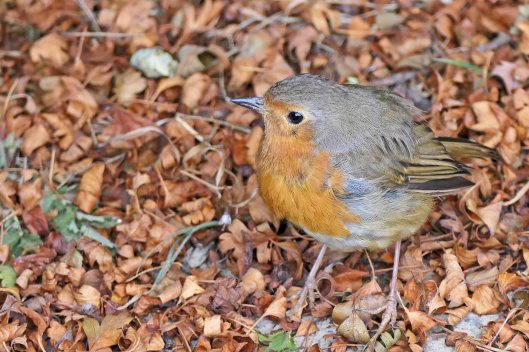
At last, I’ve been able to address the photographic gap that resulted when my 75-300mm lens stopped working a few months ago, though rather than simply replace the lens, I’ve opted for a new camera, a bridge camera with a 25-400mm lens, so I no longer have to lug about a camera body and multiple lenses (the details, if you’re interested, are on my ‘Resources’ page). I’m still adjusting, learning, experimenting, running on auto much of the time but, so far, I’m pleased with the images I’m getting and hugely delighted to be able to photograph my beloved birds, like this little Robin, once again.
10 Wednesday Aug 2022
Posted in insects
The Brown argus butterfly (Aricia agestis) usually has two broods each year, the first adults flying during May and June, the second brood appearing in late July and fading away in late September. Somehow, I missed the first brood this year so, for the last couple of weeks, I’ve been systematically checking the spots of every female Common blue (at a glance, they look quite similar to Brown argus – see my July 2018 blog Flying on the wings of confusion for tips on how to differentiate the two species). Finally, last Friday, this beautiful Brown argus flitted into my field of vision. I didn’t quite do a happy dance but there was a not-too-loud ‘Whoop’!

09 Tuesday Aug 2022
Posted in birds
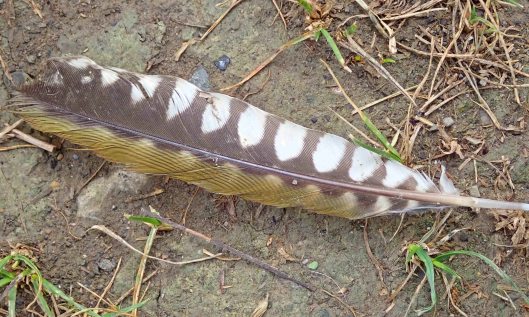
What a treasure this is! Almost as good as finding a Jay feather, and just as distinctive, with the green colour all down one side of the central spine (called the rachis). Of course, I brought it home … I was going to write ‘to add to my collection’ but my collection is gone. All the gorgeous feathers I had collected and placed in a container in my living room were attacked by house moths earlier this year, munched to smithereens by their larvae. Now I only keep the smaller feathers I find and glue them into my nature journals, where I’m hoping they’ll be safe.
08 Monday Aug 2022
Posted in birds
Tags
birding, birdwatching, British birds, broken snail shells, Song thrush, Song thrush killing snails, thrush anvil
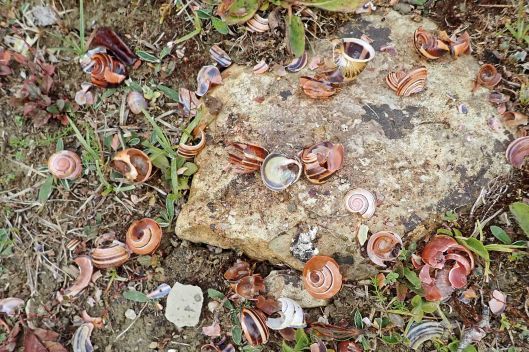
I heard it before I saw it, that persistent tap tap tap of a bird, a Song thrush, dashing a snail against a stone, its anvil, to free the shell of its juicy contents. I’ve read that thrushes often use the same stone over and over and, when I found this particular stone, I could certainly believe it. Just look at all those broken snail shells. It’s sad for the snails but good for the Song thrush and its offspring.
07 Sunday Aug 2022
Posted in plants, wildflowers
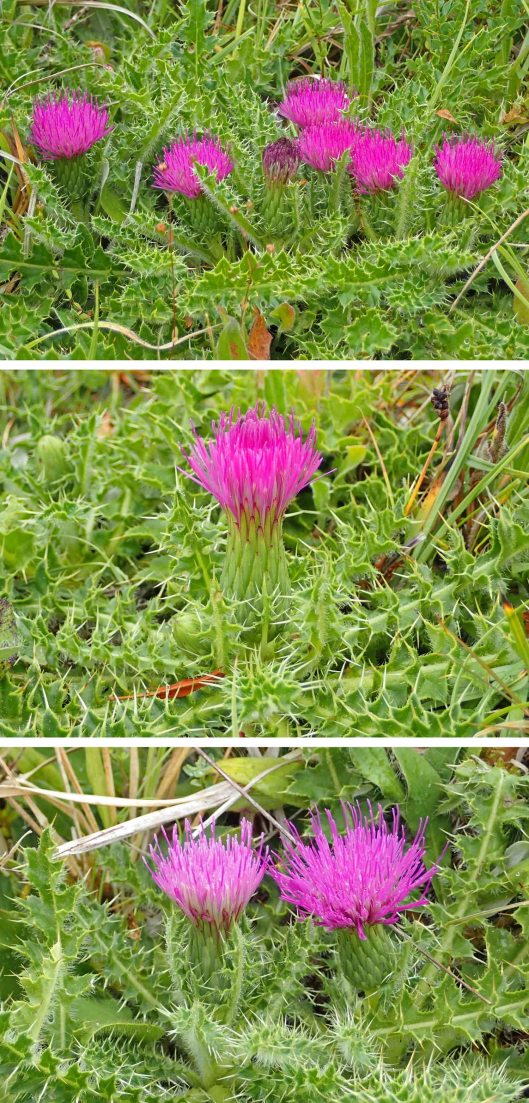
Sessile: adjective; Botany zoology (of a plant or animal structure) attached directly by its base without a stalk or peduncle (Oxford Dictionary).
Dwarf thistles (Cirsium acaule) are also known as Stemless thistles and are a good example of a sessile plant. The only local patch of Dwarf thistles I know is flourishing this year, as their preference is for ‘dry grassy habitats’ on ‘calcareous soils’ (Naturespot website).
06 Saturday Aug 2022
Posted in birds
Cygnet. It’s an unusual word, a strange combination of letters, so I checked the Oxford Dictionary for its origin: ‘Late Middle English from Anglo-Norman French cignet, diminutive of Old French cigne ‘swan’, based on Latin cycnus, from Greek kuknos‘.
The Mute swan cygnets below are some of this year’s fledglings in Cardiff Bay. They’re now mostly living independently from their parents, though still like to keep close company with their siblings.

05 Friday Aug 2022
Posted in fungi
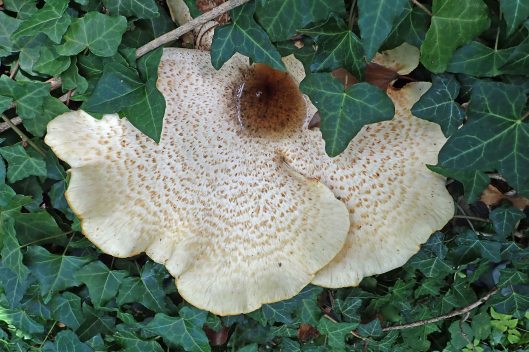
During Monday’s local meander I was hugely surprised to spot this humongous fungus, though I shouldn’t have been. Dryad’s saddle (Polyporus squamosus) is actually one of the first bracket fungi to appear each year, often sprouting its saddle-shaped ledges during the summer months when you’d least expect fungi to appear. This one was in a shady woodland, in an area less affected by the scorching sun that’s parched much of the land around here, so it was certainly a much more fungi-friendly location.
 earthstar
You must be logged in to post a comment.