• ABOUT
  • BIRDING 2018
  • Birding 2019
  • BLOG POSTS
  • Butterflies 2018
  • Resources

earthstar

~ a celebration of nature

earthstar

Author Archives: sconzani

Galls on grapevines

26 Saturday Jul 2025

Posted by sconzani in insects, plants

≈ Leave a comment

Tags

British galls, Colomerus vitis, gall mites, gall-causing mites, galls, galls on grape leaves, galls on grapevines

After last Sunday’s local meander I wrote on social media:

A lesson for me in the importance of recording: I’ve walked past this grapevine many times recently & noticed the galls on its leaves. Today I finally took photos, figured it’s caused by the mite Colomerus vitis & found there are NO Welsh records, tho’ it must be out there somewhere.
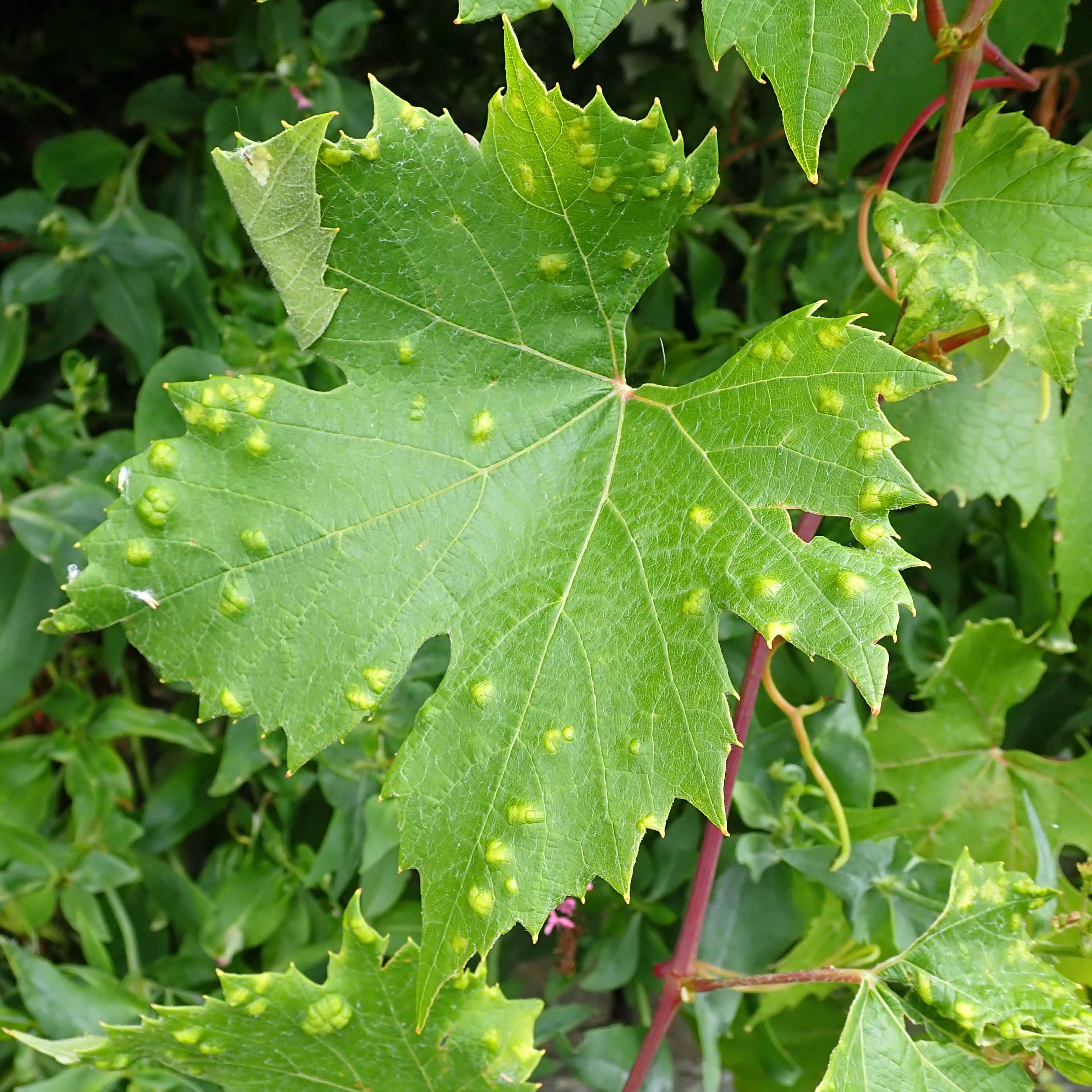
I’ve since checked the only other publicly accessible grapevine I know of locally and found that it, too, has these galls on its leaves so I was right to assume that this is something that has simply been overlooked and not recorded by anyone who’s noticed it. As well as there having been no previous Welsh records, there are very few records from elsewhere in the UK, which I assume is also under-recording, not scarcity.
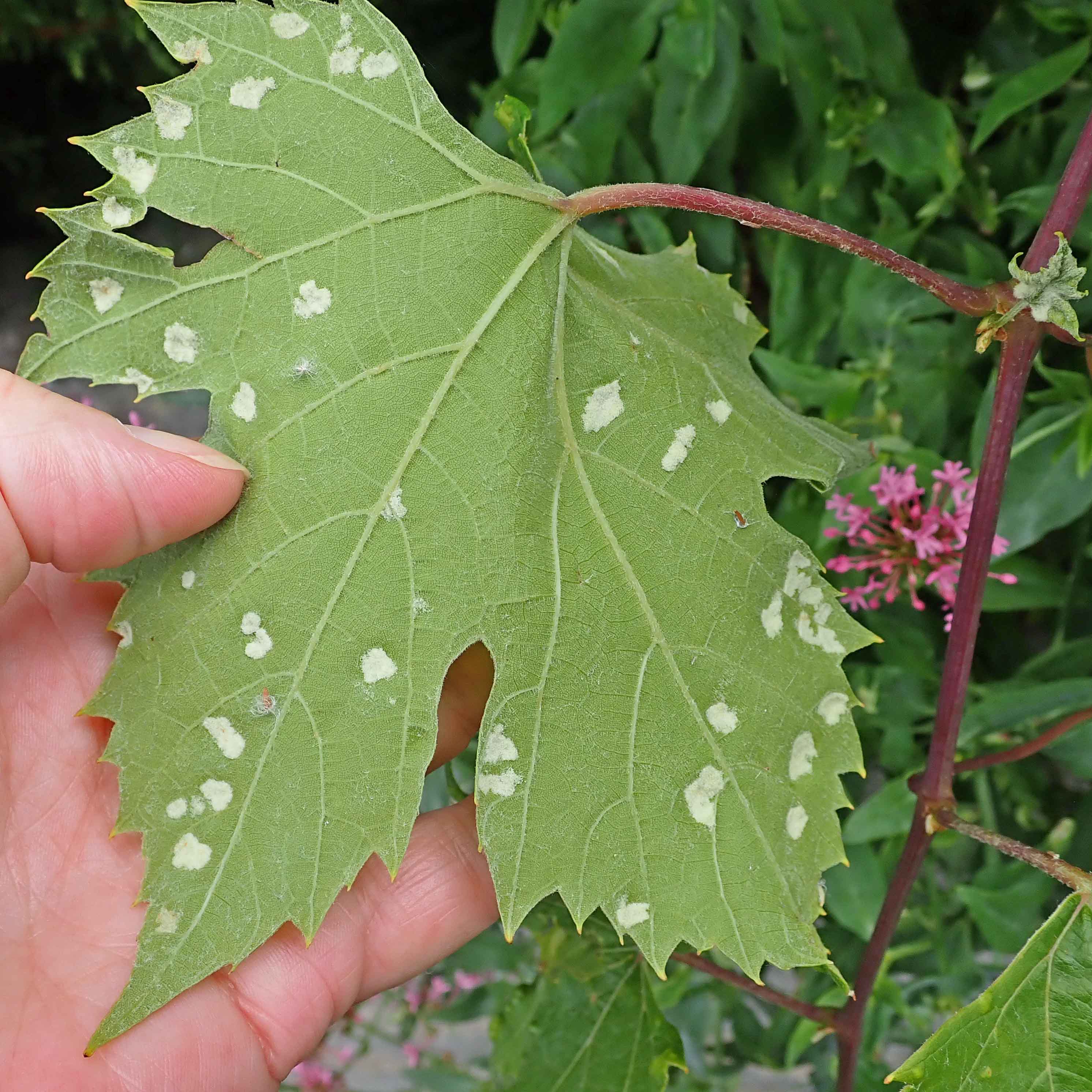
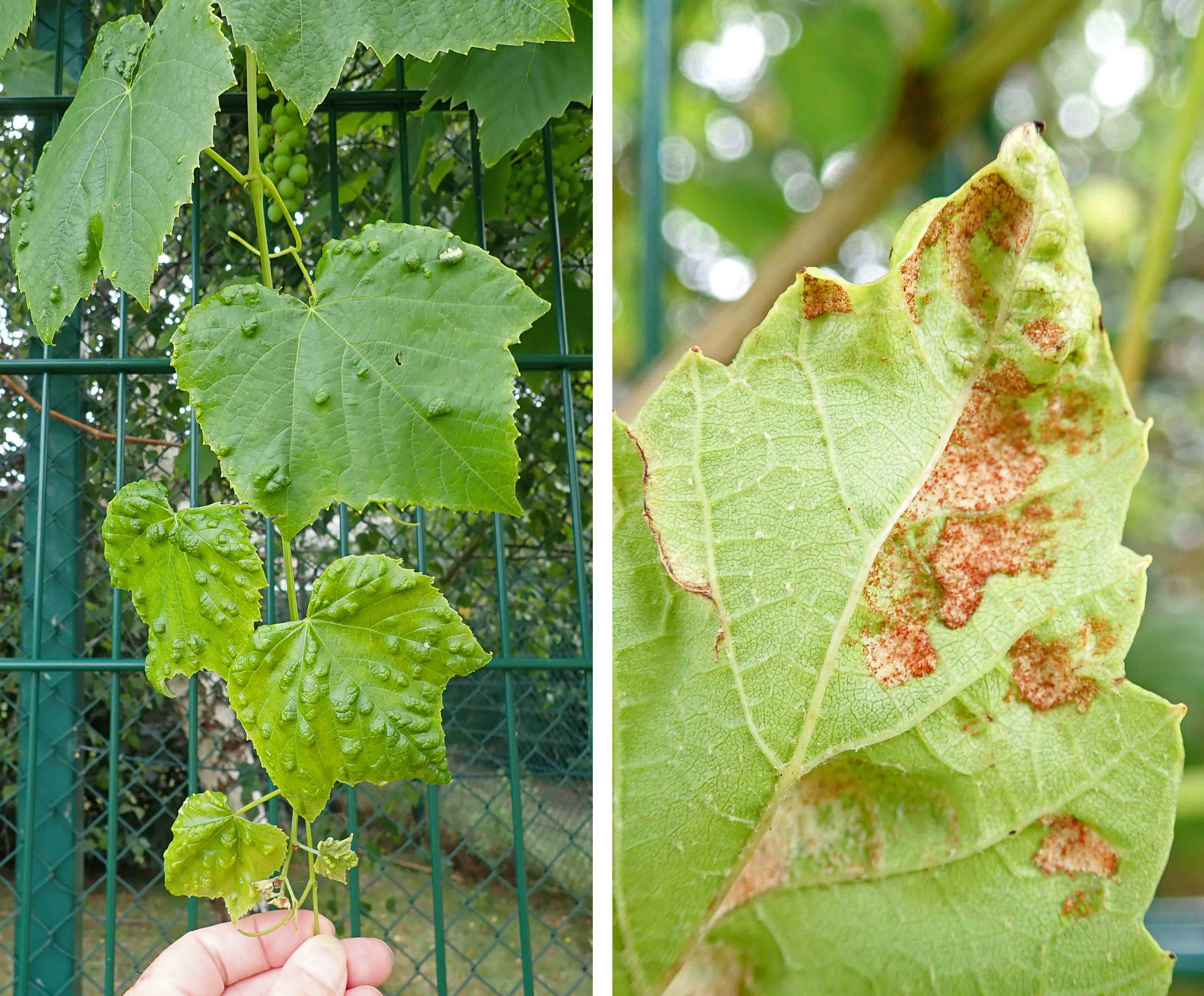
The galls, which appear as lumps and bumps on the upper side of the leaves, are caused by the miniscule mite Colomerus vitis. These mites inhabit the felt-like surface of the galls on the underside of the leaves, a surface that starts out white but gradually browns over time. The vines I’ve looked at are covered in bunches of grapes and the plants themselves look very healthy so, presumably, the galls are having little affect on the plants’ productivity.
Like Loading...

Fly: Eriothrix rufomaculata

25 Friday Jul 2025

Posted by sconzani in insects

≈ Leave a comment

Tags

bristly black and red fly, British flies, British insects, Eriothrix rufomaculata, fly, insect, parasitic fly larvae

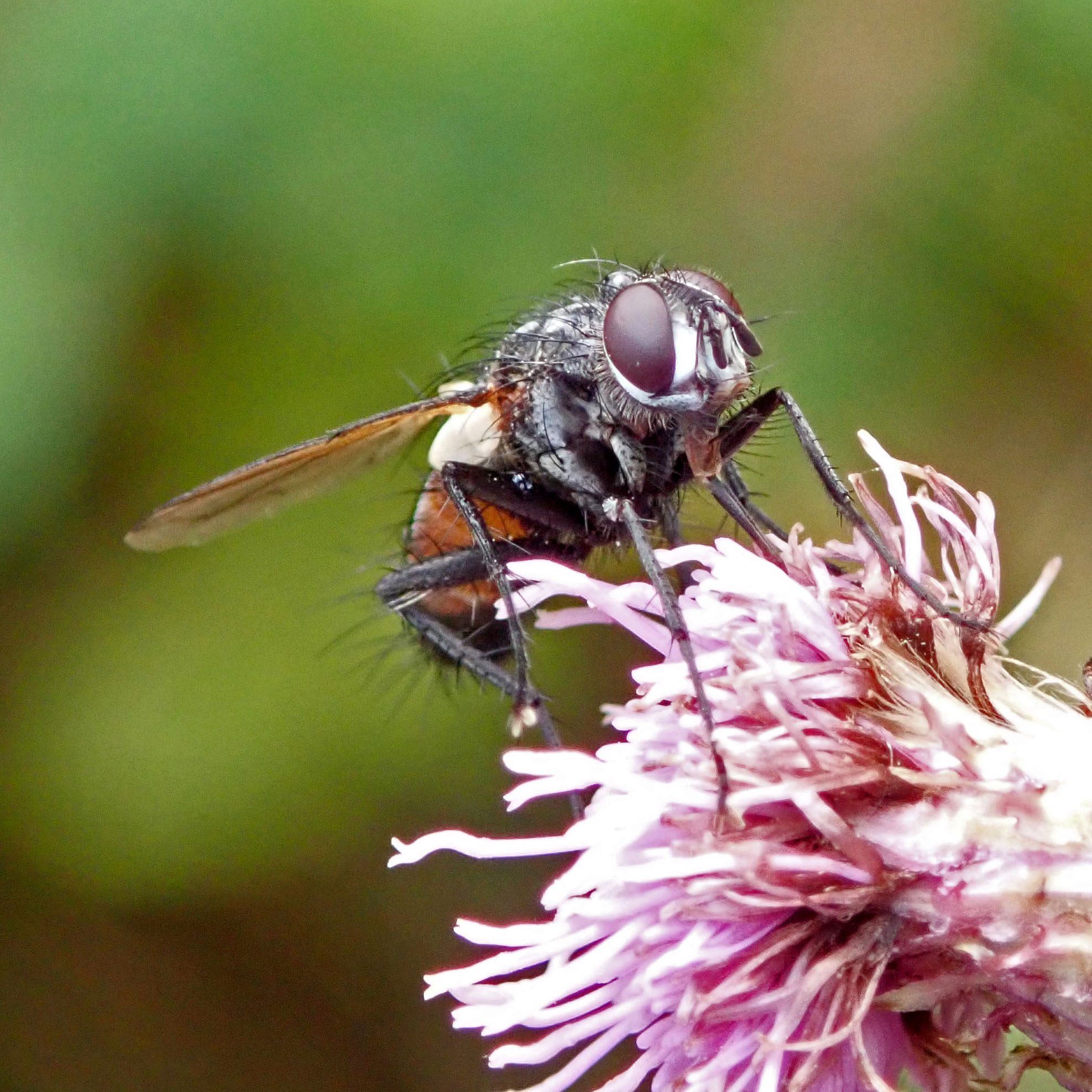
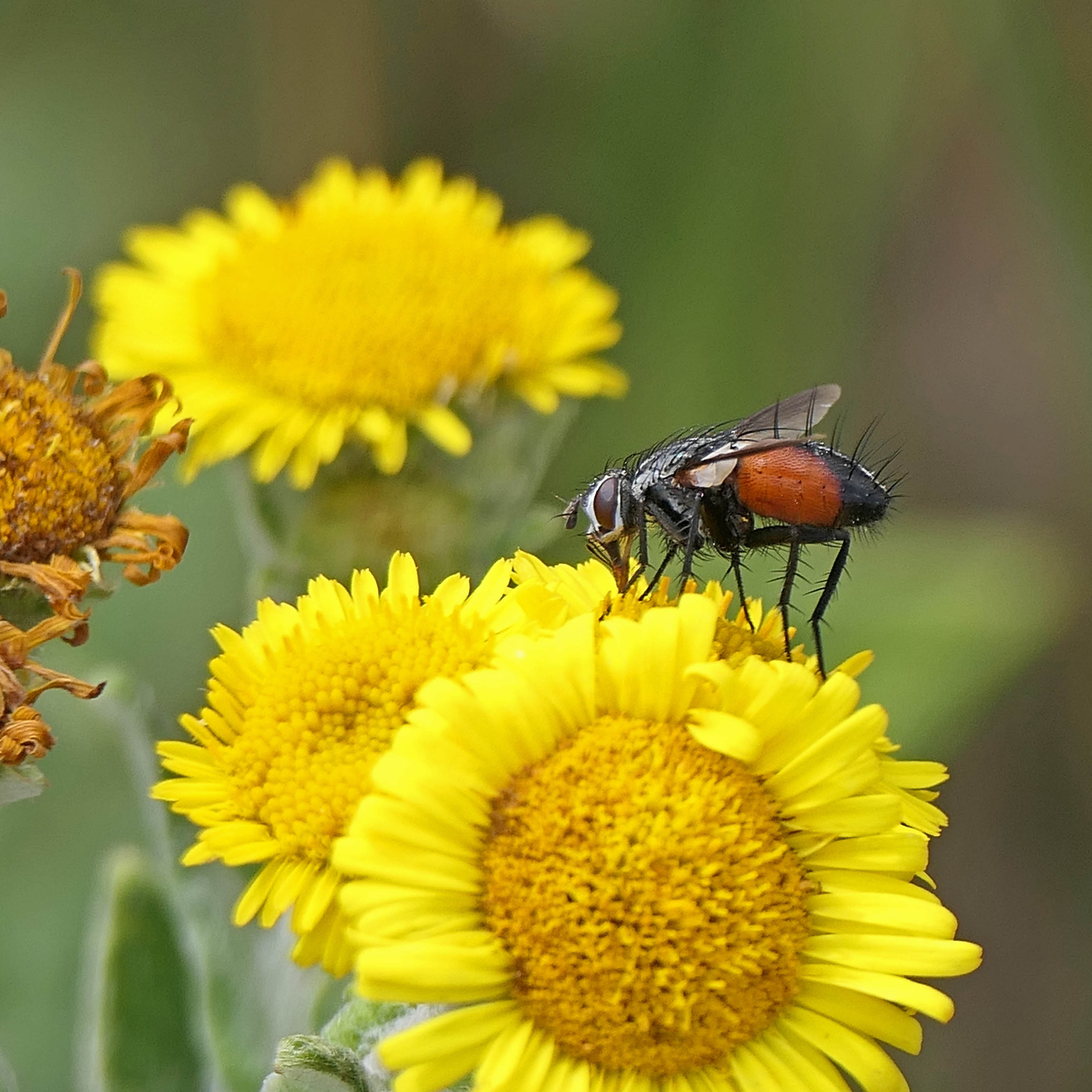
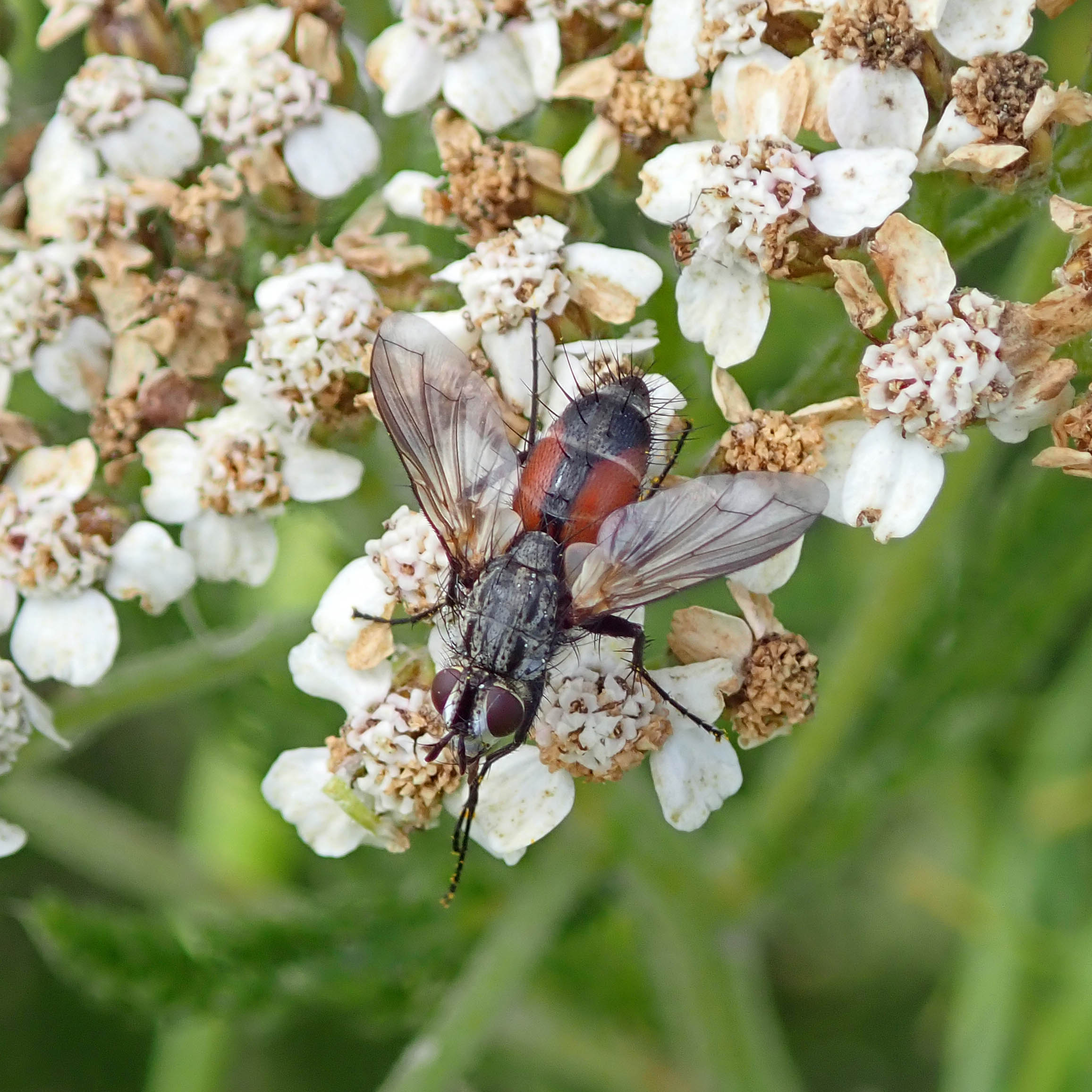
Over the past week I’ve had several sightings of this little fly, Eriothrix rufomaculata, and, though I usually shy away from trying to identify flies, this one is very distinctive. Amongst the checklist of features to look for that are listed on the Naturespot website entry for Eriothrix rufomaculata are the ‘red abdominal side patches’ ♥, ‘silvery face’ ♥, ‘projecting mouth edge’ ♥, and ‘slightly shaded wings’ ♥. It’s also very bristly.

Though the adults are supposedly active from June to October, I presume I’m seeing more of these flies now due to recent hatchings. Look for them feeding on flowers, particularly umbellifers and flowers from the Daisy family, which includes everything from Ragwort to Fleabane, Yarrow to Hemp-agrimony, thistles to Knapweeds, and many more.

Like many creatures, these flies have a dark side to their life cycle: their larvae are parasitic, feeding on the larvae of various moth species, including the little grass moths (the Crambidae) and the very beautiful tiger moth species (the Erebidae).

Like Loading...

Weevil: Barynotus obscurus

24 Thursday Jul 2025

Posted by sconzani in insects

≈ Leave a comment

Tags

Barynotus obscurus, British weevils, ground weevil, weevi

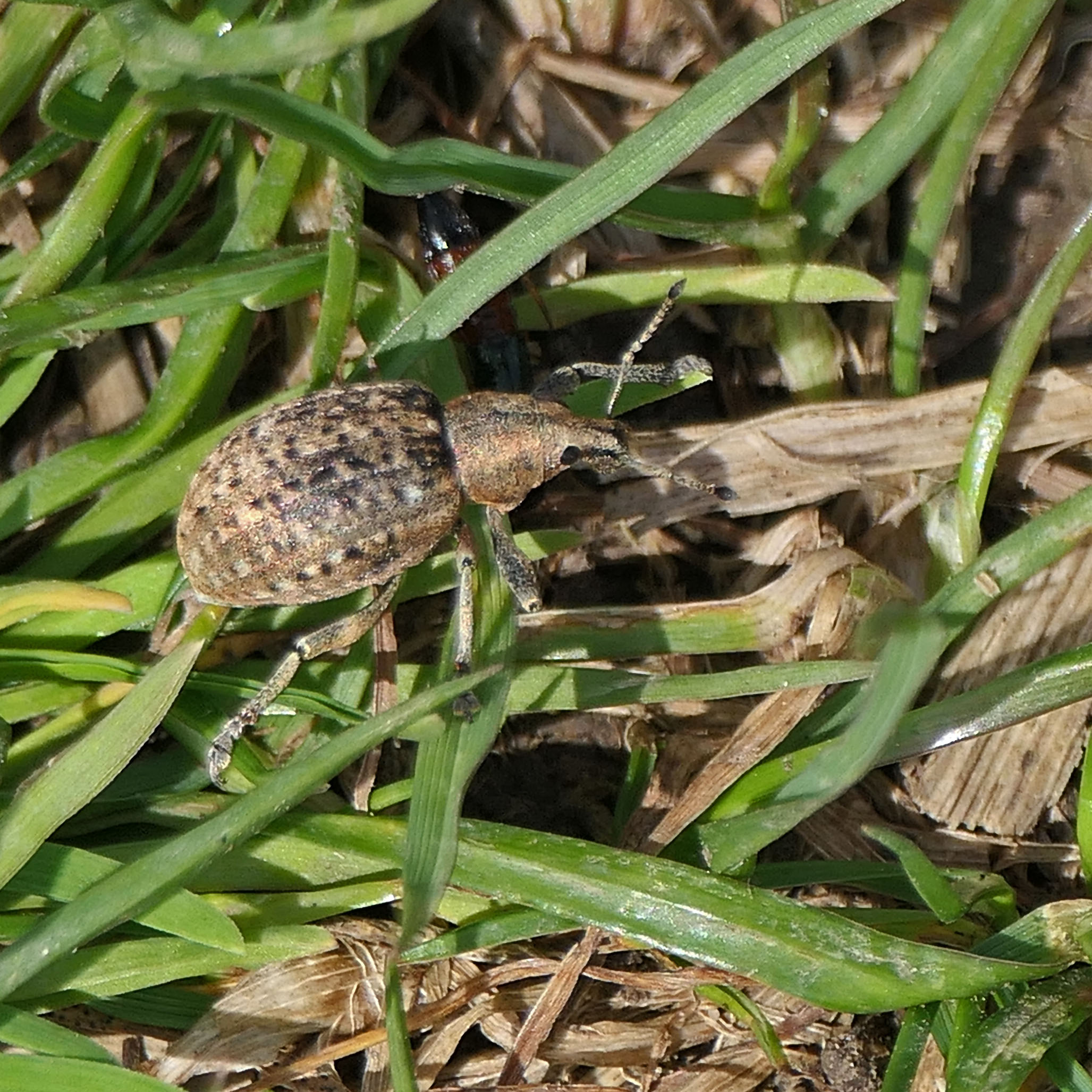
I don’t often go searching for, or find, creatures at ground level – I’m at an age where, if I get down on the ground, I might not be able to get back up again! But I happened to glance down and spotted this little fellow trundling across the path in front of me so I quickly got my camera out and followed its progress in to the short grass, hoping I’d be able to get a few shots.

As per the species description on the Naturespot website, Barynotus obscurus is a ‘large broad-nosed ground weevil’, whose ‘light brown elytra [wing casings] have a slight mottling of paler blotches’. Its body also has a light covering of short bristly hairs. Adults of the species can be found all year round pottering about at ground level, sometimes exploring under stones, other times pootling about in low bushes, though its camouflage can make it tricky to spot.

Like Loading...

Parent bug mother and eggs

23 Wednesday Jul 2025

Posted by sconzani in insects

≈ Leave a comment

Tags

British insects, British shieldbugs, Elasmucha grisea, Parent bug, Parent bug eggs, Parent bug female brooding eggs, shieldbug

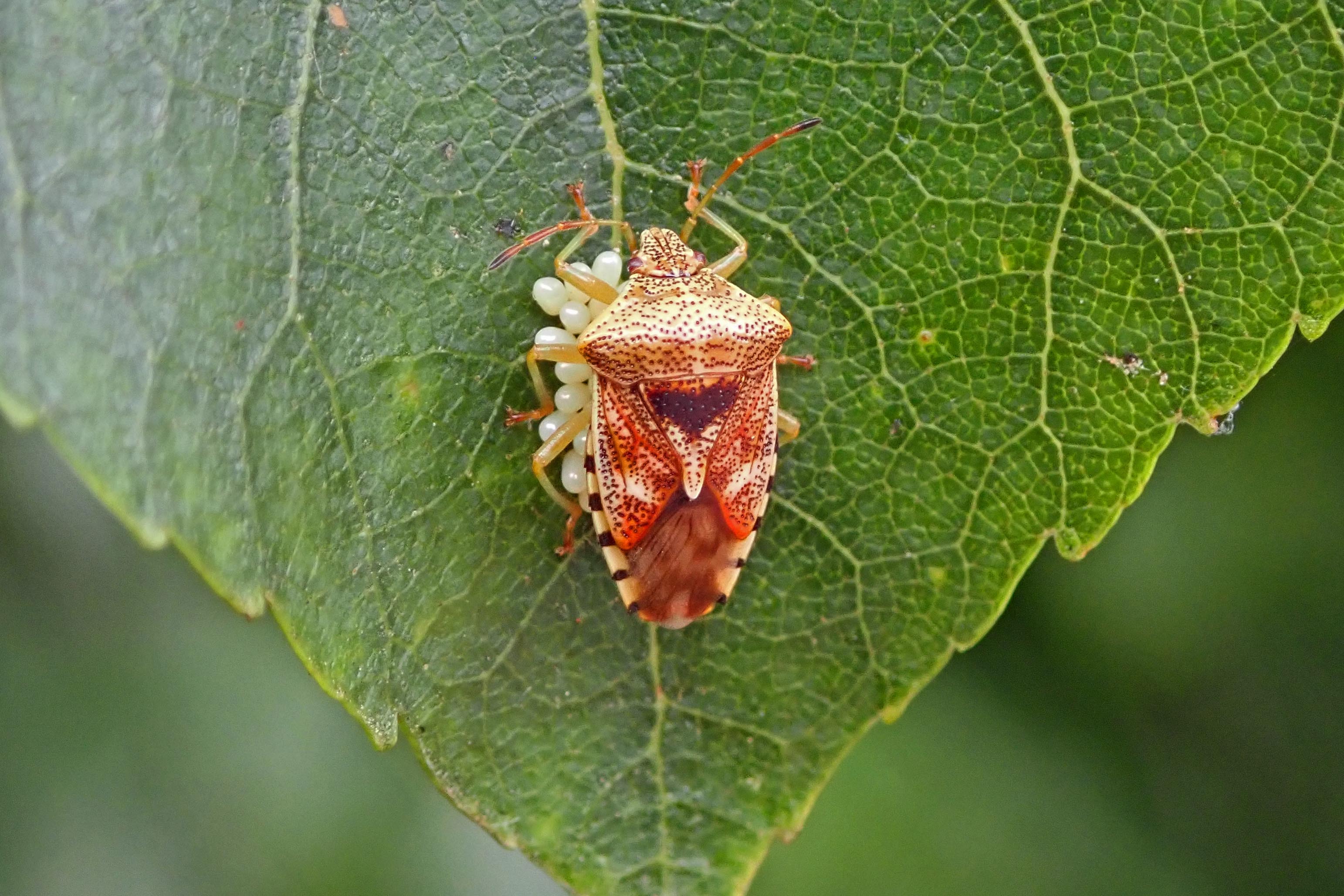
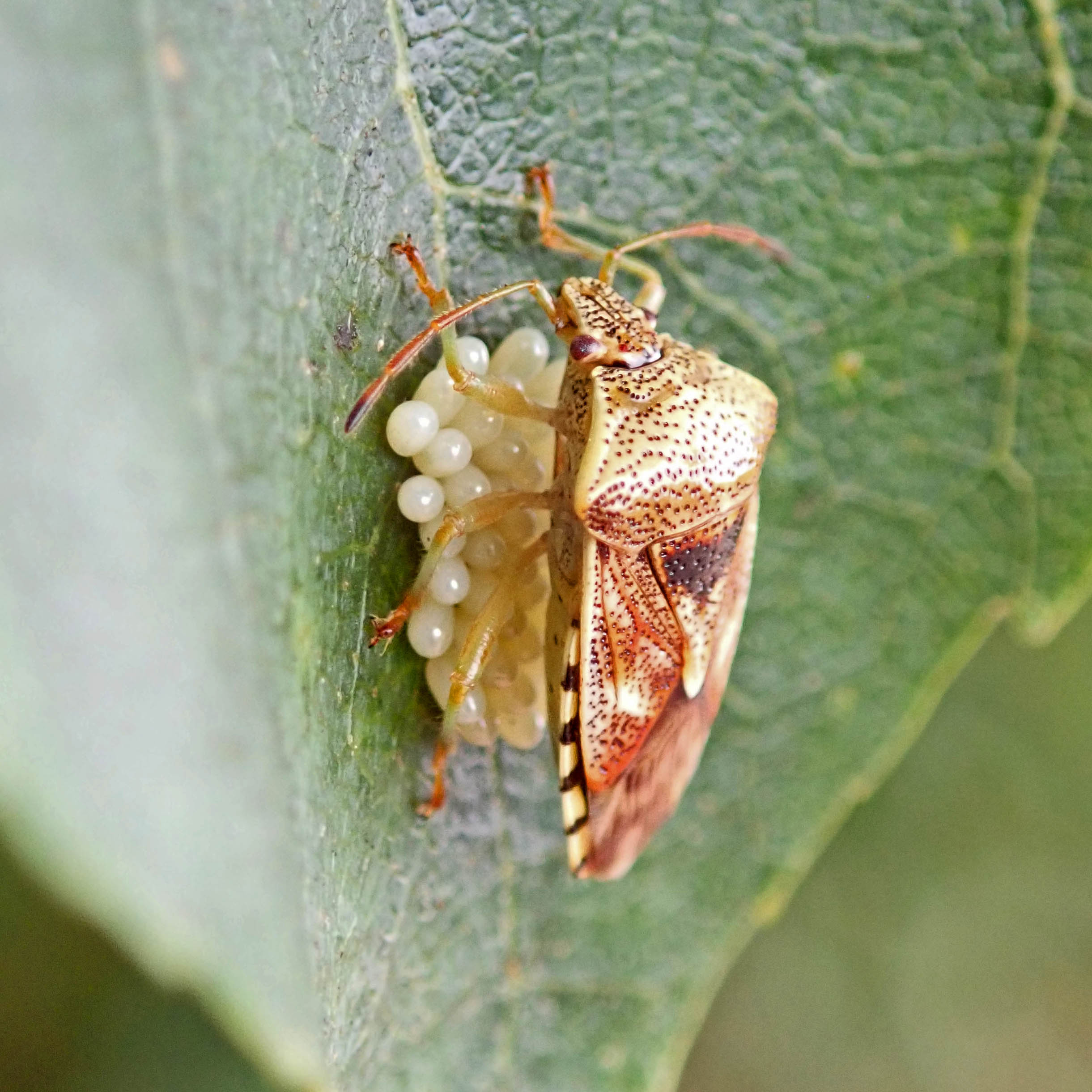
You might remember a very colourful and joyful blog from July last year (Parent bug mother and babies) when I shared a sighting of a Parent bug (Elasmucha grisea) female with her huge brood of young buglets (or, more correctly, nymphs, but I quite like buglet!). Well, just as I was heading home from a recent wander around Cardiff’s Grangemoor Park, I was fossicking through the leaves of an Italian alder tree and spotted this scene.

Though her colouring is quite pale, this is also a Parent bug mother, only this time she’s huddling over and protecting her eggs. Whether or not she was still in the process of laying the eggs or whether these eggs were a few days old I don’t know, and I didn’t want to disturb her by looking more closely. I grabbed a couple of quick photos and left her to her mothering duties.

Like Loading...

Hoverfly: Ferdinandea cuprea

22 Tuesday Jul 2025

Posted by sconzani in insects

≈ 2 Comments

Tags

British hoverflies, Ferdinandea cuprea, hoverfly, hoverfly in woodland

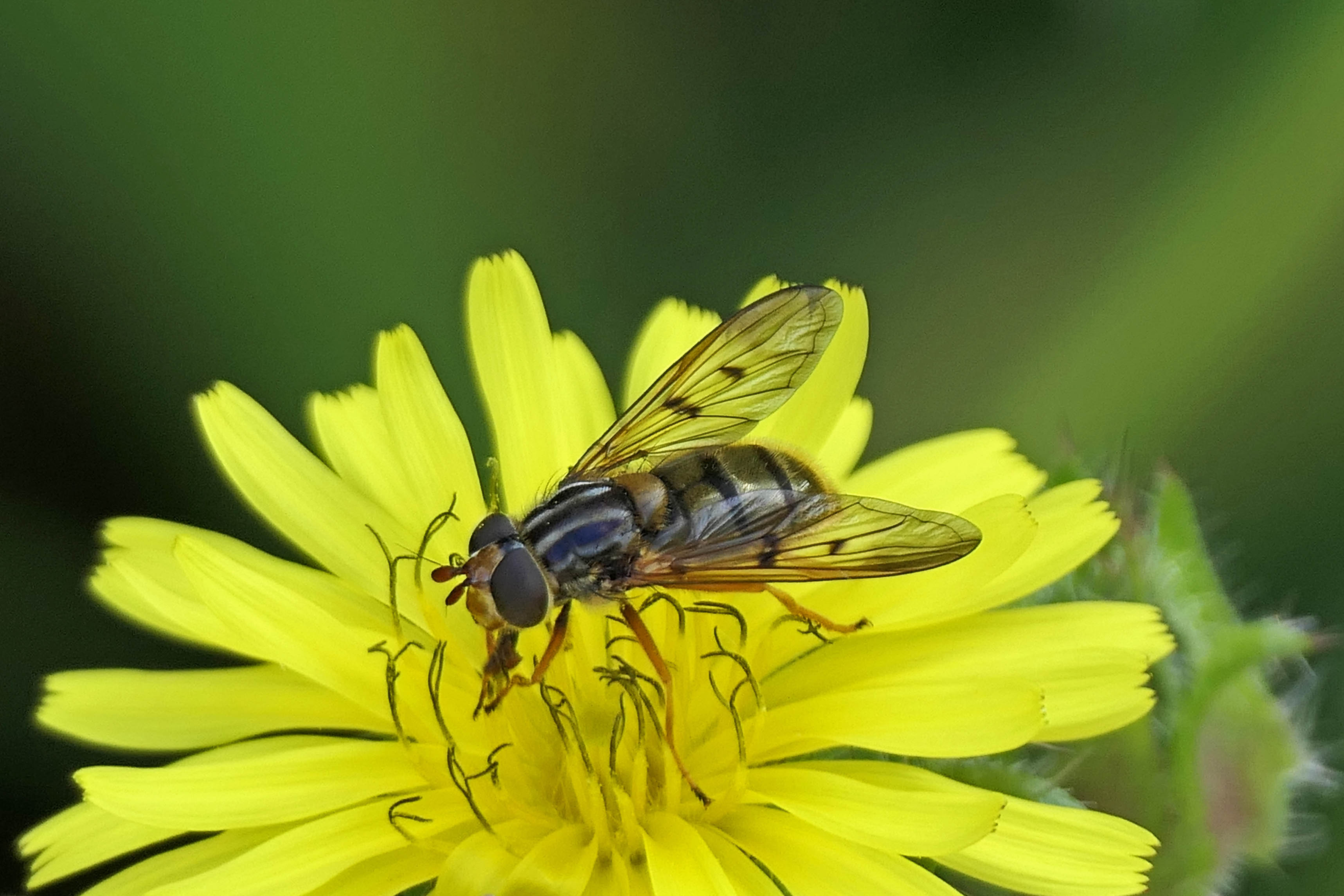
You could easily be fooled into thinking you were looking at a fly when you first saw the hoverfly Ferdinandea cuprea – I’m happy to admit I was. Fortunately, it looked unusual enough – and was settled enough – for me to take a few photos and, when I got home and looked more closely at those on my laptop, I realised this was no ordinary fly.

Now that I’ve seen one and know what to look for, I can agree with what’s written in my Britain’s Hoverflies guide book: ‘An instantly recognisable and very attractive hoverfly with a metallic, brassy abdomen, grey stripes running along the thorax, wing markings and yellow legs’. Ferdinandea cuprea favours wooded areas, mostly in southern parts of Britain and are, apparently, quite common. I presume I’ve been overlooking them for years!

Like Loading...

Leafhopper: Ribautiana ulmi

21 Monday Jul 2025

Posted by sconzani in insects, leaves, trees

≈ Leave a comment

Tags

British leafhoppers, Cicadellidae, leafhoppers on elm trees, leafhoppers on Wych elm, Ribautiana ulmi

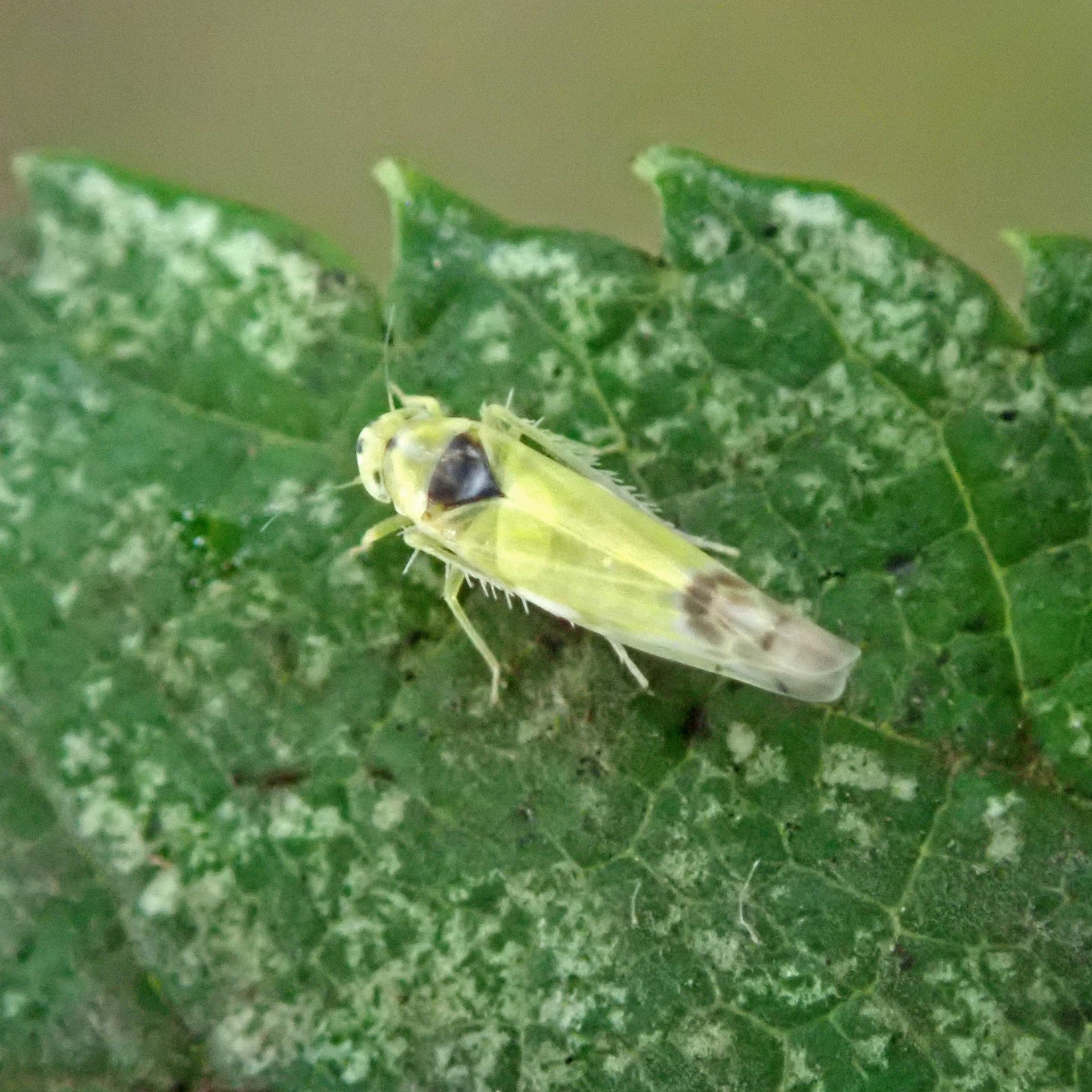
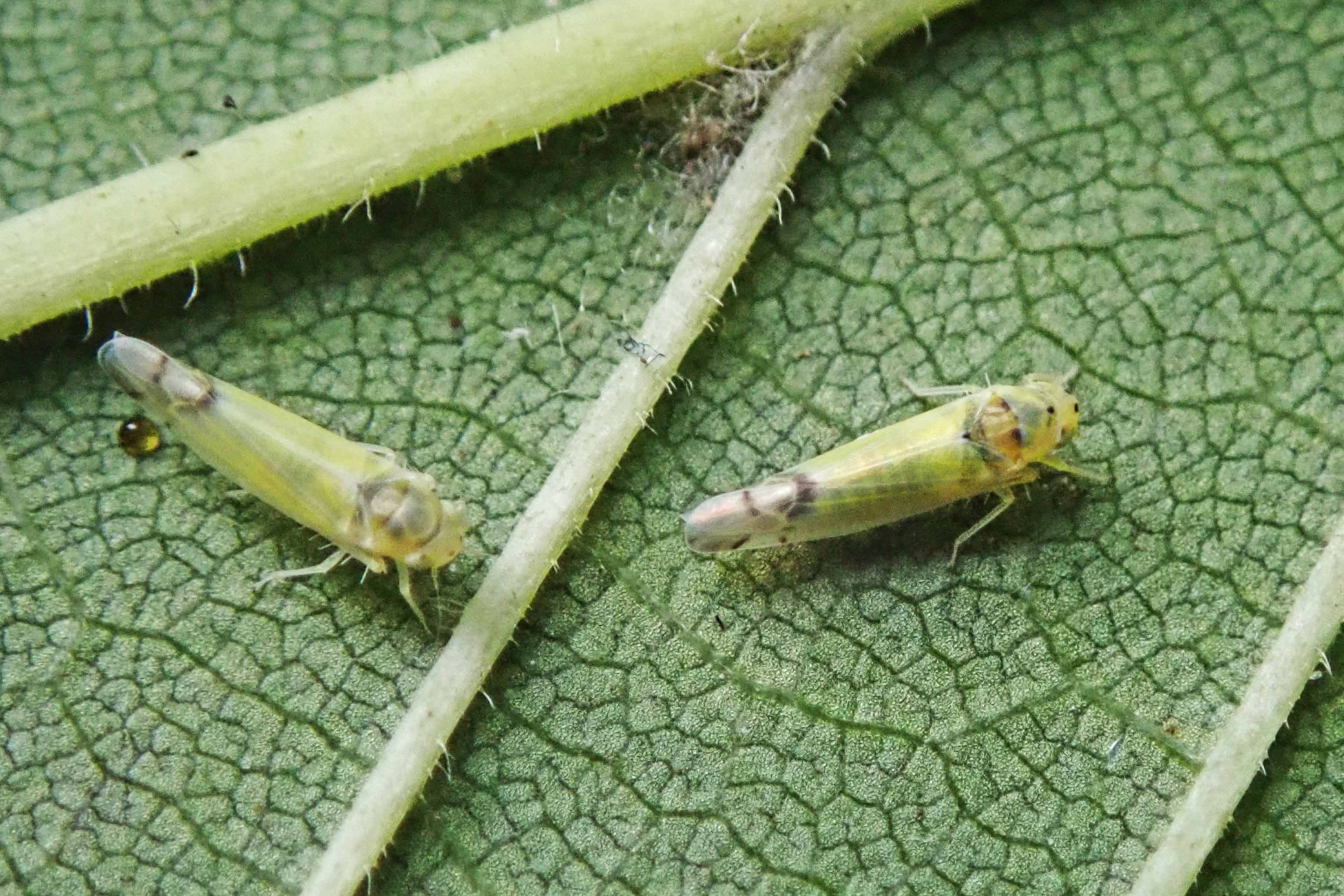
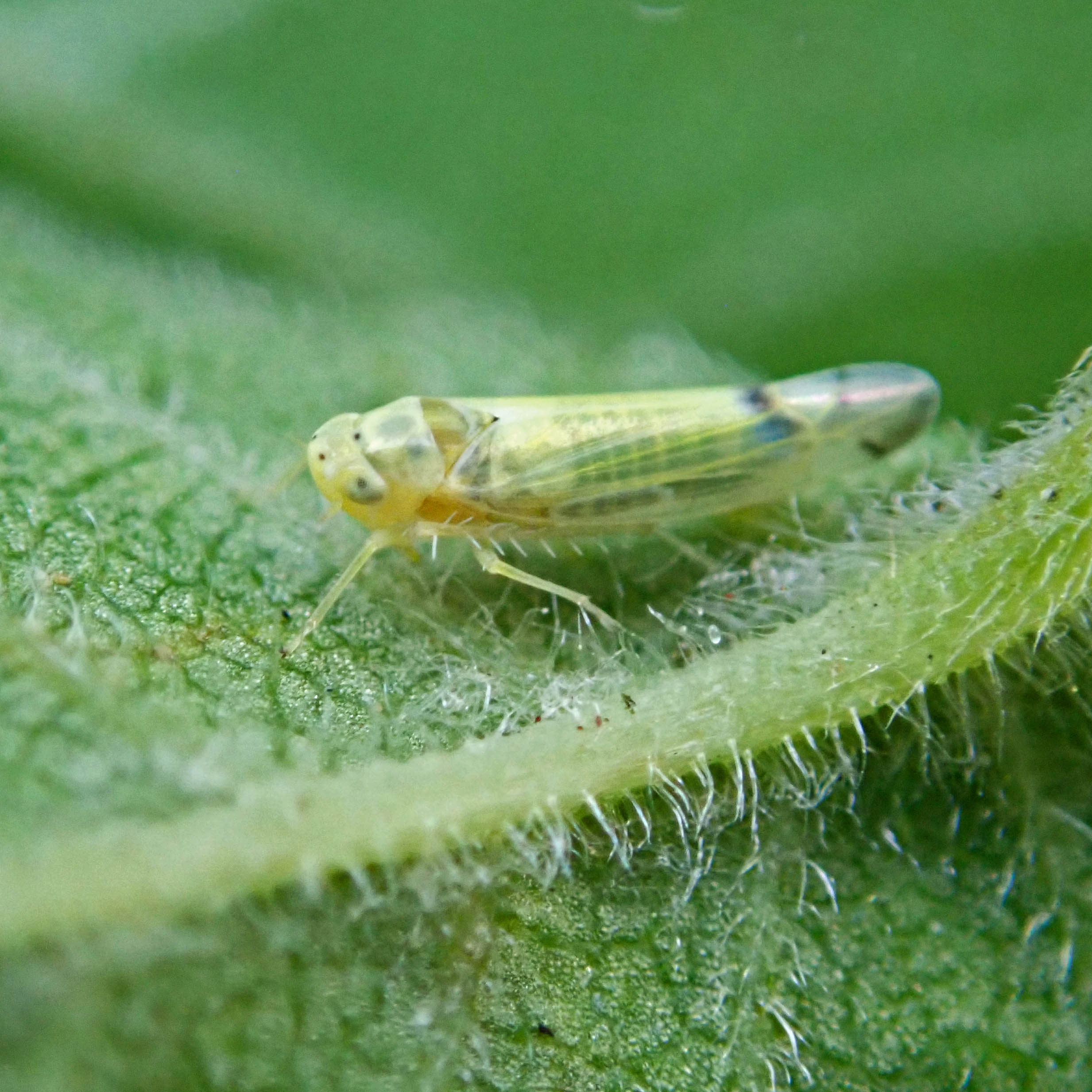
I’ve found this tiny leafhopper, between 3.5 and 4mm long, a few times now, and hope to see more this year, as the adults are out and about from May through to November.

The trouble is that, as my eyes are not the best and these hoppers are so small, I find them hard to identify in the field. My solution is to take as many photos as I can of the many small green species of leafhopper I spot, noting their location and which tree species I found them on, then I try to work out what I’ve found when I get home.

Fortunately, the five British Ribautiana species have quite distinctive markings, and this one, Ribautiana ulmi, has three black spots that are unique to the species. You might think from the ‘ulmi’ in its name that this species is only found on Elm / Wych elm trees but it has been recorded on several other trees, which can be confusing. It’s a little cutie though, so keep your eyes peeled if you find yourself staring at leaves in the next few months (though I do realise that I may be the only of us who does that 😉 ).

Like Loading...

Woolly thistles

20 Sunday Jul 2025

Posted by sconzani in wildflowers

≈ Leave a comment

Tags

British thistles, British wildflowers, Cirsium eriophorum, symmetry in flower heads, symmetry in nature, thistles, Woolly thistle

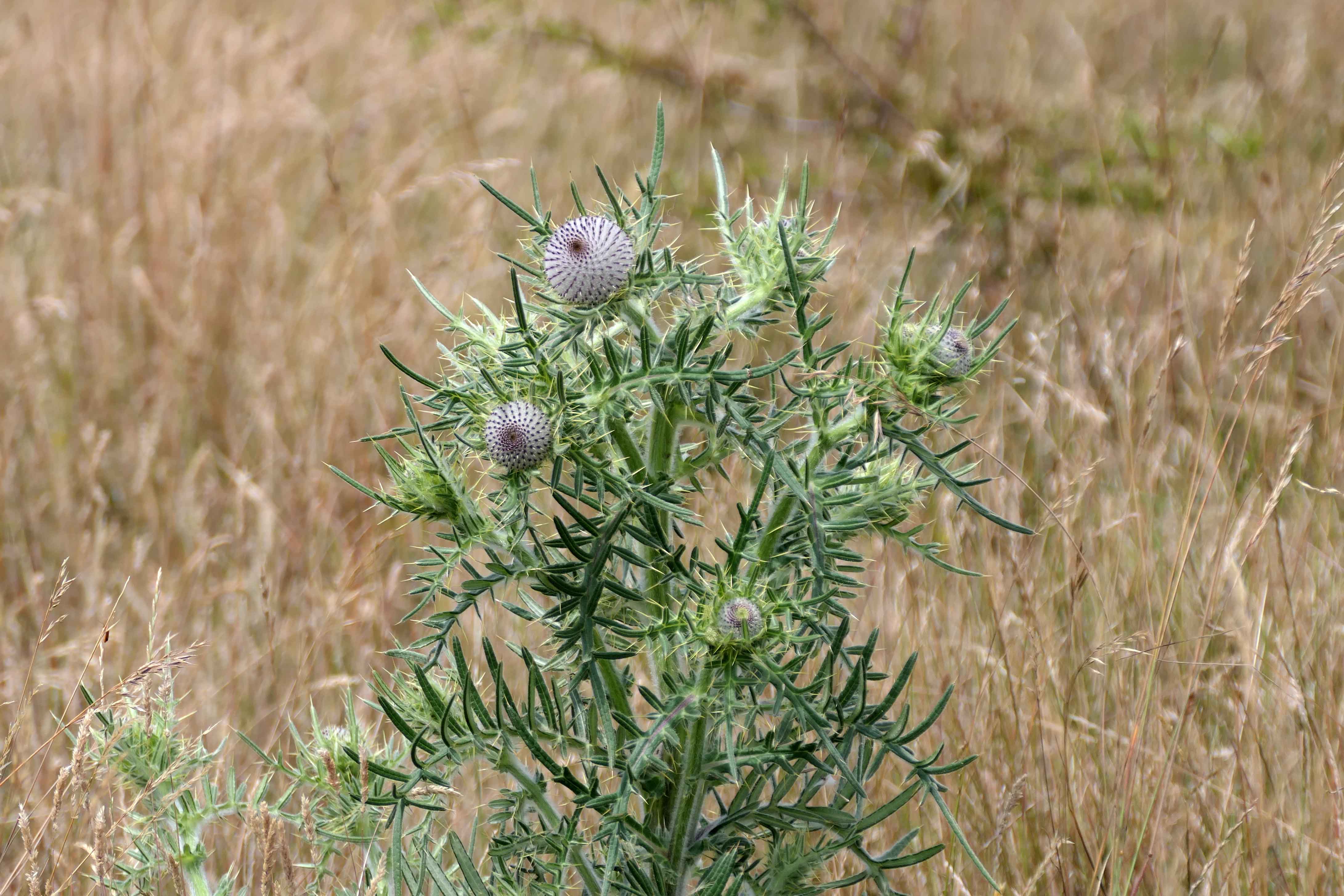
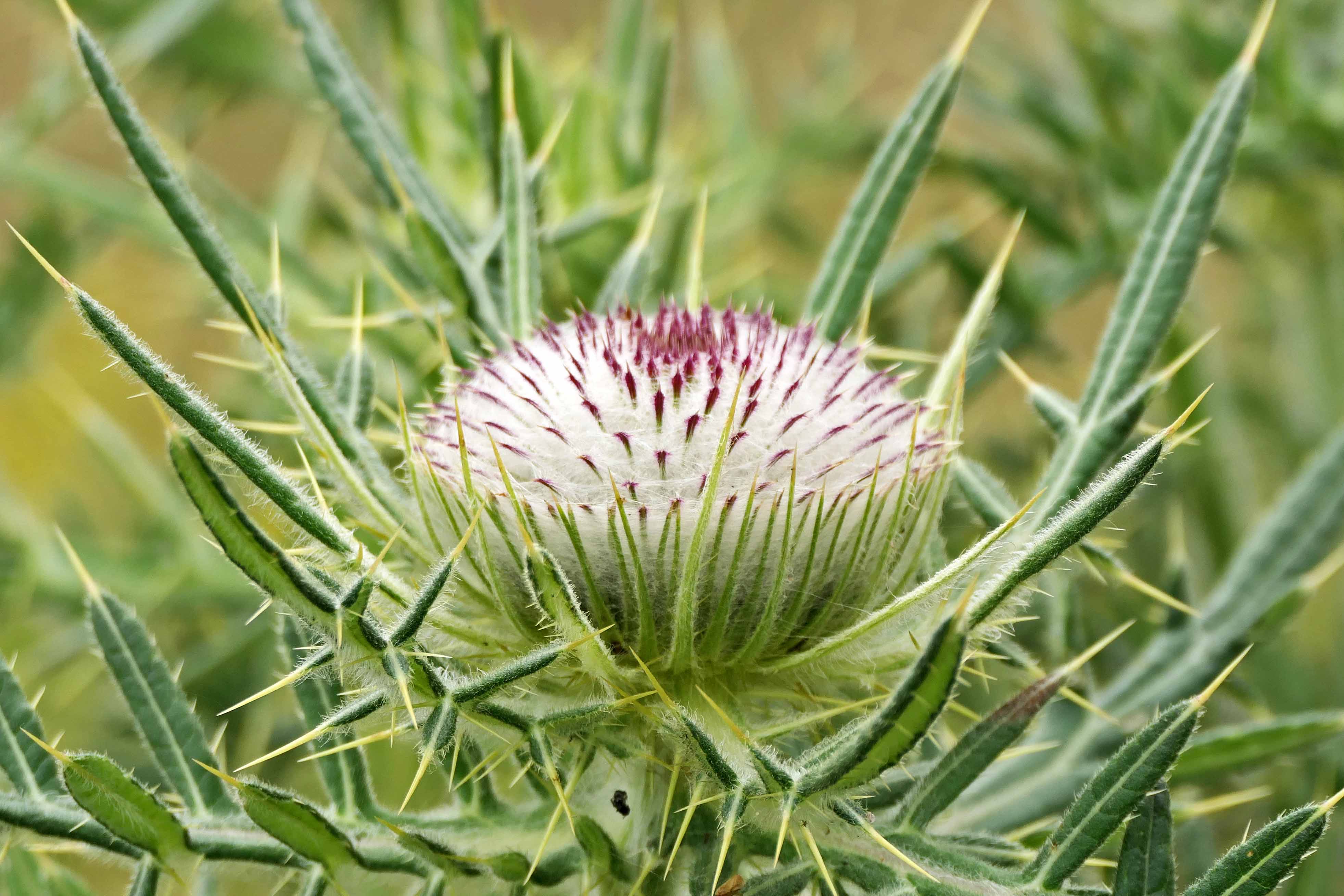
I’m a big fan of all thistle species; I love the purple colour and the shape of their flowers, and I appreciate what valuable plants they are for wildlife, both for insects and birds.

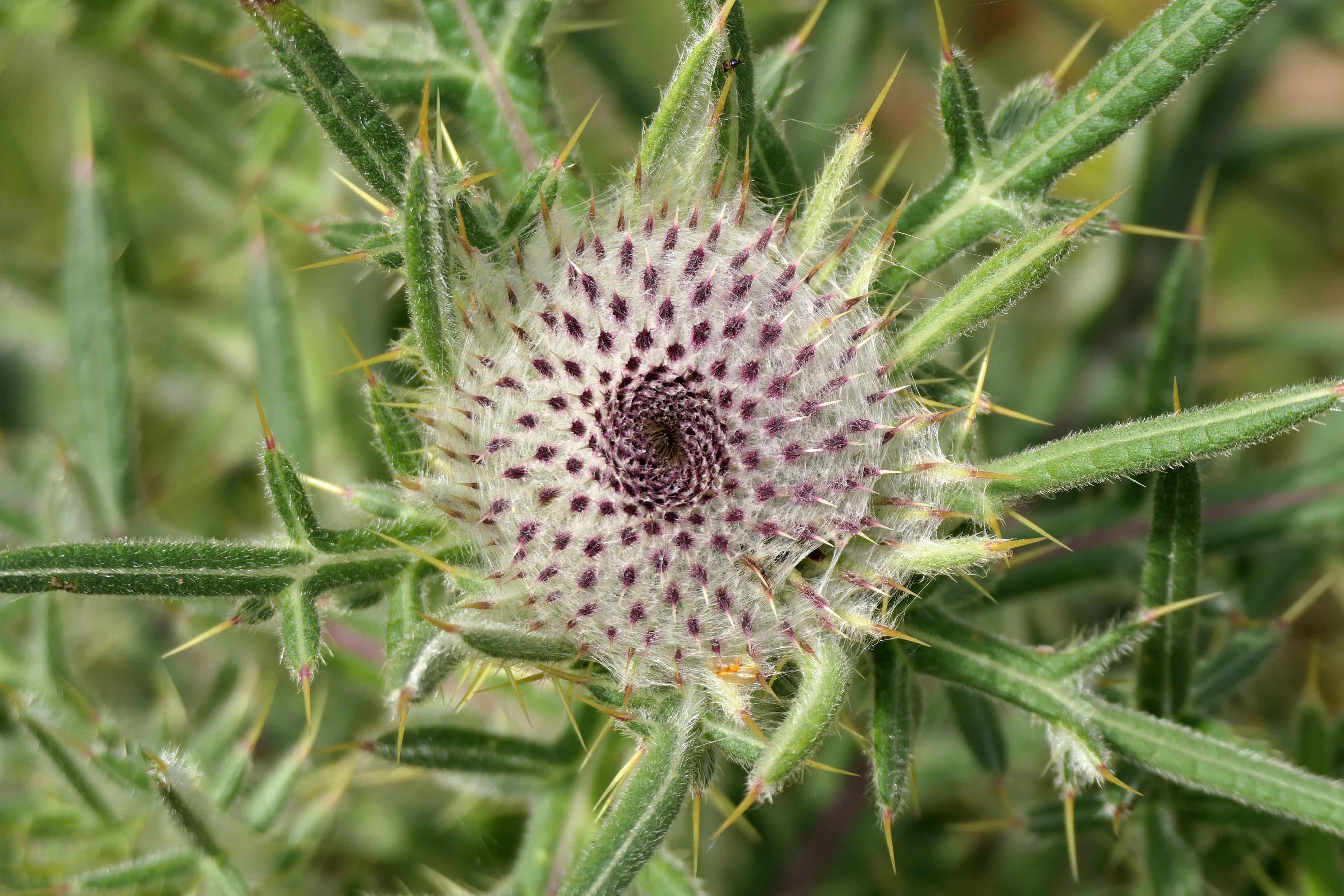
I don’t see Woolly thistle (Cirsium eriophorum) very often but it is certainly one of my favourite thistles, for the woolly looking stems and the generous size of its flowers and, most especially, for the spiralling symmetry of the flower heads.

Like Loading...

Grebe vs eel

19 Saturday Jul 2025

Posted by sconzani in birds, fish

≈ Leave a comment

Tags

birding, birdwatching, British birds, eel, Great Crested Grebe, Great crested grebe catching eel, Great crested grebe chick, Great crested grebe eating eel, juvenile Great crested grebe

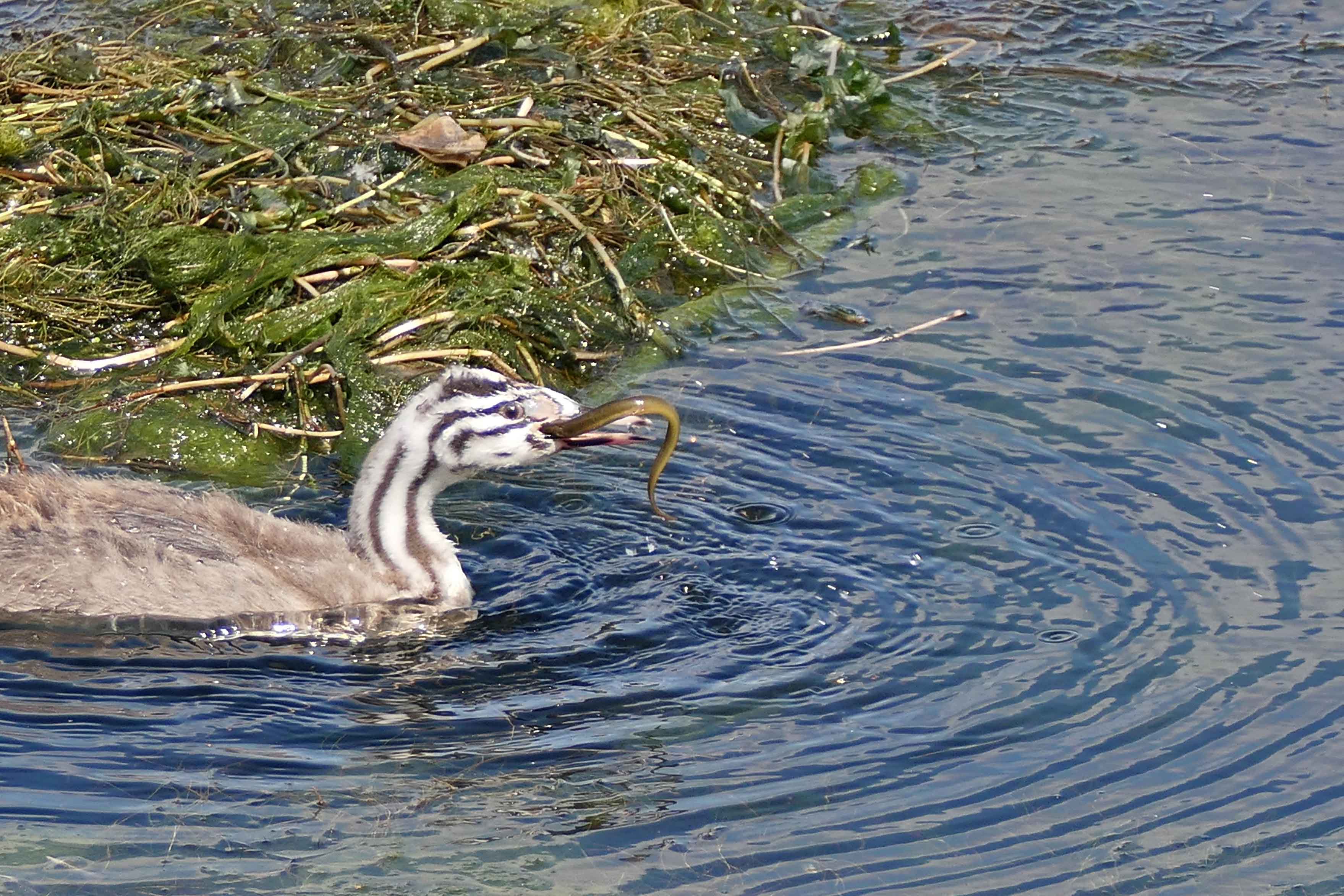
The Great crested grebe chick would not shut up, squeaking incessantly for food even while it was preening.

So, abandoning its attempt at a snooze, the parent grebe slid off its pile of weed to head off in search of fish.

What the parent brought back to feed its ever-hungry youngster was an eel, a squirming struggling eel that was putting up a strong fight for its life.

The grebe parent tried to at least stun the eel, bashing it repeatedly against the surface of the water.

However, the eel was definitely still alive and wriggling when the parent passed it to its chick.

The chick struggled to find a way to swallow the still moving eel but appeared, after a few minutes, to gulp it down.

To the youngster’s surprise, and mine, the eel was not done with its fight for life, somehow managing to slither back up the grebe’s throat and back out of its beak.

It took perhaps five more minutes before the youngster managed to grab it, poke it, manoeuvre it into position and once again swallow down the eel. This time it stayed down.

Like Loading...

Why did the shrew cross the road?

18 Friday Jul 2025

Posted by sconzani in animals, mammal

≈ Leave a comment

Tags

British mammals, Common shrew, Grangemoor Park, shrew

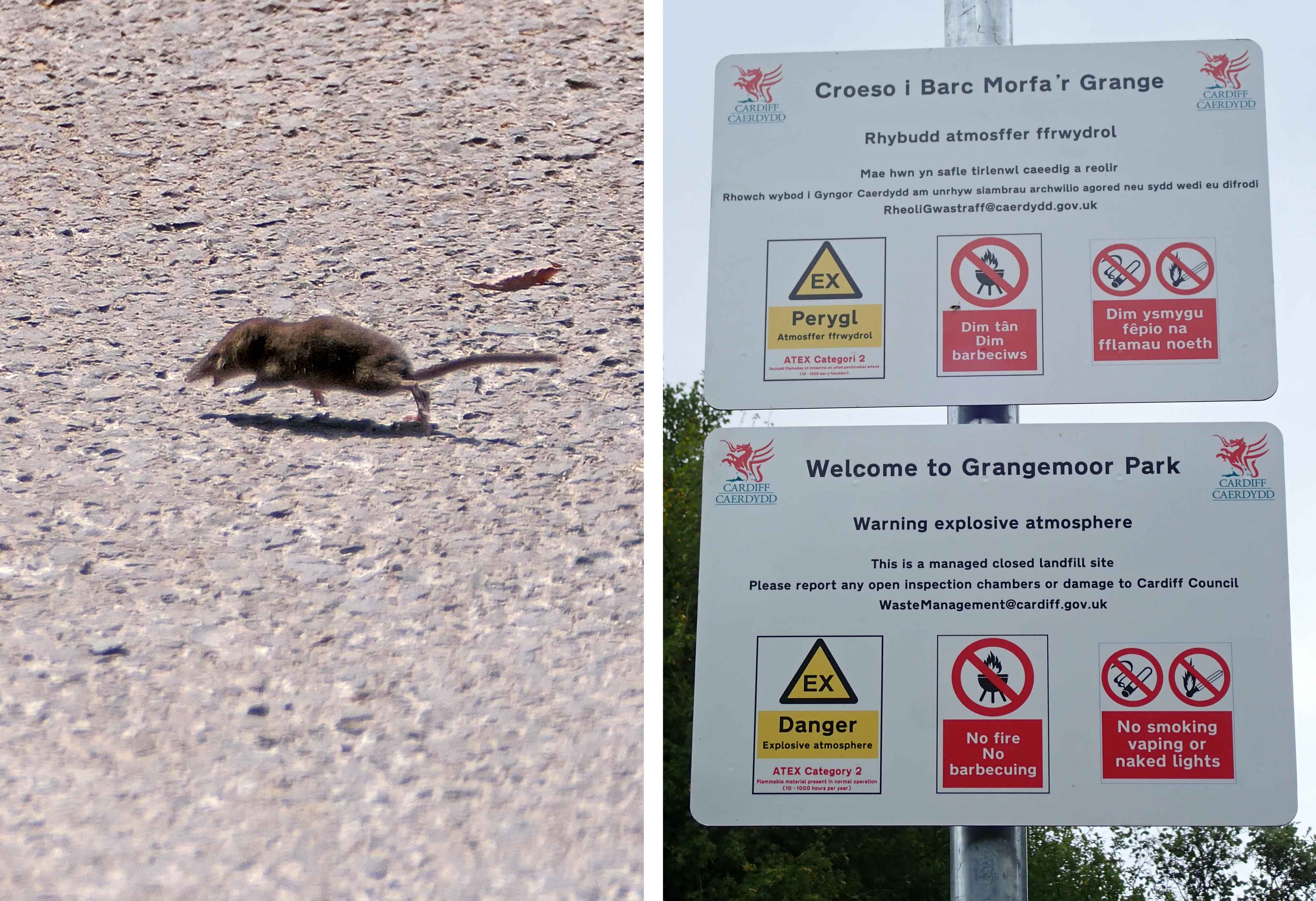
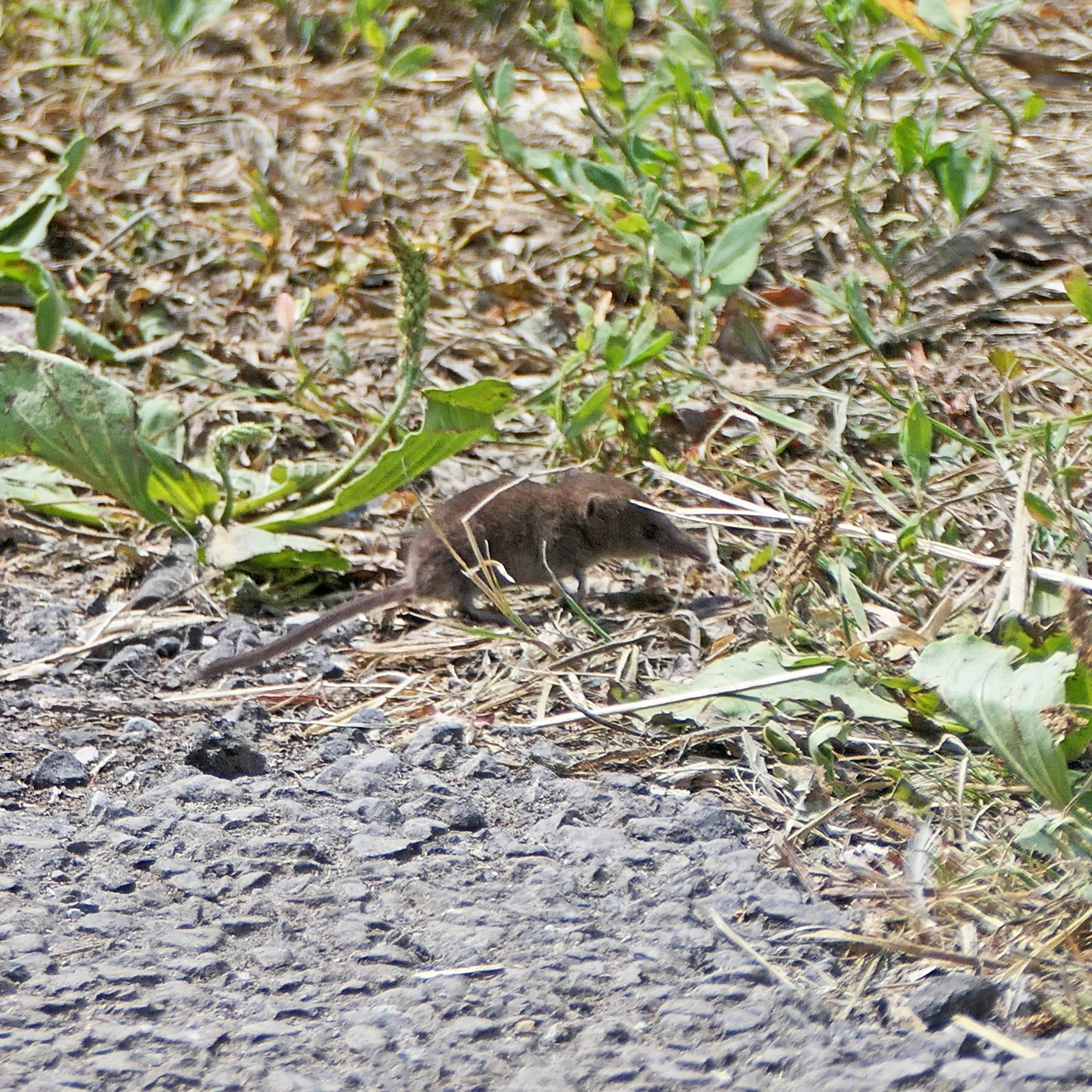
Why did the shrew cross the road? Perhaps it was to escape the ‘explosive atmosphere’.

These signs at Grangemoor Park are new so, presumably, recent tests have shown an increase in the gases leaking through the soil from whatever toxic combination of rubbish and dumped materials are lurking, mouldering beneath the ground in this former town rubbish dump. I don’t feel endangered but it did make wonder what effect it might have on the much smaller creatures that inhabit the park.

The fact that I saw the (probably Common, but they can be hard to positively identify) shrew was mere coincidence, and a wonderful chance encounter. Usually, I only see dead shrews so it was lovely to be able to watch this little mammal, scurry about at the edge of the tarmac path, race half way across then back again, sniff about in the low vegetation once more, before finally racing right across the road and disappearing into the foliage.

Like Loading...

A new kid in town

17 Thursday Jul 2025

Posted by sconzani in birds

≈ Leave a comment

Tags

birding, birdwatching, British birds, Carrion crow, crow family, crow fledgling, crow youngster

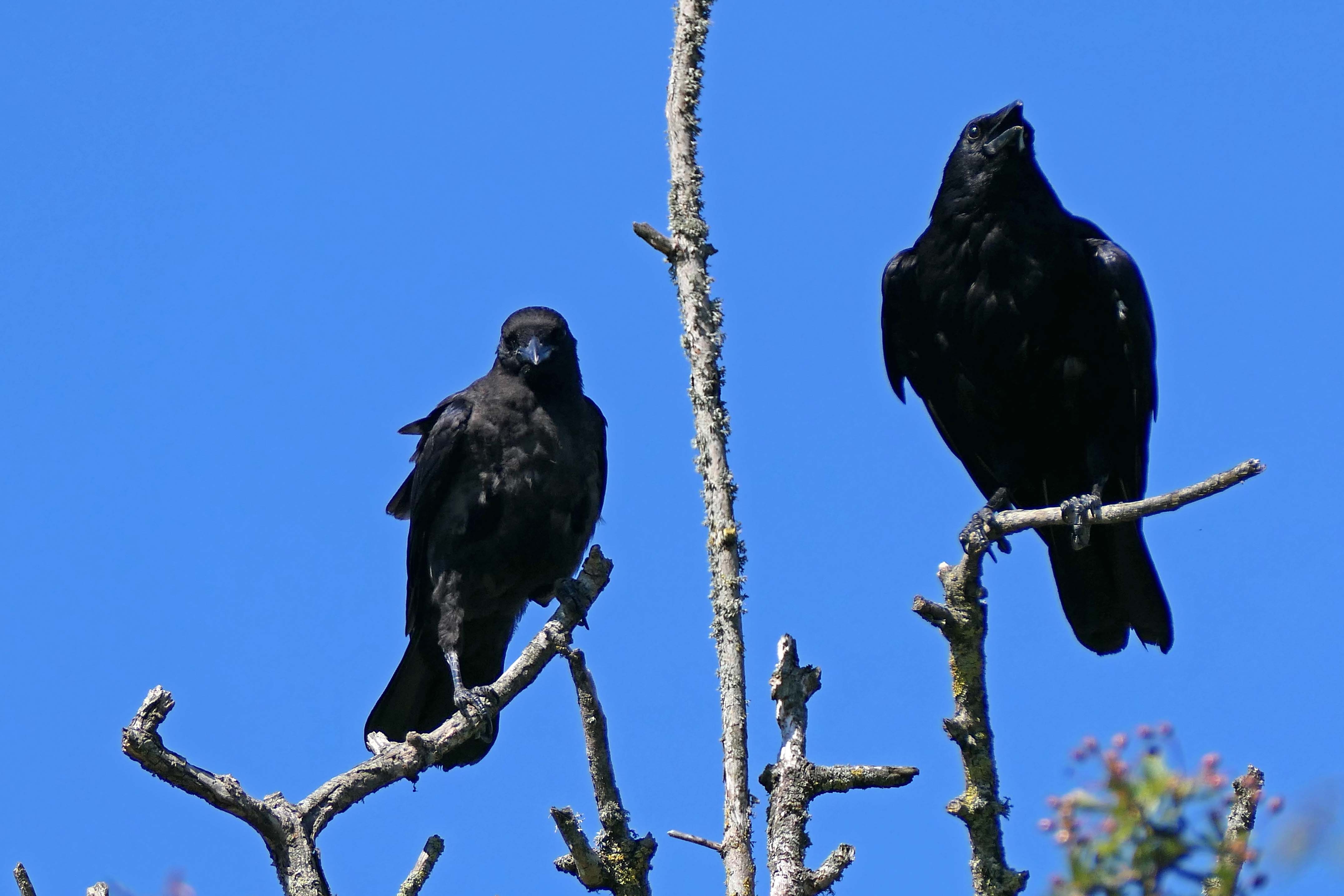
‘My’ crows have a kid!

~ youngster and its mother

Last time I visited I thought they might perhaps be having a second try at breeding as, rather than flying down together, the female Carrion crow came first. She’s always more hesitant at approaching me, whereas the male will fly almost to my feet and walk towards me. Twice the female flew off towards the woodland with food, rather than caching it in the field that is their territory, and the male only appeared for his share just as I leaving their area.

~ always curious

During my most recent visit, I heard the raucous calls of a youngster before I saw it. Mum and Dad flew in together, very eager for the suet pellets I take for them, and then flew to the tree where their youngster was waiting, as well as caching stashes of pellets on the ground for later. There was only one fledgling but, given how dry this summer has been and how few insects there are, one hungry mouth is probably more than enough for the adult birds to cope with and satisfy.

~ always hungry

Like Loading...
← Older posts
Newer posts →

About me

sconzani

sconzani

I'm a writer and photographer; researcher and blogger; birder and nature lover; countryside rambler and city strider; volunteer and biodiversity recorder.

View Full Profile →

Follow earthstar on WordPress.com

Enter your email address to follow this blog and receive notifications of new posts by email.

Recent blog posts

  • Turtle bug March 23, 2026
  • Springtime invasives March 22, 2026
  • Singing Dunnocks March 21, 2026
  • New cat: Large yellow underwing March 20, 2026
  • Curious Coal tit March 19, 2026

From the archives

COPYRIGHT

Unless otherwise acknowledged, the text and photographs on this blog are my own and are subject to international copyright. Nothing may be downloaded or copied without my permission.

Fellow Earth Stars!

  • Unknown's avatar
  • Unknown's avatar
  • Unknown's avatar
  • Unknown's avatar
  • Unknown's avatar
  • Unknown's avatar
  • Unknown's avatar
  • Unknown's avatar
  • Unknown's avatar
  • Unknown's avatar
  • Unknown's avatar
  • Unknown's avatar
  • Unknown's avatar
  • Unknown's avatar
  • Unknown's avatar
  • Unknown's avatar
  • Unknown's avatar
  • Unknown's avatar
  • Unknown's avatar
  • Unknown's avatar
  • Unknown's avatar
  • Unknown's avatar
  • Unknown's avatar
  • Unknown's avatar
  • Unknown's avatar
  • Unknown's avatar
  • Unknown's avatar
  • Unknown's avatar
  • Unknown's avatar
  • Unknown's avatar
  • Unknown's avatar
  • Unknown's avatar
  • Unknown's avatar
  • Unknown's avatar
  • Unknown's avatar
  • Unknown's avatar
  • Unknown's avatar
  • Unknown's avatar
  • Unknown's avatar
  • Unknown's avatar
  • Unknown's avatar
  • Unknown's avatar
  • Unknown's avatar
  • Unknown's avatar
  • Unknown's avatar
  • Unknown's avatar
  • Unknown's avatar
  • Unknown's avatar
  • Unknown's avatar
  • Unknown's avatar

Blog at WordPress.com.

Privacy & Cookies: This site uses cookies. By continuing to use this website, you agree to their use.
To find out more, including how to control cookies, see here: Cookie Policy
  • Subscribe Subscribed
    • earthstar
    • Join 668 other subscribers
    • Already have a WordPress.com account? Log in now.
    • earthstar
    • Subscribe Subscribed
    • Sign up
    • Log in
    • Report this content
    • View site in Reader
    • Manage subscriptions
    • Collapse this bar
 

Loading Comments...
 

You must be logged in to post a comment.

    %d