• ABOUT
  • BIRDING 2018
  • Birding 2019
  • BLOG POSTS
  • Butterflies 2018
  • Resources

earthstar

~ a celebration of nature

earthstar

Author Archives: sconzani

Brightening up the hedgerows

17 Wednesday Jul 2024

Posted by sconzani in insects

≈ Leave a comment

Tags

British butterflies, butterfly, Gatekeeper, Pyronia tithonus

Brightening up the hedgerows with the vivid orange of their upper wings, Gatekeepers (Pyronia tithonus) are a summer delight for nature-lovers.

240717 gatekeeper (1)

Over the centuries, Gatekeepers have enjoyed a range of common names, most attempts to provide a definite description of their appearance: the ‘Lesser double-eyed butterfly’ (James Petiver, Musei Petiveriani, 1695); the ‘Large heath’ (Adrian Haworth, Lepidoptera Britannica, 1803); the ‘Small meadow brown’ (George Samouelle, The Entomologist’s Useful Compendium, 1819); and ‘Hedge brown’, a name used by many since the 1800s. The name ‘Gatekeeper’ was bestowed on this beautiful butterfly by Moses Harris in his publication The Aurelian in 1766. (Naming details come from Peter Eeles’s Life Cycles of British & Irish Butterflies, 2019.)

240717 gatekeeper (2)

Like Loading...

Two longhorns

16 Tuesday Jul 2024

Posted by sconzani in insects

≈ Leave a comment

Tags

British beetles, Longhorn beetles, Rutpela maculata, Spotted longhorn beetle, Stenocorus meridianus

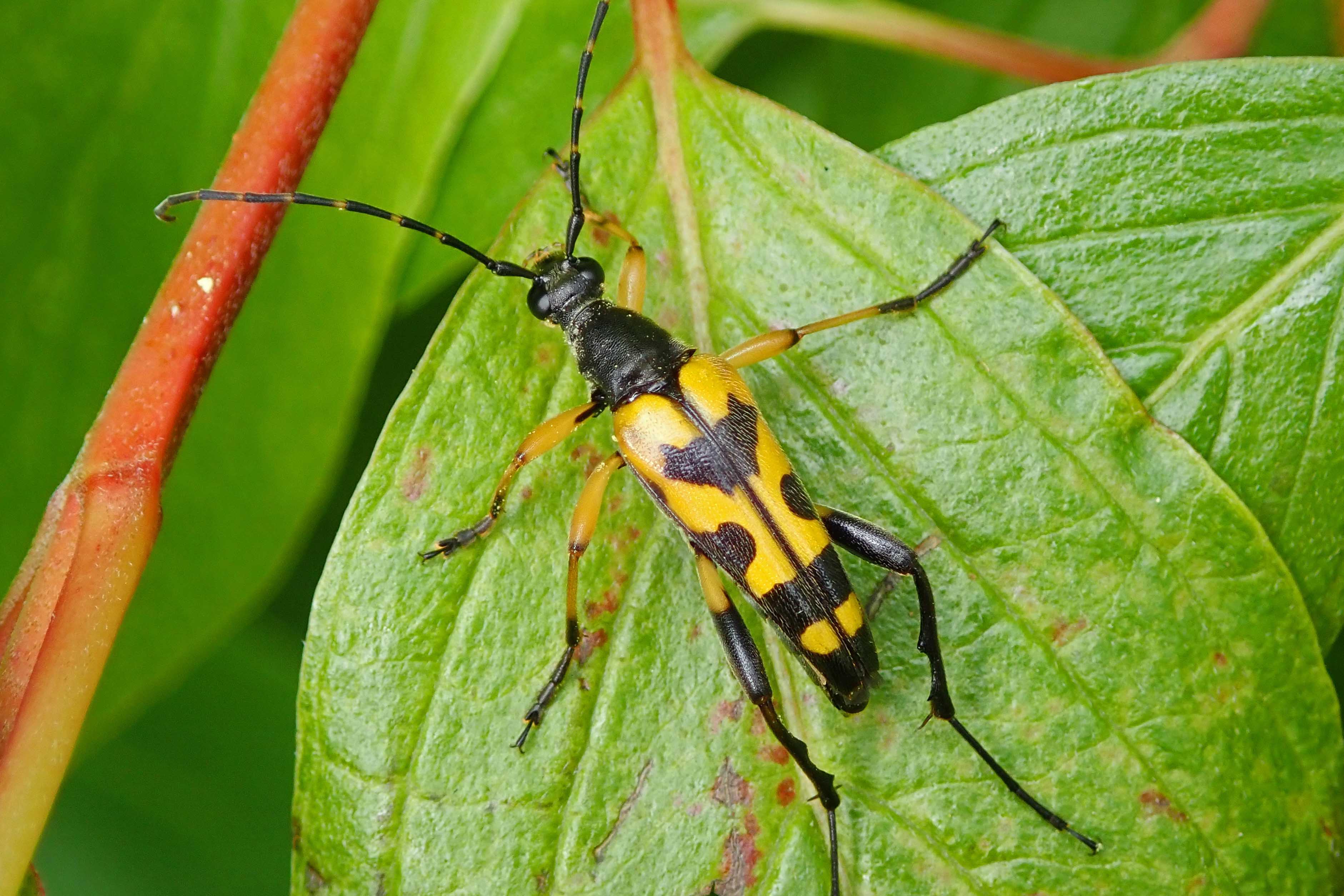
I’m sure many of you will have seen this first longhorn beetle, the Spotted longhorn (Rutpela maculata). Though the patterns may vary, its colourful yellow-and-black colouring is quite distinctive, and it is our most common longhorn beetle, though it doesn’t frequent the more northerly parts of Britain. Look for it along the edges of woodland rides and in hedgerows, particularly on the flowers of Hawthorn and various species of umbellifer, throughout the summer months.

240716 rutpela maculata

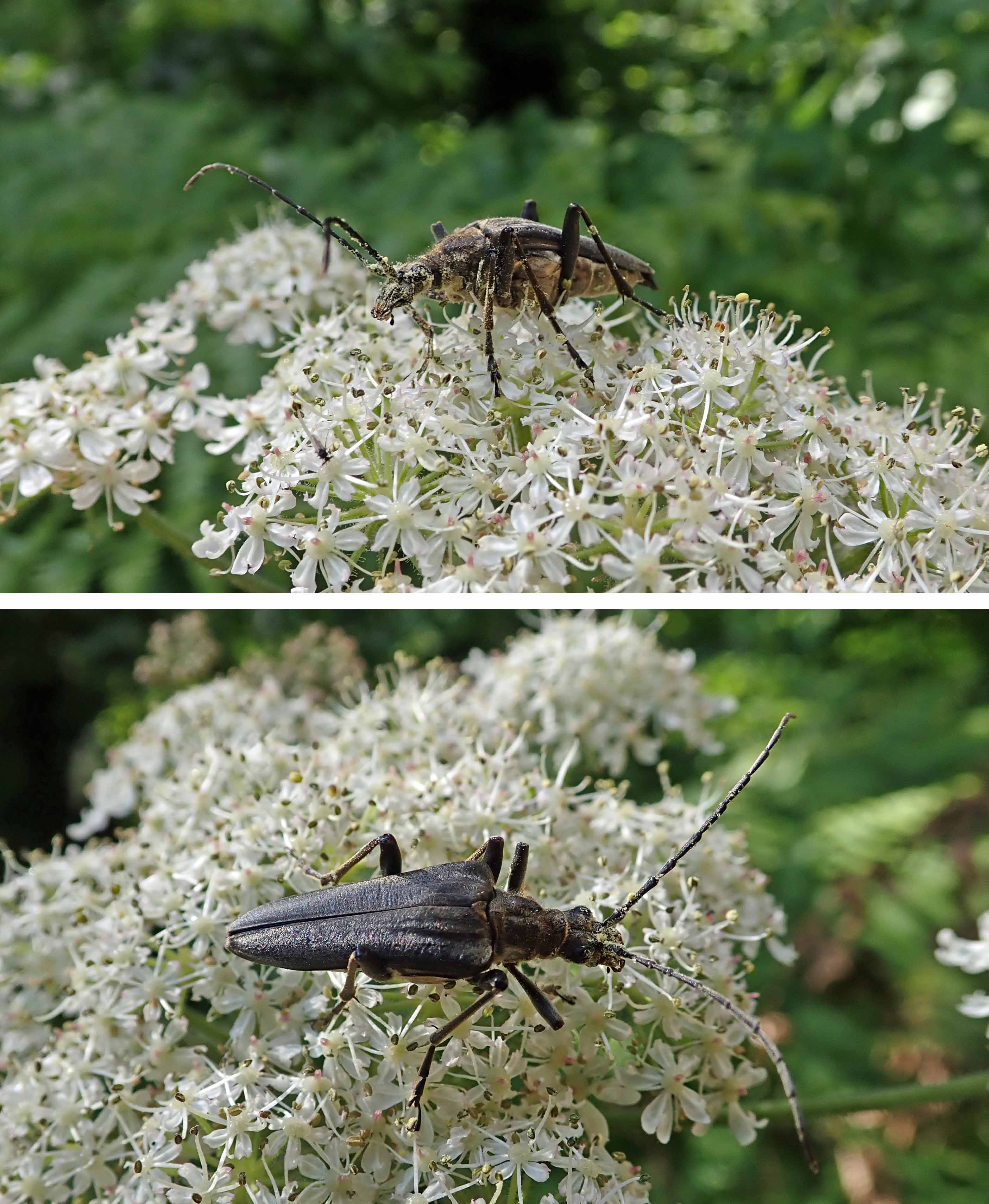
My second longhorn was a new discovery for me, once again from my recent visit to Slade Wood: this is Stenocorus meridianus (no common name). The fragmented broadleaf woodland of Slade Wood – where a lot of non-native trees have been felled in recent years to make way for native species – is the ideal habitat for this beetle, as it likes to feed on the flowers growing in sunny locations along woodland rides and on the edges of clearings. It is a large beetle, between 15 and 25mm, quite triangular in shape with its broad shoulders tapering to a more narrow apex. Its head and thorax are black (though that’s not so obvious when it’s covered in white pollen like this beastie), and the colour of its electra (wing covers) can vary from pale brown to black.

240716 Stenocorus meridianus

Like Loading...

The spinnings of Depressaria radiella

15 Monday Jul 2024

Posted by sconzani in insects

≈ Leave a comment

Tags

British moths, Depressaria radiella, moth larvae on Hogweed flower heads, moth larvae on Wild parsnip, Parsnip moth

I had found this once before, in a Cardiff Park back in July 2016, but was reminded by a post on Twitter/X to start once again checking the flower heads of Hogweed (Heracleum species) and Wild parsnip (Pastinaca sativa) for the larvae of the bland-looking little moth Depressaria radiella, the Parsnip moth.

240715 Depressaria radiella (1)

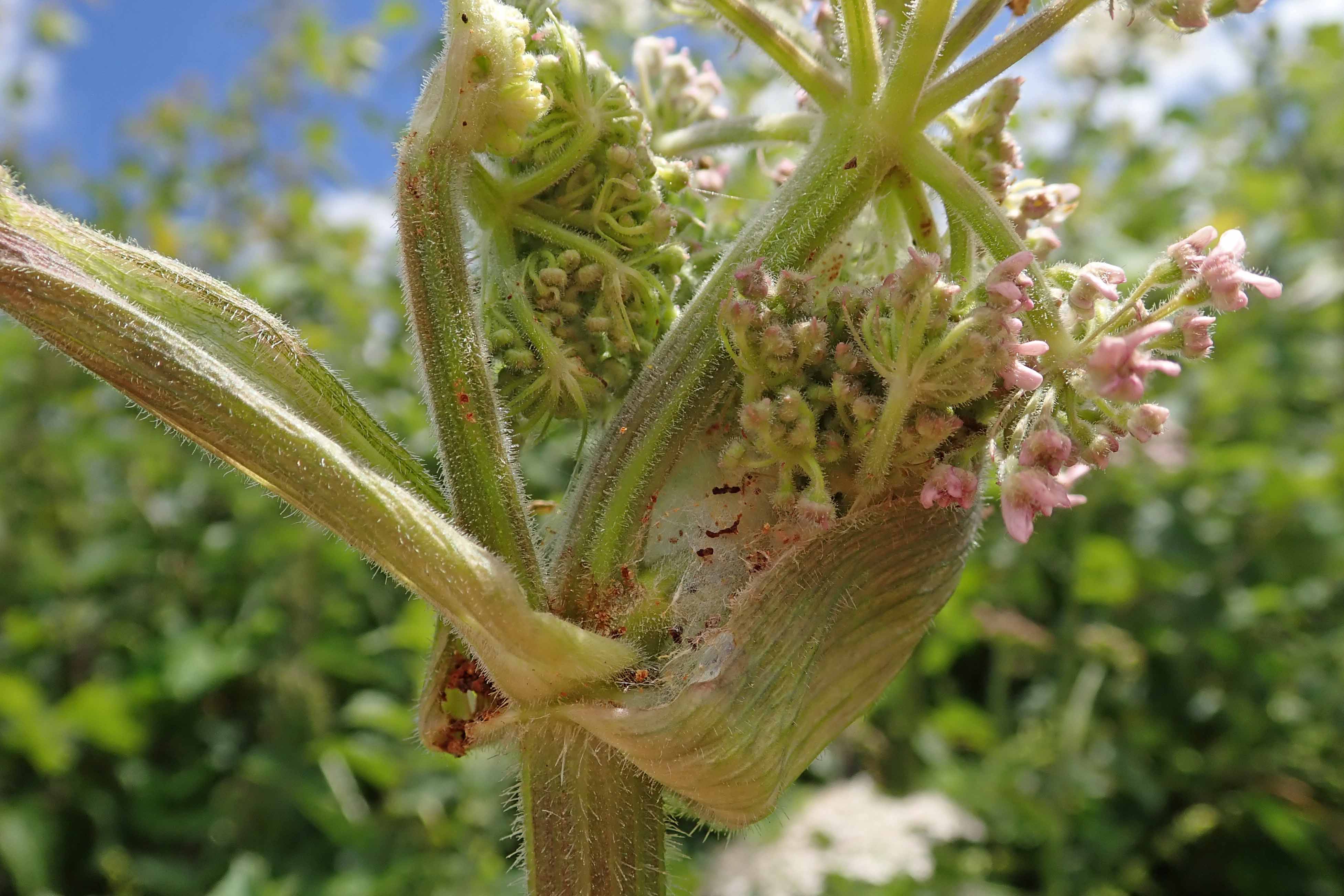
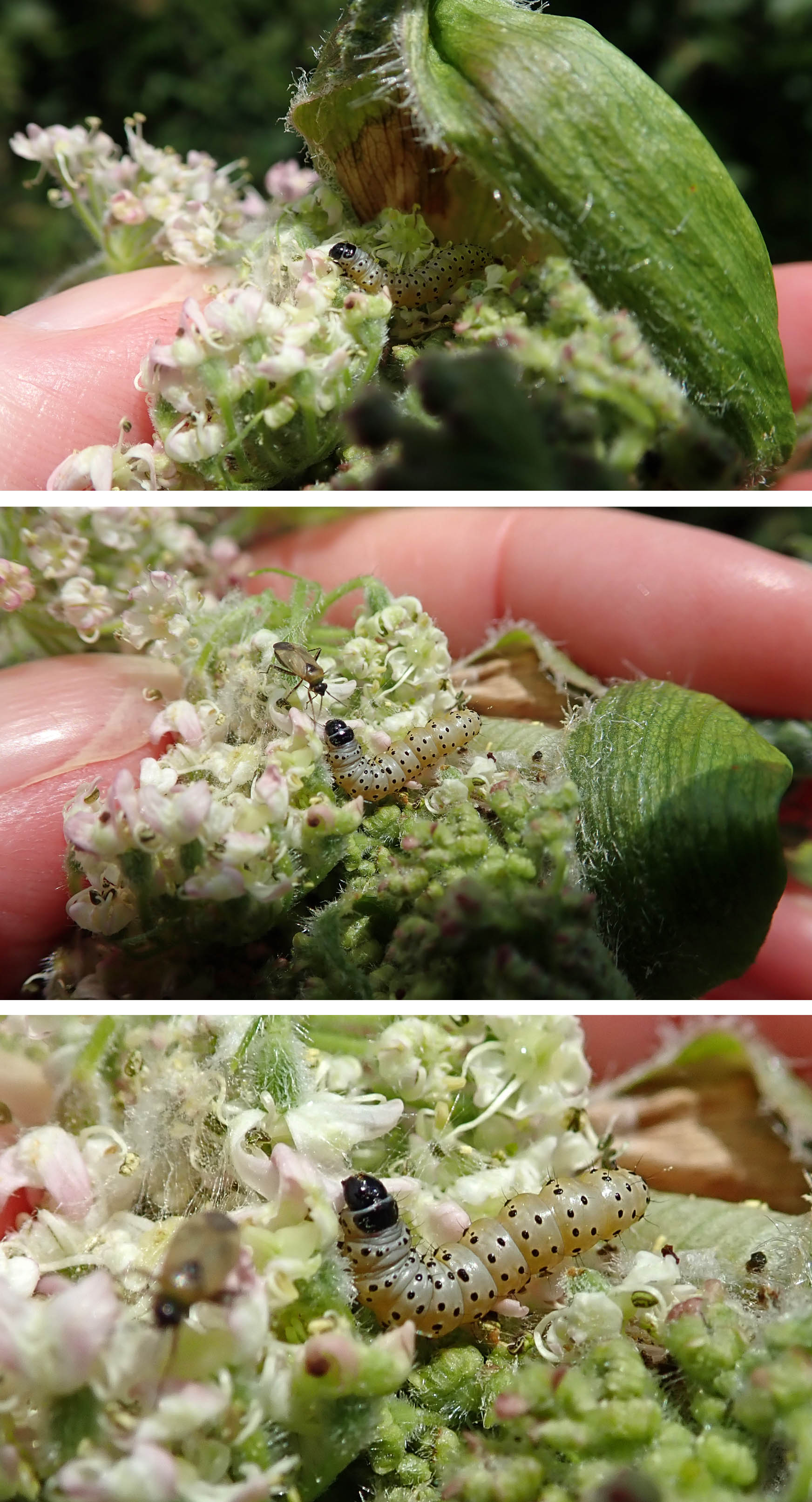
I wasn’t checking very thoroughly but still found two examples during my recent visit to Slade Wood, where they were living in Hogweed growing along the side of the lane that leads to the woodland. The larvae spin silk to bind parts of the flower heads together, making themselves a cosy little home amongst their food source. The UK Moths website reports that the larvae will eventually insinuate themselves into the plant stem to pupate, hatching in early Autumn and overwintering as adults, before beginning the whole lifecycle once again the following Spring.

240715 Depressaria radiella (2)

Like Loading...

Heather or Ling

14 Sunday Jul 2024

Posted by sconzani in wildflowers

≈ Leave a comment

Tags

British wildflowers, Calluna vulgaris, Heather, Heather flowers, Ling

Many of you will, I’m sure, be familiar with this plant, with the way it paints hillsides, heaths and moorlands in subtle shades of pink, lilac and purple when flowering, but have you looked more closely at its flowers? They are really quite beautiful. This is, of course, Calluna vulgaris, commonly known as Heather, and also Ling. As the Wildlife Trusts website reminds us

Historically, heather has been used for many purposes, such as fuel, fodder, building materials, thatch, packing and ropes. It was also used to make brooms, which is how it got its Latin name – Calluna is derived from the Greek word meaning ‘to brush’.

240714 heather

Like Loading...

An Ichneumon wasp pupa

13 Saturday Jul 2024

Posted by sconzani in insects

≈ 4 Comments

Tags

ichneumon wasp pupa, Ichneumon wasps, parasitic wasps, wasp pupa

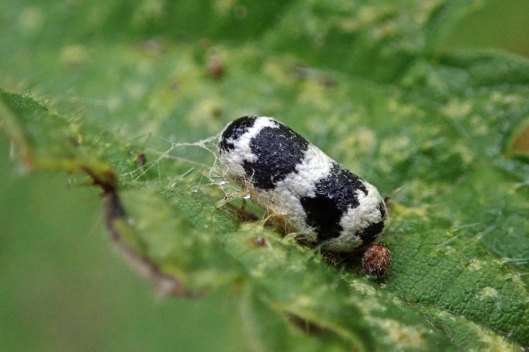
I was standing in front of a tall patch of nettles, moving from side to side, searching intently through the plant stems, hoping to find the chrysalis of one of the fat Peacock butterfly caterpillars I’d seen munching here just a few days previously (didn’t) when I spotted this black-and-white ‘thing’. It looked almost like a blob of poop but, when I edged cautiously closer (those bl**dy nettles sting!), I could see that it looked a bit furry. At home, some careful googling quickly turned up an identification – it’s the pupa of an Ichneumon wasp, which may well have parasitized one of those lovely fat caterpillars I had been admiring.

Like Loading...

Parent bug mother and babies

12 Friday Jul 2024

Posted by sconzani in insects

≈ 2 Comments

Tags

British insects, British shieldbugs, early instar Parent bug nymphs, Elasmucha grisea, Parent bug, Parent bug nymphs, shieldbug

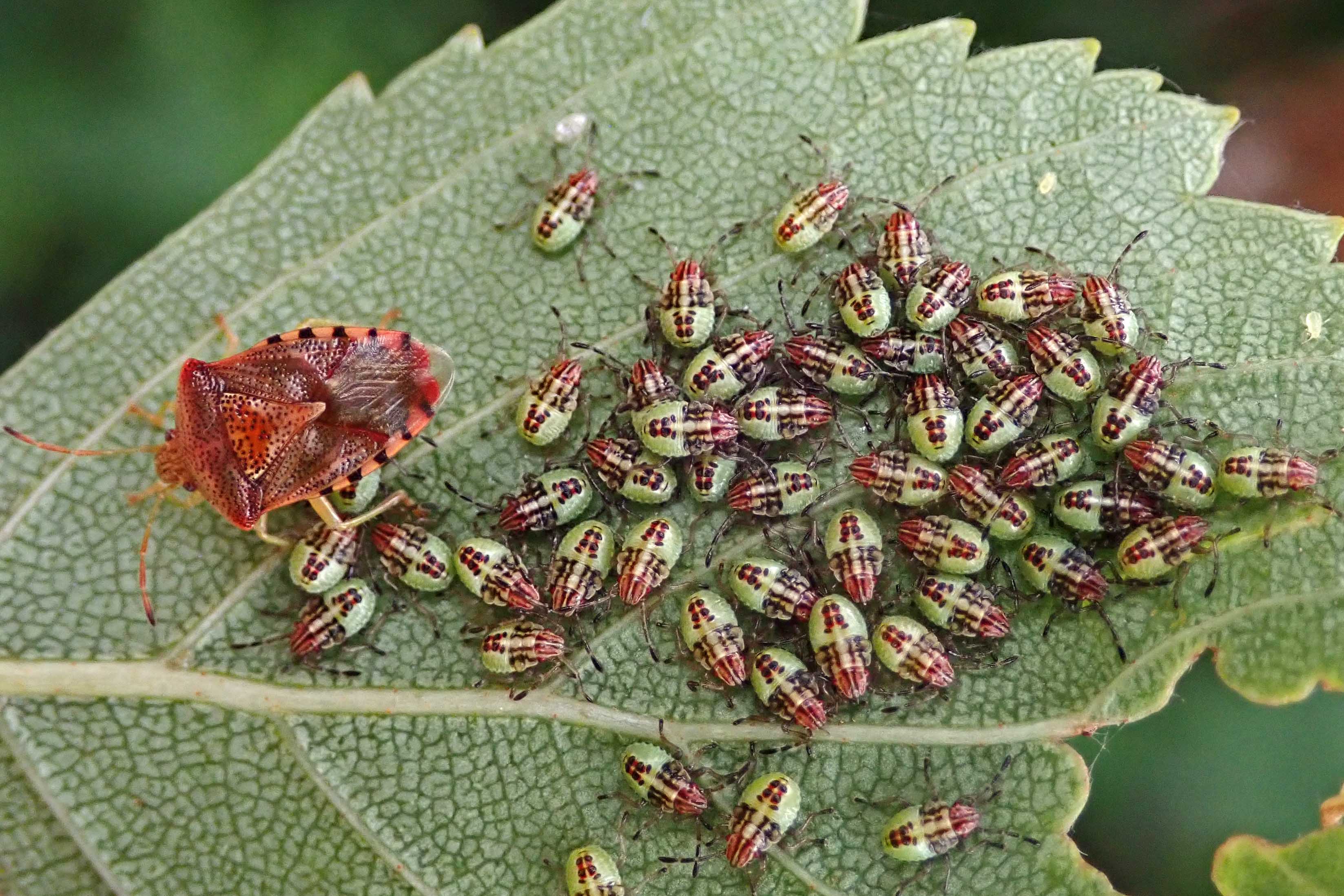
Leaf-bothering is quickly becoming one of my favourite things, especially when the weather isn’t good for bird-watching or spotting beautiful insects like butterflies and dragonflies. And it is most special when I turn over a leaf to see scenes like this, of a Parent bug (Elasmucha grisea) and her many babies (according to the British Bugs website, the male bug dies soon after mating while the female lives on to brood her eggs and young offspring). And these weren’t all of the Parent bug’s nymphs, as a neighbouring leaf held even more – I stopped counting at 80! At least she doesn’t have to feed them all.

240712 parent bug and babies

Like Loading...

First Southern hawker for 2024

11 Thursday Jul 2024

Posted by sconzani in insects

≈ Leave a comment

Tags

Aeshna cyanea, British dragonflies, dragonfly, Hawker dragonflies, Odonata, Southern hawker

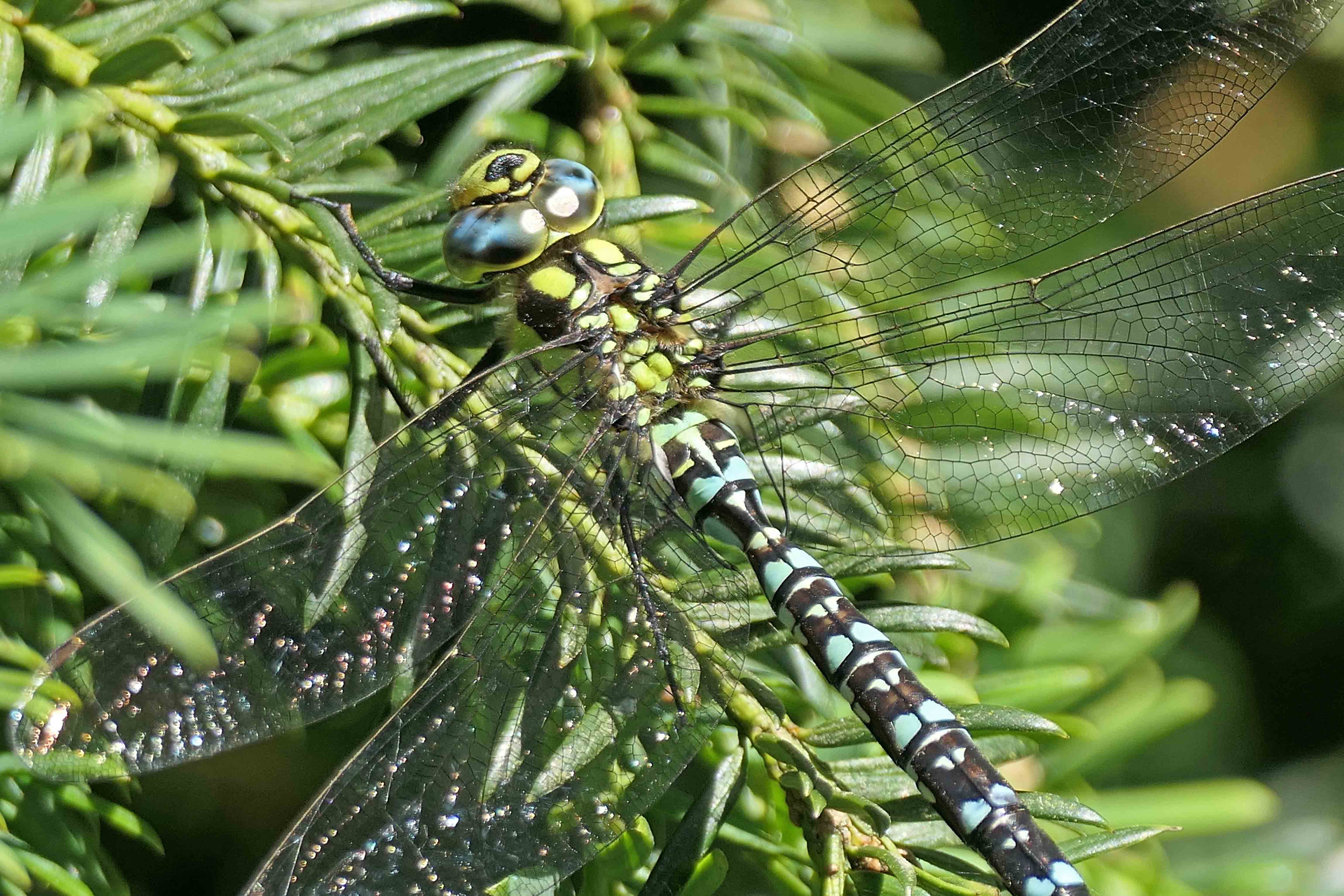
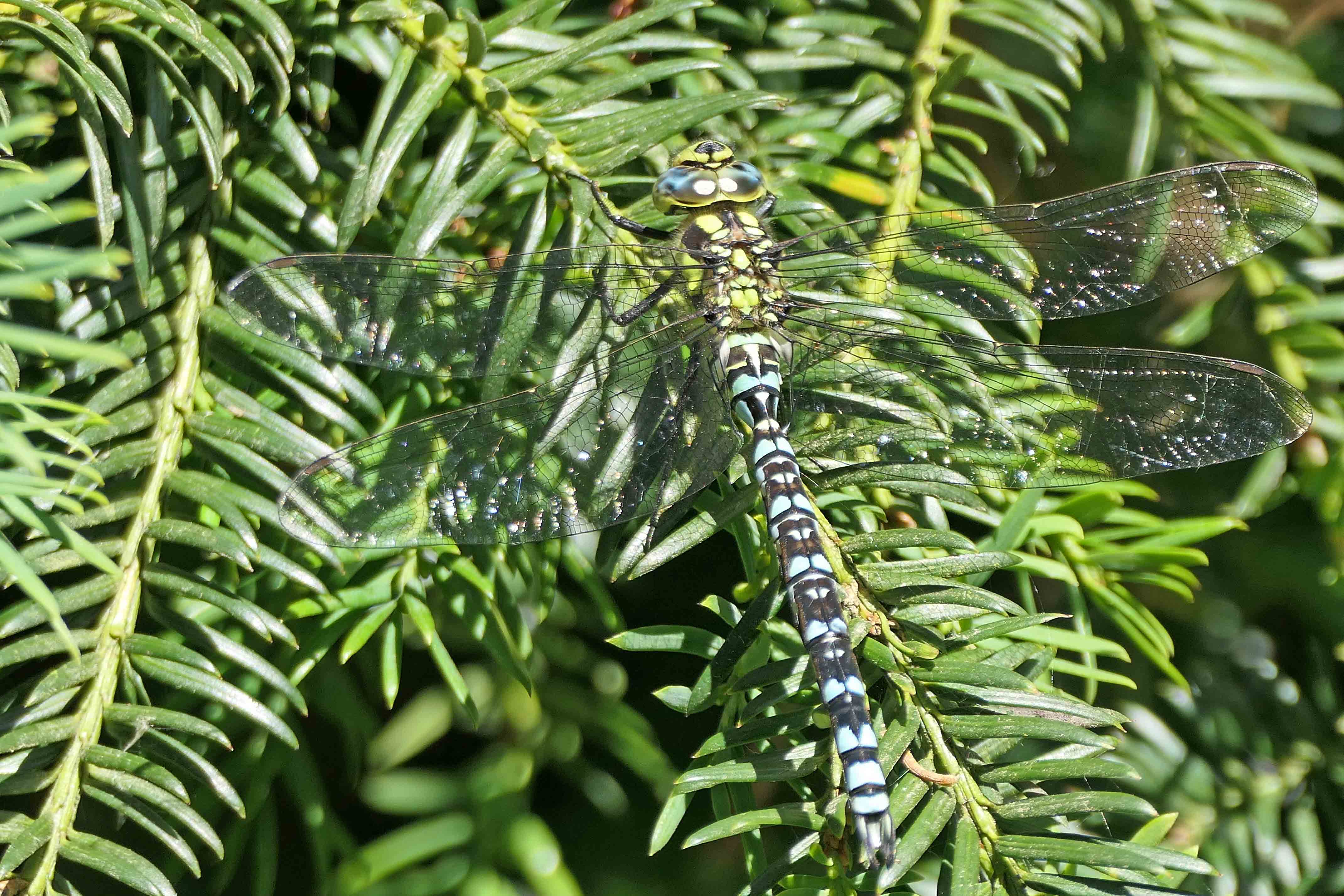
This handsome beastie was another wonderful find from my recent trip to Slade Wood in Gwent. The Southern hawker, also known as the Blue hawker (Aeshna cyanea), though quite similar to the Migrant hawker, can be identified by the broad yellow stripes on the top of its thorax, and, with a flight period running from the beginning of July to the end of September, is seen flying a month or so earlier than the Migrant.

240711 southern hawker (2)

Woodland rides like those at Slade Wood provide the ideal environment for its hawking of insects and, when it finds an ideal location, the Southern hawker will often defend its territory quite aggressively from other dragonfly intruders.

240711 southern hawker (1)

Like Loading...

Wild word: moult

10 Wednesday Jul 2024

Posted by sconzani in insects

≈ Leave a comment

Tags

British leafhoppers, Eupterycyba jucunda, insect moulting, leafhopper nymph moulting, moult, wild words

Moult (or molt, if you’re from the USA): noun; (of birds, mammals, arthropods, etc.) to shed (feathers, hair, or cuticle) in order that new growth can take place (Collins Concise Dictionary).

240710 Eupterycyba jucunda (2)

Last week, when checking the leaves of Italian alder, I found tiny creatures on almost every leaf. They were the various stages of the leafhopper Eupterycyba jucunda, from nymph to adult, and, amazingly, I even caught one in the middle of its moult from one stage to the next. The images below show an early stage nymph on the left and an adult on the right.

240710 Eupterycyba jucunda (1)

Like Loading...

The gliders of Slade Wood

09 Tuesday Jul 2024

Posted by sconzani in insects

≈ Leave a comment

Tags

British butterflies, butterfly, Limenitis camilla, Slade Wood, White admiral

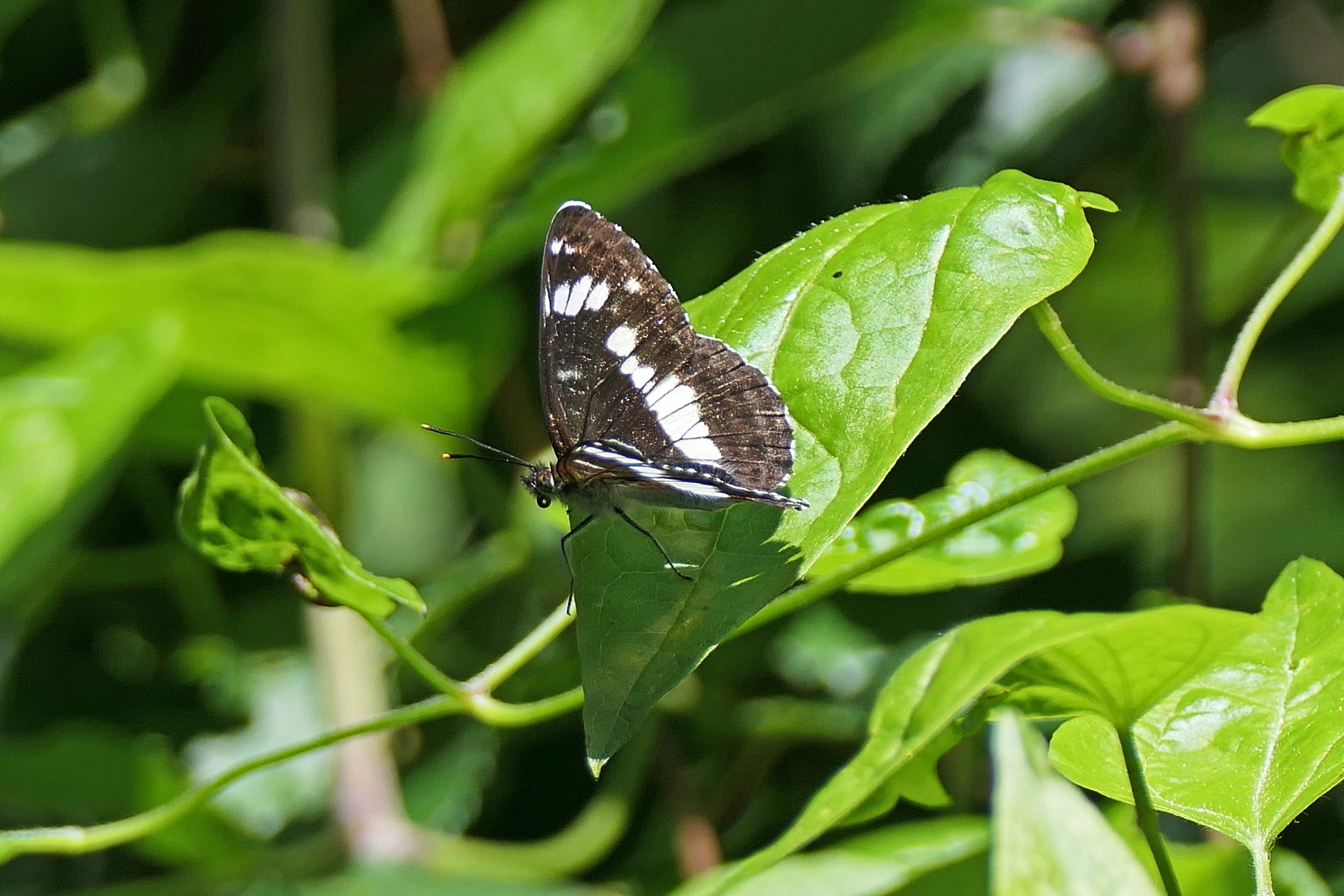
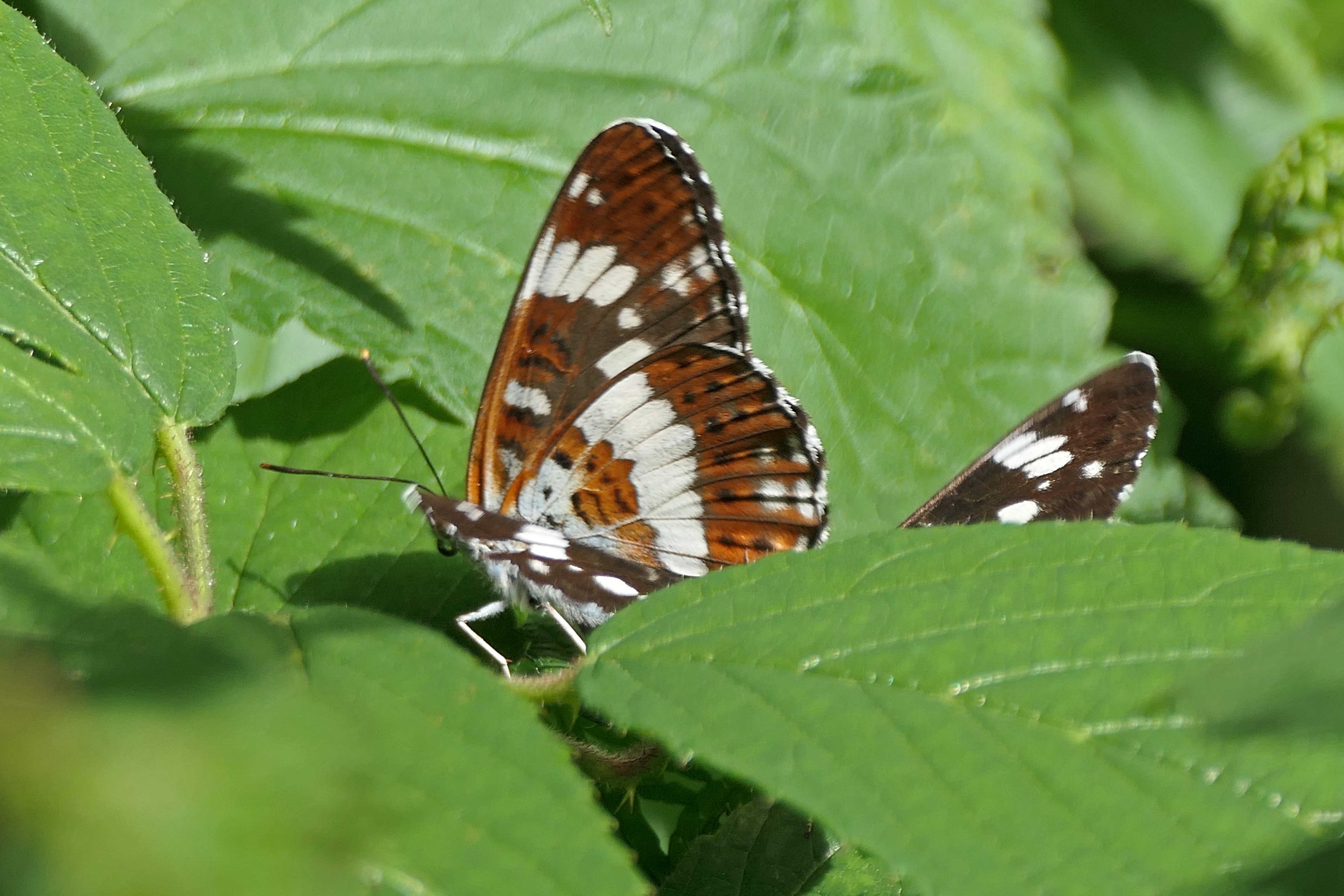
Last Thursday I took my annual train trip to Severn Tunnel Junction to look for White admirals in nearby Slade Wood, one of the few sites for this butterfly in Wales and the closest to me.

240709 white admirals (1)

And, despite it being very windy and not particularly warm, I was not disappointed.

240709 white admirals (2)

Three of these gorgeous gliders were seen along a side track where it was somewhat sheltered, but I saw none at all along the main ride, probably because of the weather conditions (seven White admirals had been seen the previous weekend when it had been sunny and still).

240709 white admirals (3)

The White admiral (Limenitis camilla) adults feed on the blossom of Brambles and on honeydew, whereas their caterpillars feed on Honeysuckle so both plants are essential for a colony of these gliding beauties to thrive.

240709 white admirals (4)

Like Loading...

Heterotoma planicornis

08 Monday Jul 2024

Posted by sconzani in insects

≈ Leave a comment

Tags

British bugs, British insects, Heterotoma planicornis, Heterotoma planicornis nymph, plant bugs

Though I had never seen one of these before, with those flattened parts of its antennae there was no mistaking this little insect. This is Heterotoma planicornis, a tiny member of the Miridae family of plant bugs. It can be found throughout Britain, on various plant species – mine was on the leaf of an Alder tree. The NatureSpot website reports that the eggs hatch in May and the nymphs develop in to adults from June onwards. The tiny bug I found was still a nymph so I guess it will be making its final change fairly soon.

240708 Heterotoma planicornis

Like Loading...
← Older posts
Newer posts →

About me

sconzani

sconzani

I'm a writer and photographer; researcher and blogger; birder and nature lover; countryside rambler and city strider; volunteer and biodiversity recorder.

View Full Profile →

Follow earthstar on WordPress.com

Enter your email address to follow this blog and receive notifications of new posts by email.

Recent blog posts

  • The day of the Wheatears March 28, 2026
  • Cetti’s warblers March 27, 2026
  • Goose barnacles March 26, 2026
  • Black-tailed godwits fighting March 25, 2026
  • Singing from every tree top March 24, 2026

From the archives

COPYRIGHT

Unless otherwise acknowledged, the text and photographs on this blog are my own and are subject to international copyright. Nothing may be downloaded or copied without my permission.

Fellow Earth Stars!

  • Unknown's avatar
  • Unknown's avatar
  • Unknown's avatar
  • Unknown's avatar
  • Unknown's avatar
  • Unknown's avatar
  • Unknown's avatar
  • Unknown's avatar
  • Unknown's avatar
  • Unknown's avatar
  • Unknown's avatar
  • Unknown's avatar
  • Unknown's avatar
  • Unknown's avatar
  • Unknown's avatar
  • Unknown's avatar
  • Unknown's avatar
  • Unknown's avatar
  • Unknown's avatar
  • Unknown's avatar
  • Unknown's avatar
  • Unknown's avatar
  • Unknown's avatar
  • Unknown's avatar
  • Unknown's avatar
  • Unknown's avatar
  • Unknown's avatar
  • Unknown's avatar
  • Unknown's avatar
  • Unknown's avatar
  • Unknown's avatar
  • Unknown's avatar
  • Unknown's avatar
  • Unknown's avatar
  • Unknown's avatar
  • Unknown's avatar
  • Unknown's avatar
  • Unknown's avatar
  • Unknown's avatar
  • Unknown's avatar
  • Unknown's avatar
  • Unknown's avatar
  • Unknown's avatar
  • Unknown's avatar
  • Unknown's avatar
  • Unknown's avatar
  • Unknown's avatar
  • Unknown's avatar
  • Unknown's avatar
  • Unknown's avatar

Blog at WordPress.com.

Privacy & Cookies: This site uses cookies. By continuing to use this website, you agree to their use.
To find out more, including how to control cookies, see here: Cookie Policy
  • Subscribe Subscribed
    • earthstar
    • Join 642 other subscribers
    • Already have a WordPress.com account? Log in now.
    • earthstar
    • Subscribe Subscribed
    • Sign up
    • Log in
    • Report this content
    • View site in Reader
    • Manage subscriptions
    • Collapse this bar
 

Loading Comments...
 

You must be logged in to post a comment.

    %d