Tags
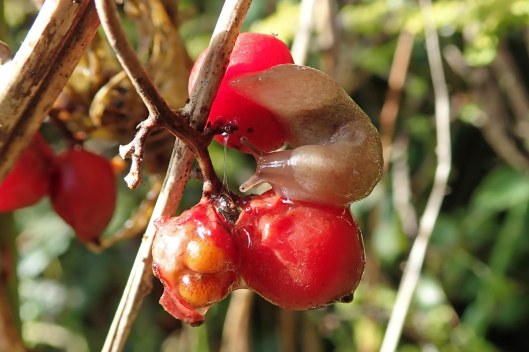
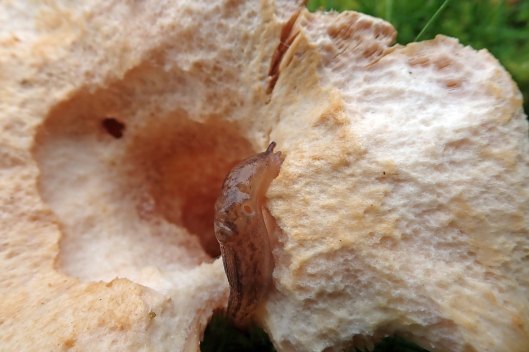
Wales is once again living up to its reputation for being a wet country, a fact about which I may not be particularly happy but the slugs are once again / still loving it.

25 Friday Oct 2019
Tags
Wales is once again living up to its reputation for being a wet country, a fact about which I may not be particularly happy but the slugs are once again / still loving it.
24 Thursday Oct 2019
Posted in autumn, flowers, nature, wildflowers
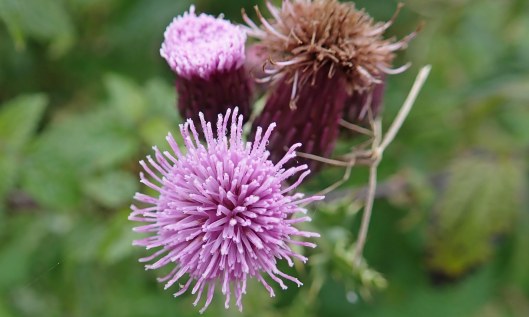
Everything was dripping today as my little bit of south Wales was cloaked in heavy fog. I headed down to Cardiff Bay hoping some interesting birds might be sitting out the murkiness but, if they were, I couldn’t see them. Plants were easier to spot so, as I walked back home up the zigzag path, I kept an eye out for which wildflowers were still in bloom. I was pleasantly surprised with the numbers I found, and the water droplets added a pretty touch to some of my photos, I think.


23 Wednesday Oct 2019
Yesterday was the first time I’ve ever seen female (on the left) and male Migrant hawkers together. These two were hanging on a fence at Goldcliff lagoons, near Newport. What a treat!

22 Tuesday Oct 2019
Posted in autumn, flowers, nature, wildflowers
I was surprised, but delighted to find this Honeysuckle plant still in flower today.

Did you know its scent, which is strongest at night, can be detected by pollinating moths a quarter of a mile away (Flora Britannica)? Did you know its vernacular name is woodbine (I know at least one of you did) and the plant is mentioned in Shakespeare’s A Midsummer Night’s Dream:
Sleep thou, and I will wind thee in my arms ..
So doth the woodbine, the sweet honeysuckle
21 Monday Oct 2019
Tags
birding, birdwatching, British birds, eclipse male Goosander, Goosander, juvenile Goosander, plumage change in Goosander
There were actually 5 Goosanders on the River Ely this morning. Four stayed their distance but this one, paddling alone, came over to investigate me.
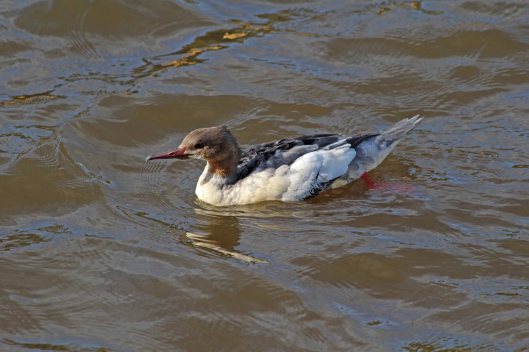
I’ve been trying to work it out. I don’t think it’s a female – though they have reddish-brown heads, they’re more generally grey in the body, without so much black on their backs.
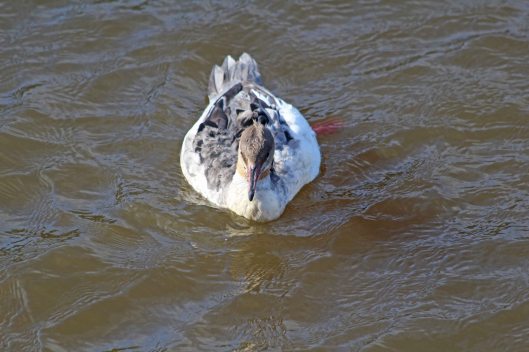
And it seems that in juvenile Goosanders the separation between the white throat and chin and the brown head is less clear cut, more ragged – in this bird it seems well defined.

So that leaves me with a male bird in eclipse plumage, i.e. still undergoing the change from its breeding plumage (of black-dark green head and upper neck) to its winter plumage, though that would usually be complete by now, I think.

Hence my confusion. If any experienced birders reader this, I would welcome your opinions (and explanations). Thanks!
20 Sunday Oct 2019
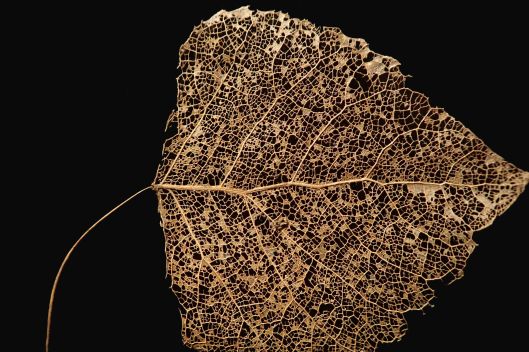
One of the ghosts of the many beautiful fallen leaves …
19 Saturday Oct 2019
Tags
birding, birdwatching, Britain's smallest bird, British birds, Europe's smallest bird, Goldcrest
Goldcrests always look sad to me – something to do with their big eyes and that dark, downturned line at the side of their beaks, perhaps.

Should they be sad? Being Europe’s littlest birds means life must be quite tough, especially as hundreds of these tiny creatures regularly migrate across the North Sea from Scandinavia to northern and eastern parts of Britain. According to Fauna Britannica, large numbers of Goldcrests used to be trapped in the rigging of North Sea fishing boats, which is why their vernacular names include ‘herring spink’ and ‘tot o’er the seas’.

I was delighted to see a good number of Goldcrests in trees along the south Wales coast this week. Their constant peeping indicated their presence – luckily for me, I can still hear their calls: the high pitch means many birders ‘lose’ the calls of Goldcrests as their hearing deteriorates with age. I certainly hope that doesn’t happen to me.

Goldcrests are not easy to photograph as they’re hyperactive little creatures, constantly flitting from leaf to branch and back again in their search for tasty tiny morsels, so I was pleased to get these few images, even though they’re not the sharpest.
18 Friday Oct 2019

I know Wales has a reputation for being a wet country but the past couple of weeks have been much wetter than any I’ve known in my four years here. Still, it’s good weather for slugs, which is why this large and colourful beastie was to be found sliding its way across my path today. It was about 3 inches long and I presume, despite its colour – they vary a lot, that it’s a Black slug (Arion ater agg.), a species that can only be positively identified by examination of its genitals. I’m not going there!

16 Wednesday Oct 2019
Determined to make the most of a few hours of sunlight yesterday, I headed along the south Wales coastal path to see what I could find, taking just my small camera as more rain was forecast.
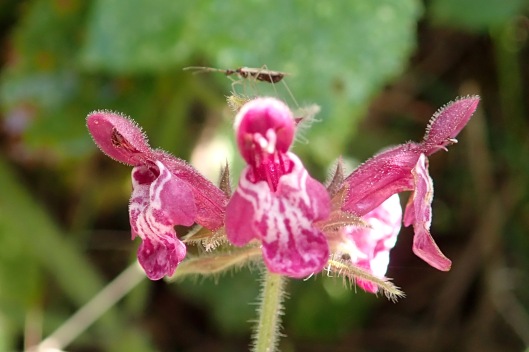
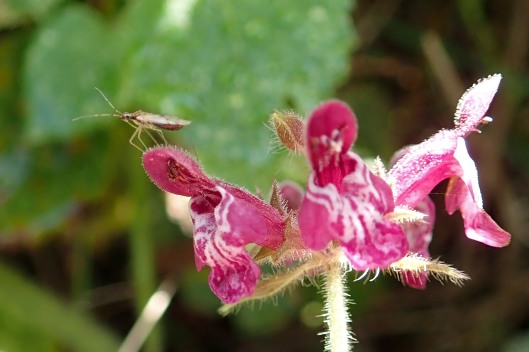
Vegetation along the path had been severely cut back since my last walk that way, which meant that wildflowers were few and far between, though I did find a few plants of Hedge woundwort (Stachys sylvatica) still flowering.
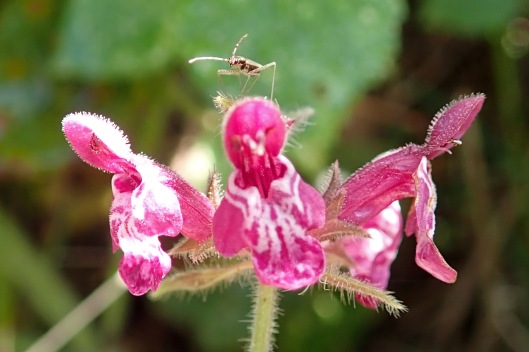
And while trying to get some close-ups of the flowers, I had the distinct feeling I was being watched. A tiny, early instar flower bug (not sure which species) was sitting atop one of the flowers and, as if curious, it pranced across from the further flower to the nearer to see what I was doing. Cute!
15 Tuesday Oct 2019
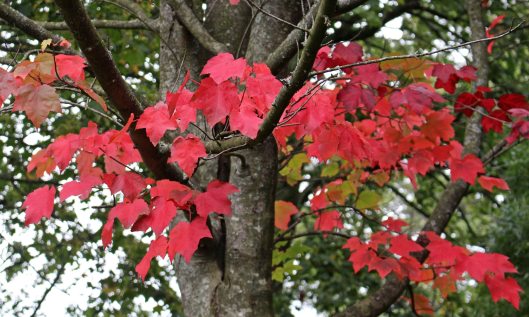
‘The heart of autumn must have broken here, and poured its treasure upon the leaves.’ ~ Charlotte Fiske Bates, ‘Woodbines in October’, from Risk, and other poems, 1879


 earthstar
You must be logged in to post a comment.