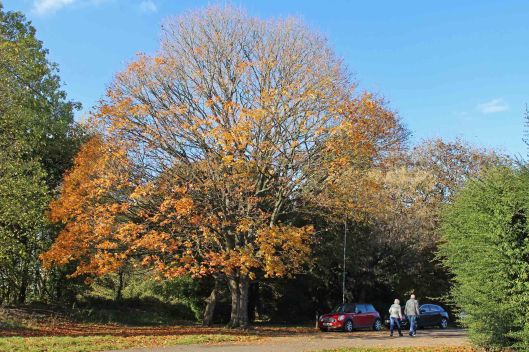
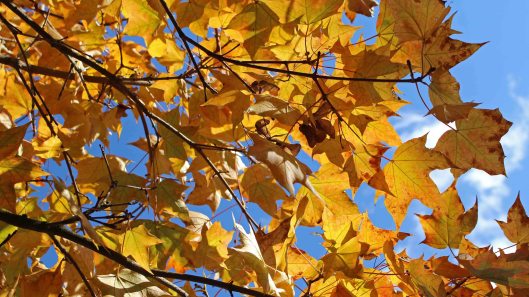
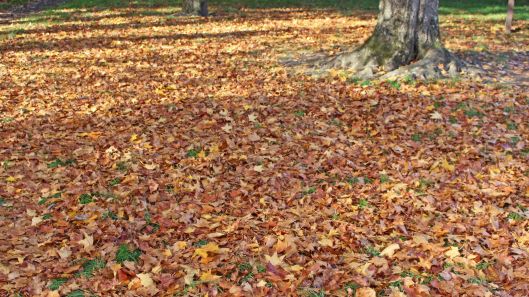
• ABOUT
  • BIRDING 2018
  • Birding 2019
  • BLOG POSTS
  • Butterflies 2018
  • Resources

earthstar

~ a celebration of nature

earthstar

Category Archives: autumn

Winter 10

25 Sunday Nov 2018

Posted by sconzani in autumn, flowers, nature, plants, wildflowers

≈ 2 Comments

Tags

#WildflowerHour, #winter10, British wildflowers, wildflowers, winter wildflower challenge

If you’ve been following for a while, you’ll know I’ve been trying on and off to learn the names of, and a bit more about, the British wildflowers I find on my meanderings. And, to that end, I follow a weekly happening on Twitter called #wildflowerhour. You can read more about that in my previous blog here. During winter they run a challenge to find and name at least 10 wildflowers each week and share them on social media using the hashtag #winter10.

Blue fleabane

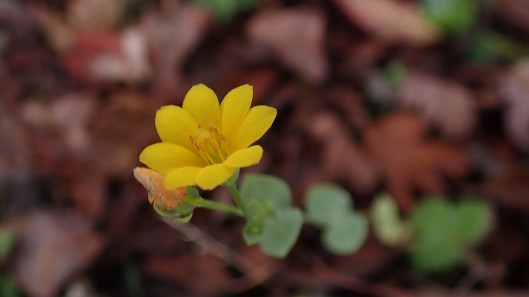
Earlier this week, I decided to see what I could find as I walked firstly through Lavernock Nature Reserve and then homeward through Cosmeston Lakes Country Park. And, er, actually, for this week my hashtag needs to be #winter11. These are they: Blue fleabane, Bramble species, maybe a Hawkbit species, some kind of Buttercup, a Dandelion species, a Daisy and Devil’s-bit scabious, Yellow-wort, a thistley thing and Red clover, and Common ragwort. You can see I’ve still got some learning to do!

Bramble species

181125 some kind of chickweed
181125 some kind of buttercup

181125 dandelion sp

181125 daisy
181125 devils-bit scabious

OLYMPUS DIGITAL CAMERA

181125 knapweed maybe
181125 red clover

181125 common ragwort

Like Loading...

Crepidotus calolepis

23 Friday Nov 2018

Posted by sconzani in autumn, fungi, nature

≈ Leave a comment

Tags

#FungiFriday, British fungi, Crepidotus calolepis, Oysterling, oysterling fungi

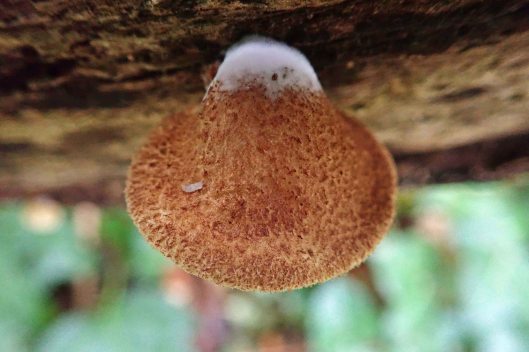
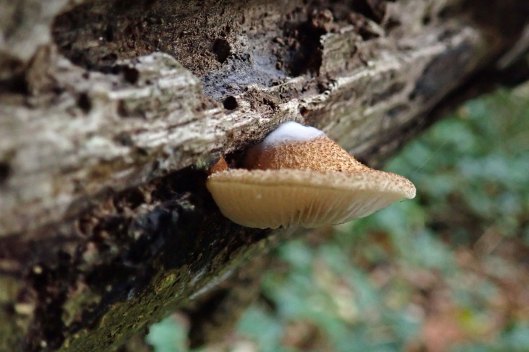
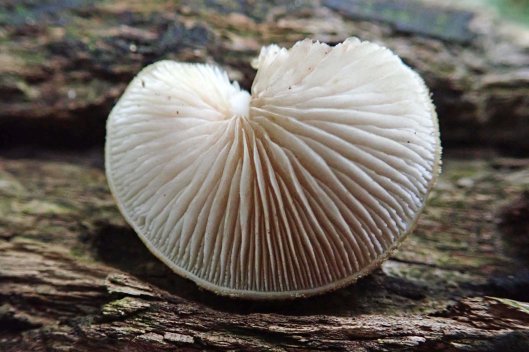
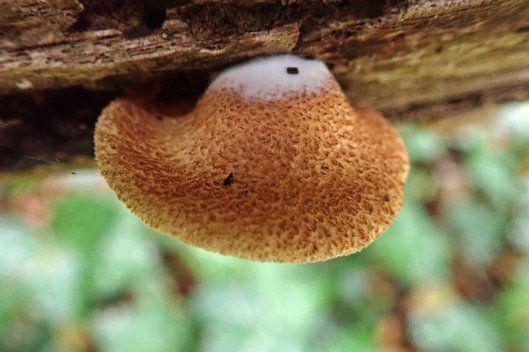
Happy #FungiFriday! I actually found these little oysterling fungi a few weeks ago but forgot to share them at the time.

181123 Crepidotus calolepis (1)

Crepidotus calolepis is a bit of a mouthful but these little beauties don’t have a common name. Here’s what fungi expert Pat O’Reilly says about its scientific name:

The generic name Crepidotus comes from crepid- meaning a base such as a shoe or a slipper (although some sources state that it means ‘cracked’), and otus, meaning an ear – hence it suggests a ‘slipper-like ear’. In the past mushrooms in this genus were sometimes referred to as slipper mushrooms. The specific epithet calolepis may come from the roots calo- meaning beautiful and lepis, meaning with scales.

181123 Crepidotus calolepis (2)

181123 Crepidotus calolepis (3)
181123 Crepidotus calolepis (4)

181123 Crepidotus calolepis (6)

O’Reilly is doubtful about the presence of Crepidotus calolepis in Britain, suggesting that the British records are, in fact, scaly forms of Crepidotus mollis, the Peeling oysterling, but my find was confirmed from photos by two other British experts so C. calolepis it is!

181123 Crepidotus calolepis (5)

Like Loading...

Glistening silver and gold

22 Thursday Nov 2018

Posted by sconzani in autumn, flowers, nature, wildflowers

≈ 4 Comments

Tags

British flora, Carlina vulgaris, Carline thistle, everlasting flowers, seedheads, seeds, thistle, thistle seeds

181122 carline thistle (2)

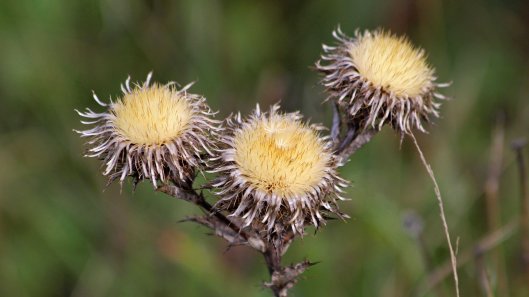
They glisten silver and gold in the late autumn sunshine these Carline thistles, with their thick fringe of papery bracts and heads of soft golden down. I blogged about the flowers last year; now here are the ‘everlasting’ seed heads that can be seen all through the chilly months of winter.

181122 carline thistle (1)

Like Loading...

Birding at Garwnant and Rhaslas

19 Monday Nov 2018

Posted by sconzani in autumn, birds, nature, walks

≈ 2 Comments

Tags

birding, birdwatching, British birds, Common crossbill, Cormorant, Garwnant Forest, Glamorgan Bird Club, Goosander, Llwyn-onn Reservoir, Red kite, Rhaslas Pond, Water pipit, Willow tit

Clear blue skies, stiff  breeze and freezing cold, star birds and great company, long walk, Welsh upland scenery … it doesn’t get much better than yesterday’s Glamorgan Bird Club’s field trip to the forestry at Garwnant and Rhaslas pond, with a quick stop at the Llwyn-onn reservoir in between.
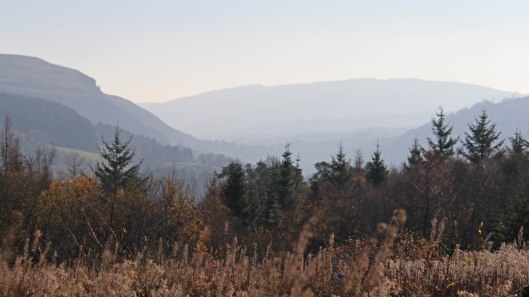
181119 birding at garwnant and rhaslas (1)

It took us a while to leave the car park at the Forestry Centre as the birding got off to a cracking start with lots of Common crossbills coming in to feed on the cones of the tall conifers all around us.

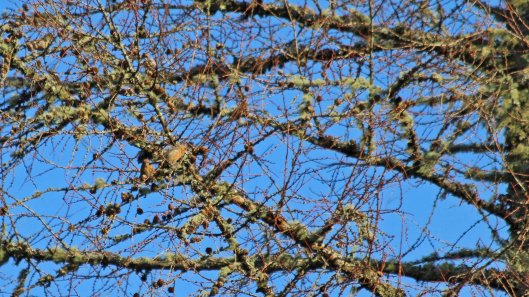
181119 birding at garwnant and rhaslas (2)181119 birding at garwnant and rhaslas (3)

We headed out along one of the many walking trails, hoping for views of Willow tits. One person heard one but the bird didn’t reappear so we carried on a bit further to a high vantage point. From there we were rewarded with views of Kestrel, Buzzard and this magnificent Red kite.

181119 birding at garwnant and rhaslas (4)

Retracing our steps, a couple of us who’d lingered behind heard the Willow tit calling, waved frantically to the birders ahead, and managed some good views of this increasingly uncommon little bird.

181119 birding at garwnant and rhaslas (5)

We then walked a rectangular path, taking us out around more of the forest trails, seeing even more Crossbills and another couple of Willow tits, as well as many other species. After lunch back at the car park, we drove down to nearby Llwyn-onn dam for a quick scan for any interesting birds. The reservoir was looking gorgeous, with much more water than on our last visit.
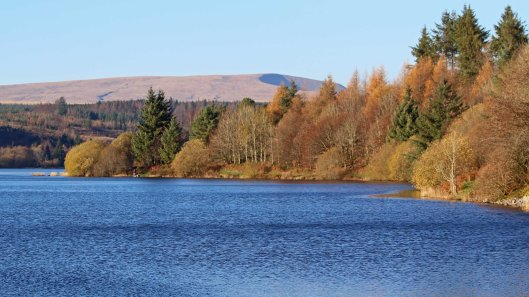
181119 birding at garwnant and rhaslas (6)

We’d hoped for a Water pipit … and there it was, though a very flighty bird that scarcely stayed still and kept flying off in various directions. I was pretty happy though as this was a lifer for me, and it was a year tick for several other birders.
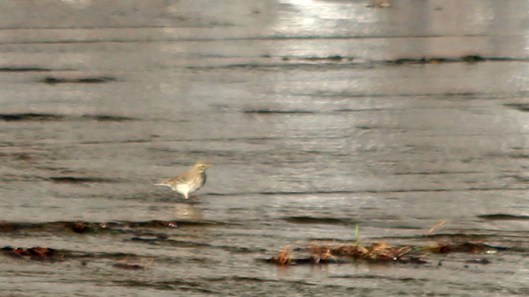
181119 birding at garwnant and rhaslas (7)

I really like how this photo of the Cormorant turned out. And there was a Common sandpiper just along the pipe from where it was perched.
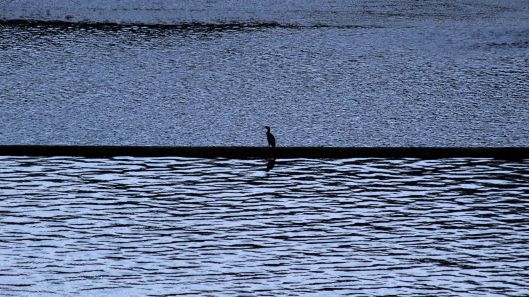
181119 birding at garwnant and rhaslas (8)

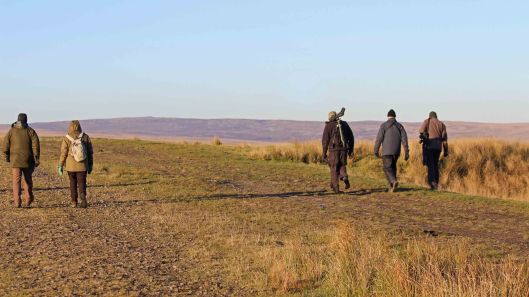
Then it was on for a quick check of Rhaslas pond before the light faded – sunset is around 4.15pm at the moment. It was bitterly cold up on the open moorland as you tell from how rugged up everyone was.
181119 birding at garwnant and rhaslas (9)

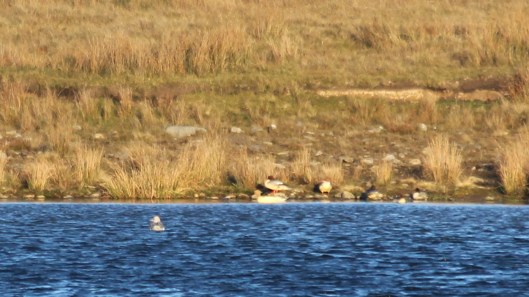
Though there weren’t a huge number of birds on the pond, we did see several Goosanders, Wigeon, Tufted ducks and a solitary Goldeneye. It was a smashing end to an excellent day!
181119 birding at garwnant and rhaslas (10)

Here’s my list of birds seen: Wigeon, Teal, Mallard, Tufted Duck, Goldeneye, Goosander, Grey Heron, Cormorant, Red Kite, Buzzard, Kestrel, Common Sandpiper, Black-headed Gull, Lesser Black-backed Gull, Herring Gull, Woodpigeon, Great Spotted Woodpecker, Magpie, Jay, Carrion Crow, Raven, Blue Tit, Great Tit, Coal Tit, Willow Tit, Goldcrest, Wren, Nuthatch, Treecreeper, Blackbird, Mistle Thrush, Robin, Pied Wagtail, Water Pipit, Chaffinch, and Common Crossbill. And somehow I missed the Starling, Song Thrush, Redwing and Fieldfare.

Like Loading...

Late autumn at Forest Farm

18 Sunday Nov 2018

Posted by sconzani in autumn, leaves, nature, trees, walks

≈ 8 Comments

Tags

autumn, autumn colour, autumn leaves, autumn trees, Forest Farm, Forest Farm Nature Reserve

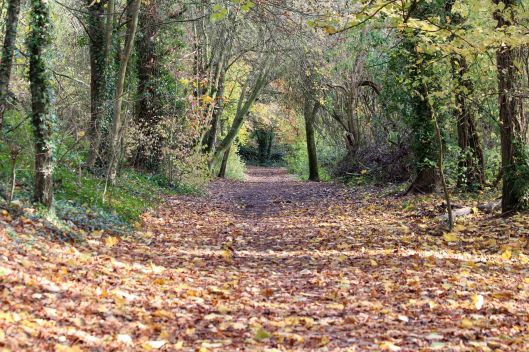
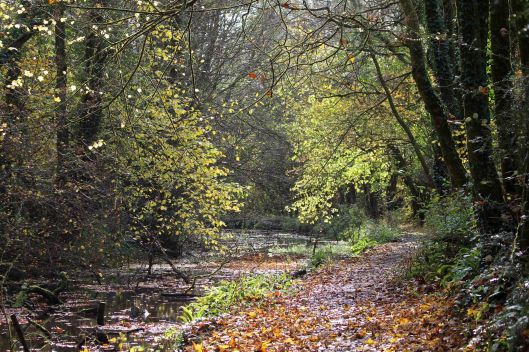
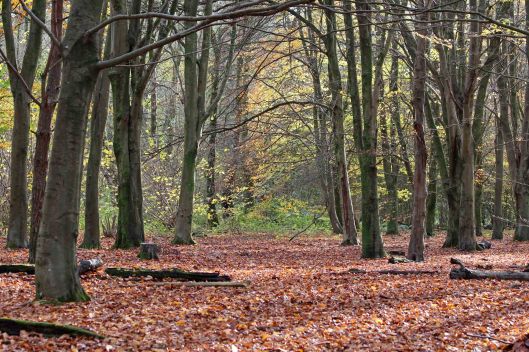
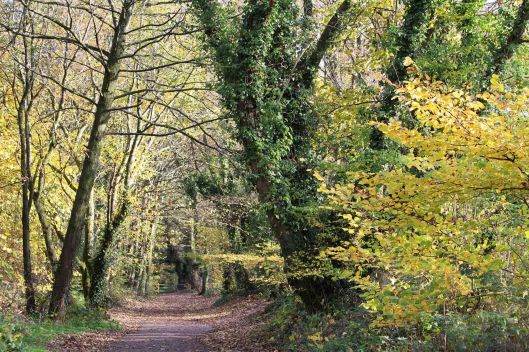
When anyone asks me what my favourite season is I can never decide because they each have their good points but, this year, our late-arriving autumn has certainly been magnificent. On Wednesday I caught the train to Radyr for a meander around Forest Farm Nature Reserve and it was sublime. From bright golden yellows to rustling red-browns, with some leaves still decorating spreading branches above my head and others carpeting the woodland floor beneath my feet, I spent a marvellous day, my eyes admiring, my feet kicking, my neck craning and all my senses spilling over. Ah, autumn!

181118 Forest Farm (1)181118 Forest Farm (2)181118 Forest Farm (3)181118 Forest Farm (4)181118 Forest Farm (5)181118 Forest Farm (6)181118 Forest Farm (7)

Like Loading...

Variations on a theme

15 Thursday Nov 2018

Posted by sconzani in autumn, nature, wildflowers

≈ 2 Comments

Tags

dandelion, dandelion seedhead, plant seeds, round seedheads, seed dispersal methods, seed dissemination, seeds

181115 seed dispersal (1)

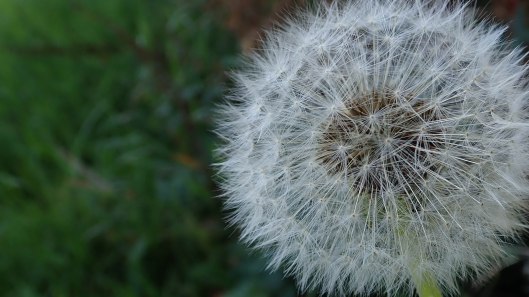
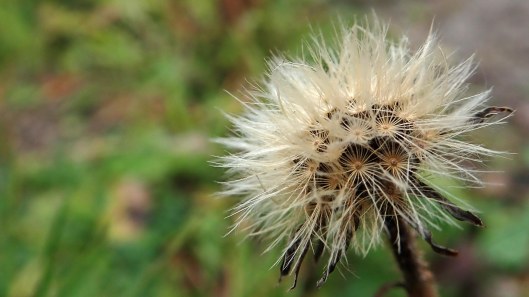
With its seeds attached to tiny botanical parachutes that can be distributed far and wide by the wind, the Dandelion (Taraxacum officinale agg.) has evolved an extremely efficient method of disseminating its seed. It’s not surprising, then, that many other species use a very similar method to disperse their seeds.

181115 seed dispersal (2)181115 seed dispersal (3)181115 seed dispersal (4)181115 seed dispersal (5)

I don’t think I’m getting my wish this time around!

181115 seed dispersal (6)

Like Loading...

Cosmeston colour

11 Sunday Nov 2018

Posted by sconzani in autumn, leaves, nature, seasons, trees

≈ Leave a comment

Tags

autumn colour, autumn leaves, autumn trees, Cosmeston, Cosmeston Lakes Country Park

181111 Cosmeston colour (1)

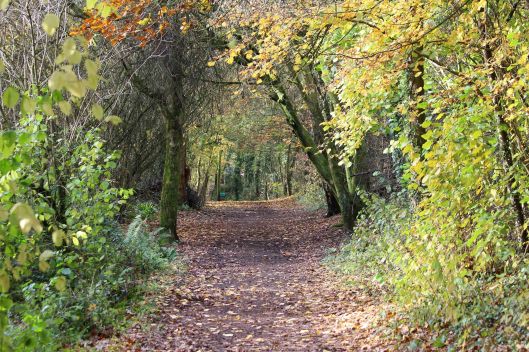
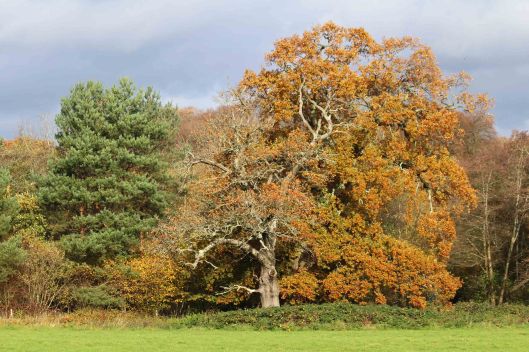
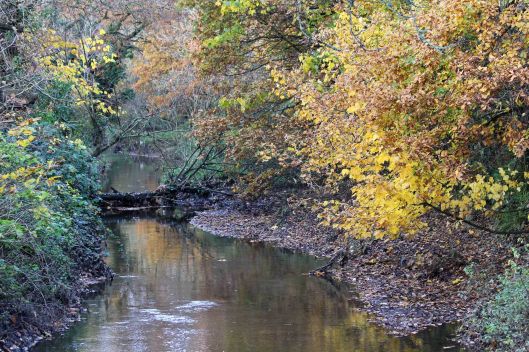
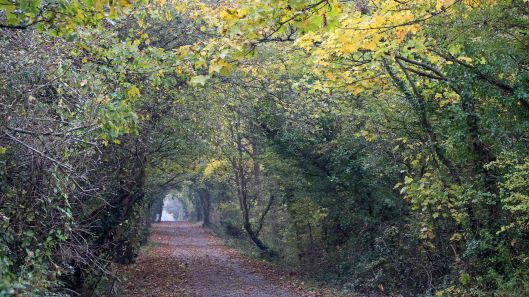
Although it’s now late autumn, as the weather has been so mild, it’s only in the past couple of weeks that I’ve been seeing the change of seasons reflected in the trees around me on my meanders. So, here’s some glorious autumn colour from recent walks at Cosmeston Lakes Country Park.

181111 Cosmeston colour (2)
181111 Cosmeston colour (3)
181111 Cosmeston colour (4)
181111 Cosmeston colour (5)
181111 Cosmeston colour (6)
181111 Cosmeston colour (7)
181111 Cosmeston colour (8)
181111 Cosmeston colour (9)
Like Loading...

A white-headed Ruff

08 Thursday Nov 2018

Posted by sconzani in autumn, birds, nature

≈ 1 Comment

Tags

birding, birdwatching, British birds, Philomachus pugnax, RSPB Lodmoor, Ruff, white-headed ruff

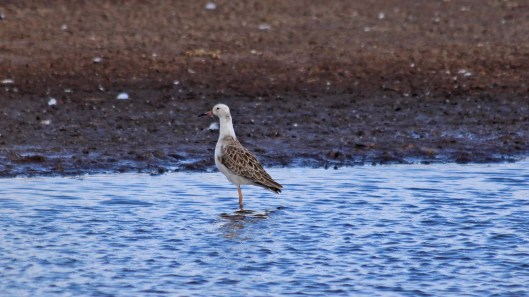
The Ruff is another bird I had only seen at a distance, or through the ’scopes of generous birding friends, before our recent birding weekend on Portland, when we got good views of a single Ruff during our stopover at RSPB Lodmoor.

181108 white-headed ruff (4)

I have to say this was an odd-looking bird, with a head that seemed far too small for its body – especially on the white-headed winter-plumaged bird we saw – though it did have something of the look of an elegant dandy, with its snowy onesie topped by a splendid brown cape of wings.

181108 white-headed ruff (8)

The Ruff (Philomachus pugnax) is a particularly fascinating bird: in the breeding season the males, resplendent in long-feathered collars of red, black or white, perform dance-and-display competitions at specially chosen sites (known as leks) to attract females (known as reeves). And, even more fascinating, there are three different types of male – you can read more about that on the BTO website here. I assume, from its white head that the Lodmoor bird was a ‘satellite’ male but I may be wrong about that. 

181108 white-headed ruff (1)
181108 white-headed ruff (2)

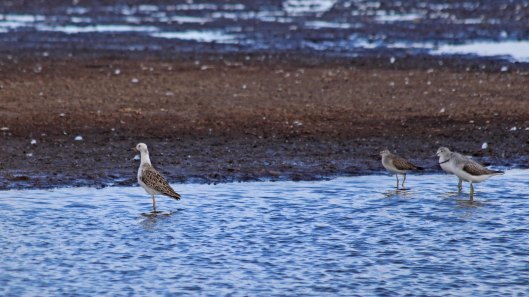
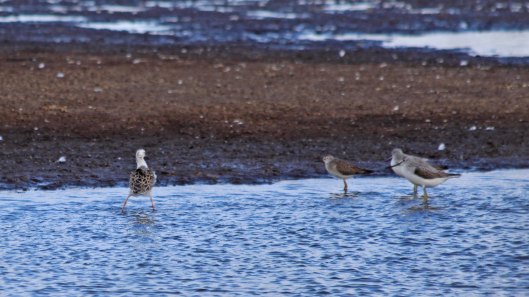
Ruffs can look quite hunched much of the time but will stand tall and alert when alarmed about something, as you can from the bird’s stance in the photo on the right above. I hasten to add that it wasn’t alarmed by the birders watching it but something – probably a bird of prey – had caused many of the nearby birds on the reserve to take flight, so the Ruff was keeping an eye on the skies. It also decided at this point that there was safety in numbers and sidled over to stand closer to the other waders nearby.

181108 white-headed ruff (3)

181108 white-headed ruff (5)

Ruff, on the left, with a Lesser yellowlegs and two Greenshanks

The Ruff used to breed quite extensively in Britain but now seldom does. We mostly see these birds as they migrate from their breeding grounds in Scandinavia to their wintering locations in Africa and vice versa, which is a great pity, as I’d certainly like to witness one of their leks some day.

181108 white-headed ruff (6)

Like Loading...

I’m following a tree: November 2018

07 Wednesday Nov 2018

Posted by sconzani in autumn, leaves, nature, parks, trees

≈ 7 Comments

Tags

#treefollowing, Acer mono, Acer mono ssp pictum, Acer pictum, autumn colour, autumn leaves, Bute Park, I'm following a tree, Mono maple

At the end of September, various circumstances combined to prevent me from visiting my Mono (Acer pictum ssp. mono), the tree I’m following this year, but I did manage to pay it a visit on 19 October. And I’m so glad I did, as I managed to get some photos of it in all its autumn glory, before last weekend’s storm-force winds blew most of its leaves off.

181107 Acer mono (1)

So, here it is on 19 October, a blaze of orange loveliness …

181107 Acer mono (2)181107 Acer mono (3)

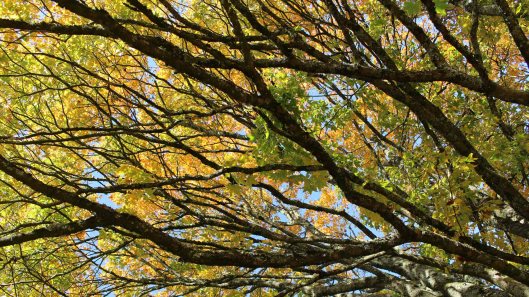
A closer shot of the leaves still on the tree, and another looking up through the canopy from underneath.

181107 Acer mono (4)
181107 Acer mono (5)
181107 Acer mono (6)
181107 Acer mono (7)
181107 Acer mono (8)
181107 Acer mono (9)
181107 Acer mono (10)
181107 Acer mono (11)

Some close-ups of the leaves on the ground. I love the variety of colours in these.

181107 Acer mono (12)

And here’s Mono on 2 November, a shadow of its former gloriousness, though what remains is a lighter, more yellow colour than before. It’s interesting to note, too, how more leaves remain on the left side of the tree, presumably because that side is a little more shaded and sheltered.

181107 Acer mono (14)

Soon, all that will remain will be this carpet of leaves below the tree and skeletal branches above.

181107 Acer mono (13)

Like Loading...

Greenshanks

05 Monday Nov 2018

Posted by sconzani in autumn, birds, nature

≈ 2 Comments

Tags

birding, birdwatching, British birds, green-legged bird, Greenshank, RSPB Lodmoor, Tringa nebularia, wading birds

As they breed in Scotland and mostly migrate to Africa for the winter (some birds do over-winter in coastal estuaries in Britain), I don’t get to see Greenshanks very often in my part of south Wales. So, it was particularly nice to get quite close, prolonged views of this pair at RSPB Lodmoor recently.

181105 greenshanks (1)

Tringa nebularia is the Greenshank’s scientific name, which Wikipedia explains as follows:

The genus name Tringa is … based on [the] Ancient Greek trungas, a thrush-sized, white-rumped, tail-bobbing wading bird mentioned by Aristotle. The specific nebularia is from [the] Latin nebula “mist” [which] … refers to the greenshank’s damp marshy habitat.

181105 greenshanks (2)
181105 greenshanks (3)

I’d like to think nebularia also refers to its winter appearance, a ghostly grey-and-white bird wading through mist-wreathed waterways on a chilly winter morning, uttering its short but evocative teu-teu-teu call, or, as Brett Westwood and Stephen Moss more elegantly write in their treasury of daily wildlife encounters, Wonderland:

… on a misty September morning, they have a pale luminosity, white beneath and lichen-grey above with a longish, slightly retroussé bill and greenish legs.

181105 greenshanks (4)

The greenish legs are, of course, the origin of its common name Greenshank and, though the colour is not always very apparent, you can see the obvious contrast between the Greenshanks’ legs and those of the Lesser yellowlegs in the photo below.

181105 greenshanks (5)

You can also get a good idea of the Greenshanks’ comparative size in this next photo, which shows, from left to right, a Ruff, the Lesser yellowlegs, two Greenshanks and a Dunlin.

181105 greenshanks (6)

Like Loading...
← Older posts
Newer posts →

About me

sconzani

sconzani

I'm a writer and photographer; researcher and blogger; birder and nature lover; countryside rambler and city strider; volunteer and biodiversity recorder.

View Full Profile →

Follow earthstar on WordPress.com

Enter your email address to follow this blog and receive notifications of new posts by email.

Recent blog posts

  • Busy Blue tits March 17, 2026
  • Cuttlebones March 16, 2026
  • No woodland here March 15, 2026
  • Family comes first March 14, 2026
  • Local Little egrets March 13, 2026

From the archives

COPYRIGHT

Unless otherwise acknowledged, the text and photographs on this blog are my own and are subject to international copyright. Nothing may be downloaded or copied without my permission.

Fellow Earth Stars!

  • Unknown's avatar
  • Unknown's avatar
  • Unknown's avatar
  • Unknown's avatar
  • Unknown's avatar
  • Unknown's avatar
  • Unknown's avatar
  • Unknown's avatar
  • Unknown's avatar
  • Unknown's avatar
  • Unknown's avatar
  • Unknown's avatar
  • Unknown's avatar
  • Unknown's avatar
  • Unknown's avatar
  • Unknown's avatar
  • Unknown's avatar
  • Unknown's avatar
  • Unknown's avatar
  • Unknown's avatar
  • Unknown's avatar
  • Unknown's avatar
  • Unknown's avatar
  • Unknown's avatar
  • Unknown's avatar
  • Unknown's avatar
  • Unknown's avatar
  • Unknown's avatar
  • Unknown's avatar
  • Unknown's avatar
  • Unknown's avatar
  • Unknown's avatar
  • Unknown's avatar
  • Unknown's avatar
  • Unknown's avatar
  • Unknown's avatar
  • Unknown's avatar
  • Unknown's avatar
  • Unknown's avatar
  • Unknown's avatar
  • Unknown's avatar
  • Unknown's avatar
  • Unknown's avatar
  • Unknown's avatar
  • Unknown's avatar
  • Unknown's avatar
  • Unknown's avatar
  • Unknown's avatar
  • Unknown's avatar
  • Unknown's avatar

Blog at WordPress.com.

Privacy & Cookies: This site uses cookies. By continuing to use this website, you agree to their use.
To find out more, including how to control cookies, see here: Cookie Policy
  • Subscribe Subscribed
    • earthstar
    • Join 668 other subscribers
    • Already have a WordPress.com account? Log in now.
    • earthstar
    • Subscribe Subscribed
    • Sign up
    • Log in
    • Report this content
    • View site in Reader
    • Manage subscriptions
    • Collapse this bar
 

Loading Comments...
 

You must be logged in to post a comment.

    %d