• ABOUT
  • BIRDING 2018
  • Birding 2019
  • BLOG POSTS
  • Butterflies 2018
  • Resources

earthstar

~ a celebration of nature

earthstar

Category Archives: autumn

Birding at WWT Steart Marshes

14 Sunday Oct 2018

Posted by sconzani in animals, autumn, birds, nature, seaside, walks

≈ 1 Comment

Tags

Bar-tailed godwits, birding, birdwatching, British birds, Cattle egret, coastal habitats, Glamorgan Bird Club, Golden plover, Greenshank, Hare, Roe deer, saltmarsh, WWT Steart Marshes

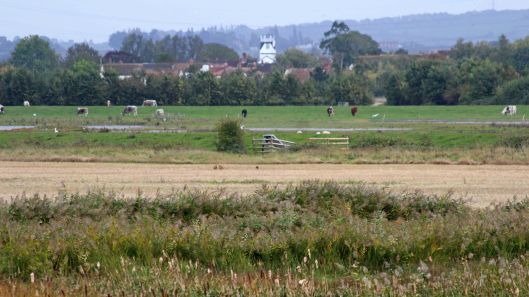
Storm Callum was wind-blasting the south-western counties of Wales and England with 50-mph-plus gusts yesterday but that didn’t deter 10 mad keen (some might just say mad) members of the Glamorgan Bird Club from heading to England, to the Wildfowl & Wetlands Trust property at Steart Marshes in Somerset, for a day’s birding. And what a magnificent place it is and an incredible day we had!
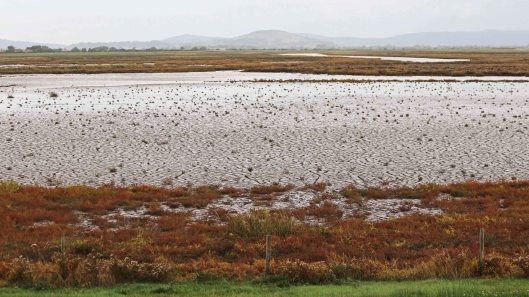
181014 Steart Marshes (1)

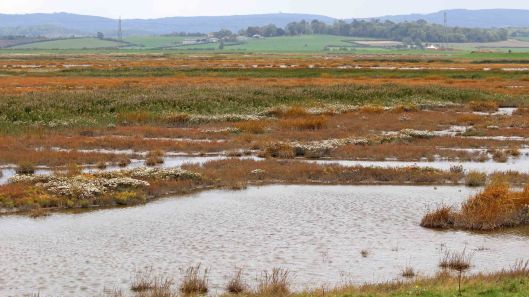
This is a man-made landscape, engineered to deal with local flooding issues and future sea-level rises, but it has the advantage of providing much-needed and extensive salt- and fresh-water wetland habitats. You can read more and watch a video on the WWT website.
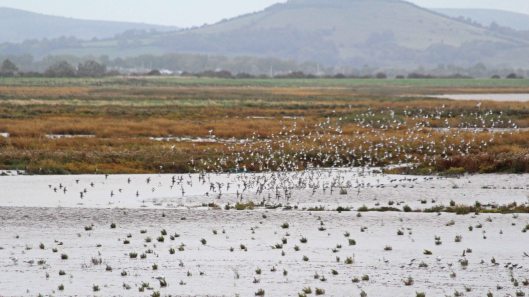
181014 Steart Marshes (2)

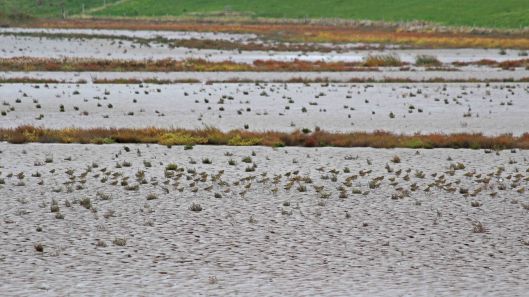
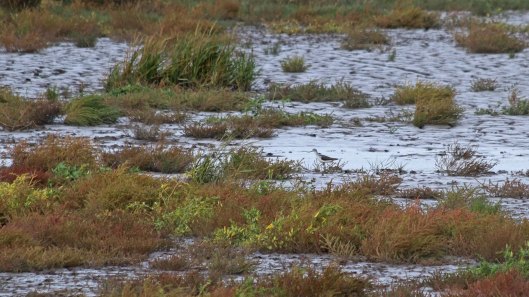
I don’t have a lot of close-up photos to share from this trip. As I mentioned at the start, it was incredibly windy so the conditions for non-blurry photography were difficult, and many of the birds were distant so I was relying on my bins and the generosity of my birding friends and their telescopes for better views.
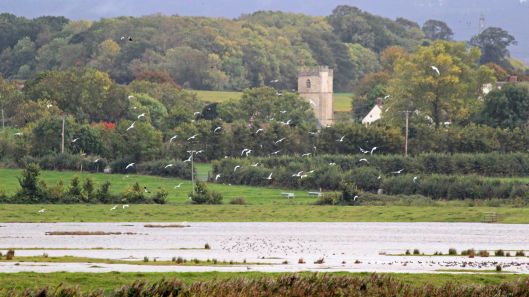
181014 Steart Marshes (3)

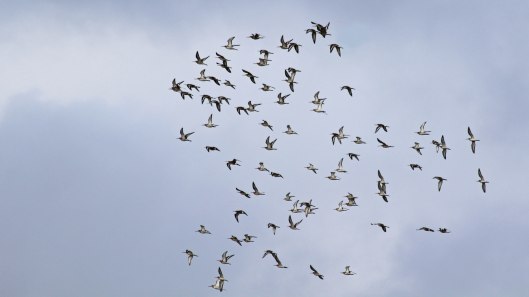
That doesn’t mean you can’t see some incredible sights here with the naked eye though: the miracle of hundreds of Lapwings or Bar-tailed godwits rising and flying in unison is one of Nature’s finest wonders, as are views of birds of prey like Merlin and Hobby screaming like fighter jets across the marshes in pursuit of prey.
181014 Steart Marshes (10)181014 Steart Marshes (7)

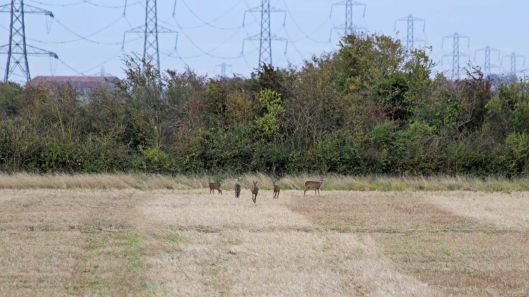
We also saw small numbers of Roe deer and Hares, scampering about in the fields.
181014 Steart Marshes (5)181014 Steart Marshes (6)

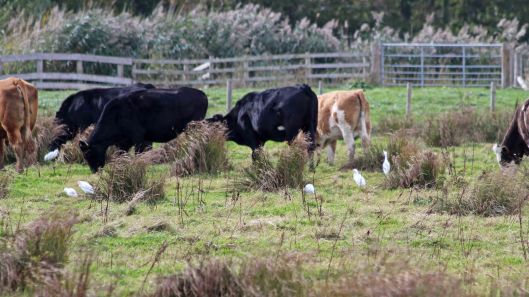
For the serious birder, there was much to quicken the heartbeat, with 13 species of wader seen, 12 Cattle egrets, a Spoonbill and a Glossy ibis. I managed to add five ticks to my year list so I was well pleased.
181014 Steart Marshes (9)181014 Steart Marshes (8)

This is a site that will only improve in future years and will almost certainly continue to attract star birds, but it’s also a place for everyone to enjoy the many walking trails, the excellent wildlife viewing facilities and the stunning beauty of the saltmarsh, an environment more colourful than I had imagined it would be. If you can, do visit!
181014 Steart Marshes (11)

My species total for the day was only 49 but this list is about quality, not quantity. Five of these were year ticks for me: Mute Swan, Canada Goose, Shelduck, Eurasian Wigeon, Mallard, Northern Pintail, Pheasant, Little Grebe, Glossy Ibis, Spoonbill, Cattle Egret, Grey Heron, Little Egret, Cormorant, Marsh Harrier, Common Buzzard, Kestrel, Merlin, Hobby, Moorhen, Coot, Ringed Plover, European Golden Plover, Grey Plover, Northern Lapwing, Knot, Little Stint, Dunlin, Ruff, Common Snipe, Black-tailed Godwit, Bar-tailed Godwit, Eurasian Curlew, Spotted Redshank, Greenshank, Common Redshank, Black-headed Gull, Lesser Black-backed Gull, Herring Gull, Woodpigeon, Magpie, Carrion Crow, Skylark, Wren, Starling, Pied Wagtail, Meadow Pipit, Goldfinch and Linnet.

The ones I missed but others saw or heard: Eurasian Teal, Northern Shoveler, Mediterranean Gull, Stock Dove, Collared Dove, Raven, Jackdaw, Blue Tit, Cetti’s Warbler, Blackbird and Chaffinch.

Like Loading...

Flocking Linnets

13 Saturday Oct 2018

Posted by sconzani in autumn, birds, nature

≈ 5 Comments

Tags

birding, birdwatching, British birds, flocks of Linnets, Linnet, Linnet flocks

I seem to be seeing Linnets everywhere at the moment.

181013 linnets (5)

There have been little flocks of four, six and ten browsing for seeds amongst the wildflowers that grow on the stones of the Ely River embankment in Cardiff Bay.

181013 linnets (1)
181013 linnets (2)
181013 linnets (3)
181013 linnets (4)

And then there have been much bigger flocks of 50 to 100 birds (sometimes joined by Goldfinches) grazing in the maize fields along the edge of the coastal path between Penarth and Lavernock.

181013 linnets (9)

And, when those Linnets feel threatened by a predator (like the bird of prey in the top left of the second photo below), they very quickly join together to form enormous flocks of at least 500 birds that whirl and swirl to try to confuse the hunter. I’ve seen this incredible phenomenon twice recently and it is truly amazing to watch and to hear all those birds tweeting and twittering at once.

181013 linnets (6)181013 linnets (7)

Like Loading...

Image

The cheek of it

12 Friday Oct 2018

Tags

#FungiFriday, fungi, fungus, unidentified fungus

181012 fungi friday

Like Loading...

Posted by sconzani | Filed under autumn, fungi, nature

≈ 4 Comments

A seed waits

10 Wednesday Oct 2018

Posted by sconzani in autumn, nature, plants

≈ Leave a comment

Tags

autumn seeds, flower seeds, plant seeds, seed quotations, seeds

‘A seed knows how to wait. Most seeds wait for at least a year before starting to grow; a cherry seed can wait for a hundred years with no problem. What exactly each seed is waiting for is known only to that seed. Some unique trigger-combination of temperature-moisture-light and many other things is required to convince a seed to jump off the deep end and take its chance – to take its one and only chance to grow.’
~ Hope Jahren, Lab Girl

181010 seeds (1)
181010 seeds (2)
181010 seeds (3)
181010 seeds (4)
181010 seeds (5)
Like Loading...

Looking daggers at me?

09 Tuesday Oct 2018

Posted by sconzani in autumn, insects, nature

≈ 2 Comments

Tags

British moths, caterpillars, dagger moths, Grey dagger, Grey dagger caterpillar, Grey dagger larva, moth larvae

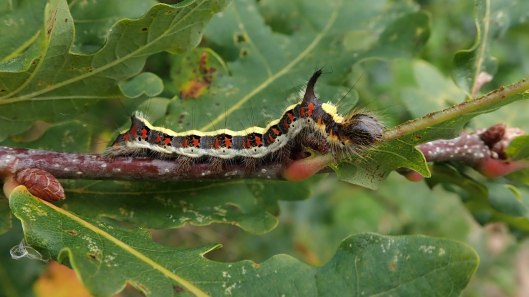
Yesterday, when I was checking out some local Oak trees for leaf mines, I came across this vibrant character. It turns out this is the larva of the Grey dagger moth (Acronicta psi), a very colourful creature when compared with its parent (you can see images on the UK Moths website here).

181009 grey dagger (1)

The larvae are about from July through to November and can be found on a wide variety of food plants. They are much easier to identify than their parents: the Grey dagger is almost identical to the Dark dagger moth and an examination of their genitals is required to tell them apart. I’m so glad I found the caterpillar not the moth – and I don’t really think it was looking daggers at me!

181009 grey dagger (2)

Like Loading...

Busy little Ivy bees

08 Monday Oct 2018

Posted by sconzani in autumn, insects, nature, plants

≈ 3 Comments

Tags

bees on Ivy flowers, British bees, Colletes hederae, Ivy bee, Ivy bee mapping project, ivy flowers

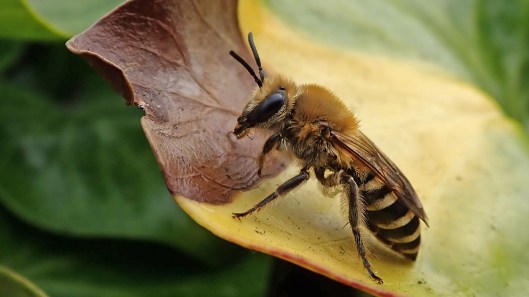
Most of the Ivy bees (Colletes hederae) I spotted when I was out walking last week were living up to their reputation as busy little mini-beasties.

181008 ivy bee (2)
181008 ivy bee (3)
181008 ivy bee (4)
181008 ivy bee (5)

But then I spotted this one, sitting on a leaf, cleaning the pollen off its legs, wings and body. I asked politely if it would please smile for the camera … and it did … I think.

Ivy bees only arrived in Britain in 2001 but they’ve slowly expanded their range across southern England and in to south Wales. They’re very handsome little bees and completely harmless but can only be seen when the Ivy is flowering, from September to November. If you spot one, it would really help if you could report it so that the wonderful folk at BWARS (the Bees, Wasps and Ants Recording Society) can track the bees’ spread around Britain.

Like Loading...

Just peachy

06 Saturday Oct 2018

Posted by sconzani in autumn, fungi, nature

≈ 1 Comment

Tags

British fungi, Elm tree, fungi on Elm, fungus, Rhodotus palmatus, Wrinkled peach

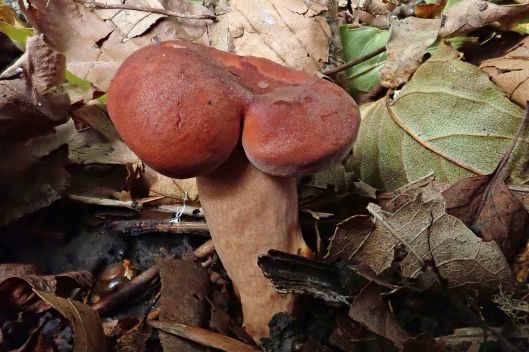
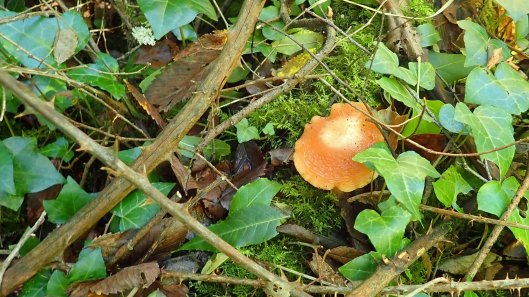
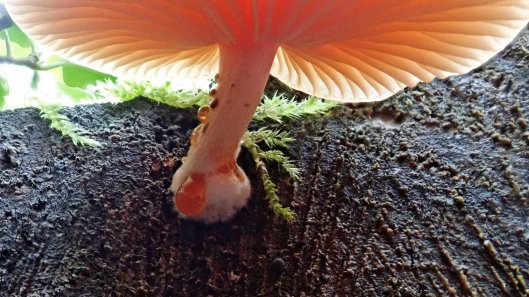
I was over the moon when I spotted this first little burst of peachiness growing on an old, ivy-smothered log a week ago.

181006 Wrinkled peach (1)

Why? Because this is one of the few fungi I can positively identify by sight, and it’s quite the rarity in most parts of Britain these days because it grows on Elm, a tree that is itself increasingly rare in Britain nowadays. According to the Forest Research website, 60 million Elm trees have been killed by Dutch Elm disease since it was first discovered in Britain in the 1920s, the majority of those dying since the 1970s.

181006 wrinkled peach (2)181006 wrinkled peach (3)

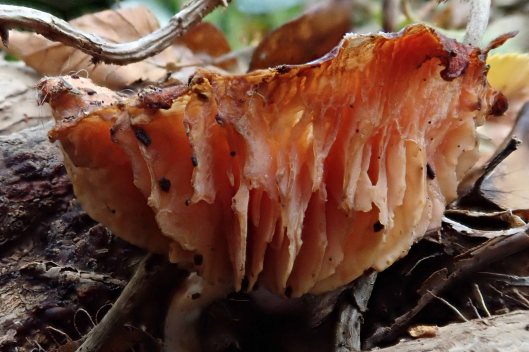
This fungus is the wonderfully named Wrinkled peach (Rhodotus palmatus). Rhodotus comes from the Ancient Greek Rhodon, meaning rose, and palmatus is Latin and means ‘shaped like a hand’, presumably a reference to the surface texture of the fungus’s cap resembling the lines on the palm of a hand.

181006 Wrinkled peach (4)

Incredibly, I found nine of these fungi on two different logs, and then, on a subsequent visit, found another one growing on a log a few metres away. Presumably the logs are the remains of an Elm that was cut down when Dutch Elm disease was at its height.

181006 wrinkled peach (7)

As you can see from my photos, the fungi range from the very young and fresh to the aging and wrinkled and decaying. Wrinkled peach, when seen at all, is usually found between July and November, so I have a few more weeks yet to enjoy these little beauties.

181006 Wrinkled peach (5)
181006 Wrinkled peach (6)

181006 Wrinkled peach (8)181006 Wrinkled peach (9)

Like Loading...

The last Common blue?

02 Tuesday Oct 2018

Posted by sconzani in autumn, insects, nature

≈ Leave a comment

Tags

British butterflies, butterflies, butterfly, Common blue, Common blue butterfly

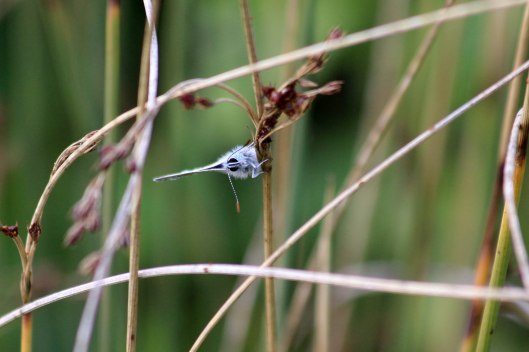
I hadn’t seen any Common blue butterflies at Cosmeston for over two weeks … until yesterday, when I spotted this little chap amongst the dying wildflowers and drying grasses. So, will he be the last Common blue for 2018?

181002 Common blue

Like Loading...

Friday’s walk 3: a Clouded yellow!

01 Monday Oct 2018

Posted by sconzani in autumn, insects, nature, walks

≈ Leave a comment

Tags

British butterflies, butterflies, butterfly, Clouded yellow, Lavernock Nature Reserve, Wales coastal path walk

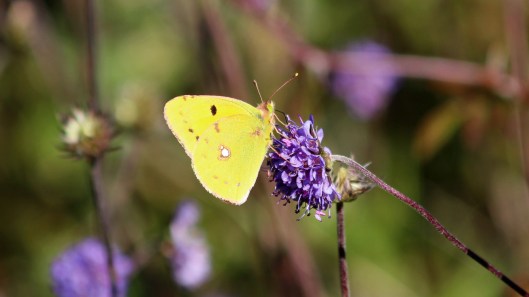
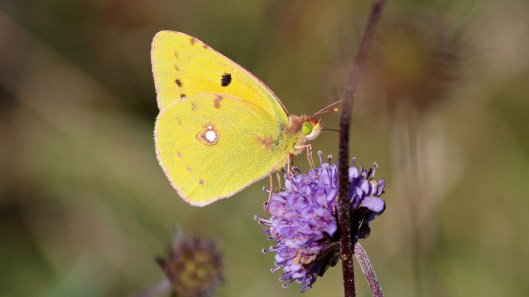
Having enjoyed some wonderful bird sightings on Sully beach, I walked on along the Wales coastal path, through Swanbridge and past St Mary’s Well Bay to Lavernock. This lovely nature reserve, perched high on the cliffs above some of south Wales’s most dramatic coastline, is the best place I know to see butterflies over the spring and summer months.

181001 Clouded yellow (1)

However, this was late September and there was a cool wind blowing so, although the Devil’s-bit scabious was still flowering, I didn’t really expect to see many butterflies this day. How wrong I was! Not only did I see three Small coppers, a couple of Red admirals, a Painted lady and a Common blue, as well numerous Small whites and Speckled woods, I was absolutely delighted to spot this glorious Clouded yellow, a butterfly we don’t see very often in this neck of the woods.

181001 Clouded yellow (2)

181001 Clouded yellow (3)
181001 Clouded yellow (4)

181001 Clouded yellow (5)

Like Loading...

Friday’s walk 2: Rocky the pipit

30 Sunday Sep 2018

Posted by sconzani in autumn, birds, nature, walks

≈ 4 Comments

Tags

birding, birdwatching, British birds, Rock pipit, Rock pipit behaviour, Rock pipit territorial behaviour, Rock pipits fighting, Sully, Sully beach

Before leaving Friday’s walk along Sully beach, I have another bird encounter to share.

180930 Rocky the pipit (1)

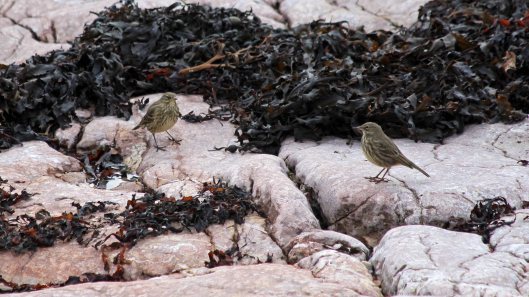
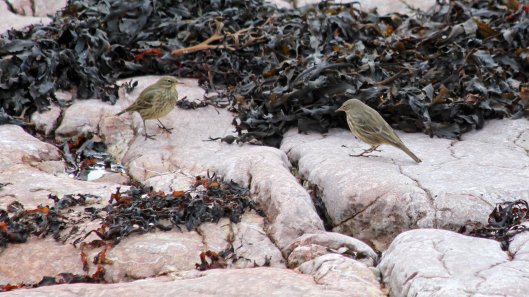
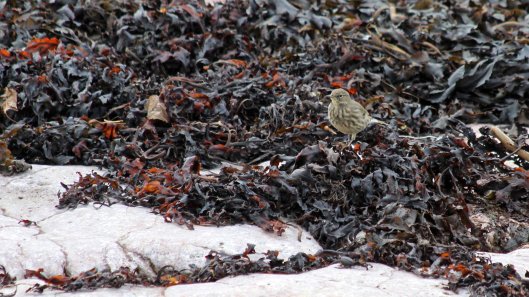
There were a lot of Rock pipits foraging amongst the rocks and piles of seaweed, more than I have seen before on Sully beach.
180930 Rocky the pipit (2)

One bird was reasonably close to where I was sitting so I had the camera up, trying to get some photos of it, when I noticed what seemed like rather odd behaviour.

180930 Rocky the pipit (3)180930 Rocky the pipit (4)

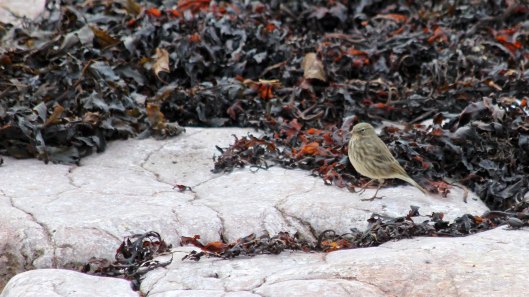
The bird hopped down from the seaweed on to a flat stone and started to stamp its feet and shuffle back and forth, looking for all the world like it was practising its line-dancing moves.

180930 Rocky the pipit (6)

Because I had the camera up to my face and was zoomed in on this one bird – let’s call him Rocky – I didn’t realise that there was actually another Rock pipit standing very close by.

180930 Rocky the pipit (7)

Rocky was focused intently on this other bird. He puffed up his chest and strutted about and did some more line-dancing moves, but the other bird didn’t seem very impressed. If this had been springtime, I would have said Rocky was trying to impress a female but it’s autumn.

180930 Rocky the pipit (8)

Next thing, Rocky’s done with the dancing and flew straight at the other bird.

180930 Rocky the pipit (9)

They bumped chests, flapped wings and generally fluttered about for a couple of minutes, presumably each bird trying to assert its dominance through this display.

180930 Rocky the pipit (10)

The other bird relinquished the rock, and the seaweed, to Rocky, who looked rather pleased with his success. I’ve since read that Rock pipits can be very territorial so I assume Rocky was defending his patch on the beach from the intruder. It was certainly fascinating to watch.

Like Loading...
← Older posts
Newer posts →

About me

sconzani

sconzani

I'm a writer and photographer; researcher and blogger; birder and nature lover; countryside rambler and city strider; volunteer and biodiversity recorder.

View Full Profile →

Follow earthstar on WordPress.com

Enter your email address to follow this blog and receive notifications of new posts by email.

Recent blog posts

  • Busy Blue tits March 17, 2026
  • Cuttlebones March 16, 2026
  • No woodland here March 15, 2026
  • Family comes first March 14, 2026
  • Local Little egrets March 13, 2026

From the archives

COPYRIGHT

Unless otherwise acknowledged, the text and photographs on this blog are my own and are subject to international copyright. Nothing may be downloaded or copied without my permission.

Fellow Earth Stars!

  • Unknown's avatar
  • Unknown's avatar
  • Unknown's avatar
  • Unknown's avatar
  • Unknown's avatar
  • Unknown's avatar
  • Unknown's avatar
  • Unknown's avatar
  • Unknown's avatar
  • Unknown's avatar
  • Unknown's avatar
  • Unknown's avatar
  • Unknown's avatar
  • Unknown's avatar
  • Unknown's avatar
  • Unknown's avatar
  • Unknown's avatar
  • Unknown's avatar
  • Unknown's avatar
  • Unknown's avatar
  • Unknown's avatar
  • Unknown's avatar
  • Unknown's avatar
  • Unknown's avatar
  • Unknown's avatar
  • Unknown's avatar
  • Unknown's avatar
  • Unknown's avatar
  • Unknown's avatar
  • Unknown's avatar
  • Unknown's avatar
  • Unknown's avatar
  • Unknown's avatar
  • Unknown's avatar
  • Unknown's avatar
  • Unknown's avatar
  • Unknown's avatar
  • Unknown's avatar
  • Unknown's avatar
  • Unknown's avatar
  • Unknown's avatar
  • Unknown's avatar
  • Unknown's avatar
  • Unknown's avatar
  • Unknown's avatar
  • Unknown's avatar
  • Unknown's avatar
  • Unknown's avatar
  • Unknown's avatar
  • Unknown's avatar

Blog at WordPress.com.

Privacy & Cookies: This site uses cookies. By continuing to use this website, you agree to their use.
To find out more, including how to control cookies, see here: Cookie Policy
  • Subscribe Subscribed
    • earthstar
    • Join 668 other subscribers
    • Already have a WordPress.com account? Log in now.
    • earthstar
    • Subscribe Subscribed
    • Sign up
    • Log in
    • Report this content
    • View site in Reader
    • Manage subscriptions
    • Collapse this bar
 

Loading Comments...
 

You must be logged in to post a comment.

    %d