• ABOUT
  • BIRDING 2018
  • Birding 2019
  • BLOG POSTS
  • Butterflies 2018
  • Resources

earthstar

~ a celebration of nature

earthstar

Category Archives: insects

Orange-tips

27 Sunday May 2018

Posted by sconzani in insects, nature

≈ Leave a comment

Tags

Anthocharis cardamines, British butterflies, butterfly, Orange-tip, Orange-tip butterfly

The various white butterflies can be difficult to tell apart but the Orange-tips (Anthocharis cardamines) are a little easier to spot. The male sports the orange tips on its wings that give the species its common name and which are, according to the UK Butterflies website, caused by an accumulation of the mustard oils that were ingested when it was a caterpillar.

180527 Orange-tip male

The female Orange-tip doesn’t have those bright wing tips but she does share with the male the equally characteristic mottled green pattern on her underwings.

180527 Orange-tip female.jpg

The female lays a single egg – the caterpillars will devour other eggs and fellow caterpillars given the chance, hence the single egg – on one of the preferred larval food plants, their favourites being Cuckooflower (Cardamine pratensis) and Garlic Mustard (Alliaria petiolata). Eggs are white when first laid, changing to orange as they near maturity, a process that takes a week or two.

Newly laid white egg
Maturing orange egg
Maturing orange egg

180527 Orange-tip egg (3)

I haven’t yet found a caterpillar but, in the next week or so, I will be re-checking the places where I found these eggs. If you want to read more about Orange-tips, you can check the Butterfly Conservation website here.

Like Loading...

Birding at St David’s Vale

26 Saturday May 2018

Posted by sconzani in birds, insects, nature

≈ Leave a comment

Tags

birding, birdwatching, British birds, Broad-bodied Chaser, Cockchafer, Common heath moth, Glamorgan Bird Club, Meadow pipit, Skylark, Small heath butterfly, St David's Vale, Stonechat, Tree pipit, Whinchat, Willow warbler

I might also have called this blog post ‘One hundred and eighty!’. Let me explain …

180525 St Davids Vale (1)

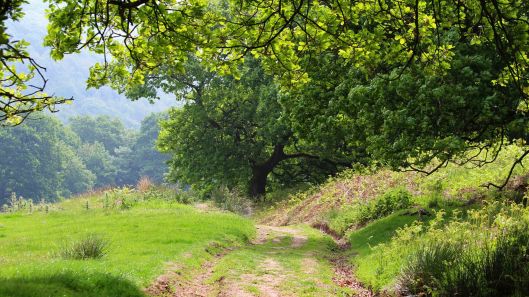
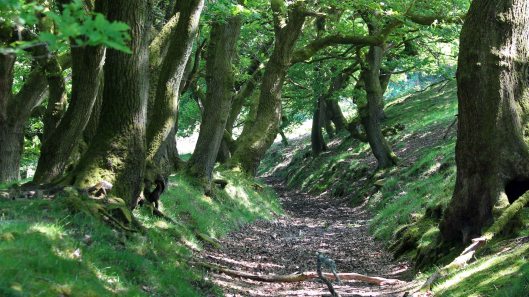
Last Wednesday I joined fourteen other members of the Glamorgan Bird Club for a day’s birding in the stunning scenery of St David’s Vale, near Abergavenny. We walked part of an ancient hollow way …

180525 St Davids Vale (4)180525 St Davids Vale (6)

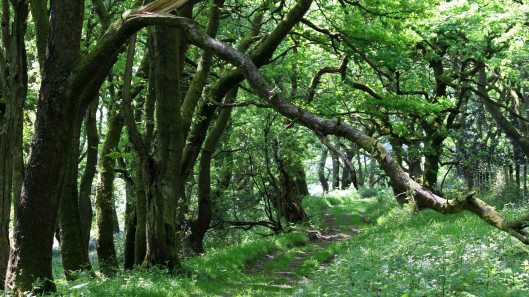
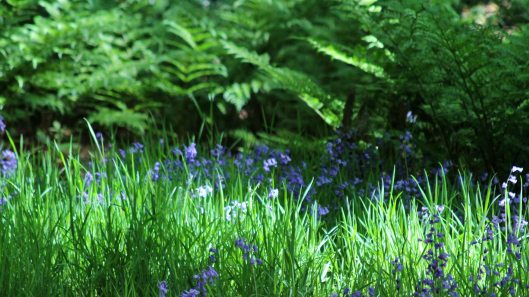
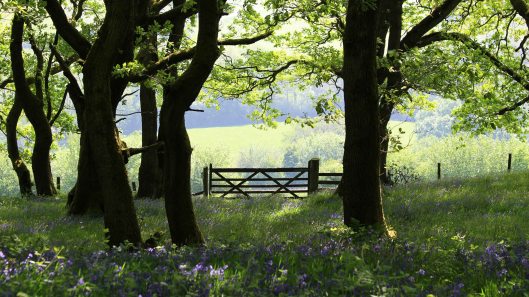
Beneath mighty oaks in an equally ancient woodland carpeted with bluebells …

180525 St Davids Vale (2)180525 St Davids Vale (3)

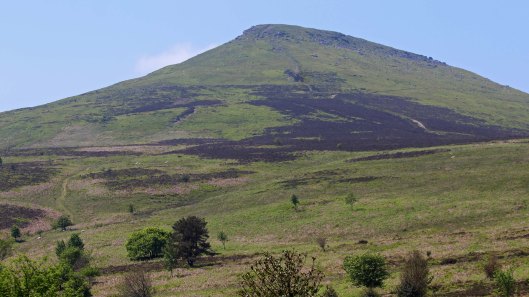
And then, as the sun broke through the low cloud that had earlier floated across the border from England, we climbed up on to the broad open moorland, with panoramic views all around and the impressive peak of Sugarloaf looming to our right.

180525 St Davids Vale (5)

Most of the birds mocked my photographic skills and no-so-long lens as they perched on distant tree tops and bushes but I was delighted to hear and then see my very first Wood warbler, and then, on the moorland, several beautiful Whinchats. And those two sightings brought my year list to – yes, you guessed it – one hundred and eighty!

180525 b willow warbler
180525 b stonechat
180525 b whinchat
180525 b tree pipit
180525 b meadow pipit
180525 b skylark

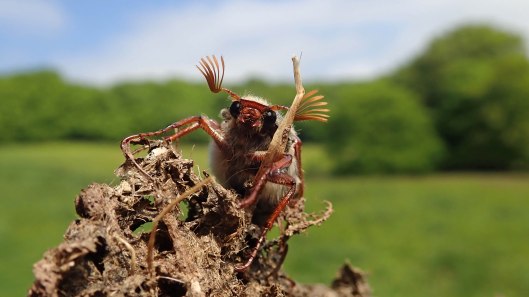
Our keen amateur naturalists also spotted a Small heath butterfly and two Common heath moths (this is the male; the female landed on my trouser leg so another birder got that picture), and a Broad-bodied chaser dragonfly. And we were entertained by the bumbling flights of several Cockchafers (I’ll cover those in a future post.)

Small heath butterfly
Common heath moth
Common heath moth
Broad-bodied chaser
Broad-bodied chaser

Cockchafer

My bird list for the today was: Mistlethrush, Robin, Goldfinch, Blackbird, Great tit, Carrion crow, Meadow pipit, Willow warbler, Swallow, Woodpigeon, Blue tit, Blackcap, Skylark, Buzzard, Chaffinch, Garden warbler, Long-tailed tit, Wood warbler, Stonechat, Raven, Tree pipit, Linnet, Whinchat, Wren, Cuckoo, House sparrow, Pied wagtail, Dunnock, Magpie and Jackdaw. It was a perfectly wonderful day!

Like Loading...

The Shieldbug red-light district

22 Tuesday May 2018

Posted by sconzani in insects, nature

≈ Leave a comment

Tags

British insects, Dolycoris baccarum, Green shieldbug, Hairy shieldbug, Palomena prasina, shield bugs, shieldbug

There’s a little track I often walk down, or up, between my home and Penarth Marina, that’s not been touched by the Council’s destructive strimmers (so far), so it’s a great place to look for wildflowers and critters, and it can take me 30 minutes or more to walk its 100 metres.

OLYMPUS DIGITAL CAMERA

When I walked this way the other day, I came across this little Green shieldbug (Palomena prasina). Just look at that innocent-looking face … but don’t be fooled. It was probably the only one of maybe 30 Green shieldbugs I saw that was on its own – all the others were working on ensuring the continuation of their species.

OLYMPUS DIGITAL CAMERA

Even the Hairy shieldbugs (Dolycoris baccarum) I found (only 3 of those) were at it! Given all the bad news we hear these days about declining insect populations, I hope this means the shieldbugs are doing okay.

OLYMPUS DIGITAL CAMERA
Like Loading...

Holly blues

20 Sunday May 2018

Posted by sconzani in insects, nature

≈ 5 Comments

Tags

blue butterfly, British butterflies, butterflies, Holly blue, Holly blue butterfly, Lavernock Nature Reserve

180520 Holly blue (2)

With clear blue skies and temps in the mid 20s, it was hot work chasing the Holly blue butterflies (Celastrina argiolus) around Lavernock last Monday. I think I saw five but they move so quickly along the scrub and up and over the trees that it was hard to be sure. Those fast fliers are mostly the males, I think, constantly sniffing for the female pheromones.

180520 Holly blue (1)

I know there were at least two Holly blues, as I managed to get a male and female together in one photo, and then was lucky enough to catch the female laying an egg on a Dogwood plant. Once she’d departed I carefully examined the plant but couldn’t find the egg. I think she must have tucked it well in amongst the flower buds, which I didn’t pry apart in case I damaged the newly laid egg. But I remember where it was so will try and go back in a week or so to check for a caterpillar.

180520 Holly blue (3)180520 Holly blue (5)

Holly blues are the first of Britain’s blue-coloured butterflies to emerge each year, which is one way to distinguish them from the many other blue butterflies. Another is their flight pattern – the other blues usually fly close to the ground. And the Holly blues are the only ones with small black dots on the undersides of their wings though, unless you see one perched, you’ll need to be quick to spot those dots ’cause these little beauties are speedy.

180520 Holly blue (4)

Like Loading...

Cool craneflies

10 Thursday May 2018

Posted by sconzani in insects, nature

≈ Leave a comment

Tags

British insects, crane fly, cranefly, Nephrotoma appendiculata, Tipula oleracea, Tipula species

When I was a kid I always knew these insects as Daddy long legs and thought they were a bit creepy the way they fluttered wildly around. Now I know them as Craneflies and think they’re really cool. Incredibly, there are around 300 species of Cranefly in Britain – yet another insect species to try to learn – sometimes my brain hurts! Luckily, there is a Cranefly Recording Scheme (CRS) and they’re on Twitter so I’ve been able to get expert and very friendly help with my IDs for these recent sightings, and a little bit of information about each as well.

180510 Nephrotoma appendiculata

For this one, CRS said: ‘That will be Nephrotoma appendiculata at this time of the year. A side on photo would definitely confirm it but given it is still April I’m happy with this species, one of rough grassland, verges etc.’ And very soon there will be many more of them!

180510 Tipula oleracea

And this one is ‘Tipula oleracea, the other common Tipula (Tipula) species. [I had wrongly thought it might be Tipula paludosa.] Typically a May species in dampish grassland. Larvae feed on grass roots.’

So, if you’re fascinated by Craneflies, why not give the Cranefly Recording Scheme a follow on Twitter?

Like Loading...

Cavorting at Cossie

03 Thursday May 2018

Posted by sconzani in insects, nature, spring

≈ 6 Comments

Tags

Brimstone butterfly, British butterflies, butterflies, Comma, Cosmeston, Cosmeston Lakes Country Park, Orange-tip butterfly, Peacock, Speckled wood

180503 Brimstone & Comma

I think it’s fair to say it’s not been much of a Spring so far, weather wise at least. It’s often been cool, frequently wet, and the sun has been elusive. I’m hoping Monday, the last day of April, was a hint of days to come – though there was a cool wind, the skies were mostly blue and it was warm in sheltered spots. Those conditions at Cosmeston persuaded the butterflies to come out to play, and I saw the highest numbers so far this year: 7 Brimstones, 2 Orange-tips, 2 Speckled woods, 2 Commas and 4 Peacocks. And it was such fun to be cavorting like a crazy woman again, flitting across fields and dancing along hedgerows to try to get photographs.

180503 Brimstone (2)180503 Comma180503 Orange-tip180503 Peacock180503 Speckled wood

Like Loading...

Wild word: phototaxis

02 Wednesday May 2018

Posted by sconzani in insects, nature

≈ 2 Comments

Tags

#WildWords, attracted to light, British insects, Chironomidae species, non-biting midge, phototaxis, repelled by light, wild words

Phototaxis: noun; biology; the bodily movement of a motile organism in response to light, either towards the source of light (positive phototaxis) or away from it (negative phototaxis) (Oxford Dictionary).
I hadn’t realised that some creatures suffer from negative phototaxis but, apparently, cockroaches are repelled by light – I thought they were just scurrying away from the humans who want to kill them. The example of positive phototaxis (i.e. an attraction to a light source) that immediately springs to mind is the moth – I’m sure we’ve all noticed them fluttering around a bright light at night – though there are many other examples. One of these is the insect in my photos: it’s one of the large family of non-biting midges (Chironomidae species). I found perhaps 30 of them on a wall near a street light recently.

OLYMPUS DIGITAL CAMERA
Like Loading...

April at Cosmeston

30 Monday Apr 2018

Posted by sconzani in animals, birds, insects, nature

≈ Leave a comment

Tags

birding, birdwatching, Blackcap, British birds, Buzzards, Chiffchaff, Coot, Cosmeston, Cosmeston Lakes Country Park, Hawthorn Shield Bug, Large Red damselfly, long-tailed tit, Swallow, Willow warbler

Easter Sunday – April the 1st this year – is not a particularly smart day to go to Cosmeston to spend a quiet, peaceful time with Nature, but I wanted to stretch my legs and public transport on Sundays is quite restricted. So, I passed through Cosmeston on one of my circular local circuits, avoiding the main paths, taking the fields less trodden. I still managed to spot a Long-tailed tit (below left) nest-building – it’ll be cosy with a few more feathers like that, and, with the help of my friend John, I heard and then spotted my first Willow warbler of 2018 (below right), a good start to the month.

180430 1 Long-tailed tit
180430 2 Willow warbler

180430 3 blackcaps

5 April  Another quick walk-through, to avoid the school holiday madness, but I did pause at the place I’d recently spotted a Hawfinch, to see if I could hear or see it. No luck with that but I did spot my first Blackcaps of 2018 (above), and there were Willow warblers and Chiffchaffs (below) aplenty!

180430 4 chiffchaff

8 April  Once again, I passed through Cosmeston as part of a longer walk, though I did linger for a short time by the west lake where I got talking to a fellow birder. From there, I had distant views of two Buzzards on the far shore – were they investigating a nest site? – and I got a fleeting glimpse and photos of a mysterious mammal swimming rapidly through the reeds. Was it a Water vole, a Stoat or a Mink? Debate raged on Twitter and Facebook when I posted photos and requested opinions but the jury is still out on its identification.

180430 5 buzzards
180430 6 unidentified mammal

11 April  Though the heavy rain of the previous night and morning had cleared, cloud cover was thick and low, making for a very gloomy walk around Cosmeston, and it was almost as if the birds were experiencing a similar dullness. Although I spotted several Blackcaps and many of the regulars (Blackbirds, Dunnocks, Robins, Chaffinches, etc), bird song was generally subdued.

180430 7 coot chick
180430 8 swallow

Highlights were my first Coot chicks of the season, with the attentive parents feeding three chicks near the former bird hide site on the west lake, and Swallows swooping and diving over both lakes. I tried for about 15 minutes to get photos of them but it was very difficult to keep up with their super speedy aerobatics, so a silhouette will have to do. There’s no mistaking that forked tail though.

I passed through Cosmeston again on 16 April, but saw nothing particularly noteworthy, and then had a break to see other sites and while a friend was visiting. My last visit for the month was today, 30 April. Though a cool wind was blowing it was fine, and warm in sheltered spots. And, though I could hear bird song all around, with the trees now rapidly greening, we’ve reached that time of year when the birds pretty much disappear behind the foliage.
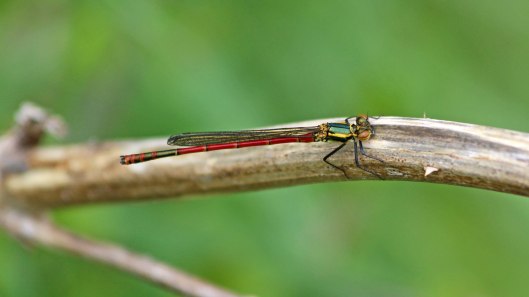
180430 9 Large red damselfly

The good news is that this is also the time of year when the other flying creatures take over: today I saw my first damselfly of the year, a Large Red; the butterflies were out in numbers: Brimstones, Peacocks, Commas, a Large white, a couple of Orange-tips and several Speckled woods (I’ll do a separate post for those in a few days); and I also saw my first shieldbug of 2018, a Hawthorn. It was a lovely walk!


OLYMPUS DIGITAL CAMERA

Like Loading...

Walking on water

29 Sunday Apr 2018

Posted by sconzani in insects, nature

≈ 6 Comments

Tags

British bugs, bugs on water, Common pond skater, Gerris lacustris, pond skaters

When I took this photo of a pond skater flitting about on a pond at a local nature reserve, I thought it would be easy to identify – ever the optimist, me! Then I discovered that there are, in fact, nine species of pond skater in Britain, though I think this is most likely to be the Common pond skater (Gerris lacustris).

180429 pond skater

I was fascinated to learn that this bug has water-repellent hairs on its feet and that’s how it’s able to ‘walk’ over the surface of still water. It uses its long middle legs to ‘row’ and its hind legs trail along behind like a kind of rudder. Amazing!

Like Loading...

Cuckoo bees

26 Thursday Apr 2018

Posted by sconzani in insects, nature

≈ Leave a comment

Tags

British bees, Cuckoo bees, Nomada bees, Nomada goodeniana, Nomada marshamella, Nomada ruficornis, Nomada species

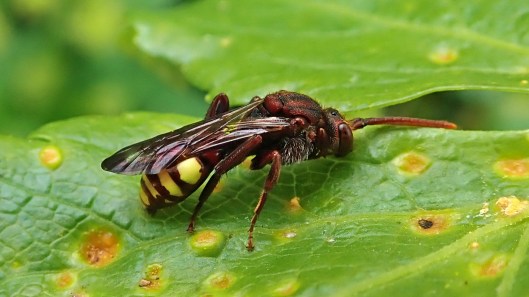
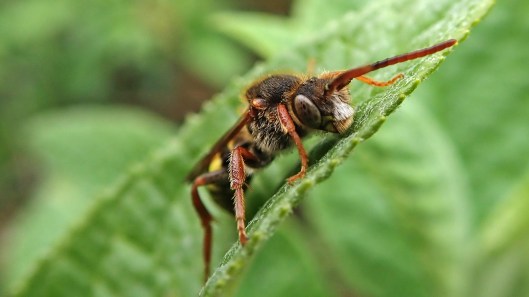
Is it a bird? Is it an insect? Well, it’s definitely an insect but one that’s pretending to be something it’s not in order to act as a kleptoparasite on other insects, hence the name cuckoo. The ‘cuckoo bees’, the Nomada species, consist of some 850 species of bee worldwide, over 30 of which can be found in Britain. Rather than collect pollen, they lay their eggs in the nests of other bees and let those bees do all the pollen-collecting and egg-rearing.

180426 Nomada ruficornis maybe (1)
180426 Nomada ruficornis maybe (3)

I thought I’d got reasonably good photos of these two Nomada bees but they are notoriously difficult to identify so, according to the experts I consulted, the bee in the photos above may perhaps be Nomada ruficornis and that in the photos below could be Nomada marshamella or N. goodeniana. Despite their parasitic habits, I still find these bees attractive.

180426 Nomada marshamella or goodeniana (3)
180426 Nomada marshamella or goodeniana (1)

180426 Nomada marshamella or goodeniana (2)


Like Loading...
← Older posts
Newer posts →

About me

sconzani

sconzani

I'm a writer and photographer; researcher and blogger; birder and nature lover; countryside rambler and city strider; volunteer and biodiversity recorder.

View Full Profile →

Follow earthstar on WordPress.com

Enter your email address to follow this blog and receive notifications of new posts by email.

Recent blog posts

  • All the yellows April 19, 2026
  • Spider: Dysdera crocata April 18, 2026
  • Recent Reed buntings April 17, 2026
  • Tiny but feisty April 16, 2026
  • NFY: Large and Small whites April 15, 2026

From the archives

COPYRIGHT

Unless otherwise acknowledged, the text and photographs on this blog are my own and are subject to international copyright. Nothing may be downloaded or copied without my permission.

Fellow Earth Stars!

  • Unknown's avatar
  • Unknown's avatar
  • Unknown's avatar
  • Unknown's avatar
  • Unknown's avatar
  • Unknown's avatar
  • Unknown's avatar
  • Unknown's avatar
  • Unknown's avatar
  • Unknown's avatar
  • Unknown's avatar
  • Unknown's avatar
  • Unknown's avatar
  • Unknown's avatar
  • Unknown's avatar
  • Unknown's avatar
  • Unknown's avatar
  • Unknown's avatar
  • Unknown's avatar
  • Unknown's avatar
  • Unknown's avatar
  • Unknown's avatar
  • Unknown's avatar
  • Unknown's avatar
  • Unknown's avatar
  • Unknown's avatar
  • Unknown's avatar
  • Unknown's avatar
  • Unknown's avatar
  • Unknown's avatar
  • Unknown's avatar
  • Unknown's avatar
  • Unknown's avatar
  • Unknown's avatar
  • Unknown's avatar
  • Unknown's avatar
  • Unknown's avatar
  • Unknown's avatar
  • Unknown's avatar
  • Unknown's avatar
  • Unknown's avatar
  • Unknown's avatar
  • Unknown's avatar
  • Unknown's avatar
  • Unknown's avatar
  • Unknown's avatar
  • Unknown's avatar
  • Unknown's avatar
  • Unknown's avatar
  • Unknown's avatar

Blog at WordPress.com.

Privacy & Cookies: This site uses cookies. By continuing to use this website, you agree to their use.
To find out more, including how to control cookies, see here: Cookie Policy
  • Subscribe Subscribed
    • earthstar
    • Join 642 other subscribers
    • Already have a WordPress.com account? Log in now.
    • earthstar
    • Subscribe Subscribed
    • Sign up
    • Log in
    • Report this content
    • View site in Reader
    • Manage subscriptions
    • Collapse this bar
 

Loading Comments...
 

You must be logged in to post a comment.

    %d