• ABOUT
  • BIRDING 2018
  • Birding 2019
  • BLOG POSTS
  • Butterflies 2018
  • Resources

earthstar

~ a celebration of nature

earthstar

Category Archives: insects

Wild word: aposematism

25 Wednesday Apr 2018

Posted by sconzani in insects, nature

≈ Leave a comment

Tags

#WildWords, aposematism, butterfly, Peacock, Peacock butterfly, warning coloration, warning patterns, wild words

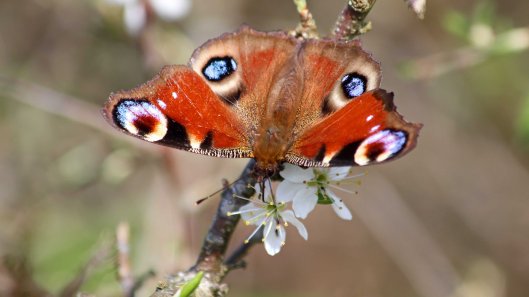
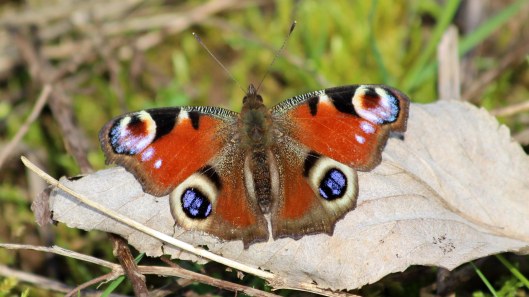
Aposematism: noun; from the Greek ἀπό apo meaning ‘away’ and σῆμα sema meaning ‘sign’; a term developed in the 19th century, reputedly by Edward Bagnall Poulton (a British evolutionary biologist), for the bright colorations or conspicuous markings that creatures use to warn or repel predators. Typical examples are things like bright yellow frogs or orange-and-black-striped caterpillars, whose colours serve as a warning to potential predators that they taste bad or might even be poisonous, and, butterflies, like the Peacock shown here, with big bold eye-type markings that make them look larger than they really are.

180425 Aposematism Peacock butterfly

Like Loading...

A moth trap

17 Tuesday Apr 2018

Posted by sconzani in insects, nature

≈ 8 Comments

Tags

British moths, Early grey, Early thorn, moths, Selenia dentaria, Xylocampa areola

I don’t have a garden so I can’t have a moth trap, and I admit to getting the teensiest bit envious of friends who do have traps. But I get to see their finds on Facebook, and I will also readily admit that learning to identify the 2500 species of moth found in Britain might just do my head in, so perhaps not having a moth trap is really a good thing! And, anyway, I seem to have discovered a very convenient place to find the occasional moth, a tall alleyway between local houses that has its very own street lamp.

OLYMPUS DIGITAL CAMERA

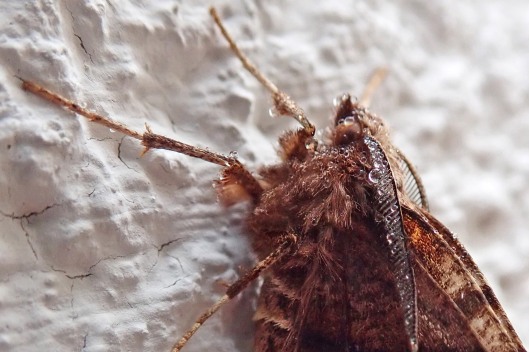
I walk this way often but hadn’t noticed moths until the day before yesterday – perhaps it hasn’t been warm enough before. And, as you can see from the head of this first moth (photo below), it was a damp, foggy morning and the moth was still to warm up so couldn’t fly away. This is one of the first of two generations of Early thorn (Selenia dentaria) to breed throughout much of Britain each year. (To find out more about the Early thorn, click here).

OLYMPUS DIGITAL CAMERA

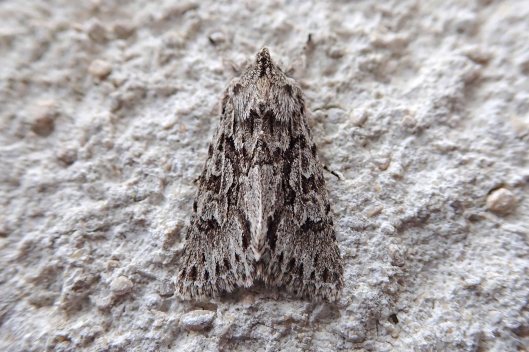
The second moth on the alley wall was this dapper delight, an Early grey (Xylocampa areola), another common and widespread moth, whose caterpillars feed on Honeysuckle. (More on the Early grey here.)

OLYMPUS DIGITAL CAMERA

Like Loading...

Getting the flutters

16 Monday Apr 2018

Posted by sconzani in insects, nature, spring

≈ 6 Comments

Tags

Bee-fly, British butterflies, butterflies, Comma, Comma butterfly, Peacock, Peacock butterfly, Speckled wood, Spring has sprung, springtime

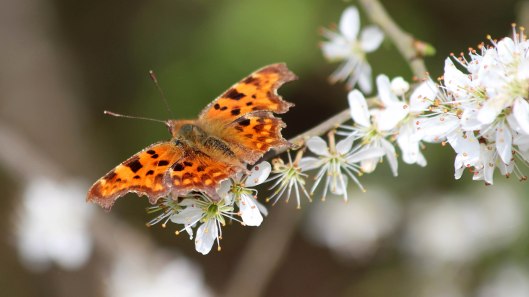
Spring came to south Wales on Saturday at approximately 3.30pm and lasted about 4 hours. (It’s supposed to return again next week and stay a few days but, in the constantly changing contemporary climate, it pays not to count your chickens – or, maybe that should be, your rays of sunshine!) Amazingly, as soon as the sun appeared, so too did the butterflies. It was like a door had been opened – where had they been hiding, I wonder? In the space of about 30 minutes, I saw Peacocks and Commas, several never-settling Brimstones, a distant large-or-small White, and my first Speckled wood of the year. Oh, and a couple of Bee-flies – not butterflies, obviously, but the cutest wee flying things you ever did see so I’ve included one here. It was delightful!

180416 1 Peacock180416 2 Comma180416 3 Peacock180416 4 Comma180416 5 Speckled wood180416 6 Bee fly

Like Loading...

Andricus kollari, maybe

14 Saturday Apr 2018

Posted by sconzani in insects, nature, trees

≈ 2 Comments

Tags

Andricus kollari, gall wasps, galls, galls on oak trees, Marble gall, oak galls, Oak Marble gall, oak tree

180414 Andricus kollari (3)

If you’re a regular around here, you may recall that in August 2017, I posted a mini-series of posts about some of the galls you can find on Oak trees, which included the Oak Marble gall (see the post here). You might also remember that in late October, I was excited to discover a creature had hatched out of one of my galls and I initially thought it was the gall causer, a minute wasp called Andricus kollari. It was not – turns out it was one of the 29 other species of hymenoptera (bees, wasp, ants and sawflies) that can also be found living in an Oak marble gall (more on that here) (and I never did identify it).

180414 Andricus kollari (1)
180414 Andricus kollari (5)

Well, this time, maybe, just maybe, I have seen the gall-causing wasp itself, A. kollari. A while ago, while out walking, I found a small Oak sapling that was absolutely covered in marble galls and, when I found one that had no holes in it, I couldn’t resist bringing it home. The tiny wasp you see in these photos recently hatched out of this gall and the size of the hole it made, plus comparisons with online photos, has led me to think that this time I may have seen the gall causer. I couldn’t be one hundred percent certain of my identification without killing the wasp and getting an expert to check it but I didn’t want to do that. And, of course, I could be totally wrong yet again. In the meantime, the wasp has been returned to the area where I found it so, weather permitting, it can continue its life cycle.

180414 Andricus kollari (2)
180414 Andricus kollari (4)
Like Loading...

This week in insects

08 Sunday Apr 2018

Posted by sconzani in insects, nature, spiders, spring

≈ Leave a comment

Tags

Abraxas grossulariata, Andrena flavipes, Magpie moth caterpillar, Red Admiral, Red velvet mite, Trombidiidae, Vanessa atalanta, Yellow-legged mining bee

I mentioned yesterday that I saw my first butterflies of 2018 this week. The first was a Peacock but my camera was in my backpack and, by the time I extracted it, the butterfly had flown off. I was still cursing that fact when another butterfly appeared, this lovely Red admiral (Vanessa atalanta). Snap!
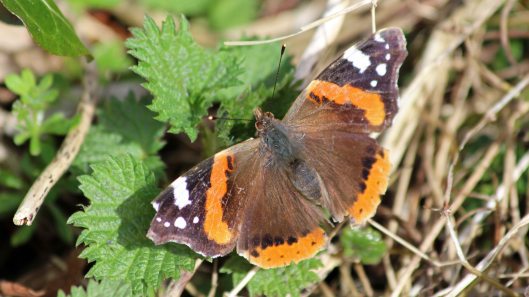
180408 Red admiral

On Wednesday’s walk, as well as the bee-flies I blogged about yesterday, I also saw several varieties of bee. I’m hopeless at identifying bees – I will focus on them one year to try to improve my skills, but that won’t be this year. Luckily, there’s a good Facebook group where the folks are very helpful, and they’ve IDed these as Yellow-legged mining bees (Andrena flavipes). They’re spring-flying solitary bees that make individual nests but often in large groups (the experts call them aggregations). This lot, of perhaps 20, were digging in to a sandy bank by the seaside. (Here’s a link to more information from BWARS.)
180408 Yellow-legged mining bee (2)
180408 Yellow-legged mining bee (3)

180408 Yellow-legged mining bee (1)

This next little critter was tiny, as you can see by comparison with my hand behind (and I have small hands). Once again, I needed help on the ID but the folks from my local Butterfly Conservation Facebook group are experts. This is a caterpillar of the Magpie moth (Abraxas grossulariata), a stunning-looking moth that I have not yet seen. Its caterpillar is quite lovely too, don’t you think?

OLYMPUS DIGITAL CAMERA

Though only 3 to 5mm long, these little Red Velvet Mites are hard to miss, simply because of their unusual colour. This is one of the Trombidiidae family but I don’t know which one. It’s really an arachnid (note the eight legs) rather than an insect but I’m including it here anyway. It’s carnivorous but no need to worry – it only eats creatures smaller than itself!

OLYMPUS DIGITAL CAMERA

And, finally, a bee that I haven’t tried to put a name to – I just liked it for the way it’s positively luxuriating in the pollen of this Lesser celandine flower.


OLYMPUS DIGITAL CAMERA

Like Loading...

Signs of spring: Bee-flies

07 Saturday Apr 2018

Posted by sconzani in insects, nature, spring

≈ 6 Comments

Tags

Bee-fly, Bombylius major, British insects, signs of spring

Last Wednesday was a ‘B’ day – not ‘B’ as in ‘B-rated’ or in any way inferior – in fact, in that sense, it was an A+ day. I named it a ‘B’ day because I saw my first Butterflies of 2018, my first Blackcap, and my first Bee-flies – and not just one Bee-fly, but a total of seven!

180407 bee-flies (7)

The Bee-fly (officially Bombylius major) is a strange-looking mini-beastie, a weird and wonderful combination, all the cuteness of a furry teddy-bear but with the sinister look of a sword fish. Never fear, it is entirely harmless to humans, though it does lay its eggs in the nests of bees and wasps, where the bee-fly larvae feast on the bee and wasp larvae. Its sword-shaped proboscis is no stinging machine – it’s used exclusively for drinking nectar from flowers. These are springtime mini-beasties, out now in sunny spots in your garden or local hedgerow.

180407 bee-flies (1)
180407 bee-flies (2)
180407 bee-flies (3)
180407 bee-flies (4)
180407 bee-flies (5)
180407 bee-flies (6)
Like Loading...

Signs of spring: minibeasts

03 Tuesday Apr 2018

Posted by sconzani in insects, nature

≈ 6 Comments

Tags

bees, bumblebee, flies, hoverflies, ladybird, minibeasts, signs of spring

‘If all mankind were to disappear, the world would regenerate back to the rich state of equilibrium that existed ten thousand years ago. If insects were to vanish, the environment would collapse into chaos.’
~ E. O. Wilson (1929 – ), American biologist, environmentalist, author

OLYMPUS DIGITAL CAMERA
180401 minibeast (4) Honey bee
OLYMPUS DIGITAL CAMERA
180401 minibeast (6) fly
180401 minibeast (7) fly
OLYMPUS DIGITAL CAMERA
180401 minibeast (9) Eristalis tenax
OLYMPUS DIGITAL CAMERA
Like Loading...

Another day, another bumble

27 Tuesday Mar 2018

Posted by sconzani in insects, nature, spring

≈ Leave a comment

Tags

Bombus lapidarius, British bumblebees, bumblebee, pollinators, Red-tailed bumblebee, signs of spring, willow catkin, willow flower

Isn’t she beautiful? While out walking in a local park I spotted this queen Red-tailed bumblebee (Bombus lapidarius) enjoying the pollen of a newly opened willow flower  … and I smiled all the way home.

180327 Red-tailed bumblebee

Like Loading...

The spider and the fly

25 Sunday Mar 2018

Posted by sconzani in insects, nature

≈ 2 Comments

Tags

Bluebottle fly, British flies, British spiders, Calliphora sp, jumping spider, Salticus scenicus, spider and fly, spider stalking prey, Zebra spider

180325 spider and fly (3)

“Come hither, hither, pretty Fly, with the pearl and silver wing;
Your robes are green and purple — there’s a crest upon your head;
Your eyes are like the diamond bright, but mine are dull as lead!”
~ from ‘The Spider and the Fly’, a poem by Mary Howitt, 1828

180325 spider and fly (1)
180325 spider and fly (2)

I’m not sure what the fly is (probably one of the Calliphora species) but its stalker is a Zebra spider (Salticus scenicus), a very common jumping spider that can be found, as this one was at Sully last week, sneaking up on its prey on sunny rocks and walls.
And what do you think happened next?

180325 spider and fly (4)

Like Loading...

Birth notice

17 Saturday Mar 2018

Posted by sconzani in insects, nature, plants, wildflowers

≈ 6 Comments

Tags

Ficaria verna, flies, fly, leaf mines, leaf mining fly, leafminer, Lesser Celandine, Phytomyza ranunculi

I was handing out the cigars last Monday!
Now, you might well think me more than a little mad to be excited about the birth of a fly but this was the first time I had tried rearing one … and it was actually successful, which bodes well for the fact that I’m intending to take part in a fly-rearing investigation this summer (more on that closer to the time).

180317 Phytomyza ranunculi (2)
180317 Phytomyza ranunculi (3)

The fly is Phytomyza ranunculi, a creature whose larvae often make their home in the leaves of Lesser celandine (Ficaria verna). I blogged about this leafminer, its larvae and the pupa here, and it is that pupa which finally hatched earlier this week. I had been told it would take about 3 weeks to hatch but it was, in fact, longer than that – it was 6 February when I found the pupa and 12 March when it hatched, so 34 days in total.

180317 Phytomyza ranunculi (1)

Now, here I must admit to a rookie error. As it was well over the 3 weeks, I had almost given up on its hatching so, on Monday night, when I had a sudden notion to open the container, I didn’t look inside first. The fly popped straight out, perched on the edge for a very brief time – and I managed to get just one photo, and then it flew off. I’ve searched for it in my flat, and it did a quick fly by when I was washing the dishes yesterday, but I haven’t been able to find it, neither to take more photos nor to let it outside.

Like Loading...
← Older posts
Newer posts →

About me

sconzani

sconzani

I'm a writer and photographer; researcher and blogger; birder and nature lover; countryside rambler and city strider; volunteer and biodiversity recorder.

View Full Profile →

Follow earthstar on WordPress.com

Enter your email address to follow this blog and receive notifications of new posts by email.

Recent blog posts

  • All the yellows April 19, 2026
  • Spider: Dysdera crocata April 18, 2026
  • Recent Reed buntings April 17, 2026
  • Tiny but feisty April 16, 2026
  • NFY: Large and Small whites April 15, 2026

From the archives

COPYRIGHT

Unless otherwise acknowledged, the text and photographs on this blog are my own and are subject to international copyright. Nothing may be downloaded or copied without my permission.

Fellow Earth Stars!

  • Unknown's avatar
  • Unknown's avatar
  • Unknown's avatar
  • Unknown's avatar
  • Unknown's avatar
  • Unknown's avatar
  • Unknown's avatar
  • Unknown's avatar
  • Unknown's avatar
  • Unknown's avatar
  • Unknown's avatar
  • Unknown's avatar
  • Unknown's avatar
  • Unknown's avatar
  • Unknown's avatar
  • Unknown's avatar
  • Unknown's avatar
  • Unknown's avatar
  • Unknown's avatar
  • Unknown's avatar
  • Unknown's avatar
  • Unknown's avatar
  • Unknown's avatar
  • Unknown's avatar
  • Unknown's avatar
  • Unknown's avatar
  • Unknown's avatar
  • Unknown's avatar
  • Unknown's avatar
  • Unknown's avatar
  • Unknown's avatar
  • Unknown's avatar
  • Unknown's avatar
  • Unknown's avatar
  • Unknown's avatar
  • Unknown's avatar
  • Unknown's avatar
  • Unknown's avatar
  • Unknown's avatar
  • Unknown's avatar
  • Unknown's avatar
  • Unknown's avatar
  • Unknown's avatar
  • Unknown's avatar
  • Unknown's avatar
  • Unknown's avatar
  • Unknown's avatar
  • Unknown's avatar
  • Unknown's avatar
  • Unknown's avatar

Blog at WordPress.com.

Privacy & Cookies: This site uses cookies. By continuing to use this website, you agree to their use.
To find out more, including how to control cookies, see here: Cookie Policy
  • Subscribe Subscribed
    • earthstar
    • Join 642 other subscribers
    • Already have a WordPress.com account? Log in now.
    • earthstar
    • Subscribe Subscribed
    • Sign up
    • Log in
    • Report this content
    • View site in Reader
    • Manage subscriptions
    • Collapse this bar
 

Loading Comments...
 

You must be logged in to post a comment.

    %d