• ABOUT
  • BIRDING 2018
  • Birding 2019
  • BLOG POSTS
  • Butterflies 2018
  • Resources

earthstar

~ a celebration of nature

earthstar

Category Archives: insects

My first Eyed ladybird

22 Tuesday Apr 2025

Posted by sconzani in insects, ladybird

≈ Leave a comment

Tags

Anatis ocellata, Britain's ladybirds, Eyed ladybird, ladybird, ladybird on Pine

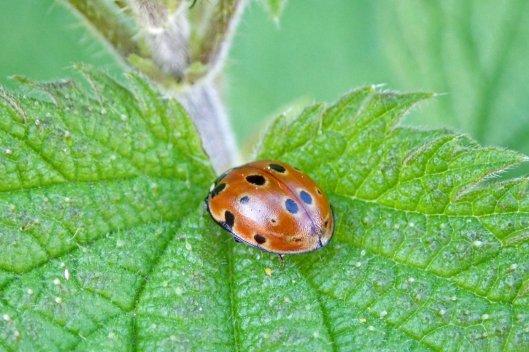
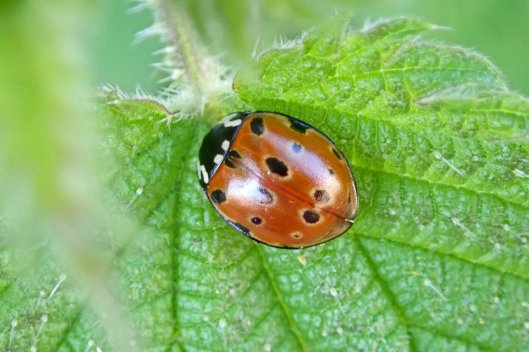
This lovely little creature was a bit lost. I found it sitting on some nettles beside a busy road. Admittedly, the bank above was covered in tall broadleaf trees and scrub but with none of the Pine trees the Eyed ladybird (Anatis ocellata) is meant to associate with. And the reason for that association is the fact that it eats Pine aphids.

This was my first ever sighting of an Eyed ladybird, Britain’s largest at 8-9 mm. I’ve been looking more closely at Pine trees lately but I’ve not seen one there … yet. The adults are out and about from Spring through to Autumn, so I’ll keep looking.

I wish I’d been able to get better photos but, you know, nettles!

Like Loading...

Leafmines: Cerodontha species

21 Monday Apr 2025

Posted by sconzani in insects, plants

≈ Leave a comment

Tags

British flies, British leafmines, Cerodontha, fly pupa, leaf-mining flies, leafmines on Carex flacca, leafmines on Glaucous sedge

While checking Glaucous sedge (Carex flacca) for the leaf-mining moth larva I featured in last Monday’s post (Leafmines: Elachista cinereopunctella), this time at a different location, I found an altogether different leafminer. This larva had also munched a linear gallery inside the leaf but I knew when I saw the tiny black speck within the mine that this miner was a fly and the black speck was likely to be a pupa. I also guessed that it would be difficult to identify as fly miners often are so I brought home two of several pupae I found.

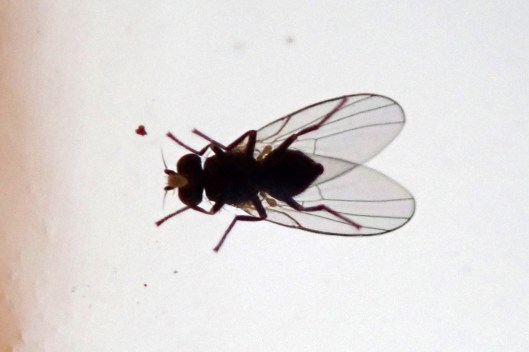
When I got home, I opened up one of the leaves to get a look at the pupa, took a few photos then popped the two snippets of sedge in a jar on my kitchen window sill to see what might emerge. Rob, from the British Leafminers website was able to confirm from my photo of the pupa that this was indeed a fly, likely belonging to the genus Cerodontha.

Twelve days later I was making my morning cup of tea when I noticed movement in the jar: a fly had emerged from the pupa I had photographed. Once again I took some photos and checked in with Rob – it was definitely a Cerodontha but a female, which are not as easy to pin to exact species as a male specimen (something to do with the genitalia, I suspect). Still, when I emailed Barry of the National Agromyzidae Recording Scheme, he thought an ID might be possible and volunteered to take a closer look. I’m waiting a few days to see if the second pupa hatches, then will send my specimens to him for further examination. If an exact identification results from that, I’ll update this post.

Like Loading...

Greedy for Garlic

20 Sunday Apr 2025

Posted by sconzani in insects, spring, wildflowers

≈ 6 Comments

Tags

Allium ursinum, British wildflowers, Dark-edged bee-fly, Honey bee, Ramsons, solitary bee, Speckled wood, spring flowers, Wild garlic

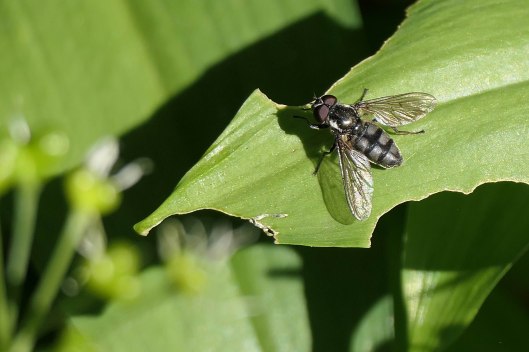
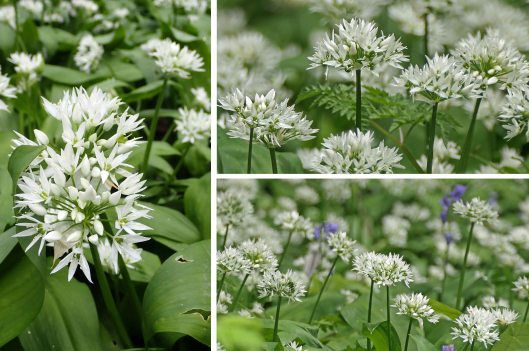
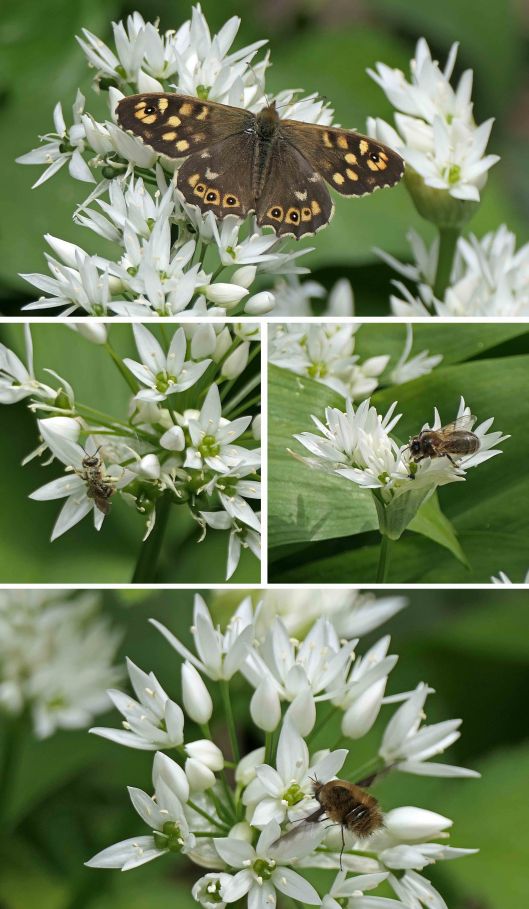
The first two days of the Easter break were very wet so I’m glad I took these images last Sunday. One of our local parks has the perfect environment for Wild garlic – Ramsons, if you prefer, Allium ursinum. A shallow ravine runs through the park, with a small stream meandering along its base, and, at this time of year, the steep sides of the gulley are carpeted with the lush green leaves and bright white umbels of garlic flowers. Elsewhere in the park, under tall old trees, the path is also lined with Wild garlic, so anywhere you walk, whenever you breathe, your nostrils are almost assaulted by garlic’s strong smell.

Though I know some people can’t tolerate this odour, it doesn’t seem to affect the insects, neither attracts nor repels them; a flower’s a flower, with the pollen and nectar that nurtures them. Last Sunday’s walk wasn’t particularly sunny but I still found a few creatures feeding greedily: a Speckled wood, a teeny solitary bee and a Honey bee, and a Dark-edged bee-fly.

Like Loading...

Whack a snack!

16 Wednesday Apr 2025

Posted by sconzani in birds, insects

≈ Leave a comment

Tags

birding, birdwatching, blackbird, Blackbird eating moth, British birds, British moths, Herald moth, Scoliopteryx libatrix, The Herald

Wouldn’t you know it? This was my first ever Herald moth (Scoliopteryx libatrix) and it ended up being snatched, whacked, and snacked on by a Blackbird. I guess a bird’s gotta eat. (If you want to see what an intact Herald looks like, there are some cracking photos on the UK Moths website.)

Like Loading...

Small zooming Orange-tips

15 Tuesday Apr 2025

Posted by sconzani in insects, spring

≈ Leave a comment

Tags

British butterflies, butterfly, male Orange-tip, Orange-tip

As I write this, a weather warning has just come into force, potentially bringing thunder, lightning and heavy rain from midday today until midday tomorrow. These warnings don’t always produce the forecast downpours but I feel for all the newly emerged small creatures, especially the delicate butterflies like this little Orange-tip. Of all the small Orange-tip males I’ve recently seen zooming along the hedgerows and banks of wildflowers, desperately seeking females, this one finally paused long enough to refuel, which allowed me to quickly snap a few photos. I hope he, and all his butterfly cousins, manage to find sufficient shelter to survive any deluges.

Like Loading...

Leafmines: Elachista cinereopunctella

14 Monday Apr 2025

Posted by sconzani in insects

≈ Leave a comment

Tags

British leafmines, Elachista cinereopunctella, Glaucous sedge-miner, leafmines, leafmines on Glaucous sedge, leafmining moth larvae, leafmining moths

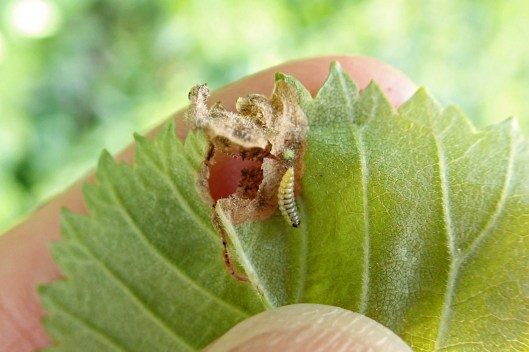
These two leafmines, in the leaves of Glaucous sedge (Carex flacca), may look quite boring and nondescript but scroll down to see what lies within.

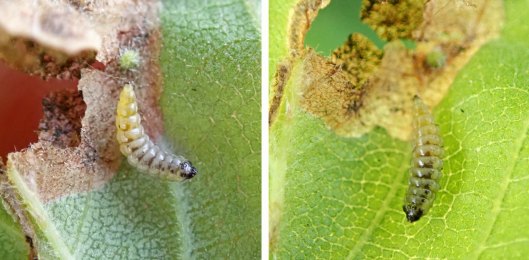
This is the stunning little larva of Elachista cinereopunctella, a moth that can be found throughout Britain but only in areas where its larval plants can be found (mainly Glaucous sedge, but some other sedges are also used). And the moth’s not actually that common in Wales, with just 13 records showing in the national biodiversity database. This may be because the adult moth is also rather nondescript (see a photo on the UK Moths website here) and few people look for and record the leaf-mining larval stage. I was lucky to be directed to the presence of these mines by my friendly local moth expert, George, though it still took some poking about the sedges in a local area of woodland to find them.

Like Loading...

Luscious leek for lunch

13 Sunday Apr 2025

Posted by sconzani in flowers, insects, spring, wildflowers

≈ 2 Comments

Tags

Allium triquetrum, Dark-edged bee-fly, Hairy-footed flower bee, insects on Three-cornered leek, solitary bee, Three-cornered garlic, Three-cornered leek

Today’s short local meander was rather smelly, firstly with swathes of Wild garlic (which will feature in an upcoming post) and also this lush area of Three-cornered leek (or Three-cornered garlic, Allium triquetrum), which was attracting lots of insects.

First up, a tiny solitary bee.

Then, several Dark-edged bee-flies came hovering in to view, long spiky legs dangling below and long tongues poking in to the flowers to feed.

And then this brute showed up, the first Hairy-footed flower bee I’ve managed to photograph this year, just.

Like Loading...

What an effort!

11 Friday Apr 2025

Posted by sconzani in insects, spring

≈ Leave a comment

Tags

British butterflies, butterfly, butterfly eggs, butterfly eggs on nettle, Peacock, Peacock butterfly, Peacock butterfly eggs, Peacock butterfly laying eggs, Stinging nettle

As I write this, my fingers are still stinging. And none of my photos are sharp, partly because ‘Ouch!’ but also because I didn’t want to disturb the clutch so was trying to move the leaf as little as possible. But, when I watched their beautiful mother laying the first of these yesterday, I knew I had to go back today to see how many she’d produced.

And here she is, the gorgeous female Peacock butterfly, clinging on to a Stinging nettle leaf. You might just be able to see how her abdomen is curved up towards the underside of the leaf where she is depositing her eggs. My guide book tells me that a female Peacock ‘lays her eggs in batches of up to 400 eggs, a process that can take over two hours’. What an effort! I will, of course, be looking out for when the tiny caterpillars emerge, in approximately two weeks’ time.

Like Loading...

Mystery: on a pine tree

10 Thursday Apr 2025

Posted by sconzani in insects, trees

≈ Leave a comment

Tags

mystery egg sac, mystery insect, mystery object on pine tree, mystery pupa, mystery pupal case, pine

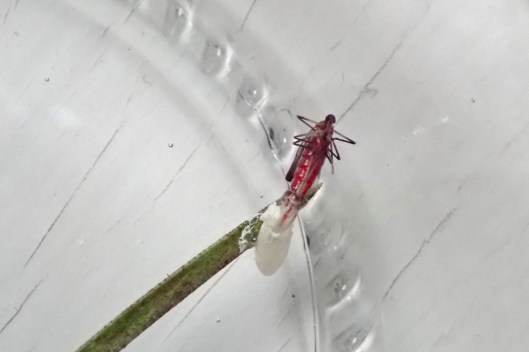
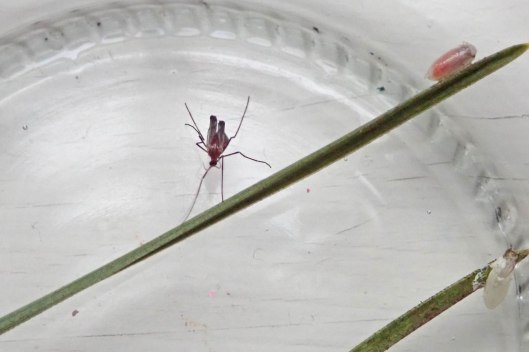
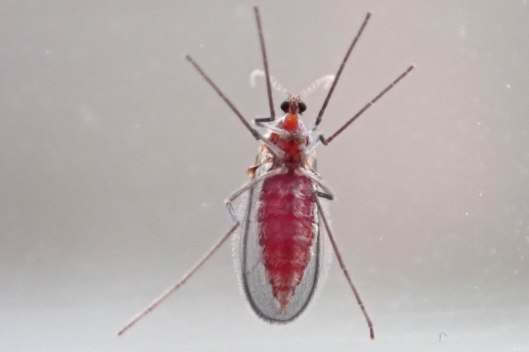
As the spring and summer progress, this first ‘mystery’ post may well develop in to a mystery series, depending on how many intriguing things I manage to find and how many I don’t manage to identify. These first mystery items were found recently when I was looking more closely than usual at Pine trees to see if I could spot any more Pine ladybirds. I did find one more of those lovely creatures but I also found these ‘things’, dotted sparsely around, attached to the Pine needles.

No amount of googling has produced any similar images or information and, when I asked for help on social media, I was inundated with helpful people saying they were Pine scale, which, after checking the lifecycle of those scales, I’m fairly sure they’re not. They look to me like some kind of egg sac or pupal case, with a tiny creature growing and developing inside.

In an attempt to solve the mystery, I plucked a couple of Pine needles, with the things attached, off one tree, and I’ve brought them home, stuck them in a jar on my kitchen window sill. Whether or not something will emerge remains to be seen and, rest assured, I will definitely write another blog post if that does happen. In the meantime, if any of you has any bright ideas, please do share them in the comments.

Like Loading...

Holly blue and Small white

09 Wednesday Apr 2025

Posted by sconzani in insects

≈ Leave a comment

Tags

blue butterflies, British butterflies, butterfly, Holly blue, Small white, white butterflies

Two for the price of one today!
It’s always a joy to see the blue butterflies emerge; it’s like a tiny piece of the sky has fallen to earth and is flitting amongst the flowers and shrubs and along the trees and hedges. The first to appear locally are the Holly blues. My first, on 2 April, was in an unlikely place; as I walked past, it flitted out from the street-side hedge of a house a few streets away from where I live. There was no Holly or Ivy in sight but perhaps those larval plants were growing in a nearby back garden that I couldn’t see in to.

Next to appear, just a couple of days later, was a Small white that was already looking a bit tatty. It seems its short life was proving to be a challenge, escaping from bird attacks or, perhaps, getting snagged in vegetation. My second Small white was pristine, feeding along a field edge so abundant with Blackthorn blossom that the area had attracted six species of butterfly: as well as the Small white, there were Speckled wood, Comma, another Holly blue, Brimstone, and my first Orange-tip of 2025 (which will feature in a future blog, as soon as one stays still long enough for a photo).

Like Loading...
← Older posts
Newer posts →

About me

sconzani

sconzani

I'm a writer and photographer; researcher and blogger; birder and nature lover; countryside rambler and city strider; volunteer and biodiversity recorder.

View Full Profile →

Follow earthstar on WordPress.com

Enter your email address to follow this blog and receive notifications of new posts by email.

Recent blog posts

  • Three Common sandpipers February 17, 2026
  • Beetle: Athous bicolor February 16, 2026
  • Crocus flower power February 15, 2026
  • Delightful doves February 14, 2026
  • Fan-like fungi February 13, 2026

From the archives

COPYRIGHT

Unless otherwise acknowledged, the text and photographs on this blog are my own and are subject to international copyright. Nothing may be downloaded or copied without my permission.

Fellow Earth Stars!

  • Unknown's avatar
  • Unknown's avatar
  • Unknown's avatar
  • Unknown's avatar
  • Unknown's avatar
  • Unknown's avatar
  • Unknown's avatar
  • Unknown's avatar
  • Unknown's avatar
  • Unknown's avatar
  • Unknown's avatar
  • Unknown's avatar
  • Unknown's avatar
  • Unknown's avatar
  • Unknown's avatar
  • Unknown's avatar
  • Unknown's avatar
  • Unknown's avatar
  • Unknown's avatar
  • Unknown's avatar
  • Unknown's avatar
  • Unknown's avatar
  • Unknown's avatar
  • Unknown's avatar
  • Unknown's avatar
  • Unknown's avatar
  • Unknown's avatar
  • Unknown's avatar
  • Unknown's avatar
  • Unknown's avatar
  • Unknown's avatar
  • Unknown's avatar
  • Unknown's avatar
  • Unknown's avatar
  • Unknown's avatar
  • Unknown's avatar
  • Unknown's avatar
  • Unknown's avatar
  • Unknown's avatar
  • Unknown's avatar
  • Unknown's avatar
  • Unknown's avatar
  • Unknown's avatar
  • Unknown's avatar
  • Unknown's avatar
  • Unknown's avatar
  • Unknown's avatar
  • Unknown's avatar
  • Unknown's avatar
  • Unknown's avatar

Blog at WordPress.com.

Privacy & Cookies: This site uses cookies. By continuing to use this website, you agree to their use.
To find out more, including how to control cookies, see here: Cookie Policy
  • Subscribe Subscribed
    • earthstar
    • Join 670 other subscribers
    • Already have a WordPress.com account? Log in now.
    • earthstar
    • Subscribe Subscribed
    • Sign up
    • Log in
    • Report this content
    • View site in Reader
    • Manage subscriptions
    • Collapse this bar
 

Loading Comments...
 

You must be logged in to post a comment.

    %d