Big picture, small picture
17 Saturday Feb 2018
16 Friday Feb 2018
Posted in flowers, nature, spring, wildflowers
Tags
#FloralFriday, British wildflowers, Ficaria verna, Lesser Celandine, Ranunculus ficaria, signs of spring

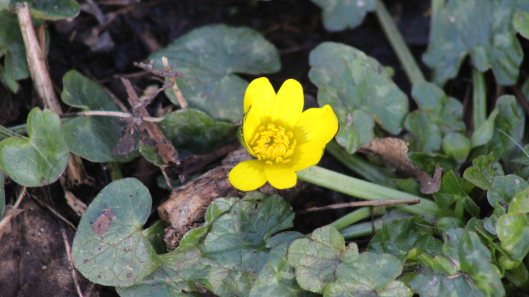
Not only was it the favourite flower of William Wordsworth (who wrote three poems about it) and considered to be a herbal remedy for haemorrhoids (due to the shape of its roots), but the pretty Lesser celandine (was Ranunculus ficaria, now Ficaria verna) is one of the first floral heralds of spring.
The flowers are supposed to appear around the same time that the Swallows arrive back in Britain (hence the name Celandine, which comes from the Greek chelidon, meaning Swallow) (flower and bird are out of sync this year, though) so we need to keep our eyes on the skies, as well as on the ground.

15 Thursday Feb 2018

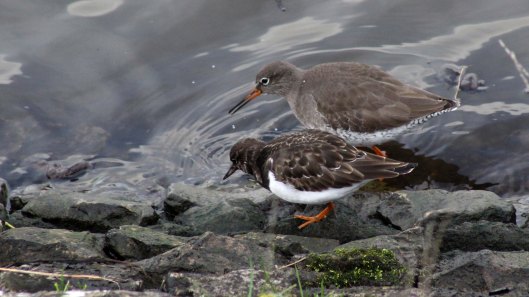
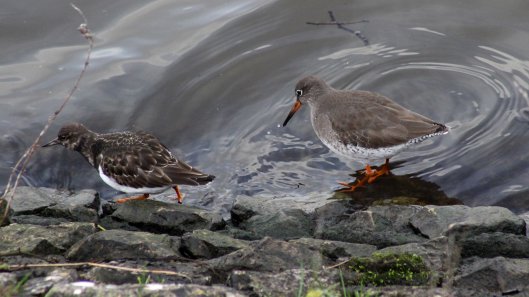
T: ‘Found anything tasty?’

R: ‘Nothing to see here. Move along.’

14 Wednesday Feb 2018
Primaveral: adjective, meaning of, relating to, or taking place in early spring (as in, for example, the primaveral blossoming of the Cherry plum tree in my photo).
According to the Oxford Dictionary, the word appeared in the English language in the early 19th century, having come possibly from the Catalan primavera, the Spanish primavera, the Portuguese primavera, or the Italian primavera, which all mean ‘springtime’. And those words probably came from the Latin prīmum vēr, meaning first or earliest spring.

13 Tuesday Feb 2018
Tags
bird behaviour, birding, birdwatching, British birds, feathers, feathers as insulation, fluffing up feathers, how birds keep warm, robin

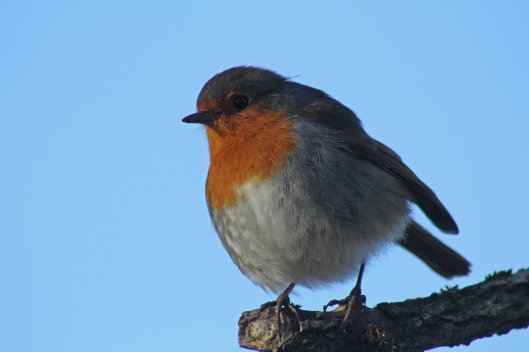
The biting wind seems to find the smallest crack in your several layers of clothing to nip at exposed flesh, your hands feel frost-bitten even though you’ve got your thickest gloves on, and the tip of your nose is so cold that you can no longer feel it. Yet there on a fence post directly in front of you, equally exposed to the wintery weather, is a chirpy wee Robin, singing its heart out, seemingly oblivious to the chill. How does it do it?

Well, the answer is in the fluffing up of its feathers. If you’ve ever slept under a down- or feather-filled duvet, you’ll know how incredibly warm feathers can be, and that’s especially true for our wee Robin. You see, feathers are a brilliant form of insulation material – feathers trap air close to the bird’s body so, in winter, they trap the warmth of the bird’s body heat. The more fluffed up the feathers are, the more warm air they trap, the more cosy is our little Robin.

12 Monday Feb 2018
When you love birds but don’t have a garden …

11 Sunday Feb 2018
Posted in nature

Thanks for dropping in to my little corner of the internet. I’m off on holiday for a week or so, hoping to find lots more lovely creatures and plants to share with you all. My daily posts will continue though, so check below for the latest.
11 Sunday Feb 2018
Tags
Buttercup, fly, fly larva, fly puparium, leaf mine on buttercup, leaf mine on Lesser celandine, leaf mines, leafminer, Lesser Celandine, Phytomyza ranunculi
You might think there are no insects around in winter but you’d be wrong, as I’ve been discovering in the past week or so. In my checks for blooming wildflowers, I’ve seen the odd Lesser celandine and Buttercup flower and, looking more closely at the plants, I’ve noticed leaf mines on some. And where there are leaf mines, there are insects laying eggs and larvae developing from those eggs to create the mines.
These particular mines are created by Phytomyza ranunculi, an incredibly tiny fly which I haven’t yet seen. But I have seen – and can show you here – a larva and a puparium. I brought home a couple of Lesser celandine leaves, intending to take better photos of them, but I didn’t reckon on them shrivelling up overnight. On the positive side, when I picked up one leaf, a tiny larva was sitting underneath, presumably having popped out of the leaf as it dried up.
A couple of days later I brought home another couple of leaves, for the same purpose, but this time left them in a sealed container. The next day, when I opened it, I saw this tiny speck in the bottom of the container and realised a larva from one of the leaves must have pupated. I’m trying to hatch it so I – and you – get to see the fly. Fingers crossed!
10 Saturday Feb 2018
Tags
birding, birdwatching, Glamorgan Bird Club, Goldeneye, Greenfinch, Kenfig National Nature Reserve, Kenfig Pool, Ogmore, Slavonian grebe, Stonechat
Wednesday dawned clear and frosty so on went the layers of clothing, scarf, hat, gloves and boots, in the backpack went the camera, binoculars, a spot of lunch and rain jacket (this is Wales and I was once a Girl Guide so I was prepared!). I’d scanned tweets, posts and blogs so knew vaguely what to expect and left the house hopeful.

And I did not despair, nor was I disappointed. On my first Glamorgan Bird Club trip of the year, to Ogmore – both the river and the beach – and then on to Kenfig National Nature Reserve, I added ten new birds to my 2018 list, including two lifetime firsts in the Slavonian grebe and Short-eared owls.
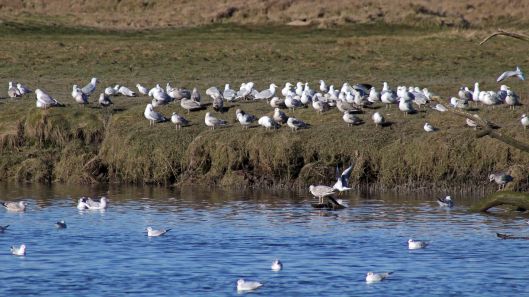
At Ogmore, the weather was glorious – blue skies, and heat in the sun, if you managed to shelter from the chilly breeze. There were gulls galore, mostly Herring and Black-headed, a sprinkling of Common and a single Med, as well as, further down river, a Great black-backed gull – what beasts they are!
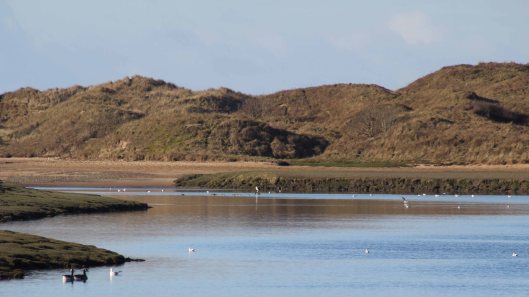

A Kingfisher added its flash of turquoise, to the mostly white, grey and brown colours of the other birds (Little egret, Cormorant, Mallard, Redshank, Canada goose, Mute swan). But I don’t mean to imply the other avian species were boring – just look at these dazzling Goldeneyes!

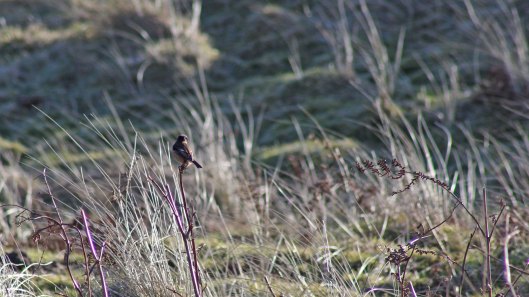
As we wandered further towards the river mouth, a Stonechat popped up to survey the humans adorned with bins, scopes and cameras, all staring in the opposite direction, to peep briefly, ‘Look at me!’. So I did.
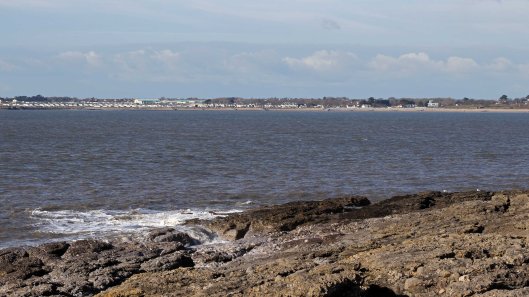
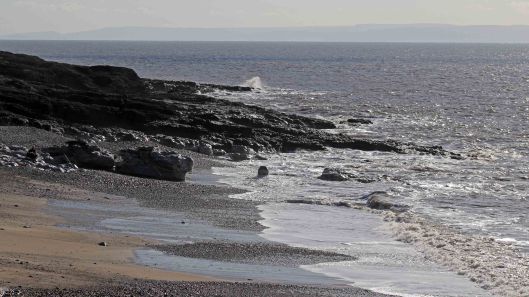
At Ogmore beach, we were hoping for Purple sandpipers but, even with 21 pairs of eyes surveying every nook and rock cranny, we lucked out. Turns out the birds were spending the day across the bay at Newton and Porthcawl. But hey, the scenery was glorious, with glimpses of the recent dumps of snow across the water on Exmoor.
Sandwiches devoured, we headed to Kenfig and stomped down to the pool, where I almost immediately got on to my first lifer of the day, the little black-and-white Slavonian grebe that’s been overwintering there. It’s small, a frequent diver, and was distant but was plainly see-able through bins and scopes, if not such a great subject for my camera.
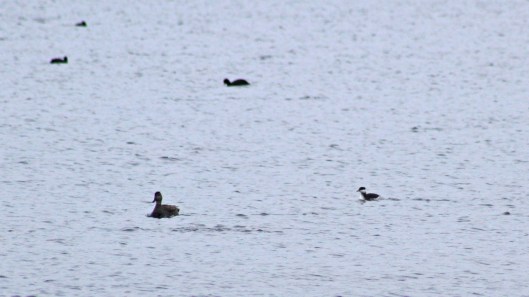
By this time, the sun had clouded over, and even a stroll through boggy fields, over wonky stiles, around the lake’s edge in search of White-fronted geese failed to keep the chill from my bones – and we didn’t see those geese. But, a small stalwart seven of us – the others peeling off to heated cars and homes – decided to head for a high point to survey the dunes for the Short-eared owls that have recently been sighted hunting at dawn and dusk. Another lifer! Two birds were seen, one flying low, back and forth amongst the dunes, the other gliding high, with a Kestrel for company.

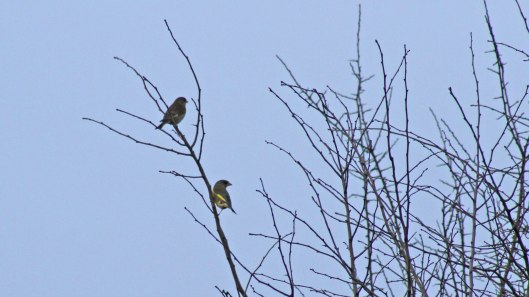
And to finish off a wonderful day’s birding, we got the call that tea, coffee and cake awaited us at the Kenfig office, and spotted these two Greenfinch amongst trees along the way. Just perfect!
We saw 62 species in total: the full list can be seen on the Glamorgan Bird Club’s website here.

09 Friday Feb 2018
Posted in flowers, nature, spring, wildflowers
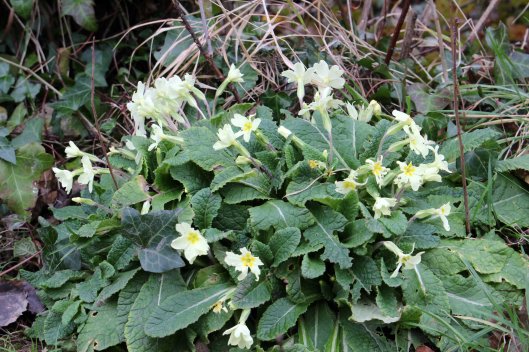
‘Ring-ting! I wish I were a Primrose,
A bright yellow Primrose blowing in the spring!
The stooping boughs above me,
The wandering bee to love me,
The fern and moss to creep across,
And the elm-tree for our king!’
~ from William Allingham, ‘Wishing, A Child’s Song’. Allingham (1824-1889) was an Irish poet and man of letters.

You must be logged in to post a comment.