• ABOUT
  • BIRDING 2018
  • Birding 2019
  • BLOG POSTS
  • Butterflies 2018
  • Resources

earthstar

~ a celebration of nature

earthstar

Category Archives: nature

Rye birds

27 Tuesday Feb 2018

Posted by sconzani in birds, nature, seaside, weather

≈ Leave a comment

Tags

birding, birdwatching, British birds, Cormorant, Great black-backed gull, Lapwing, Redshank, Rye Harbour Nature Reserve, shoveler, Wigeon

My original title for this blog was ‘A mad Kiwi and an Englishwoman go birding in a howling gale’. I decided that was a trifle long but it was certainly an accurate reflection of our day at Rye Harbour Nature Reserve. Nevertheless, we persevered, though we did put off walking the beach-top path – I think we would’ve been blown all the way back to Rye township if we’d tried that.

180227 Rye Harbour birds (4)

As you might expect, the birds were mostly hunkered down, sheltering where possible behind clumps of grass or huddled alongside sandy banks. Still, with brief stops here and there to scan the shingle and reeds with constantly watering eyes through fogging-up binoculars and short pops into hides (as much to warm up as to look out), we managed to clock up a total of 35 species. They were: Kestrel, House sparrow, Herring gull, Lesser black-backed gull, Black-headed gull, Mallard, Shelduck …

180227 Rye Harbour birds (3)

Shoveler (above, seen through a netting fence), Brent goose …
180227 Rye Harbour birds (5)

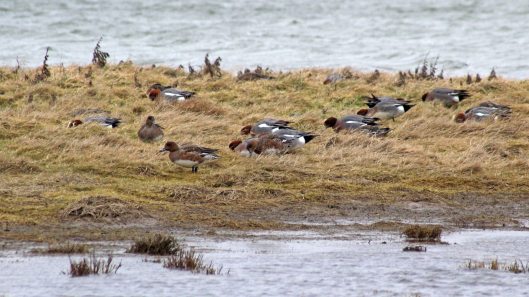
Wigeon (those handsome birds above), Oystercatcher, Carrion crow, Tufted duck …

180227 Rye Harbour birds (1)

Redshank (always a favourite of mine), Coot …

180227 Rye Harbour birds (6)

Cormorant (already beginning to nest in trees near Castle Water) …

180227 Rye Harbour birds (2)

Great black-backed gull and Lapwing (both above), Little grebe, Mute swan, Teal, Little egret, Goldfinch, Woodpigeon, Blackbird, Green woodpecker, Great tit, Coal tit, Magpie, Mistle thrush, Pied wagtail, Greylag goose, Egyptian goose, Pheasant, and Starling.

Like Loading...

The 18-buzzard bus

26 Monday Feb 2018

Posted by sconzani in animals, birds, nature

≈ 4 Comments

Tags

birding, birdwatching, British birds, Buteo buteo, Buzzard, killing time on bus journeys

What do you do to help pass the time on a long bus journey? Read, sleep, listen to music, do crosswords or puzzles? I had taken along my knitting for the three-and-a-half-hour bus ride from Cardiff to London, but I didn’t knit a single stitch.

180226 buzzards (1)
180226 buzzards (2)

I spent the 15 minutes waiting for the bus watching the earth of a molehill moving as the little mole tidied up its tunnel (and, of course, I was hoping it might poke its head out, but no such luck). And, once we were underway, we hadn’t cleared Cardiff’s suburbs before I spotted my first buzzard hovering over a park so, after that, I decided to abandon my knitting and keep my eyes on the countryside that was whizzing past outside the window.

180226 buzzards (5)

And what did I see? My list reads as follows: Lesser black-backed gulls, Herring gulls and Black-headed gulls, Carrion crows, Robins, Jackdaws, Pied wagtails, Feral and Woodpigeons, Magpies, Starlings, Mallards and Mute swans, Mistle thrushes and Blackbirds, a Rookery, lots of rabbits and Pheasants, and two small groups of deer, plus, of course, the 18 Buzzards alluded to in the title of this blog. I was very impressed to see so many of them.

180226 buzzards (3)
180226 buzzards (4)
Like Loading...

The beastie from the east

25 Sunday Feb 2018

Posted by sconzani in nature

≈ 2 Comments

Tags

Haemopis sanguisuga, Horse leech, leech, Trocheta subviridis

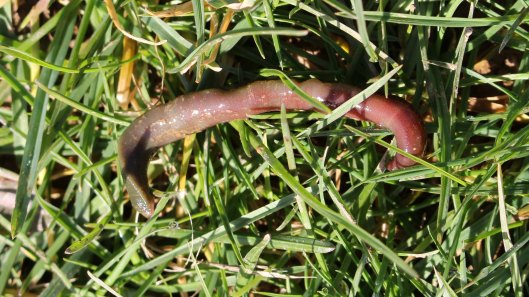
If you’re British, you’ll realise I’ve borrowed the name of this post from the nickname for the extremely cold weather blast that’s about to hit Britain but my ‘beastie from the east’ is something rather different. To be honest, I don’t actually know what it is. I spotted it on 16 February, in a puddle on a muddy walking track leading to Bodium Castle, while on holiday in East Sussex.

182025 leech (1)

It looked like an unusual earthworm but, when I picked it up, I realised it wasn’t a worm, and my friend Jill suggested it might be a leech. When we got home and checked the internet, I initially thought it might be a Horse leech (Haemopis sanguisuga) but, as I’ve never seen one – nor, indeed, any leech, I couldn’t be sure.

182025 leech (2)
182025 leech (3)

So, I posted some photos on Twitter. One person thought Horse leech might be right but another suggested it might be a different leech, Trocheta subviridis, though to confirm that would require a close look at its pores and, of course, I didn’t bring it home with me. So, my ‘beastie from the east’ remains a bit of an intriguing mystery.

182025 leech (4)
182025 leech (5)
Like Loading...

The bumbles are back!

24 Saturday Feb 2018

Posted by sconzani in flowers, insects, nature, spring, wildflowers

≈ Leave a comment

Tags

bumblebee, crocus, spring flowers, Spring has sprung

180224 bumblebee

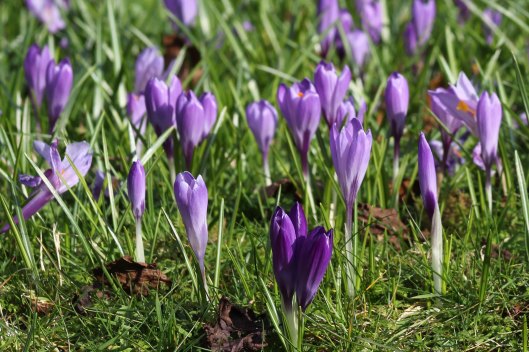
Following on from yesterday’s gorgeous crocuses for Floral Friday, here’s a little something I found bumbling about in those flowers …

180224 bumblebee (1)
180224 bumblebee (2)
180224 bumblebee (3)
180224 bumblebee (4)
180224 bumblebee (5)
180224 bumblebee (6)
Like Loading...

Fair-handed Spring

23 Friday Feb 2018

Posted by sconzani in flowers, nature, plants, spring, wildflowers

≈ Leave a comment

Tags

Cathays Cemetery, crocus, spring flowers

180223 crocuses (4)

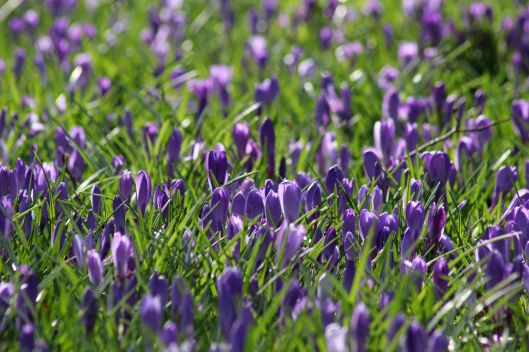
Along these blushing borders bright with dew,
And in yon mingled wilderness of flowers,
Fair-handed Spring unbosoms every grace –
Throws out the snowdrop and the crocus first
~ James Thomson, ‘Spring’, The Seasons
180223 crocuses (2)180223 crocuses (3)180223 crocuses (5)180223 crocuses (1)

Like Loading...

Little egrets, again

22 Thursday Feb 2018

Posted by sconzani in birds, nature

≈ Leave a comment

Tags

birding, birdwatching, British birds, Cuckmere Haven, Egretta garzetta, Little egret, Rye Harbour Nature Reserve, Winchelsea Beach

It seems Little egrets (Egretta garzetta) are rather partial to southern England as I saw several during my holiday in East Sussex last week, at Rye Harbour Nature Reserve and in the fields behind Winchelsea Beach.

180222 Little egrets (1)

We also get Little egrets in Wales, of course, and I’ve blogged about them before, when there were two visiting a Cardiff lake last July, but I was delighted to get much closer to one particular bird last Saturday at Cuckmere Haven. The weather was glorious, and people were out in droves to enjoy the almost-summery day, but this lovely little bird simply moved slightly further away as they passed, then returned to the well-trodden grassy path to continue probing for earthworms and miscellaneous insects.

180222 Little egrets (2)
180222 Little egrets (4)

180222 Little egrets (5)

180222 Little egrets (6)
180222 Little egrets (3)


Like Loading...

Wild words: chalk

21 Wednesday Feb 2018

Posted by sconzani in geology, nature, seaside

≈ Leave a comment

Tags

#WildWords, Birling Gap, chalk, chalk cliffs, Cuckmere Haven, limestone cliffs, Seven Sisters Country Park

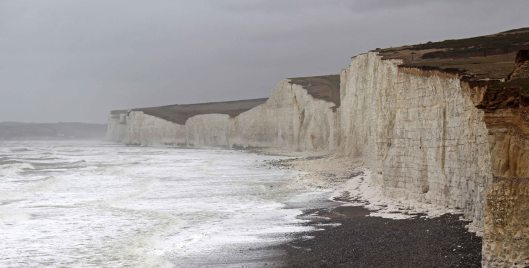
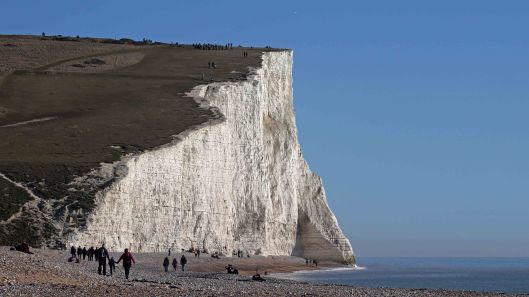
Chalk: noun; ‘a white soft earthy limestone (calcium carbonate) formed from the skeletal remains of sea creatures’, according to the Oxford Dictionary, though that seems a relatively simplistic explanation to me. I chose chalk as this week’s word as I was in East Sussex last week and had occasion twice to see the magnificent chalk cliffs known as the Seven Sisters, once at Birling Gap in a howling gale and again, at Cuckmere Haven, on a day that felt like summer had come early to southern England.

180221 chalk (1)

The Discovering Fossils website has this to say about the chalk at the Seven Sisters:

The Chalk at Seven Sisters belongs to the Upper Chalk, and was deposited during the Coniacian and Santonian stages of the Late Cretaceous epoch between 87-84 million years ago (mya). At this time Seven Sisters and much of Great Britain, along with Europe, lay beneath a relatively shallow sea around 40°N of the equator, on an equivalent latitude to the Mediterranean Sea today.

And you can read more about the fascinating process of chalk formation here.

180221 chalk (2)

Like Loading...

Drake domination

20 Tuesday Feb 2018

Posted by sconzani in birds, nature

≈ Leave a comment

Tags

Aythya ferina, birding, birdwatching, British birds, Pochard

180220 Pochard (1)

So it’s not just in the world of human beings that males dominate females. No, I’m not climbing on my soapbox – I’m referring to the recently published results of surveys of European and North African populations of Pochard (Aythya ferina), which have indicated that, over a 16-year period, the proportion of males to females has increased significantly in favour of the males. You can read more about the research here.

180220 Pochard (3)

180220 Pochard (4)
180220 Pochard (2)

180220 Pochard (5)

Like Loading...

Hallo, Rabbit

19 Monday Feb 2018

Posted by sconzani in animals, mammal, nature

≈ 2 Comments

Tags

British fauna, British mammals, Cosmeston, Oryctolagus cuniculus, rabbit

180219 rabbit

“Hallo, Rabbit,” he said, “is that you?”
“Let’s pretend it isn’t,” said Rabbit, “and see what happens.”
~ A.A. Milne, Winnie the Pooh

Like Loading...

Goosie, goosie, goosander

18 Sunday Feb 2018

Posted by sconzani in birds, nature

≈ 2 Comments

Tags

birding, birdwatching, British birds, Goosander, Merganser, Mergus merganser

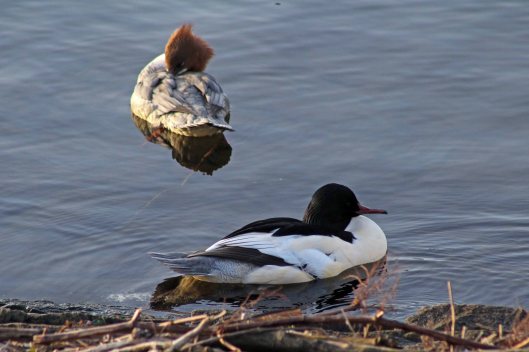
Officially Mergus merganser – the name merganser is a hybrid eighteenth-century word obtained from the Latin root merg-, meaning ‘diving’, and anser, meaning ‘goose’, this beautiful bird is the Goosander. It used to be known as the Common merganser, and I’ve noticed some birders still call it that – old habits…. The bird has a ton of other vernacular names, like, from Sussex, dun diver; green-headed goosander, harle, and jacksaw, in Yorkshire; land cormorant (in Dublin); in Shropshire, pied wigeon; and, in Orkney, rantock. And then there are the understandable references to that long serrated ‘all the better to catch fish with’ bill: sawbill, in Stirlingshire; sawneb, from Aberdeenshire; and, from Suffolk, sawyer.

180218 Goosander (1)

Female above, male below

Their fish-catching habit is why Goosanders have often been persecuted, particularly by the fishermen who think the birds are theirs for the catching. Fortunately, the bird’s population has, thus far, not suffered unduly from this persecution and, from 1871, the year they were first known to have bred in Britain, the Goosander has gradually colonised most of Scotland and spread through much of England and Wales.

Male
Male
Female
Female

Britain has another merganser, Mergus serrator, the Red-breasted merganser, and the two species can be hard to tell apart. But the main thing to note is location – Goosanders are mostly freshwater birds and can be seen year round on rivers and lakes in many parts of Britain, whereas Red-breasted mergansers, although equally at home in fresh- and salt-water locations, are mostly seen in the winter months in coastal areas.

180218 Goosander (4)
180218 Goosander (5)
Like Loading...
← Older posts
Newer posts →

About me

sconzani

sconzani

I'm a writer and photographer; researcher and blogger; birder and nature lover; countryside rambler and city strider; volunteer and biodiversity recorder.

View Full Profile →

Follow earthstar on WordPress.com

Enter your email address to follow this blog and receive notifications of new posts by email.

Recent blog posts

  • Bug: Harpocera thoracica April 22, 2026
  • A female Tawny April 21, 2026
  • NFY: Orange-tip April 20, 2026
  • All the yellows April 19, 2026
  • Spider: Dysdera crocata April 18, 2026

From the archives

COPYRIGHT

Unless otherwise acknowledged, the text and photographs on this blog are my own and are subject to international copyright. Nothing may be downloaded or copied without my permission.

Fellow Earth Stars!

  • Unknown's avatar
  • Unknown's avatar
  • Unknown's avatar
  • Unknown's avatar
  • Unknown's avatar
  • Unknown's avatar
  • Unknown's avatar
  • Unknown's avatar
  • Unknown's avatar
  • Unknown's avatar
  • Unknown's avatar
  • Unknown's avatar
  • Unknown's avatar
  • Unknown's avatar
  • Unknown's avatar
  • Unknown's avatar
  • Unknown's avatar
  • Unknown's avatar
  • Unknown's avatar
  • Unknown's avatar
  • Unknown's avatar
  • Unknown's avatar
  • Unknown's avatar
  • Unknown's avatar
  • Unknown's avatar
  • Unknown's avatar
  • Unknown's avatar
  • Unknown's avatar
  • Unknown's avatar
  • Unknown's avatar
  • Unknown's avatar
  • Unknown's avatar
  • Unknown's avatar
  • Unknown's avatar
  • Unknown's avatar
  • Unknown's avatar
  • Unknown's avatar
  • Unknown's avatar
  • Unknown's avatar
  • Unknown's avatar
  • Unknown's avatar
  • Unknown's avatar
  • Unknown's avatar
  • Unknown's avatar
  • Unknown's avatar
  • Unknown's avatar
  • Unknown's avatar
  • Unknown's avatar
  • Unknown's avatar
  • Unknown's avatar

Blog at WordPress.com.

Privacy & Cookies: This site uses cookies. By continuing to use this website, you agree to their use.
To find out more, including how to control cookies, see here: Cookie Policy
  • Subscribe Subscribed
    • earthstar
    • Join 642 other subscribers
    • Already have a WordPress.com account? Log in now.
    • earthstar
    • Subscribe Subscribed
    • Sign up
    • Log in
    • Report this content
    • View site in Reader
    • Manage subscriptions
    • Collapse this bar
 

Loading Comments...
 

You must be logged in to post a comment.

    %d