• ABOUT
  • BIRDING 2018
  • Birding 2019
  • BLOG POSTS
  • Butterflies 2018
  • Resources

earthstar

~ a celebration of nature

earthstar

Category Archives: nature

Leafminer on bramble

29 Monday Jan 2018

Posted by sconzani in insects, nature, plants

≈ 6 Comments

Tags

bramble, British micro moth, British moths, Golden pigmy moth, leaf mines, leafminer, moth larvae in leaf mines, Rubus fruticosus agg, Stigmella aurella

Following on from my Leafmines 101 post and the one about leafminers on Hart’s tongue fern, here’s another leaf mine I think I can identify (note the ‘I think’!).
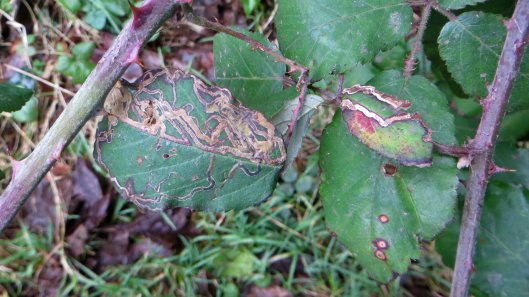
180129 Stigmella aurella on bramble (1)

The reason I’m hesitant about positively IDing this one is because there are two species of micro moth whose larvae produce very similar mines on bramble (Rubus fruticosus agg.) leaves. One is the Glossy bramble pigmy moth (Stigmella splendidissimella) but the more likely in this case is the Golden pigmy moth (Stigmella aurella).

180129 Stigmella aurella on bramble (2)
180129 Stigmella aurella on bramble (3)

Though it’s very common and widespread in Britain, I’ve never seen this tiny moth (images on the UK moths website here) but the mines its larvae create on bramble leaves are everywhere I look. As you can see, the mine starts out small but, as the larva within chews and chews, so it widens its mine to accommodate its expanding girth.

You can see if the inhabitant is still at home by holding the leaf up to the light. Most of these seemed to be empty, as you can see from the images below (the central black lines are the frass). I’ve never actually opened a mine to have a look at the larva when it has been inside but, if I did, I would see an orangey-yellow grub with a brownish tinge to its head (there are images on the Bladmineerders website here).

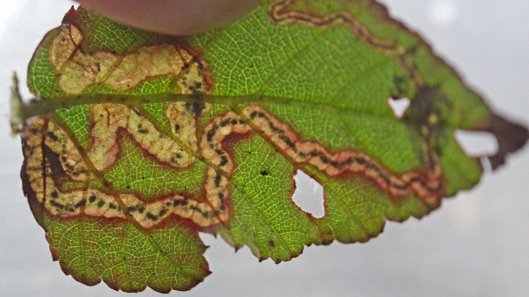
180129 Stigmella aurella on bramble (4)180129 Stigmella aurella on bramble (5)

Like Loading...

Another winter ten

28 Sunday Jan 2018

Posted by sconzani in flowers, nature, wildflowers, winter

≈ Leave a comment

Tags

#theWinter10, British flora, January flowers, wildflowers, winterf-flowering wildflowers

It was about time I had another go at WildflowerHour’s current challenge: ‘our weekly winter challenge is #thewinter10 which is to find ten different wild flowers in bloom each week. Once you’ve found them, work out what they are, and post them for the rest of us to see.’

So, on Thursday’s walk, though I was really looking for birds, I also remembered to cast my eyes downwards for flowers. And, on one relatively short stretch along the western edge of Cardiff Bay, I found my ten: Creeping buttercup (I think). a Dandelion species, Nipplewort, Petty spurge, possibly Common mouse-ear, Red dead nettle, Groundsel, Sweet meadow grass, Gorse, and Red clover.

180128 Winter ten (1)
180128 Winter ten (2)
180128 Winter ten (3)
180128 Winter ten (5)
180128 Winter ten (6)
180128 Winter ten (8)
180128 Winter ten (9)
180128 Winter ten (10)
180128 Winter ten (11)
180128 Winter ten (12)
Like Loading...

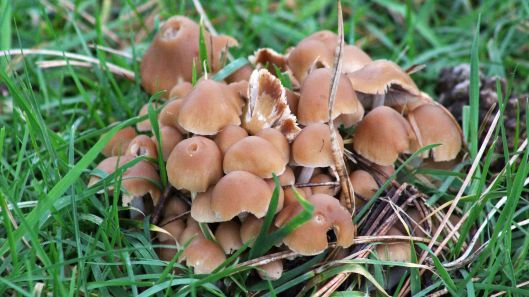
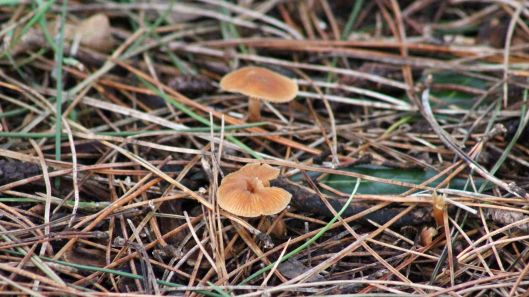
Little brown jobs

27 Saturday Jan 2018

Posted by sconzani in fungi, nature

≈ 8 Comments

Tags

British fungi, brownish fungi, difficult to identify fungi, fungi, fungus, little brown job

Though I have since learnt that this expression is also used by birders, ‘Little brown job’ is a term I first heard used in relation to fungi, the many and varied, brownish-hued conglomerations of fungi that have few distinguishing characteristics (unless you’re a whizz with a microscope) and so can often be notoriously difficult to identify. Here are some I’ve seen this week.

180127 Little brown jobs (1)180127 Little brown jobs (2)180127 Little brown jobs (3)180127 Little brown jobs (4)180127 Little brown jobs (5)180127 Little brown jobs (6)

Like Loading...

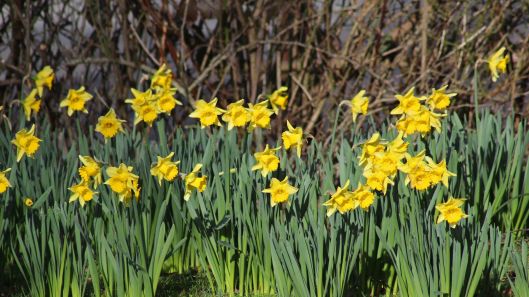
‘Daffodowndilly’

26 Friday Jan 2018

Posted by sconzani in flowers, nature, spring

≈ 4 Comments

Tags

A A Milne, daffodil, daffodowndilly, signs of spring, spring flowers, yellow flowers

180126 daffodils (1)

She wore her yellow sun-bonnet,
She wore her greenest gown;
She turned to the south wind
And curtsied up and down.
She turned to the sunlight
And shook her yellow head,
And whispered to her neighbour:
“Winter is dead.”
~ A.A. Milne, When We Were Very Young

180126 daffodils (2)
180126 daffodils (4)

180126 daffodils (3)

Like Loading...

A gathering of grebes

25 Thursday Jan 2018

Posted by sconzani in birds, nature

≈ Leave a comment

Tags

birding, birdwatching, British birds, little grebe, Roath Park Lake, Tachybaptus ruficollis

Six is the highest number of Little grebes (Tachybaptus ruficollis) I’ve ever seen in one group – these were on Roath Park Lake a couple of days ago – but the really tricky thing was to get them all above water and in shot at the same time!

180125 Little grebes (1)

One, two, plus two with their heads below water … and two circles of bubbles.

180125 Little grebes (2)

One up, three on their way under … and two nowhere to be seen.

180125 Little grebes (3)

Nope!

180125 Little grebes (4)

Almost!

180125 Little grebes (5)

YES! Success at last.

Like Loading...

Wild words: chlorophilia

24 Wednesday Jan 2018

Posted by sconzani in leaves, nature, trees

≈ 1 Comment

Tags

#WildWords, chlorophilia, green leaves, loving all things green

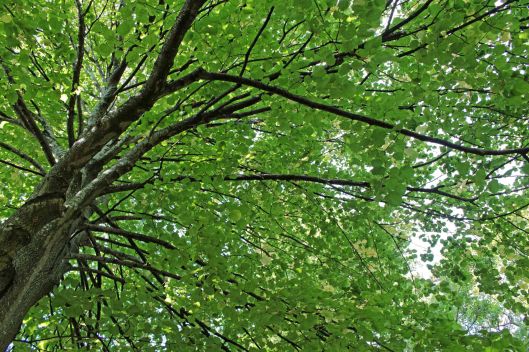
Chlorophilia: from the Greek khlōros, meaning green, and philia, meaning loving; thus, loving all things green and growing.
Now, that sounds straightforward enough and many of us would willingly admit to having chlorophilia but a word of caution. I’ve just been reading on the Wiki Knowledge Dump blog (the place where rejected Wikipedia articles often get resurrected) that the word (which does not appear in standard dictionaries) was ‘invented’ in 2004 to describe a physical or sexual attraction to plants. Tree-huggers, take note!

180124 chlorophilia

Like Loading...

Heads up for Big Garden Birdwatch

23 Tuesday Jan 2018

Posted by sconzani in birds, nature, winter

≈ 4 Comments

Tags

Big Garden Birdwatch, birding, birdwatching, British birds, counting the birds in your garden, RSPB birdwatch

180123 1 blackbird
180123 2 blue tit
180123 3 chaffinch

I don’t have a garden but that doesn’t mean I can’t take part in this weekend’s RSPB Big Garden Birdwatch ’cause you can also do your count in your local park.

180123 4 coal tit
180123 5 collared dove
180123 6 dunnock

All it takes is an hour of your time on either the 27th, 28th or 29th of January, a pen and paper so you can make a note of the birds you see, and maybe a cup of tea and a couple of biscuits to keep you going.

180123 7 Goldfinch
180123 8 great tit
180123 9 house sparrow

The specific list of birds to be counted is Blackbird, Blue tit, Chaffinch, Coal tit, Collared dove, Dunnock, Goldfinch, Great tit, House sparrow, Greenfinch, Long-tailed tit, Magpie, Robin, Starling and Woodpigeon. Of course, the RSPB is also interested in any other birds you see in your garden (not flying overhead), and any other creatures that have visited your garden in the past year – a mole or a hedgehog or maybe a fox?

180123 10 greenfinch
180123 11 long-tailed tit
180123 12 magpie

Here’s the link so all you Brits out there can check the details and get involved.

180123 13 robin
180123 14 Starling
180123 15 woodpigeon


Like Loading...

A halcyon day

22 Monday Jan 2018

Posted by sconzani in birds, nature

≈ 2 Comments

Tags

Alcyone, birding, birdwatching, British birds, Ceyx, Forest Farm, Glamorgan Canal, Greek myth about kingfisher, Halcyon, Halcyon days, Kingfisher

Did you know that the word halcyon is Greek for kingfisher?

180122 Kingfisher (1)

It comes from an ancient myth about Alcyone and her husband Ceyx who angered the gods by calling each other Zeus and Hera. The real Zeus and Hera were livid and punished the couple by killing Ceyx, using a thunderbolt to sink Ceyx’s ship.

180122 Kingfisher (2)

Overcome with grief at the news, Alcyone jumped into the sea and also drowned. Impressed by Alcyone’s love and compassion, Zeus and Hera transformed the couple into vibrant blue birds, the kingfishers that delight all who are privileged to see them.

180122 Kingfisher (3)

But life was not all plain sailing for the newly transformed kingfishers as Zeus declared that Alcyone could only lay her eggs in winter, at a place close to the shore where Ceyx’s body had washed up. This caused Alcyone further grief because the winter storms kept washing her eggs away.

180122 Kingfisher (4)

Eventually, Zeus relented and decreed that there would always be a period of fourteen days in the middle of winter when the seas would be calm enough for Alcyone to lay and brood her eggs.

180122 Kingfisher (5)

This period of calm came to be known as the period of halcyon days. And, though the wind was strong, gusty and icy cold for my walk along the Glamorgan Canal at Forest Farm Nature Reserve on Friday, yet it was a day of seeing beautiful kingfishers so I feel I can still call it a halcyon day!

Like Loading...

Signs of spring: snowdrops

21 Sunday Jan 2018

Posted by sconzani in flowers, nature, plants, seasons, spring, wildflowers

≈ 6 Comments

Tags

Bute Park, signs of spring, snowdrop, spring flowers

During my walk in Bute Park a few days ago, I saw my first signs of spring. And, though I love winter – as I love each of the seasons for the differences they offer – still, it is always heart-warming, when the days are short and cold and often grey, to see small signs, like these snowdrops, of the earth’s re-awakening.

180121 snowdrops

Like Loading...

Twitching a Firecrest

20 Saturday Jan 2018

Posted by sconzani in birds, nature, parks

≈ 2 Comments

Tags

birding, birdwatching, British birds, Bute Park, Firecrest, Regulus ignicapillus

I don’t consider myself a twitcher – by which I mean one of those obsessives who cares only about adding ticks to lists and accumulating huge numbers of bird sightings and will travel long distances at word of a sighting to get them – but I have set myself a personal challenge of seeing 200 species of birds in Britain in 2018 if at all possible. So, when a relatively scarce bird happens to be seen in a Cardiff park, and that park is a favourite place of mine for a walk, then, of course, I’m going to go for a look.

180120 Firecrest (1)
180120 Firecrest (2)

The bird is a Firecrest (Regulus ignicapillus), cousin to the Goldcrest I blogged about a couple of days ago, only ever so slightly bigger and an equally elusive little bush flitter that is currently enjoying the bushes alongside the River Taff in Bute Park. It was first sighted by a local birder, further up the Taff, on 4 January, and I did go looking then. I couldn’t find in that day – but I did enjoy a delightful walk along the riverside trail.

180120 Firecrest (5)

Then, on 11 January, the bird – presumably the same one, as they are not very common hereabouts – was spotted further down the river, almost in the heart of Cardiff, by a local RSPB staffer out for a lunchtime run. On Thursday I went for a look and was really lucky to meet two other birders who already had the bird in their sights (when I passed by again later, on my way to the train after a long walk in the park, the bird had temporarily disappeared so I was really glad I’d seen it earlier). Typically, this little Firecrest wasn’t still for an instant and the bushes it favoured meant the light was not great for photographs but it was a real treat to see and to watch its insect-catching antics.

180120 Firecrest (3)
180120 Firecrest (4)
Like Loading...
← Older posts
Newer posts →

About me

sconzani

sconzani

I'm a writer and photographer; researcher and blogger; birder and nature lover; countryside rambler and city strider; volunteer and biodiversity recorder.

View Full Profile →

Follow earthstar on WordPress.com

Enter your email address to follow this blog and receive notifications of new posts by email.

Recent blog posts

  • The return of the Willow warblers April 23, 2026
  • Bug: Harpocera thoracica April 22, 2026
  • A female Tawny April 21, 2026
  • NFY: Orange-tip April 20, 2026
  • All the yellows April 19, 2026

From the archives

COPYRIGHT

Unless otherwise acknowledged, the text and photographs on this blog are my own and are subject to international copyright. Nothing may be downloaded or copied without my permission.

Fellow Earth Stars!

  • Unknown's avatar
  • Unknown's avatar
  • Unknown's avatar
  • Unknown's avatar
  • Unknown's avatar
  • Unknown's avatar
  • Unknown's avatar
  • Unknown's avatar
  • Unknown's avatar
  • Unknown's avatar
  • Unknown's avatar
  • Unknown's avatar
  • Unknown's avatar
  • Unknown's avatar
  • Unknown's avatar
  • Unknown's avatar
  • Unknown's avatar
  • Unknown's avatar
  • Unknown's avatar
  • Unknown's avatar
  • Unknown's avatar
  • Unknown's avatar
  • Unknown's avatar
  • Unknown's avatar
  • Unknown's avatar
  • Unknown's avatar
  • Unknown's avatar
  • Unknown's avatar
  • Unknown's avatar
  • Unknown's avatar
  • Unknown's avatar
  • Unknown's avatar
  • Unknown's avatar
  • Unknown's avatar
  • Unknown's avatar
  • Unknown's avatar
  • Unknown's avatar
  • Unknown's avatar
  • Unknown's avatar
  • Unknown's avatar
  • Unknown's avatar
  • Unknown's avatar
  • Unknown's avatar
  • Unknown's avatar
  • Unknown's avatar
  • Unknown's avatar
  • Unknown's avatar
  • Unknown's avatar
  • Unknown's avatar
  • Unknown's avatar

Blog at WordPress.com.

Privacy & Cookies: This site uses cookies. By continuing to use this website, you agree to their use.
To find out more, including how to control cookies, see here: Cookie Policy
  • Subscribe Subscribed
    • earthstar
    • Join 642 other subscribers
    • Already have a WordPress.com account? Log in now.
    • earthstar
    • Subscribe Subscribed
    • Sign up
    • Log in
    • Report this content
    • View site in Reader
    • Manage subscriptions
    • Collapse this bar
 

Loading Comments...
 

You must be logged in to post a comment.

    %d