• ABOUT
  • BIRDING 2018
  • Birding 2019
  • BLOG POSTS
  • Butterflies 2018
  • Resources

earthstar

~ a celebration of nature

earthstar

Category Archives: nature

202/365 Sexing Gatekeepers

21 Sunday Jul 2019

Posted by sconzani in 365DaysWildin2019, insects, nature

≈ 1 Comment

Tags

British butterflies, butterfly, Gatekeeper, Sexing Gatekeepers, working out gender of Gatekeepers

The orange-and-brown Gatekeepers have been brightening my local wanderings for a couple of weeks now, eclipsing the now-fading Meadow browns and Ringlets with their newly emerged vibrancy, but I’m struggling to tell which are the males and which the females.

190721 gatekeeper male

It’s easy when they sit with their wings open, as the males have  dark streaks of colour through the centre of their upper wings. So, that’s a male posing perfectly in the photograph above and a female being not quite as co-operative in the image below.
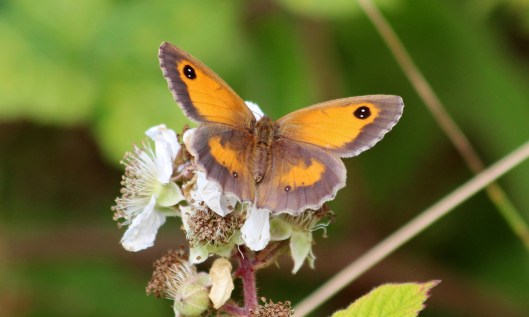
190721 gatekeeper female

For some reason though – and I have spent several hours lately observing them – I don’t see females sitting open-winged very often. As butterfly observers in other parts of south Wales tell me they frequently see females perched open-winged in their areas, I’m wondering why there’s a difference locally. Is there an imbalance in the local population, with many more males than females? Are the males more aggressive here, so the females prefer not to advertise their presence? I don’t know the answers so if someone does, I’d love to know.

190721 gatekeeper female (2)
190721 gatekeeper underwing (1)
190721 gatekeeper underwing (2)

In the meantime, I’ve been trying to spot which are male and female when their wings are closed. The females should be lighter in colour, I believe, but lightness and darkness are so subjective and very changeable, depending on the prevailing weather conditions and the habitat. Females are also a little larger but, again, it’s difficult to make that comparison unless you see the two sexes sitting side by side. Take the three butterflies above – I know the one of the left is a female as I saw her upper wings, and I would guess that the individual on the right is a male as it does look quite dark, but the one in the middle?

190721 gatekeeper female very faded

I’ll keep trying to improve my observation skills but, in a couple of weeks, the Gatekeepers will be looking as faded as the Meadow browns and Ringlets are now – like the female above, photographed in mid August – and then my queries will have to wait until the cycle begins again next year.
Like Loading...

201/365 Rain

20 Saturday Jul 2019

Posted by sconzani in 365DaysWildin2019, nature, weather

≈ 2 Comments

Tags

rain, raindrops on seedhead, seedhead

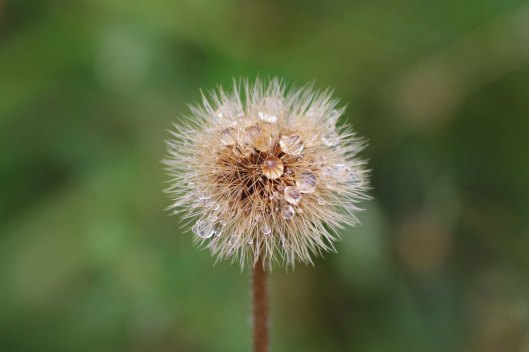
Yesterday it rained, it poured, it bucketed down and, after several weeks with scarcely a drop of rain, it was life-giving, cleansing, greening, quenching, reviving, freshening …

190720 rain

Like Loading...

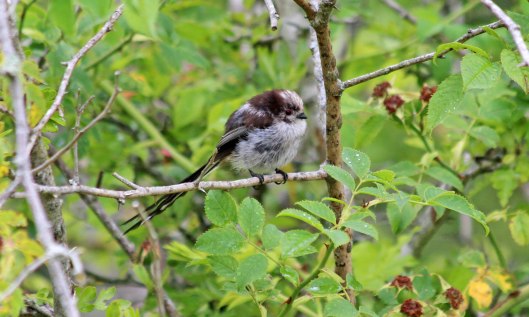
200/365 A pack of juveniles

19 Friday Jul 2019

Posted by sconzani in 365DaysWildin2019, birds, nature

≈ 4 Comments

Tags

#365DaysWild, Cosmeston, Cosmeston Lakes Country Park, juvenile Long-tailed tit, long-tailed tit

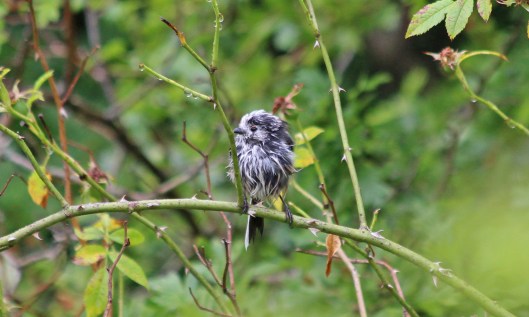
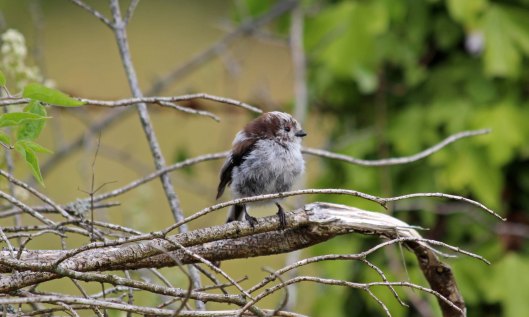
A pack of juveniles they may be but I saw no delinquents here.

190719 long-tailed tit (1)190719 long-tailed tit (2)

These are the cute little bundles of fluff known officially as Long-tailed tits, and yesterday, at Cosmeston, I followed a flock of perhaps 40 of these, with an assortment of Great and Blue tits and Chiffchaffs, all young birds, as they were feeding.

190719 long-tailed tit (3)190719 long-tailed tit (4)

Following a shrubby fence line, they pecked about amongst the low trees and bushes, and also ventured out into the field of wildflowers, perching precariously on the stems of tall umbellifers while surveying the surrounding plants for small insects and caterpillars.

190719 long-tailed tit (5)190719 long-tailed tit (6)

It was a great delight to watch them and, being young, they were not as wary of my presence as adults might be, so I managed to get some reasonable photos.

190719 long-tailed tit (7)190719 long-tailed tit (8)

Like Loading...

199/365 Short and prickly

18 Thursday Jul 2019

Posted by sconzani in 365DaysWildin2019, nature, plants, wildflowers

≈ 3 Comments

Tags

#365DaysWild, British flora, Cirsium acaule, Cosmeston, Cosmeston Lakes Country Park, Dwarf thistle, thistle, wildflowers

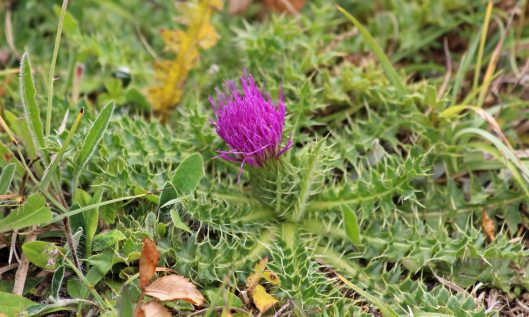
During today’s walk around Cosmeston I spotted a plant I’ve not seen before – or, at least, I’ve not consciously noticed before. It’s so easy to just walk over the things growing under your feet – although, in this case, if you were walking barefoot you couldn’t help but notice it!

190718 dwarf thistle (1)

It’s the Dwarf thistle (Cirsium acaule), and it’s easily identifiable as its single flower almost completely lacks a stem – the gorgeous purple flower sits right on top of a rosette of wavy and spiny edged leaves.

190718 dwarf thistle (4)
190718 dwarf thistle (2)

This thistle prefers to grow in low grasslands, particularly on calcareous soils, so it does tend to be quite localised but can be found in England as far north as Yorkshire and in south Wales.

190718 dwarf thistle (3)

Like Loading...

198/365 Little and larger

17 Wednesday Jul 2019

Posted by sconzani in 365DaysWildin2019, insects, nature, plants

≈ Leave a comment

Tags

British moths, caterpillars, caterpillars on ragwort, Cinnabar moth, Cinnabar moth caterpillars, orange and black caterpillars, Ragwort

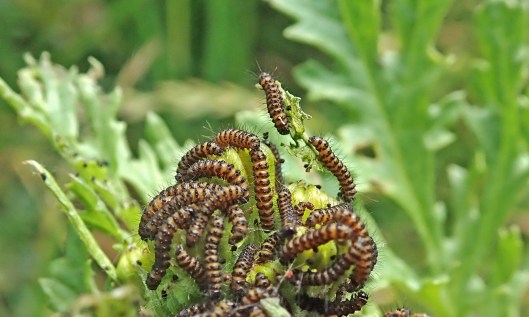
It’s time to check your local patch of Ragwort for these little critters, the caterpillars of the Cinnabar moth.

OLYMPUS DIGITAL CAMERA

As adult moths, they’re bright red and black but as caterpillars they’re a striking combination of orange-and-black stripes, the patterns more visible the more they munch and grow.

OLYMPUS DIGITAL CAMERA

For some reason there’s quite a size difference in this little bunch – perhaps a combination of broods hatched at different times that just happen to have chosen the same Ragwort plant to chew on.

190717 cinnabar caterpillars (4)

Like Loading...

197/365 Butterflying at Slade Wood

16 Tuesday Jul 2019

Posted by sconzani in 365DaysWildin2019, insects, nature, walks

≈ 7 Comments

Tags

#365DaysWild, British butterflies, butterfly, butterflying, Comma, Peacock, Red Admiral, Silver-washed fritillary, Slade Wood, Small tortoiseshell, White admiral

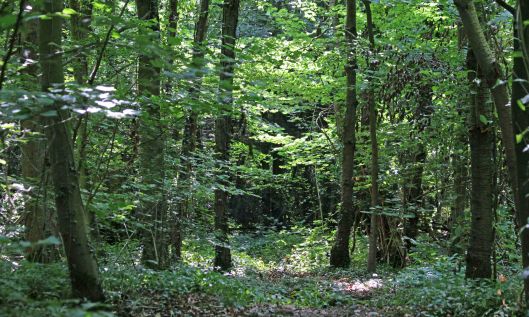
Yesterday, with my friend Sharon, I went to Slade Wood, in the neighbouring county of Gwent, for a walk and some butterflying.

190716 Slade Wood

The woodland was lovely and a haven from the hot sun but, for us, the best butterflying was to be had just wandering along the country lane leading to the woodland. With high hedges, abundant wildflowers and occasional blooming Buddleia bushes, backed by the tall woodland trees, it was heaven for butterflies. These are a few of the 12 species we saw …

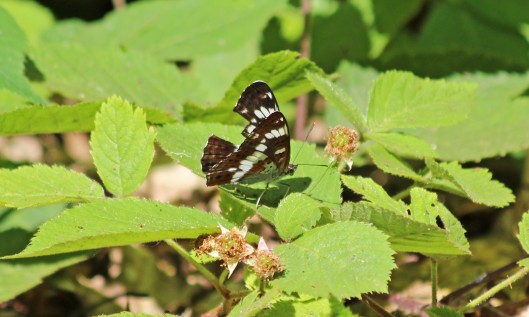
190716 white admiral

My first White admirals of the year, the first I’ve seen in Wales; they seem to float over the vegetation.

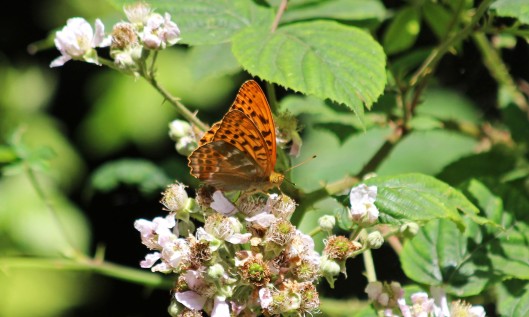
190716 silver-washed fritillary

Those giant orange-and-brown speedsters, the Silver-washed fritillaries.

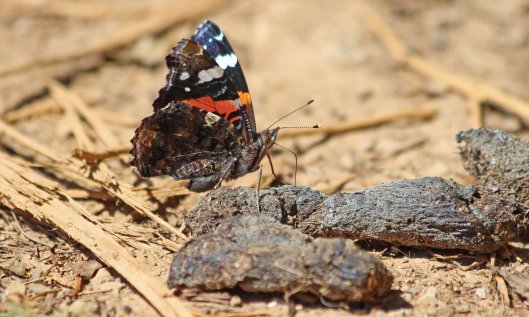
190716 red admiral

Red admiral extracting minerals from poo … mmmmm, delicious!

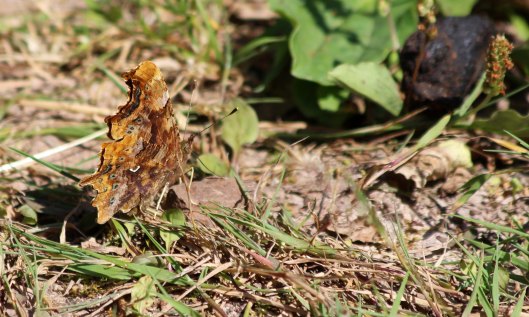
190716 comma

Comma, incredibly well camouflaged amongst the grasses and leaf litter, also heading for a slurp at the poo.

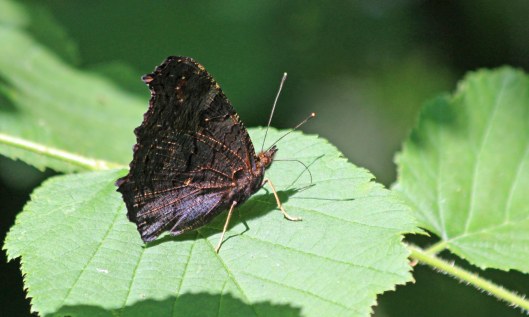
190716 peacock

Peacock, hiding its glorious bold colours away behind those closed wings.

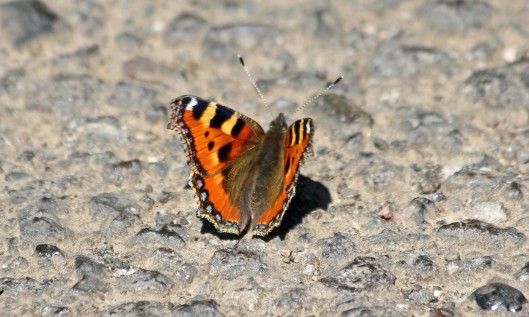
190716 small tortoiseshell

Small tortoiseshell, a pretty little butterfly that I don’t see very often, so a delight to spot one of these.

Like Loading...

196/365 Ether’s nild

15 Monday Jul 2019

Posted by sconzani in 365DaysWildin2019, insects, nature

≈ 4 Comments

Tags

#365DaysWild, Blue-tailed damselfly, British damselflies, damselfly, damselfly and devil, Ischnura elegans rufescens

The damselfly and the devil – not a combination I’d have thought of but this, from Paul Evans, Field Notes from the Edge: Journeys through Britain’s secret wilderness (Rider, London, 2015) is fascinating:

In her novel Precious Bane, Mary Webb … used a Shropshire name for damselfly, ether’s nild: the ether or adder’s nild or needle because of its shape and stitching flight. Country lore had it that damselflies hovered over an adder coiled in the heath or bog as lookouts for their venomous master or mistress … Elsewhere called the Devil’s darning-needle, naughty children, scolding women and swearing men were warned that the damselfly would come and sew their eyes and mouths shut if they did not mend their ways.

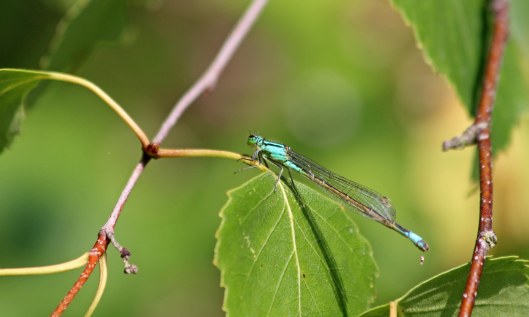
190715 blue-tailed damselfly

The damselflies in my images are both Blue-tailed damselflies (Ischnura elegans). The females come in five different colour variations – this, with the reddish thorax, is called rufescens.

190715 blue-tailed damselfly rufescens

Like Loading...

195/365 Imperial colours

14 Sunday Jul 2019

Posted by sconzani in 365DaysWildin2019, flowers, nature, wildflowers

≈ 2 Comments

Tags

British wildflowers, Dyer’s greenweed, imperial colours, Marsh woundwort, purple wildflowers, Rosebay willowherb, Yellow loosestrife, yellow wildflowers

It occurs to me when looking at recent flower photos I’ve taken that the wildflowers currently in bloom have a very imperial look to them: masses of purple, the colour favoured by the emperors of Rome, and swathes of yellow, the colour that dominated the imperial wardrobe in China.

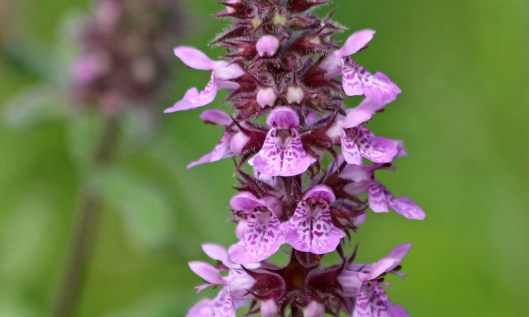
190714 1 marsh woundwort

Marsh woundwort (Stachys palustris), found growing in the wildflower meadows in Cardiff’s Hailey Park this week; once regarded as the most effective of the wound-healing woundwort family.

190714 dyers greenweed

Dyer’s greenweed (Genista tinctoria), plentiful at Lavernock Nature Reserve; also found in archaeological remains left by Vikings in York, proving its use as a yellow dye since at least the 9th century.

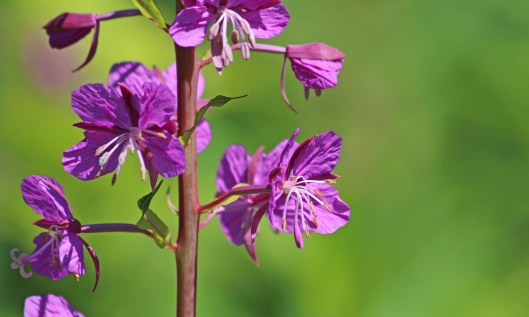
190714 rosebay willowherb

Rosebay willowherb (Chamerion angustifolium), firing up the conservation areas at Cathays Cemetery; nicknamed ‘bombweed’ during World War II when it grew in the London ruins created by German bombing raids.

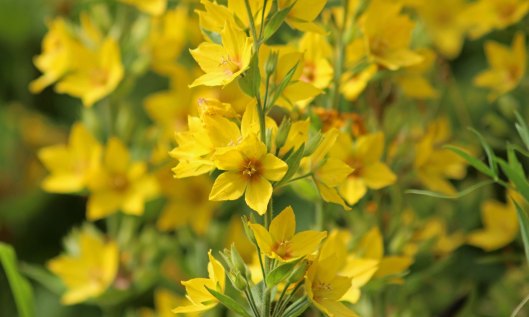
190714 yellow loosestrife

Yellow loosestrife (Lysimachia vulgaris), ablaze beside the River Taff in Cardiff; named in honour of Macedonian King Lysimachus who supposedly fed it to his cattle to calm them, hence lose + strife!

The interesting snippets about these plants were mostly extracted from my Flora Britannica.

Like Loading...

194/365 On the top of the tip

13 Saturday Jul 2019

Posted by sconzani in 365DaysWildin2019, insects, nature

≈ 2 Comments

Tags

#365DaysWild, Aberbargoed spoil tip, British butterflies, butterfly, colliery spoil tip, Grayling

The coal-mining spoil tip in Aberbargeod was once 400 feet high, a disaster waiting to happen, until the tragedy at Aberfan in 1966 (when 144 people, mostly children in the town’s primary school, were killed by the local spoil tip sliding down the valley) caused an urgent re-evaluation of the dangers of these tips. Aberbargoed’s was reduced in size, walkways and culverts were built around it, trees have been planted on it, and it’s now a wondrous place for biodiversity.

190713 grayling (1)

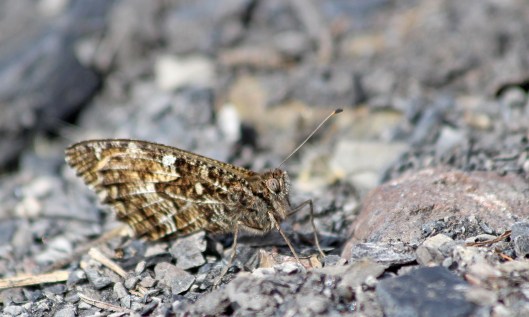
It is, however, still a steep huffing-puffing walk to the top on a hot summer’s day, particularly when, as I did yesterday, you walk straight up, instead of using one of the longer zigzagging paths. But it was worth every drop of sweat I exuded as, not only are the panoramic views superb, but Aberbargoed tip is also home to a colony of Grayling butterflies.

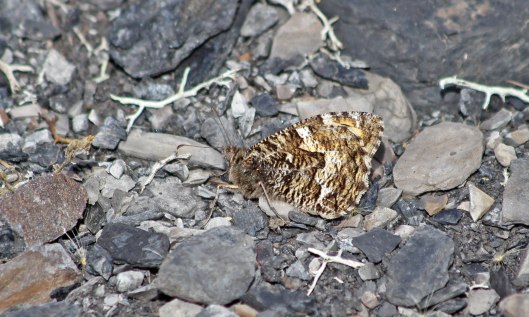
190713 grayling (2)

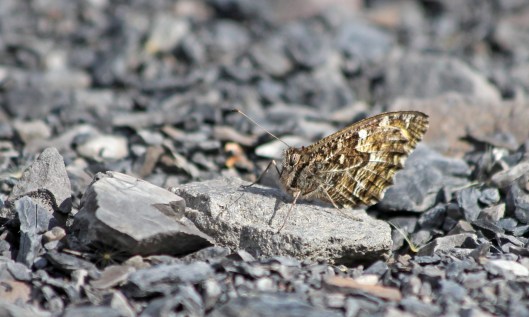
Graylings prefer dry, well-drained locations with sparse vegetation, so a spoil tip is the perfect spot for them. And, as they like to hunker down with the bright eye spots on their forewings well hidden, the mottled colouring on their hind wings means they’re incredibly well camouflaged on the stone chippings.

190713 grayling (3)

I was lucky, though, that a couple of the Graylings I spotted yesterday seemed curious about this stranger who had invaded their territories. So, I plonked myself down on a slope next to a path and waited. And sure enough, first one, then a second butterfly came to investigate. If it hadn’t been as hot as hell, I could’ve stayed there for hours.

190713 grayling (4)

You can read more about the environmental importance of preserving the spoil tip sites on Liam Old’s excellent website, Colliery Spoil Biodiversity Initiative.

Like Loading...

193/365 Hairstreaks

12 Friday Jul 2019

Posted by sconzani in 365DaysWildin2019, insects, nature

≈ 2 Comments

Tags

#365DaysWild, British butterflies, butterfly, hairstreaks, Purple hairstreak, record shots only, White-letter hairstreak

Record shots only! Have you heard that term? Well, these photos are extremely good examples of what it means – really lousy photos, sometimes taken at long distance and then heavily cropped, often blurry, possibly adjusted in Photoshop or similar image processing software to try to enhance the features, but really only retained as proof that you did actually see what you say you saw. (So you can actually see what lovely butterflies these are, I’ve linked their names to the relevant pages on the Butterfly Conservation website.)

190712 white-letter hairstreak

Luckily, with this shot of a White-letter hairstreak, I was with another person, who actually showed me the location, so I have a witness to the sighting. From my ‘record shot’ you probably can’t even tell that the small blob in the sky is a butterfly flitting around in the top canopy of this Wych elm.

190712 purple hairstreak (1)

I did a little better with the Purple hairstreak. Again, this is a known location, where other people have seen and photographed these lovely little butterflies in recent days. The first time I visited, all I could see were small flutterings at the very top of the tall old oak trees where the Purple hairstreaks live. Luckily, on my second visit, some of the butterflies were moving around further down the tree. I just needed to be patient and wait for one to fly, then try to follow where it went – believe me, that’s not easy as they almost seem to disappear amongst the leaves and they really are quite small (a wing span of 37-39mm).

190712 purple hairstreak (2)

Like Loading...
← Older posts
Newer posts →

About me

sconzani

sconzani

I'm a writer and photographer; researcher and blogger; birder and nature lover; countryside rambler and city strider; volunteer and biodiversity recorder.

View Full Profile →

Follow earthstar on WordPress.com

Enter your email address to follow this blog and receive notifications of new posts by email.

Recent blog posts

  • My first Holly blue April 10, 2026
  • Alder flies April 9, 2026
  • Lily beetle April 8, 2026
  • First bee-flies April 7, 2026
  • Bloody-nosed beetle April 6, 2026

From the archives

COPYRIGHT

Unless otherwise acknowledged, the text and photographs on this blog are my own and are subject to international copyright. Nothing may be downloaded or copied without my permission.

Fellow Earth Stars!

  • Unknown's avatar
  • Unknown's avatar
  • Unknown's avatar
  • Unknown's avatar
  • Unknown's avatar
  • Unknown's avatar
  • Unknown's avatar
  • Unknown's avatar
  • Unknown's avatar
  • Unknown's avatar
  • Unknown's avatar
  • Unknown's avatar
  • Unknown's avatar
  • Unknown's avatar
  • Unknown's avatar
  • Unknown's avatar
  • Unknown's avatar
  • Unknown's avatar
  • Unknown's avatar
  • Unknown's avatar
  • Unknown's avatar
  • Unknown's avatar
  • Unknown's avatar
  • Unknown's avatar
  • Unknown's avatar
  • Unknown's avatar
  • Unknown's avatar
  • Unknown's avatar
  • Unknown's avatar
  • Unknown's avatar
  • Unknown's avatar
  • Unknown's avatar
  • Unknown's avatar
  • Unknown's avatar
  • Unknown's avatar
  • Unknown's avatar
  • Unknown's avatar
  • Unknown's avatar
  • Unknown's avatar
  • Unknown's avatar
  • Unknown's avatar
  • Unknown's avatar
  • Unknown's avatar
  • Unknown's avatar
  • Unknown's avatar
  • Unknown's avatar
  • Unknown's avatar
  • Unknown's avatar
  • Unknown's avatar
  • Unknown's avatar

Blog at WordPress.com.

Privacy & Cookies: This site uses cookies. By continuing to use this website, you agree to their use.
To find out more, including how to control cookies, see here: Cookie Policy
  • Subscribe Subscribed
    • earthstar
    • Join 642 other subscribers
    • Already have a WordPress.com account? Log in now.
    • earthstar
    • Subscribe Subscribed
    • Sign up
    • Log in
    • Report this content
    • View site in Reader
    • Manage subscriptions
    • Collapse this bar
 

Loading Comments...
 

You must be logged in to post a comment.

    %d