• ABOUT
  • BIRDING 2018
  • Birding 2019
  • BLOG POSTS
  • Butterflies 2018
  • Resources

earthstar

~ a celebration of nature

earthstar

Category Archives: nature

March at Cosmeston

29 Thursday Mar 2018

Posted by sconzani in birds, flowers, nature, reptiles, spring, wildflowers

≈ 2 Comments

Tags

birding, birdwatching, British birds, Chiffchaff, Common frog, Cosmeston, Cosmeston Lakes Country Park, Gadwall, Great Crested Grebe, Hawfinch, Meadow pipit, primrose, Reed buntin, Sand martin, Scaup, treecreeper

11 March  This visit to Cosmeston started with me being yaffled at by a Green woodpecker – I always think they’re jeering at me, trying to lure me into stalking them for that ever-elusive close-up. I resisted and walked on, then paused to watch a Magpie trying to carry off a very large twig / small branch, proof that nest-building has begun.
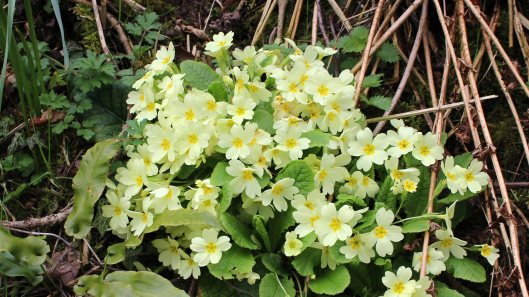
180329 1 primroses

Masses of pale Primroses were flowering prettily along the western boundary path, and the lake was overflowing the boardwalk at the west end due to recent heavy rain.
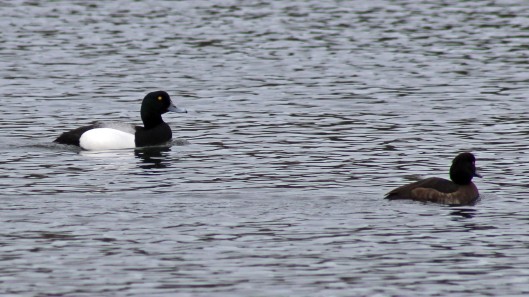
180329 2 drake Scaup

I paused near there, as I always do, to look at the gulls and finally, FINALLY, spotted the drake Scaup that’s been visiting the Cosmeston lakes on and off in recent weeks, this time in company with a female Tufted duck, which could be why some interesting hybrids are occasionally sighted locally.

180329 3 Treecreeper
180329 4 Gadwall & Tufted ducks

I walked up Mile Road and then off the main track to where the bird hide used to be (it was burnt down by vandals last year and has not been rebuilt), and spotted a Treecreeper hopping up a nearby tree, then turned to see a group of five Gadwall on the east lake, much closer in than usual.
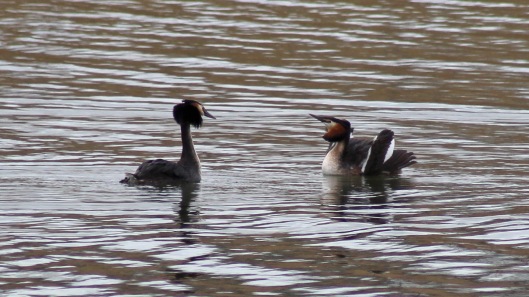
180329 5 Great crested grebes

I watched them a while then was charmed to also watch a pair of Great crested grebes displaying – more on those here. I wandered on, up Mile Road to the top end where I head back in to suburbia, and was farewelled by a large flock of perhaps fifty Fieldfare and Redwing that flew up from the area of Old Cogan Farm and landed in the trees above me.

180329 6 Scaup
180329 7 Common frog

16 March  I only walked through Cosmeston as part of a longer walk from Sully to Penarth, so I didn’t linger long but I did manage to get closer views and better photos of the Scaup, as it was sitting right off the boardwalk and ‘swan feeding area’ near the cafe. And I also detoured past the dipping pond to check out the Common frog eruption – see more on the frogs here.

180329 8 Meadow pipits
180329 9 Meadow pipits

19 March  I stomped off to Cossie with snow still on the ground (but steadily melting) after the ‘Mini-beast from the east’, the second instalment of cold weather to blast us this month. The most notable wildlife effect was in the large numbers of Meadow pipits to be seen, sometimes in singles, at one point a flock of at least 20 grazing together.
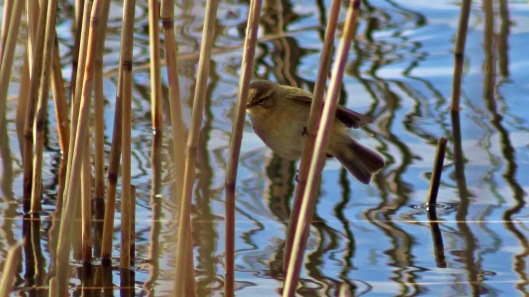
180329 10 Chiffchaff

It was also a day of confusing birds: there was a female Blackbird with a pale bib, making me think she might be a Ring ouzel, and two Chiffchaffs pretending to be Reed warblers, presumably because there were more insects to be had close to the water – behaviour also seen at another site in south Wales that day.
180329 11 Sand martin

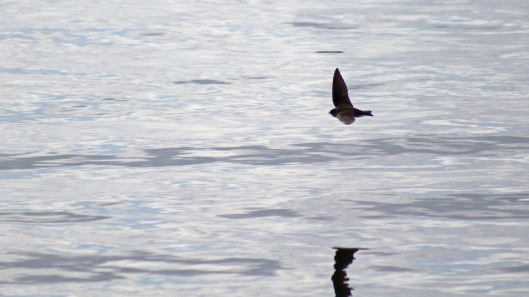
And, another sign of spring, I saw my first Sand martins of the year, three of them, hawking back and forth on the east lake.
180329 12 Reed bunting

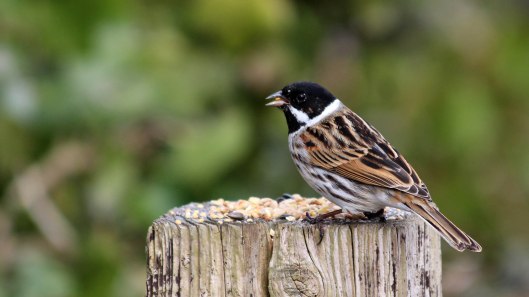
23 March  Once again, this was a walk through rather than around Cosmeston, as I was doing the same walk as a week ago, from Sully back home. As I had recently stocked up on bird seed, I was sprinkling small amounts here and there as I strolled, and was delighted to see three male Reed buntings come down for a snack in one spot – such handsome birds. The other highlight was the Chiffchaffs, at least six crisscrossing the lane between the two lakes, flycatching the multitude of little gnatty things flying about on this sunny day.
180329 13 hawfinch

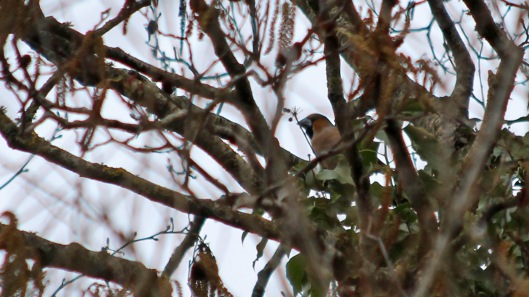
29 March  Well, I wasn’t intending to make another visit to Cossie this month but then one of my birding friends spotted a Hawfinch there on the 27th and I couldn’t let that pass without at least having a look for it. (For non-birders, Hawfinches are usually difficult to find, though they have been having a good winter this year.) So, trying, somewhat unsuccessfully, to dodge heavy rain showers, I headed over to Cosmeston early this morning. I knew the approximate location to look but it certainly wasn’t easy spotting anything in the dense trees. Luckily, I had listened to the bird’s call on the RSPB website before I set off and that’s how I found it … by listening very very carefully and then following that sound. The bird was very high in a tree and almost obscured by intervening branches (my photo is a heavy crop) … but I was very chuffed to find it!

Like Loading...

Wild words: display

28 Wednesday Mar 2018

Posted by sconzani in birds, nature, spring

≈ 1 Comment

Tags

#WildWords, bird courtship display, bird displays, birding, birds displaying, birdwatching, British birds, Great Crested Grebe, wild words

Display: Verb; the Oxford Dictionary defines this as: ‘(of a male bird [though, from what I’ve seen, female birds also respond to and/or participate in displays], reptile, or fish) to engage in a specialized pattern of behaviour that is intended to attract a mate’. The word comes from the Anglo-French desplaier or desploier, meaning literally, ‘to unfold’.

180328 Great crested grebes displaying (1)

The birds section of the Stanford University website has a really thorough description of this behaviour, including a diagram of some of the display postures adopted by their Western Grebe. In Britain, the equivalent bird is the Great crested grebe, which also gets a mention and which has a particularly lovely display to watch, as you can see in these recent shots of local birds displaying.

180328 Great crested grebes displaying (2)180328 Great crested grebes displaying (3)

Like Loading...

Another day, another bumble

27 Tuesday Mar 2018

Posted by sconzani in insects, nature, spring

≈ Leave a comment

Tags

Bombus lapidarius, British bumblebees, bumblebee, pollinators, Red-tailed bumblebee, signs of spring, willow catkin, willow flower

Isn’t she beautiful? While out walking in a local park I spotted this queen Red-tailed bumblebee (Bombus lapidarius) enjoying the pollen of a newly opened willow flower  … and I smiled all the way home.

180327 Red-tailed bumblebee

Like Loading...

Spring migration: Wheatear

26 Monday Mar 2018

Posted by sconzani in birds, nature, spring

≈ 5 Comments

Tags

bird migration, birding, birdwatching, British birds, Oenanthe oenanthe, spring migration, Wheatear

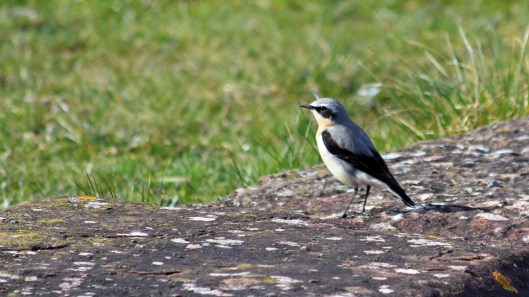
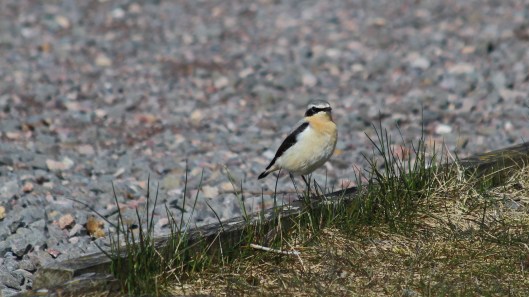
I’ve walked miles – seriously, miles and miles and miles! – in the past ten days, trying to spot my first Wheatear (Oenanthe oenanthe) of 2018. I was following up reported local sightings by my fellow birders – ‘Wheatear at Swanbridge/Sully Island this morning’, ‘Wheatear for 2nd day at Hayes Rd car park’, ‘Wheatear on Cardiff Bay barrage’ (two people saw that one on the same day – but did it show for me? Did it heck as like!), ‘Wheatear on the Barrage’ (4 days later), ‘Male wheatear Penarth Marina’ (my local patch and I couldn’t find that one despite three walks around about).

18032 wheatear (1)

Then finally, on the 23rd, I got a fleeting glimpse of one (and a couple of fuzzy photos) just off Sully beach. And, just like the proverbial buses that don’t turn up at all and then all turn up together, I spotted another one on Cardiff Bay Barrage the very next day. That one’s the very handsome male in these photos.

18032 wheatear (2)

Wheatears are just returning from having spent their winter in the tropical parts of Africa. The males arrive first, usually in March, followed not long afterwards by the females. We see them arriving along the south Wales coast for a few weeks, then they move inland to their breeding sites. Now, to keep an eye out for a female!

18032 wheatear (3)

Like Loading...

The spider and the fly

25 Sunday Mar 2018

Posted by sconzani in insects, nature

≈ 2 Comments

Tags

Bluebottle fly, British flies, British spiders, Calliphora sp, jumping spider, Salticus scenicus, spider and fly, spider stalking prey, Zebra spider

180325 spider and fly (3)

“Come hither, hither, pretty Fly, with the pearl and silver wing;
Your robes are green and purple — there’s a crest upon your head;
Your eyes are like the diamond bright, but mine are dull as lead!”
~ from ‘The Spider and the Fly’, a poem by Mary Howitt, 1828

180325 spider and fly (1)
180325 spider and fly (2)

I’m not sure what the fly is (probably one of the Calliphora species) but its stalker is a Zebra spider (Salticus scenicus), a very common jumping spider that can be found, as this one was at Sully last week, sneaking up on its prey on sunny rocks and walls.
And what do you think happened next?

180325 spider and fly (4)

Like Loading...

Swans in flight

24 Saturday Mar 2018

Posted by sconzani in birds, nature

≈ 3 Comments

Tags

birding, birdwatching, British birds, Mute swan, swans flying, swans in flight, swans taking off

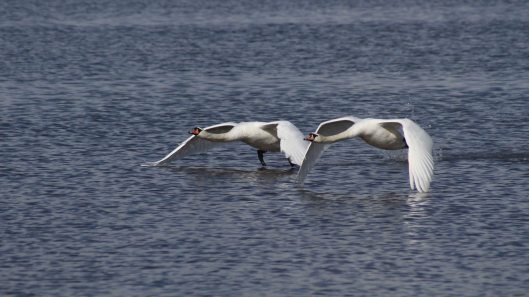
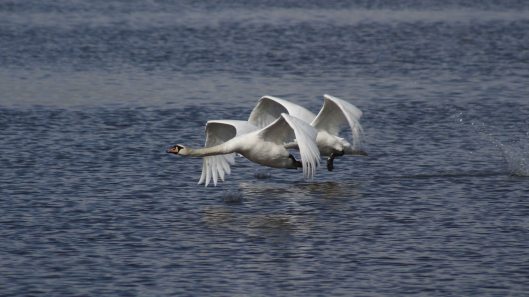
It takes a bit of effort, powerful flapping of their wide wings and jogging along on top of the water, but once they’re airborne, what a truly majestic sight these Mute swans make!

180324 swans in flight (1)180324 swans in flight (2)180324 swans in flight (3)180324 swans in flight (4)

Like Loading...

This week in wildflowers

23 Friday Mar 2018

Posted by sconzani in flowers, nature, spring, wildflowers

≈ Leave a comment

Tags

#FloralFriday, British flora, British wildflowers, Colt's-foot, Daisy, dandelion, gorse, Groundsel, Lesser Celandine, Red dead-nettle, Speedwell, Three-cornered garlic, wildflowers

What a week it’s been weather wise! We’ve gone from a generous dumping of snow and temperatures hovering around -5°C last Sunday through occasional rain, sunny periods, UV factors up and down, zephyr winds and mustang gales. Is it spring or isn’t it? Well, I’m seeing increasingly more wildflowers so I guess it must be. Here’s a selection from this week’s wanders.

180323 colt's-foot

Colt’s-foot (Tussilago farfara)

180323 daisy

Daisy (Bellis perennis)

180323 dandelion sp

a type of Dandelion (Taraxacum sp.)

180323 gorse

a type of Gorse (Ulex sp.)

180323 groundsel

Groundsel (Senecio vulgaris)

180323 lesser celandine

Lesser celandine (Ficaria verna)

180323 red dead nettle

Red dead-nettle (Lamium purpureum)

180323 speedwell

a species of Speedwell (probably Germander) (Veronica sp.)

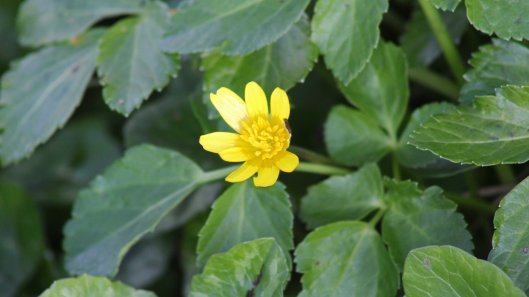
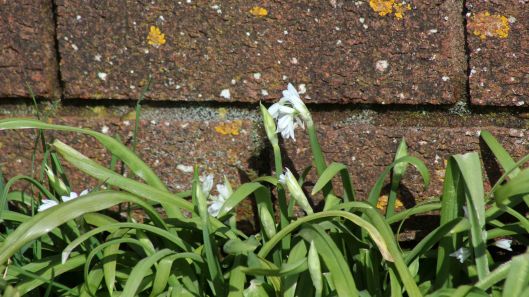
180323 three-cornered leek

Three-cornered leek (Allium triquetrum)


Like Loading...

While I was sleeping …

22 Thursday Mar 2018

Posted by sconzani in birds, nature

≈ Leave a comment

Tags

birding, birdwatching, British birds, Cardiff Bay, Cardiff Bay wetlands, Great Crested Grebe, sleeping bird, sleepy bird

180322 Great crested grebe (1)

zzzzzzzzzzzzzzzzzzzzzzzzzzzzzzzzzzzzzzzzz …

180322 Great crested grebe (2)

What? What? What’s happening?

180322 Great crested grebe (3)

Bah! Just another crazy photographer!

180322 Great crested grebe (4)

zzzzzzzzzzzzzzzzzzzzzzzzzzzzzzzzzzzzzzzzz …

Like Loading...

Wild words: forest

21 Wednesday Mar 2018

Posted by sconzani in nature, trees

≈ Leave a comment

Tags

#WildWords, forests, International Forests Day, trees, wild words, woodland

Forest: noun; a large area covered chiefly with trees and undergrowth. The Oxford Dictionary says the word morphed from the Latin foris, meaning ‘outside’, to the late Latin forestis (silva), meaning ‘(wood) outside’, to Old French and thence to Middle English.

Today just happens to be a day to celebrate the importance of all types of forests and woodlands and trees all around the globe, so here’s wishing you a very happy International Forests Day!

180321 forest

Like Loading...

Frogs, and lots of them

20 Tuesday Mar 2018

Posted by sconzani in nature, reptiles, spring

≈ 1 Comment

Tags

British reptiles, Common frog, Cosmeston, Cosmeston Lakes Country Park, frog, Rana temporaria, signs of spring

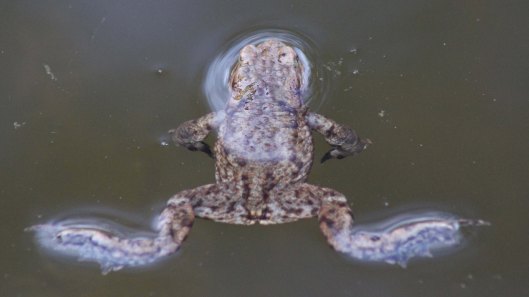
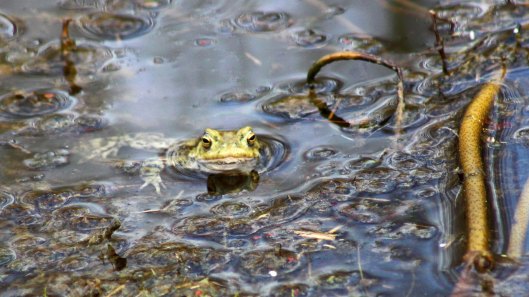
Here’s a sign of spring, if ever there was one – well, hundreds of signs of spring, in fact – as the frogs are out and croaking at Cosmeston’s dipping pond.

180320 Common frog (1)

Though they come in a variety of colours, ranging from light green and yellow through to olive and light brown, these are all Common frogs (Rana temporaria). They’ve long hind legs for hopping and swimming, big eyes for spotting females, and strong front fingers for gripping on to those females once they find them. At dinnertime, they have a preference for small invertebrates like slugs and snails, and they, in turn, are much enjoyed by herons, crows, hedgehogs, otters, and rats.

180320 Common frog (2)180320 Common frog (4)

Frogs have a special place in human culture: they have been used to predict the weather – bright healthy skin foretells fine weather, dull skin rain; they are the subject of numerous superstitions – a frog in the house is a portent of death or something similarly awful, yet frog bones might be worn around the neck as a cure-all; they feature in idioms – if your voice is a bit croaky, you are said to ‘have a frog in your throat’ – and in fairytales – a frog is transformed into a handsome price after being kissed by a beautiful princess. And I haven’t even mentioned one of the most well-known frogs of all, Kermit.

180320 Common frog (3)180320 Common frog (5)

Like Loading...
← Older posts
Newer posts →

About me

sconzani

sconzani

I'm a writer and photographer; researcher and blogger; birder and nature lover; countryside rambler and city strider; volunteer and biodiversity recorder.

View Full Profile →

Follow earthstar on WordPress.com

Enter your email address to follow this blog and receive notifications of new posts by email.

Recent blog posts

  • Bug: Harpocera thoracica April 22, 2026
  • A female Tawny April 21, 2026
  • NFY: Orange-tip April 20, 2026
  • All the yellows April 19, 2026
  • Spider: Dysdera crocata April 18, 2026

From the archives

COPYRIGHT

Unless otherwise acknowledged, the text and photographs on this blog are my own and are subject to international copyright. Nothing may be downloaded or copied without my permission.

Fellow Earth Stars!

  • Unknown's avatar
  • Unknown's avatar
  • Unknown's avatar
  • Unknown's avatar
  • Unknown's avatar
  • Unknown's avatar
  • Unknown's avatar
  • Unknown's avatar
  • Unknown's avatar
  • Unknown's avatar
  • Unknown's avatar
  • Unknown's avatar
  • Unknown's avatar
  • Unknown's avatar
  • Unknown's avatar
  • Unknown's avatar
  • Unknown's avatar
  • Unknown's avatar
  • Unknown's avatar
  • Unknown's avatar
  • Unknown's avatar
  • Unknown's avatar
  • Unknown's avatar
  • Unknown's avatar
  • Unknown's avatar
  • Unknown's avatar
  • Unknown's avatar
  • Unknown's avatar
  • Unknown's avatar
  • Unknown's avatar
  • Unknown's avatar
  • Unknown's avatar
  • Unknown's avatar
  • Unknown's avatar
  • Unknown's avatar
  • Unknown's avatar
  • Unknown's avatar
  • Unknown's avatar
  • Unknown's avatar
  • Unknown's avatar
  • Unknown's avatar
  • Unknown's avatar
  • Unknown's avatar
  • Unknown's avatar
  • Unknown's avatar
  • Unknown's avatar
  • Unknown's avatar
  • Unknown's avatar
  • Unknown's avatar
  • Unknown's avatar

Blog at WordPress.com.

Privacy & Cookies: This site uses cookies. By continuing to use this website, you agree to their use.
To find out more, including how to control cookies, see here: Cookie Policy
  • Subscribe Subscribed
    • earthstar
    • Join 642 other subscribers
    • Already have a WordPress.com account? Log in now.
    • earthstar
    • Subscribe Subscribed
    • Sign up
    • Log in
    • Report this content
    • View site in Reader
    • Manage subscriptions
    • Collapse this bar
 

Loading Comments...
 

You must be logged in to post a comment.

    %d