• ABOUT
  • BIRDING 2018
  • Birding 2019
  • BLOG POSTS
  • Butterflies 2018
  • Resources

earthstar

~ a celebration of nature

earthstar

Category Archives: nature

Feathers and fungi at Forest Farm

19 Monday Mar 2018

Posted by sconzani in birds, fungi, nature, parks, walks

≈ 4 Comments

Tags

biodiversity, Blue tit, Blushing bracket, Brittle cinder, coal tit, Elfcups, Forest Farm, Forest Farm Nature Reserve, Great tit, Grey heron, Hairy curtain crust, Moorhen, nuthatch, Song thrush, wren

I’ve blogged about the charms of the Forest Farm Nature Reserve many times before but I thought I’d share some of the highlights from last week’s wander …

180319 Forest Farm

Oh, and I will just add that the combination of feathers – me mostly looking upwards – and fungi – eyes down – can be quite difficult. By the end of the day, I felt like one of those nodding dog ornaments you used to see in the rear windows of cars. Still, ’twas a lovely long meandering walk!

180319 Blue tit
180319 Blushing bracket
180319 Brittle cinder
180319 Coal tit
180319 Elfcups
180319 Great tit
180319 Grey heron
180319 Hairy curtain crust
180319 Moorhen
180319 Nuthatch
180319 Song thrush
180319 Wren
Like Loading...

Spring migration: chiffchaff

18 Sunday Mar 2018

Posted by sconzani in birds, nature, spring

≈ 2 Comments

Tags

birding, birdwatching, British birds, Chiffchaff, migrating birds, Phylloscopus collybita, spring migration

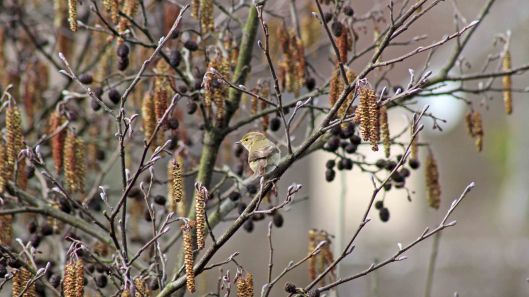
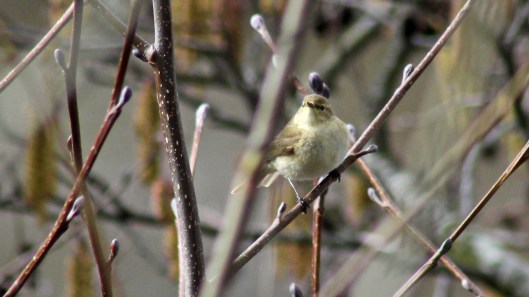
You know it’s really springtime when the migrating birds start to appear and this week has seen those birds arriving, albeit in fairly small numbers yet here in south Wales. Friends have been reporting sightings of Sand martins and Wheatear – I’ve yet to see either, but I am one of the many who have now either heard and/or seen their first Chiffchaff (Phylloscopus collybita) of 2018.

180318 chiffchaff (4)

Though a few Chiffchaffs overwinter in Britain, the vast majority migrate south during autumn and overwinter in the sunshine and warmer temperatures of the Mediterranean and west Africa.

180318 chiffchaff (1)
180318 chiffchaff (3)

I heard my first of these lovely little birds last Monday, 12 March, at Forest Farm Nature Reserve, and I saw my first, shown here in my photographs, in trees alongside the River Taff in Cardiff on Thursday, the 15th. Welcome back, little Chiffchaffs!

180318 chiffchaff (2)

Like Loading...

Birth notice

17 Saturday Mar 2018

Posted by sconzani in insects, nature, plants, wildflowers

≈ 6 Comments

Tags

Ficaria verna, flies, fly, leaf mines, leaf mining fly, leafminer, Lesser Celandine, Phytomyza ranunculi

I was handing out the cigars last Monday!
Now, you might well think me more than a little mad to be excited about the birth of a fly but this was the first time I had tried rearing one … and it was actually successful, which bodes well for the fact that I’m intending to take part in a fly-rearing investigation this summer (more on that closer to the time).

180317 Phytomyza ranunculi (2)
180317 Phytomyza ranunculi (3)

The fly is Phytomyza ranunculi, a creature whose larvae often make their home in the leaves of Lesser celandine (Ficaria verna). I blogged about this leafminer, its larvae and the pupa here, and it is that pupa which finally hatched earlier this week. I had been told it would take about 3 weeks to hatch but it was, in fact, longer than that – it was 6 February when I found the pupa and 12 March when it hatched, so 34 days in total.

180317 Phytomyza ranunculi (1)

Now, here I must admit to a rookie error. As it was well over the 3 weeks, I had almost given up on its hatching so, on Monday night, when I had a sudden notion to open the container, I didn’t look inside first. The fly popped straight out, perched on the edge for a very brief time – and I managed to get just one photo, and then it flew off. I’ve searched for it in my flat, and it did a quick fly by when I was washing the dishes yesterday, but I haven’t been able to find it, neither to take more photos nor to let it outside.

Like Loading...

We have blossom!

16 Friday Mar 2018

Posted by sconzani in flowers, nature, spring, trees

≈ 6 Comments

Tags

#FloralFriday, blossom, Cherry blossom, Cherry tree, spring, Spring has sprung, springtime

180316 blossom (3)

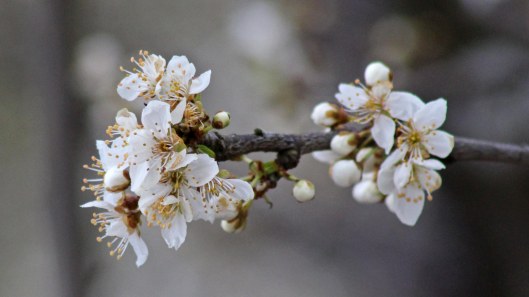
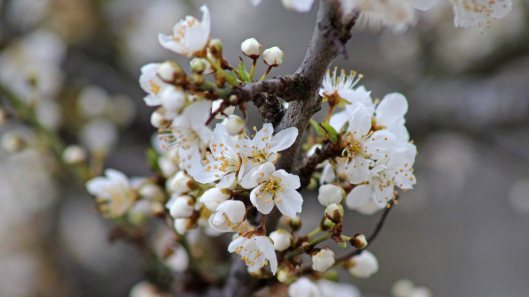
The ornamental cherry outside my living room window is a little behind last year in its blossoming, probably because of that really cold snap we had a couple of weeks back, but the blossom started to open this week. Spring!

180316 blossom (5)
180316 blossom (6)
180316 blossom (2)
180316 blossom (4)

180316 blossom (1)

Like Loading...

A mulish Magpie

15 Thursday Mar 2018

Posted by sconzani in birds, nature, spring

≈ 3 Comments

Tags

birding, birdwatching, British birds, European magpie, Magpie, nest building, nesting, nesting birds, Spring is in the air

Spring is definitely in the air here in south Wales. Wildflowers are wakening and blossom is bursting, migrating creatures are on the move and those that don’t migrate are thinking about procreation. For birds, that means nest building, and this Magpie obviously had some rather grandiose ideas about the size of nest it was going to construct. But had it bitten off more than it could chew?

180315 Magpie nest building (1)
180315 Magpie nest building (2)
180315 Magpie nest building (3)
180315 Magpie nest building (4)
180315 Magpie nest building (5)
180315 Magpie nest building (6)
180315 Magpie nest building (7)
180315 Magpie nest building (8)

 Success!

180315 Magpie nest building (9)

Like Loading...

Wild words: Leucistic

14 Wednesday Mar 2018

Posted by sconzani in birds, nature

≈ 5 Comments

Tags

#WildWords, birding, birdwatching, blackbird, leucism, leucistic, leucistic blackbird, wild words

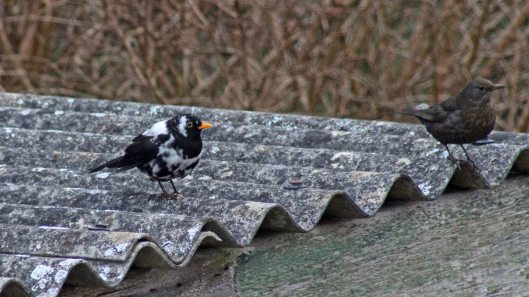
Leucistic: Adjective; (of an animal) [or other creature] having whitish fur, plumage, or skin due to a lack of pigment (Oxford Dictionary).

180314 leucistic blackbird (1)

It’s not easy being different as this leucistic black-and-white Blackbird seems to be discovering. I’ve spotted it several times in and around a neighbour’s backyard in recent days, usually sitting alone, looking a little bereft. Once it tried to approach first a male and then a female Blackbird, adopting the submissive posture a young bird would adopt to beg food from its parents, but the other birds totally rejected it and flew off.

180314 leucistic blackbird (2)
180314 leucistic blackbird (3)
180314 leucistic blackbird (4)

I’ve posted about leucistic birds before: a Crow here, and a Jackdaw was the star here.

Like Loading...

I’m following a tree: February 2018

13 Tuesday Mar 2018

Posted by sconzani in nature, parks, trees

≈ 9 Comments

Tags

Acer mono, Acer pictum, Bute Park, I'm following a tree, Mono maple, tree following

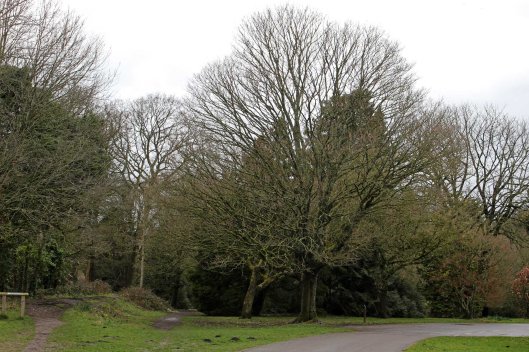
I went to visit Mono, my tree, an Acer pictum, twice during February, both times on grey wintery rainy days so it’s not looking at its most attractive in my photos. But that did mean I wasn’t distracted by its foliage and instead had a good look at the tree’s structure.

180313 acer pictum (1)

As you can see, Mono has its roots firmly planted in the ground. It stands right next to a tarmac roadway but, luckily, that is only used by park vehicles and employees, and their driving and parking nearby doesn’t appear to have affected the tree. At the moment the grass around its base is somewhat sparse but that may change as the weather warms.

180313 acer pictum (2)
180313 acer pictum (3)

180313 acer pictum (4)

Mono’s trunk is thick and solid. It’s difficult to see the trunk’s texture as most of the surface is covered in lichens, mosses, ferns and liverworts – I’ll look at those in more detail in a future monthly post. The trunk is straight to about four feet, perhaps more, then, rather than maintain a single main trunk, it branches out into a multitude of thick and thin trunks, branches, and twigs.

180313 acer pictum (5)
180313 acer pictum (6)
180313 acer pictum (7)
180313 acer pictum (8)

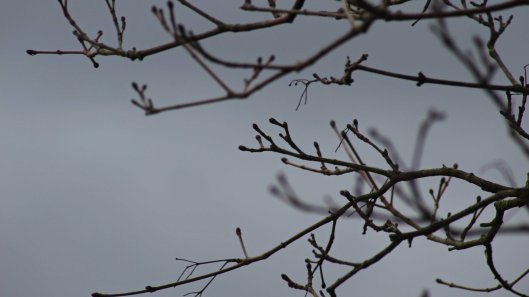
I’m not sure what the smallest twiglets are that you can in these photos – perhaps the remnants of last year’s flowers / fruit. We shall have to wait and see. There are no leaves yet, though the buds are thick, with a slightly purplish hue, and look near to bursting.

180313 acer pictum (9)

180313 acer pictum (10)
180313 acer pictum (11)

Mono is, I think, a favourite of the local birds, of which there are many. While I was surveying the tree and taking my photos, a Robin serenaded me loudly – though, in truth, it was more likely to be advertising itself to any potential lady friends and announcing to all and sundry that this was its territory / tree. A Goldcrest was also dotting about, foraging for the tiniest of insects – these little birds are never still, hence my lousy photo of it.

180313 acer pictum (13)
180313 acer pictum (12)

After a recent blast of extreme cold and snow, the weather now seems to be warming towards spring so it will be interesting to see what changes March will bring to my beautiful tree.

Like Loading...

Birding in Barry

12 Monday Mar 2018

Posted by sconzani in birds, nature

≈ 2 Comments

Tags

Barry, Barry Docks, Barry Old Harbour, birding, birdwatching, British birds, Curlew, Great Crested Grebe, Med gull, Mediterranean gull, Oystercatcher, Redhsank, Shelduck

The south Wales town of Barry is not exactly what you’d call a prime birding destination but, due to its coastal location, it does turn up regular wader sightings and the occasional rarity. On this visit, I dipped on my target species, the Great northern diver that’s been overwintering in Barry Docks – I saw the bird last year but want to add it to this year’s list – but I still had an enjoyable day’s birding, with a few nice surprises.

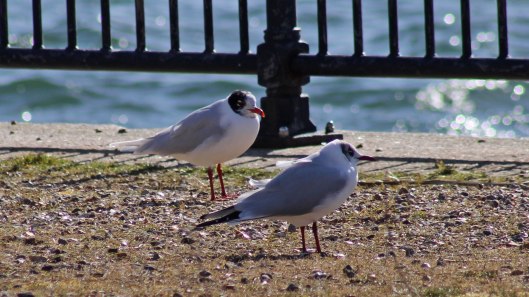
180312 Med & black-headed gulls

First up at Barry Docks was the local Mediterranean gull. For those unfamiliar with this bird, you can see some of the differences between it and Black-headed gulls in this photo – in breeding season, the hood on the head of the Med gull covers its entire head and is a true black (not a chocolate brown hood on just the front half of the head), its beak and legs are different, and it has white wing tips.

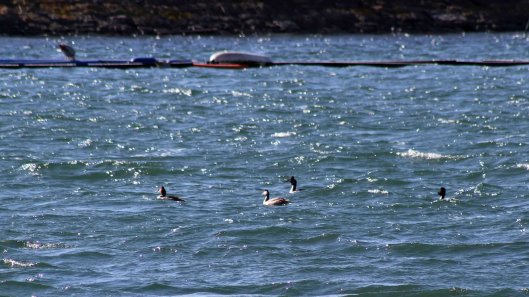
180312 Great crested grebes

Four Great crested grebes were braving the choppy waves being whipped up by the strong sou’westerly wind.

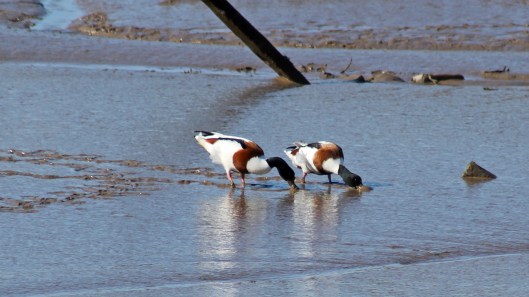
180312 Shelducks

In Barry Old Harbour, two Shelducks were hoovering the mud for small shellfish and aquatic snails.

180312 Redshanks

At least eight Redshanks were prospecting amongst the salt marsh and along the silty rivulets.

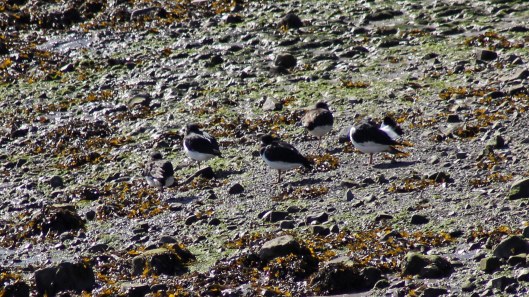
180312 Oystercatchers

Sitting down, five Oystercatchers were so well camouflaged as to be almost invisible, until they got up and one set them all off singing out their characteristic call.

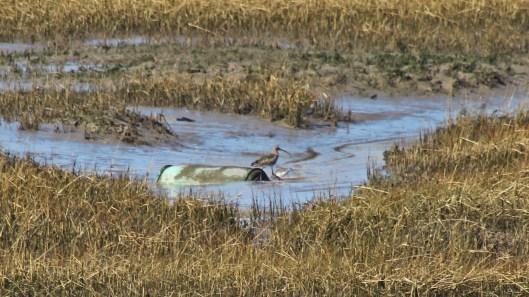
180312 Curlew (1)

The day’s pièce de résistance was the sight of two Curlews prospecting for a late lunch amongst reeds and under rocks. At first, I thought I had the two Black-tailed godwits reported earlier in the week but no, those bills were definitely curved. A nice sighting just the same!

180312 Curlew (2)

Like Loading...

Pavement plants

11 Sunday Mar 2018

Posted by sconzani in nature, plants, wildflowers

≈ Leave a comment

Tags

#PavementPlants, #WildflowerHour, British flora, Groundsel, Hairy bittercress, Lesser Celandine, plants in pavement, Shepherd's purse, wild plants, wildflowers

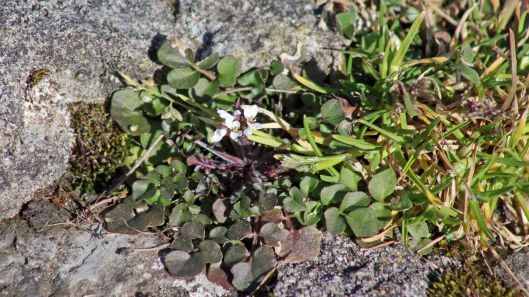
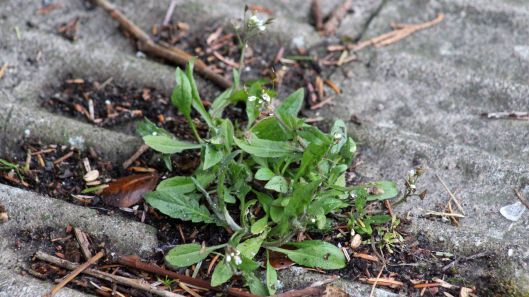
This week’s Wildflower Hour challenge was to check out your local pavement for #PavementPlants. As the challenge says: ‘It is amazing how many plants are able to eke out a living where they were never invited. Growing in seemingly inhospitable cracks and crevices, thriving where there is little soil, these tough little plants are often overlooked.’ So, it was eyes down this week as I wandered around Penarth and, though I decided to look just for plants that were flowering and ignore the ubiquitous grasses and mosses, I did manage to find a few little treasures in my local pavements, steps and paths.

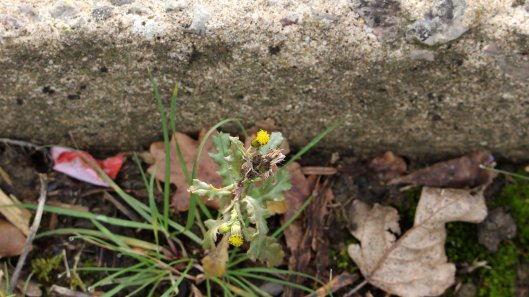
180311 pavement plant groundsel

Groundsel (Senecio vulgaris)
I’m sure most people recognise Groundsel when they see it, as it’s very common in areas of disturbed ground. I just learned today that Senecio comes from the Latin for ‘old man’, a reference to the bare ‘scalp’ that remains once the plant’s fluffy white seeds have blown away.

180311 pavement plant hairy bittercress (2)

Hairy bittercress (Cardamine hirsuta)
I was initially confused about which bittercress this was, Hairy or Wavy but my trusty wildflower guide tells me that Hairy has four stamens and Wavy usually has six, so that clinched it. Apparently, this plant is edible, though bitter – hence its name: I think I’ll pass.

180311 pavement plant lesser celandine

Lesser celandine (Ficaria verna)
Once known as Pilewort, as it was believed to be a remedy for haemorrhoids, Lesser celandine contains high levels of vitamin C and was also used to prevent scurvy.

180311 pavement plant Shepherd's purse

Shepherd’s purse (Capsella bursa-pastoris)
This very common wild plant’s common name comes from the purse-like shape of its seed pods.

Like Loading...

Birding in the Forest of Dean

10 Saturday Mar 2018

Posted by sconzani in birds, nature, walks, winter

≈ 2 Comments

Tags

birding, birdwatching, Cannop Ponds, Forest of Dean, Glamorgan Bird Club, Great grey shrike, Hawfinch, Mandarin duck, snow

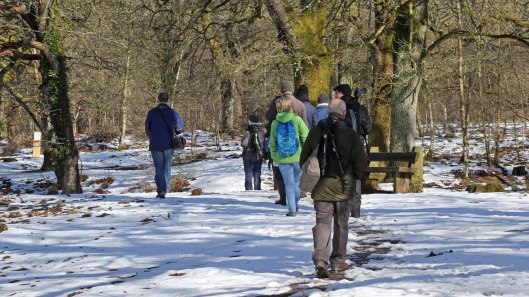
For my latest birding adventure, I joined 21 other members of the Glamorgan Bird Club and ventured across the border to England, to explore birding sites in the beautiful Forest of Dean, where the glorious tree-clad countryside was made even more lovely by the covering of snow that still lingered from the previous weekend’s weather bomb.

180310 snowy landscape (2)

The snow also meant two of the car parks we tried were closed and necessitated a long stomp along the forest trails to the viewpoint where we could search the skies for Goshawk – unfortunately, the birds weren’t seen, but what a wonderful walk it was! There’s just something about that snow-white coating that makes a landscape look magical.

180310 Cannop Ponds (1)180310 Cannop Ponds (2)

But I’m getting ahead of myself. We started off at Cannop Ponds, where I got my first sight of Mandarin ducks in the wild. These stunning birds are native to Asia – and I had first seen them in a bird park in Kuala Lumpur – but escapees from parklands and zoos have established breeding populations in Britain and, in 1971, the bird was added to the official British bird list, under category C1 (although introduced, the birds now derive from the resulting self-sustaining populations).

180310 Mandarin & other ducks (1)180310 Mandarin & other ducks (3)

At the ponds we also enjoyed good views of a resident Marsh tit before heading off along the forest trails. In a large clearing, one of our eagle-eyed younger members spotted another of our target birds for this trip, the Great grey shrike. Using bins and ’scopes we were able to watch the bird catch a tiny lizard and, its trademark action, impale its prey on a sharp twig.
180310 snowy landscape (1)180310 Great grey shrike

After our Goshawk-less stomp to New Fancy viewpoint, we returned to the cars and drove on to Parkend, where the local Hawfinches proved more cooperative, obliging with distant but dark views under the conifers by the cricket ground. They were the icing on the cake of another thoroughly enjoyable outing with my bird club buddies.

180310 Hawfinch

My list of species sighted is as follows: Mute Swan, Greylag Goose, Mandarin Duck, Gadwall, Teal, Mallard, Tufted Duck, Little Grebe, Cormorant, Buzzard, Moorhen, Coot, Lesser Black-backed Gull, Woodpigeon, Great Spotted Woodpecker, Great Grey Shrike, Magpie, Jay, Carrion Crow, Raven, Blue Tit, Great Tit, Coal Tit, Marsh Tit, Long-tailed Tit, Goldcrest, Nuthatch, Treecreeper, Blackbird, Robin, Dunnock, Chaffinch, Goldfinch, Siskin, and Hawfinch. And I was obviously not paying attention when others in the group saw (or heard) the Grey Heron, Stock Dove, Jackdaw, Mistle Thrush, Grey Wagtail, Greenfinch, and Bullfinch.

180310 Mandarin & other ducks (2)180310 Mandarin & other ducks (4)

Like Loading...
← Older posts
Newer posts →

About me

sconzani

sconzani

I'm a writer and photographer; researcher and blogger; birder and nature lover; countryside rambler and city strider; volunteer and biodiversity recorder.

View Full Profile →

Follow earthstar on WordPress.com

Enter your email address to follow this blog and receive notifications of new posts by email.

Recent blog posts

  • Bug: Harpocera thoracica April 22, 2026
  • A female Tawny April 21, 2026
  • NFY: Orange-tip April 20, 2026
  • All the yellows April 19, 2026
  • Spider: Dysdera crocata April 18, 2026

From the archives

COPYRIGHT

Unless otherwise acknowledged, the text and photographs on this blog are my own and are subject to international copyright. Nothing may be downloaded or copied without my permission.

Fellow Earth Stars!

  • Unknown's avatar
  • Unknown's avatar
  • Unknown's avatar
  • Unknown's avatar
  • Unknown's avatar
  • Unknown's avatar
  • Unknown's avatar
  • Unknown's avatar
  • Unknown's avatar
  • Unknown's avatar
  • Unknown's avatar
  • Unknown's avatar
  • Unknown's avatar
  • Unknown's avatar
  • Unknown's avatar
  • Unknown's avatar
  • Unknown's avatar
  • Unknown's avatar
  • Unknown's avatar
  • Unknown's avatar
  • Unknown's avatar
  • Unknown's avatar
  • Unknown's avatar
  • Unknown's avatar
  • Unknown's avatar
  • Unknown's avatar
  • Unknown's avatar
  • Unknown's avatar
  • Unknown's avatar
  • Unknown's avatar
  • Unknown's avatar
  • Unknown's avatar
  • Unknown's avatar
  • Unknown's avatar
  • Unknown's avatar
  • Unknown's avatar
  • Unknown's avatar
  • Unknown's avatar
  • Unknown's avatar
  • Unknown's avatar
  • Unknown's avatar
  • Unknown's avatar
  • Unknown's avatar
  • Unknown's avatar
  • Unknown's avatar
  • Unknown's avatar
  • Unknown's avatar
  • Unknown's avatar
  • Unknown's avatar
  • Unknown's avatar

Blog at WordPress.com.

Privacy & Cookies: This site uses cookies. By continuing to use this website, you agree to their use.
To find out more, including how to control cookies, see here: Cookie Policy
  • Subscribe Subscribed
    • earthstar
    • Join 642 other subscribers
    • Already have a WordPress.com account? Log in now.
    • earthstar
    • Subscribe Subscribed
    • Sign up
    • Log in
    • Report this content
    • View site in Reader
    • Manage subscriptions
    • Collapse this bar
 

Loading Comments...
 

You must be logged in to post a comment.

    %d