• ABOUT
  • BIRDING 2018
  • Birding 2019
  • BLOG POSTS
  • Butterflies 2018
  • Resources

earthstar

~ a celebration of nature

earthstar

Category Archives: parks

Wildflowers that aren’t

25 Friday Aug 2017

Posted by sconzani in flowers, insects, nature, parks, wildflowers

≈ 8 Comments

Tags

bumblebee, Floral Friday, insects on flowers, ladybird, wildflowers, wildflowers in city parks

170825 flowers & insects (1)

I’m in two minds about the current trend amongst city councils to plant beds of wildflowers in local parks. I’m told that the seed mixes are often imported from Europe because they’re cheaper, so they’re not necessarily flower species that would grow naturally in the local area. It seems a token gesture on the part of councils rather than any kind of commitment to the environment. On the other hand, I can’t help but enjoy the colourful flowers, and the insects also seem to benefit from them. What do you think?

170825 flowers & insects (2)
170825 flowers & insects (3)
170825 flowers & insects (4)
170825 flowers & insects (5)
170825 flowers & insects (6)
170825 flowers & insects (7)
Like Loading...

Invasive American red-eared terrapins

01 Tuesday Aug 2017

Posted by sconzani in amphibian, nature, parks

≈ 2 Comments

Tags

alien invader, American red-eared terrapin, Cosmeston Lakes Country Park, invasive terrapin, invasive turtle, terrapin, turtle

Does anyone else see the irony in the fact that the Teenage Mutant Ninja Turtles battled alien invaders for the good of society, yet the popularity of their comic books, TV cartoons and films created a craze for pet turtles, the idiotic and irresponsible owners of which have now created their own alien invaders by releasing their unwanted pets into Britain’s rivers, ponds and assorted waterways?

170801 American red-eared terrapin

Like Loading...

A triumph of nature

28 Friday Jul 2017

Posted by sconzani in flowers, nature, parks, wildflowers

≈ Leave a comment

Tags

British flora, British native orchids, British orchids, Broad-leaved helleborine, Epipactis helleborine, orchid, terrestrial orchid

These Broad-leaved helleborines (Epipactis helleborine) are a little past their best but I just had to post about them, partly because I love all of Britain’s native orchids and partly because these are survivors. You would usually find these terrestrial orchids growing in clearings or along path edges in forests and woodlands but these particular plants are growing on the edges of a former rubbish tip, now urban park, in Cardiff. Despite humans dumping thousands of tons of rubbish on their habitat, then covering that over with imported rocks and soil, laying tarmac paths and planting cultivated plants like cotoneaster, these helleborines have somehow survived. The idea of that made my day!

170728 Broad-leaved helleborine (7)
170728 Broad-leaved helleborine (1)
170728 Broad-leaved helleborine (5)
170728 Broad-leaved helleborine (2)
170728 Broad-leaved helleborine (3)
170728 Broad-leaved helleborine (6)
170728 Broad-leaved helleborine (4)
Like Loading...

Little egrets

09 Sunday Jul 2017

Posted by sconzani in birds, nature, parks

≈ 5 Comments

Tags

birding, birds, birdwatching, British birds, Egretta garzetta, Little egret

After reading reports of a Great white egret being seen at Roath Park lake last Wednesday evening, I decided a visit was in order for Thursday. Unfortunately, the Great white had flown the coop but I did manage to see Little egrets, which was almost as good.

170709 Little egrets (3)

Twenty years ago these birds were a rarity in Britain but, with the warming of our climate, the Little egret (Egretta garzetta) has been expanding its European range and was added to the British breeding list in 1996. They are still not that common in Cardiff so to see two birds together at the lake was a treat. (Apologies for the photos: the birds were a bit distant for my lens and their bright white makes them difficult to photograph in full sun.)

170709 Little egrets (4)
170709 Little egrets (5)
170709 Little egrets (1)
170709 Little egrets (2)

I wonder what their larger, much more common cousin and frequent lake visitor, the Grey heron, made of their visit.

170709 Grey heron (2)
170709 Grey heron (1)
Like Loading...

Rambling with reptiles

03 Monday Jul 2017

Posted by sconzani in 'Dedicated Naturalist' Project, nature, parks, reptiles, walks

≈ Leave a comment

Tags

adder, British reptiles, grass snake, Mary Gillham Archive Project, Parc Slip Nature Reserve, reptile ramble, reptile refugia, slow-worm, volunteering

If you’ve been following my ‘wild’ life for a while, you’ll remember that, in August last year, I went on a reptile ramble at the Wildlife Trust of South & West Wales’s Parc Slip Nature Reserve. Well, last Wednesday our team of trusty Mary Gillham Archives Project staff and volunteers went for another ramble, partly because we enjoyed the last one so much and partly as a way of farewelling the lovely Natalie, a university student who’s been working with us since last September. Though tinged with sadness at saying goodbye to Nat, we had an exciting ramble.

170703 Volunteers (1)
170703 Volunteers (2)

I thought perhaps the persistent drizzle might mean we wouldn’t see many reptiles but I was wrong. In fact, the reverse might actually have been true – the rain may well have encouraged the beasties to stay put under their refugia – except, that is, for one large adder, which I almost stepped on, as it was lying in the grass close to one of the shelters. So, though we didn’t see any lizards this time, we saw more adders, grass snakes and slow-worms than last year. Oh, and the bird’s-nest-shaped dried-grass vole nests under some of the refugia were really cute too.

170703 adder (1)
170703 adder (2)
170703 adder (3)
170703 grass snake
170703 slow-worm (1)
170703 slow-worm (2)
170703 Vole nest under refugia
Like Loading...

National Meadows Day

01 Saturday Jul 2017

Posted by sconzani in flowers, insects, nature, parks, seaside, walks, wildflowers

≈ Leave a comment

Tags

Lavernock Point, Lavernock Reserve, National Meadows Day, Wildlife Trust for South & West Wales

170701 Lavernock Reserve (3)

Happy National Meadows Day!

170701 Lavernock Reserve (2)

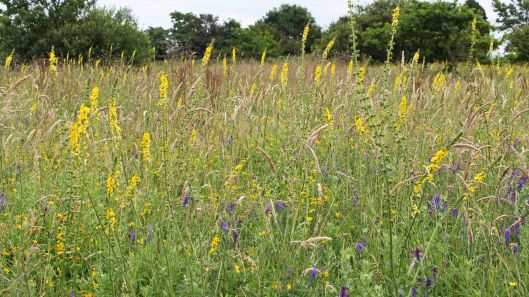
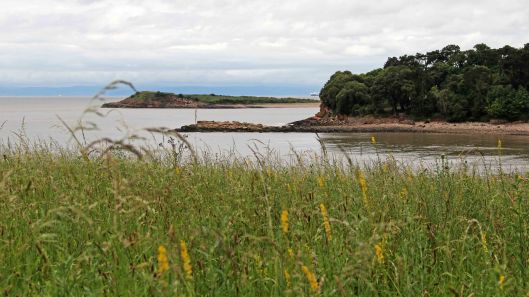
I had a slightly premature celebration by joining a Wildlife Trust walk around Lavernock Reserve on the south Wales coast yesterday. It’s an interesting place that has only become a reserve relatively recently. Due to its prime coastal position, a gun battery was built here back in 1860s and added to during the Second World War – these now form a scheduled ancient monument.

170701 Lavernock Reserve (1)

The meadows sit upon a substrate of clay over Jurassic limestone and, thanks to the tremendous efforts of dedicated volunteers who work constantly to contain the invading scrub, the grasslands are home to many lovely plant, insect and animal species, as well as a succession of migrating birds in spring and autumn.

170701 7-spot ladybird
170701 Centaury
170701 Common red soldier beetle
170701 Common spotted orchid & Selfheal
170701 Large skipper
170701 Marmalade hoverfly
170701 Orange-spot piercer
170701 Plume moth
170701 Restharrow
170701 Ringlet
170701 Snipe fly
170701 Swollen-thighed beetle
Like Loading...

Meet the Robins

19 Monday Jun 2017

Posted by sconzani in birds, nature, parks

≈ 6 Comments

Tags

birding, birdwatching, British birds, Cosmeston Lakes Country Park, fledgling robin, robin

Let me introduce you to Mr and Mrs Robin and their two children. They live at Cosmeston Lakes Country Park. Mr (or Mrs – I can’t actually tell male and female robins apart) came to greet me when I was standing by one the lakes yesterday, watching the ducks. He (or she) hopped over to within inches of where my hand was resting on a railing and looked at me with something akin to desperation. “Do you happen to have any food, lady?” Then, Mrs (or Mr) Robin popped up on to the closest fence post and also gave me a pleading look, “Please!”.

170619 Robin family (1)
170619 Robin family (2)

Luckily, I did have some seed in my bag so spread a little on top of another fence post. They were there immediately, picking up two or three seeds and flitting into a nearby tree. And then I saw the reason for their desperation – two ravenous fledglings were nagging them for food. Truth be told, the fledglings were probably old enough to feed themselves and did, in fact, pop down and peck around a bit. But Mum and Dad obviously still felt obliged to feed their youngsters if they could. I was very pleased to help out.

170619 Robin family (3)
170619 Robin family (4)
Like Loading...

Night heron sighting!!!

18 Sunday Jun 2017

Posted by sconzani in birds, nature, parks

≈ 6 Comments

Tags

birding, birdwatching, Black-crowned night heron, Cosmeston Lakes Country Park, Night heron, Nycticorax nycticorax, rare bird, rare bird sighting

We’re having a heatwave here in south Wales at the moment and, as I really don’t like the heat or the burning sun, I almost didn’t bother getting up early and going for a walk this morning. But I’m SO glad I did because, by sheer good luck, I spotted a relatively rare bird at Cosmeston Lakes Country Park.

170618 Night heron (2)

Typical me – at the time I didn’t realise it was rare. In fact, I couldn’t work out what it was. It was across the other side of the lake and, even with my 300mm lens, I couldn’t get a close-up (see above). Was it a juvenile cormorant? The shape looked wrong. Was it a juvenile heron (there were three other Grey herons on the water near by)? The colour looked cream, rather than light grey, and the eye looked wrong.

170618 Night heron (1)
170618 Night heron (3)

So, I took 7 photos and continued my walk. Once home and showered and cooled down, I went through my pics, cropped them hard and posted them on my bird group page on Facebook. Result! It’s a Night heron (Nycticorax nycticorax) and is a fairly uncommon migrant in Britain, with usually less than twenty records per annum. It’s caused a bit of excitement amongst local birders though, unfortunately, those who’ve looked for it this afternoon haven’t managed to see it. Needless to say, I’m rather chuffed at my sighting!

Oh, and sorry about my rubbish photos. Luckily this is a bird I’ve seen before, overseas, so you can see some better images here.

Like Loading...

Critters at RSPB Ham Wall

13 Tuesday Jun 2017

Posted by sconzani in animals, insects, nature, parks

≈ 6 Comments

Tags

Black-tailed skimmer, caddisfly, Common tortoiseshell, damselfly, Four-spotted Chaser, nature reserve, Roe deer, RSPB Ham Wall, Shapwick Heath

The only problem with going on a birding trip is that, in order to get photos of the birdies, I usually have my long lens on my camera, which means it’s then not easy to get photos of all the lovely smaller creatures I see as I’m walking around. And both RSPB Ham Wall Nature Reserve and, just across the road, Shapwick Heath National Nature Reserve have a profusion of delightful, and sometimes rare smaller creatures to be seen.

170613 Shapwick Heath

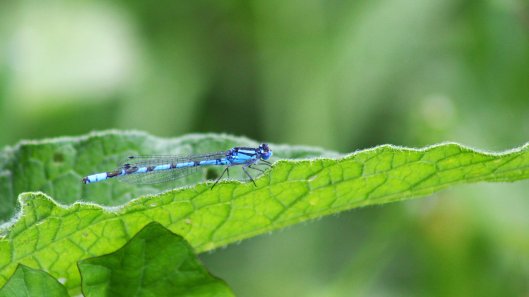
In particular, we saw a wealth of damsel- and dragonflies, including several of the Four-spotted chasers and Black-tailed skimmers shown below and, we think, the unusual Variable damselfly (though this can be tricky to identify). Spiders were particularly abundant on the path-side scrub, as were Dock beetles, judging from all the holey leaves we saw.
170613 4-spotted chaser
170613 Black-tailed skimmer

170613 RSPB Ham Wall critters (1)

170613 RSPB Ham Wall critters (2)

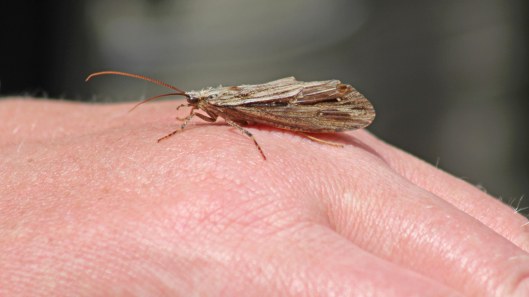
We rescued several large hairy caterpillars which were determinedly marching across the paths but risked annihilation from feet and bicycle tyres, as well as one large and very friendly Caddisfly (above). Butterflies weren’t as plentiful as I expected, though we did see good numbers of very fresh Small tortoiseshells, presumably newly hatched.

170613 Small tortoiseshells (2)
170613 Small tortoiseshells (1)

The most unexpected sighting, and a highlight for me, was a Roe deer on the canal-side bank in Shapwick Heath. Only its head and its very large ears could be seen, as it munched happily on a large green mouthful of vegetation while keeping a close eye on our admiring group of photographers.

170613 Roe deer

As I mentioned in yesterday’s piece on the birds of Ham Wall, you really need a week to explore these superb reserves thoroughly and then you might be lucky enough to see their resident water voles and otters. I have to go back!

Like Loading...

Southover Grange Gardens

31 Wednesday May 2017

Posted by sconzani in flowers, nature, parks, plants, trees

≈ Leave a comment

Tags

350-year-old Mulberry tree, garden in Lewes, public gardens in East Sussex, Southover Grange Gardens

Curiosity can be a good thing. You look through a grill in a stone wall and spy a magical garden. You see people walking to and fro so you think, ‘maybe it’s open to the public’. You walk further along the walls until, at the corner of the street, you find an entrance and, hey presto, you discover the glorious Southover Grange Gardens in Lewes.
170531 Southover Grange Gardens Lewes (1)

The Grange was built by one William Newton in 1572, with stone filched from the old Lewes Priory, but the gardens are the creation of more recent owners. Highlights include a 350-year-old Mulberry tree, one of the oldest in England, as well as many other magnificent old trees; herbaceous borders and formal bedding displays; a box-hedged knot garden full of the scent of roses; a wildflower area; and an impressive collection of public artworks. If you’re ever in Lewes, do pay a visit to this tranquil oasis.

This slideshow requires JavaScript.

Like Loading...
← Older posts
Newer posts →

About me

sconzani

sconzani

I'm a writer and photographer; researcher and blogger; birder and nature lover; countryside rambler and city strider; volunteer and biodiversity recorder.

View Full Profile →

Follow earthstar on WordPress.com

Enter your email address to follow this blog and receive notifications of new posts by email.

Recent blog posts

  • Q is for Quercus December 22, 2025
  • P is for Phalarope December 21, 2025
  • O is for Odonata December 20, 2025
  • N is for nest December 19, 2025
  • M is for mite December 18, 2025

From the archives

COPYRIGHT

Unless otherwise acknowledged, the text and photographs on this blog are my own and are subject to international copyright. Nothing may be downloaded or copied without my permission.

Fellow Earth Stars!

  • Unknown's avatar
  • Unknown's avatar
  • Unknown's avatar
  • Unknown's avatar
  • Unknown's avatar
  • Unknown's avatar
  • Unknown's avatar
  • Unknown's avatar
  • Unknown's avatar
  • Unknown's avatar
  • Unknown's avatar
  • Unknown's avatar
  • Unknown's avatar
  • Unknown's avatar
  • Unknown's avatar
  • Unknown's avatar
  • Unknown's avatar
  • Unknown's avatar
  • Unknown's avatar
  • Unknown's avatar
  • Unknown's avatar
  • Unknown's avatar
  • Unknown's avatar
  • Unknown's avatar
  • Unknown's avatar
  • Unknown's avatar
  • Unknown's avatar
  • Unknown's avatar
  • Unknown's avatar
  • Unknown's avatar
  • Unknown's avatar
  • Unknown's avatar
  • Unknown's avatar
  • Unknown's avatar
  • Unknown's avatar
  • Unknown's avatar
  • Unknown's avatar
  • Unknown's avatar
  • Unknown's avatar
  • Unknown's avatar
  • Unknown's avatar
  • Unknown's avatar
  • Unknown's avatar
  • Unknown's avatar
  • Unknown's avatar
  • Unknown's avatar
  • Unknown's avatar
  • Unknown's avatar
  • Unknown's avatar
  • Unknown's avatar

Blog at WordPress.com.

Privacy & Cookies: This site uses cookies. By continuing to use this website, you agree to their use.
To find out more, including how to control cookies, see here: Cookie Policy
  • Subscribe Subscribed
    • earthstar
    • Join 667 other subscribers
    • Already have a WordPress.com account? Log in now.
    • earthstar
    • Subscribe Subscribed
    • Sign up
    • Log in
    • Report this content
    • View site in Reader
    • Manage subscriptions
    • Collapse this bar
 

Loading Comments...
 

You must be logged in to post a comment.

    %d