• ABOUT
  • BIRDING 2018
  • Birding 2019
  • BLOG POSTS
  • Butterflies 2018
  • Resources

earthstar

~ a celebration of nature

earthstar

Category Archives: plants

M is for mite

18 Thursday Dec 2025

Posted by sconzani in insects, plants

≈ Leave a comment

Tags

British galls, Colomerus vitis, gall mites, gall-causing mites, galls, galls on grape leaves, galls on grapevines

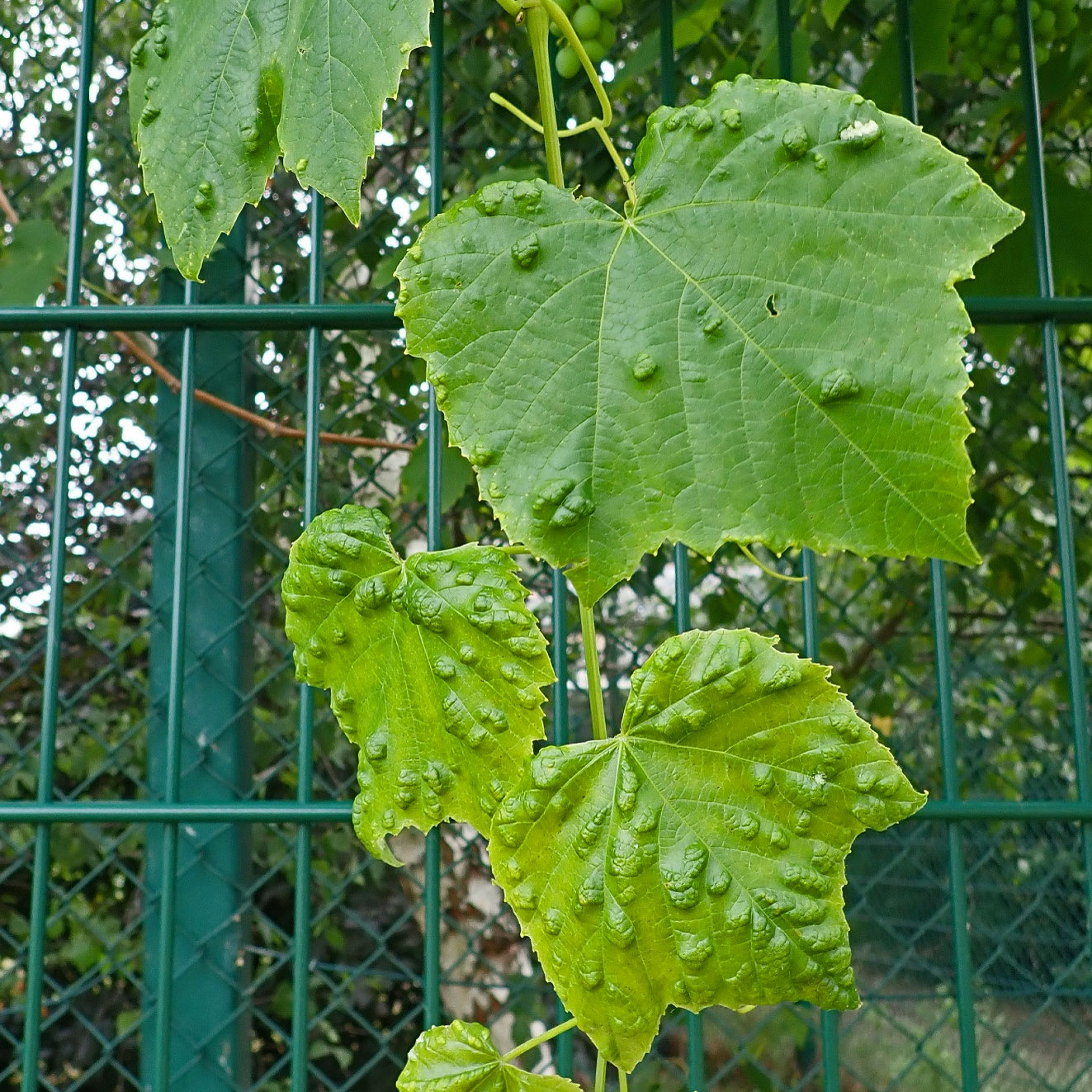
When preparing this series of countdown blog posts, I revisited the two locations where I found Grape mites (Galls on grapevines, 26 July) earlier this year, hoping to take a new photo to accompany this post. Unfortunately, I’d left it too late, as the grape vines were both bare, their leaves dead and already dropped off or blown from their branches on to the ground below. My find of this miniscule mite was one of my ‘first for Wales’ sightings in 2025 and I’m quite surprised to note that no other sightings have yet been recorded though, on checking iRecord, sightings do look quite sparse across Britain so far. I’ve already made a diary note to check for the mites (Colomerus vitis) again next year, and will be on the lookout for their telltale signs in other locations.

Like Loading...

Aphid: Eriosoma lanigerum

01 Monday Dec 2025

Posted by sconzani in insects, plants, trees

≈ 2 Comments

Tags

American blight, aphid, aphids on Apple trees, aphids on Firethorn, aphids on Pyracantha, British aphids, Eriosoma lanigerum, galls on Firethorn, galls on Pyracantha, Woolly apple aphid

When I set out on my walk last Saturday, I wasn’t intentionally targeting aphids but up they popped. At this first location I wasn’t completely certain that what I saw was caused by aphids but, as soon as I poked one of the fuzzy white lumps on this Firethorn (Pyracantha species) and my finger came away stained red, I knew I’d just inadvertently squashed an aphid (this has happened to me before when I grabbed a willow branch without noticing the aphids perched on it).
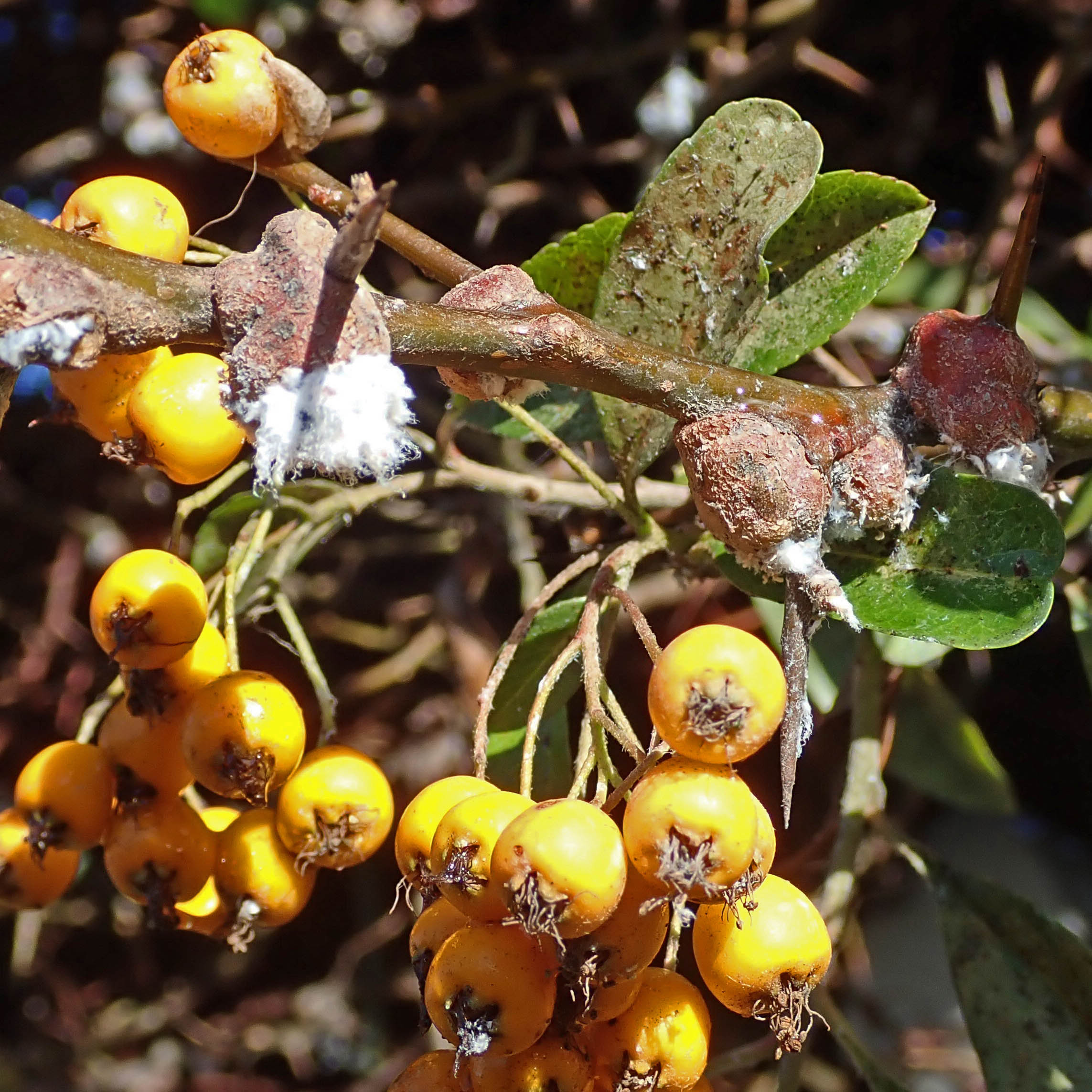
After a little research when I got home, it quickly became apparent that these were Eriosoma lanigerum, also known as Woolly apple aphids and American blight. The sap-sucking feeding of Eriosoma lanigerum causes deformation and swellings on the branches, trunks and roots of their host plants, as you can see from the lumpy growths on the branches of this Firethorn bush.
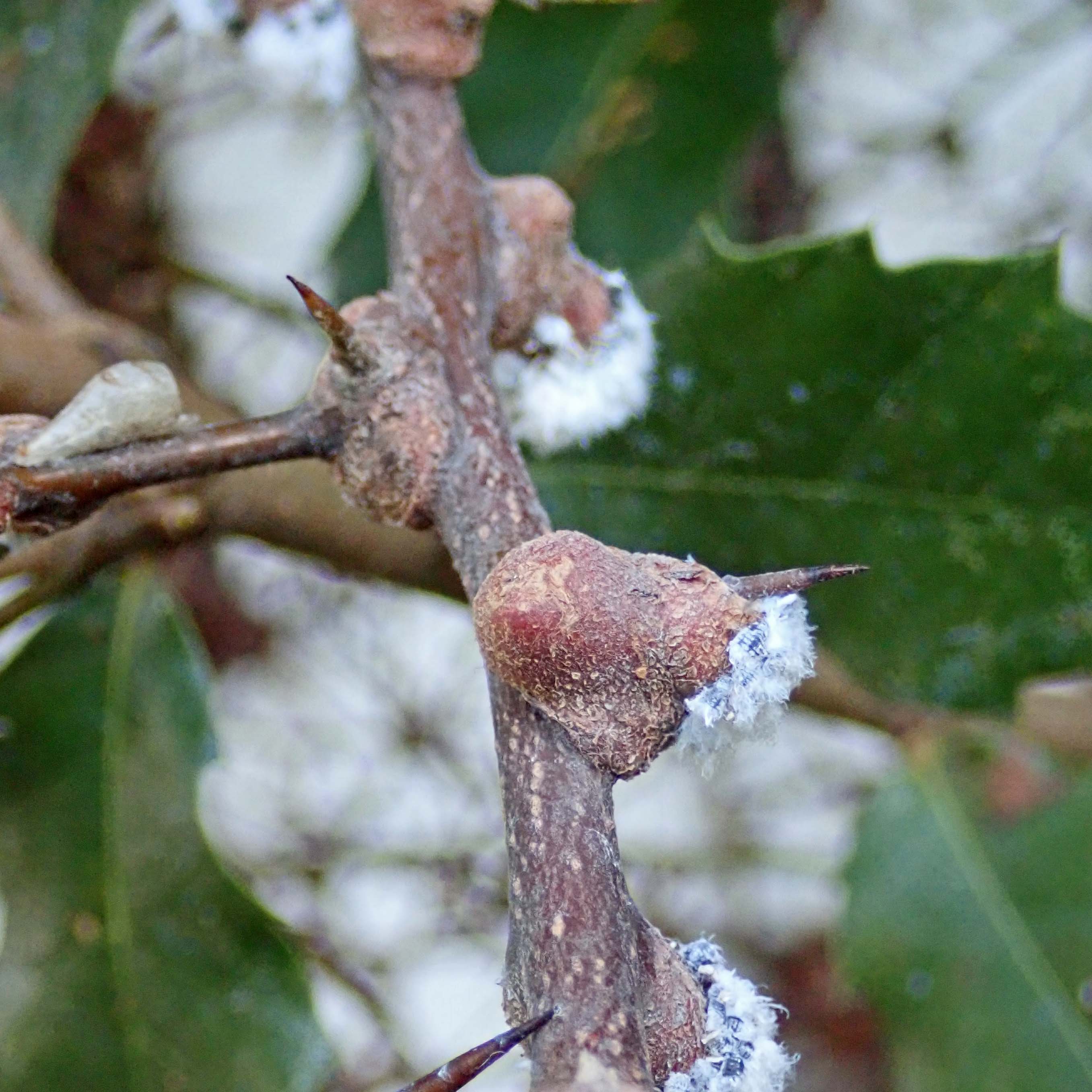
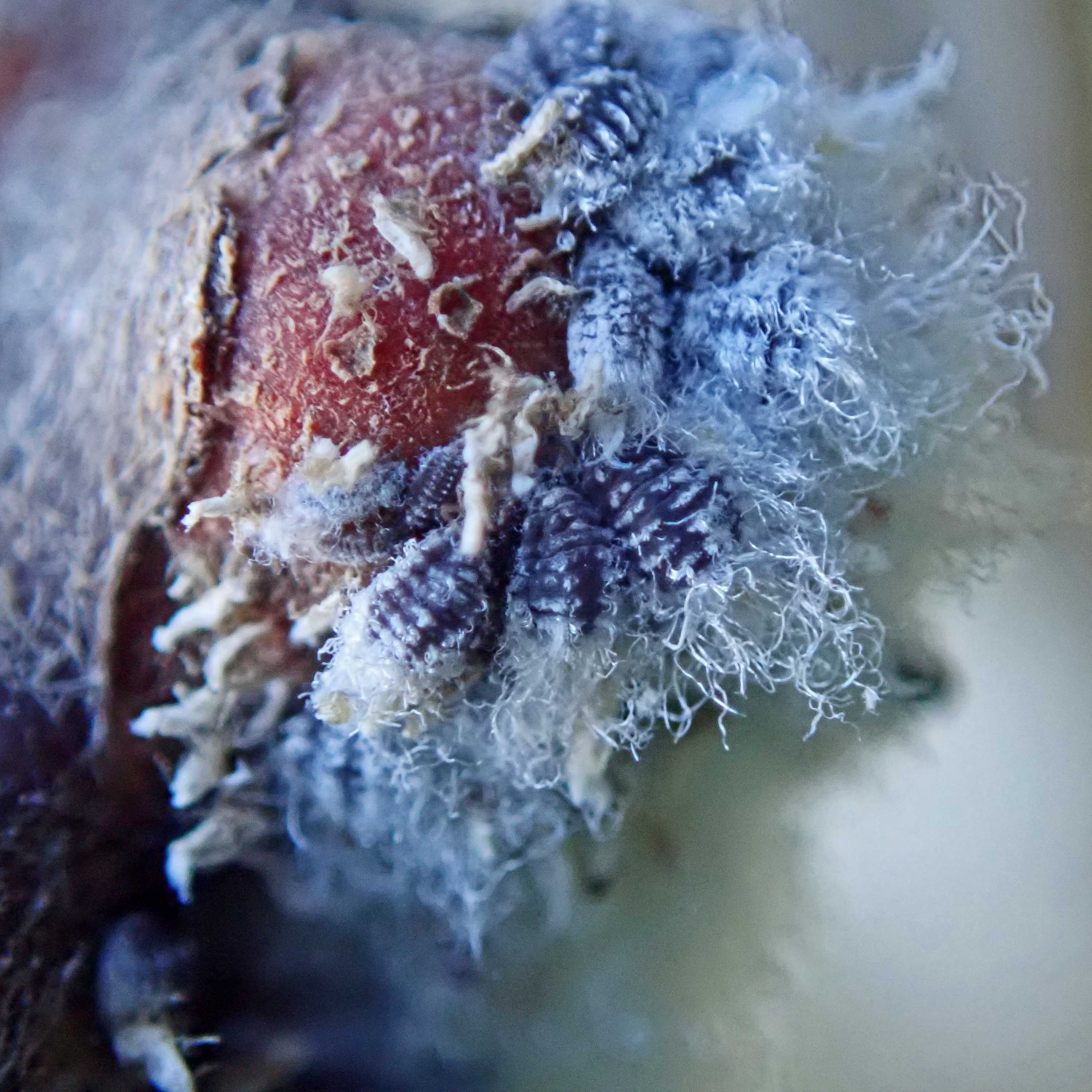
The white ‘wooliness’ is a wax substance the aphids produce in specialised glands and excrete as filaments from various parts of their bodies. The Influential Points website, which is an excellent resource for information about aphids, summarises the various reasons scientists have reached for this wax secretion:

Smith suggests that the primary role of the secreted wax is to prevent the aphids becoming contaminated by their own honeydew … and that of other members of the colony…. Other secondary roles of wax may include individual microclimate isolation, protection from fungi, parasites and predators plus waterproofing and frost protection.
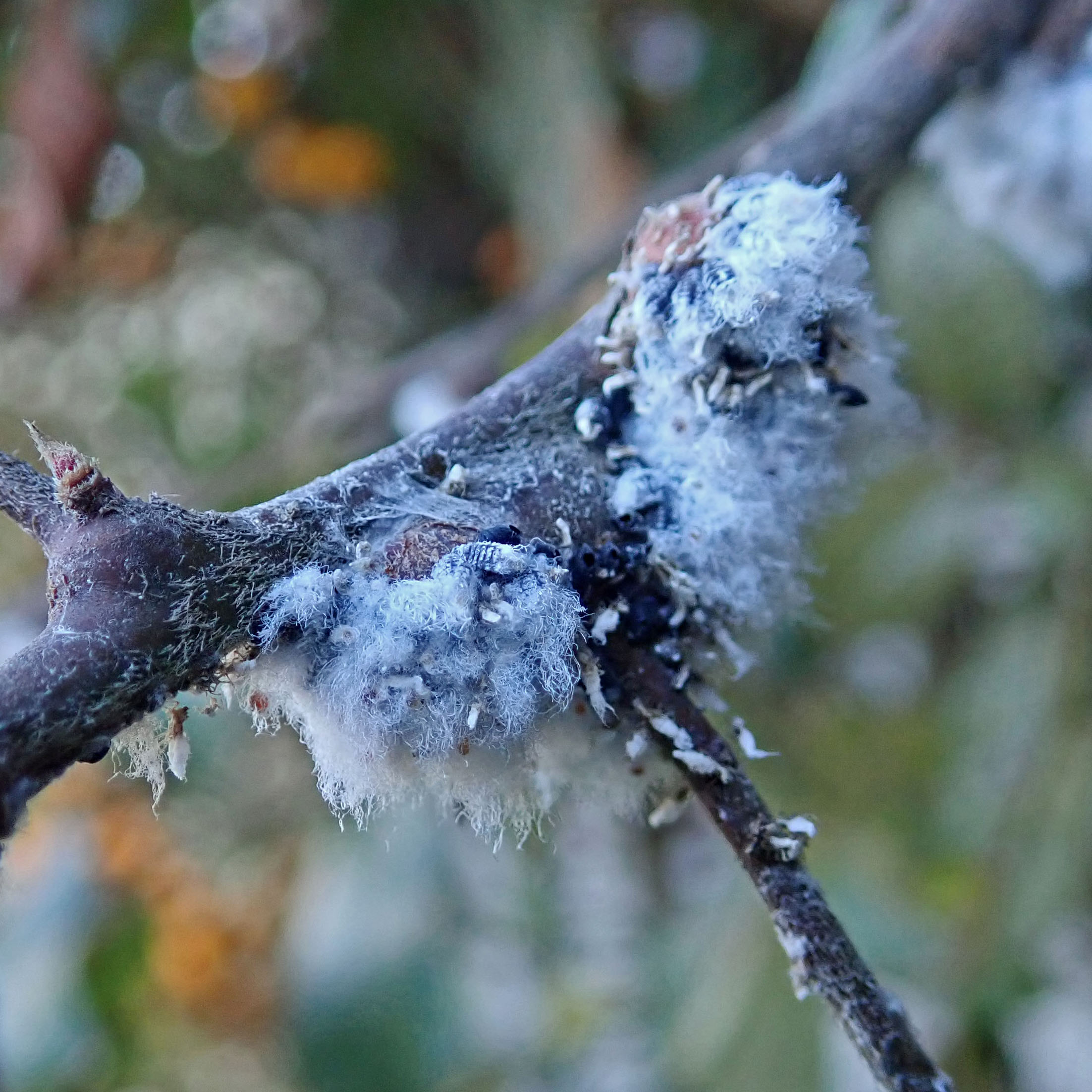
Though their primary plant hosts are Pyracantha and Cotoneaster species, as the Woolly apple aphid name suggests, their secondary host is Apple and, on the various species of Apple trees, they are considered a major pest, often having a severe economic impact on Apple crops. If you’re interested in reading more about this, the Influential Points website has a long list of various scientific research papers from around the globe on the subject of these aphids, their reproduction habits, their seasonal movements, their genetics and population dynamics, as well as ways to control their infestations.

Like Loading...

Viviparous umbellifers

19 Wednesday Nov 2025

Posted by sconzani in autumn, plants, wildflowers

≈ Leave a comment

Tags

Daucus carota, viviparity, viviparous umbellifer, viviparous Wild carrot, Wild carrot

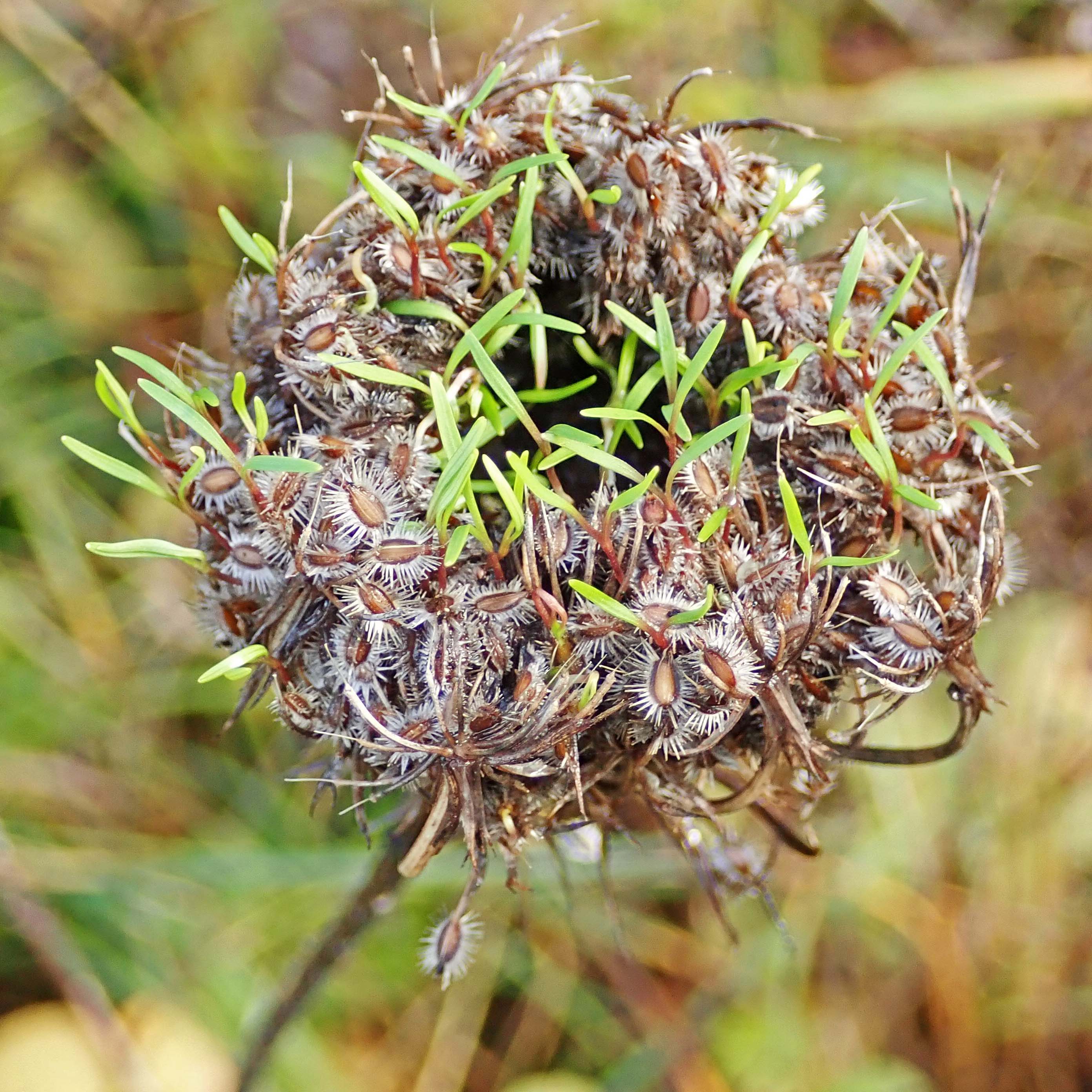
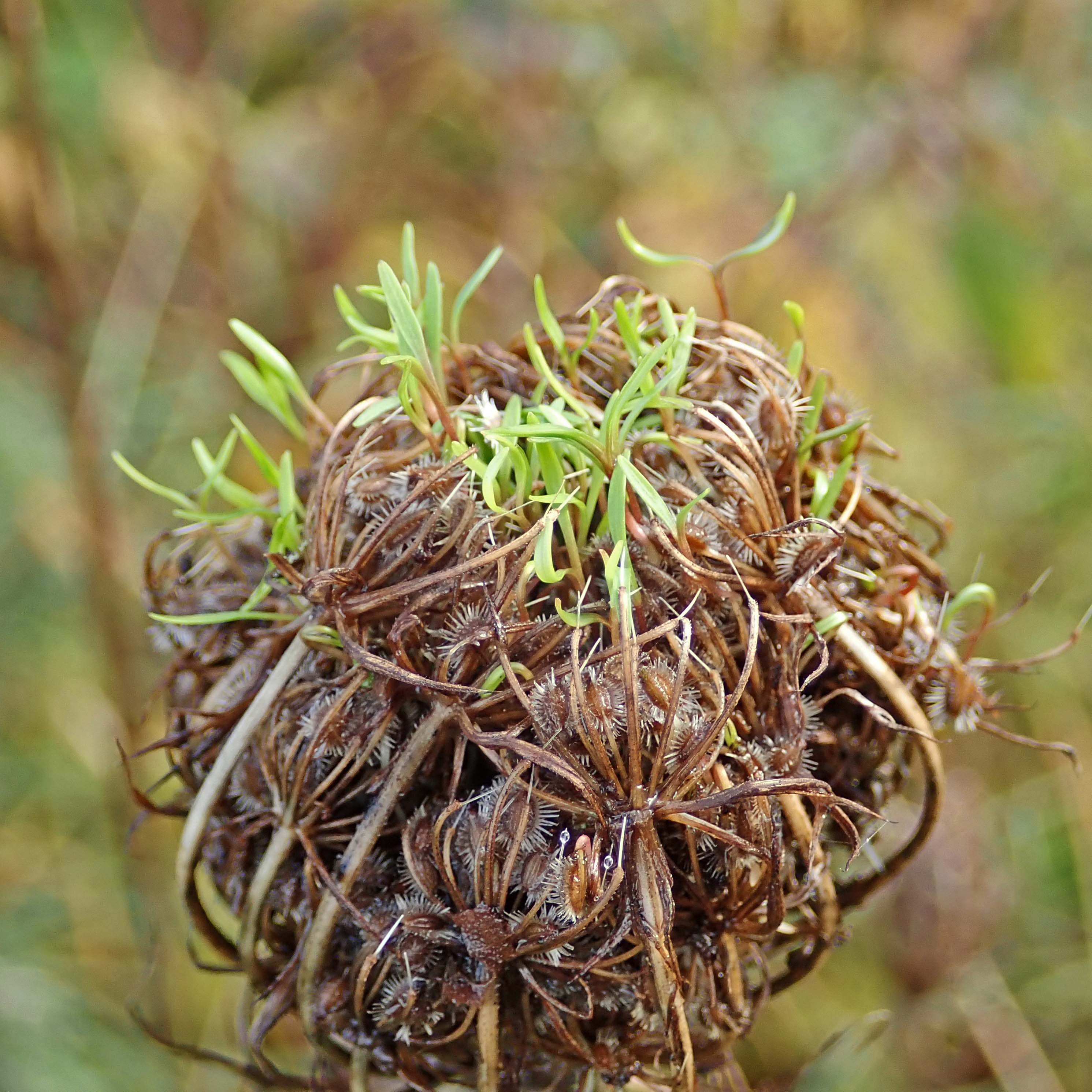
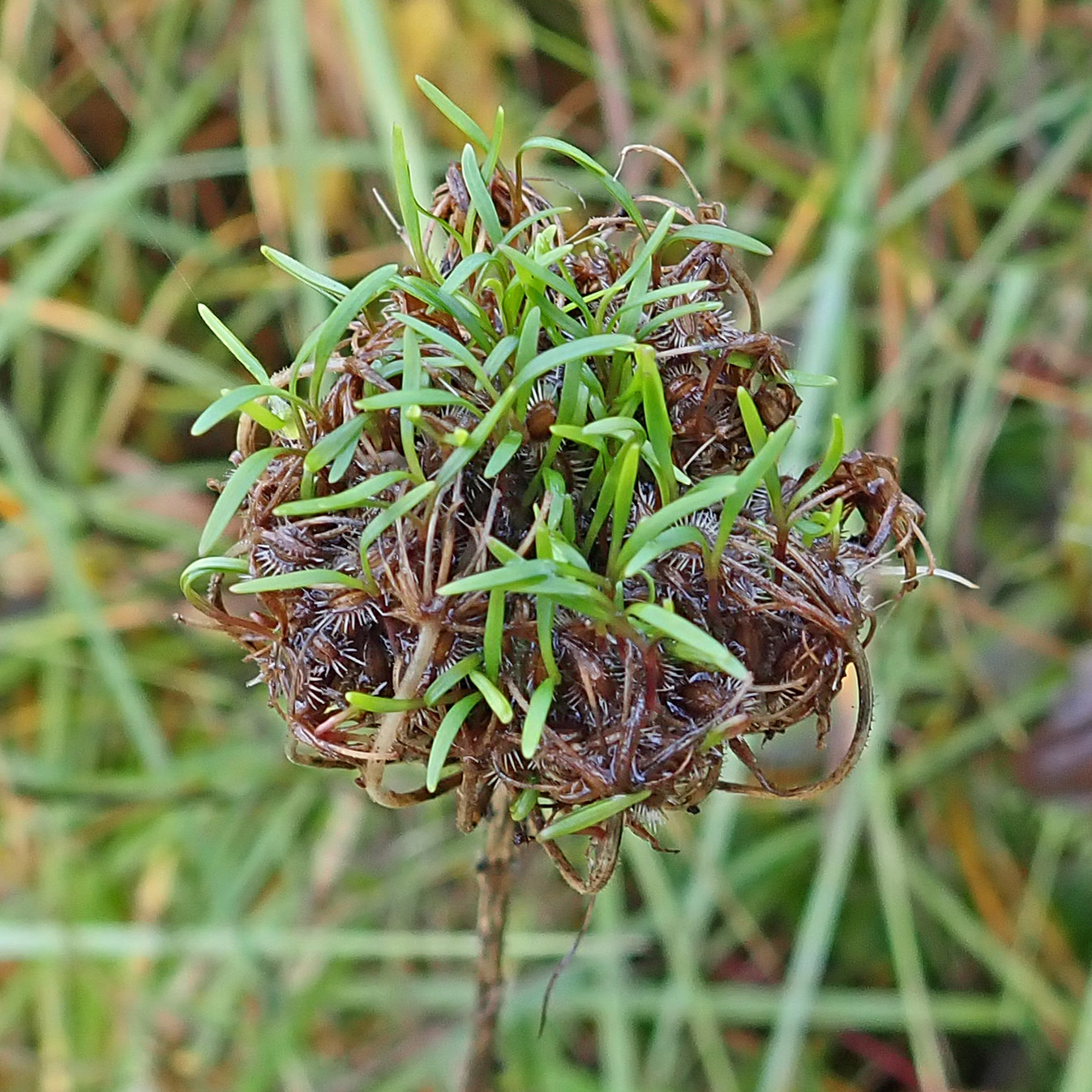
I’ve seen viviparous Teasels before (see Wild word: viviparity, January 2024) but these viviparous umbellifers – I think these are Wild Carrots (Daucus carota), spotted during my circuit of Cardiff Bay last Thursday, were a first for me and a result, I’m sure, of how warm and wet this autumn has been.

Viviparity is when seeds begin the germination process, producing their primary leaves, while the seeds are still joined to their parent plant.

I must make a point of visiting this location in the next week or so to see whether the seeds continue to grow, producing secondary leaves, and more, while still within the seedhead structures.

Like Loading...

Bountiful Ground-ivy

15 Saturday Nov 2025

Posted by sconzani in fungi, insects, leaves, plants

≈ Leave a comment

Tags

case-bearing moth larva on Ground-ivy, Coleophora albitarsella, galls on Ground-ivy, Ground-ivy, Puccinia glechomatis, Rondaniola bursaria, rust on Ground-ivy

When the weather’s wet, which it often has been of late, I tend to focus more on looking for small things when out walking. This is partly because the larger creatures, like birds, tend to prefer taking shelter as much as we humans do but also because I don’t want to get my good camera wet and my small camera, the one I use for close-up shots, is waterproof. Monday was one such day and, when I stooped to pat a random black cat that appeared out of nowhere, I noticed how marked and mottled were the leaves of the Ground-ivy the cat was sitting next to. So, I investigated.

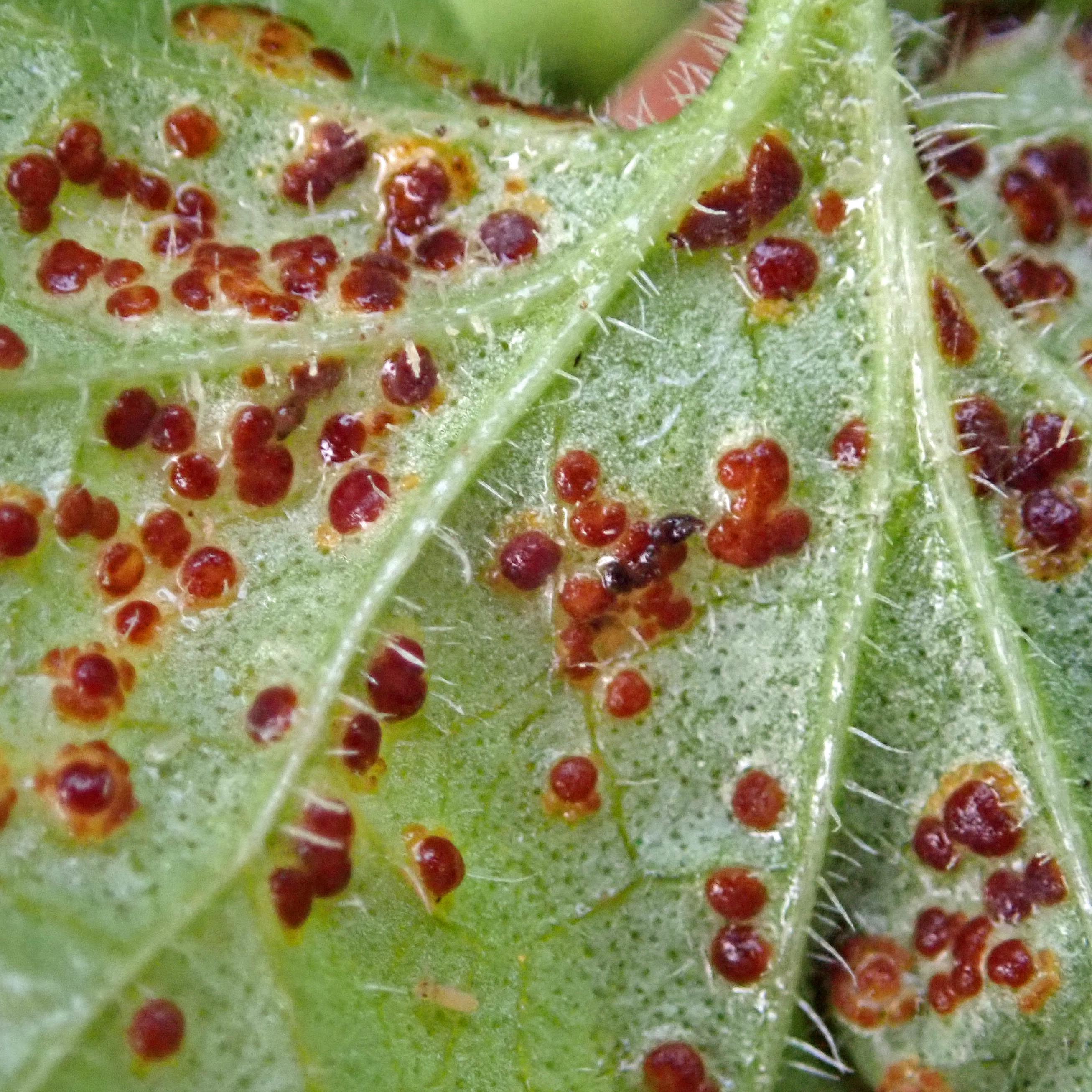
And what a bountiful patch of Ground-ivy it was. Firstly, I couldn’t help but notice how many of the leaves were covered with the pustules of the rust fungus Puccinia glechomatis.

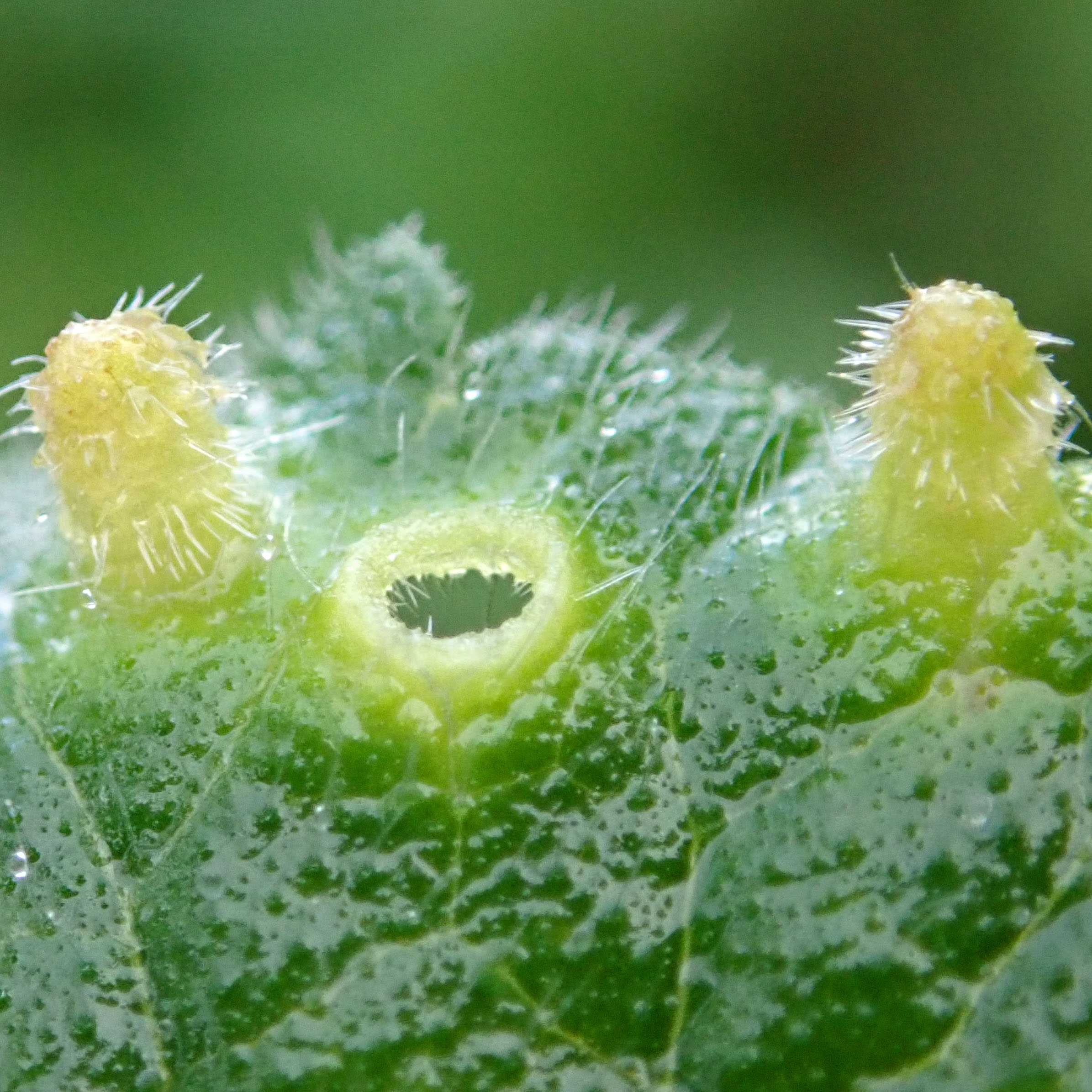
Then I discovered that many of the leaves also had small bumps on them, galls caused by the miniscule mite Rondaniola bursaria.

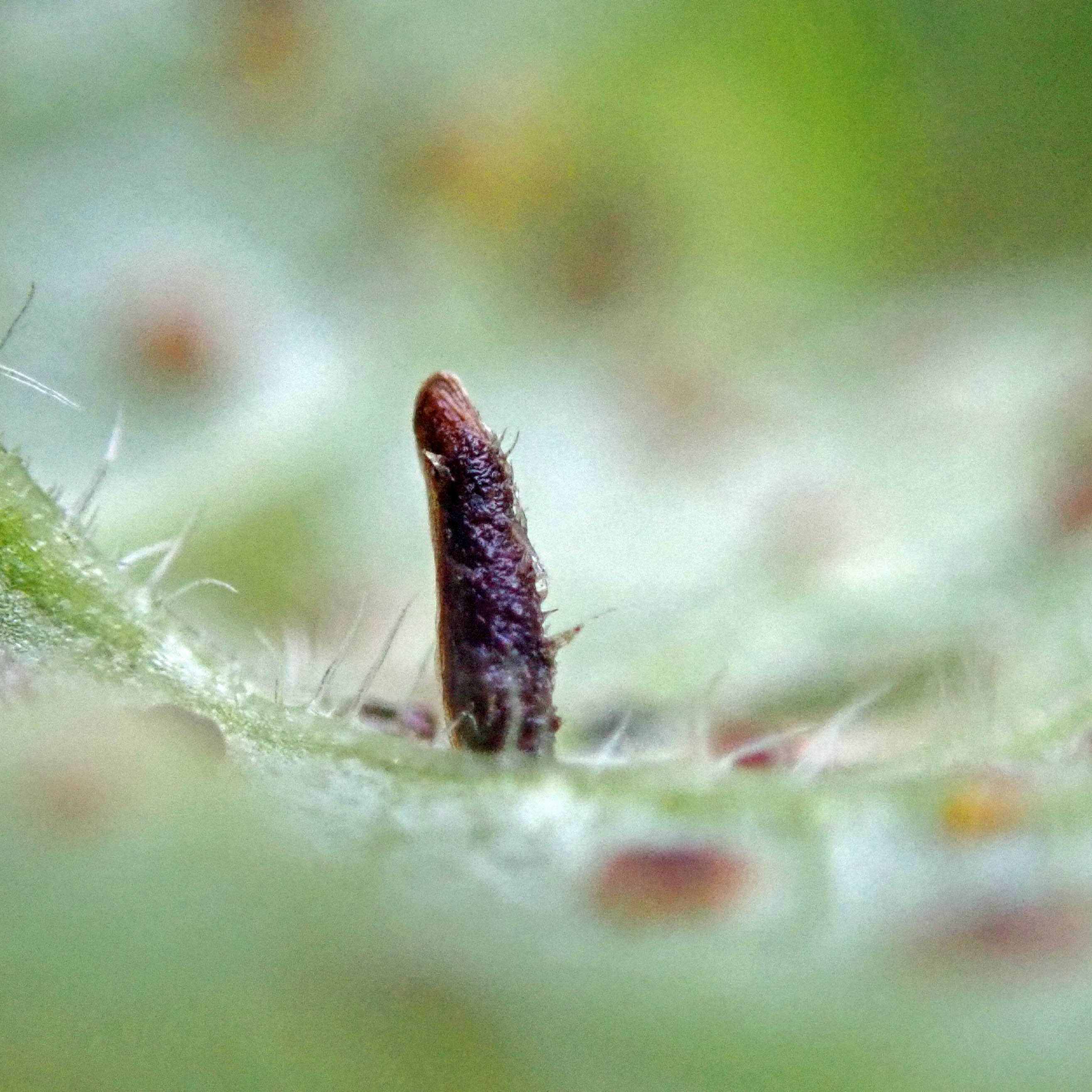
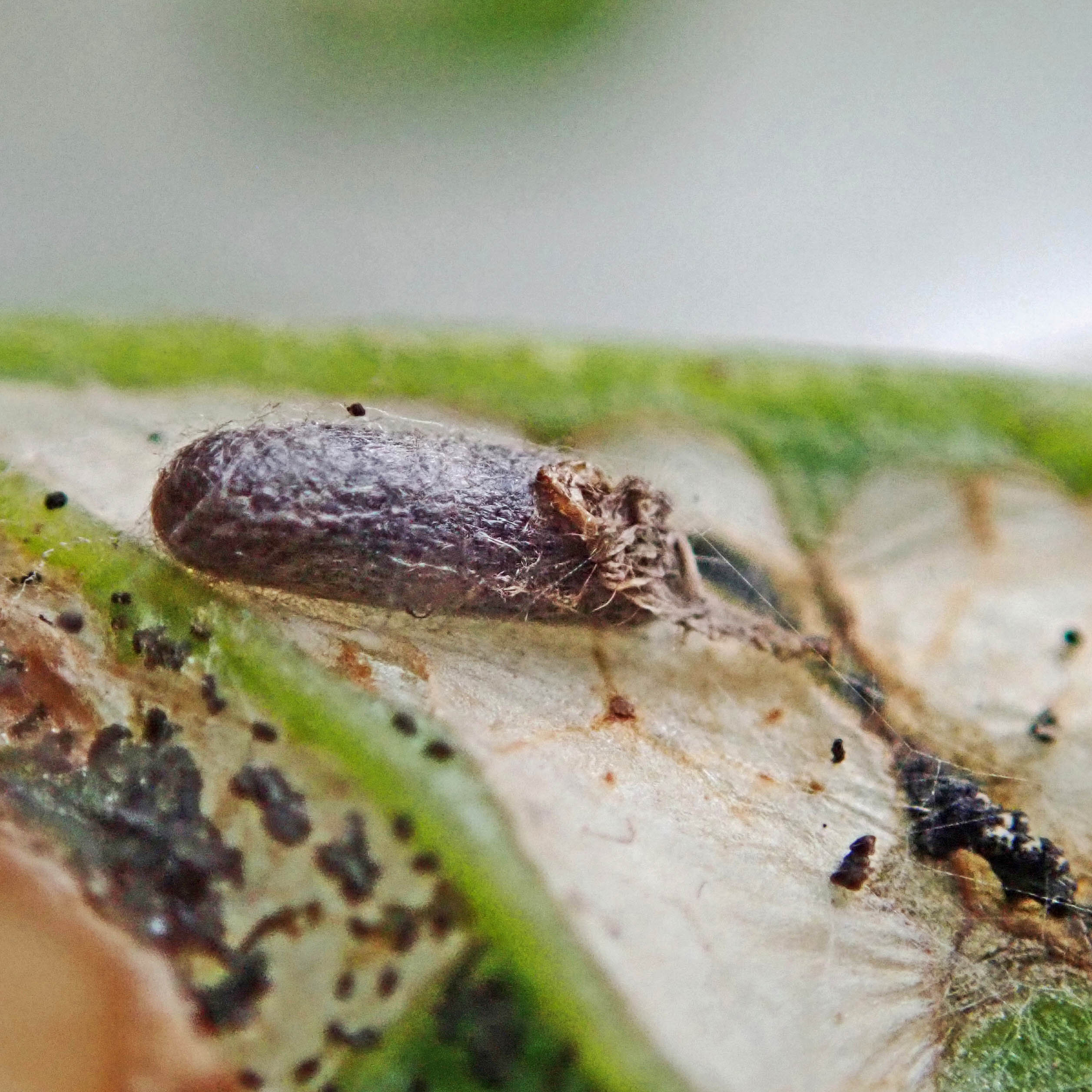
And, perhaps best of all, while investigating the rust and the galls, I also spotted a single tiny dark case sticking up from one leaf, the self-constructed home of a larva of the moth Coleophora albitarsella. And, with that, the rain starting coming down a little too heavily for comfort so both the cat and I headed for home.

Like Loading...

Parasite of Bedellia somnulentella

27 Monday Oct 2025

Posted by sconzani in insects, leaves, plants

≈ 4 Comments

Tags

Bedellia somnulentella larva, British moths, British parasitic wasps, parasite of Bedellia somnulentella, parasitic wasp, wasp that parasitises Bedellia somnulentella, wasp that parasitises moth larvae

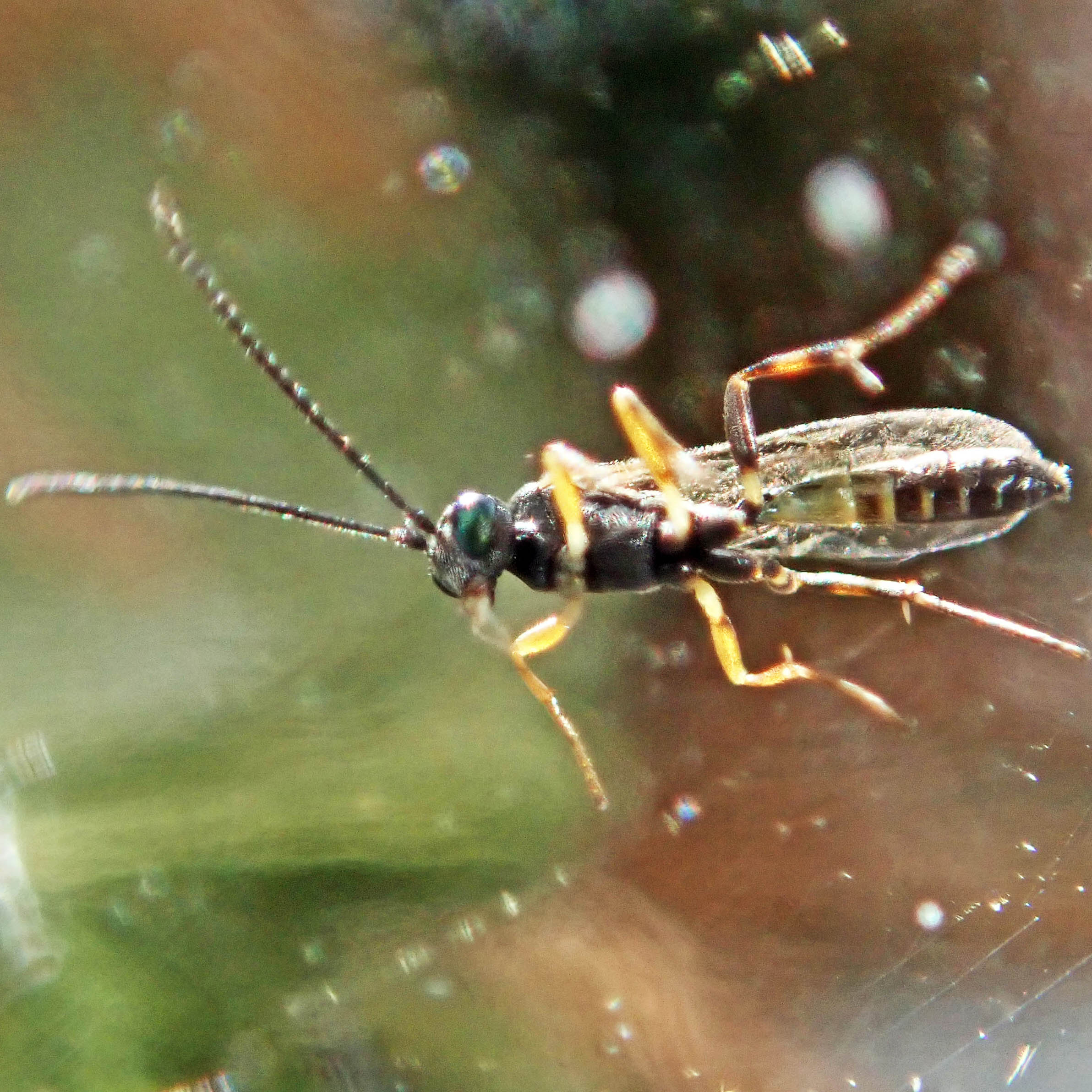
The two Field bindweed leaves I brought home from my coastal walk nearly two weeks ago, on the 14th, are the leaves that just keep on giving. As well as the three moth pupae I found on them – the reason I brought them home in the first place (see my blog Bedellia somnulentella revisited, 20 October), there was another pupa that looked to me to be that of a wasp, probably one that had parasitised another B. somnulentella larva.

That tiny wasp has now hatched. As is often the case with these miniscule creatures, I have no way of determining which exact species of parasitic wasp it is, and I do realise that the whole concept of a wasp larva eating a moth larva from the inside while it’s still alive is a bit gory (perhaps I should’ve posted this on Halloween!), but I find it fascinating, both the process of parasitism and also bringing the occasional things home to see what emerges. The little wasp, a male, has been released to live its best life.

Like Loading...

The ones I missed

12 Sunday Oct 2025

Posted by sconzani in autumn, flowers, plants, wildflowers

≈ Leave a comment

Tags

autumn colour, autumn flowering wildflowers, autumn flowers, British wildflowers

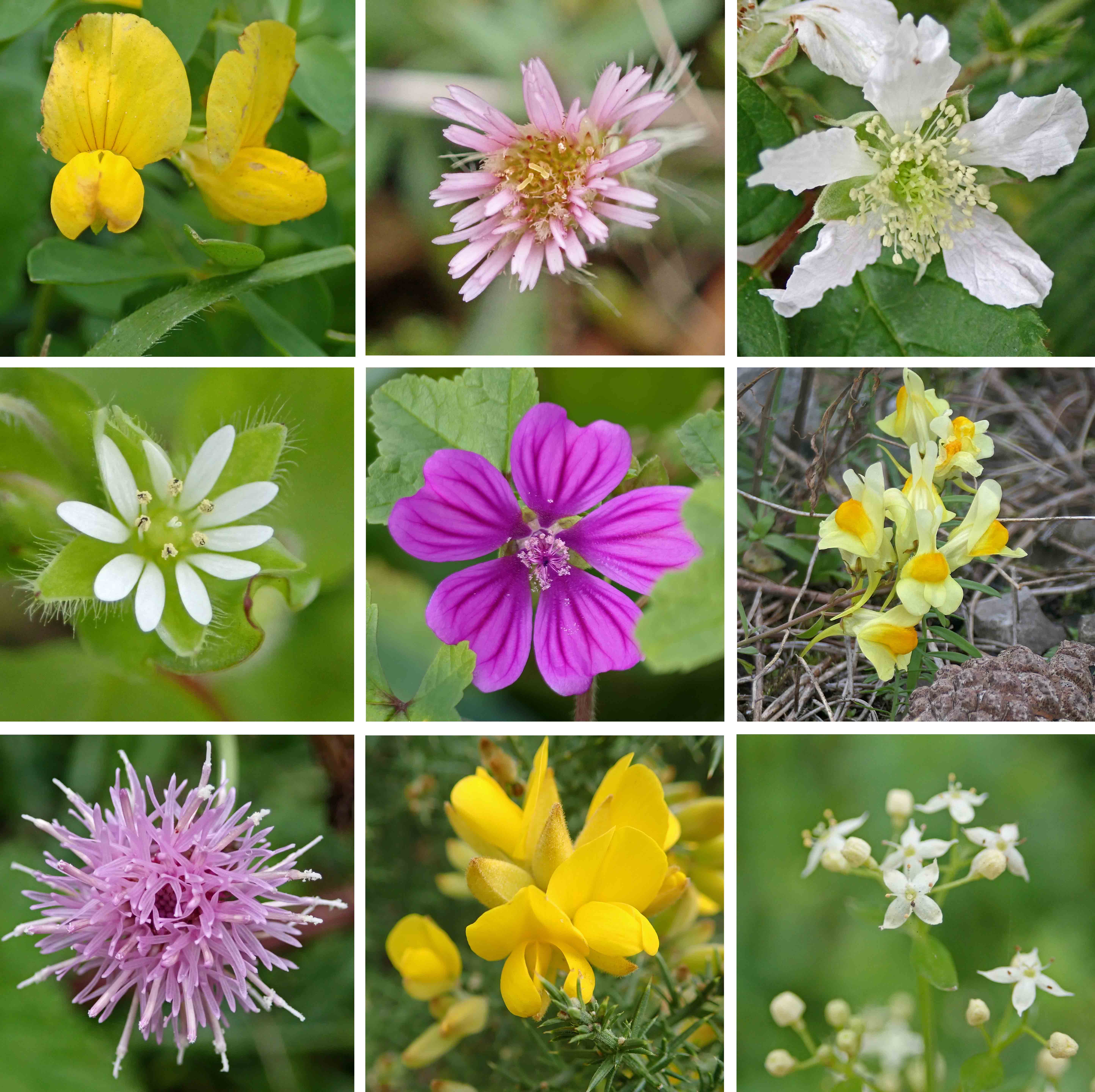
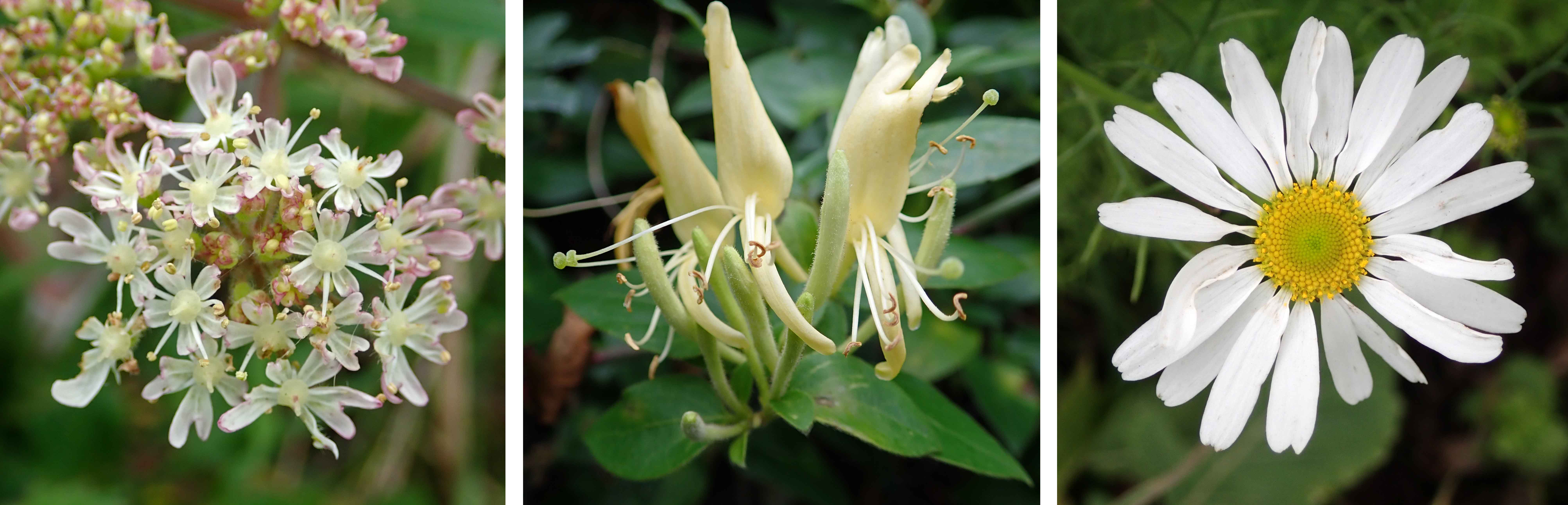
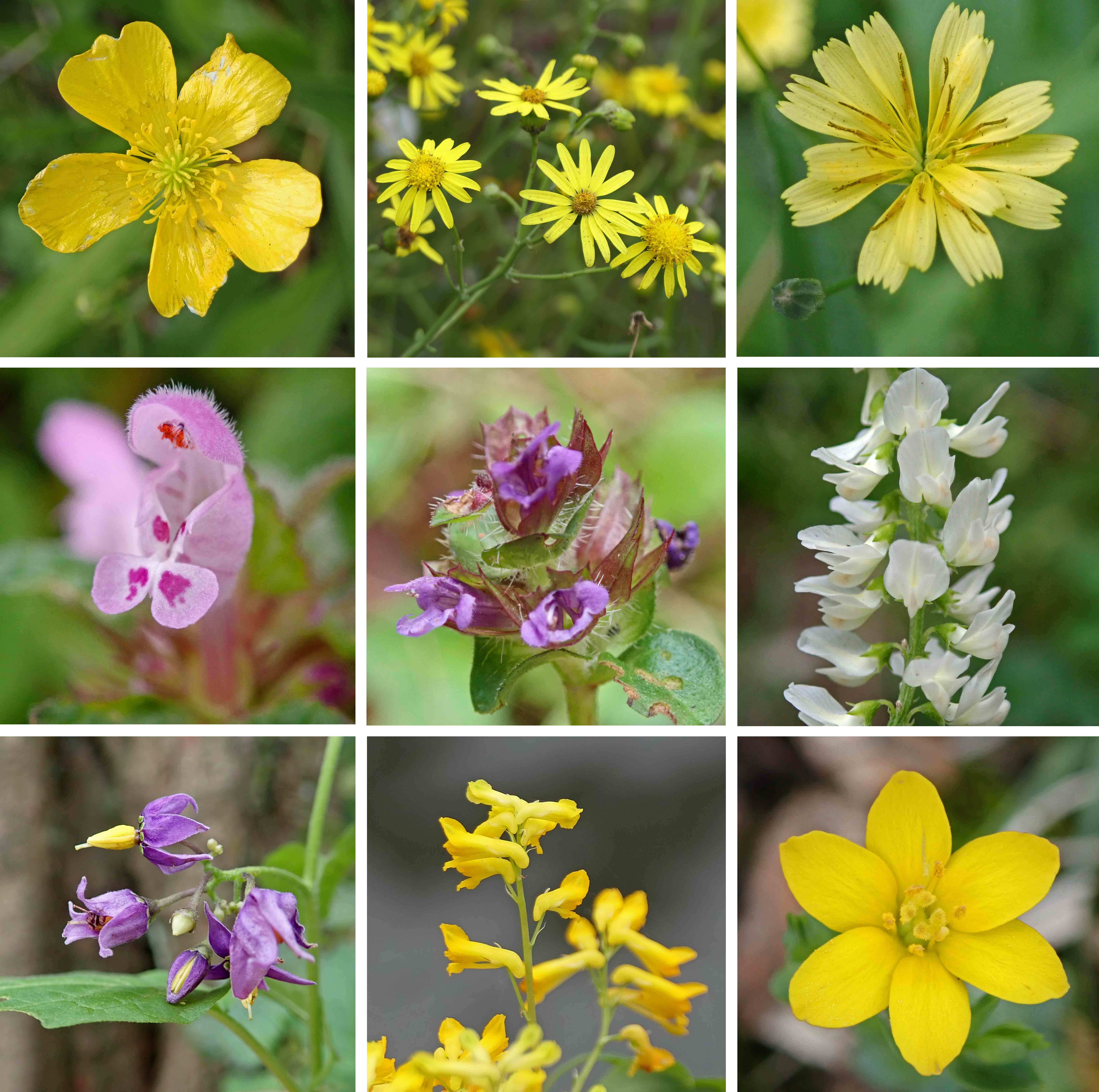
Despite finding a respectable 60 wildflowers still in bloom during last week’s walk, I knew I could find even more so I’ve kept my eyes peeled during this week’s walks. These are the ones I missed last week …

Bird’s-foot trefoil, Blue fleabane, Bramble, Common chickweed, Common mallow, Common toadflax, Creeping thistle, Gorse, and Hedge bedstraw.

Hogweed, Honeysuckle, and Mayweed.

Meadow buttercup, Narrow-leaved ragwort, Nipplewort, Red dead-nettle, Selfheal, White melilot, Woody nightshade, Yellow corydalis, and Yellow-wort.

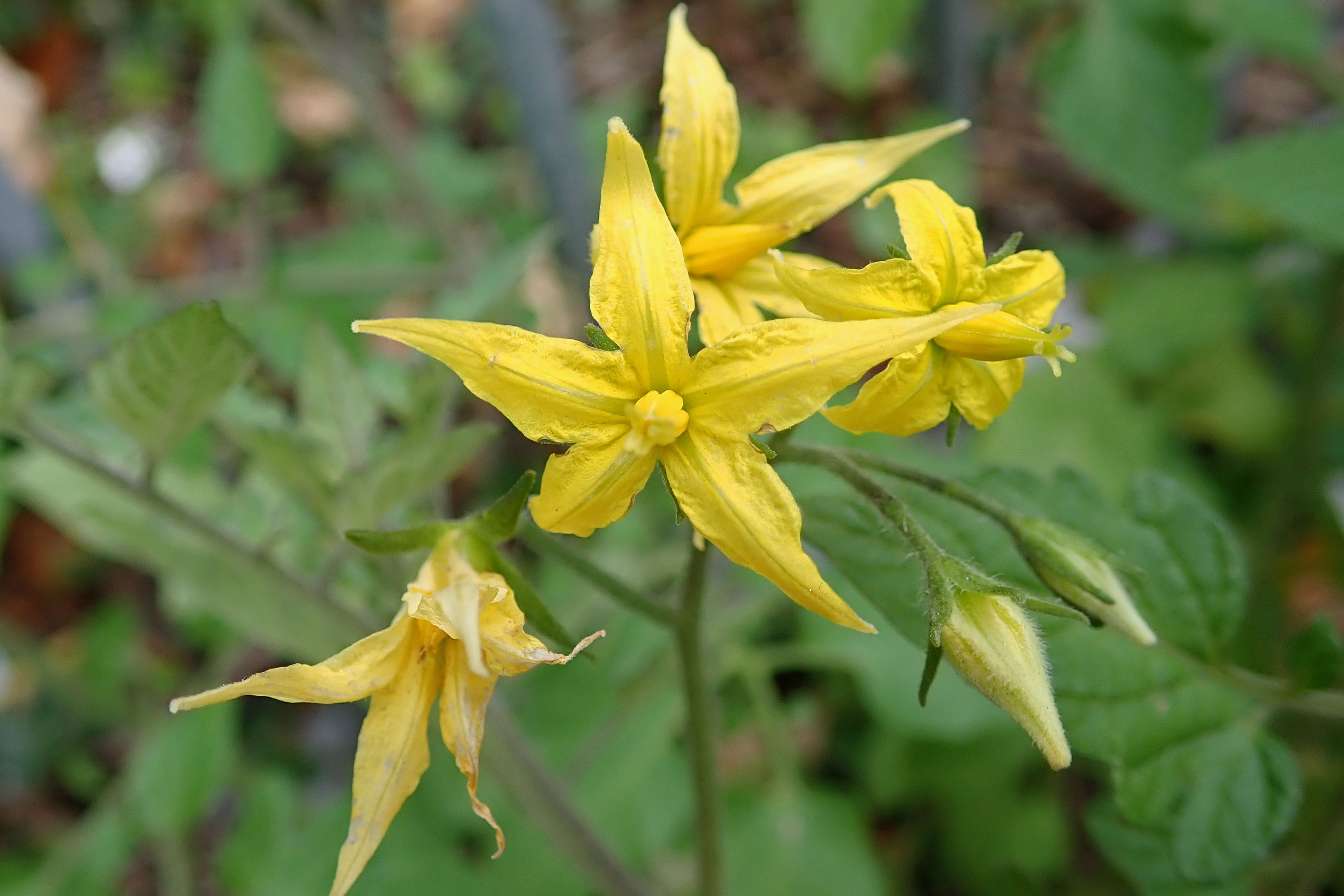
I had to add this last one – not a wildflower, but a random Tomato that had somehow self-seeded along the edge of one of the local back lanes. I admire its tenacity.

Like Loading...

Leafmines: Chrysoesthia sexgutella

06 Monday Oct 2025

Posted by sconzani in insects, plants

≈ Leave a comment

Tags

British leafminers, British moths, leaf-mining moth larvae, leafmines, leafmines on Goosefoot, leafmines on Orache

Last Wednesday evening I got a message from local moth expert George that another local moth-er had found the leafmines of the moth Chrysoesthia drurella, a new find for the county of Glamorgan, in a suburb on the opposite side of Cardiff to where I live. As he knows I’m a keen seeker of leafmines, George just wanted to let me know to keep an eye out for them when I’m out walking.

The moth larvae mine the leaves of Orache (Atriplex sp.) and Goosefoot (Chenopodium sp.), neither of which plants I’m familiar with so that was my first hurdle, being able to recognise the plants and knowing where to find them. Out came my plant books! Sometime later I was fairly confident I’d recognise the plants, though not be able to distinguish one from the other; fortunately, in this case that didn’t matter.

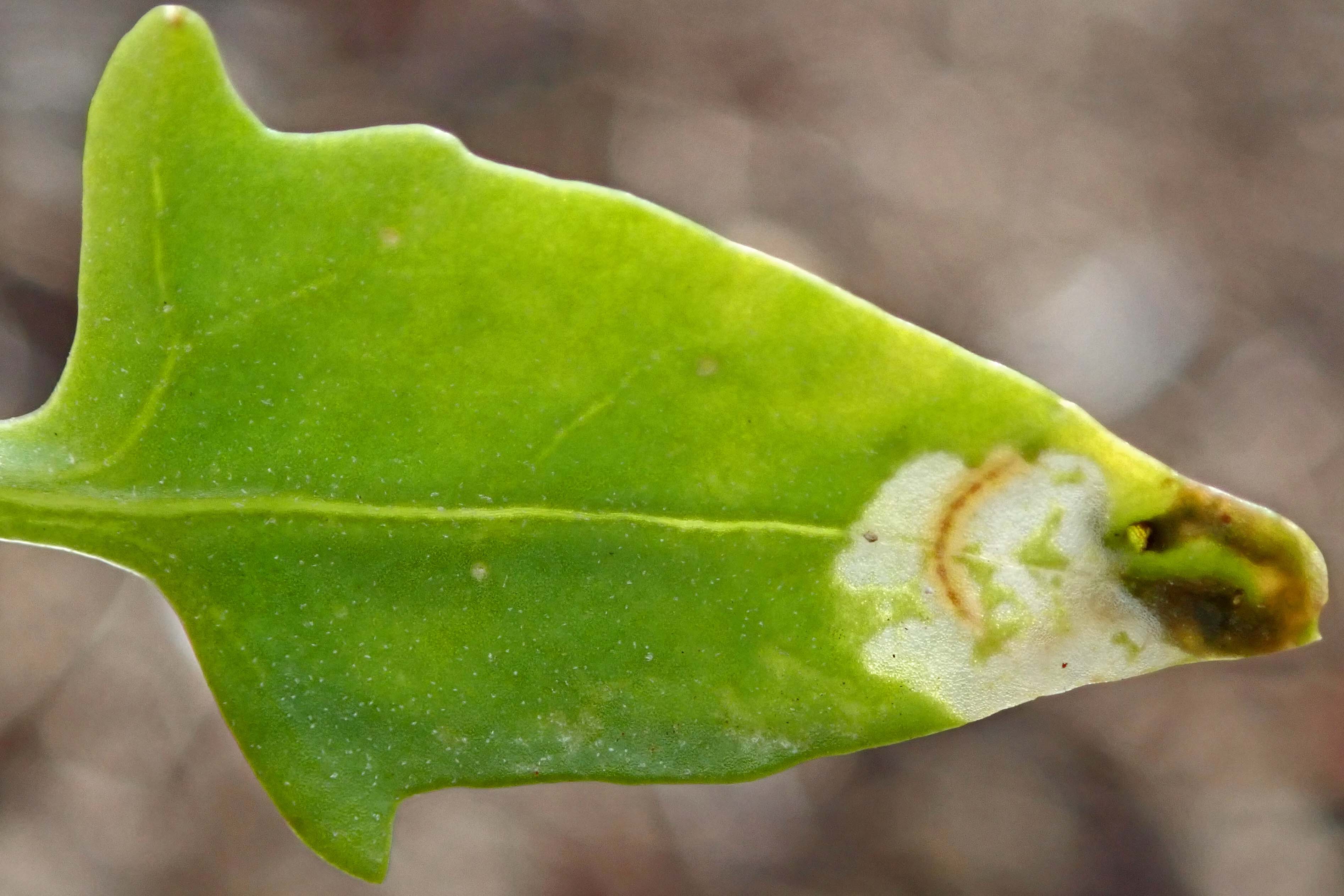
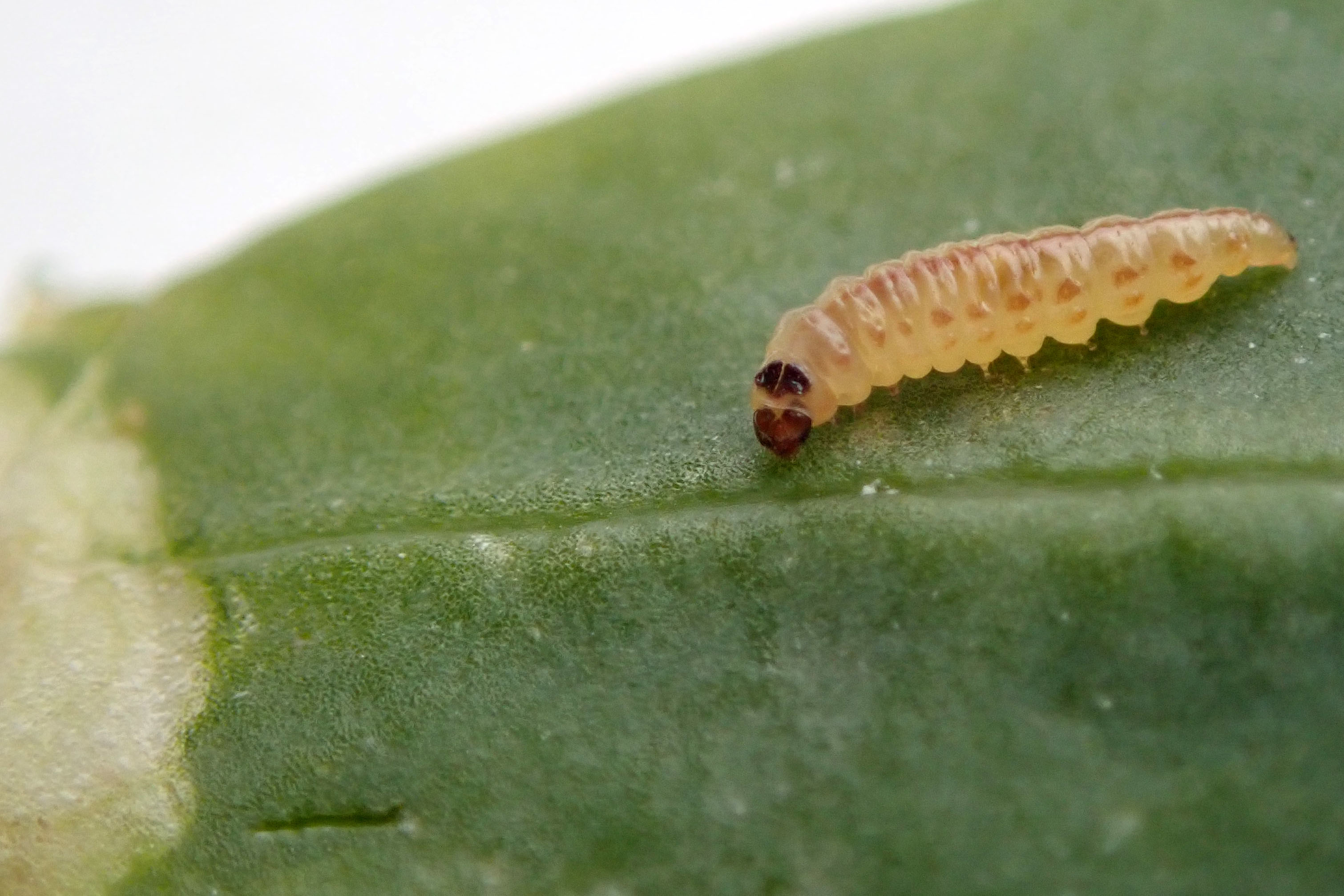
Thursday dawned and, after dealing with some necessary chores, I headed out for a walk, deciding to detour to a local beach in the hope of finding the correct plants. I was in luck, and the plants had mines on their leaves, though they didn’t look like how they should for the moth larvae I was seeking. So, finding a mine that still had a larva in it, I plucked it off the plant and brought it home to take a closer look at it, as the larva’s markings would tell me one way or the other whether I’d found C. drurella. I hadn’t!

However, I had found a closely related species, Chrysoesthia sexgutella, which mines the leaves of the same plants and was a new find for me. This moth breeds twice each year, with the first brood adults flying in May/June and the second on the wing in August. You can see what the adult moth looks like on the UK Moths website. And my search for the rarer Chrysoesthia drurella continues.

Like Loading...

I see red

02 Thursday Oct 2025

Posted by sconzani in autumn, insects, plants, seasons

≈ 2 Comments

Tags

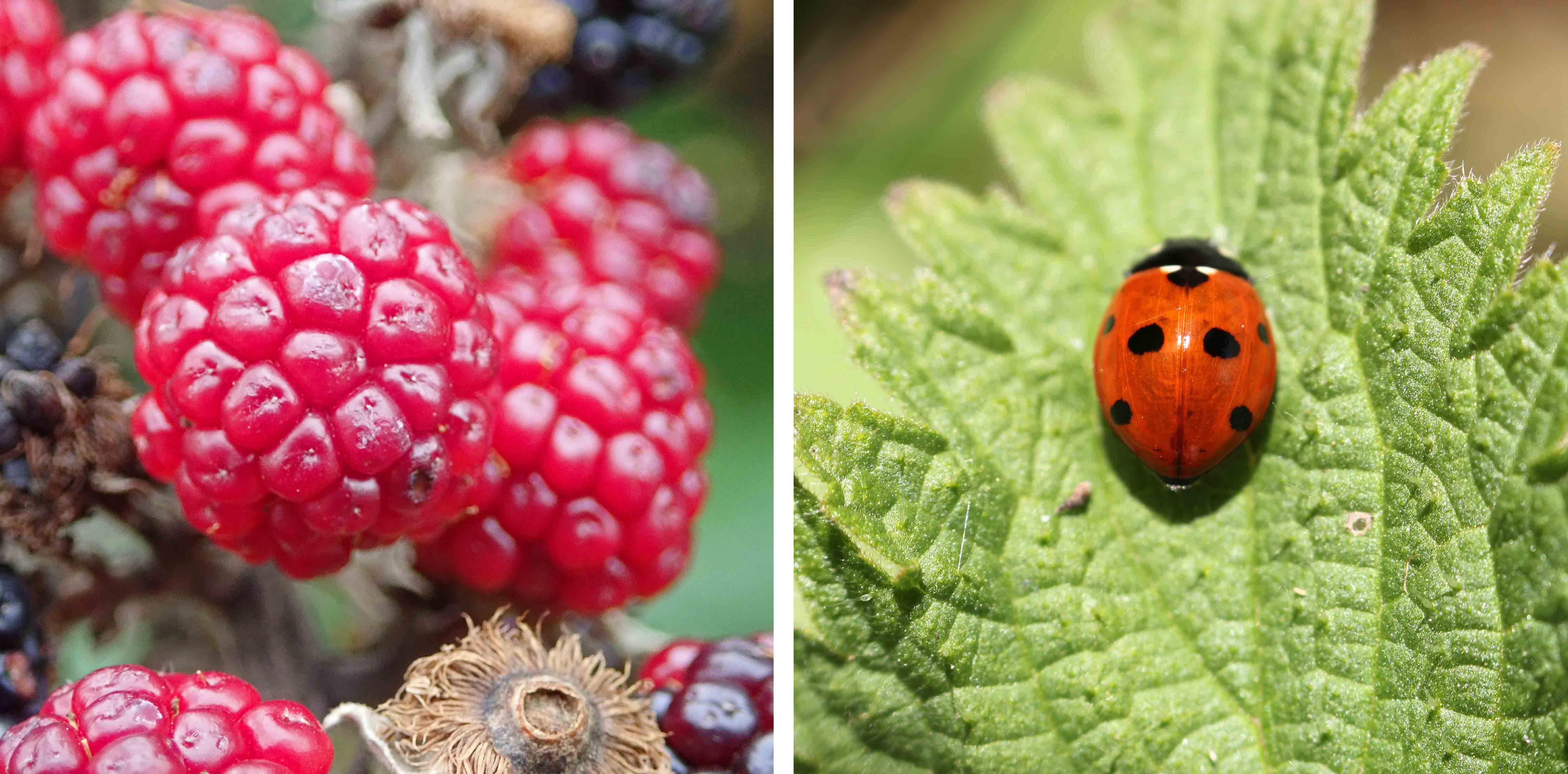
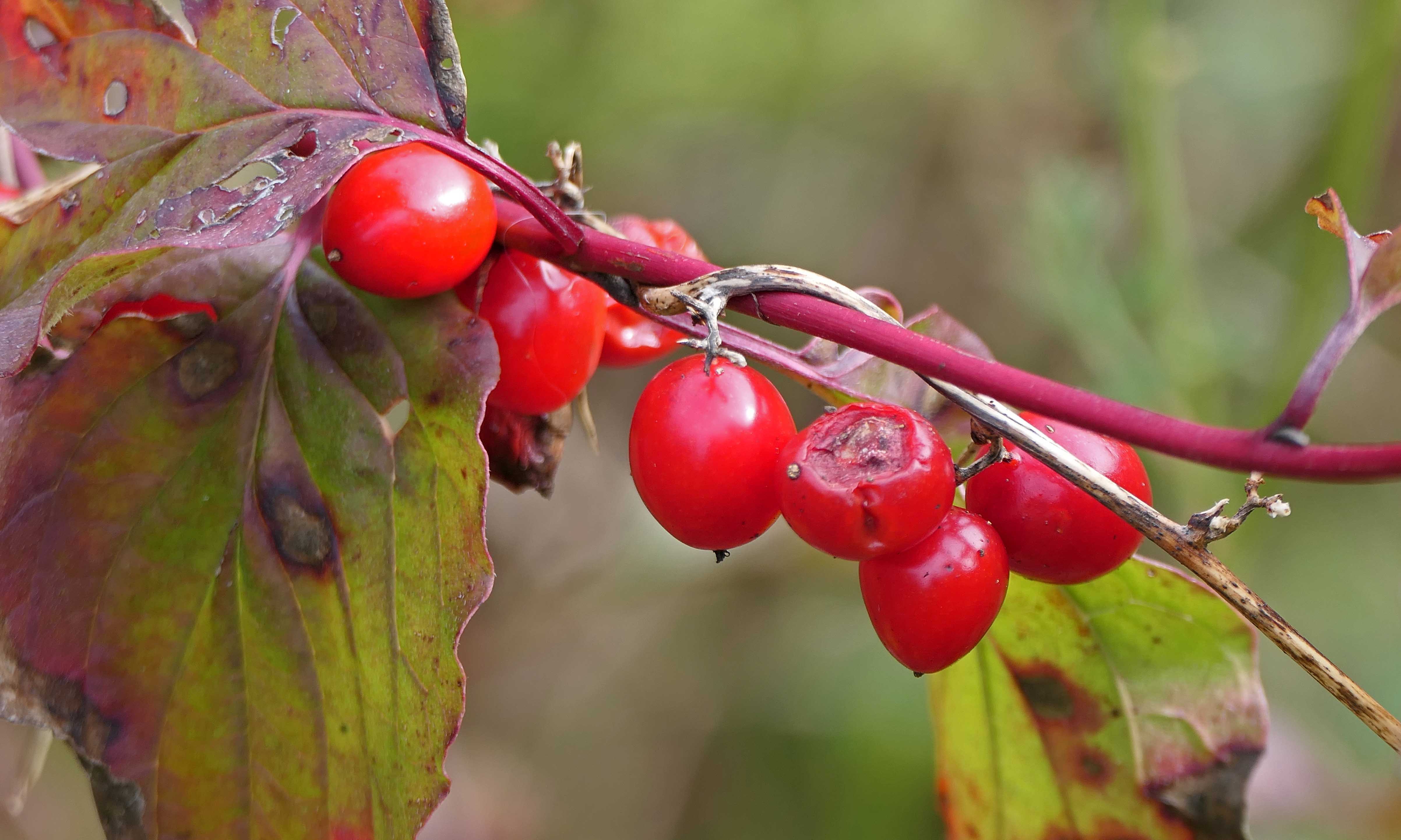
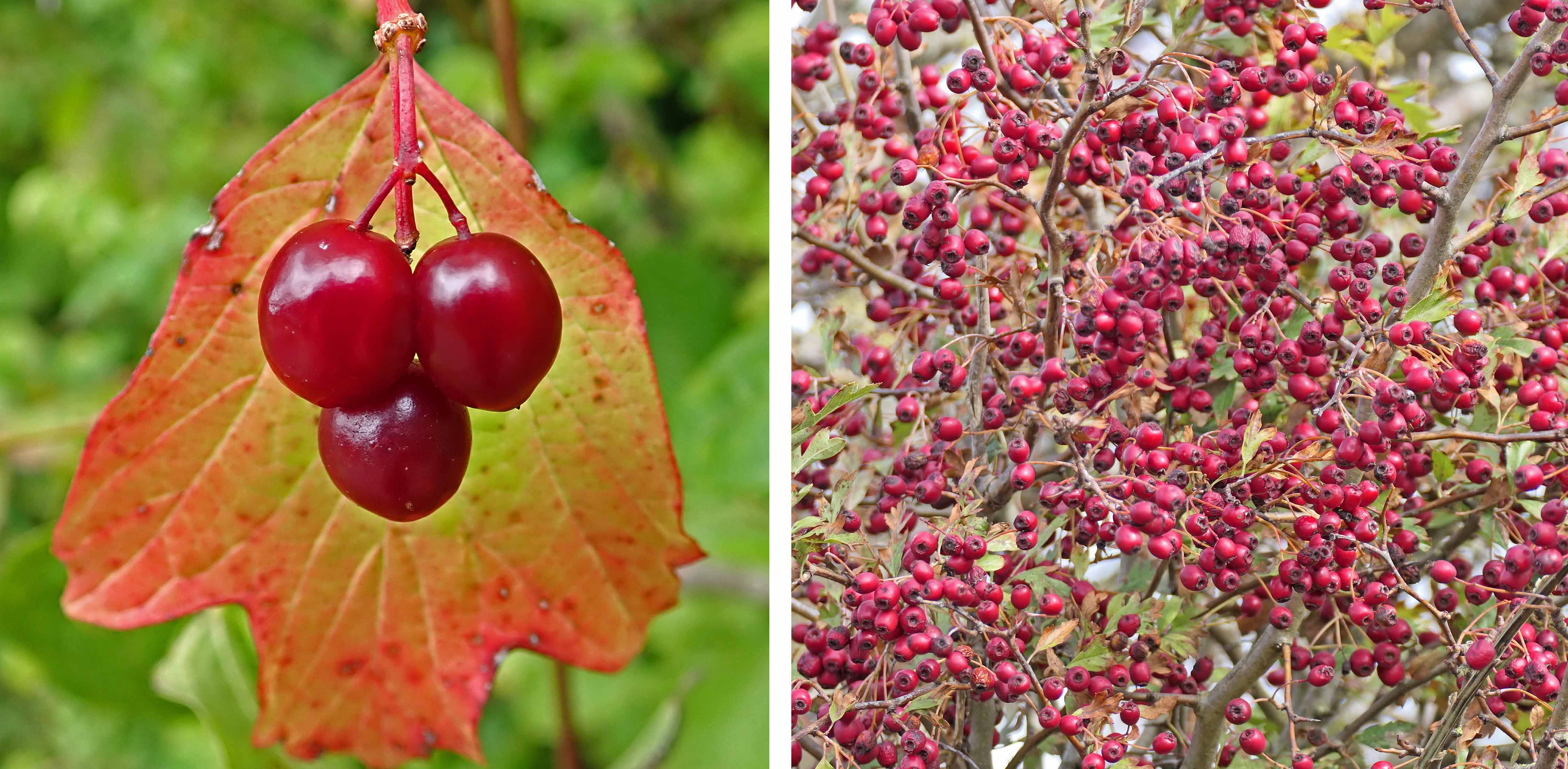
7-spot ladybird, autumn colour, Black Bryony berries, blackberries, Common Darter, Field rose hips, Guelder rose berries, Hawthorn berries, red berries, red colour in nature, Robin's pincushion

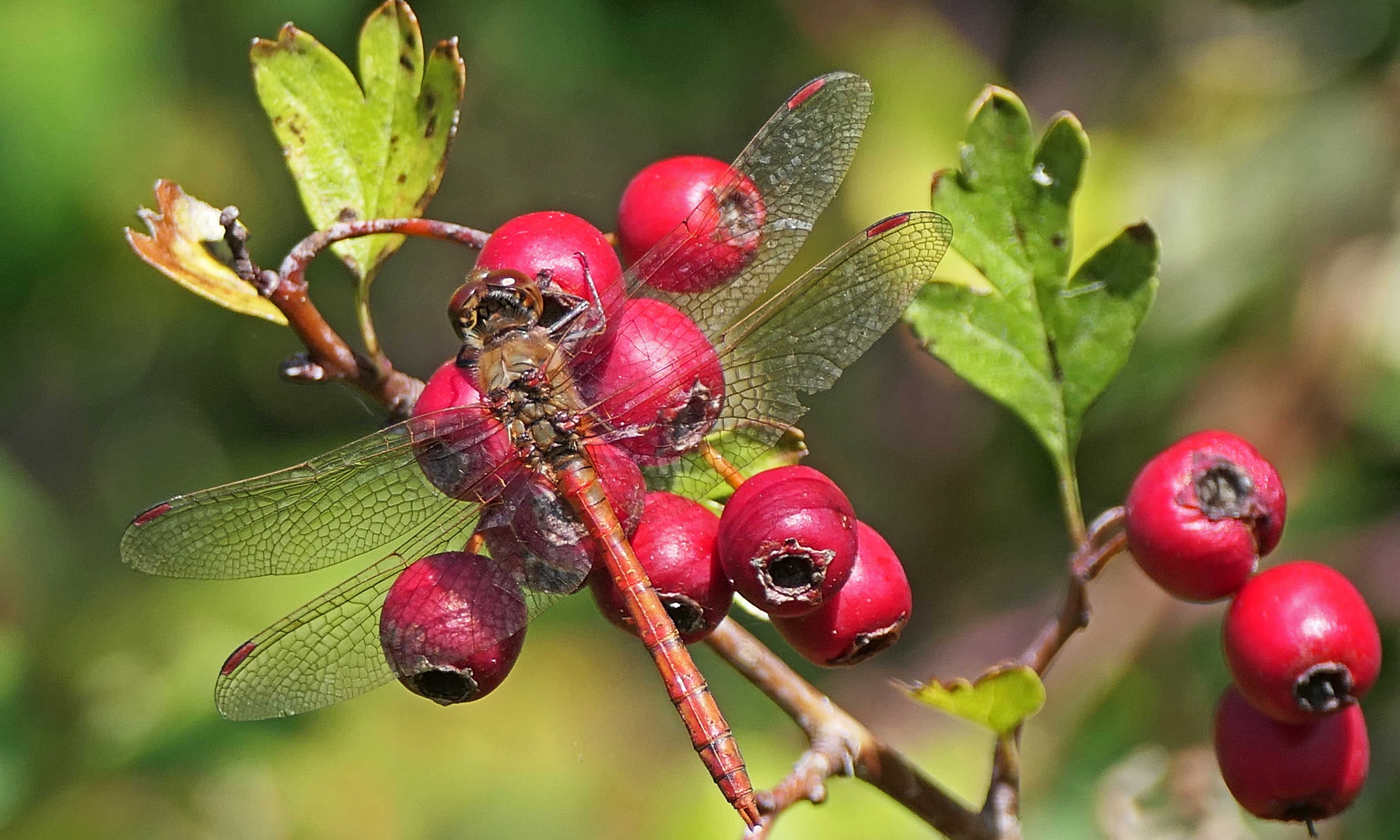
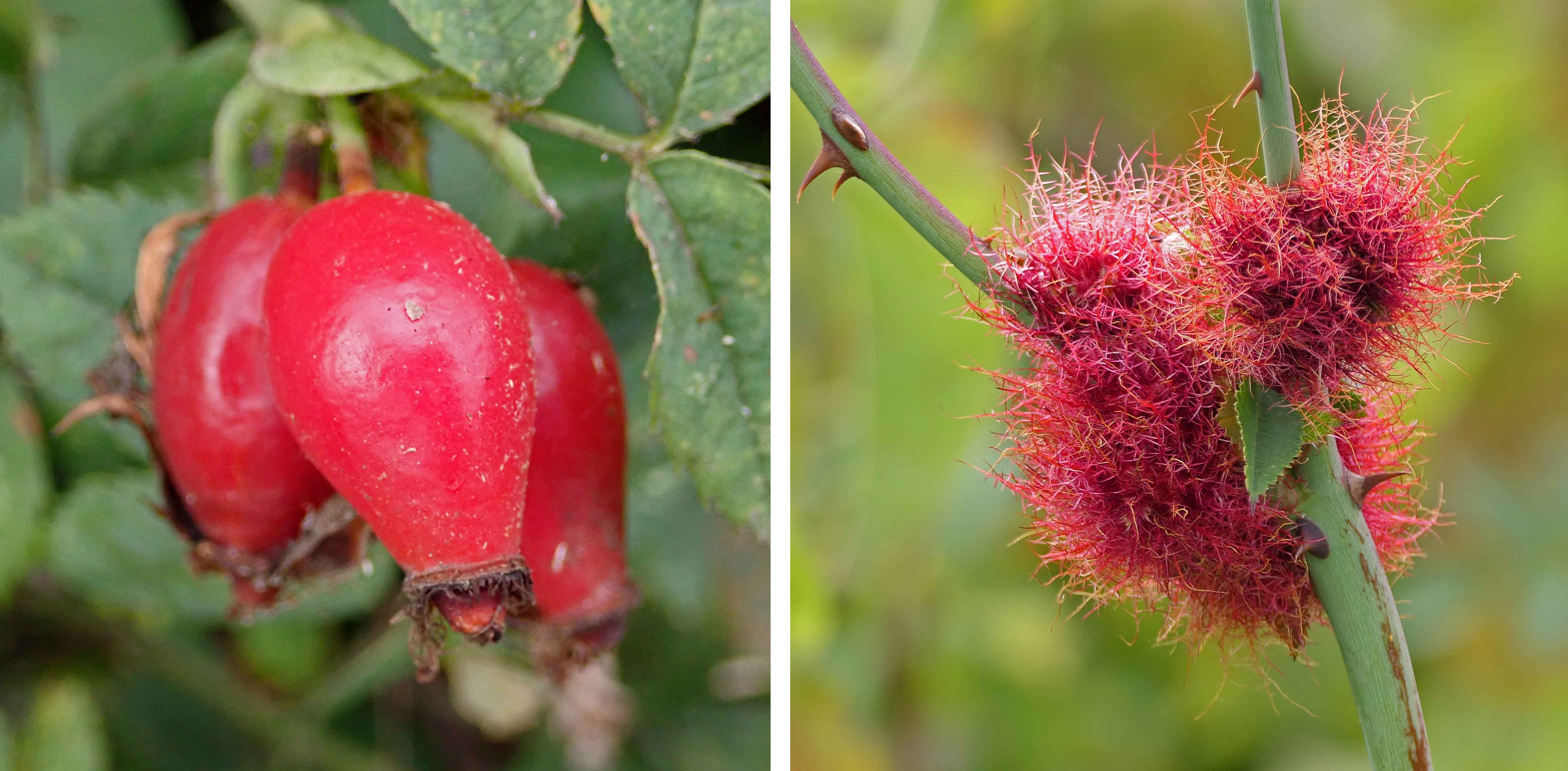
When I’m out walking at the moment, it seems that everywhere I look, I see red …

I see red

I see red

I see red

I see re-e-ed

Like Loading...

Leafmines: Acrolepia autumnitella

29 Monday Sep 2025

Posted by sconzani in insects, plants

≈ 2 Comments

Tags

Acrolepia autumnitella, Bittersweet, British leafminers, British moths, leaf-mining moth larvae, leaf-mining moths, leafmines on Bittersweet, Solanum dulcamara

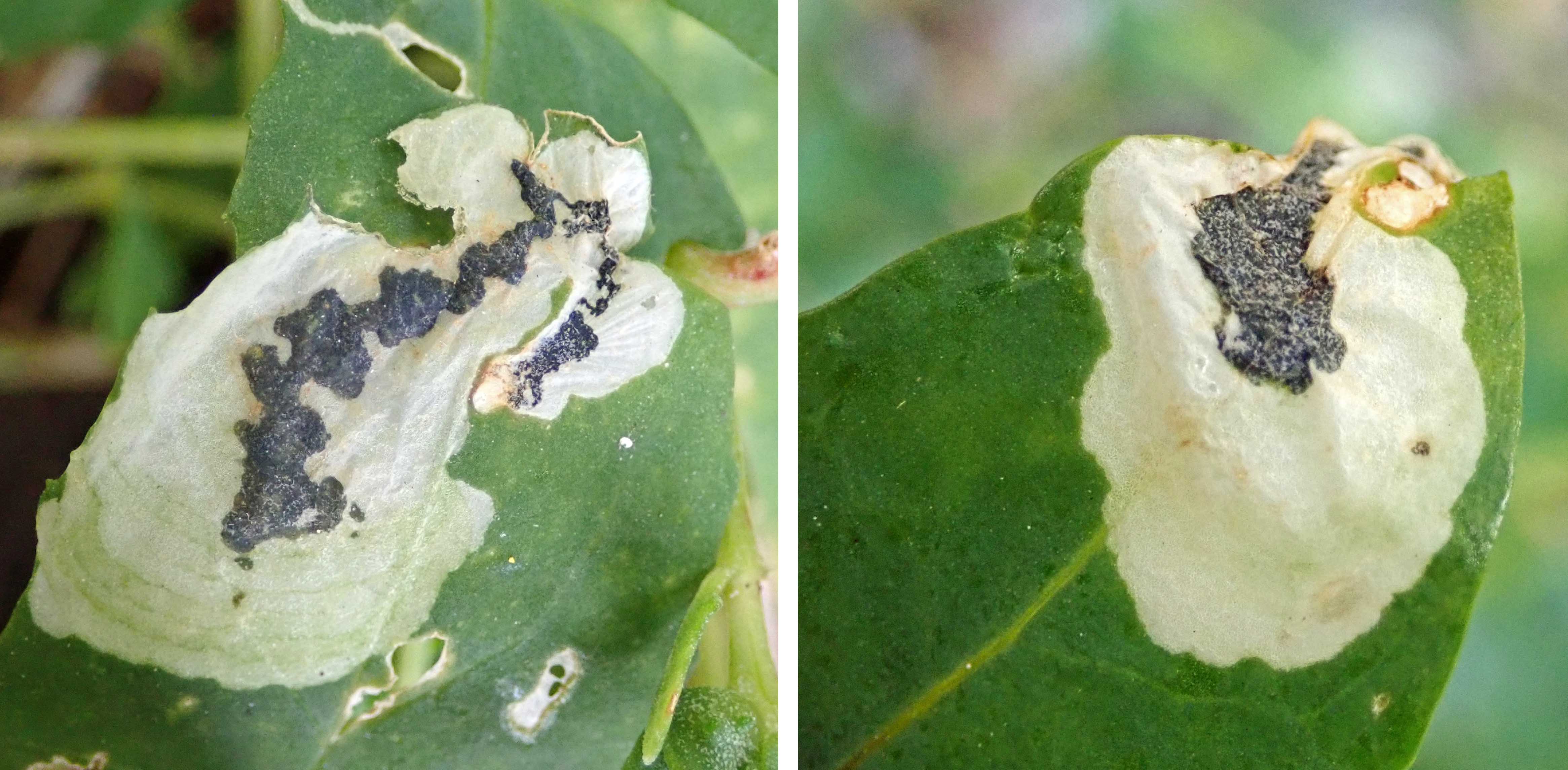
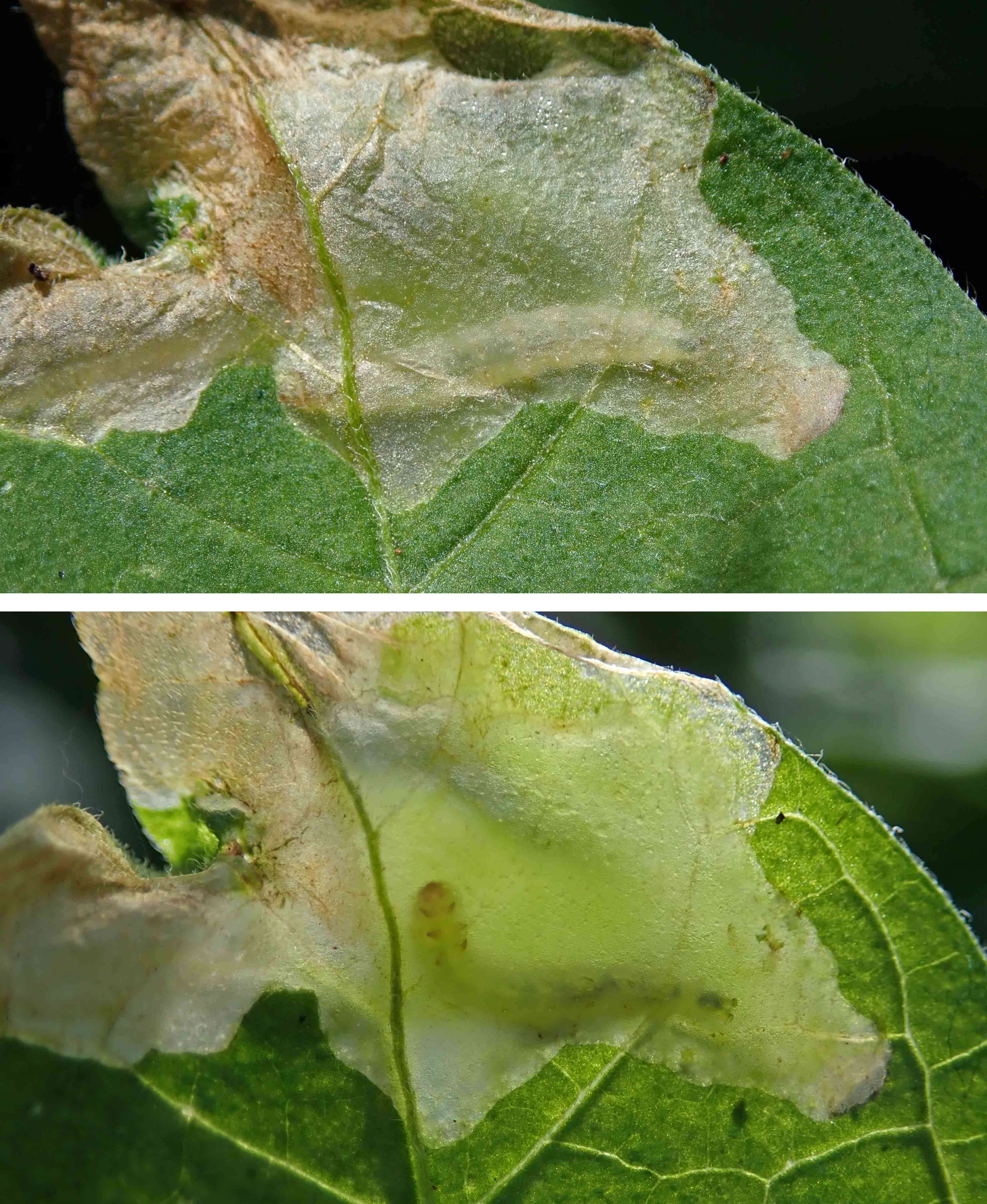
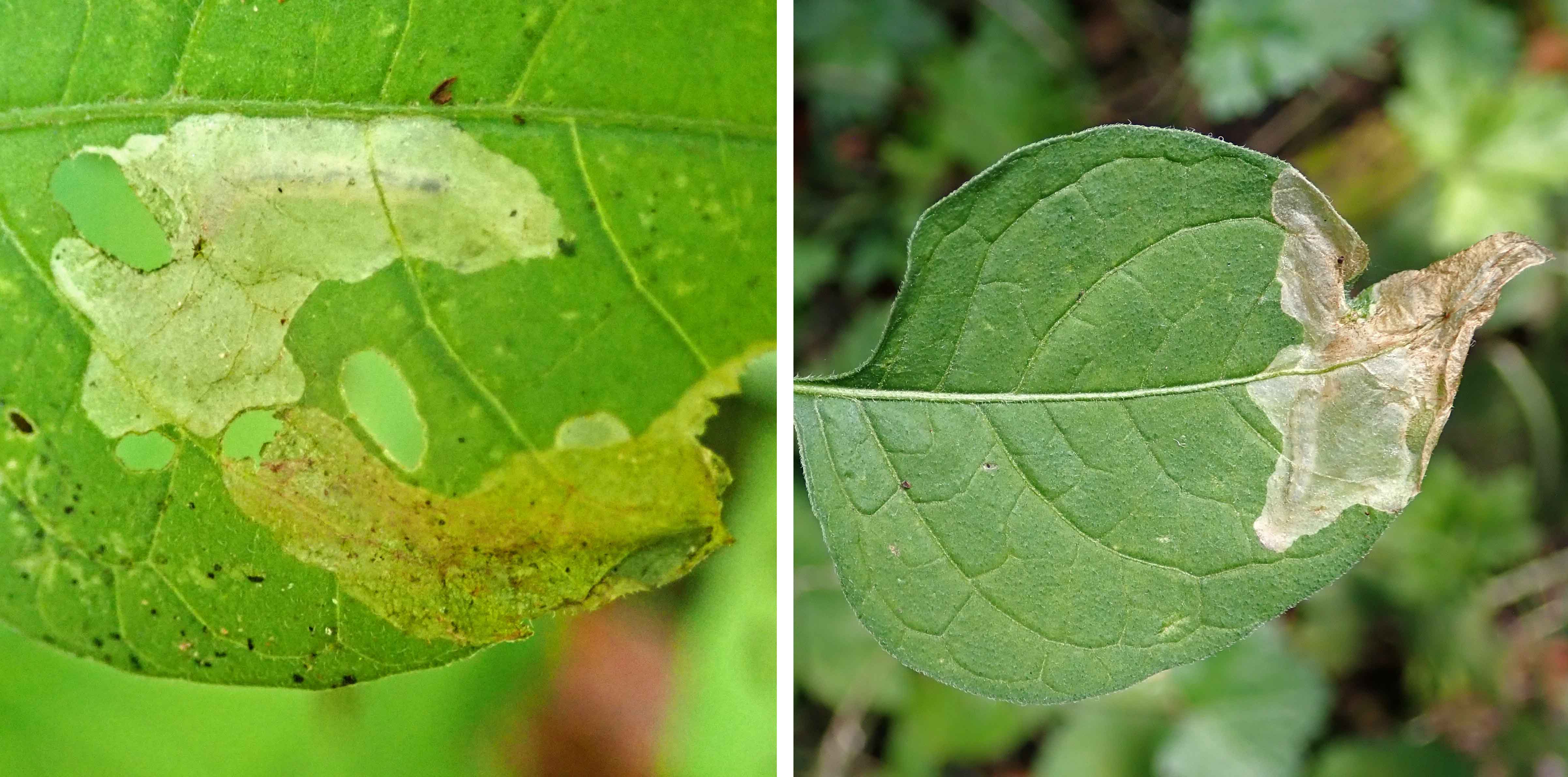
I don’t think I’ve seen leafmines on this plant before – this is Bittersweet (Solanum dulcamara), and the mines can also be found on other members of this plant genus, Tomato (S. lycopersicum) and Potato (S. tuberosum), as well as on Deadly nightshade (Atropa belladonna).

The miners here are the larvae of the moth Acrolepia autumnitella, a very pretty little chestnut-coloured creature, which is shown on the UK Moths website. As you can see in my images, the larvae create quite large blotch mines, and these can be found twice a year, in June and September. I haven’t yet found a pupa but I will keep looking because the silk cocoon that surrounds the pupa looks rather lovely, as a photo on the British Leafminers website shows.

Like Loading...

Goldenrod

28 Sunday Sep 2025

Posted by sconzani in autumn, flowers, plants, wildflowers

≈ Leave a comment

Tags

autumn colour, autumn wildflowers, British wildflowers, Goldenrod, Solidago virgaurea, yellow wildflowers

Is there a more aptly named wildflower? This is Goldenrod (Solidago virgaurea), which, when in full bloom, looks exactly as you might expect a plant with that name to look. As it flowers in late summer – early autumn, not only does it provide a welcome burst of bright colour at a time when many other wildflowers are past their best, it also supplies much needed nourishment at that time of year to a multitude of insects. Butterfly Conservation have produced a pdf extolling the benefits of Goldenrod, which they say is a food source for around 40 moth species, as well as numerous species of flies.

I’m not sure why but this is not a flower I see locally; I found these plants in the quarries on the Isle of Portland. My wildflower guide book says it can be found growing in dry woodlands and grasslands, on cliffs and in sand dunes, throughout the British Isles – maybe I’ve overlooked it in my area.

I’ve read that Goldenrod contains certain beneficial chemicals that have anti-fungal and anti-inflammatory properties and, in Flora Britannica, Richard Mabey writes that ‘In the sixteenth and seventeenth centuries it was in great demand as a wound herb but, according to John Gerard [The Herball, 1597], fell from favour when it was discovered to be rather common.’ Whether or not the benefit to humans has been scientifically proven seems open to question, and I would certainly never advise anyone to ingest plant products rather than seek proper medical attention for any ailments they might have. Perhaps this is a plant best left for the insects to feast on.

Like Loading...
← Older posts

About me

sconzani

sconzani

I'm a writer and photographer; researcher and blogger; birder and nature lover; countryside rambler and city strider; volunteer and biodiversity recorder.

View Full Profile →

Follow earthstar on WordPress.com

Enter your email address to follow this blog and receive notifications of new posts by email.

Recent blog posts

  • M is for mite December 18, 2025
  • L is for lepidopteran lifers December 17, 2025
  • K is for Keeled skimmers December 16, 2025
  • J is for Jersey tiger December 15, 2025
  • I is for Ichneumon December 14, 2025

From the archives

COPYRIGHT

Unless otherwise acknowledged, the text and photographs on this blog are my own and are subject to international copyright. Nothing may be downloaded or copied without my permission.

Fellow Earth Stars!

  • Unknown's avatar
  • Unknown's avatar
  • Unknown's avatar
  • Unknown's avatar
  • Unknown's avatar
  • Unknown's avatar
  • Unknown's avatar
  • Unknown's avatar
  • Unknown's avatar
  • Unknown's avatar
  • Unknown's avatar
  • Unknown's avatar
  • Unknown's avatar
  • Unknown's avatar
  • Unknown's avatar
  • Unknown's avatar
  • Unknown's avatar
  • Unknown's avatar
  • Unknown's avatar
  • Unknown's avatar
  • Unknown's avatar
  • Unknown's avatar
  • Unknown's avatar
  • Unknown's avatar
  • Unknown's avatar
  • Unknown's avatar
  • Unknown's avatar
  • Unknown's avatar
  • Unknown's avatar
  • Unknown's avatar
  • Unknown's avatar
  • Unknown's avatar
  • Unknown's avatar
  • Unknown's avatar
  • Unknown's avatar
  • Unknown's avatar
  • Unknown's avatar
  • Unknown's avatar
  • Unknown's avatar
  • Unknown's avatar
  • Unknown's avatar
  • Unknown's avatar
  • Unknown's avatar
  • Unknown's avatar
  • Unknown's avatar
  • Unknown's avatar
  • Unknown's avatar
  • Unknown's avatar
  • Unknown's avatar
  • Unknown's avatar

Blog at WordPress.com.

Privacy & Cookies: This site uses cookies. By continuing to use this website, you agree to their use.
To find out more, including how to control cookies, see here: Cookie Policy
  • Subscribe Subscribed
    • earthstar
    • Join 667 other subscribers
    • Already have a WordPress.com account? Log in now.
    • earthstar
    • Subscribe Subscribed
    • Sign up
    • Log in
    • Report this content
    • View site in Reader
    • Manage subscriptions
    • Collapse this bar
 

Loading Comments...
 

You must be logged in to post a comment.

    %d